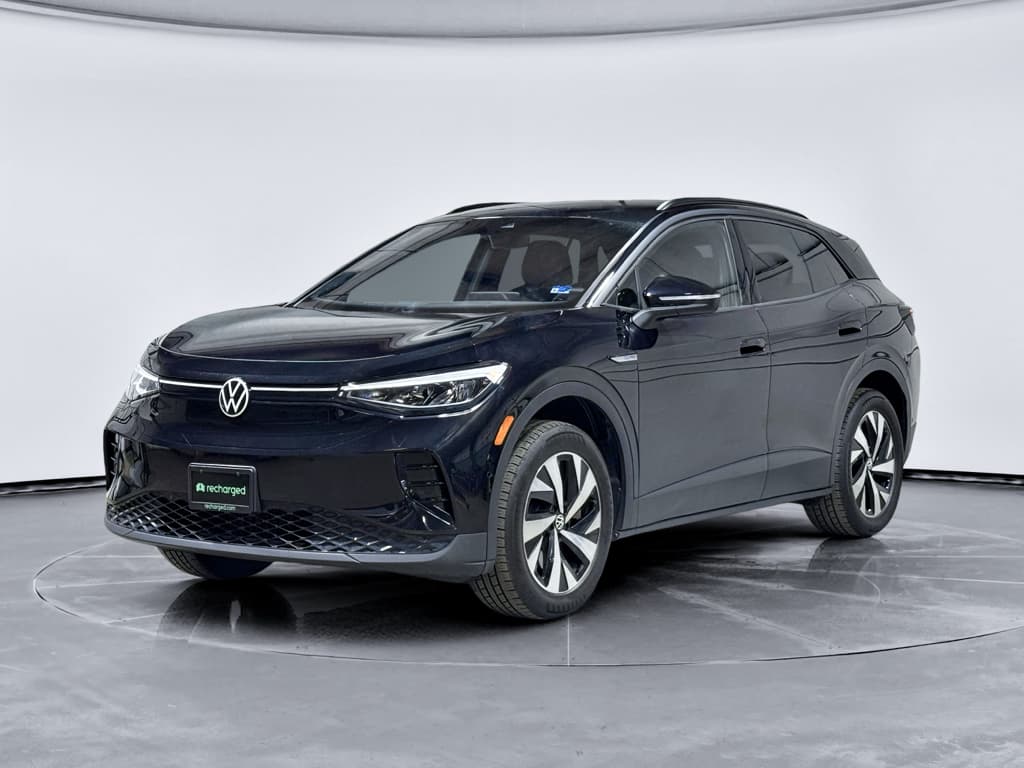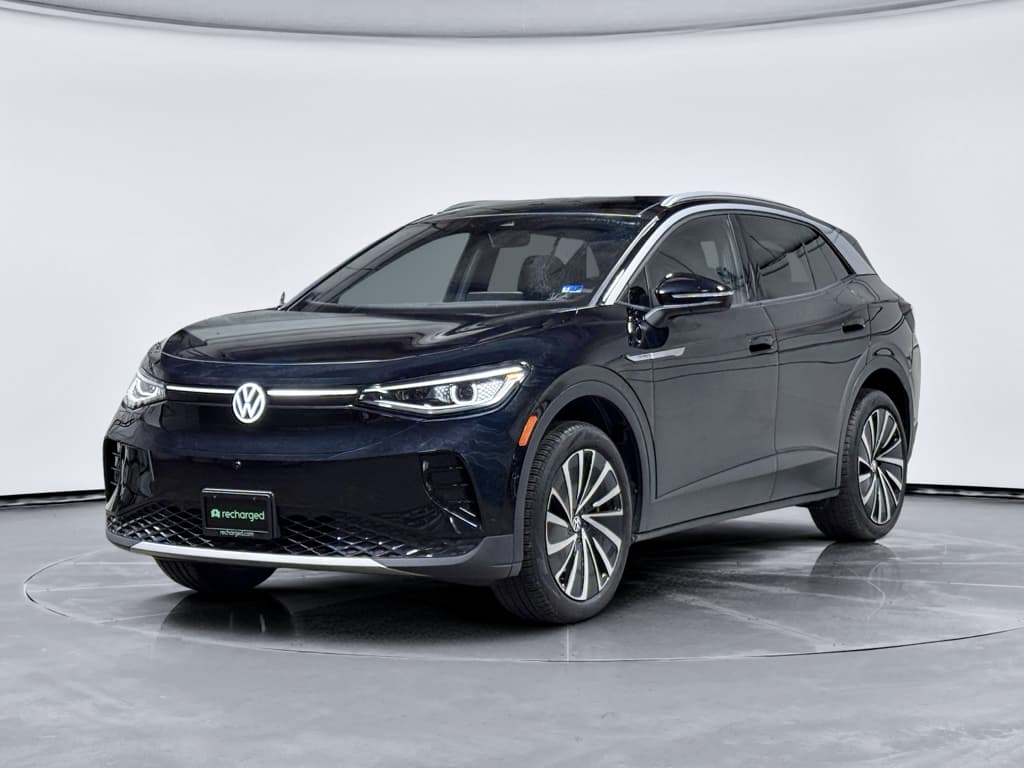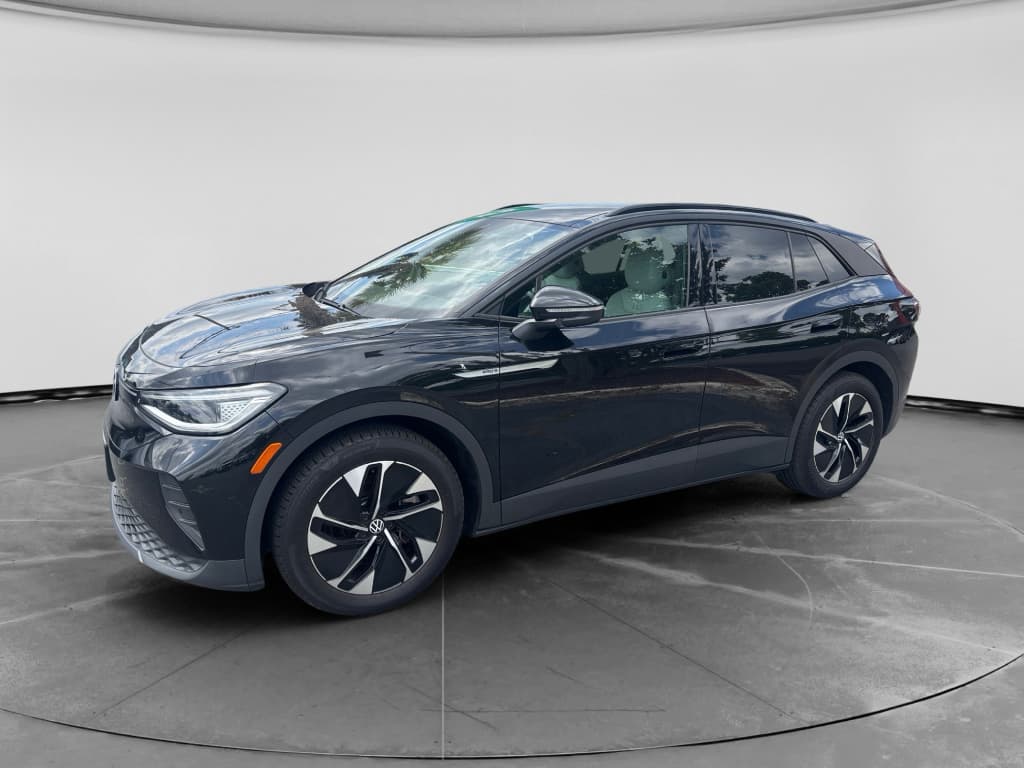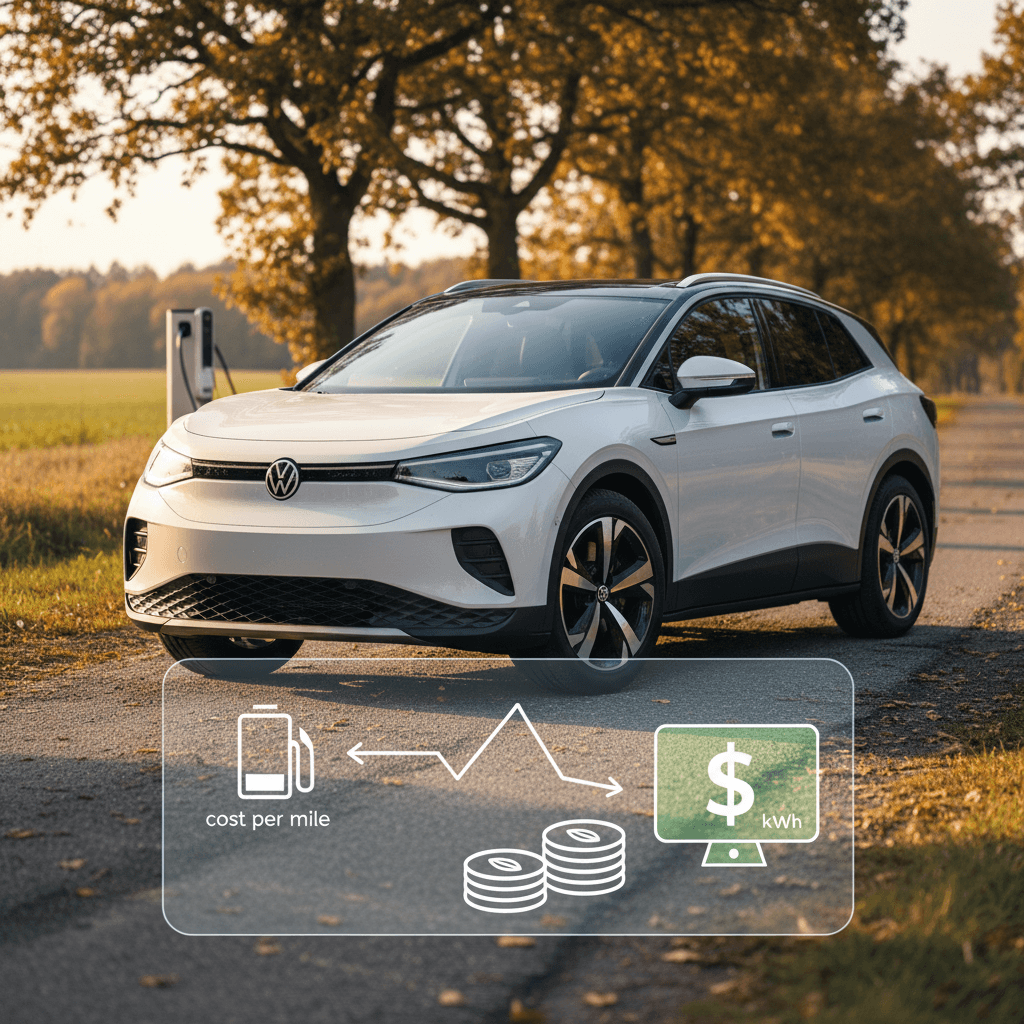
When you strip away the marketing and the moral glow of driving electric, the basic question remains painfully simple: how much does a Volkswagen ID.4 cost per mile to drive? Not in theory, not in a lab cycle, but in your life, commuting, grocery runs, road trips, cold mornings, and the occasional ill‑advised highway sprint.
Snapshot: VW ID.4 cost per mile
Volkswagen ID.4 cost per mile: quick overview
Volkswagen ID.4 real‑world cost per mile (2025 ballpark)
Numbers like these are averages, not commandments. A frugal commuter charging at off‑peak residential rates in the Midwest might see an all‑in cost per mile for a used ID.4 in the mid‑30‑cent range. A coastal new‑car buyer relying on pricey public charging could land closer to 70 cents. The spread is wide; the job here is to show you what actually moves that needle.
How we calculate Volkswagen ID.4 cost per mile
Before you can compare an ID.4 to a gas SUV, or to another EV, you need a consistent yardstick. Cost per mile is simply your total ownership cost divided by miles driven. In practice, we break it into four buckets:
- Electricity (or charging) costs
- Maintenance and repairs
- Insurance, registration, taxes and fees
- Depreciation (what the vehicle is actually losing in value while you own it)
A simple cost‑per‑mile formula
Take your expected 5‑year costs:
- Electricity + charging fees
- Maintenance & repairs
- Insurance & registration
- Depreciation (purchase price minus resale/remaining value)
Add them up and divide by your expected mileage (for example, 60,000 miles).
Example: New ID.4 buyer
Say over 5 years and 60,000 miles you spend:
- $3,000 on electricity
- $1,200 on maintenance
- $7,500 on insurance & fees
- $21,000 in depreciation
Total: $32,700 ÷ 60,000 miles ≈ $0.55 per mile.
Why buying used often wins
Electricity cost per mile for a Volkswagen ID.4
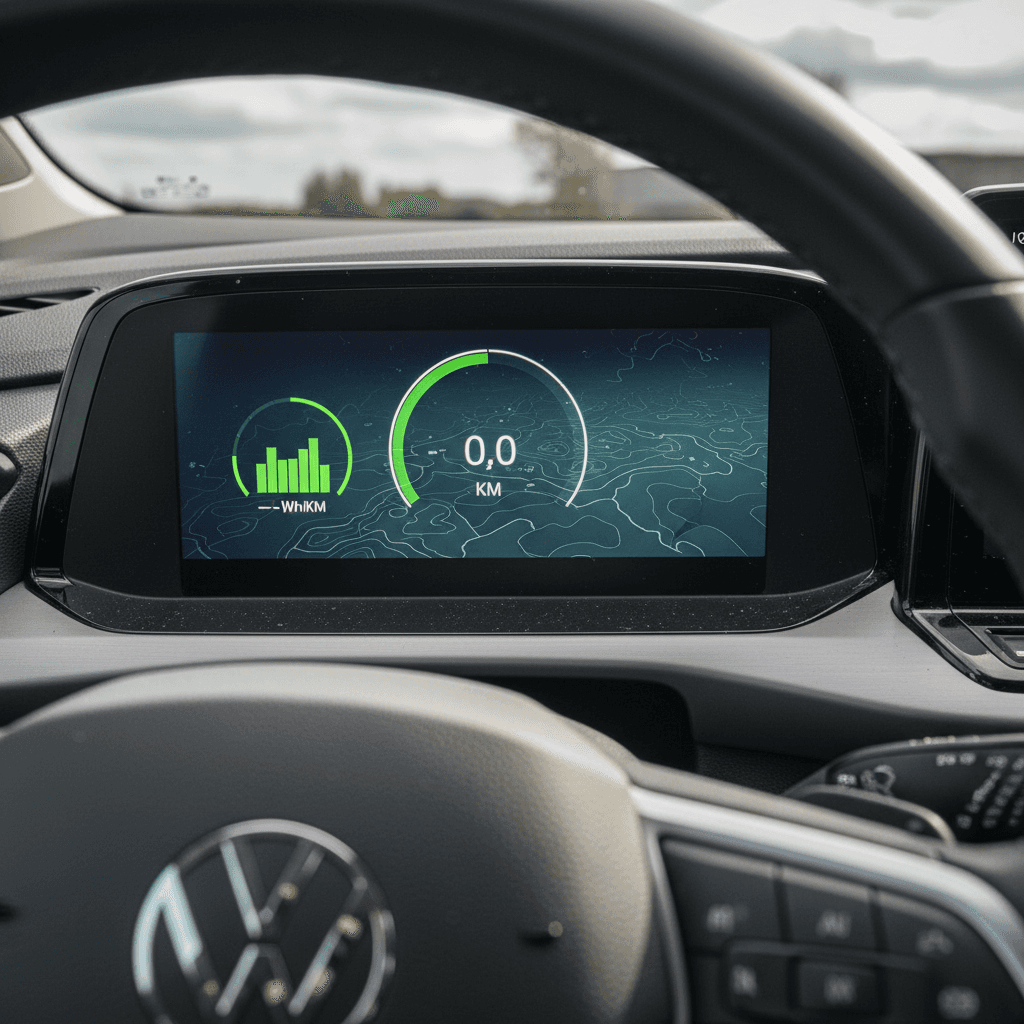
Volkswagen’s own numbers peg the ID.4 around 2.7–3.2 miles per kWh in mixed driving, depending on battery size, motor count, wheels and weather. In the wild, most owners land closer to the low end of that range with highway and winter driving in the mix. Let’s call it 2.7–3.0 mi/kWh real‑world for cost‑per‑mile planning.
Volkswagen ID.4 electricity cost per mile – typical 2025 scenarios
All examples assume ~2.8 mi/kWh real‑world efficiency. Your numbers will shift up or down with your actual energy consumption and rates.
| Scenario | Electricity price | Miles per kWh (assumed) | Energy cost per mile |
|---|---|---|---|
| Home off‑peak charging | $0.12/kWh | 2.8 mi/kWh | ≈ $0.04/mile |
| Home typical rate | $0.16/kWh | 2.8 mi/kWh | ≈ $0.06/mile |
| High‑cost urban utility | $0.24/kWh | 2.8 mi/kWh | ≈ $0.09/mile |
| DC fast charging – moderate | $0.40/kWh | 2.6 mi/kWh | ≈ $0.15/mile |
| DC fast charging – expensive network | $0.60/kWh | 2.4 mi/kWh | ≈ $0.25/mile |
Use this table as a planning tool, not a verdict, your local rates and driving style matter.
If you’re primarily charging at home, the ID.4 is almost comically cheap per mile on energy. The danger is getting hooked on DC fast charging, which turns your thrifty EV into a premium‑fuel‑grade habit. The car doesn’t care where the electrons came from; your wallet does.
Beware the “public‑charging lifestyle”
Maintenance and repairs: pennies per mile, not dollars
EV maintenance is a bit like jazz: it’s more about what isn’t there. A Volkswagen ID.4 has no oil changes, timing belts, spark plugs, or exhaust system, and there’s a single‑speed reduction gear instead of a complex automatic transmission. You’re mostly looking at tires, brake fluid, cabin filters and the occasional software update.
What actually wears out on a Volkswagen ID.4
The short list of things that move your cost per mile
Tires
The ID.4 is heavy and torquey. Expect 30k–40k miles out of a set of quality tires if you rotate them.
Budget roughly $800–$1,000 per full set, or about 1.5–2 cents per mile over time.
Brakes (slow to wear)
Regenerative braking does most of the work, so pads and rotors last much longer than on a comparable gas SUV.
Think in terms of years rather than miles, unless you drive aggressively in mountains.
Fluids & filters
Brake fluid flushes, cabin air filters and the occasional alignment keep things tidy.
Spread over 60,000+ miles, you’re roughly in the fractions of a cent per mile territory.
Roll it all together and a sensible estimate for Volkswagen ID.4 maintenance cost per mile over 8–10 years is in the neighborhood of $0.02–$0.03 per mile, heavily driven by tire choice and road conditions. That’s markedly lower than many gas crossovers, where fluids and mechanical wear play a much larger role.
How Recharged lowers the "unknowns"
Ready to find your next EV?
Browse VehiclesHow insurance and registration affect total cost per mile
Insurance and registration aren’t exciting, but they’re real dollars in the denominator of your cost‑per‑mile fraction. New EVs like the ID.4 can cost a bit more to insure than an equivalently priced gas crossover, largely because of repair complexity and parts pricing, though this varies a lot by ZIP code and insurer.
Insurance & fees: adding them to your Volkswagen ID.4 cost per mile
Illustrative 5‑year example for a driver with a clean record and average U.S. rates.
| Item (5‑year total) | Conservative example | Aggressive example | Per‑mile impact (60k miles) |
|---|---|---|---|
| Insurance premiums | $7,000 | $9,000 | ≈ $0.12–$0.15/mile |
| Registration & EV fees | $1,000 | $1,500 | ≈ $0.02–$0.03/mile |
| Total insurance + fees | $8,000 | $10,500 | ≈ $0.14–$0.18/mile |
Use your actual quotes and local fees for precise numbers, these are planning placeholders, not promises.
When you add electricity, maintenance and these “paper costs” together, you’re often around $0.25–$0.35 per mile before you even touch depreciation. Which brings us to the elephant quietly shuffling in the resale lane.
Volkswagen ID.4 vs gas SUV: cost per mile showdown
To make the Volkswagen ID.4 cost per mile meaningful, you need a foil. Think of a popular compact crossover, call it a RAV4, CR‑V, Tucson, Tiguan, doing 28 mpg combined on regular gas. Now give both vehicles 60,000 miles to tell their story.
Volkswagen ID.4 vs similar gas SUV – 5‑year / 60,000‑mile cost per mile
Illustrative example using averaged 2025‑ish energy prices and mainstream insurance/maintenance costs. Your mileage, literally, will vary.
| Cost category (5 years / 60k mi) | Volkswagen ID.4 (home‑dominant charging) | Volkswagen ID.4 (fast‑charge heavy) | Comparable gas SUV |
|---|---|---|---|
| Energy/fuel | $3,000 (~$0.05/mi) | $8,000 (~$0.13/mi) | $8,500 (~$0.14/mi @ $4/gal, 28 mpg) |
| Maintenance | $1,200 (~$0.02/mi) | $1,500 (~$0.025/mi) | $3,000 (~$0.05/mi) |
| Insurance & fees | $8,000 (~$0.13/mi) | $8,000 (~$0.13/mi) | $7,500 (~$0.12/mi) |
| Depreciation | $20,000–$23,000 (~$0.33–$0.38/mi) | $20,000–$23,000 (~$0.33–$0.38/mi) | $17,000–$20,000 (~$0.28–$0.33/mi) |
| Estimated total | $32,200–$35,000 (≈$0.54–$0.58/mi) | $37,500–$40,500 (≈$0.63–$0.68/mi) | $36,000–$39,000 (≈$0.60–$0.65/mi) |
Assumes purchase price in the low‑ to mid‑$40Ks for both vehicles when new, before incentives.
The ID.4’s superpower isn’t some magical free‑energy fantasy. It’s the ability to shift a big chunk of your cost per mile into a controllable, relatively stable utility bill. If you charge mainly at home, you can often beat a comparable gas SUV by a meaningful margin. If you live on DC fast charging, the advantage shrinks, or flips.
The worst‑case cost‑per‑mile scenario
Used Volkswagen ID.4: battery health, depreciation, and real per‑mile cost
Depreciation is where the Volkswagen ID.4 cuts both ways. New buyers have watched values fall faster than some expected as more EVs hit the used market and incentives shift. For a used‑car shopper, that’s an opportunity wearing a slightly worried face.
What matters most on a used ID.4 (for cost per mile)
1. Battery state of health (SoH)
A healthy ID.4 pack should still hold the vast majority of its original capacity after a few years. More capacity means more real‑world range, fewer charging stops and better resale, all of which lower your effective cost per mile.
2. Charging history
A life spent mostly on home Level 2 charging is kinder to the battery than relentless DC fast charging. That history shows up in health data, and eventually in range and resale value.
3. Tires, brakes and alignment
Worn tires and neglected alignment turn immediately into hundreds of dollars, which becomes a very steep few cents per mile on a car you just bought.
4. Remaining warranty coverage
Volkswagen’s battery warranty gives you a buffer against big, low‑probability failures. Knowing how many years and miles are left helps you price risk correctly.
How Recharged turns guesswork into math
7 ways to lower your VW ID.4 cost per mile
Practical tactics to push your cost per mile down
You can’t control the whole market, but you can control more than you think.
1. Max out home charging
Every mile you charge at home instead of a fast charger is money back in your pocket. If your utility offers time‑of‑use rates, schedule charging for off‑peak hours.
2. Drive the efficiency display
Use the ID.4’s trip computer as a game: can you nudge it closer to 3 mi/kWh? Even small improvements here shave real cents off your per‑mile cost.
3. Keep tires properly inflated
Underinflated tires sap range and wear out faster. A simple digital gauge and a monthly check are absurdly cheap insurance for both efficiency and safety.
4. Plan to keep it longer
Stretching ownership from 3 to 7 years lets you spread depreciation over more miles, often dropping your all‑in cost per mile dramatically.
5. Buy gently used instead of new
Let someone else take the steepest depreciation. A 2‑ or 3‑year‑old ID.4 with a clean battery‑health report can be the sweet spot for value.
6. Shop insurance quotes
EV insurance pricing is still all over the map. Quoting multiple carriers can easily swing your cost per mile by a few cents.
- 7. Avoid oversized wheels and sticky tires unless you truly need them, great for looks and grip, terrible for efficiency and tire life.
Financing and cost per mile
FAQ: Volkswagen ID.4 cost per mile to drive
Frequently asked questions about VW ID.4 cost per mile
Bottom line: what you should expect per mile
Viewed through a cost‑per‑mile lens, the Volkswagen ID.4 is neither a miracle nor a menace. It’s a modern, comfortable electric crossover that can be meaningfully cheaper per mile than a comparable gas SUV, but only if the rest of the equation lines up: home charging, sane purchase price, realistic ownership horizon.
If you’re shopping new, your biggest lever is avoiding overpaying and planning to keep the car long enough for low maintenance and cheap electricity to do their work. If you’re shopping used, your levers are battery health, prior charging behavior and today’s asking price. That’s where a data‑rich used EV marketplace like Recharged can tilt the odds firmly in your favor, turning an ID.4 from an experiment into a very rational cost‑per‑mile play.
Run your own numbers, be honest about how and where you’ll charge, and the Volkswagen ID.4 will tell you very clearly whether it fits the life you actually live, not the one in the brochure.