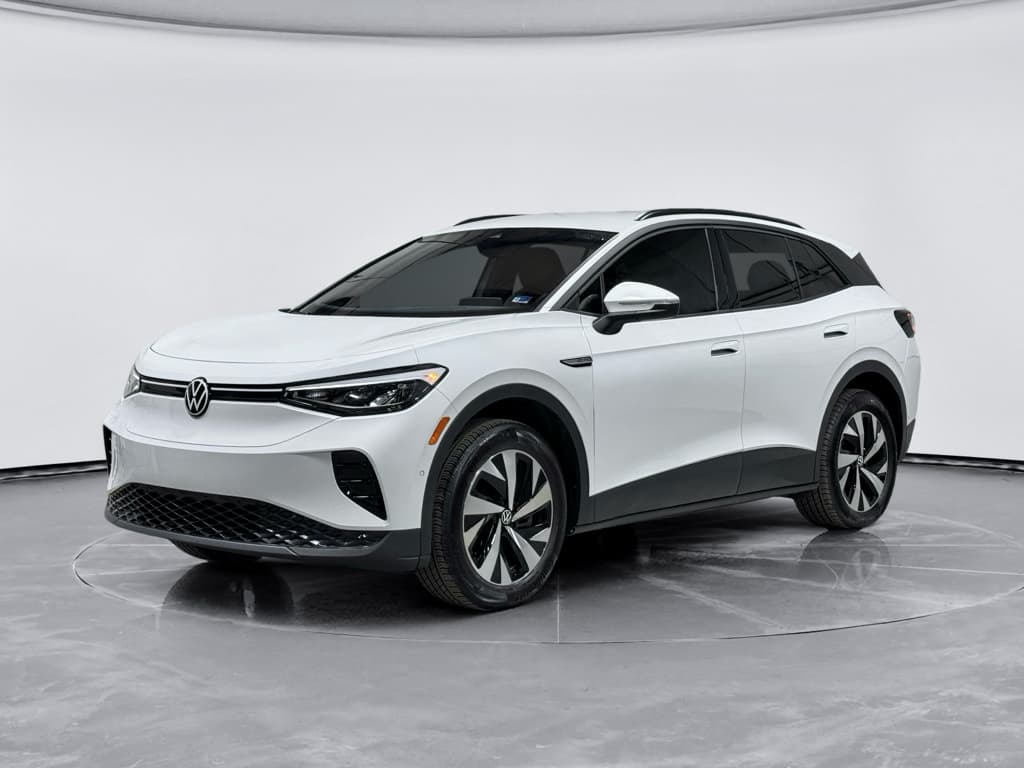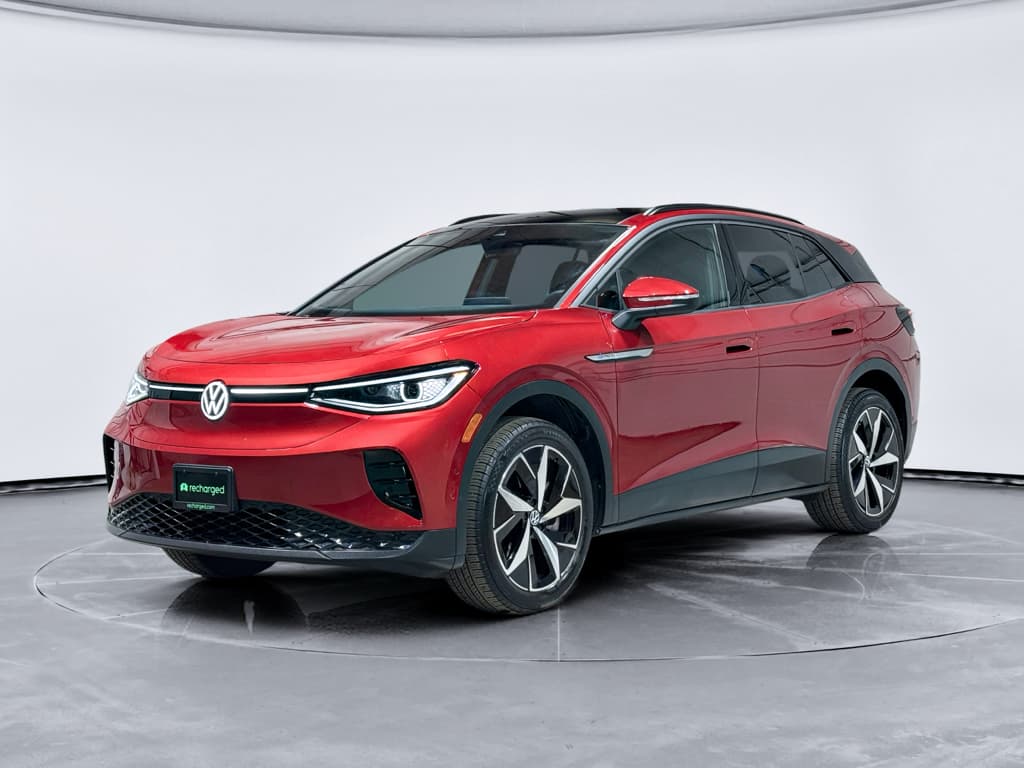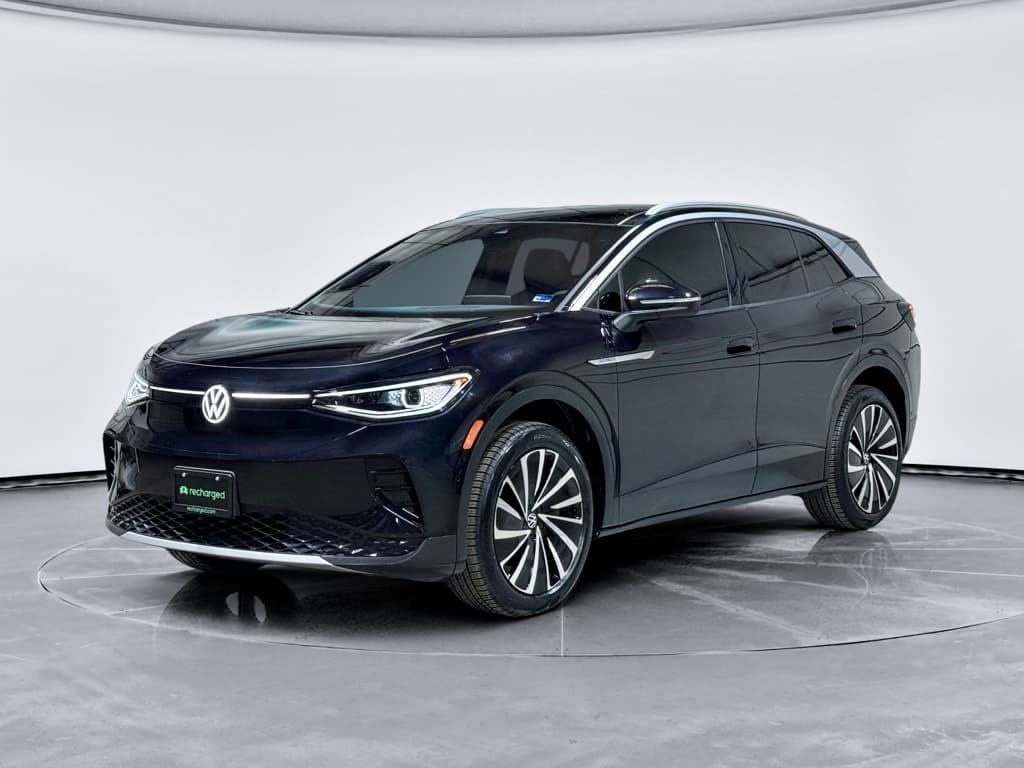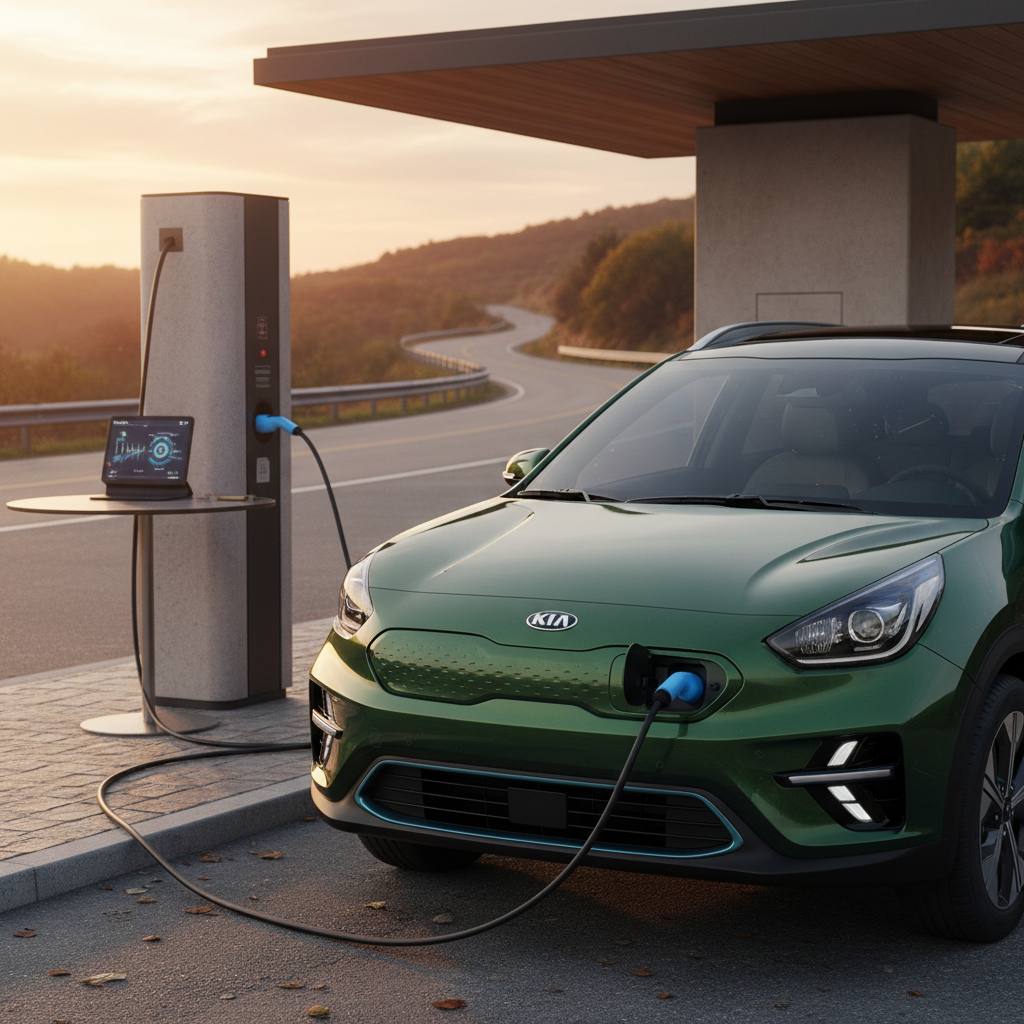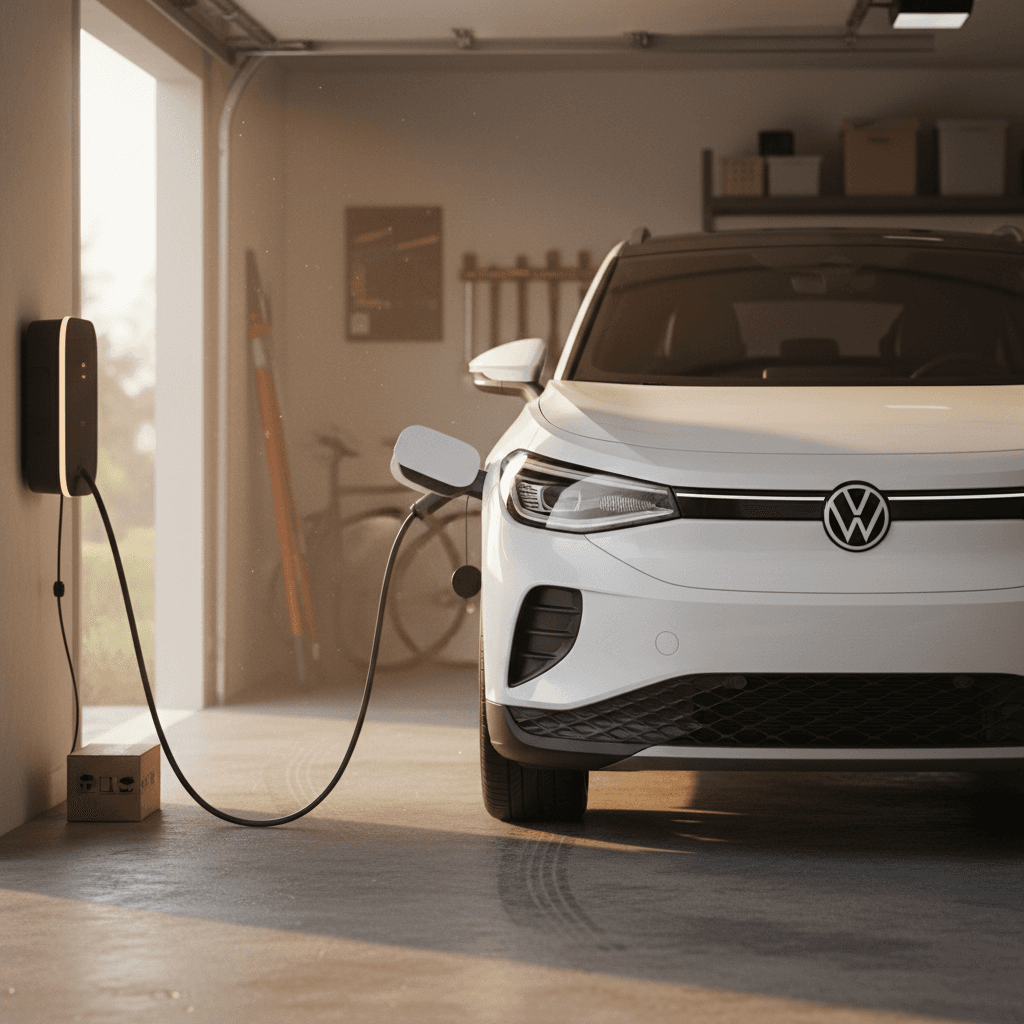
If you own a Volkswagen ID.4, the single best upgrade you can make is a proper Level 2 home charger. The right setup can turn a nearly empty battery into a full pack overnight, while the wrong one wastes money and still leaves you short on range. This guide breaks down the best home charger options for the VW ID.4, how many amps you actually need, and what to look for in wiring, safety, and smart features.
Quick answer
Why home charging matters so much for Volkswagen ID.4 owners
Home charging transforms VW ID.4 ownership
Public DC fast charging is great for road trips, but it’s too expensive and inconvenient for daily use. The Volkswagen ID.4 was designed around the idea that you plug in at home, walk away, and wake up to a full battery. That only really works if you step up from the slow 120‑volt cord to a 240‑volt Level 2 solution that matches what the car can accept.
Think of it like installing Wi‑Fi
VW ID.4 charging basics: what your onboard charger can actually use
Before you can choose the best home charger for a Volkswagen ID.4, you need to understand the limits inside the car. The wall unit or portable EVSE advertises a certain power, but the ID.4’s onboard AC charger decides how much it will actually accept.
Volkswagen ID.4 AC charging basics by model year (North America)
Approximate onboard AC charging capability for common U.S. ID.4 variants. Always confirm in your owner’s manual for your exact trim.
| Model years / trims | Typical onboard AC rating | Breaker & EVSE combo that makes sense | What it means in practice |
|---|---|---|---|
| Early ID.4 trims with 7.2 kW AC (select base models) | ~7.2 kW | 40A breaker / 32A charger is enough | You won’t see benefit from >32A; focus on reliability and price. |
| Most 2023+ ID.4 trims | Up to ~11 kW | 50A breaker / 40A charger hits the sweet spot | You’ll charge near the car’s AC max without overbuilding your panel. |
| Future ID.4 updates (if AC stays 11 kW) | 11 kW | Up to 60A breaker / 48A charger if panel allows | Slightly shorter charge times; more useful if you add a second EV. |
The wallbox rating is only half the story, the ID.4’s onboard charger determines your real AC charging ceiling.
Every North American ID.4 uses a J1772 inlet for Level 1 and Level 2 AC charging and CCS for DC fast charging, so any mainstream J1772 Level 2 charger will be compatible. What changes from charger to charger is how much current it can deliver (32A, 40A, 48A, etc.) and how smart the software is.
Don’t chase kW you can’t use
How many amps does the “best” ID.4 home charger really need?
32‑amp Level 2 (on 40‑amp circuit)
- Delivers ≈7.2 kW at 240 V.
- Comfortably fills most ID.4 packs from low state of charge in ~9–11 hours.
- Excellent fit for early 7.2 kW‑limited trims and still fine for overnight on 82 kWh packs.
- Often available as a plug‑in unit with NEMA 14‑50 or 6‑50 plug, great for renters.
For many households that drive 30–60 miles per day, a 32‑amp charger already feels like “as fast as gas,” just happening at night.
40–48‑amp Level 2 (on 50–60‑amp circuit)
- Delivers ≈9.6–11.5 kW, depending on the exact amperage.
- Better aligned with later ID.4 trims that can accept up to ~11 kW AC.
- Shortens 0–100% charge times by roughly 20–30% vs 32A, especially on larger packs.
- Almost always hard‑wired, more permanent and cleaner looking, but less portable.
This is the right choice if your panel can support it and you want to future‑proof for a second EV.
Practical rule of thumb
Top home charger picks for the Volkswagen ID.4
You’ll see dozens of “best charger” lists, but the right fit for a Volkswagen ID.4 comes down to three things: amperage, reliability, and software you can live with. Here’s how the landscape breaks down by use case, with examples you can cross‑shop rather than a single “one true” pick.
Best home charger types for VW ID.4 owners
Match the charger to your home, driving pattern, and budget, not someone else’s spec sheet.
1. 32‑amp portable Level 2 (NEMA plug)
Best for: Renters, condo owners, or anyone who may move soon.
- Typically plugs into a NEMA 14‑50 or 6‑50 outlet.
- Delivers around 7.2 kW, enough to refill an ID.4 overnight.
- Easy to take with you if you move or want to share between locations.
Look for UL‑listed units with adjustable current and a sturdy, weather‑rated cable if used outdoors.
2. 40‑amp smart wallbox
Best for: Most single‑family homeowners with a 50‑amp circuit available.
- Hard‑wired, clean installation on a dedicated 50‑amp breaker.
- Pairs well with the ID.4’s 11 kW onboard charger for faster top‑ups.
- Smart scheduling, usage logs, and sometimes load‑sharing between two units.
This is the sweet spot for long‑term ID.4 ownership.
3. 48‑amp “future‑proof” charger
Best for: Homes with plenty of panel capacity and multiple current or future EVs.
- Requires a 60‑amp circuit and professional installation.
- Lets future EVs that can accept 48A fully exploit the extra power.
- Real‑world gain vs 40A on an ID.4 is modest, but can matter with two EVs sharing power.
Great if you’re already upgrading the panel and want headroom.
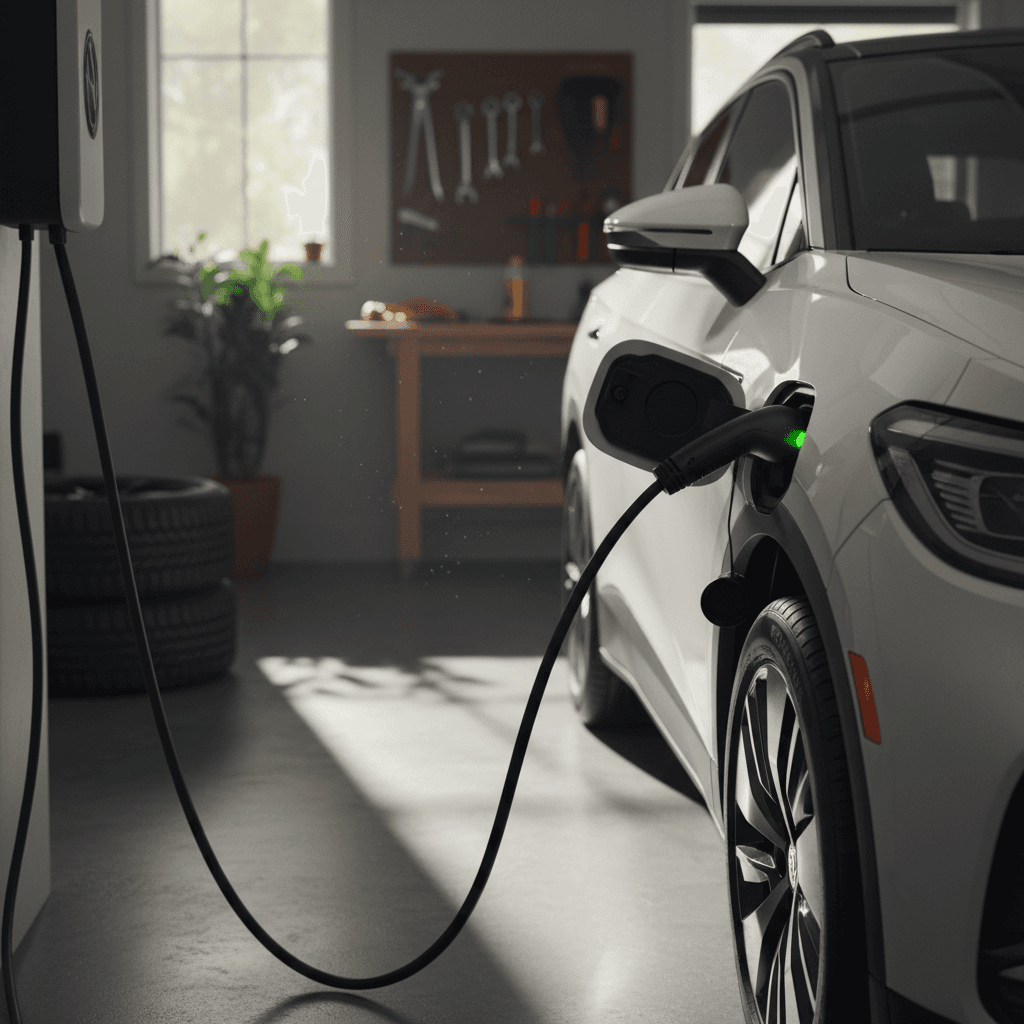
What about the VW‑branded charger?
Smart charger features that are actually worth it
A lot of home EVSE marketing is software fluff. For a Volkswagen ID.4 owner, the smart features that matter most are the ones that save you money or make life simpler, not yet another app you never open.
Prioritize these features for an ID.4 home charger
Wi‑Fi or Ethernet connectivity
Connectivity lets the charger track session history, apply firmware updates, and coordinate with other devices. It’s more reliable than pure Bluetooth, especially for outdoor installs.
Time‑of‑use scheduling
If your utility offers cheaper off‑peak rates, you want the charger (or car) to automatically start charging when electricity is cheapest, often late at night.
Adjustable amperage settings
Being able to dial the EVSE down from, say, 40A to 24A can be a lifesaver if you’re sharing capacity with other loads or plugging into different 240‑volt outlets.
Solid load‑sharing for two EVs
If your household has, or will have, two EVs, look for chargers that can intelligently split a single circuit between them without tripping breakers.
Open, predictable app experience
Over‑featured apps are common. Favor chargers with clean, stable apps that focus on core functions: start/stop, scheduling, and usage tracking.
Use the car or the charger as your “brain,” not both
Installation, wiring, and outlet choices for ID.4 home charging
Electrically, an EV charger is a continuous load, which means the National Electrical Code expects the circuit to be sized at 125% of the charger’s continuous current. That’s why a 32‑amp charger requires a 40‑amp breaker, and a 40‑amp charger needs a 50‑amp breaker. Get this wrong and you’re asking for nuisance trips, or, in the worst case, a safety problem.
Common home wiring setups for VW ID.4 owners
Pick the combination that matches both your electrical panel and your living situation.
40A breaker + NEMA 14‑50 or 6‑50 outlet
- Supports up to a 32‑amp plug‑in Level 2 charger.
- Great for garages where you may want to unplug or replace the unit easily.
- Popular for homeowners who want flexibility but still plan on staying put.
Ask your electrician to mount the outlet where the cable easily reaches the ID.4’s charge port without strain.
Hard‑wired 50–60A circuit to wallbox
- Cleanest, most permanent installation.
- Supports 40–48A chargers without the extra cost of a high‑current receptacle and plug.
- Less wear and tear over time because there’s no heavy plug to insert/remove.
Ideal for long‑term homes where you know the charger will live in one place.
Always use a licensed electrician
- Mount the charger so the cable reaches the ID.4’s port without being pulled tight or tripping people.
- If installing outdoors, choose a unit with a proper NEMA weather rating and in‑use cover for any receptacle.
- Label the breaker clearly in the panel so house‑sitters or electricians can quickly identify it.
- If your panel is marginal on capacity, ask about load management devices that can throttle the charger automatically when the house is near its limit.
Real‑world charging times and costs for a VW ID.4
On paper, charging specs can look abstract. In practice, what most Volkswagen ID.4 owners care about is: if I plug in tonight, will I be ready by morning, and what does it cost me each month?
Approximate VW ID.4 home charging times
Rough estimates for going from a low state of charge to full on common home setups. Actual times vary with temperature, battery size, and how often you charge to 100%.
| Setup | Power delivered | Typical 10–100% time on large pack | Use case fit |
|---|---|---|---|
| Included Level 1 cord, 120 V outlet | ~1.3 kW | 40–50 hours | Strictly backup or very light daily driving. |
| 32A Level 2 (40A circuit) | ~7.2 kW | ≈9–11 hours | Overnight from low to full; ideal for most owners. |
| 40A Level 2 (50A circuit) | ~9.6 kW | ≈7–8.5 hours | Faster recovery when you arrive home late and leave early. |
| 48A Level 2 (60A circuit) | ≈11 kW (limited by car) | ≈7–8 hours | Marginally faster than 40A; makes more sense if you add a second EV. |
For daily use, you’ll rarely go 0–100%, most ID.4 owners hover between 20% and 80%, which shortens these times significantly.
On cost, the math is straightforward. With U.S. residential electricity averaging around the mid‑teens cents per kWh, many ID.4 drivers see roughly $50–$60 per month in home charging costs at typical annual mileage. That’s often far below what they were spending monthly on gas with a similar‑size crossover.
Let the ID.4 work like a smartphone
Common mistakes to avoid with ID.4 home chargers
Avoid these VW ID.4 home charging pitfalls
Oversizing the charger beyond your panel
Buying a 48‑amp wallbox when your panel can only safely support a 40‑amp circuit doesn’t speed up your ID.4, it just forces the electrician to derate it and wastes money.
Relying on the 120‑volt cord long‑term
The included Level 1 cord is fine as a stopgap, but routinely waiting 2–3 days for a full charge undermines everything that’s convenient about owning an EV.
Using cheap, unlisted hardware
Bargain‑basement chargers without UL or ETL listing are not where you want to save a few dollars. Under‑spec’d relays and cables can overheat under continuous load.
Mounting too far from the charge port
A too‑short cable or bad mounting spot leaves the cord stretched across walkways or barely reaching the car. Plan the mounting point around how you actually park.
Stacking multiple schedules
Setting charging schedules in both the ID.4 and the charger app is a recipe for unpredictable behavior. Choose one scheduler and disable the other.
Check for software and menu limits
How Recharged can help ID.4 owners with charging and ownership
A home charger is just one part of the total ownership picture. At Recharged, we focus on making used EV ownership, including the Volkswagen ID.4, as transparent and low‑stress as possible, from battery health to home charging.
Why ID.4 shoppers start with Recharged
Beyond home charging, we help you understand the whole EV ownership experience.
Recharged Score battery health report
Financing and trade‑in support
Digital retail + Experience Center
Ready to find your next EV?
Browse VehiclesFrom charger questions to keys in your hand
Volkswagen ID.4 home charger FAQ
Frequently asked questions about VW ID.4 home charging
The “best” home charger for a Volkswagen ID.4 isn’t the biggest number on the box, it’s the one that fits your panel, your parking situation, and the way you actually drive. For most owners, that means a reliable 32–40 amp Level 2 charger, installed correctly on a dedicated 240‑volt circuit, with just enough smart features to hit cheap, off‑peak rates. Get that right, and your ID.4 simply behaves like a smartphone you plug in at night and forget about. If you’re exploring a used ID.4 or comparing it with other EVs, Recharged can help you connect the dots between battery health, charging speed, and long‑term ownership costs so you can make a confident decision.