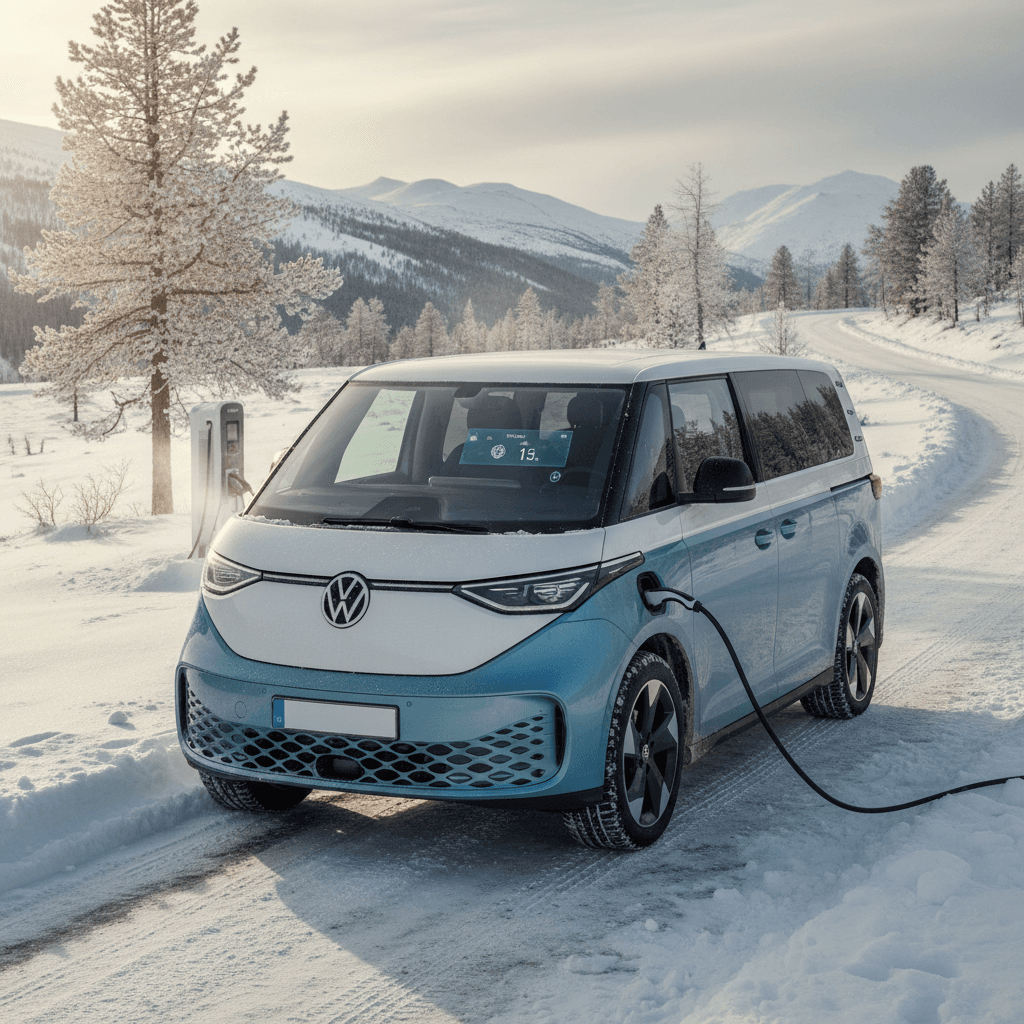
If you’re eyeing the retro-cool Volkswagen ID. Buzz as a family hauler or road-trip van, you’ve probably heard that EVs lose range in the cold. The natural follow-up question is: what Volkswagen ID. Buzz winter range loss percentage should you actually plan for when temperatures drop?
Bottom line up front
ID. Buzz winter range loss at a glance
Volkswagen ID. Buzz range and typical winter loss
Volkswagen publishes official range numbers using test cycles like WLTP (Europe) rather than EPA (U.S.) for the ID. Buzz today. Those numbers are optimistic for both highway and winter use. In the real world, especially in colder climates, you should scale those claims down. As a planning rule, assume the Volkswagen ID. Buzz winter range loss percentage will sit around 25–30% for most everyday cold‑weather driving and build your charging plan from there.
Why the Volkswagen ID. Buzz loses range in winter
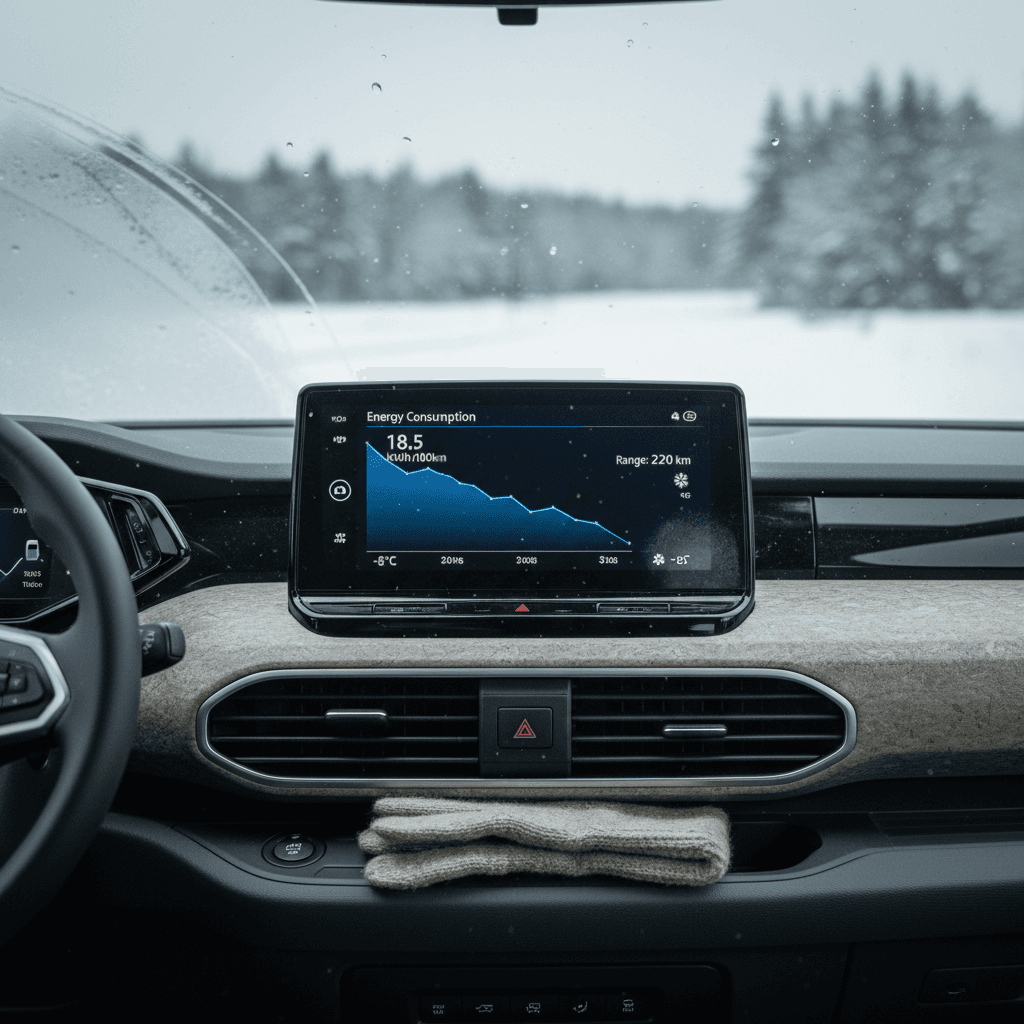
Cold weather doesn’t just "steal" miles from the ID. Buzz; it exposes how energy‑hungry a big, boxy van can be when conditions are rough. Three main mechanisms drive winter range loss in any EV, and the ID. Buzz has all three in play:
- Cold batteries are less efficient. Lithium‑ion cells in the ID. Buzz’s battery don’t like low temperatures. Internal resistance rises, so you get less usable energy and slower fast‑charging when the pack is cold.
- Cabin heating is expensive. Unlike a gas car that "wastes" heat from an engine, the ID. Buzz has to draw power from the battery to heat that large cabin volume. That can easily add 2–6 kW of continuous load on a frigid day.
- Higher drag from dense, cold air and winter tires. The ID. Buzz is a tall, upright van. Cold, dense air plus chunkier, softer winter tires mean more aerodynamic and rolling resistance, especially noticeable at highway speeds.
Think in terms of energy, not just miles
Real-world winter range and loss percentages
Because the ID. Buzz is still rolling out globally, winter test data is more limited than for long‑running models like the ID.4 or Model Y, but the patterns are consistent with other modern Volkswagen MEB‑platform EVs. Below is a practical look at how Volkswagen ID. Buzz winter range loss percentage shakes out across common scenarios.
Typical ID. Buzz winter range loss by scenario
These are planning figures, not guarantees, based on trends seen in similar VW EVs and early ID. Buzz owner reports.
| Scenario | Temp (°F) | Speed / Driving | Cabin Heat | Estimated Loss % | Approx. Usable Range* |
|---|---|---|---|---|---|
| Mild winter commute | 40–45 | Urban + suburban mix, 30–50 mph | Eco, 68°F | 15–20% | ~215–230 mi |
| Cold city errands | 25–32 | Stop‑and‑go, 20–40 mph | Comfort, 70–72°F | 20–30% | ~190–215 mi |
| Cold highway trip | 25–32 | Highway 65–70 mph | Comfort, 70–72°F | 30–35% | ~170–200 mi |
| Deep freeze highway | 5–15 | Highway 70–75 mph | Comfort, 70–72°F | 35–45% | ~150–180 mi |
| Eco‑max city use | 32 | City, 20–40 mph | Seat + wheel heat only | 10–20% | ~210–235 mi |
Always allow a safety buffer on top of these estimates, especially if traveling with kids or on rural routes.
*Assumes a long‑wheelbase ID. Buzz Pro with a usable battery capacity around the mid‑70 kWh range and WLTP‑style rating in the mid‑260s. Real U.S. EPA‑style ratings will typically be lower, but the percentage loss behavior across temperatures is similar.
These are planning estimates, not promises
7 factors that change your winter range loss
Two ID. Buzz drivers on the same road in the same weather can still see very different winter range loss percentages. Here are the biggest knobs you can turn, and what they do to your numbers.
Key drivers of Volkswagen ID. Buzz winter range loss
Understand these and you’ll predict your range far better than any guess from the dash.
1. Outside temperature
The jump from 40°F to 25°F is often worth another 5–10 percentage points of range loss. Below about 15°F, losses escalate quickly because the battery and cabin both need heavy heating support.
2. Average speed
The ID. Buzz is a large van; drag rises sharply with speed. Expect much higher loss at 70–75 mph than at 55–60 mph in the same temperature.
3. Aerodynamics & load
Roof boxes, bike racks, and a fully loaded cabin all amplify winter penalties. A loaded Buzz punching a bigger hole in dense air will lose more range than an empty one.
4. HVAC usage
Cranking the cabin to 74°F and relying on full-blast HVAC can add several kW of draw. Using seat and steering wheel heaters instead lets you keep the cabin set point lower.
5. Route profile
Long uphill grades or driving through slush and snow cost more energy than flat, clear pavement. In winter, even small hills and rough surfaces matter more.
6. Preconditioning
Preheating the cabin and battery while plugged in can dramatically reduce early-trip loss. Skipping this step forces the battery to spend valuable energy just warming itself.
A realistic target to aim for
Heat pump, climate settings, and cabin comfort
Volkswagen offers a heat pump on the ID. Buzz in many markets, and that option matters in cold climates. A heat pump moves heat rather than just creating it with resistive elements, which can significantly cut the energy needed to keep the big cabin warm above freezing.
How the heat pump helps
- Above ~25–30°F, a heat pump can reduce HVAC energy draw by a meaningful margin compared with pure resistive heating.
- In a large vehicle like the ID. Buzz, that can easily be worth 5–10% less total range loss on a long winter drive.
- Below the mid‑20s, the advantage shrinks as the system relies more on resistive backup.
Climate settings that waste range
- Setting cabin temp high (72–74°F) instead of 66–68°F.
- Heating the entire cabin when only front seats are occupied.
- Leaving the van idling in "comfort mode" for long waits instead of using seat heaters and shorter preheat sessions.
Use the "personal micro‑climate" strategy
Highway vs. city driving in the cold
EV owners often assume highway driving is always better for range. In winter, especially in the ID. Buzz, the opposite is often true: steady high‑speed driving can be your range worst‑case.
- At city and suburban speeds (20–45 mph), aerodynamic drag is lower and regenerative braking can recover some energy in stop‑and‑go traffic, even in cold weather.
- At highway speeds (65–75 mph), the big frontal area of the ID. Buzz fights dense, cold air. HVAC is working constantly, and there’s less regen per mile because you’re usually cruising steadily.
Expect bigger losses on winter highway road trips
Does winter hurt ID. Buzz battery health?
It’s important to separate temporary winter range loss from long‑term battery degradation. Cold itself is not the enemy of battery life; in fact, heat is much worse for aging. But how you use and charge your ID. Buzz in winter still matters for longevity.
Winter usage: what helps and what hurts battery health
Short answer: cold is mostly a comfort and convenience issue, not a death sentence for your pack.
Generally safe winter habits
- Parking in a garage or sheltered spot when possible.
- Preconditioning the battery while plugged in before fast charging.
- Using moderate state‑of‑charge (SoC) windows, e.g., 20–80% day‑to‑day.
- Accepting slower DC fast‑charging speeds when the pack is cold rather than forcing multiple back‑to‑back rapid sessions.
Habits to avoid even in winter
- Leaving the van parked at 0–5% SoC for long periods in the cold.
- Regularly charging to 100% and letting it sit for days, regardless of temperature.
- Hammering the battery with repeated DC fast charges from low SoC on multi‑day high‑speed road trips.
Good news for used ID. Buzz shoppers
Ready to find your next EV?
Browse VehiclesPlanning winter road trips in an ID. Buzz
The ID. Buzz is tailor‑made for long‑distance family trips, and winter doesn’t change that, it just demands more realistic planning. Here’s a simple framework you can use when plotting out winter drives.
Winter road-trip checklist for your ID. Buzz
1. Base your plan on 60–65% of ideal range
If your ID. Buzz claims ~260 miles in ideal conditions, plan winter legs assuming <strong>160–180 real miles</strong> between fast‑charges at highway speeds. That bakes in a 30–35% loss plus a cushion.
2. Add one extra charging stop
Instead of stretching for two long legs, break your trip into three shorter ones. Shorter intervals protect you from surprises like headwinds, detours, or kids demanding a warm cabin.
3. Use preconditioning whenever possible
If your route uses DC fast chargers that support battery preconditioning via navigation, make use of it. Arriving with a warm pack can cut charge times significantly in the cold.
4. Check network reliability, not just locations
In winter, a single out‑of‑service charger can be more than an inconvenience. Use apps that show <strong>recent check‑ins</strong> and status so you’re not betting your day on a dead station.
5. Watch elevation and weather, not just distance
Climbs, mountain passes, and headwinds can add meaningful energy use. If your trip involves big elevation changes, pad your plan even more than the generic winter percentage suggests.
6. Keep a "soft" buffer
Try to arrive at chargers with <strong>15–25% SoC</strong>, not 2–3%. That buffer is your insurance policy against closed exits, traffic jams, or unexpected reroutes.
Snow and slush change the math again
Buying a used ID. Buzz: winter-specific checks
If you’re looking at a used Volkswagen ID. Buzz, winter range is more than a comfort issue, it’s a key part of knowing whether the vehicle truly fits your lifestyle. Beyond the usual used‑EV checks, add these winter‑oriented items to your list.
Winter-focused checklist for used ID. Buzz shoppers
Confirm heat pump and cold‑weather packages
Check the build sheet or window sticker to see if the van has the <strong>heat pump</strong>, heated seats, heated steering wheel, and heated windshield. These options directly impact winter comfort vs. range trade‑offs.
Review real-world consumption history
If possible, look at trip computer data screens or app history from previous winters. How many kWh/100 km or mi/kWh was the previous owner seeing in cold months?
Get a battery health report, not just range guess‑o‑meter
Dashboard range estimates can be misleading. A professional <strong>battery health diagnostic</strong>, like the Recharged Score, gives you a much clearer view of usable capacity and degradation.
Inspect tires and wheel setup
Oversized wheels and sticky performance or aggressive winter tires can add drag. Understand what rubber and wheel size you’re inheriting; it matters on a tall EV van.
Ask about charging habits
Frequent DC fast charging from very low SoC can accelerate wear. Ask how the previous owner charged on long trips, and whether they typically kept the battery between ~20–80% during daily use.
Test a cold-start scenario if you can
If you’re shopping in winter, try a true cold start test drive: leave the van parked outside, then measure range estimate and consumption on a short loop with the cabin warmed as you’d normally use it.
How Recharged helps de‑risk winter range
Volkswagen ID. Buzz winter range FAQ
Frequently asked questions about ID. Buzz winter range
Key takeaways for ID. Buzz winter range
If you frame the Volkswagen ID. Buzz winter range loss percentage as a predictable operating characteristic rather than a defect, the van becomes much easier to live with year‑round. Assume roughly 20–35% loss for most winter driving, understand that 40%+ loss is possible at high speeds in deep cold, and plan your charging and climate settings around those realities.
For shoppers considering a used ID. Buzz, the real question isn’t whether it loses range in winter, all EVs do, but whether it delivers enough usable range for your routes when it’s cold, loaded with people and gear, and driven the way you actually drive. That’s where objective battery health data, realistic winter planning, and support from EV‑specialist retailers like Recharged make the difference between an anxious ownership experience and one that simply works.