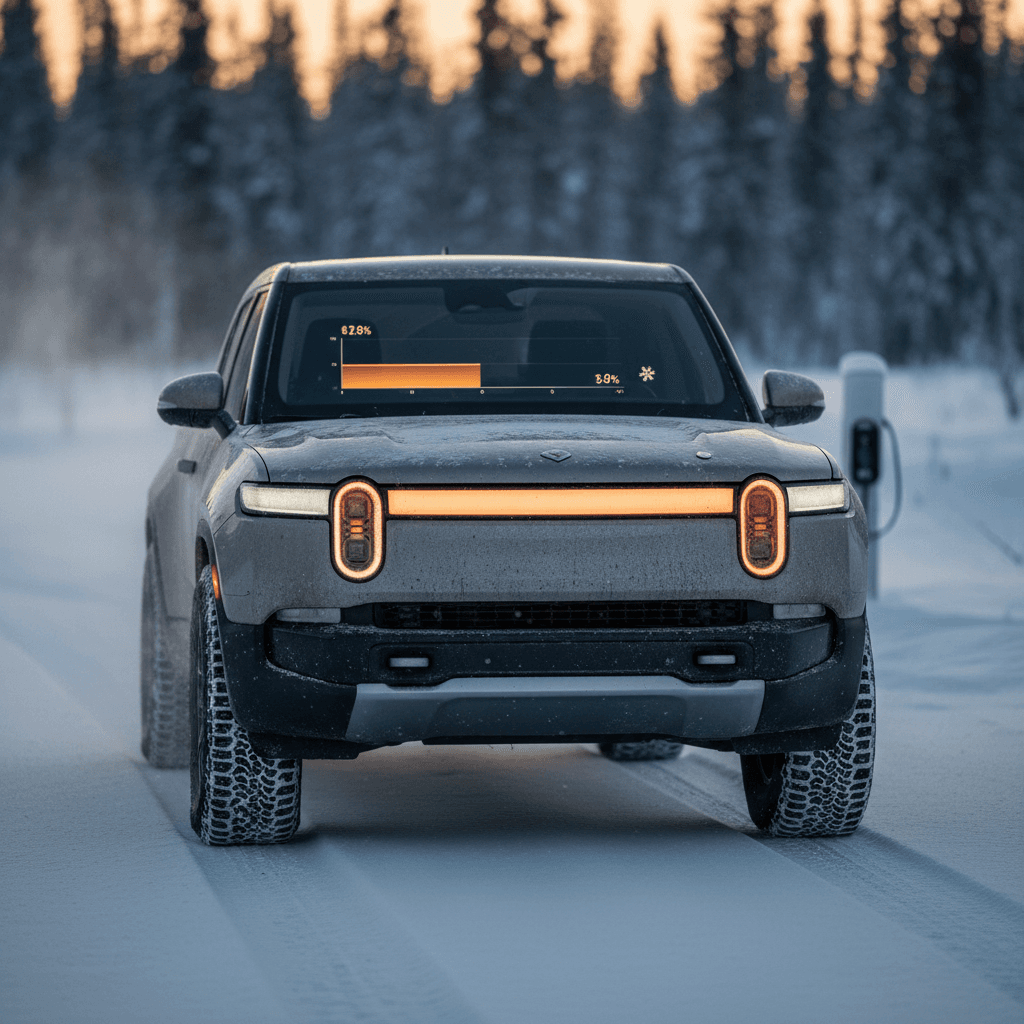
If you’re looking at a Rivian R1T and you live where winter actually means snow, ice, and single‑digit temps, you’re probably wondering: what’s the real Rivian R1T winter range loss percentage? Not the marketing number, but what you’ll actually see on the highway, on ski trips, or during frigid commutes.
Short answer
Rivian R1T winter range loss at a glance
Typical Rivian R1T winter range loss
Those are broad ranges, not promises. Your exact Rivian R1T winter range loss percentage will depend on where you live, how you drive, what tires you run, and how often you precondition. But these numbers give you a realistic starting point for planning.
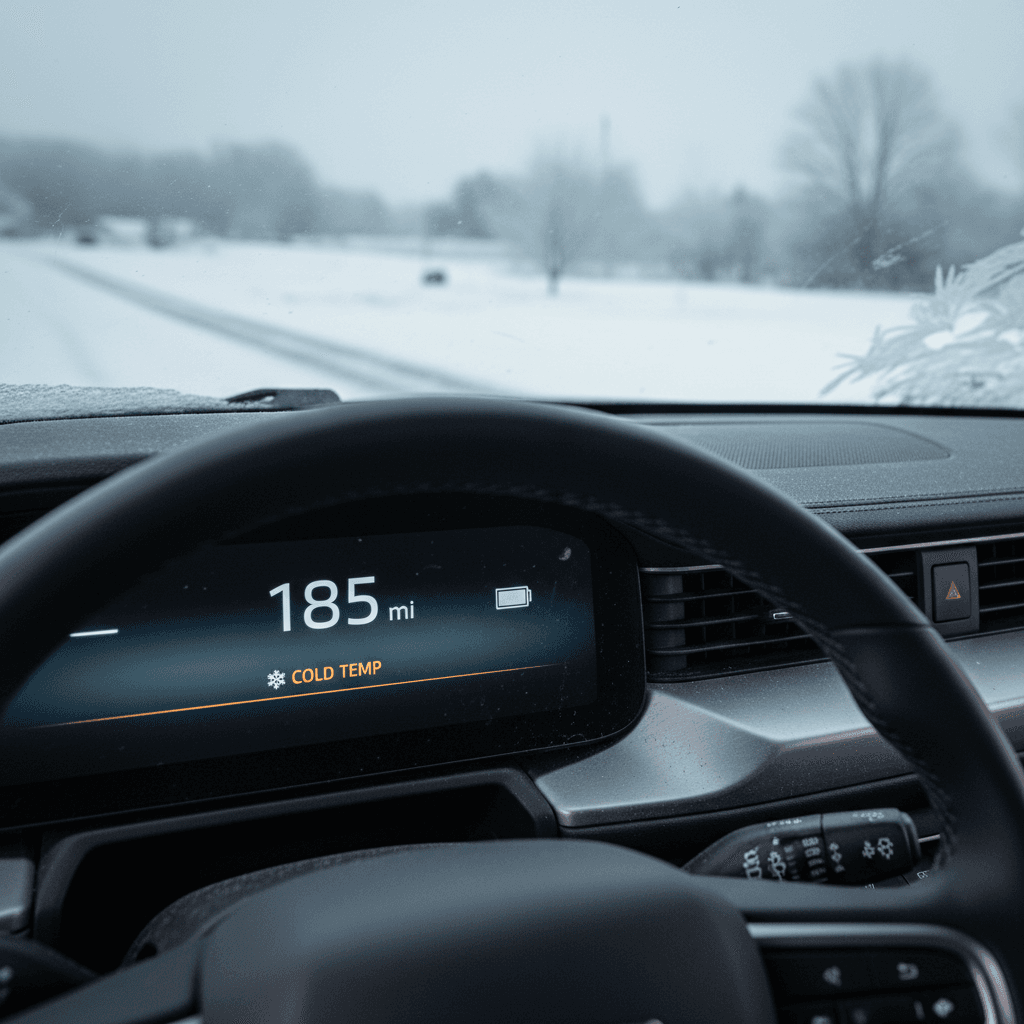
Why EVs – and the R1T – lose range in winter
Before we zoom in on the Rivian R1T, it helps to understand why any EV loses range in winter. The short version: batteries hate cold, humans like heat, and pushing a heavy, boxy truck through dense cold air just takes more energy.
- Cold batteries are less efficient. Lithium‑ion chemistry slows down in the cold, so you lose some usable energy until the pack warms up. That shows up as fewer miles per kWh and a lower temporary range estimate.
- Cabin and battery heating pull a lot of power. In sub‑freezing temps, the Rivian is heating the cabin, seats, steering wheel, and often the battery itself. On short drives, that fixed overhead dominates your consumption.
- Air is denser in winter. At 70 mph in 10°F air, aerodynamic drag is noticeably higher than on a 70°F day. In a tall, wide truck like the R1T, that drag really matters.
- Winter tires and slush add rolling resistance. Aggressive tread blocks, snow‑packed wheel wells, and unplowed roads all make your motors work harder.
- Short trips are the efficiency killer. Every time you start from cold, the truck has to re‑heat itself. Five miles to the store and back in 10°F weather will look terrible on your mi/kWh readout compared with a 150‑mile highway run.
Don’t panic about the “blue bar”
Real-world data: Rivian R1T winter range loss percentage
Let’s move from theory to numbers. Between controlled range tests, fleet‑level cold‑weather data, and thousands of owner reports, a clear picture of Rivian R1T winter range loss has emerged.
Typical Rivian R1T winter range loss by scenario
Approximate real‑world winter range loss percentages for common Rivian R1T use cases, assuming a well‑maintained battery.
| Scenario | Temp range | Driving type | Approx. range vs EPA | Estimated loss |
|---|---|---|---|---|
| Cool weather commuter | 25–40°F | Steady highway, preconditioned | 75–85% | 15–25% |
| Real winter mix | 10–25°F | Mixed city/highway, heated cabin | 65–80% | 20–35% |
| Deep cold road trip | 0–10°F | 70–75 mph highway, snow tires | 55–70% | 30–45% |
| Urban short hops | 0–25°F | 5–15 mile trips from cold soak | 50–70% | 30–50%+ |
Use these as planning baselines, not guarantees – your exact results will vary with terrain, wind, elevation, and driving style.
On the controlled‑test side, one long‑term R1T highway test saw range fall from about 250 miles in mild conditions to roughly 190 miles in sub‑freezing weather at similar speeds – about a 24% loss on that route. And broader cold‑weather datasets that include the R1T point to it retaining around 80% of its rated range across a mix of winter conditions.
Owner logs tell the same story. In forums and cold‑climate groups, experienced R1T drivers routinely report 20–35% loss on long trips with preconditioning, and 35–45% loss when they combine deep cold, snow tires, cargo boxes or racks, headwinds, and higher interstate speeds.
How this compares to other EVs
7 factors that change your R1T’s winter range loss
Two R1T owners can drive the same day in the same state and see drastically different winter range loss percentages. Here are the main variables that matter, and how you can use them to your advantage.
What actually moves your winter range number
These seven variables explain most of the spread you see in R1T owner reports.
1. Speed
2. How cold, and how long
3. Trip length & frequency
4. Tires, wheels, and road surface
5. Wind, elevation, and payload
6. Climate settings
7. Software, heat pump, and model year
The two biggest levers you control every day
How to estimate your own R1T winter range
You don’t need a spreadsheet to make winter drives predictable. Here’s a simple way to turn the Rivian R1T’s winter range loss percentages into practical planning numbers for your truck, your climate, and your driving style.
Quick method to estimate your cold-weather R1T range
1. Start from your EPA‑rated range
Look up your R1T’s official range based on pack, motors, and wheels. As a ballpark, many dual‑motor trucks with larger packs land in the 340–390 mile EPA range on street tires, with All‑Terrain options trimming that back.
2. Pick the right temperature band
If your winter is mostly 25–40°F, use a smaller loss factor. If you routinely see 0–15°F, use a larger one. You can use 20% for “cool,” 30% for “real winter,” and 40% for “deep cold” as conservative defaults.
3. Adjust for speed and tire setup
If you plan to run 75–80 mph on All‑Terrain or winter tires with a box or bikes on the roof, add another 5–10% loss to your estimate. If you’ll cruise around 65 mph on clear roads, you can stay closer to the base factor.
4. Apply the loss factor to your EPA range
Multiply your rated range by (1 – loss %). For example, a 350‑mile rated truck at a 30% winter loss gives you ≈245 miles of realistic winter range on a full charge for that trip.
5. Build a personal winter rule of thumb
After a few cold‑weather road trips, check your trip‑meter mi/kWh and distance versus battery percentage used. Turn that into your own rule, like “In January at 70 mph, I plan around 1.7 mi/kWh,” and use that going forward.
Example: Ski trip in real winter
You have an R1T with a rated range of 350 miles and you’re heading to a ski hill on a 15°F day, mostly highway at 70 mph with a cargo box.
- Base winter loss factor: 30% (real winter)
- Extra for speed + box: +5–10%
- Total planning loss: around 35–40%
350 miles × (1 – 0.35) ≈ 225 miles of realistic winter range. Plan your fast‑charge stops using that number, not the full EPA figure.
Example: 35°F highway commute
Same truck, but you’re driving 60 miles each way at 35°F with no roof gear and preheating while plugged in.
- Loss factor: around 20–25%
- Winter planning range: 350 × (1 – 0.25) ≈ 260 miles
- Your 120‑mile round‑trip is very manageable on a comfortable buffer.
Over a few weeks, you can refine that 20–25% based on your own trip‑meter data.
8 ways to minimize winter range loss in a Rivian R1T
You can’t negotiate with physics, but you can absolutely shape how hard winter hits your R1T’s range. Think of it as shifting from “winter surprise” to “winter management.”
Practical ways to protect R1T range in cold weather
You don’t need to use every trick every day – start with the easy wins and build from there.
1. Precondition while plugged in
2. Turn down cabin temp, turn up seat heat
3. Drop 5 mph on the highway
4. Use defrost sparingly
5. Store indoors when possible
6. Choose tires wisely
7. Don’t obsess over 100% charges
8. Plan charging with realistic assumptions
Safety first in deep cold
Planning winter road trips in an R1T
Used correctly, the R1T is a genuinely confidence‑inspiring winter road‑trip truck. But winter road‑tripping in any EV, especially a big one, rewards a bit more structure than hopping in a gas 4×4 and hoping every small‑town station is open.
Winter road-trip checklist for Rivian R1T owners
1. Build your route with winter assumptions
Use Rivian’s built‑in planner plus a third‑party tool that lets you input temperature and speed. Base legs on <strong>60–70% of EPA range</strong>, not the full number, especially if you’re climbing or running winter tires.
2. Precondition before DC fast charging
In cold weather, arriving at a fast charger with a cold battery can cut your charging speed dramatically. Use the navigation to a charger (which tells the truck to warm the pack) and, if needed, run climate preconditioning from the app.
3. Watch consumption live, not just the guess‑o‑meter
Monitor your trip mi/kWh and battery percentage used versus distance. If you’re trending worse than expected in the first 30–50 miles, adjust speed or consider a backup charger earlier in the route.
4. Have backups for critical chargers
In winter, a busy or offline DC fast charger can cause real stress. Identify at least one <strong>backup charging option</strong> (another DC site or a Level 2 stop) within your comfortable range buffer.
5. Account for elevation and weather
Climbs, passes, and lake‑effect snow matter. If your route crosses high terrain or an exposed plain on an especially cold or windy day, treat your initial estimate as optimistic and tighten your buffer.
6. Pack for the worst case
A charged phone, extra warm clothing, and a simple emergency kit are good practice in any vehicle. In an EV, they’re your hedge if you get stuck in a closure and need to idle for heat while you wait.
Reality check: It’s doable
Buying a used Rivian R1T if you live in a cold climate
If you’re shopping used, winter range is more than a comfort issue – it’s part of how you think about battery health, pack size, and total cost of ownership. The good news is that modern packs in well‑cared‑for R1Ts tend to hold up well, but you still want to go in eyes‑open.
Questions to ask about a used R1T
- Which battery and motor configuration? A Max or Large pack dual‑motor truck gives you extra buffer for winter, towing, or long rural stretches.
- What wheels and tires are included? 20" All‑Terrain or dedicated winter tires are great for traction but cost range. Knowing what’s mounted helps you interpret any winter logs or trip stories.
- How was it charged? A history heavy on DC fast charging isn’t ideal, but one that combines home Level 2 with periodic road‑trip fast charging is typical and usually fine.
- Any history of winter use? Cold‑climate owners can often tell you exactly what loss they saw on their typical winter routes.
How Recharged helps cold‑climate shoppers
Every used EV sold through Recharged includes a Recharged Score Report that digs into real battery health, charging history, and fair‑market pricing. For a winter‑bound R1T buyer, that means:
- Clear insight into usable capacity vs. when the truck was new.
- Expert guidance on how that translates into winter range in your climate.
- Help picking the right pack, wheels, and tires for ski‑town life, rural backroads, or long‑distance highway driving.
If you’re trading in a different EV or truck, Recharged can also provide an instant offer or consignment option, plus nationwide delivery so you don’t have to road‑trip your new R1T home in January if you don’t want to.
Rivian R1T winter range loss FAQ
Frequently asked questions about R1T winter range
Key takeaways: Living with R1T winter range loss
The Rivian R1T is one of the most confidence‑inspiring winter vehicles on sale – massive traction, adjustable ride height, and a deeply competent all‑wheel‑drive system. The trade‑off is clear: you give up a meaningful slice of rated range in real winter, especially in deep cold and at high speeds. But for most owners, that loss is predictable and manageable once you stop expecting summer‑day range in January.
Plan around a 20–40% Rivian R1T winter range loss percentage, use preconditioning and conservative speed on cold days, and treat 60–70% of EPA as your planning range for harsh winter trips. If you’re shopping used, lean on battery‑health data and real‑world winter stories rather than spec‑sheet fantasies. And if you want help translating all of that into the right truck for your climate and commute, Recharged can pair you with a used R1T whose battery health, pack size, and equipment actually match the way you’ll use it when the temperature drops.