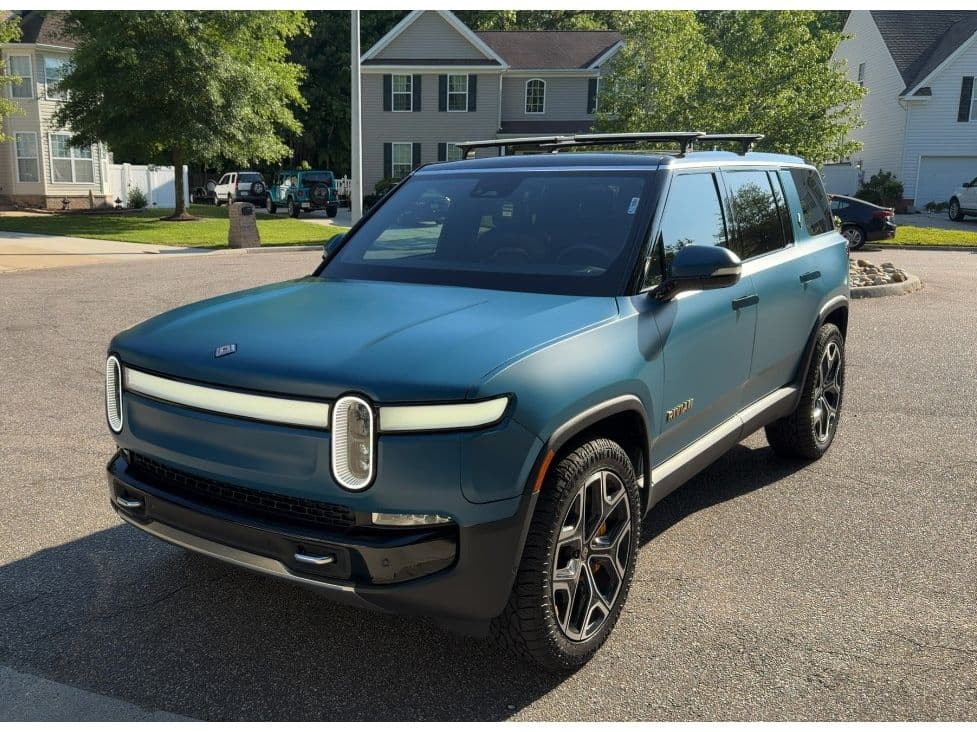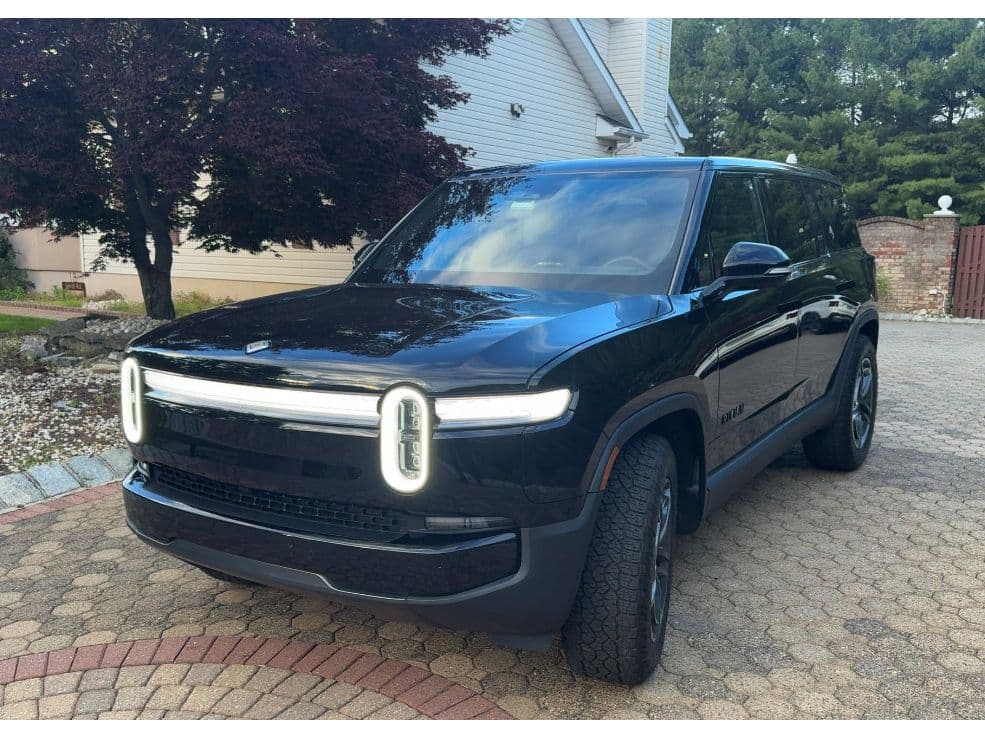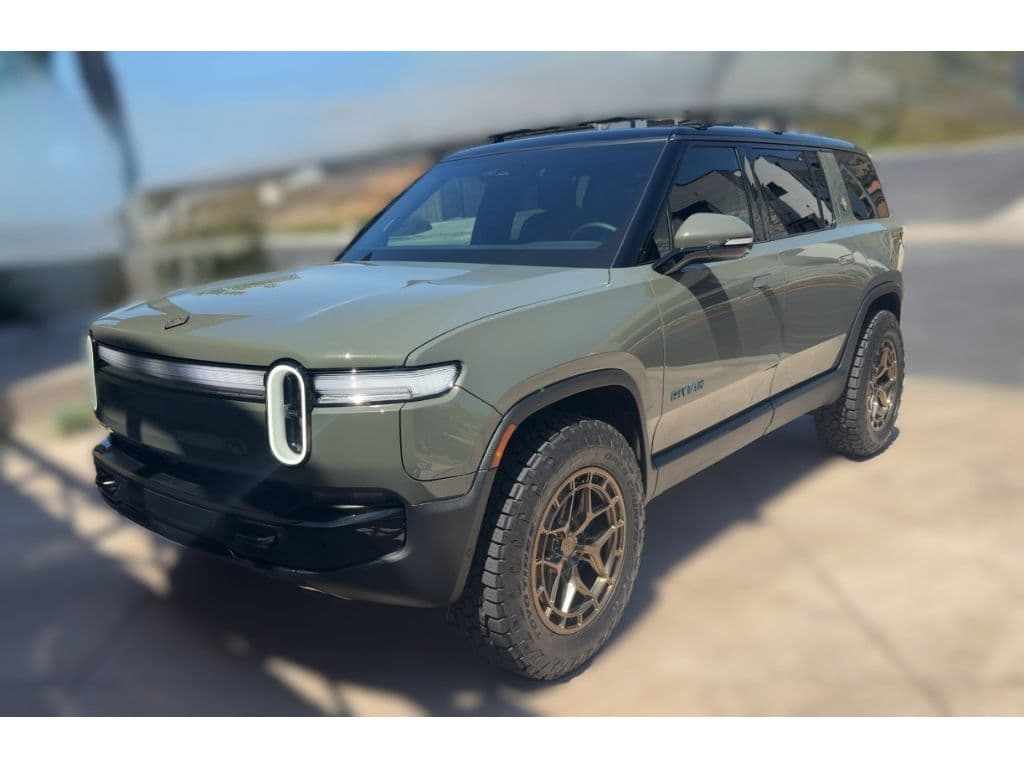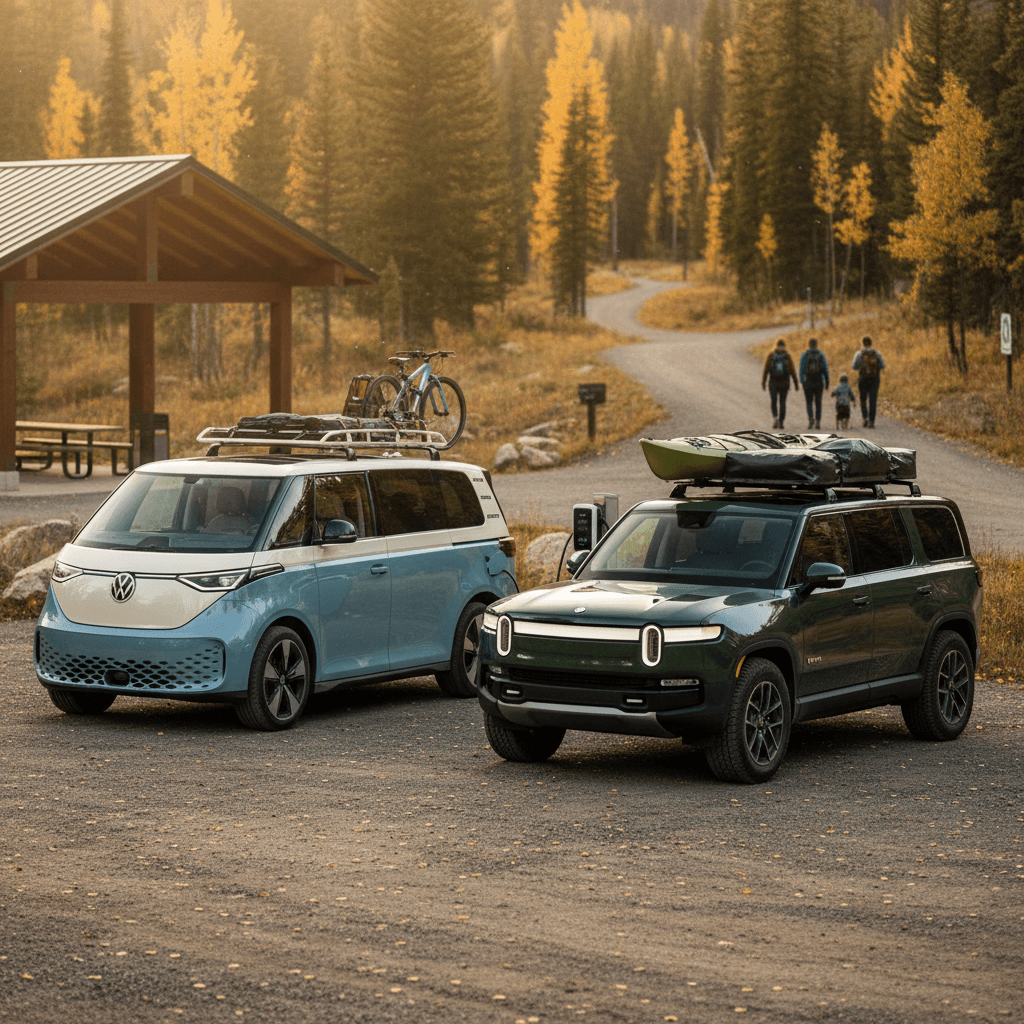
You don’t cross-shop the Volkswagen ID. Buzz and Rivian R1S by accident. You’re looking for a three-row electric family hauler with personality, not another anonymous crossover. The question is simple, Volkswagen ID. Buzz vs Rivian R1S, which is better? The answer depends less on 0–60 times and more on how your family actually lives: school runs, Costco raids, ski trips, trailheads, and everything in between.
Same idea, very different vibes
Headline numbers: ID. Buzz vs R1S
Volkswagen ID. Buzz vs Rivian R1S at a glance
Quick comparison: ID. Buzz vs Rivian R1S (U.S. models)
Approximate specs for current U.S. versions. Exact figures vary by wheel/tire choice, drive unit and options.
| Volkswagen ID. Buzz (US, 3-row) | Rivian R1S (2025+) | |
|---|---|---|
| Vehicle type | Electric minivan / MPV | Electric luxury SUV |
| Seating | Up to 7 | Up to 7 |
| Battery (usable, approx) | ~85 kWh | 92–142 kWh (Standard / Large / Max) |
| EPA range (best case) | ~231–234 miles | Up to ~410 miles (Dual Max) |
| Drive | RWD or AWD | Dual-motor or Tri-motor AWD |
| 0–60 mph (quickest trims) | ~5.7–6.0 sec (AWD est.) | Low-3s possible with performance setups |
| Max DC fast charge | ~200 kW | ~200–220 kW |
| Starting MSRP (new) | Low $60,000s | High $70,000s |
| Character | Family lounge on wheels | Off-roadable electric Range Rover analogue |
Always check the exact configuration you’re buying, especially on the used market, because range and performance can change dramatically with trims and wheel choices.
How to read this comparison
Who each EV is really for
ID. Buzz: The electric family room
The Volkswagen ID. Buzz is for people who secretly wanted a minivan but couldn’t bring themselves to say the word. It’s playful, retro and intentionally un-SUV. Think families who live in the city or close-in suburbs, haul kids more than kayaks, and rarely drive 300 miles in a day.
- Prioritizes comfort, space and style over extreme range.
- Easy step-in height for kids and grandparents.
- Sliding doors and a big hatch make daily life painless.
Rivian R1S: The adventure flagship
The Rivian R1S is an electric answer to the Lexus GX or Mercedes GLE, except quicker. It’s for households that tow, ski, camp, or just like to drive something that looks ready for Patagonia even when it’s only going to Target.
- Far more range, power and off-road hardware than the VW.
- Luxury cabin with a rugged, outdoorsy edge.
- Higher step-in, more commanding view, more capability.
Don’t confuse vibes with fit
Pricing: new vs used reality check
On paper, the Volkswagen ID. Buzz undercuts the Rivian R1S. In the real world, especially if you’re shopping used, things get more nuanced. Incentives, leases and early depreciation can scramble the math.
What you’re likely to pay
New MSRPs are just the opening bid. Used prices and incentives can narrow the gap.
Volkswagen ID. Buzz (new)
Volkswagen’s three-row ID. Buzz for the U.S. starts in the low $60,000s with generous standard equipment. Well-optioned examples quickly creep toward the high $60,000s.
VW and dealers have already leaned on leasing to make the Buzz more palatable, often passing along federal lease incentives even when a purchase wouldn’t qualify.
Rivian R1S (new)
A 2025+ Rivian R1S generally starts in the high $70,000s before options. Bigger battery packs, off-road packages and fancy paint can easily shove the sticker well past $90,000.
It feels like a luxury SUV in both execution and price. You pay for the range and performance.
Used market: the equalizer
Early Rivian R1S models have already done a lot of depreciating. On the used market, you can sometimes find a nicely equipped R1S for the price of a new or nearly new ID. Buzz.
Recharged specializes in used EVs, with a Recharged Score on every vehicle so you can compare battery health, pricing and features without guesswork.
Use total cost, not sticker, to compare
Range, battery and efficiency
Here is where the Rivian R1S politely removes the kid gloves and uppercuts the ID. Buzz. Volkswagen gives you charming sheetmetal, a decent-sized battery and middling range. Rivian hands you multiple battery options and real road-trip legs, if you’re willing to pay for them.
Battery and range comparison
Approximate figures for U.S. models; exact ratings depend on wheels, tires, and drivetrain.
| Volkswagen ID. Buzz | Rivian R1S | |
|---|---|---|
| Battery (usable, approx) | ~85 kWh | Standard ~92 kWh, Large ~109 kWh, Max ~141 kWh |
| EPA range (shortest) | ~230–231 mi (AWD) | ~270 mi (Dual Standard) |
| EPA range (longest) | ~234 mi (RWD) | Up to ~410 mi (Dual Max) |
| Typical highway range @ 75 mph (owner reports) | Often under 200 mi fully loaded | Much closer to rated range with bigger packs |
| DC fast charge peak | ~200 kW, ~25 min 10–80% in ideal conditions | ~200–220 kW, ~30–40 min 10–80% depending on pack |
| Energy use | Less efficient boxy shape | Heavy but clever software, better aero than its brick shape suggests |
Real-world range is always lower on cold days, at highway speeds and when fully loaded. Use these numbers as a starting point, not a promise.
If you road-trip, this is decisive
Space, comfort and practicality
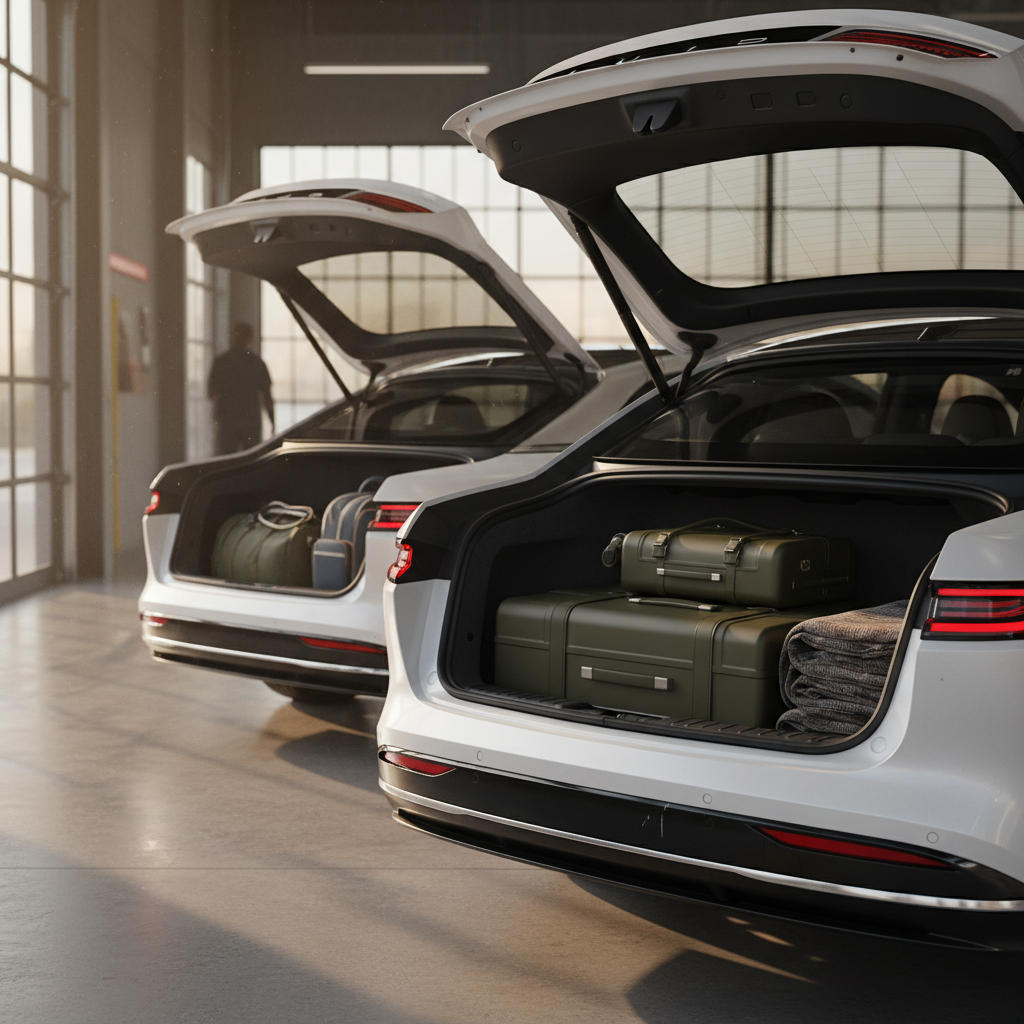
Both of these EVs can seat seven. Only one of them truly feels like a rolling living room. Rivian gives you a handsome, upright SUV cabin; Volkswagen gives you an airy, glassy lounge that happens to have wheels.
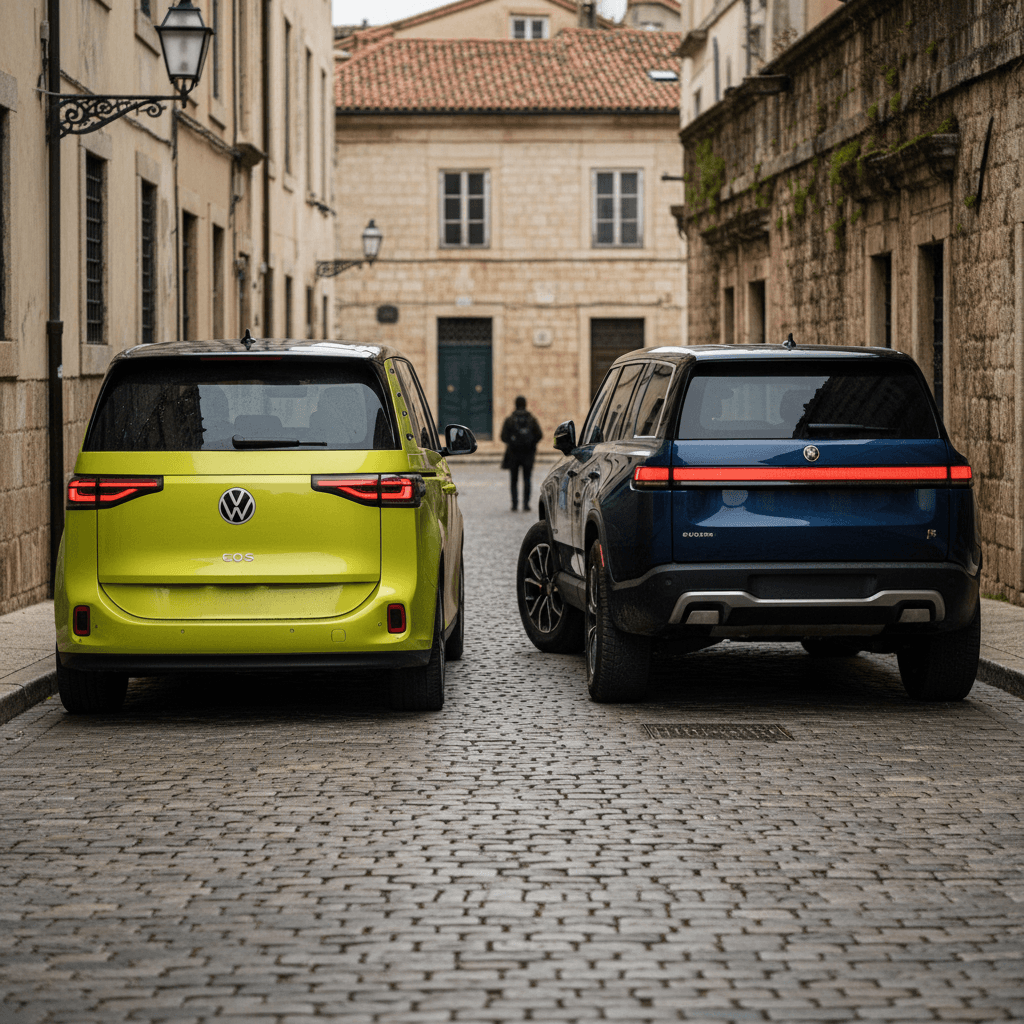
Interior experience: who does people-carrying better?
SUV vs van doesn’t tell the whole story.
Volkswagen ID. Buzz: living room on wheels
- Huge windows and light colors make the cabin feel larger than it is, great for passengers prone to carsickness.
- Sliding side doors and low, flat floor are fantastic for kids and older passengers.
- Three-row packaging emphasizes people over cargo; with all seats up, luggage space is modest but workable for day trips.
- The flat, squared-off rear makes loading strollers, bikes and storage bins painless.
Rivian R1S: luxury SUV with a third row
- Second row is genuinely roomy; third row fits adults for shorter trips but is tighter than the VW’s airy space.
- Cargo room with all three rows up is limited, but with the third row folded you get a long, useful load floor.
- Front seats are more sculpted and supportive, with a premium feel that the VW can’t quite match.
- Adjustable air suspension can kneel the vehicle to make loading kids and cargo easier.
For kid duty, the Buzz quietly wins
Performance, handling and off-road capability
There’s no polite way to put this: the ID. Buzz is not a performance vehicle. It’s quick enough for American traffic, but its mission is comfort. The R1S, by contrast, can be spec’d to out-drag some sports cars while fording streams and crawling over rocks.
Performance & capability snapshot
Approximate performance ranges for common configurations.
| Volkswagen ID. Buzz | Rivian R1S | |
|---|---|---|
| Power | ~282 hp RWD, ~330 hp AWD (approx.) | Dual-motor around mid-600 hp; tri-motor performance versions well above 900 hp |
| 0–60 mph | High-5s to ~7 sec depending on trim | Roughly 4–5 sec (dual) down to low-3s (tri/performance) |
| Drive layout | RWD or AWD | Standard AWD (dual or tri-motor) |
| Ride & handling | Comfort-first, tall and soft; minivan vibes | Adjustable air suspension, multiple drive modes; can feel like a sport SUV or a soft-roader |
| Off-road hardware | Light-duty soft-road at best | Real off-road chops: height-adjustable suspension, serious approach/departure angles, sophisticated traction control |
| Towing | Limited rating, more people-hauler than tow rig | Capable tow ratings with appropriate pack, but expect range penalty when towing |
Numbers vary by battery, motor and wheels. If you’re buying used, verify the exact drivetrain, Rivian in particular has introduced multiple motor and battery combos since launch.
Do you actually off-road?
Charging experience and road trips
Both of these EVs support DC fast charging in the ~200 kW neighborhood and Level 2 AC charging at home. The difference isn’t so much how they charge, but what that charging experience feels like when you’re three hours from grandma’s house with an impatient back seat.
Road-trip charging realities
1. R1S: Fewer stops, more buffer
With a Large or Max pack, the Rivian R1S lets you skip chargers the Buzz can’t ignore. That matters when a station is busy, broken or snowed in. You get to decide whether to stop; the Buzz sometimes decides for you.
2. Buzz: Fast enough, but range-limited
The ID. Buzz’s ~230-mile EPA range can melt to 170–190 miles at highway speeds with a full load. You’ll be planning relatively frequent DC fast-charge stops on long days, and you’ll want to be picky about stations.
3. Network and plug standards
Rivian has been building out its own Adventure Network along with access to large third-party networks. VW owners lean mostly on public CCS or NACS chargers depending on adapter support and future connector changes.
4. Home charging parity
At home, both behave like any other modern EV: a 40–48 amp Level 2 charger will comfortably refill either overnight. Where things diverge is your <strong>tolerance for long-distance driving</strong>.
If you live far from dense charging corridors
Tech, interior and everyday livability
Volkswagen has been busy fixing its software reputation, and the U.S.-spec ID. Buzz benefits from newer infotainment than early ID.4s. Rivian, meanwhile, ships something closer to a rolling smartphone, beautiful, sometimes quirky, occasionally laggy, but deeply integrated with the vehicle.
Cabin tech: strengths and annoyances
You’ll live with these systems every day; they matter more than 0–60 times.
Volkswagen ID. Buzz tech
- Large central touchscreen with updated VW software and illuminated climate sliders, better than the old system, but still menu-heavy.
- Good suite of driver-assistance features (adaptive cruise, lane centering, etc.) but a bit less polished than the best in class.
- Physical practicality wins: lots of storage cubbies, easy-to-clean materials, sensible controls once you learn them.
- Fewer over-the-air theatrics; your Buzz is unlikely to wake up one day with a totally new UI.
Rivian R1S tech
- Big, beautiful center display and slick graphics; a distinct Rivian design language that feels premium.
- Most controls, including climate and drive modes, are screen-based, which looks great but can be annoying on washboard roads.
- Frequent over-the-air updates add features and occasionally bugs. You’re buying into a fast-moving software ecosystem, for better and worse.
- Excellent driver-assistance tuning and robust camera views; a great partner on long drives.
Old-school ease vs new-school wow
Ownership costs and reliability
Neither of these is a cheap vehicle to own. Both are heavy, complex EVs from manufacturers still working through software and quality growing pains. The question is how predictable your ownership experience will feel.
- Energy costs: The Rivian’s higher consumption is offset by its bigger battery; per mile, costs can be similar if you mostly charge at home. On road trips, more kWh burned means bigger fast-charging bills.
- Maintenance: Both benefit from EV simplicity: no oil changes, fewer moving parts. Tire wear can be significant on the heavy, powerful R1S, especially with aggressive driving or all-terrain rubber.
- Repairs and service: Rivian’s service network is smaller but very owner-focused; VW has scale and dealer footprint but more variability in experience. For complex EV diagnostics, having a brand that understands high-voltage systems is crucial.
- Software and glitches: Early Rivian owners have seen the full spectrum, from flawless to gremlin-rich. VW’s software isn’t perfect either, but its bugs tend to be more traditional infotainment annoyances than existential vehicle issues.
How Recharged helps de-risk a used EV
Which is better for you? Real-world scenarios
Enough numbers. Let’s talk about how these things feel when your life is actually happening in them, kids wailing, weather misbehaving, phone at 3%.
Pick your life, then your EV
Urban / suburban family with short trips
Daily driving under 80 miles, mostly city and suburbs.
Parking garages, parallel parking and tight school pickup lanes.
Occasional regional trips, few 500+ mile marathons.
<strong>Better fit:</strong> Volkswagen ID. Buzz. It’s easier to live with, more approachable, and its modest range is rarely a limitation.
Road-trip-heavy family
Multiple long highway trips per year, 300–600 miles per day.
Varying climates, from summer heat to winter storms.
Prioritize fewer, shorter charging stops and a big buffer.
<strong>Better fit:</strong> Rivian R1S, ideally with Large or Max pack. Range and charging flexibility outweigh the Buzz’s charm.
Outdoor and off-road enthusiasts
Trails, campsites, ski slopes and dirt roads in the itinerary.
Occasional towing: small camper, boat or utility trailer.
Need confident snow and rough-road performance.
<strong>Better fit:</strong> Rivian R1S, no question. This is what it was built to do.
Style-forward, experience-first driver
You want something that makes people smile in parking lots.
You care more about vibe than quarter-mile times.
Your longest regular drive is to the next metro area, not across three states.
<strong>Better fit:</strong> ID. Buzz. It’s a rolling conversation piece and a surprisingly relaxing commuter.
Buying a used ID. Buzz or Rivian R1S
Both vehicles can make excellent used buys if you know what you’re looking at. The catch is that they’re both relatively new to the U.S., and their hardware has already evolved, especially Rivian’s.
Key checks when shopping used
1. Confirm battery pack and motor configuration (R1S)
A 2025+ R1S could be Standard, Large or Max pack, with dual or tri motors. Range and performance swing dramatically. Verify the exact configuration from the build sheet or vehicle info screen, not just the window sticker photo in a listing.
2. Check real battery health
Range ratings assume a healthy pack. A quality used listing should include third-party battery diagnostics. Every vehicle on Recharged gets a <strong>Recharged Score</strong> with verified battery health so you know whether that 300-mile R1S still behaves like one.
3. Inspect for off-road use (R1S)
If a previous owner used their R1S as intended, look closely for underbody scrapes, suspension wear and tire damage. Off-road use isn’t a red flag by itself, but you want to ensure it was done responsibly.
4. Look for software and recall history
Both VW and Rivian have been issuing updates and service campaigns. Ask for service records and confirm major software and hardware updates are current. A vehicle that’s been maintained at the dealer or service center is almost always worth a premium.
5. Verify charging accessories
Make sure the car comes with its OEM charging cable, any adapters and tow hook accessories. Replacing those out of pocket is not cheap, especially on a premium EV.
Range and performance numbers are table stakes. What matters is how calmly an EV lets you move your life around, kids, dogs, gear and all, without you having to think about it.
FAQ: Volkswagen ID. Buzz vs Rivian R1S
Frequently asked questions
Bottom line: ID. Buzz vs Rivian R1S
If you strip away the marketing and mood lighting, the choice between the Volkswagen ID. Buzz and Rivian R1S comes down to how far, how often and with whom you drive. The R1S is the clear winner for range, performance, off-road confidence and long-haul comfort; it’s the EV you buy when you want to go far and fast with all your stuff. The ID. Buzz is the one you buy when you want every errand and school run to feel a little more human, a little more fun, and you’re realistic about your need for range.
In other words: the Rivian R1S is better for crossing states; the ID. Buzz is better for crossing town. If you’re shopping either one used, a platform like Recharged, with verified battery health, transparent pricing and EV-specialist support, can keep this from becoming an expensive science experiment. Pick the vehicle that matches your life today, not the one you imagine you might live someday, and you’ll be happy every time you unplug.