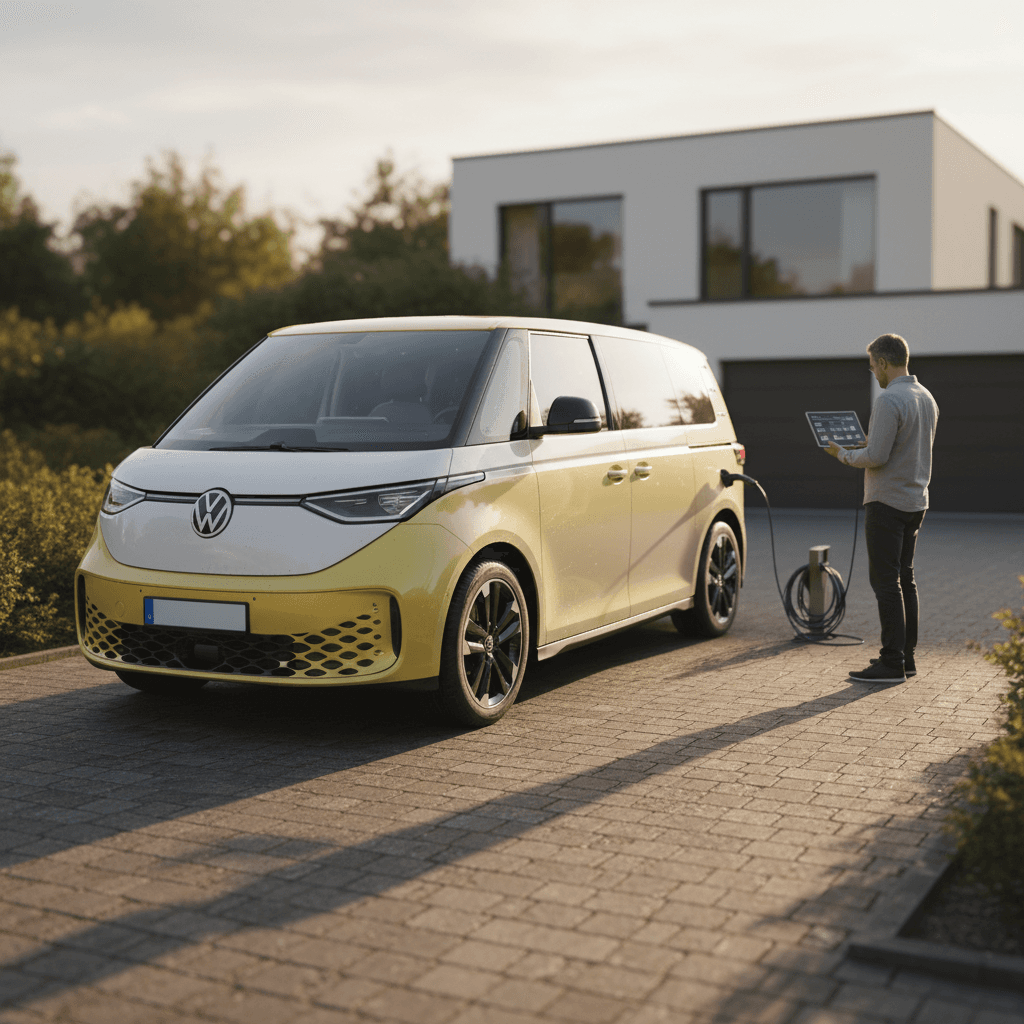
If you’re eyeing that retro‑cool electric van, you’re probably also wondering how the Volkswagen ID. Buzz will hold its value after 3 years. Will it be a modern classic that stays strong on the used market, or another early EV that takes a steep depreciation hit?
Quick reality check
Why VW ID. Buzz 3‑Year Value Is Hard to Pin Down (Today)
Before we talk numbers, it’s important to understand the context. The ID. Buzz reached U.S. buyers starting with the 2025 model year, after launching earlier in Europe. That means a U.S.‑spec Buzz won’t even be three years old until roughly late 2027 or 2028. Any 3‑year projections you see today are just that, projections, not actual auction data.
- The ID. Buzz is a niche vehicle: an electric van with strong emotional appeal but a relatively small audience.
- Volkswagen has already said it will skip the 2026 U.S. model year and jump from 2025 to 2027, which can spook some shoppers and affect perceived stability.
- The broader EV market is in flux, with falling new‑EV prices, bigger incentives, and rapid improvements in range and charging tech.
Why that matters for you
How Much Will a VW ID. Buzz Be Worth After 3 Years?
Let’s get to the heart of the question: What is a Volkswagen ID. Buzz likely to be worth after 3 years? Because the real‑world data set is small, the best we can do is blend third‑party depreciation forecasts with what we know about VW EVs and high‑demand niche vehicles.
Projected 3‑Year Value Range for the Volkswagen ID. Buzz
Some independent residual models estimate that an ID. Buzz could lose roughly $9,000–$10,000 in value over the first 3 years on an average‑priced example. That works out to around 35–45% depreciation depending on incentives, mileage, and condition.
Think in percentages, not just dollars
What Drives Volkswagen ID. Buzz Value After 3 Years?
Key Forces That Shape ID. Buzz 3‑Year Value
Some you control, some you don’t, but they all matter.
1. Demand for quirky EV vans
The ID. Buzz isn’t a commodity crossover; it’s a lifestyle vehicle. If the van‑life and family‑EV audience keeps loving it, that emotional pull can support stronger resale than its raw specs might suggest.
2. Battery health & range
Real‑world range and battery degradation will be watched closely. If the Buzz proves stable over its first 3–5 years, used‑market confidence (and values) will benefit.
3. Charging & tech updates
Newer EVs keep offering more range, faster charging, and more software updates. If VW rolls out a major refresh or longer‑range version quickly, early Buzz models could look outdated, and cheaper, more quickly.
Other Factors That Influence 3‑Year ID. Buzz Value
These can push your individual van above, or below, the averages.
Mileage & use case
Heavy miles (e.g., ride‑share, delivery, or business use) will pull your 3‑year value down. A garage‑kept, lightly used family hauler will sit near the top of the value band.
Accident & service history
A clean CARFAX, documented maintenance, and no air‑suspension or high‑voltage repairs will help your particular Buzz stand out when it’s time to sell or trade.
New‑car incentives at that time
If Volkswagen is heavily discounting new ID. Buzz models three years from now, used prices will feel that pressure. This has already happened with several other EVs.
How the ID. Buzz Compares to Other EVs and Vans
Typical 3‑Year Value Patterns: ID. Buzz vs. Alternatives
These aren’t hard promises, just a way to position the ID. Buzz against vehicles you might be cross‑shopping.
| Vehicle | Segment | Typical 3‑Year Value Retention* | What Usually Drives It |
|---|---|---|---|
| Volkswagen ID. Buzz | Electric van | ≈55–65% (early projection) | Niche appeal, limited supply, unknown long‑term reliability |
| Volkswagen ID.4 | Compact electric SUV | ≈50–55% | Aggressive discounts, mainstream competition, improving tech |
| Gas minivan (Sienna/Odyssey) | Family minivan | ≈60–70% | Broad demand, proven reliability, lower new‑car incentives |
| Premium 3‑row EV SUV (e.g., Model X) | Large EV SUV | ≈55–65% | High new prices, strong brand pull, tech updates |
Projected value retention assumes normal mileage and condition, with incentives reflected in the real purchase price where applicable.
About the numbers
Lease vs. Buy: What Makes Sense If You’re Worried About Value
One of the biggest decisions you’ll make with an ID. Buzz is whether to lease or buy. Because 3‑year value is still uncertain, the right strategy depends a lot on your risk tolerance and how long you plan to keep the van.
Why a lease can make sense
- Residual risk is on the bank. If the ID. Buzz falls faster than expected, you can walk away at the end of the term.
- Tax credits may be rolled into the lease. In many cases the lessor can capture federal incentives and use them to offset payments.
- Good fit for 3‑year plans. If you know you’ll outgrow the van, leasing lines up neatly with a 36‑month horizon.
When buying might be smarter
- You’ll keep it 6–10 years. In that case, 3‑year value swings matter a lot less than long‑term reliability and total cost of ownership.
- You negotiate a big discount. If you buy well below MSRP, your effective depreciation shrinks dramatically.
- You believe in the Buzz’s cult appeal. If the van becomes a modern classic, later‑year values could surprise to the upside.
Watch the fine print on leases
How Battery Health Impacts 3‑Year ID. Buzz Value
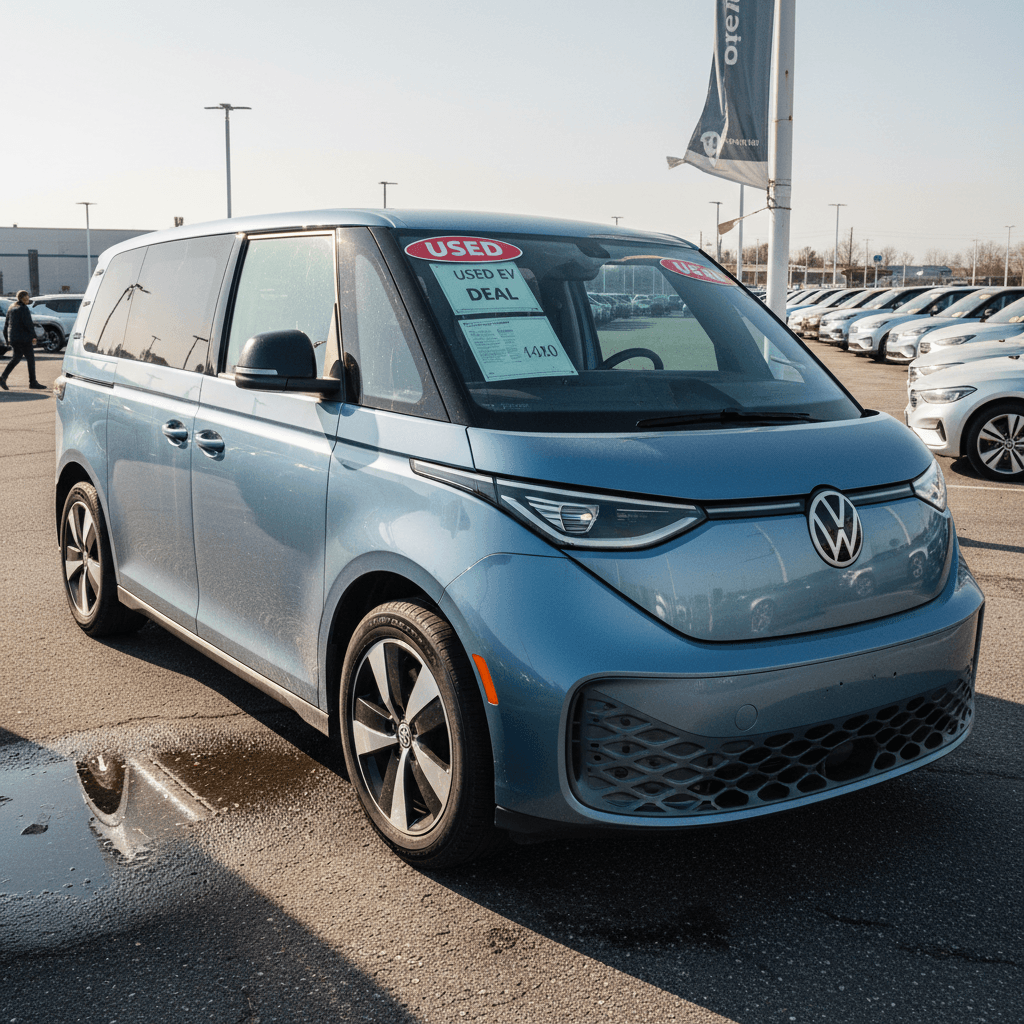
On any used EV, battery health is the headline. A 3‑year‑old ID. Buzz whose pack still delivers close to its original range will be worth meaningfully more than an identical van that’s lost a big chunk of usable capacity.
- Early‑life degradation on modern EV batteries is usually modest, but extreme fast‑charging habits and hot climates can accelerate wear.
- Shoppers are becoming savvier; many will ask specifically about state of health (SoH) or want a third‑party battery report.
- If competing EVs are getting longer‑range packs, a Buzz that has lost range will feel older before its time, and command a lower price.
Where Recharged fits in
7 Practical Ways to Protect Your ID. Buzz’s Value
Owner checklist: Give your ID. Buzz the best shot at a strong 3‑year value
1. Keep mileage in check
Depreciation models assume about 10,000–12,000 miles per year. If you’re doubling that, expect your 3‑year value to sit at the bottom of the typical range.
2. Baby the battery
Favor Level 2 charging at home, avoid frequent 0–100% fast‑charge sessions, and don’t leave the van sitting for long periods at 100% or near empty.
3. Stay on top of software updates
Volkswagen will continue to refine charging curves, infotainment, and driver‑assist features. Keeping your van up to date helps it feel less "old" to a used‑market buyer.
4. Document all maintenance
Even though EVs need less service than gas vans, keep receipts for tire rotations, brake checks, and any warranty work. A paper trail makes your Buzz easier to sell or trade.
5. Avoid major cosmetic damage
Dents, interior stains, and worn upholstery can knock thousands off a specialized vehicle like the Buzz. Consider seat covers if you haul kids, pets, or work gear.
6. Think twice before heavy mods
Lifts, oversized wheels, or custom wraps might be your style, but they often narrow the buyer pool and hurt resale. Keep mods reversible where possible.
7. Time your exit smartly
If you plan to sell around year three, try to do it before a major refresh or new battery option hits showrooms, which can drag down values on earlier builds.
How Recharged Helps You Shop Smarter for a Used ID. Buzz
If you’re waiting for the Volkswagen ID. Buzz to show up on the used market, you’ll be shopping in a segment with limited supply and a lot of question marks. This is where having objective data and EV‑savvy guidance matters as much as the vehicle itself.
What You Get When You Shop an ID. Buzz Through Recharged
Less guessing, more clarity, especially around value.
Recharged Score battery report
Each used EV listing on Recharged comes with a Recharged Score Report that shows verified battery health, charging history signals, and projected longevity, so you’re not guessing about range loss.
Fair market pricing insights
Our pricing tools look at current market conditions, incentives on new EVs, and comparable sales to help you understand whether a particular Buzz is fairly priced for its age and mileage.
EV‑specialist support
You can talk with EV‑focused specialists, not just general salespeople, about depreciation, battery health, home charging, and whether a used Buzz fits your budget and lifestyle.
Ready to find your next EV?
Browse VehiclesRecharged also offers financing, trade‑ins, instant offer or consignment options, and nationwide delivery, so when the right Buzz shows up, you can move quickly, and with more confidence about what it should be worth 3 years down the road.
Volkswagen ID. Buzz 3‑Year Value: FAQ
Frequently Asked Questions About 3‑Year ID. Buzz Value
Bottom Line: Is the ID. Buzz a Safe Bet After 3 Years?
No one can tell you today, with certainty, exactly what a Volkswagen ID. Buzz will be worth after 3 years. The model is too new, the EV landscape is changing too quickly, and Volkswagen itself is still fine‑tuning its U.S. strategy. But when you look at forecasts, comparable vehicles, and the Buzz’s unique personality, a clear picture emerges: it’s unlikely to be a rock‑bottom depreciator, and it has a decent shot at holding value a bit better than more anonymous EVs, especially if real‑world battery performance proves solid.
If you plan to move on in roughly three years, lean on tools that help you manage risk: consider leasing, negotiate hard on the front‑end price, and protect the battery and bodywork like the investment they are. And when you’re ready to shop the used market, platforms like Recharged, with verified battery diagnostics, fair‑value pricing, and EV‑savvy guidance, can turn a fuzzy 3‑year "maybe" into a decision you can feel good about long after the new‑car smell fades.