If you’re eyeing Volkswagen’s electric van, a natural question is: how much does Volkswagen ID. Buzz service cost over the years? The good news is that EVs like the ID. Buzz typically cost less to maintain than comparable gas vans, but that doesn’t mean service is free, or predictable, if you don’t know what you’re walking into.
Quick answer
ID. Buzz service cost overview
Typical Volkswagen ID. Buzz service and maintenance costs
Think of ID. Buzz service costs in three buckets: 1. Scheduled maintenance – inspections, filters, fluids and software checks. 2. Wear items – tires, brake pads/rotors, wiper blades, cabin air filters. 3. Unexpected repairs – rattles, electronics glitches, HVAC parts and the like. Because there’s no engine oil, spark plugs, timing belts or exhaust system, total maintenance cost is typically lower than a comparable gas minivan or full‑size SUV. But the ID. Buzz is a large, heavy EV on big tires, so you’ll still want to budget realistically.
What servicing a Volkswagen ID. Buzz actually involves
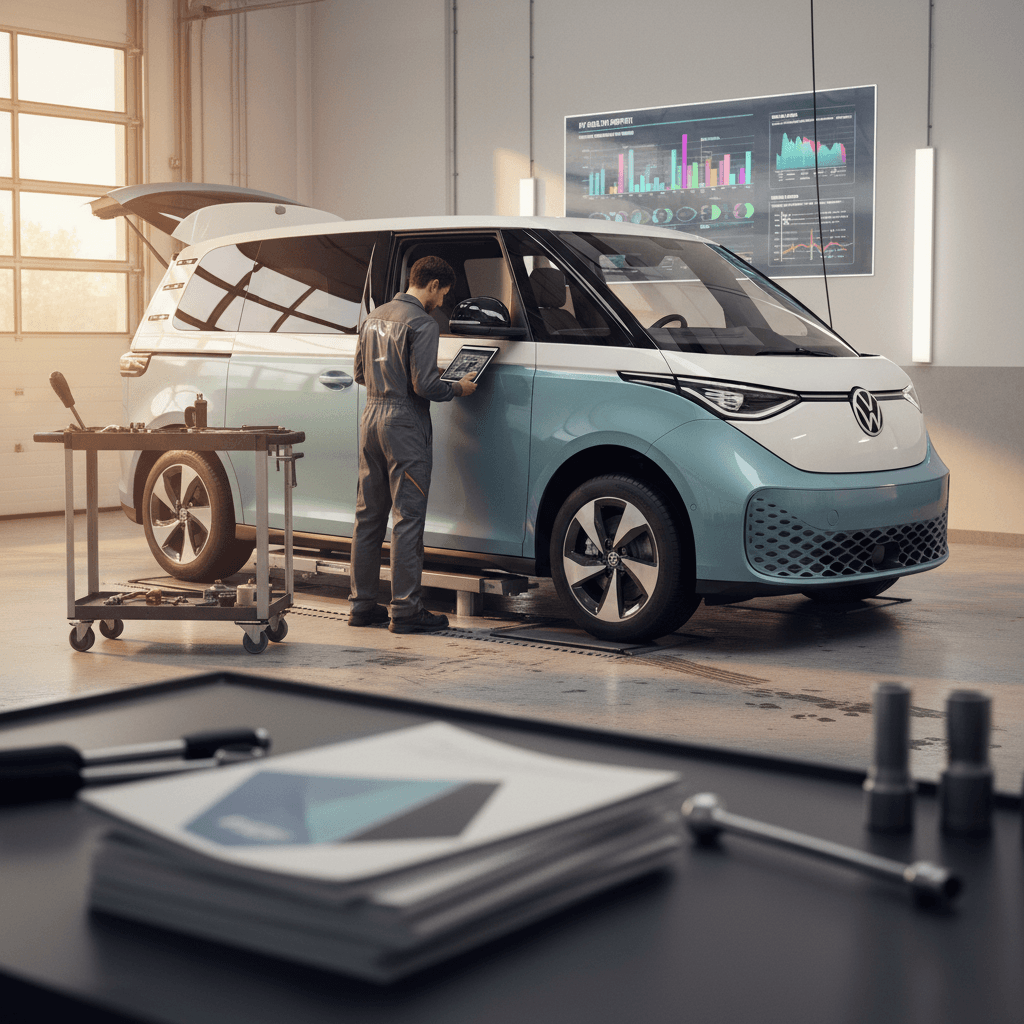
The best way to understand ID. Buzz service pricing is to first understand what’s on the menu. A typical scheduled visit at a VW dealer includes things like:
- Multi‑point inspection (suspension, steering, underbody, high‑voltage components visual check)
- Software and control‑unit checks, plus updates or recalls as needed
- Cabin air filter inspection or replacement
- Brake system inspection (pads, rotors, fluid condition, parking brake operation)
- Tire rotation and tread/wear pattern check
- 12‑volt battery test
- Cooling system level check for the battery and power electronics
- Wiper blades, lights, HVAC and general functionality check
Why EV services still matter
Factory free maintenance and warranty coverage
New U.S.-market Volkswagens, including the ID. Buzz, are bundled with Carefree Maintenance, which covers your first two scheduled services. For most owners, that works out to roughly the first 2 years or 20,000 miles of basic maintenance, whichever comes first.
What Volkswagen covers on a new ID. Buzz
Understanding your included benefits before you start paying out of pocket
Carefree Maintenance
2 years/20,000 miles of scheduled maintenance on new VW models typically covers the first two services. On an ID. Buzz, that usually means baseline inspections, tire rotation and filters at year 1 and year 2.
New‑vehicle warranty
A typical VW new‑vehicle limited warranty is 4 years/50,000 miles, covering many defects in materials or workmanship. It doesn’t make wear items free, but it can absorb early component failures.
High‑voltage battery
The ID. Buzz high‑voltage battery is generally backed by an 8‑year/100,000‑mile warranty against excessive capacity loss and defects, helping protect you from the single most expensive EV component.
Prepaid maintenance plans
Scheduled service costs by interval
Service pricing always varies by dealer and region, but based on menu pricing from VW stores and what we see on similar ID. family vehicles, you can build a realistic picture of how much ID. Buzz service costs once you’re beyond the free‑maintenance window.
Estimated Volkswagen ID. Buzz scheduled service costs
Typical U.S. dealer pricing once free Carefree Maintenance is used up. Actual quotes will vary, use this as a planning tool, not a contract.
| Service interval | Approx. mileage/time | What’s usually done | Estimated cost at dealer | Notes |
|---|---|---|---|---|
| Service 1 (often free) | 10,000 mi / 1 year | Multi‑point inspection, software check, tire rotation, top‑offs | $0–$250 | Covered by VW Carefree Maintenance on new vehicles; used‑vehicle buyers should budget the paid amount. |
| Service 2 (often free) | 20,000 mi / 2 years | Repeat Service 1, cabin air filter replacement, brake check | $0–$300 | Typically the second Carefree service; price applies if out of coverage. |
| Service 3 | 30,000 mi / 3 years | Inspection, rotation, filters, more detailed suspension and steering checks | $250–$400 | Your first fully paid service on a new vehicle if you stay in‑network. |
| Service 4 | 40,000 mi / 4 years | Repeat Service 3 plus brake fluid replacement | $350–$450 | Brake fluid replacement adds labor and cost. |
| Service 5+ | 50,000+ mi | Intervals repeat, with occasional coolant checks and additional inspections | $250–$450 | Higher‑mileage visits often coincide with tires and brakes. |
Assumes average driving and no major additional repairs. Taxes and shop fees not included.
Dealer vs. independent EV shop
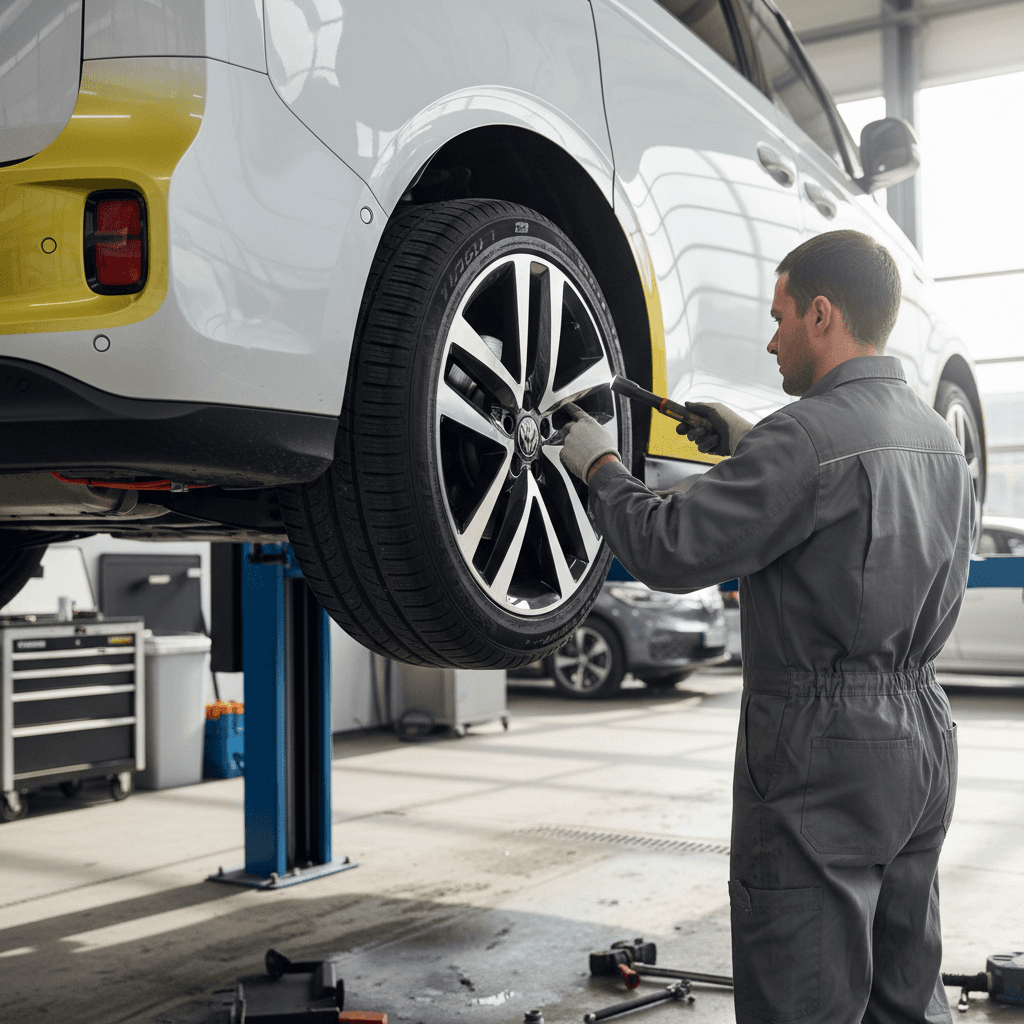
Common wear items: tires, brakes and more
Where ID. Buzz owners really feel ongoing costs isn’t the basic inspection, it’s the wear items that come with a heavy, three‑row electric van. Budgeting for these keeps your total cost of ownership realistic.
Typical ID. Buzz wear‑item costs
Approximate U.S. pricing at mainstream tire and repair shops
Tires
The ID. Buzz rides on large, EV‑rated tires. Expect roughly $250–$350 per tire for quality replacements, or $1,000–$1,400 per set mounted and balanced. Aggressive driving or frequent highway miles may shorten life to 25,000–35,000 miles.
Brakes
Thanks to regenerative braking, pads and rotors last longer than in gas vans, but weight still matters. Plan for $350–$700 per axle at a dealer when pads and rotors finally need replacement, often north of 60,000 miles for gentle drivers.
Fluids & filters
Brake fluid flushes can run $150–$250. Cabin filters are often $60–$120 installed. Coolant for the battery/power electronics is long‑life; replacement is uncommon in the first several years unless there’s a repair.
Save money with rotations
Repairs outside normal service: what to budget for
Because the ID. Buzz is relatively new, long‑term repair data is limited, but we can triangulate from ID.4 and other VW EVs plus early owner reports. The pattern is familiar: EV powertrains themselves are generally robust, while electronics and comfort features generate most of the surprise bills.
Common out‑of‑warranty repair scenarios and cost ranges
Ballpark U.S. pricing based on similar VW EVs and dealer labor rates. Your local quotes may differ.
| Repair type | Example issue | Estimated cost range | When it tends to appear |
|---|---|---|---|
| Diagnosis visit | Warning light, drivability concern | $150–$250 | Any time; some visits covered under warranty depending on cause. |
| Electronics/software fix | Infotainment glitches, charging‑port sensor replacement | $250–$800 | Often 3–7 years out, depending on usage and climate. |
| HVAC components | Blower motor, A/C sensor or valve | $400–$1,200 | Common in older vehicles; limited Buzz data so far. |
| Suspension wear | Bushings, links, shocks/struts | $600–$1,500 | Higher‑mileage vans, rough roads or heavy loads accelerate wear. |
Always get a written estimate before approving non‑warranty repairs.
High‑voltage repairs are specialized
How ID. Buzz service costs compare to other EVs
Compared with VW ID.4 and other compact EVs
Mechanically, the ID. Buzz shares a lot with the ID.4, so routine service costs are in the same ballpark. Where the van can be more expensive is tires, bigger, higher‑load tires simply cost more, and some suspension components because of the added weight and three‑row packaging.
On the positive side, many independent shops are now comfortable working on ID.4s, and that expertise will spill over to the Buzz as the fleet ages.
Compared with gas minivans and SUVs
If you cross‑shop the ID. Buzz against a gas‑powered minivan or three‑row SUV, its scheduled maintenance costs are generally lower. There’s no engine oil, transmission service, spark plugs or exhaust system to maintain, and brake wear is reduced by regeneration.
The main tradeoff is tire cost, but on a total‑ownership basis, the Buzz typically comes out ahead for maintenance if you follow the recommended schedule and don’t chronically abuse the tires.
Smart ways to lower your ID. Buzz service costs
Practical strategies to keep Volkswagen ID. Buzz service affordable
Follow (but don’t overdo) the factory schedule
Stick to the mileage and time recommendations in your owner’s manual rather than generic dealer upsell packages. Paying for extra oil treatments or engine services your EV doesn’t need is pure waste, your ID. Buzz doesn’t burn gasoline.
Rotate and align tires regularly
Make sure every scheduled service includes a tire rotation, and get a four‑wheel alignment checked whenever you see uneven wear or steering pull. That’s often a $150–$225 alignment that can save a $1,200 tire set.
Use VW’s free services strategically
If your Buzz is still in the Carefree Maintenance window, time your visits to knock out as much required work as possible at those first two services, especially tire rotations and software checks.
Shop quotes for wear‑item work
For tires, brakes and alignments, a reputable independent shop that understands EV weight and torque can often beat dealer pricing significantly. Just make sure they follow VW specs and understand lift/jacking points on the Buzz.
Leverage over‑the‑air fixes
Before scheduling a diagnostic visit for a minor infotainment or connectivity glitch, check for software updates through the myVW app and infotainment system. Some annoyances vanish with a fresh build of software rather than a technician’s time.
Consider an extended plan only after research
Dealer extended warranties and prepaid maintenance can be useful but are often priced with plenty of margin. Compare their cost to realistic, line‑item estimates like the ones in this guide before signing. Walk away if the math doesn’t pencil out for your mileage and how long you plan to keep the van.
Where Recharged fits in
Ready to find your next EV?
Browse VehiclesService costs for used ID. Buzz buyers
Most ID. Buzz shoppers in the next few years will be looking at lightly used vans, often coming off early leases or buybacks. Your service‑cost picture depends heavily on age, mileage and how the previous owner treated the vehicle.
What to expect by used ID. Buzz age and mileage
Typical maintenance and repair expectations for common used‑vehicle scenarios.
| Vehicle age/mileage | What’s likely coming due | Budget for the next 2 years | Buying‑advice notes |
|---|---|---|---|
| 2–3 years / ~20–30k mi | Out of free maintenance; next paid inspection and rotation, maybe first cabin filter | $400–$900 | Verify both Carefree services were done; inspect tires for early wear. |
| 4–5 years / ~40–60k mi | Brake fluid flush, more frequent inspections, possible first brake job, possibly tires | $1,000–$2,000 | Tire condition and brake wear are key negotiation points. Ask for alignment records. |
| 6–8 years / ~70–90k mi | Repeat services, more frequent wear items, potential HVAC or suspension work | $1,500–$3,000 | Battery warranty may be near its limit; a professional battery‑health assessment is essential. |
| 8+ years / 100k+ mi | Higher likelihood of repairs alongside routine service; tires and brakes often needed again | $2,000+ | Treat this like any older vehicle: price should reflect the reality that you’ll likely invest in reconditioning. |
These ranges assume normal use with no major accident damage.
Use service history as a pricing tool
FAQ: Volkswagen ID. Buzz service costs
Common questions about Volkswagen ID. Buzz service costs
Bottom line: Is the Volkswagen ID. Buzz expensive to service?
Viewed purely through a maintenance lens, the Volkswagen ID. Buzz is not an expensive vehicle to service relative to its size and capability. Routine visits after the free‑maintenance period typically land in the low hundreds of dollars, and the absence of traditional engine work keeps long‑term costs in check. The big variables are tires, brakes and the occasional electronics or suspension repair as the van ages, items you can plan and budget for with clear records and realistic expectations.
If you’re buying new, use VW’s Carefree Maintenance and any prepaid plan wisely. If you’re buying used, focus on battery health, tire and brake condition, and evidence that the previous owner followed the schedule. And if you’d rather not decode those clues on your own, a used ID. Buzz from Recharged comes with the data, diagnostics and human guidance you need to keep service costs predictable instead of surprising.