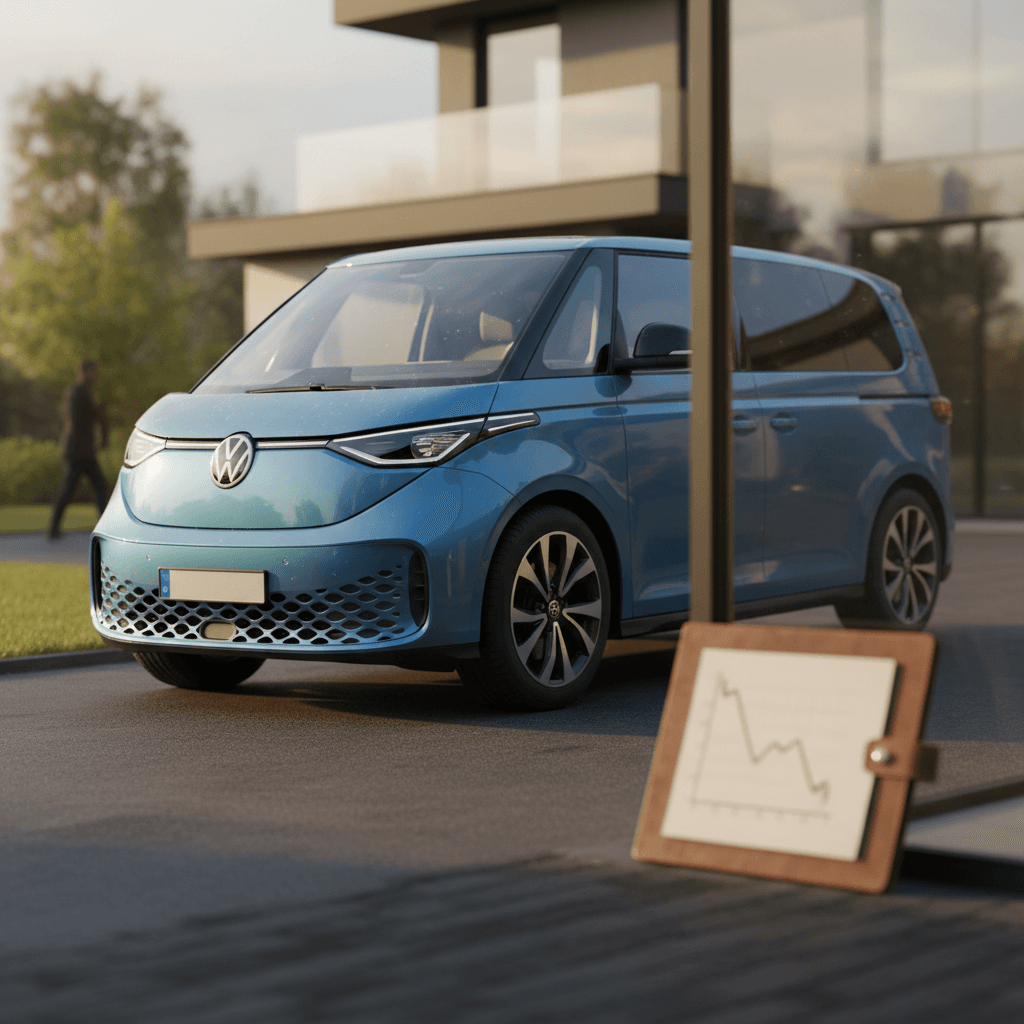
If you’re trying to make sense of Volkswagen ID. Buzz resale value in 2026, you’re not alone. The van launched in the U.S. for the 2025 model year at around $61,500–$71,500 MSRP, and by early 2026 we already have incentives, real-world used listings, and even news that the ID. Buzz will skip the U.S. 2026 model year. That combination makes pricing noisy, and full of opportunity, if you understand what’s going on.
Key context for 2026 shoppers
Why ID. Buzz resale value is tricky in 2026
With most vehicles, resale value is a simple function of age, miles, and brand reputation. The ID. Buzz adds a few twists: - It’s a nostalgia play (Microbus reboot) in an EV market that’s cooling off from its 2021–2022 hype cycle. - It’s a relatively expensive people-mover competing with much cheaper three-row hybrids and crossovers. - VW’s decision to skip the 2026 U.S. model year creates supply quirks but also makes banks more conservative on future values. Instead of assuming this van behaves like a normal minivan, you need to zoom out and look at EV economics, battery tech, incentives, and alternatives. That’s how you avoid overpaying, or panic-selling, for the wrong reasons.
Early ID. Buzz value snapshot (U.S. focus)
Current pricing: how much used ID. Buzz vans are going for
By spring 2026, actual transaction data is still thin but no longer theoretical. The pattern that’s emerging looks something like this for U.S.-spec 2025 ID. Buzz vans:
Indicative 2026 price bands for 2025 VW ID. Buzz (U.S.)
These ranges are directional, based on early used listings, trade-in data, and typical EV depreciation patterns. Exact pricing varies by region, trim, and equipment.
| Scenario | Miles in 2026 | Condition & trim | Typical asking price | Likely trade-in range |
|---|---|---|---|---|
| “Garage queen” | <7,500 | 1st Edition / high-spec, spotless history | $55,000–$60,000 | $47,000–$52,000 |
| Normal use | 7,500–15,000 | Mid/high trim, clean history | $49,000–$55,000 | $43,000–$50,000 |
| Heavy use or base spec | >15,000 | Base trim or visible wear | $42,000–$49,000 | $38,000–$45,000 |
Use these bands as a sanity check, local supply, condition, and options can push your real number above or below.
Don’t anchor on sticker price
If you’re cross-shopping listings, pay attention to three details that explain most of the price spread: 1. Miles and usage pattern, A 5,000‑mile Buzz that spent its life as a weekend family hauler is in a very different risk bucket than one with 18,000 miles from ride-share duty. 2. Seats and layout, Seven-seat long-wheelbase passenger vans with desirable color combos tend to hold value better than relatively bare-bones configurations. 3. Warranty calendar, 2025 build dates mean you’re still well within the 8‑year EV component warranty, but each year you burn through cheap, low-risk miles.
Depreciation drivers: what moves ID. Buzz values up or down
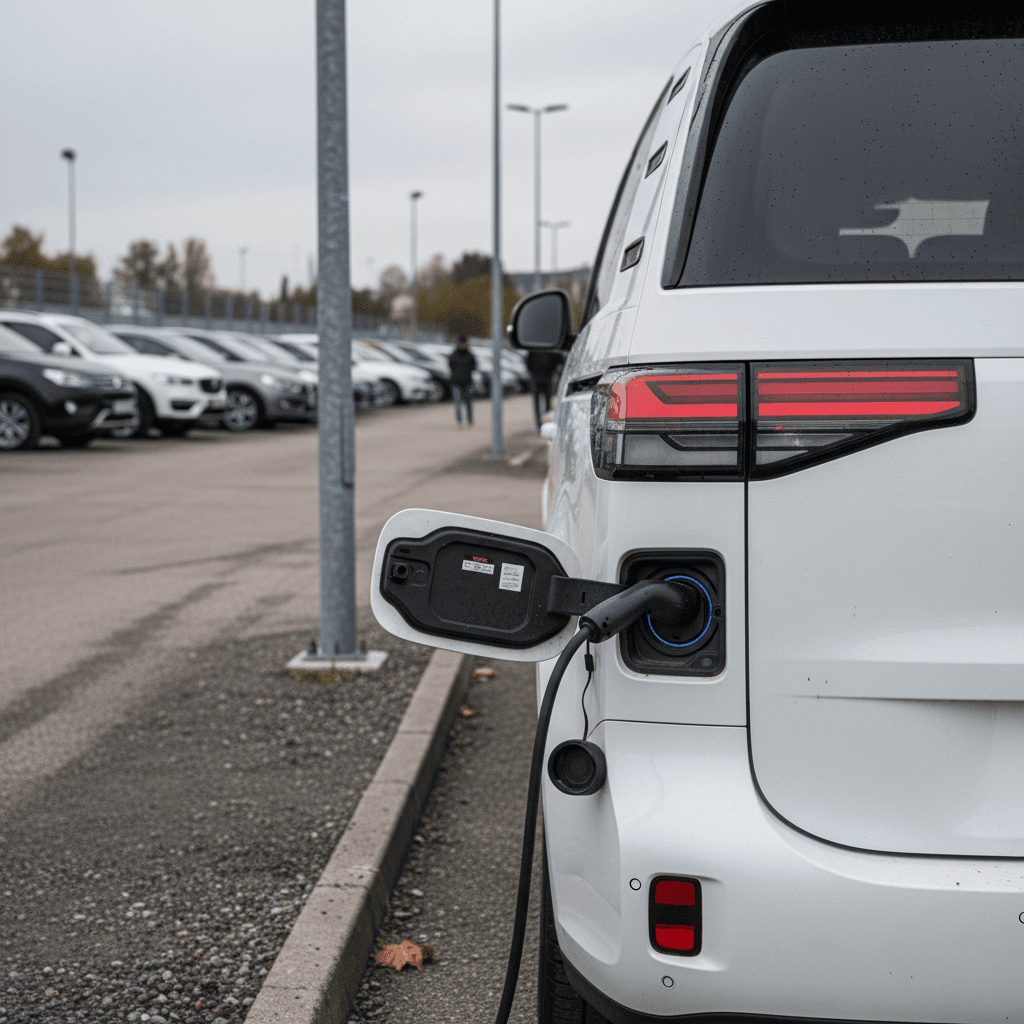
The ID. Buzz isn’t immune to the depreciation pressures hitting the broader EV market, if anything, its niche appeal magnifies them. Here are the main forces shaping its curve between 2026 and 2030.
Four big forces behind ID. Buzz depreciation
Think like a lender: what would make you nervous, or confident, about this asset in five years?
1. Macroeconomic EV demand
EV demand cooled from the 2021–2022 frenzy, especially above $50K. Higher interest rates and abundant leases coming off term in 2026–2027 put downward pressure on expensive EVs in general, including the ID. Buzz.
2. Competitive three-row options
The Buzz competes with cheaper three-row hybrids and upcoming three-row EV crossovers. If those deliver more range or lower monthly payments, they cap how high used Buzz prices can realistically sit.
3. Battery and software confidence
VW’s MEB platform has now seen several years of real-world use. As long as battery degradation stays moderate and software updates keep improving usability, used buyers are less scared, which supports values.
4. Incentives & tax credits
If new ID. Buzz vans qualify for rich incentives in future model years, or if competitors get larger credits, late-model used values can lag. Buyers compare total out-the-door cost, not just sticker prices.
Macro forces (you can’t control)
- Interest rates and overall EV sentiment
- New-model pricing, incentives, and range improvements
- VW’s product planning choices (like skipping 2026)
These set the ceiling for what a used ID. Buzz can be worth in any given year.
Micro factors (you can control)
- How cleanly you maintain the interior and exterior
- Charging habits that protect battery health
- Service records and software update history
- How, where, and when you sell or trade
These determine where *your* van sits within the market’s price band, top, middle, or bottom.
Battery health, warranty, and their impact on value
For any used EV, the real asset isn’t the leather or the sliding doors, it’s the battery. The good news for ID. Buzz shoppers is that the van shares VW’s proven MEB hardware with the ID.3 and ID.4, which now have meaningful long-term data behind them.
- Real-world tests of VW’s MEB packs show roughly 10–15% capacity loss over the first 4–5 years in typical use, which is better than many shoppers fear.
- Volkswagen backs the high-voltage battery with an 8‑year / ~100,000‑mile warranty (market specifics vary) to at least ~70% of the original usable capacity.
- The ID. Buzz’s long-wheelbase battery is in the mid‑80 kWh usable range, so even with moderate degradation there’s ample real-world range for family and van-life duty.
Why third-party battery checks matter
Battery checklist for ID. Buzz resale value
1. Confirm warranty in-service date
Ask for the original purchase or in-service date so you know exactly how much of the 8‑year battery warranty window remains. A van with six years left commands a premium over one with only three.
2. Review DC fast-charging history
Frequent high-power fast charging accelerates degradation, especially on road-trip vans. If possible, ask about typical charging habits or look for usage clues in the infotainment history.
3. Get a battery health report
Use an independent diagnostic like the <strong>Recharged Score</strong> to see current state of health, not just what the dash says on a good day. This can justify paying more for a healthier pack, or negotiating hard when it’s below average.
4. Test range in your real conditions
A short highway loop at your normal speeds and climate gives you a reality check. If the van can’t reasonably hit the ranges owners commonly see, adjust your valuation.
2026–2029 resale value outlook
Forecasting any EV’s resale value is an exercise in probability, not prophecy. With the ID. Buzz, 2026 is the inflection point between hype and data. Here’s a grounded view of what the next few years are likely to look like if the broader EV market stays on its current trajectory.
High-level ID. Buzz resale value outlook (U.S.)
Directionally, this is how a typical 2025 ID. Buzz purchased new might evolve on the used market, assuming normal usage and no major recalls or market shocks.
| Year | Age | Indicative private-party value vs. original transaction | Key dynamics |
|---|---|---|---|
| 2026 | 1 year | ~75–90% | Early depreciation already baked in; low miles and desirable specs still command strong money. |
| 2027–2028 | 2–3 years | ~60–75% | More off-lease and high-mileage vans appear. Competing three-row EVs and updated tech push values toward the middle of the pack. |
| 2029 | 4 years | ~50–65% | Battery health differences widen. Clean, low‑mile, well‑optioned vans separate from ex-fleet or heavily used examples. |
Think in ranges and scenarios, not exact dollar predictions.
What could *support* stronger resale
How to evaluate a used ID. Buzz like a pro
If you’re buying used in 2026, you’re effectively betting on how this van will age over the next five to eight years. Here’s how to stack the odds in your favor.
The 4-part used ID. Buzz evaluation framework
Don’t just fall in love with the paint color, interrogate the economics.
1. Vehicle history & usage
- Single-owner, private use beats ex-rental or fleet.
- Look for consistent annual mileage and documented maintenance.
- Avoid anything with repeated electrical or charging-related complaints.
2. Battery & charging profile
- Request a recent battery health report where possible.
- Ask about home charging vs. fast-charging usage.
- Check for any high-voltage system repairs under warranty.
3. Interior wear & configuration
- Stowable tables, rails, and seats add value if intact.
- Excessive seat wear, stains, or odors are price levers.
- Seven-seat layouts are usually easier to resell.
4. Software & service status
- Confirm all recall and campaign work has been done.
- Check that the latest major software updates are installed.
- Test drive with a focus on driver-assistance behavior and infotainment glitches.
Leverage expert-guided inspections
Selling your ID. Buzz: strategies to maximize resale value
On the sell side, your goal in 2026 is to position the ID. Buzz as the best-value version of itself: the same charm and space, but with less risk and hassle than a random listing on a classifieds site.
Seller playbook: 7 moves that pay off
1. Time your sale around demand spikes
List just before peak family road-trip seasons or at the start of the school year, when people are actively shopping for spacious, road-trip‑ready EVs.
2. Document everything
Keep a folder (digital is fine) with service invoices, recall paperwork, software update notes, and accessory receipts. A clean paper trail supports a higher asking price.
3. Fix small cosmetic issues
Curb rash, small dents, and worn tires are classic buyer “discount buttons.” Fix the cheap stuff first so shoppers can’t easily knock thousands off your number.
4. Highlight charging convenience
If you already have a Level 2 charger installed or can transfer hardware, make that clear in your listing. For many buyers, charging readiness is as important as wheel design.
5. Include a battery health report
A third-party battery health report (for example, via a <strong>Recharged Score</strong> if you sell through Recharged) can easily be worth more than it costs by easing range anxiety for cautious buyers.
6. Consider consignment or instant offers
If you value speed and low hassle, platforms like <strong>Recharged</strong> can help you get an instant offer or sell via consignment with expert pricing and national reach.
7. Be realistic, but firm, on price
Price slightly above your minimum acceptable number, then be prepared to hold the line with data: comparable listings, battery health results, and remaining warranty coverage.
Lease vs. buy: implications for future resale
In 2026, lease programs for the ID. Buzz are still evolving, and they’re shaped by the same resale uncertainty you’re trying to solve. Captive finance arms and banks use residual values, their prediction of what the van will be worth at the end of the term, to set payments.
When leasing can make sense
- You want to enjoy the ID. Buzz for 2–3 years and then walk away from resale risk.
- Lease programs are built on conservative residuals, if values hold better than expected, buying out the lease can be a win.
- You can write off payments through a business that uses the van for work.
Just read the fine print on mileage limits, EV incentives, and purchase-option fees.
When buying is the better bet
- You plan to keep the van 7–10 years and capture most of its utility.
- You’re comfortable managing resale yourself and shopping for the best offer.
- You believe the ID. Buzz will age well and develop a durable niche following.
In that scenario, minimizing interest cost and protecting battery health matter more than whether residuals are off by a few percentage points.
Watch the residual math
Common pitfalls to avoid with ID. Buzz resale
- Ignoring actual transaction prices. Asking prices on classifieds can be aspirational. Look at what similar vans actually sell or appraise for, not just what sellers hope to get.
- Overvaluing niche mods. Aftermarket wheels, wraps, or camper conversions may narrow your buyer pool more than they increase value. Keep the stock parts if you customize.
- Underestimating interior condition. Families and pets are what this van is for, but heavy wear on seats and plastics is one of the fastest ways to push your example to the bottom of the pricing band.
- Skipping software and recall updates. An ID. Buzz that’s behind on campaigns and firmware feels riskier to buyers and appraisers. Keeping it fully updated is cheap value insurance.
- Hiding EV quirks. If there’s an intermittent charging or infotainment issue, fix it before sale. Surprises during a pre-purchase inspection will cost you more than preventive work.
Red flags that should change your price, or make you walk
Volkswagen ID. Buzz resale value FAQ (2026)
Frequently asked questions about ID. Buzz resale value
Bottom line: is the ID. Buzz a good bet in 2026?
If you treat the Volkswagen ID. Buzz like a speculative investment, you’ll probably be disappointed. If you treat it like what it really is, an expensive but deeply charming electric van with solid hardware and a still-evolving resale story, the numbers start to make more sense. In 2026, the smartest moves are to buy the cleanest, healthiest example you can reasonably afford, hold it long enough to extract real utility, and make every decision, from charging habits to where you sell, with future value in mind.
That’s exactly where a specialist used‑EV partner helps. At Recharged, every ID. Buzz comes with a Recharged Score Report covering battery health, pricing fairness, and condition, plus options for financing, trade-in, instant offers, and nationwide delivery. Whether you’re buying your first electric van or figuring out how to exit one you already own, having that level of transparency turns the ID. Buzz from a resale gamble into a deliberate, data-backed choice.