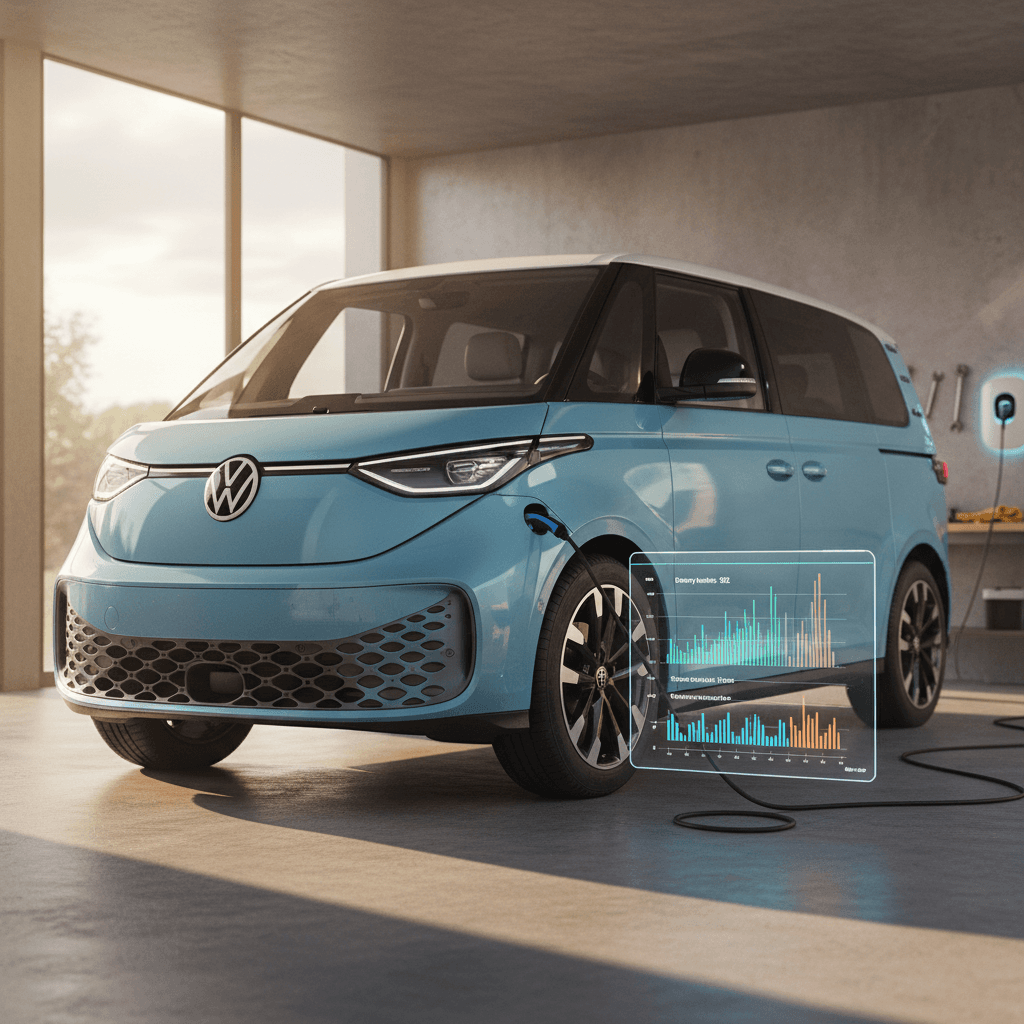
You don’t buy a Volkswagen ID. Buzz because it’s the sensible appliance; you buy it because you want to live inside a rolling concept car. In 2026, though, the romance has to share a bed with reality: what is Volkswagen ID. Buzz reliability actually like now that real owners have miles, recalls, and software updates under their belts?
Quick take for 2026 shoppers
ID. Buzz reliability in 2026 at a glance
Volkswagen ID. Buzz reliability snapshot (2026)
Reliability for the ID. Buzz in 2026 is a tale of two vans. The hardware story, body, crash structure, battery pack, motors, is mostly reassuring. The software and support story is less charming, with infotainment crashes, app weirdness, and dealerships still learning how to support a low‑volume halo EV.
How new is the ID. Buzz, and why that matters for reliability
The ID. Buzz only reached American driveways in late 2024 as a 2025 model, riding on Volkswagen’s MEB platform shared with the ID.4 and ID.7. In 2026, that means U.S. vans have at most a couple of years and tens of thousands of miles on them. Statistically, this is the honeymoon phase: the time when design flaws and software bugs emerge, but true long‑term wear patterns haven’t fully declared themselves.
What we already know
- The MEB platform has been on sale globally for several years, so motors, inverters, and the basic battery design aren’t experimental.
- Many ID. Buzz issues mirror complaints from ID.4 and ID.3 owners: infotainment lag, charging‑schedule bugs, and random warning messages.
- Crash performance and safety tech have tested very well so far, which sets a strong foundation.
What we don’t know yet
- How the big battery and cooling hardware hold up past 100,000 miles in family‑hauler duty.
- Whether Volkswagen will consistently fix software problems with over‑the‑air updates or leave owners living with quirks.
- How parts availability and dealer expertise will look as these vans age, especially outside big metro areas.
Think in platform, not just model
Safety and crashworthiness: strong scores, young software
If you’re hauling kids and dogs, you start with the crash tests, not the cupholders. On that count, the ID. Buzz comes out swinging: the 2025 model earned a 5‑Star overall safety rating from NHTSA, putting it in the top tier of large family vehicles for crash protection and rollover resistance.
What the safety story tells you about reliability
Great bones, but your digital co‑pilot still needs polish
Crash structure
The ID. Buzz rides on a modern EV skateboard chassis with strong performance in frontal, side, and rollover tests.
That doesn’t guarantee zero problems, but it does mean the fundamentals of the shell are well‑engineered.
Driver‑assist tech
VW’s IQ.DRIVE suite (adaptive cruise, lane keeping, blind‑spot monitoring and more) is standard, but it runs on the same software stack as the infotainment.
When the software’s good, it’s a relaxed highway cruiser; when it hiccups, you’ll see warnings or temporarily disabled features.
Human‑machine interface
The capacitive sliders, touchscreen‑heavy controls, and menu‑driven climate system are a reliability factor too. They don’t “break” like a switch; they just drive owners mad.
Most complaints are about frustration, not outright failure.
Safety tip
Recalls and official fixes so far
For a vehicle this fresh, you should absolutely expect recalls, and the ID. Buzz has already had a couple of notable ones in the U.S. market, mostly involving compliance and safety labeling rather than catastrophic mechanical failures.
Early Volkswagen ID. Buzz recalls (U.S., through early 2026)
Always run a fresh VIN search, but here are the big‑ticket items that have surfaced so far.
| Issue | Model years affected | What’s wrong | How it’s fixed |
|---|---|---|---|
| Brake warning light labeling | 2025 | A software/configuration error caused the brake system warning to appear in the wrong color and symbol for U.S. regulations. | VW reflashes the cluster software so the correct red BRAKE indicator appears when required. |
| Rear bench seat width compliance | 2025 | Certain vans had a rear bench slightly outside permitted dimensions under U.S. safety regs. | Dealers inspect and, where necessary, replace or adjust seat components to meet spec. |
| Misc. software campaigns | 2025–2026 | Infotainment bugs, charging logic updates, and communication issues with the online services module. | Over‑the‑air or dealer‑installed software updates; some cars require replacement of specific control units. |
Recalls may vary by build date and region; check NHTSA and Volkswagen before buying.
How to check an ID. Buzz for open recalls
Common issues owners are reporting
Because reliability data sets are still small, owner forums and early reviews are your best lens into day‑to‑day life with the ID. Buzz. The pattern looks familiar to anyone who’s watched modern Volkswagens mature: the car is delightful to drive, and the computers are occasionally possessed.
- Infotainment and software glitches – freezes, reboots, Apple CarPlay drops, or profiles and settings randomly resetting after an update.
- Charging‑schedule weirdness – vans switching from “charge by departure” to “charge now,” forgetting saved locations, or ignoring off‑peak schedules.
- 12‑volt battery issues – a handful of owners report dead 12‑volt batteries on nearly new vans, leaving the car unable to wake up even when the high‑voltage pack is fine.
- Door and sliding‑door quirks – occasional complaints about locking behavior, sensors, or latches, particularly in colder climates.
- Minor build issues – rattles, interior trim squeaks, or condensation in exterior lighting on some early European vans. These are annoying, not dangerous, and usually fixable under warranty.
When a “quirk” becomes a real problem
Battery life, range, and charging reliability
The high‑voltage battery is the beating, very expensive heart of the ID. Buzz. So far there’s no evidence of systemic pack failures in 2025–2026 vans, and they benefit from the same liquid‑cooled MEB battery architecture used in the ID.4, which has generally held up well. But there are some patterns you should pay attention to.
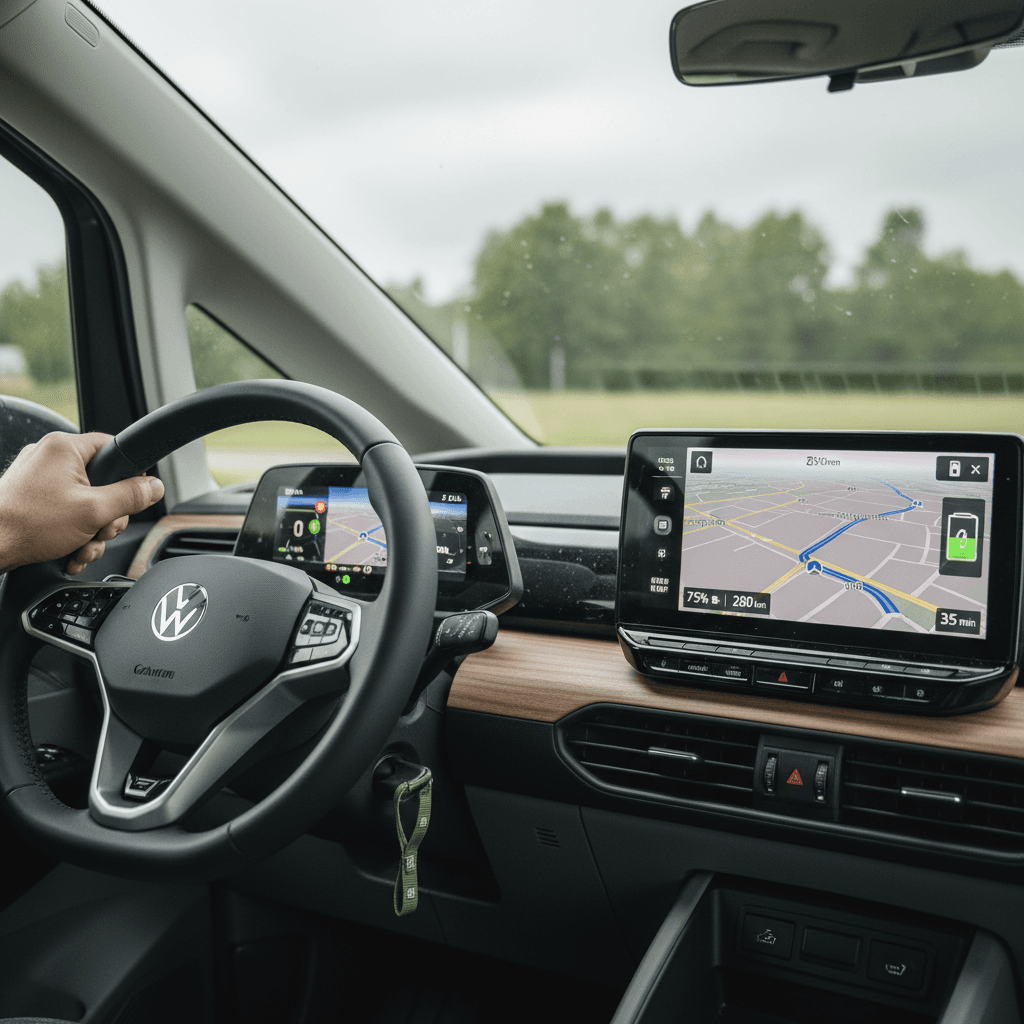
How the ID. Buzz behaves in the real world
Battery health so far looks solid; range expectations are another story
Battery degradation
So far, owners aren’t reporting dramatic capacity loss in the first 2–3 years. Normal EV degradation, single‑digit percent over the early years, seems typical.
VW backs this with an 8‑year/100,000‑mile warranty against the pack dropping below 70% usable capacity.
Real‑world range swings
Like its ID siblings, the Buzz can be optimistic on range estimates and very sensitive to speed, temperature, and load.
Drive at 80 mph with a full crew and roof box, and you’ll discover just how fast 200 miles evaporates.
Charging behavior
Hardware‑level fast‑charging failures are rare; most headaches trace back to software logic or communication with public chargers.
Plan on the usual EV learning curve: understanding which networks your Buzz likes, pre‑conditioning the battery when possible, and updating software promptly.
Battery and charging reliability checks before you buy
1. Review fast‑charging history
On a used ID. Buzz, ask for charging logs or at least anecdotes: how often has it DC fast‑charged, and at what speeds? A van that consistently charges unusually slowly at many different stations may need deeper diagnosis.
2. Test DC fast charging yourself
Take the van to a reputable DC fast charger with at least 40–50% battery and verify you see speed ramping up toward the rated peak. A one‑off slow session can be the station; consistent slowness can be the car.
3. Compare range to EPA rating
On a long mixed‑driving route, compare the miles you actually cover to the EPA estimate. Big unexplained gaps may be about driving style, but they can also flag battery or thermal‑management issues.
4. Look for high‑voltage fault history
Ask for dealer service records showing any high‑voltage or battery‑system warnings. Multiple entries for battery cooling or HV contactors on a young van should make you cautious.
Cost of ownership and maintenance expectations
On paper, the ID. Buzz should be cheaper to maintain than a comparable gasoline minivan or three‑row SUV. There’s no oil to change, no spark plugs to foul, no exhaust to rust. In practice, the big wildcard is how much time you spend at the dealer for software and warranty work.
What you probably won’t pay for
- Traditional engine maintenance – no timing belts, oil services, or transmission fluid changes.
- Brake jobs every 30k – with good regenerative braking, pads and rotors last a long time if you’re gentle.
- Emissions repairs – there is no emissions system to fail.
What can still sting
- Tires – the Buzz is heavy and torque‑rich; cheap or under‑inflated tires will vanish quickly.
- Out‑of‑warranty electronics – infotainment screens, control modules, and sensors aren’t cheap once the warranty clock runs out.
- Dealer downtime – a young, complex EV plus a dealer learning curve can mean days of waiting for diagnostic decisions, even for simple issues.
Budgeting for ownership
How reliable is the ID. Buzz vs other EVs?
Stack the ID. Buzz against a Tesla Model X, Kia EV9, or Mercedes EQV‑class van and you’ll see a familiar trade: Volkswagen leans a little more conservative on battery and motor design and a little less polished on software. If Tesla is Silicon Valley chaos and Hyundai/Kia are the honor students, the ID. Buzz is the art‑school kid who occasionally forgets their homework but never misses a show.
Reliability vibe vs other big EV people‑movers (2026)
Subjective, but grounded in owner reports and early data.
| Model | Hardware robustness | Software polish | Dealer/service ecosystem |
|---|---|---|---|
| VW ID. Buzz | Solid MEB platform; few catastrophic failures reported so far. | Improved vs. early ID.4, but still prone to glitches and UI frustration. | VW dealer network is extensive, but EV expertise varies widely. |
| Tesla Model X | Mature battery and drive units with known failure modes. | Frequent updates, slick UI, but regressions and new bugs are common. | Direct service model, decent mobile support but spotty appointment availability. |
| Kia EV9 | Newer platform but strong early showing; Hyundai/Kia packs aging well. | Generally clean, stable software with fewer reported gremlins. | Dealers still learning EV specifics but trending better each year. |
| Mercedes EQV / EQS SUV | Overbuilt hardware; expensive if it breaks. | Complex, heavy UI but fewer outright crashes reported. | Premium dealers, premium labor rates, but strong service experience when it works. |
Use this as a directional feel, not as a hard reliability ranking.
Used Volkswagen ID. Buzz reliability checklist
By 2026, the earliest European‑market ID. Buzz vans are already filtering into the used market, and U.S. 2025 vans will follow quickly. If you’re shopping used, you’re volunteering to be the second owner of a very charismatic guinea pig. Here’s how to stack the odds in your favor.
10 reliability checks for a used ID. Buzz
1. Scan for open recalls and software campaigns
Run the VIN through official recall tools and ask the seller for proof that campaigns, especially brake‑warning and seat‑related recalls, have been performed.
2. Inspect for water leaks and condensation
Look for condensation in headlamps and taillights, damp carpets, or musty smells. Early build vans in Europe have seen the odd water‑ingress case; you don’t want to inherit one.
3. Test every sliding door, every way
Open and close the sliding doors manually and (if equipped) electrically, on level ground and on a slope. Watch for binding, warning messages, or failure to latch.
4. Abuse the infotainment, for science
Pair a phone, run CarPlay/Android Auto, set a route, change profiles, and adjust climate. If the system freezes or reboots repeatedly in 30–45 minutes, expect more of the same.
5. Check for 12‑volt battery or electrical history
Ask specifically about any no‑start events, dead 12‑volt batteries, or replaced control modules. A one‑time dead battery is forgivable; a pattern is not.
6. Examine tire wear for alignment issues
Uneven wear or cupping on a relatively low‑mileage Buzz can indicate alignment or suspension problems, especially if the van has seen rough roads or curbs.
7. Listen for rattles and buzzes
On a rough road, listen for interior rattles and sliding‑door chatter. Some squeaks are fixable, but a chorus of them reveals build‑quality and prior‑repair issues.
8. Confirm charging flexibility
Verify that the van can AC charge at home and DC fast charge on at least one major public network without errors or repeated charge‑session drops.
9. Review service records for repeat offenders
Multiple visits for the same software module, door hardware, or electrical gremlin are a red flag. Reliability isn’t just what broke, it’s what keeps breaking.
10. Get a third‑party EV‑focused inspection
A general pre‑purchase inspection is good; an EV‑specific health check with battery diagnostics is better. If the seller can’t or won’t provide detailed battery data, price in that uncertainty.
How Recharged evaluates ID. Buzz battery and history
Because the ID. Buzz is new and data is thin, shopping blind is the worst thing you can do. This is where Recharged’s obsession with battery and history comes in handy.
What a Recharged Score tells you on an ID. Buzz
Looking past the paint color and into the electrons
Verified battery health
Every ID. Buzz on Recharged comes with a Recharged Score Report, including diagnostics of real‑world battery capacity and charging behavior, so you’re not guessing whether that big pack still behaves like new.
History and recall status
We pull accident history, title status, and open‑recall checks so you can see at a glance whether critical campaigns have been completed and whether a van has been crashed or flood‑damaged.
EV‑specialist support
Recharged’s EV specialists can walk you through the quirks of the ID. Buzz, software expectations, realistic road‑trip range, and what it’s like to live with one, before you ever click “buy.”
Ready to find your next EV?
Browse VehiclesWhy this matters for the Buzz specifically
FAQ: Volkswagen ID. Buzz reliability questions
Volkswagen ID. Buzz reliability FAQ
Bottom line: is the ID. Buzz a reliable EV in 2026?
Reliability, in the soul of an enthusiast, is more than the absence of breakdowns; it’s whether the machine shows up for your life the way you imagined. In 2026, the Volkswagen ID. Buzz mostly does. It hauls kids, bikes, and labradoodles in near silence. It shrugs off gas stations. It passes the crash tests with honors. And yes, sometimes its software has a mood.
If you need something utterly drama‑free, there are safer bets among more conservative EVs and gas vans. But if you’re the sort of driver who sees a yellow ID. Buzz and feels a little tug in the ribcage, the real trick is stacking the odds: pick a van with clean records and healthy diagnostics, make sure the recall work is done, and buy from someone who understands EVs. That’s exactly the gap Recharged is built to fill, so when you finally slide open that big side door, you’re stepping into the future, not into someone else’s experiment gone wrong.