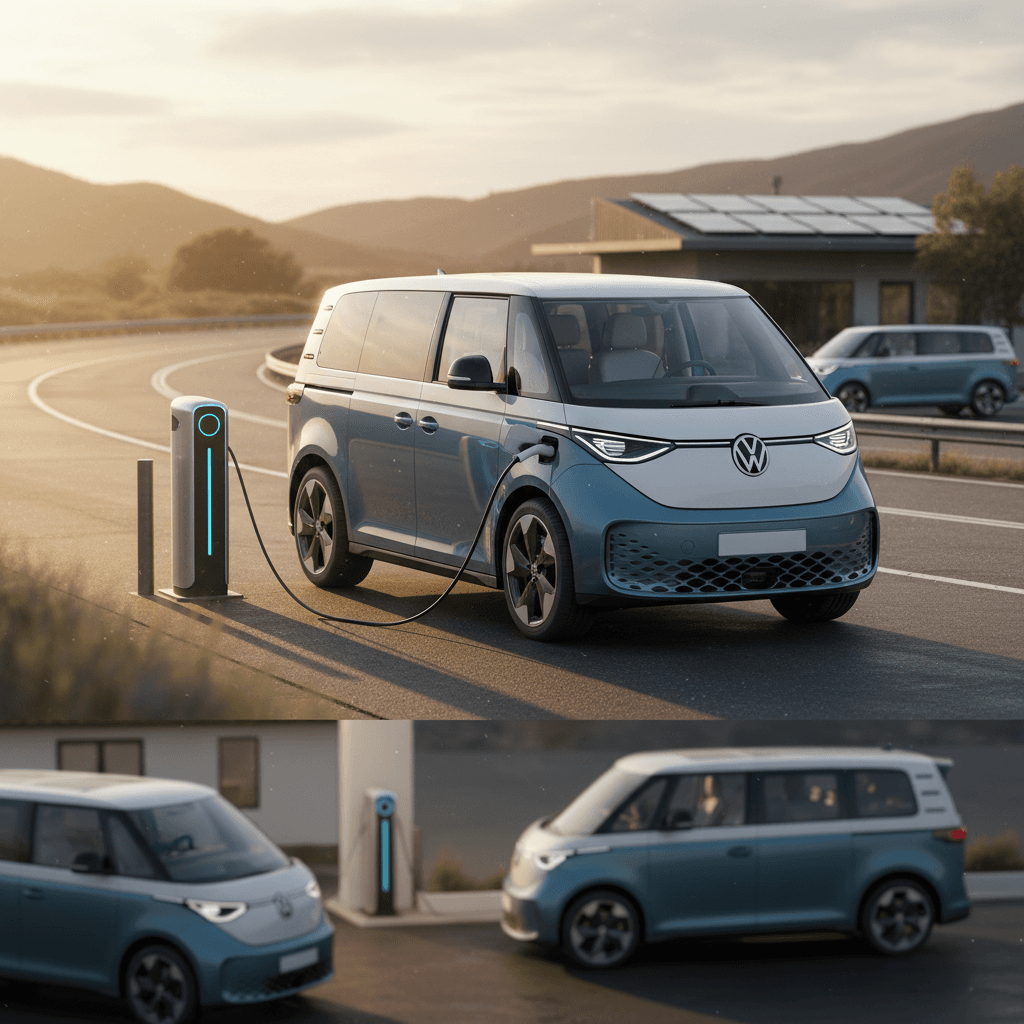
You don’t buy a Volkswagen ID. Buzz because you want to hypermile; you buy it because you want to load it with people, dogs, bikes, and memories. But that only works if you understand how fast the ID. Buzz can actually charge, at home, on a road trip, and in bad weather, so you can plan your life around it, not the other way around.
At-a-glance ID. Buzz charging
ID. Buzz charging overview: the numbers that matter
Key Volkswagen ID. Buzz charging stats
Those are the headline numbers. In real life, you’ll rarely charge from 0–100%, and your ID. Buzz will spend most of its time topping up between 20–80%. The rest of this guide translates those specs into actual minutes at the plug, so you can decide whether to upgrade your home setup or how long to budget for that DC fast‑charge stop with a van full of restless passengers.
Battery size & charging hardware on the ID. Buzz
To understand charging speed, start with what the ID. Buzz is working with under the floor.
- Battery: U.S. long‑wheelbase ID. Buzz models use a pack around 91 kWh gross, with high‑80s kWh usable energy.
- Onboard AC charger: Supports up to 11 kW on Level 2 (240V), the same rating VW uses on the ID.4 and other MEB‑platform EVs.
- DC fast charging: Depending on market and exact configuration, VW cites up to 170–200 kW peak DC fast‑charge power and roughly 10–80% in about 26–30 minutes on a capable charger.
Specs vs. your driveway
Home charging: how fast is Level 1 vs. Level 2?
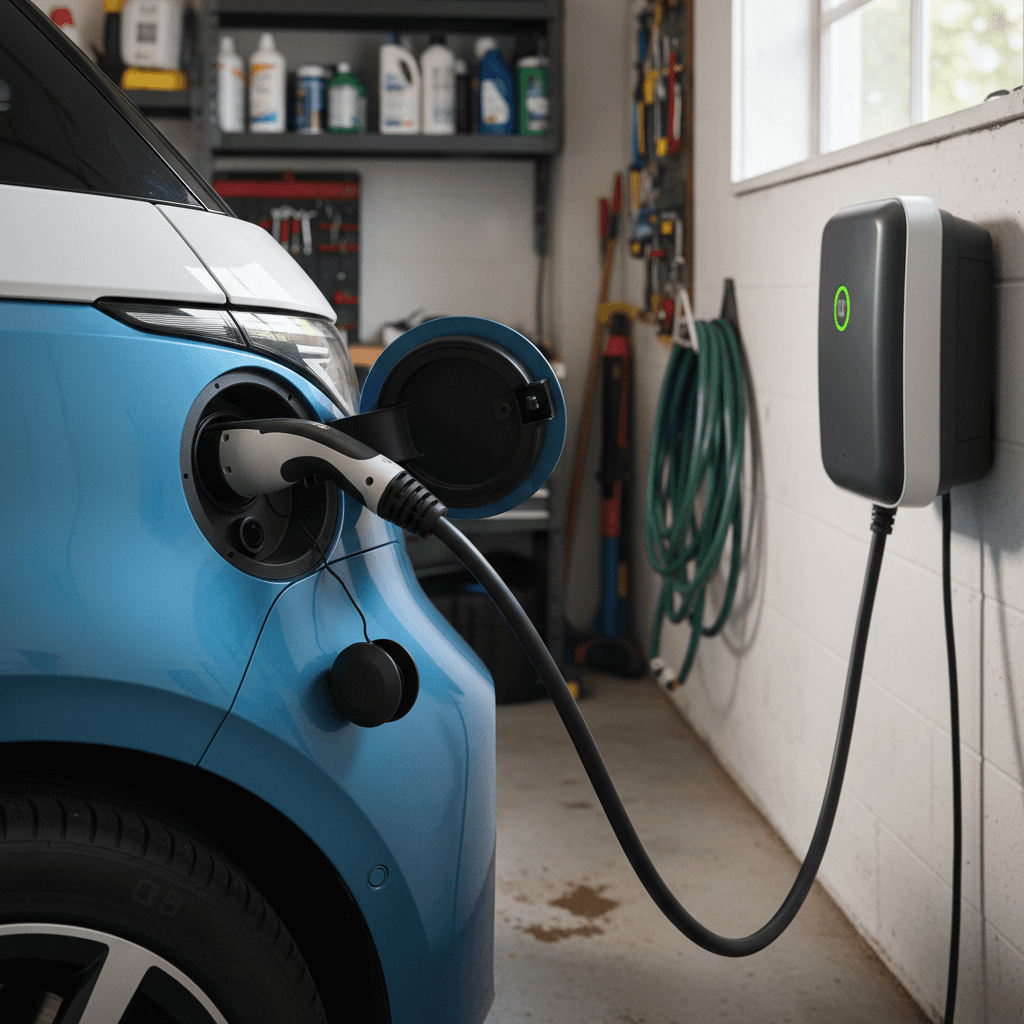
If you only remember one thing from this section, make it this: a nearly 90‑plus‑kWh battery is big. On a standard 120V outlet, it will feel like it’s charging with a garden hose. A proper 240V Level 2 charger turns that trickle into something you can live with.
Volkswagen ID. Buzz home charging speeds (approximate)
Approximate times from a very low state of charge to about 80% in typical U.S. home‑charging scenarios. Actual times vary with temperature, battery conditioning, and how full the battery already is.
| Charging method | Typical power | Approx. miles of range per hour* | Time from ~10–80% | Best use case |
|---|---|---|---|---|
| Level 1 (120V wall outlet) | 1.2 kW | 2–3 mi/hr | ~60–70 hours | Emergency top‑ups only; not realistic as a sole charging plan. |
| Level 2 (240V, 32A circuit) | ≈7.7 kW | 18–22 mi/hr | ~11–12 hours | Overnight charging for moderate daily driving. |
| Level 2 (240V, 40A circuit) | ≈9.6 kW | 22–26 mi/hr | ~9–10 hours | Good balance of speed and install cost for most owners. |
| Level 2 (240V, 48A circuit, 11 kW max) | ≈11 kW | 26–30 mi/hr | ~8–9 hours | Fastest practical home charging; ideal if you drive a lot or share the charger. |
Use these numbers for planning, not as promises, your real‑world charging curve will slow down as you approach a full battery.
About that miles‑per‑hour number
DC fast charging: real-world 10–80% times
Volkswagen positions the ID. Buzz as a capable road‑trip vehicle, and on paper its DC fast‑charging hardware backs that up. On a strong DC fast charger (175–200 kW unit, healthy battery, and good conditions), VW says you can go from about 10–80% in the high‑20‑minute range. Independent testing has found similar 10–80% times in the 25–35 minute window depending on temperature and how low you start.
Volkswagen ID. Buzz DC fast-charging expectations
Approximate real‑world times on capable DC fast chargers when conditions are favorable. We focus on 10–80% because that’s the sweet spot for both speed and battery health.
| State of charge window | Charger rating | Approx. time | What it’s good for |
|---|---|---|---|
| 10–60% | 150–200 kW DC fast charger | ≈15–20 minutes | Quick top‑up on trips; coffee or restroom stop. |
| 10–80% | 150–200 kW DC fast charger | ≈25–35 minutes | Typical highway road‑trip stop for a meal or stretch break. |
| 20–80% | 100–150 kW DC fast charger | ≈30–45 minutes | When you can’t find the very fastest hardware, or share a charger. |
| 80–100% | Any DC fast charger | 20–40 additional minutes | Only do this when you truly need maximum range, charging slows dramatically. |
Use these as planning tools: it’s smarter to do two quick 10–70% stops than one long slog to 100%.
Fastest way to travel in an EV van
Can the ID. Buzz use Tesla Superchargers?
Yes, at least for U.S. models, Volkswagen has announced access to the Tesla Supercharger network via the North American Charging Standard (NACS) partnership. That means many ID. Buzz drivers in the U.S. will be able to use selected Tesla Superchargers in addition to CCS fast‑charging networks like Electrify America and EVgo.
What Tesla Supercharger access means for ID. Buzz owners
More plugs, less route anxiety, if you know the fine print.
More places to plug in
The big win is coverage. Adding Tesla Superchargers to the usual CCS networks means far more fast‑charging options on popular corridors, especially in rural areas where CCS is still sparse.
Connector and adapter details
Early ID. Buzz models use the CCS1 inlet. Volkswagen will provide a NACS adapter for some owners and is transitioning to a native NACS port on later model years. Check your specific van’s build and the latest VW announcements before you count on Superchargers for a big trip.
How to actually start a charge
Charging at Superchargers usually requires activating the stall through a compatible app (Tesla or VW‑branded partner integration). Once that’s set up, it’s plug in, confirm, and let the van handle the rest, including battery preconditioning when you set the charger as a destination.
Not every Supercharger will work
How charging speed really works: curves, heat, and state of charge
On paper, you’ll see numbers like “up to 200 kW.” On the charger screen, you might see 60, 120, then 80 kW. That’s not the charger “lying,” it’s your ID. Buzz following a charging curve that balances speed and battery health.
1. State of charge (SoC)
Like most modern EVs, the ID. Buzz charges fastest when the battery is low, roughly between 10–40%. Then it holds a healthy plateau through about 60–70% before gradually tapering as it approaches 80% and beyond. That’s why a jump from 15–60% might take similar time to 60–85%, even though the percentage change is the same.
2. Temperature and preconditioning
Batteries are picky about temperature. If the pack is very cold or very hot, your ID. Buzz will limit power to protect itself. Use built‑in trip planning or set a DC fast charger as your navigation destination so the van can precondition the battery and hit close to that advertised peak when you arrive.
Why your first winter road trip feels slow
Road-trip strategies for the ID. Buzz
A three‑row electric van asks a lot from its battery. Loaded with people, cargo, and highway speeds, the ID. Buzz won’t match the range of a slippery crossover with the same kWh. The good news: its strong DC fast‑charging performance and growing network access make it a perfectly workable road‑trip machine if you plan smart.
Smart ID. Buzz road-trip charging game plan
1. Start the day around 80–90%
Use home Level 2 charging to leave with a nearly full battery, but avoid sitting at 100% for hours. Schedule charging to finish near departure when possible.
2. Aim to arrive around 10–20%
You’ll see the fastest DC charging when the battery is low. Plan stops so you roll in with some buffer, enough to reach another station if something’s out of order, but not half a pack.
3. Charge during meals, not after
Look for chargers near restaurants, grocery stores, or parks. If you can combine a 30‑minute 10–80% session with lunch, the charging time just disappears into the day.
4. Stay in the fast part of the curve
It’s often quicker overall to do two shorter stops between 10–70% than a single session that drags from 80–100%. Use your nav system or third‑party apps to spot logical back‑to‑back options.
5. Have a Plan B network
Don’t rely solely on one charging provider. With the ID. Buzz you’ll typically have CCS and, increasingly, Tesla Supercharger options. Save apps and RFID cards for at least two networks before you leave.
6. Watch speed and wind
At 70–80 mph, a brick‑shaped van uses a lot of energy. A small reduction in cruising speed can save you a full fast‑charging stop on a long leg, especially in headwinds or heavy rain.
Road-trip sweet spot
Protecting your battery: daily charging habits
You bought the ID. Buzz to keep for a while, so think about charging in terms of battery health over years, not just today’s convenience. The pack is designed to last, but a few simple habits help it age more gracefully.
Battery-friendly habits for ID. Buzz ownership
You don’t have to baby it, just avoid the extremes.
Live in the 20–80% zone
For everyday driving, there’s no need to top up to 100%. Set your charge limit around 70–80% and raise it only before trips. Letting the ID. Buzz hover between roughly 20–80% keeps stress off the cells.
Save DC fast charging for trips
DC fast charging is a great tool, but it’s harder on the battery than overnight Level 2. For local use, lean on your home charger and reserve high‑power DC sessions for travel days or rare time‑crunch situations.
Avoid long sits at 100%
Sometimes you need a full charge, that’s fine. Just try not to leave the van parked for days at 100% in hot weather. If you use a departure timer, schedule charging to finish within an hour or two of your drive.
Check your charge limits after software updates
Choosing the right home charger for your ID. Buzz
Because the ID. Buzz tops out around 11 kW on AC, there’s no reason to chase exotic, over‑spec’d hardware. A well‑installed 40‑ or 48‑amp Level 2 charger is the sweet spot for most owners, and it’s an upgrade you’ll feel every single day.
Sizing the circuit and charger
- 32A charger (40A circuit): Perfect if you drive modest miles or your panel is tight on capacity.
- 40A charger (50A circuit): Great all‑around choice that refills a low pack overnight.
- 48A charger (60A circuit): Lets the ID. Buzz take full advantage of its 11 kW onboard charger if your wiring and panel support it.
Always have a licensed electrician confirm what your home can safely support before you buy hardware.
Smart features worth paying for
- Scheduling: So you can automatically charge during off‑peak electricity rates.
- Energy tracking: Helpful if you want to understand (or deduct) your charging costs.
- Load management: Lets the charger share power with other large loads to avoid tripping breakers.
If you’re shopping the used EV market, portable Level 2 chargers can also be a flexible option, especially for renters.
Where Recharged fits in
Volkswagen ID. Buzz charging FAQ
Frequently asked questions about ID. Buzz charging
Bottom line: what to expect from ID. Buzz charging
The Volkswagen ID. Buzz is a big‑hearted electric van with a big battery to match. At home, a properly installed Level 2 charger turns that capacity into a non‑issue: plug in overnight and wake up ready for another day of school runs, errands, and weekend adventures. On the road, strong DC fast‑charging hardware and growing access to Tesla Superchargers make cross‑country trips entirely realistic, as long as you plan around the 10–80% sweet spot instead of chasing 100% at every stop.
If you’re looking at an ID. Buzz today, or eyeing one on the used market in a few years, think of charging speed as part of the ownership equation, right alongside seating, cargo space, and budget. Get your home setup right, learn how the van behaves on fast chargers, and you’ll find that living with an electric microbus is less about watching kilowatts and more about enjoying the miles in between. And when you’re ready to shop, Recharged is here with transparent battery‑health reports and EV‑savvy support so you can pick the right Buzz for the way you actually drive.