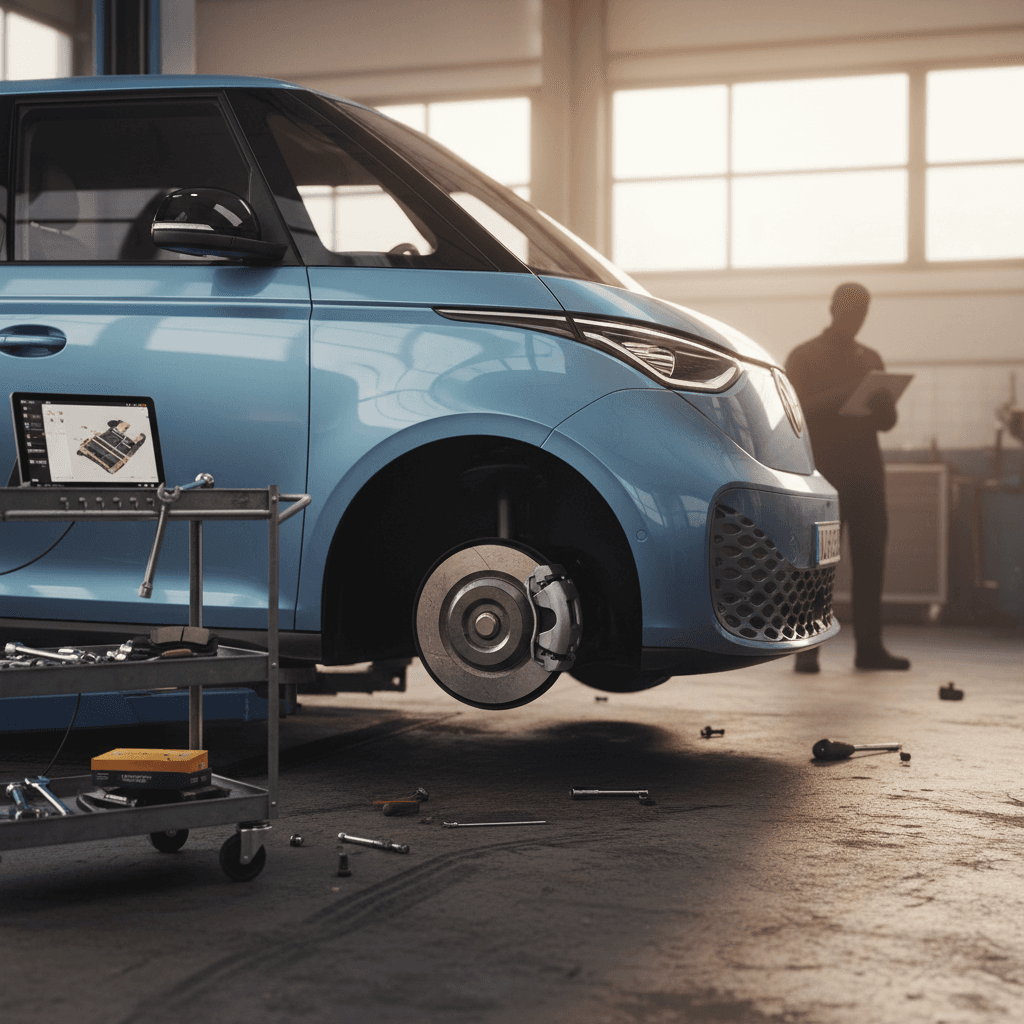
You don’t buy a Volkswagen ID. Buzz because you love dropping cash on maintenance. One perk of this all‑electric van is that its brake pads usually last longer and cost less over time than a similar gas-powered people mover. Still, when the service advisor says, “You’re due for front pads,” you want to know whether that brake pad replacement cost is fair, and how often you should expect to see that line item.
Quick answer
ID. Buzz brake pad replacement cost overview
Typical ID. Buzz brake repair price ranges (U.S.)
Because the ID. Buzz shares platform DNA with other MEB‑based Volkswagens like the ID.4, you can expect brake pad pricing in the same neighborhood as a midsize crossover or minivan, not the sky‑high figures you might see on a performance EV. The difference is that you’ll probably replace them less often.
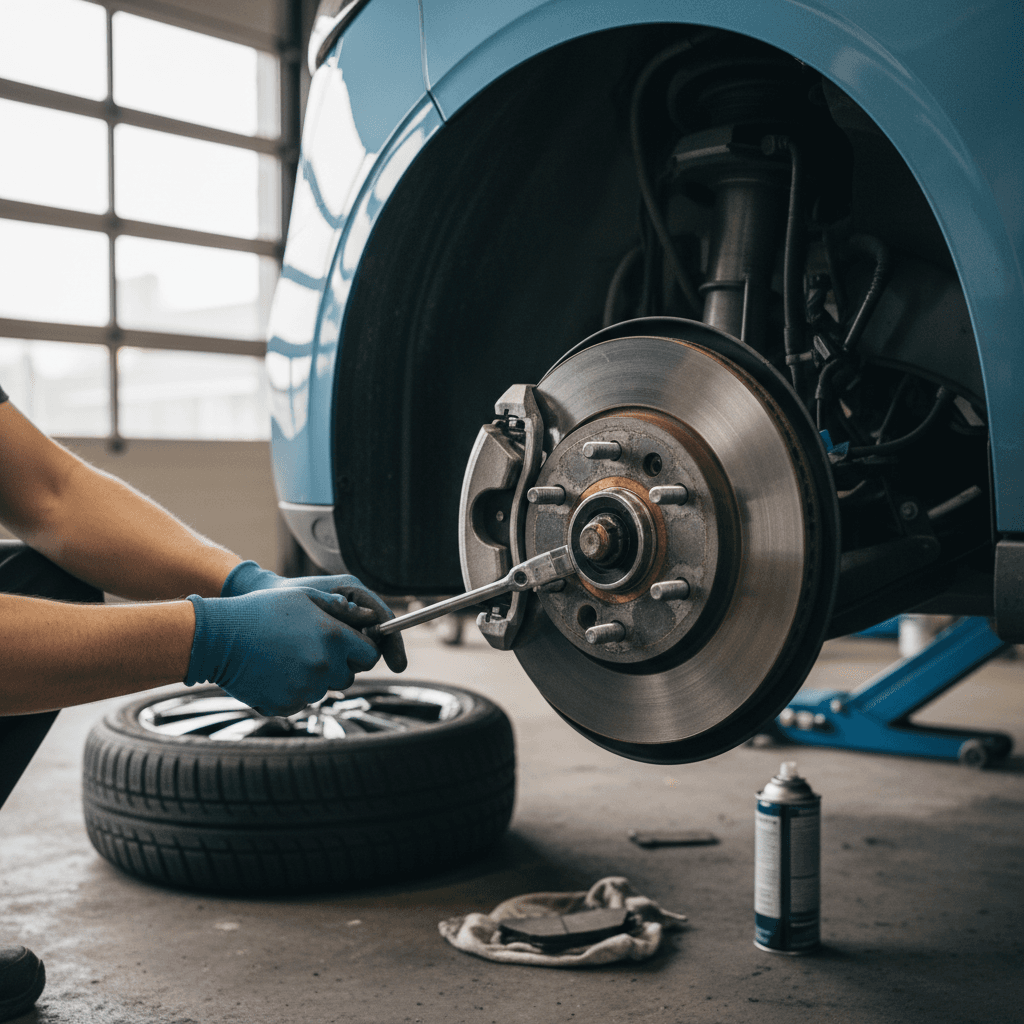
How much does Volkswagen ID. Buzz brake pad replacement cost?
Let’s translate the averages into realistic numbers for an ID. Buzz owner in the U.S. These figures assume OEM‑quality pads and a straightforward job with no seized hardware or rotor damage.
Estimated Volkswagen ID. Buzz brake pad replacement costs (U.S. 2026)
Typical price ranges for pads-only and pads-plus-rotors service on a Volkswagen ID. Buzz. Actual invoices vary by shop, market, and driving conditions.
| Service type | Where | What’s included | Typical cost (per axle) |
|---|---|---|---|
| Front brake pads only | Independent shop | New pads, hardware as needed, labor, basic inspection | $180–$300 |
| Front brake pads only | VW dealership | OEM pads, labor, multipoint inspection | $250–$400 |
| Rear brake pads only | Independent shop | New pads, parking brake calibration if needed | $180–$300 |
| Rear brake pads only | VW dealership | OEM pads, parking brake service | $250–$450 |
| Front pads + rotors | Independent shop | Pads, rotors, labor, brake system inspection | $320–$550 |
| Rear pads + rotors | Independent shop | Pads, rotors, labor, parking brake adjustment | $300–$520 |
| Full 4‑wheel pads + rotors | Independent shop | All four corners refreshed, fluid top‑off | $650–$1,100 |
Use this table as a sanity check against quotes you get from dealers or independent shops.
Watch for “pads and rotors, no questions asked”
What changes your ID. Buzz brake pad bill?
Key factors that drive Volkswagen ID. Buzz brake pad costs up or down
Same van, very different bills depending on where and how you drive.
Where you live
Labor rates in big metros like Los Angeles, Seattle, or New York are simply higher. A job that runs $220 per axle in a smaller city might hit $350+ in a coastal metro area.
Driving style & load
Short city trips with lots of stop‑and‑go, frequent fully loaded passengers, or towing will all make the friction brakes work harder.
Use of regen
If you drive mostly in strong regenerative modes and plan ahead, you may go many tens of thousands of miles before you even touch the pads.
OEM vs. aftermarket pads
Genuine VW pads tend to cost more than high‑quality aftermarket ceramics. The upside is consistent feel and low noise; the downside is a higher parts line on your bill.
Dealer vs. independent shop
Dealers often charge more per labor hour. A good independent shop with EV experience can usually beat dealer pricing without cutting corners.
Hidden extras
Brake fluid flush, pad wear sensors, seized caliper hardware, or rusted backing plates can all add line items to an otherwise simple pad swap.
How long do ID. Buzz brake pads last?
Volkswagen’s own maintenance literature for the ID. family leans heavily on inspection, not replacement intervals. On an EV like the ID. Buzz, the electric motor does most of the slowing, and the friction brakes step in mainly at the end of a stop or in an emergency. That means the pads can last a very long time.
- Many EV owners report 50,000–70,000 miles before replacing their first set of pads, sometimes more if they drive mostly highway and use strong regen.
- In urban driving with lots of short trips, or if you prefer light regen, you might see pad wear closer to 30,000–40,000 miles.
- Corrosion and sticking hardware can wear pads faster than mileage suggests, especially in snowy or coastal climates.
Use the two‑year inspection rhythm
Signs your ID. Buzz needs new brake pads
Because the ID. Buzz relies so much on regenerative braking, you might not lean on the friction brakes often enough to notice gradual changes. Here’s what to watch for when the pads are nearing the end of the road.
Common warning signs of worn brake pads
1. Squealing or scraping when you use the pedal
A high‑pitched squeal can be a built‑in wear indicator on the pad. A harsher scraping sound usually means the pad material is gone and you’re into the metal backing plate, time to stop driving and schedule service.
2. Longer stopping distances
If you need noticeably more pedal pressure to stop the van, or the Buzz doesn’t slow as quickly when regen is limited (like on a full battery), the pads may be thin or glazed.
3. Pulsation or vibration in the pedal
A pulsing pedal often points to rotor issues, but badly worn pads can contribute. Either way, you’ll want the whole brake system inspected.
4. Brake warning light or service message
The ID. Buzz can display dashboard warnings for brake issues. Treat them as serious, even if the van still feels like it stops fine.
5. Visual check shows less than ~3 mm of pad
If you or a tech peek through the wheel and see only a sliver of friction material left, it’s time to plan a pad swap.
Don’t wait for metal‑on‑metal
Dealership vs. independent shop for ID. Buzz brakes
VW dealership pros
- Technicians see a lot of MQB and MEB Volkswagens, so they know the hardware and software quirks.
- Guaranteed OEM pads and proper parking brake calibration procedures.
- Service history stays in the Volkswagen system, which some future buyers appreciate.
The trade‑off is cost: dealers usually post higher hourly rates and rarely use lower‑priced aftermarket pads.
Independent shop pros
- Often $50–$150 less per axle for the same job, depending on your area.
- More flexibility to choose high‑quality aftermarket ceramic pads that dust less.
- Great option once the van is out of its basic warranty period.
Look for a shop that’s comfortable working around high‑voltage systems, even though a pad swap itself is conventional work.
Where Recharged fits in
Ready to find your next EV?
Browse VehiclesWays to save on ID. Buzz brake pad replacement
Smart ways to keep ID. Buzz brake costs in check
Small choices that add up over the life of an electric van.
Lean on regen, not the pedal
Use stronger regenerative settings and look farther down the road. The more kinetic energy you bleed off electrically, the less your friction pads see, and the later you’ll pay to replace them.
Combine services
Bundle brake work with tire rotation or scheduled inspections. Some shops discount overlapping labor, and you’ll save time versus separate visits.
Get a second quote
If a dealer quote feels high, get an estimate from a reputable independent shop. Use the cost ranges in this guide as your reality check.
Choose pads for your priorities
Premium ceramic pads cost more up front but can be quieter and less dusty. For a family van that lives in city traffic, that may be money well spent.
Skip upsells you don’t need
Politely decline add‑ons like throttle‑body cleaning or fuel system flushes, your ID. Buzz doesn’t even have those parts. For brakes, focus on pads, rotors if needed, and timely fluid changes.
Use prepaid or coverage wisely
If you bought VW prepaid maintenance or an extended service contract, check what’s covered. Wear items like pads usually aren’t, but inspections and fluid flushes sometimes are.
Brake pads, rotors, and fluid: what to replace when
On a Volkswagen ID. Buzz, your brake system has the same basics as any other modern vehicle: pads clamp down on rotors, fluid transfers pedal pressure, and an electronic parking brake holds the van when parked. The electric drivetrain changes how often those parts wear, but not what needs attention.
What usually gets replaced, and when, on ID. Buzz brakes
Typical patterns for an EV van driven in mixed U.S. conditions. Always follow your owner’s manual and technician’s measurements.
| Component | Typical ID. Buzz pattern | What it costs if done with pads | When to say yes |
|---|---|---|---|
| Front brake pads | First set often around 50k–70k miles, then similar intervals | $180–$350 per axle (pads only) | Measured at ~3 mm or less, or if you hear squealing |
| Rear brake pads | Can last as long or longer than fronts on many EVs | $180–$350 per axle (pads only) | Thin pads, parking brake issues, or uneven wear |
| Rotors | Usually replaced on condition, not by mileage | + $150–$250 per axle for parts and extra labor | Deep grooves, rust lip, warping, or undersized thickness |
| Brake fluid | EVs still need periodic fluid changes | $100–$170 for a flush at most shops | Every few years per VW schedule, or if fluid is contaminated |
Think of this as a roadmap, not a strict schedule. Real‑world mileage and climate will move things earlier or later.
Don’t skip the fluid just because it’s an EV
Buying a used ID. Buzz? Brake checks that matter
If you’re looking at a used ID. Buzz, especially one that spent its life in a rental, shuttle, or ride‑share fleet, the brakes deserve a close look. Those vans often see constant stop‑and‑go driving with heavy loads, which can chew through pads faster than a private‑use Buzz that lives on suburban highways.
Brake questions to ask before you buy a used ID. Buzz
1. When were the pads last replaced?
Ask for service records showing pad and rotor work. Recent pads with older rotors aren’t necessarily bad, but it’s worth knowing what was done and when.
2. What’s the current pad thickness?
A pre‑purchase inspection should include measured pad thickness at all four corners. “Looks fine” isn’t enough; you want millimeters on paper.
3. Any history of warped rotors or ABS issues?
Pulsation, ABS warnings, or uneven pad wear can hint at past neglect. They’re fixable, but they belong in the price negotiation.
4. Has the brake fluid ever been flushed?
On a three‑ or four‑year‑old van, an untouched fluid line is a yellow flag. Factor that $100–$170 job into your first‑year budget.
5. How does it feel on a long, hard stop?
On the test drive, do at least one firm, straight‑line stop from highway speed (when it’s safe). The Buzz should stay straight and confident without vibration.
How Recharged helps here
FAQ: Volkswagen ID. Buzz brake pad replacement cost
Frequently asked questions about ID. Buzz brake pads
Bottom line on ID. Buzz brake pad costs
The Volkswagen ID. Buzz is a big, charming electric van, but when it comes to brake pad replacement cost, it behaves like any modern VW, just with a little help from physics. Regenerative braking stretches pad life, so you’ll probably visit the shop less often than you would in a gas van. When you do, a fair price in the U.S. is roughly $180–$350 per axle at a good independent shop, or $250–$450 per axle at a dealer for pads only.
Use VW’s two‑year inspection rhythm, listen for early warning signs, and don’t be shy about asking shops for pad thickness measurements and line‑item estimates. If you’re still shopping for your Buzz rather than servicing it, buying through Recharged means you start with a clear picture of brake condition and overall health, thanks to the Recharged Score Report. That way, the only surprises your ID. Buzz delivers are the good kind, like how quietly it glides to a stop.