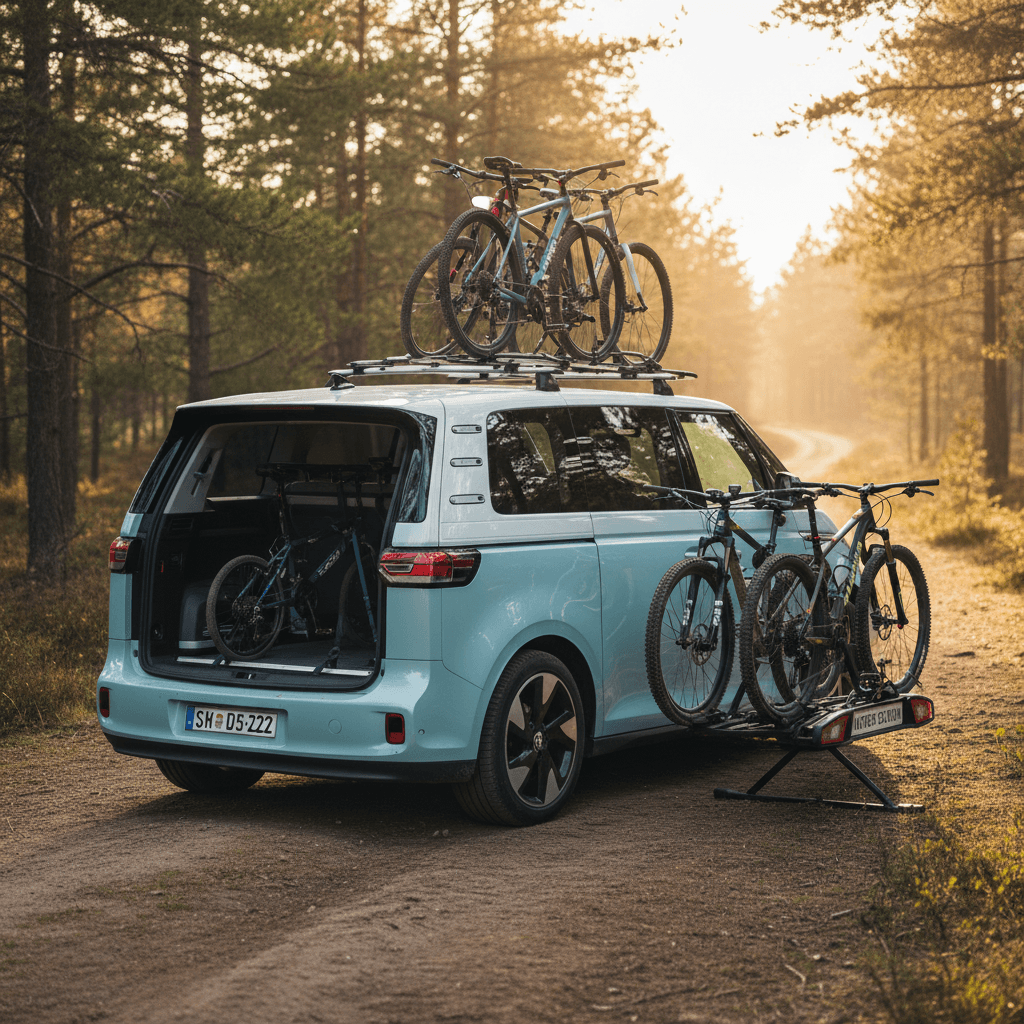
If you bought a Volkswagen ID. Buzz because it looks like the ultimate electric adventure van, you’re not alone. For a lot of owners, the next question is simple: how do I carry bikes safely and efficiently? This guide breaks down the most practical Volkswagen ID. Buzz bike rack options, including hitch, roof, and interior setups, plus the weight limits, model-year quirks, and range impacts you should think about before you load up.
Quick answer
ID. Buzz bike rack overview and key limits
Before you start shopping for bike racks, it’s worth understanding what the ID. Buzz can handle. Unlike a traditional minivan, the Buzz is an EV with a heavy battery pack and a tall body, so weight distribution and aerodynamics matter more than usual.
Volkswagen ID. Buzz carrying and towing basics
Those numbers translate into some clear rules of thumb: - Hitch or towbar‑mounted racks are usually the best first choice. They keep drag lower than roof setups and make loading easier. - Roof racks are fine if you stay under the 100 kg limit and accept more wind resistance. - You don’t have to use an external rack at all, the boxy cargo area can swallow bikes inside if you’re willing to remove wheels. Let’s look at each option in more detail, starting with factory and aftermarket hitches.
Factory tow hitch vs aftermarket receivers
Volkswagen’s own documentation and early owner experience make one thing clear: not every ID. Buzz comes with a factory tow hitch, and options vary by market and trim. That’s especially important if you’re cross‑shopping U.S.‑spec long‑wheelbase vans, European short‑wheelbase vans, and Cargo versions, or if you’re looking at the used market.
Factory hitch (where available)
- Offered as an option or package on many trims; often called a Trailer Hitch or Towing Package.
- Designed and tested by VW for the Buzz’s structure and cooling system.
- Comes with the correct wiring, control modules, and an official tow rating.
- Downside: may be missing on early or special trims (like some "1st Edition" models), even when the vehicle can tow on paper.
Aftermarket receiver
- Hitch manufacturers have started releasing 2" and 1¼" receivers that bolt into the Buzz’s existing mounting points.
- Usually rated for bike racks and light towing within VW’s limits.
- Can be added to vans that left the factory without a hitch, including some early North American builds.
- Quality and install difficulty vary, plan on professional installation if you’re not comfortable dropping the rear fascia or dealing with wiring.
Model‑year nuance
For pure bike hauling, you don’t need the full towing package with trailer brake wiring, but you do want a receiver that’s rated for at least the total weight of your rack and bikes. Many owners prioritize a 2" Class III‑style receiver, because it opens up more rack choices and higher tongue‑weight ratings.
Best hitch-mounted bike rack options for the ID. Buzz
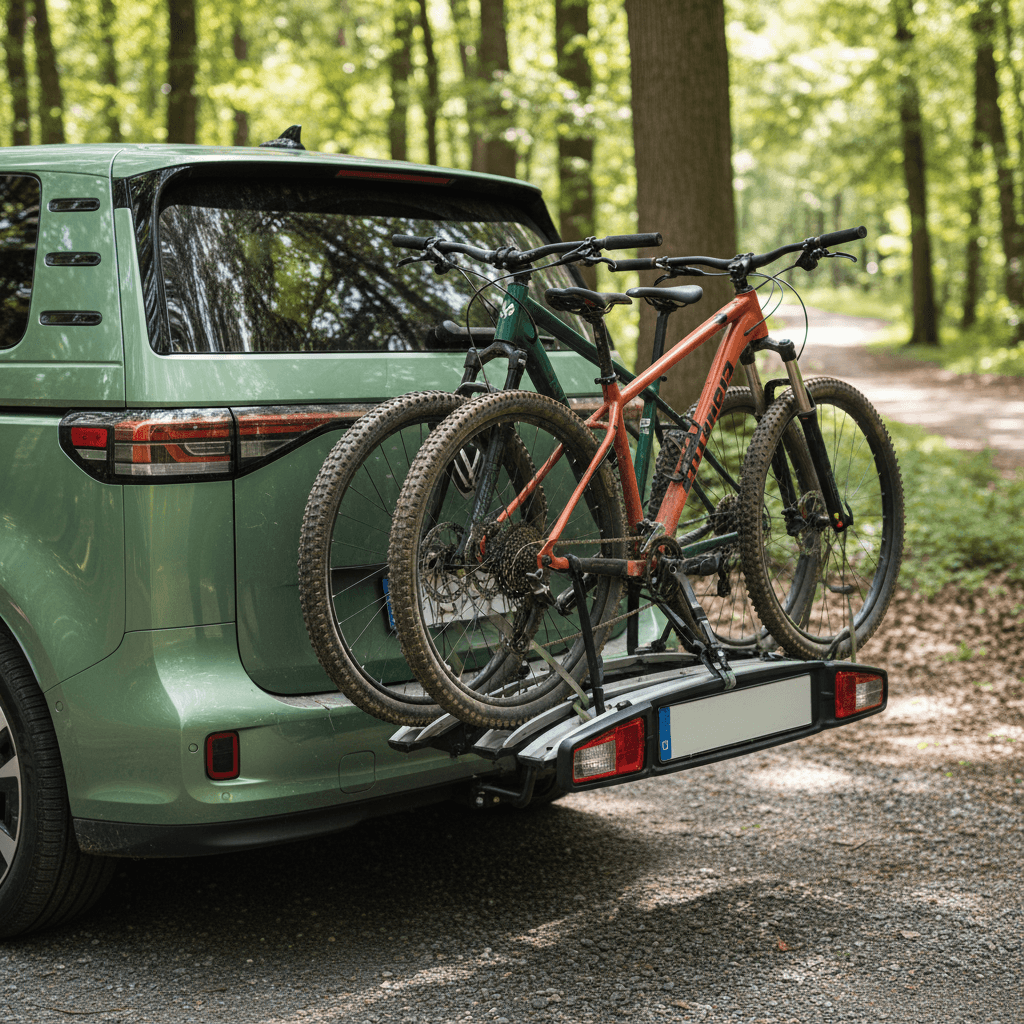
If your ID. Buzz has, or will have, a hitch receiver, a hitch‑mounted bike rack is generally the best solution. It keeps bikes out of the airstream more than a roof rack does, doesn’t require lifting bikes overhead, and leaves the interior free for passengers or camping gear.
Common hitch rack styles for the ID. Buzz
How they differ and which owners they fit best
Platform racks
Best overall for EVs. Bikes sit in trays, held by wheels and/or frame arms.
- Very stable at highway speed.
- Easy loading for heavier e‑bikes.
- Often support 2–4 bikes.
Hanging (mast) racks
Traditional design where bikes hang from top tubes.
- Lighter and cheaper than platforms.
- Can fit 3–5 bikes, but more frame contact.
- Less ideal for step‑through or carbon frames.
Swing‑away & tilt racks
Variants of platform or hanging racks.
- Tilting lets you open the big Buzz tailgate with bikes loaded.
- Swing‑away arms move the whole rack out of the way.
- Heavier and pricier, but great for camping and road‑trips.
You don’t need an ID. Buzz‑specific bike rack; what matters is hitch size, tongue‑weight rating, and clearance to that big rear hatch. Many of the premium rack brands offer fit guides and show ID. Buzz compatibility, but the reality is that if it works on a mid‑size SUV with a 2" receiver, it’ll usually work on a Buzz as long as you respect the weight limits.
Clearance check for the giant tailgate
If you frequently carry e‑bikes (which can weigh 50–70 lb each), lean heavily toward a quality, tray‑style platform rack rated for high per‑bike loads. That will likely eat a good chunk of the Buzz’s hitch‑load allowance, so you may be limited to 2–3 heavy bikes, not 4–5 like a lighter hanging rack would allow with analog bikes.
Roof-mounted bike racks and roof load limits
Roof‑mounted bike racks are a natural fit for a boxy van like the ID. Buzz, but they’re not the first choice for efficiency or handling. VW’s own converter guidelines and technical data emphasize that roof loads raise the center of gravity and can affect stability, especially in crosswinds or emergency maneuvers.
Volkswagen ID. Buzz roof load basics
How much you can realistically carry on top, including bikes
| Parameter | Typical value | What it means for bikes |
|---|---|---|
| Dynamic roof load | 100 kg (approx.) | Maximum allowed while driving, including crossbars, rack, bikes, and any box or accessories. |
| Static roof load | Up to ~250 kg (guideline) | The van can support more weight when parked (e.g., people in a rooftop tent), but that doesn’t change the 100 kg driving limit. |
| Crossbar requirement | At least 2 bars | You’ll usually mount 2–3 upright bike trays onto VW or aftermarket crossbars. |
| Official guidance | "Avoid roof loads if possible" | VW explicitly notes that roof loads impair handling and increase body roll. It’s allowed, but use with care. |
Always confirm the exact limits in your Buzz’s owner’s manual, as roof loads can vary slightly by market and configuration.
A typical upright roof bike rack tray weighs around 4–7 kg, and a modern mountain or gravel bike might weigh 12–16 kg. Put three bikes up top and you’re in the 50–60 kg range before counting the crossbars themselves, comfortably under 100 kg, but enough to change the Buzz’s behavior at speed.
Roof racks hurt range more than hitch racks
If you must go roof‑mounted, say you need maximum rear access for a hitch‑mounted box or camping gear, stick to fewer, lighter bikes and consider: - Using aero crossbars and low‑profile trays. - Removing front wheels (and using fork‑mount trays) to reduce height and drag. - Reducing highway speed slightly; 5–10 mph makes a noticeable difference in consumption with bikes on the roof.
Interior and tailgate-style bike solutions
The ID. Buzz’s secret bike‑carrying weapon is its huge interior. If you don’t need all three rows of seats on a given trip, you may not need an external rack at all. Owners regularly report hauling one or two full‑size mountain bikes inside the van with the rear seats folded and a wheel or two removed.
Non‑rack ways to carry bikes in an ID. Buzz
Great if you want maximum range or anti‑theft peace of mind
Interior fork mounts
Install quick‑release or thru‑axle mounts on a board or modular rail system in the cargo area.
- Remove front wheels and clamp forks to mounts.
- Keeps bikes upright and stable.
- Best for 1–3 bikes, depending on wheelbase and bar width.
Soft‑strap & wheel‑off method
Simpler, tool‑free approach.
- Fold the rear seats, remove the front wheel, lay the bike diagonally.
- Use soft straps to anchor to tie‑downs.
- Protect interior with a mat or blanket.
These interior methods preserve the Buzz’s clean aerodynamics and protect your bikes from theft and weather. The trade‑offs are obvious: you’ll lose seating flexibility, and bike mud will end up inside the van unless you’re diligent about cleaning and covering things.
Interior hauling hack
Traditional strap‑on "trunk" racks, the kind that hook over a hatch and cinch down with straps, are generally not recommended for the ID. Buzz. The rear hatch is large, relatively upright, and expensive to repair, and there’s limited official fitment support for these racks on modern EVs. If you don’t have a hitch, roof or interior options are safer bets.
Weight ratings: how many bikes can your ID. Buzz safely carry?
Because the ID. Buzz is an EV, you want to think in terms of systems: the van’s own ratings, the hitch’s rating, the rack’s rating, and the actual bikes you plan to carry. Your safe limit is always the lowest number in that stack.
Step‑by‑step weight check for your Buzz bike setup
1. Confirm your Buzz’s tow and roof ratings
Check your owner’s manual and door‑jamb sticker. Many ID. Buzz passenger vans are rated to tow roughly 3,500 lb with trailer brakes and allow about 100 kg of dynamic roof load, but always rely on the exact numbers for your VIN.
2. Find your hitch’s tongue‑weight rating
Look for a sticker or stamping on the factory or aftermarket receiver. For bike‑rack duty, tongue weight (supported vertical load) matters more than max trailer weight.
3. Check the bike rack’s maximum load
Every rack lists a total weight limit and usually a per‑bike limit. Platform racks designed for e‑bikes typically support 60–80 lb per tray but may be capped at 2–3 bikes.
4. Weigh or estimate your bikes accurately
Don’t guess. A modern full‑suspension e‑MTB can weigh 55–70 lb; a road bike might be 18–22 lb. Add it all up with accessories like baskets, child seats, or locks attached.
5. Compare all numbers and choose the lowest
Your real limit is the smallest of: vehicle hitch or roof rating, hitch receiver rating, and rack rating. Design your system around that number with a safety margin.
6. Re‑check after upgrades or changes
If you add a cargo box alongside bikes, switch to heavier e‑bikes, or change racks, repeat this process. What was safe with two bikes may not be with four.
Example: safe 4‑bike family setup
Range impact and driving dynamics with bikes on an ID. Buzz
From an energy‑use perspective, bikes are the opposite of aero. The ID. Buzz already presents a big frontal area; hang bikes off the back or roof and you’re adding more turbulence in exactly the wrong place. For road‑tripping, it’s critical to understand how this affects planning.
What happens to range?
- At city speeds, extra drag is modest; weight matters more, especially with e‑bikes or fully loaded racks.
- On the highway, expect a 20–30% hit to range with bikes outside the aero envelope, particularly on the roof.
- A hitch rack usually costs less range than a roof rack because bikes sit in the low‑pressure wake behind the van.
How does it drive?
- Roof‑mounted bikes raise the center of gravity and increase body roll in corners and crosswinds.
- A heavy hitch rack can make the rear feel more planted but also lengthens the vehicle and can affect high‑speed stability.
- In all cases: leave a bigger following gap and avoid aggressive lane changes.
Planning Buzz charging stops with bikes aboard
This is where a marketplace like Recharged can be helpful when you’re shopping used. If you see an ID. Buzz listed with a hitch and clearly set up for outdoor gear, ask for the Recharged Score battery health report and any real‑world road‑trip energy‑use data. That context tells you a lot about how the previous owner used (or abused) the pack while hauling gear.
Shopping checklist if you want a used ID. Buzz for bikes
If your whole reason for wanting an ID. Buzz is shuttling bikes to trailheads or family rides, you should shop with that use case front and center. The good news: the Buzz is a great platform for this, as long as you pay attention to trim, hitch equipment, and battery health.
Used ID. Buzz bike‑hauler checklist
1. Verify factory hitch or quality aftermarket install
Crawl under the rear bumper and confirm a solid receiver that’s properly tied into the structure. Look for clean wiring, no hacked‑in trailer lights, and no evidence of rear‑end damage or repairs around the hitch.
2. Confirm roof‑rail and crossbar compatibility
If you plan on roof bikes, make sure the van either has factory rails/base bars or supports aftermarket crossbars for your model year. Ask which system the previous owner used so you know what’s plug‑and‑play.
3. Ask how the previous owner carried bikes
A Buzz that’s always run a roof rack with bulky cargo at 80 mph has likely seen higher energy use than one using an interior or hitch solution. It’s not automatically a deal‑breaker, but it’s a data point.
4. Review towing and payload history
If the seller towed near the 3,500‑lb limit regularly, check service records for brakes, suspension, and tires. Heavy towing plus bike racks isn’t a red flag by itself, but it means you should scrutinize maintenance.
5. Get a battery health snapshot
Use tools like the Recharged Score to see verified battery state of health. If the Buzz has spent its life road‑tripping with bikes at freeway speeds, you’ll want evidence that the pack is still in good shape.
6. Budget for the right rack system
Even if a used Buzz includes an old or cheap rack, plan on replacing it with a system that matches your bikes and trips. That might mean a premium 2‑bike e‑MTB rack or a 4‑bike family setup with tilt.
Frequently asked questions: Volkswagen ID. Buzz bike racks
ID. Buzz bike rack FAQ
Bottom line: picking the right ID. Buzz bike rack
The Volkswagen ID. Buzz is one of the most bike‑friendly EVs on the road: tall, spacious, and purpose‑built for adventure. The challenge isn’t whether you can carry bikes, but how to do it without compromising safety, range, or the van’s structure. For most riders, that means a properly rated hitch receiver and a quality platform bike rack sized to your mix of standard and e‑bikes.
Roof racks remain a useful backup when you need maximum capacity or want to free the hitch for a cargo box, but they demand more attention to weight and energy use. And if you’re flexible on seating, the ID. Buzz can often swallow bikes inside with nothing more than a fork mount and a blanket.
If you’re still in the research phase, Recharged can help you find a used ID. Buzz that already has the right hitch setup, verify battery health with a Recharged Score report, and even line up financing and nationwide delivery. That way, when your Buzz shows up in the driveway, you’re only one bike rack purchase away from your first fully electric shuttle to the trailhead.