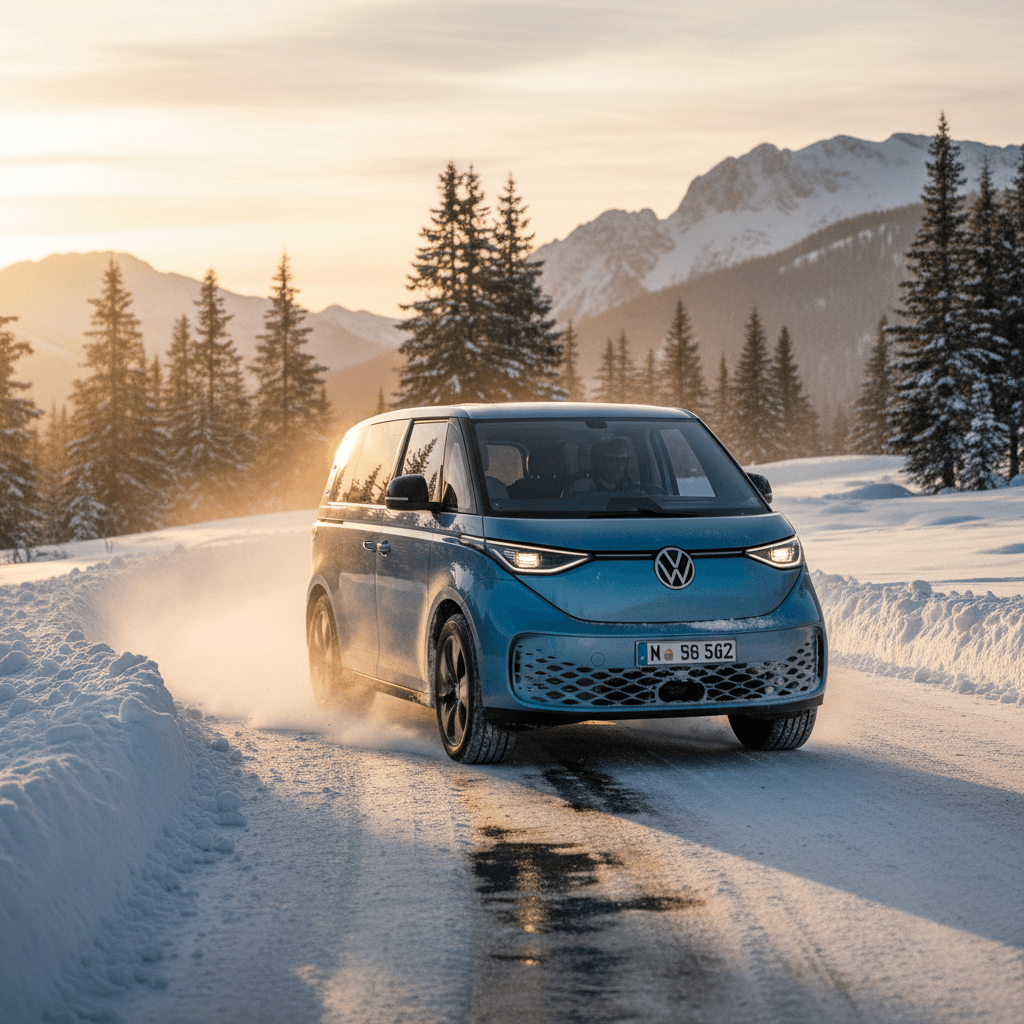
If you live where roads turn white every winter, you’re right to wonder whether the Volkswagen ID. Buzz is best for snow and ice or better left for sunnier climates. This cheerful electric van looks like a ski-lodge shuttle, but how it behaves on packed powder, freezing rain, and slushy commutes comes down to drivetrain, tires, and how you use it. Let’s dig into what the ID. Buzz does well in winter, where it struggles, and which versions make the most sense if snow is part of your life.
Quick take
Is the Volkswagen ID. Buzz good in snow and ice?
Electric vans actually start with a few natural winter advantages. The ID. Buzz’s battery is mounted low in the floor, which drops the center of gravity and helps stability when the road gets slick. The weight over the drive axles improves traction, and Volkswagen’s traction and stability systems react far faster than a human ever could when a wheel starts to spin.
On the flip side, you’re working with a tall, heavy, boxy van. In the U.S.‑spec long‑wheelbase ID. Buzz, curb weight is around 6,000–6,200 pounds and ground clearance is about 6.3 inches. That’s fine for plowed streets and resort access roads, but you’ll start to push snow with the nose long before a crossover like a Subaru Outback or Kia EV9 does.
Owner reports from snowy regions paint a consistent picture: on good winter tires, both rear‑wheel‑drive and 4MOTION all‑wheel‑drive Buzz models feel secure and predictable in snow. On the stock all‑season tires, grip on ice is merely average, exactly what you’d expect. In other words, the ID. Buzz doesn’t magically break winter physics, but it behaves like a well‑sorted modern EV van when you set it up correctly.
Winter strengths and limitations of the ID. Buzz
ID. Buzz in snow: strengths vs. limitations
Know what it does well, and where you’ll hit its limits.
Winter strengths
- Low center of gravity from the floor battery keeps the big body settled on slick roads.
- Instant torque helps you ease away from a snowy stop without revving and spinning.
- Fine traction control can meter power to each axle (on AWD) quicker than a human reaction.
- Good weight over drive wheels improves traction compared with a light, nose‑heavy gas van.
- Heated seats and steering wheel warm people efficiently, using less energy than blasting the cabin heater.
Winter limitations
- Modest ground clearance (about 6.3 inches) means deep, unplowed snow will stop you.
- Big, boxy body is more sensitive to crosswinds and ruts in heavy slush.
- Heavy curb weight lengthens stopping distances if tires can’t bite into ice.
- Range drops in cold thanks to battery chemistry and cabin heating.
- Wheel well clearance can pack with heavy snow if you drive through the really deep stuff.
Don’t confuse traction with stopping power
Best Volkswagen ID. Buzz versions for snow and ice
If you’re trying to decide which ID. Buzz is best for snow and ice, think in tiers: drivetrain first, then battery and features. Here’s how the lineup shakes out from a winter‑driving perspective.
Which ID. Buzz spec is best for winter?
How the main ID. Buzz variants stack up for snow and ice duty.
| Version | Drivetrain | Winter capability (on proper tires) | Best use case |
|---|---|---|---|
| ID. Buzz RWD (single‑motor) | Rear‑wheel drive | Good on plowed roads; traction is fine but not heroic on steep, icy grades. | Mild‑to‑moderate winters, urban/suburban commuting, occasional ski trips on maintained roads. |
| ID. Buzz 4MOTION / AWD (dual‑motor) | All‑wheel drive | Best all‑round winter choice; strong traction for icy driveways and mountain passes. | Regular snow, hilly terrain, families who head to the mountains most weekends. |
| ID. Buzz GTX | Performance‑tuned AWD | Same basic traction as other AWD versions, with more power and often better standard tires. | Drivers who want winter traction plus brisk acceleration and towing for winter toys. |
| ID. Buzz Cargo RWD | Rear‑wheel drive | Similar to passenger RWD, but weight distribution changes as you load it. | Contractors and fleets in snowy regions who stick mostly to plowed roads. |
Assumes appropriate tires for the conditions. Exact trim names and equipment can vary by market and model year.
If you live in a place like Colorado’s Front Range, the upper Midwest, upstate New York, or northern New England, the AWD 4MOTION or GTX versions are the smart default. In flatter, milder regions that see a few storms a year, think Virginia, Maryland, or coastal Oregon, RWD with serious winter tires is typically enough.
Match the van to your climate, not your bravado
Tires: the number one snow and ice upgrade
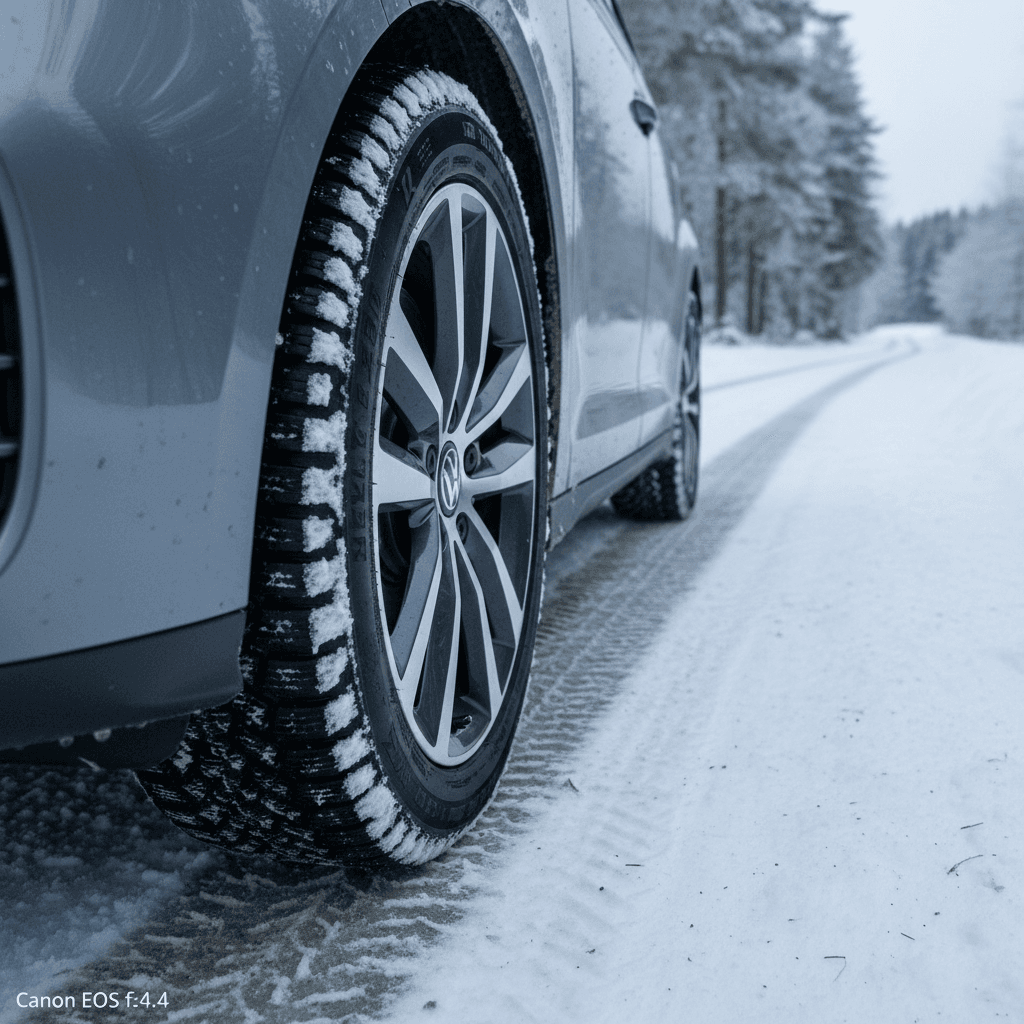
Every winter conversation about the ID. Buzz needs to start with tires. The U.S.‑market long‑wheelbase Buzz typically ships on substantial 20‑inch wheels with wide all‑season tires, great for dry grip and looks, not ideal for sheet ice or powder days.
- Dedicated winter tires (on their own wheels) are the single biggest safety upgrade you can buy. They transform both RWD and AWD models on snow and ice.
- All‑weather tires (with the three‑peak mountain snowflake symbol) are a decent compromise if you see frequent cold rain and occasional snow but don’t want a full winter set.
- Chains or textile “socks” may be required in mountain passes. Always check the owner’s manual and local rules for clearance and approved fitments before you buy.
- Avoid running summer performance tires in any kind of winter condition, rubber compounds harden and grip vanishes.
Don’t cheap out on load rating
Ground clearance, weight and winter handling
On paper, the ID. Buzz’s 6.3 inches of ground clearance look more crossover than minivan. In practice, that’s enough for several inches of fresh snow on paved roads, but heavy drifts will quickly turn the big VW into a snowplow. The long wheelbase also means it can high‑center more easily than a shorter EV crossover if you charge into deep ruts.
How the weight helps
- Weight over the driven axle(s) presses the tires into the surface for better mechanical grip.
- The low‑slung battery keeps the tall body from feeling tippy in quick maneuvers on slick pavement.
- Regenerative braking on the driven wheels can be very smooth, helping you slow the van without upsetting balance, especially in gentle "B" mode driving.
Where weight works against you
- In an emergency stop on ice, a 6,000‑plus‑pound van will need more distance than a compact car, even on the same tires.
- If you slide, there’s more momentum to manage. The ESP system helps, but physics calls the shots.
- Deep, heavy snow in front of the bumper takes a lot of effort to push; ground clearance is the hard limit.
Think “smart momentum,” not “blast through it”
Range loss and charging behavior in cold weather
Every EV loses range in the cold, and the ID. Buzz is no exception. Between thicker drivetrain fluids, cold battery chemistry, and cabin heating, many drivers see 20–35% less range in real winter use compared with mild weather. That matters more in a big, not‑very‑aerodynamic van than in a sleek hatchback.
Make the most of ID. Buzz range in winter
Simple habits that add real miles when temperatures drop.
Precondition while plugged in
Rely on seat & wheel heaters
Plan DC fast‑charge stops
Precondition on cold mornings, always
Best ID. Buzz drive modes and settings for winter
Volkswagen gives the ID. Buzz several drive modes and traction settings, and a few of them are especially helpful on snow and ice. Exact labels vary a bit by region and model year, but the basic ideas are the same.
Smart settings for snow and ice
Use Eco or Comfort instead of Sport
Dialing back throttle response makes it easier to feed in power gently on slick surfaces. You’re less likely to surprise the traction control with an abrupt pedal stab.
Try dedicated Snow or Traction modes
On AWD models, Snow or Traction modes typically bias power for smooth launches and allow a bit more controlled wheel slip so tires can bite through loose snow.
Be gentle with “B” regen mode
Strong regenerative braking can unsettle the rear of an RWD van on ice. In really slick conditions, consider using normal “D” and braking gently with the pedal instead.
Let the electronics work
Leave stability and traction control on. The systems in the ID. Buzz are tuned to keep heavy EVs in line; turning them off is for stuck‑in‑a‑snowbank situations only.
Use hill‑hold on steep ramps
On icy parking ramps or driveways, hill‑hold can prevent the van from rolling backward while you smoothly transition from brake to accelerator.
When to turn off traction control briefly
Must‑have winter gear for ID. Buzz owners
Because the ID. Buzz has so much interior volume, it’s easy to carry a small winter survival kit without cluttering up the cabin. A little preparation goes a long way when you’re sitting in a snowstorm waiting for the plow to come through.
- Full winter tire and wheel set, properly load‑rated for the ID. Buzz.
- Compact shovel and a bag of sand, gravel, or kitty litter for traction under stuck wheels.
- Snow brush with a long enough handle to reach that tall roof and big windshield.
- Warm blankets or sleeping bags for everyone in the van, plus spare hats and gloves.
- Portable jump‑starter for non‑EV accessories you might be carrying (snowblower, trailer gear, etc.).
- Phone charging cables and a 12‑volt adapter so navigation and weather apps stay alive.
- If your region allows them and Volkswagen approves: certified chains or snow socks sized correctly for the Buzz’s wheel and tire setup.
Leverage EV comfort when you’re stuck
When the ID. Buzz is not the right snow vehicle
There are winter scenarios where the charming electric bus simply isn’t the right tool. It’s good to know those boundaries before you find yourself staring at a "chains required" sign and a wall of drifting powder.
Situations that call for something more hardcore
Know when to borrow the old 4x4 instead.
Deep, unplowed snow
Severe off‑road or backcountry use
For most families, that’s not a dealbreaker. The ID. Buzz is aimed at winter commuting, school runs, weekend ski trips, and road‑trip duty on maintained highways. If you regularly need to break trail through knee‑deep drifts to reach a remote cabin, consider the Buzz your three‑season shuttle and keep something more rugged for the worst days.
Shopping a used ID. Buzz as a winter family hauler
If you’re considering a used ID. Buzz specifically with winter in mind, you’re juggling two big questions at once: how the van handles snow, and how the battery is holding up after a few cold seasons. That’s where buying from a specialist matters.
What to look for in a winter‑ready used Buzz
- AWD/4MOTION or GTX if you live in a snow belt or regularly visit mountain passes.
- Evidence of a dedicated winter wheel and tire set that comes with the van.
- Clean underbody and wheel wells, excessive corrosion from road salt is a red flag.
- Service records that show regular tire rotations and alignments (critical for heavy EVs).
How Recharged can help
Every vehicle on Recharged comes with a Recharged Score Report that includes verified battery health, so you can see how winter use has affected real‑world range.
You can browse used EVs entirely online, get expert EV guidance from specialists who understand cold‑weather use, line up financing, and even arrange nationwide delivery to your driveway, no haggling in a snowy lot.
Already driving an EV and thinking about switching to an ID. Buzz? Recharged can provide an instant offer or consignment plan for your current car and help you trade into something that fits your winters better.
Volkswagen ID. Buzz winter driving FAQ
Common questions about the ID. Buzz in snow and ice
Bottom line: is the ID. Buzz best for snow and ice?
If your definition of “best for snow and ice” is a vehicle that shrugs off plowed winter roads, hauls family and gear to the mountains, and keeps everyone warm and calm when the weather turns, a properly equipped Volkswagen ID. Buzz absolutely belongs on your short list. The all‑wheel‑drive and GTX versions, running high‑quality winter tires, are the sweet spot for serious snow climates.
If, instead, you need to bust through unplowed backroads or crawl into a remote cabin in white‑out conditions, physics and ground clearance say you’re shopping in the wrong aisle. In that world, the ID. Buzz makes a fantastic three‑season family EV and urban commuter, with a backup truck or SUV kept for the truly ugly days.
Whichever camp you’re in, taking the time to match the right ID. Buzz spec, tires, and charging habits to your winter reality pays off every time the forecast turns blue and white. And if you’re ready to find one, Recharged can help you compare used ID. Buzz listings, decode battery health with a Recharged Score Report, and line up financing and delivery, all without standing on a frozen lot wondering if you remembered your gloves.