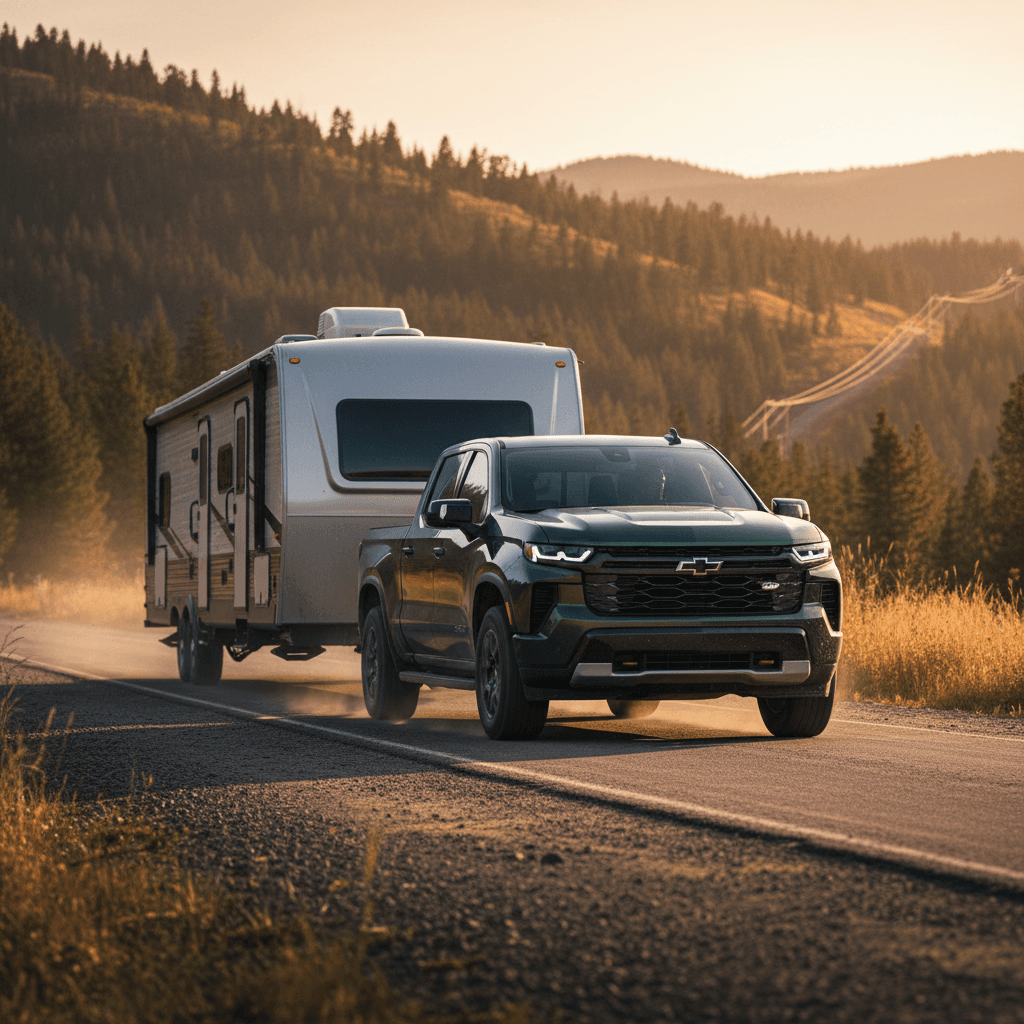
If you’re looking at an electric truck for real work, a proper Chevy Silverado EV towing review matters more than any 0–60 time. The Silverado EV promises up to 12,500 pounds of towing, nearly 500 miles of range in some trims, and slick trailering tech, but how does it actually behave with a trailer hooked up, and how fast does the range fall when you’re pulling a camper, boat, or equipment?
Quick takeaway
Silverado EV towing overview
Chevrolet built the Silverado EV on GM’s Ultium platform, which means a low, heavy battery pack, dual‑motor all‑wheel drive, and a frame engineered from day one with towing in mind. Across the lineup, the Silverado EV currently offers a maximum conventional tow rating of 12,500 pounds, with a fleet‑only variant targeting 20,000 pounds down the road. That puts it in the same neighborhood as a well‑equipped gas Silverado 1500 and ahead of the Ford F‑150 Lightning’s 10,000‑pound max rating.
Headline Silverado EV towing numbers
Tow ratings vs. reality
Towing capacity by trim and configuration
Unlike a traditional half‑ton lineup with dozens of combinations, the Silverado EV range is simpler but still varies quite a bit in towing and payload depending on trim and battery pack. Here’s how the headline numbers shake out for current retail and fleet‑focused models:
Chevy Silverado EV towing capacity by trim (current and announced)
Approximate factory tow and payload specs for major Silverado EV trims. Always check the specific truck’s door‑jamb label and owner’s manual before towing.
| Trim | Max Tow Rating | Payload (approx.) | Battery/Range Notes |
|---|---|---|---|
| WT (Work Truck) | 10,000 lb | ~1,440 lb | Available in multiple packs; Max Range WT can exceed 490 miles unloaded |
| WT Max Tow fleet | 12,500–20,000 lb (fleet) | Varies | Special max‑tow fleet variants target up to 20,000 lb conventional towing |
| LT | 10,000–12,500 lb | ~1,300–1,500 lb | Extended and Max packs around 390–410+ miles of range unloaded |
| RST | 10,000–12,500 lb | ~1,300 lb | Performance‑oriented, 760 hp in Wide Open Watts; range up to ~460+ miles with Max pack |
| Trail Boss (2026+) | 12,500 lb | ~2,100 lb | Off‑road trim with lift and 35" tires; GM‑estimated 478‑mile Max Range option |
Numbers shown are manufacturer ratings; real‑world range while towing is discussed in the next section.
How this compares to gas trucks
Real‑world towing range: what you actually get
Range is where electric truck towing stops being abstract and becomes very real. The Silverado EV’s big Max Range battery can deliver over 490 miles of EPA‑rated range in some WT configurations when unloaded, which is a real advantage over the F‑150 Lightning. But hook up a heavy, boxy trailer and you should mentally cut that figure nearly in half.
- With a ~9,000‑lb flatbed and tractor, early drives of the WT suggest roughly a 50% drop in range at highway speeds.
- Chevy’s own software assumes about a 50% reduction when it detects a trailer and instantly adjusts the remaining‑range estimate.
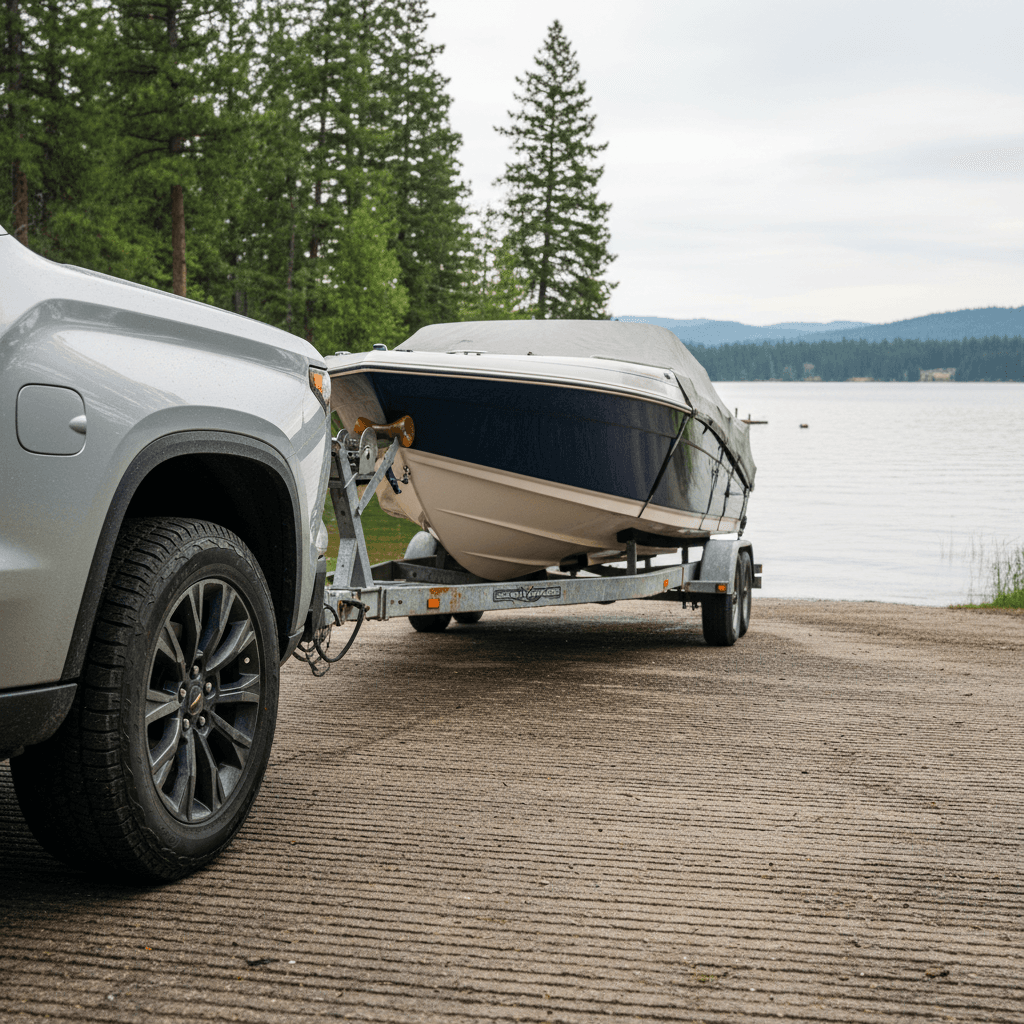
- Lighter, more aerodynamic trailers (or slower driving) can do better, owners report ~1.4–2.0 mi/kWh with midsize boats at 35–65 mph, versus 2.3–2.7 mi/kWh unladen in similar conditions.
In practice, that means a Max Range WT that shows ~450–490 miles of range empty might give you more like 220–260 miles between charges with a heavy tandem‑axle camper or equipment trailer at 65–70 mph. That’s still more headroom than most current EV trucks, but it’s not the same set‑it‑and‑forget‑it experience as a 36‑gallon gas tank.
Speed and aero matter more than weight
On‑road towing experience: power, stability, and braking
Where the Silverado EV really shines is in how it feels with a trailer attached. The Ultium platform’s battery pack sits between the frame rails, giving the truck a very low center of gravity, and every trim uses dual motors with all‑wheel drive. That translates into confident, drama‑free towing even when you’re close to the 10,000‑pound mark.
How the Silverado EV feels when towing
Electric torque and low center of gravity change the experience compared with a gas truck.
Instant torque
Stability and control
Braking and regen
Reviewers who’ve towed near the WT’s 10,000‑lb rating describe the truck as planted and confident, with the powertrain barely breaking a sweat. The main complaint so far isn’t capability, but visibility: the standard mirrors are more "half‑ton daily driver" than "HD tow rig," so serious towers will want to pay attention to mirror options or aftermarket solutions.
Boat and camper towing sweet spot
Trailering tech, cameras, and Super Cruise
Hardware is only half the story. Chevy has spent years refining its trailering tech on gas Silverados, and most of that toolbox carries over, or improves, in the Silverado EV. The truck can be equipped with the Advanced Trailering System, a Trailering In‑Vehicle App, and on certain trims, GM’s latest Super Cruise hands‑free driver assistance that works even while towing.
Key Silverado EV trailering technologies
More than just a hitch and a rating sticker.
Advanced Trailering System
Super Cruise with trailer support
- Multiple camera views, including hitch guidance, can take a lot of the stress out of lining up and backing into tight sites.
- Integrated trailer brake controller and Tow/Haul mode tailor torque delivery and braking for smoother launches and descents.
- The navigation system factors trailer weight into energy estimates and automatically adjusts range when it detects a trailer on the hitch.
Don’t over‑trust driver assistance
Charging and route planning when you’re towing
The Silverado EV’s 800‑volt architecture and 350‑kW peak DC fast‑charge rate are a real advantage when you’re hauling. Under ideal conditions, you can add about 100 miles of range in roughly 10 minutes, handy when your effective towing range is half the EPA figure. The problem isn’t speed; it’s charging station layout.
The good news
- High peak charge rates make it realistic to run a "drive 2–3 hours, top off 20–30 minutes" towing rhythm.
- GM’s route planning can suggest high‑speed chargers along your route and adjust energy estimates once it detects a trailer.
- Partnerships with major charging networks and access to Tesla’s Supercharger network via NACS expand your options over time.
The catch
- Many chargers today are nose‑in or back‑in only, not pull‑through. You may have to unhitch the trailer to plug in.
- Backroads and rural routes with good campgrounds or lakes can still be sparse on reliable DC fast chargers.
- Cold weather, headwinds, and high speeds can compound towing range losses, forcing more frequent stops.
Plan like a trucker, not a commuter
Silverado EV vs. F‑150 Lightning for towing
If you’re cross‑shopping electric trucks specifically for towing, the Silverado EV’s numbers look compelling next to the Ford F‑150 Lightning. The Lightning tops out around 10,000 lb of towing; the Silverado EV reaches 12,500 lb in several trims, with a fleet variant targeting 20,000 lb. More importantly, the Chevy’s larger battery options give you substantially more unloaded and towing range.
Towing comparison: Silverado EV vs. F‑150 Lightning
Focusing only on towing‑relevant traits.
Range & charging
Driving & stability
The flip side is availability and price. Lightnings are already fairly common on the used market, sometimes at meaningful discounts, while the Silverado EV is still rolling out in phases. If you’re shopping used specifically, your local market may dictate which truck is realistically on the table right now.
How Recharged can help compare trucks
Is the Silverado EV a good tow rig for you?
Whether the Silverado EV can replace your current tow vehicle comes down less to raw tow rating and more to your patterns. If you mostly tow locally, boats to the lake, a couple hours to the campground, equipment to job sites, the truck’s strengths line up nicely with your needs. If you regularly crush 500‑mile days with a tall fifth‑wheel, today’s EV ecosystem is still catching up.
Who the Silverado EV works best for
Regional campers and boaters
If most of your trips are 100–200 miles each way, the Silverado EV’s towing range and fast‑charge speeds are workable, especially with the larger battery packs.
Contractors and work fleets
The WT’s high unloaded range, strong low‑speed torque, and offboard power output make it ideal for hauling tools and equipment around a metro area or between nearby job sites.
Suburban families with occasional towing
For households that daily‑drive a truck and tow a few weekends a year, the Silverado EV offers quiet commuting and zero tailpipe emissions without giving up the ability to pull a camper or toys.
Long‑haul RVers and heavy livestock haulers
If you routinely run multiple states a day with heavy, high‑profile trailers, charging logistics and range penalties mean a diesel 2500/3500 still makes more sense, for now.
Watch your payload when you load up
Practical towing tips for EV truck owners
Once you understand the Silverado EV’s strengths and limits, good habits can make towing surprisingly smooth. These best practices apply to any EV truck, but the details here are tailored to Chevy’s setup.
Silverado EV towing best practices
1. Set up trailer profiles in the app
Use the in‑vehicle Trailering App to create profiles for each trailer you own. Log dimensions and weights so the truck’s range estimates and driver‑assistance behavior are as accurate as possible.
2. Use Tow/Haul mode and adjust regen
Engage Tow/Haul mode before you pull out. It remaps torque delivery and can boost regen on descents. Try different regen levels in an empty parking lot so you know how the truck feels before you hit a mountain pass.
3. Start your day with 80–90% SOC
Charging to 100% every night isn’t great for long‑term battery health. For road trips, leaving at 80–90% and quick‑charging during the day is usually faster overall, especially with a big Ultium pack.
4. Aim for 2–3 hour stints
Plan to stop for DC fast charging every 120–180 miles when towing. That keeps you in the sweet spot of the battery’s charge curve and aligns with natural breaks for food and fuel (for you, not the truck).
5. Favor pull‑through chargers and easy exits
When you can, choose stations with pull‑through layouts or extra space that let you stay hitched. It saves time and reduces the hassle of re‑hooking in a crowded parking lot.
6. Test your setup close to home first
Before a big trip, do a shakedown tow within 30–50 miles of home. Watch your mi/kWh, braking feel, and how the range estimate behaves. You’ll start your first real trip with realistic expectations.