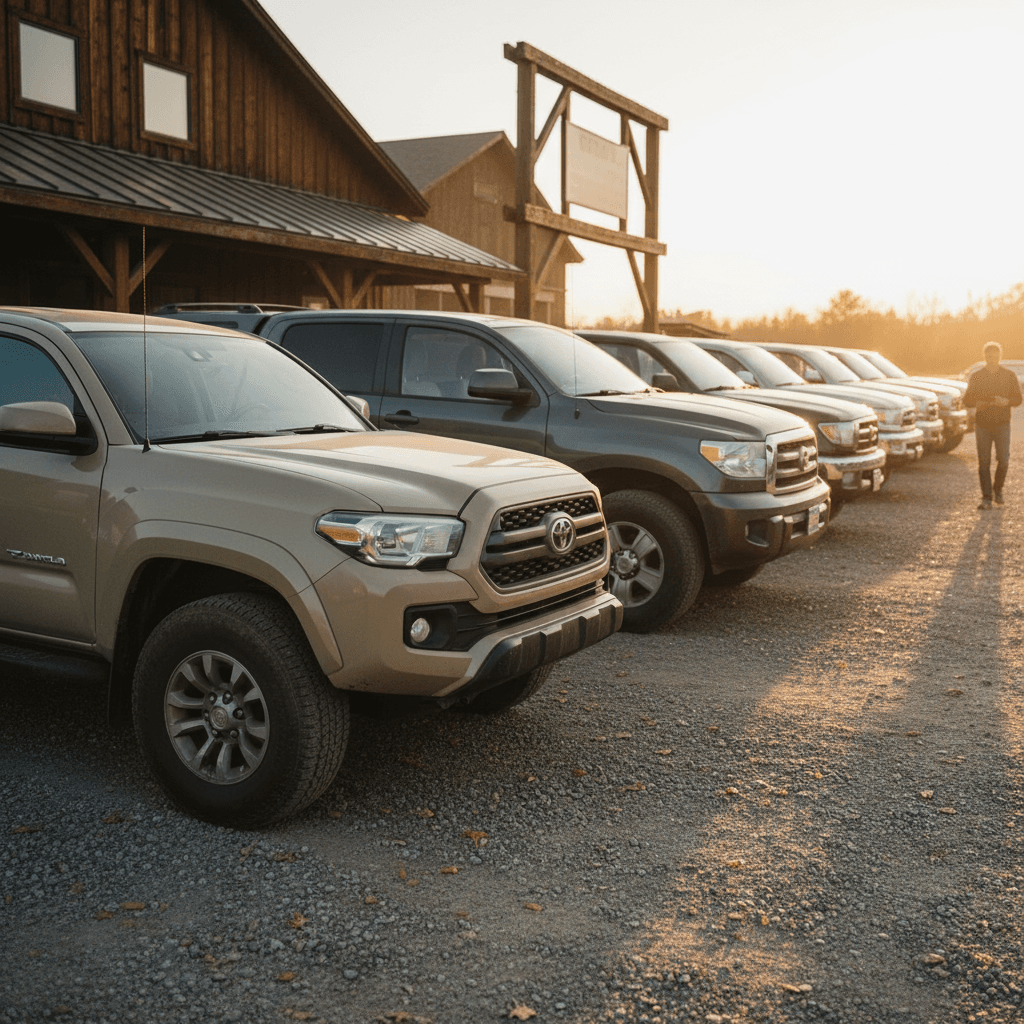
If you’re shopping for a used Toyota truck, you’re already on the right track. Toyota pickups have earned a reputation for going hundreds of thousands of miles, holding their value, and doing real work without drama. The trick is matching the right Tacoma or Tundra to your budget, your towing needs, and how you actually drive, then making sure you don’t buy into someone else’s problems.
What this guide covers
Why Used Toyota Trucks Are So Popular
In study after study of long‑lasting vehicles, the Toyota Tacoma and Tundra consistently rank among the trucks most likely to reach high mileage. Lists of the “longest‑lasting vehicles” for 2025 are dominated by Toyota models, and both the Tacoma and Tundra appear alongside Sequoia, 4Runner, and other Toyota stalwarts. That combination of durability and relatively low ownership cost is exactly why used Toyota trucks often sell fast and hold their value.
Core strengths of used Toyota trucks
Why buyers keep coming back to Tacoma and Tundra
Durability & longevity
Everyday usability
Strong resale value
The downside of popularity
Tacoma vs. Tundra: Which Used Toyota Truck Fits You?
Used Toyota Tacoma: midsize all‑rounder
- Size: Easier to park and maneuver, especially in cities or tight driveways.
- Use case: Daily driving, weekend home‑improvement runs, light towing, moderate off‑roading.
- Engines: Four‑cylinders and V6 options depending on year; manual transmissions available on many older trucks.
- MPG: Generally more fuel‑efficient than a comparable full‑size truck.
Used Toyota Tundra: full‑size workhorse
- Size: Full‑size footprint with more interior space and bed volume.
- Use case: Regular towing, hauling heavy loads, family road trips with gear.
- Engines: Strong V8 options through 2021 and powerful twin‑turbo V6 and hybrids from 2022‑up.
- Towing: Properly equipped Tundras can tow well over 10,000 pounds in many model years.
- Choose a used Toyota Tacoma if you want a truck that’s easy to live with every day and only tow or haul moderate loads.
- Choose a used Toyota Tundra if you routinely tow campers, boats, or trailers, or you simply prefer the space and stability of a full‑size pickup.
Reliability and Longevity: What the Data Says
Why used Toyota trucks have a reputation for going the distance
Think condition, not just mileage
Best Used Toyota Tacoma Years (and Years to Avoid)
The Tacoma earned its loyal following because, overall, it’s tough and trustworthy. But no truck is perfect. Certain years have more complaints about frame rust, paint issues, or transmission behavior, and those are the ones to be cautious with, especially if you’re paying a premium because it’s a Toyota.
Used Tacoma reliability snapshot
A high‑level look at commonly recommended years and years frequently flagged for issues. Always verify any individual truck’s history.
| Generation | Model years | General reputation | Key notes |
|---|---|---|---|
| 1st gen (1995–2004) | 2000–2004 | Very durable but rust‑prone | Excellent mechanical longevity but watch for severe frame corrosion, especially in rust‑belt states. |
| 2nd gen (2005–2015) | 2005–2010 | Approach with caution | More reports of transmission complaints and frame rust; 2006–2009, 2011–2012 are widely flagged as problem years. |
| 2nd gen (2005–2015) | 2012–2015 | Often recommended | Fewer major complaints overall; still inspect thoroughly for frame rust and prior accident damage. |
| 3rd gen (2016–present) | 2016–2017 | Years to be careful with | Owner reports highlight hesitant or inconsistent automatic transmissions in many trucks. |
| 3rd gen (2016–present) | 2018–present | Mixed but improving | Later trucks benefit from updates; still drive several examples to judge transmission feel for yourself. |
This table is a starting point, use it along with a professional inspection and a vehicle history report.
Tacoma rust is not a small problem
Best Used Toyota Tundra Years and Towing Capacity
If you’re shopping for a used Toyota Tundra, you’re usually thinking about towing and payload. The Tundra has long been respected as a stout, reliable tow rig, with many second‑generation trucks capable of pulling around 10,000 pounds when properly equipped. From 2022 on, Toyota moved to powerful twin‑turbo V6 and hybrid powertrains with even stronger tow ratings in many trims.
Typical Toyota Tundra tow ratings by era
Approximate maximum tow ratings for common Tundra configurations. Always check the specific truck’s door‑jamb sticker and owner’s manual before towing.
| Model years | Max towing (approx.) | Engines/highlights | Shopping notes |
|---|---|---|---|
| 2000–2006 | Up to ~7,200 lbs | Early V8 and V6 options | Good basic trucks but not powerhouses; check rust and age‑related wear carefully. |
| 2007–2013 | Up to ~10,400 lbs | 5.7L V8 becomes the towing favorite | Strong and simple; popular with towers, so inspect transmissions and rear suspensions for heavy use. |
| 2014–2021 | Roughly 9,800–10,500+ lbs | Refined 5.7L V8, updated styling | Still V8‑powered with robust reputations; 2014–2016 are often highlighted for reliability and capability. |
| 2022–present | Roughly 8,000–12,000 lbs | Twin‑turbo V6 and hybrid | More efficient with strong torque; be aware of newer‑tech complexity and open recalls. |
Numbers are rounded; actual capacity depends on engine, axle ratio, cab/bed configuration, and equipment.
Generally well‑regarded Tundra years
Don’t ignore recent recalls
Checklist: How to Inspect a Used Toyota Truck
Used Toyota truck pre‑purchase checklist
1. Start with the frame and underbody
Look for heavy flaking rust, soft spots you can poke through with a screwdriver, or fresh undercoating that might hide corrosion, especially on older Tacoma and Tundra models from snowy or coastal regions.
2. Verify maintenance and service records
Ask for oil‑change receipts, timing‑belt or spark‑plug intervals where applicable, and documentation of coolant and transmission‑fluid changes. A thick folder of records is worth real money.
3. Check for open recalls and completed repairs
Use a VIN lookup through Toyota or NHTSA to see if any recalls apply, and confirm with paperwork that the work was done. This is especially important on late‑model trucks.
4. Evaluate engine and transmission behavior
On a test drive, listen for cold‑start rattles, misfires, or whining. Pay close attention to automatic‑transmission shifts on 2016–2017 Tacomas and any Tundra that has towed heavy loads.
5. Inspect suspension, steering, and tires
Clunks over bumps, wandering steering, or uneven tire wear can indicate worn ball joints, bushings, or shocks from hard use, common on trucks that lived off‑road or carried heavy loads.
6. Scan electronics and safety features
Confirm that backup cameras, parking sensors, lighting, and driver‑assist features all work as intended. On newer trucks with large touchscreens, cycle the system and check for glitches.
7. Get a professional inspection
Even if you’re mechanically inclined, a pre‑purchase inspection by a trusted shop, or, on EVs, a high‑voltage battery health report like the Recharged Score, can save you from a five‑figure mistake.
Budget, Prices, and What You Actually Get
Because used Toyota trucks hold their value so well, it’s important to be realistic: for the same money that buys a lightly used domestic truck, you might be shopping older or higher‑mileage Toyota metal. That’s not inherently bad, many buyers would rather have an older, proven Toyota, but you should understand what your budget can reasonably buy.
What different budgets typically buy
Exact prices vary by market and condition, but here’s how things usually break down in the U.S.
Around $15,000
$20,000–$30,000
$30,000+
How Recharged can help with pricing
Ready to find your next EV?
Browse VehiclesWhere EVs Fit In: Hybrids and Electric Trucks
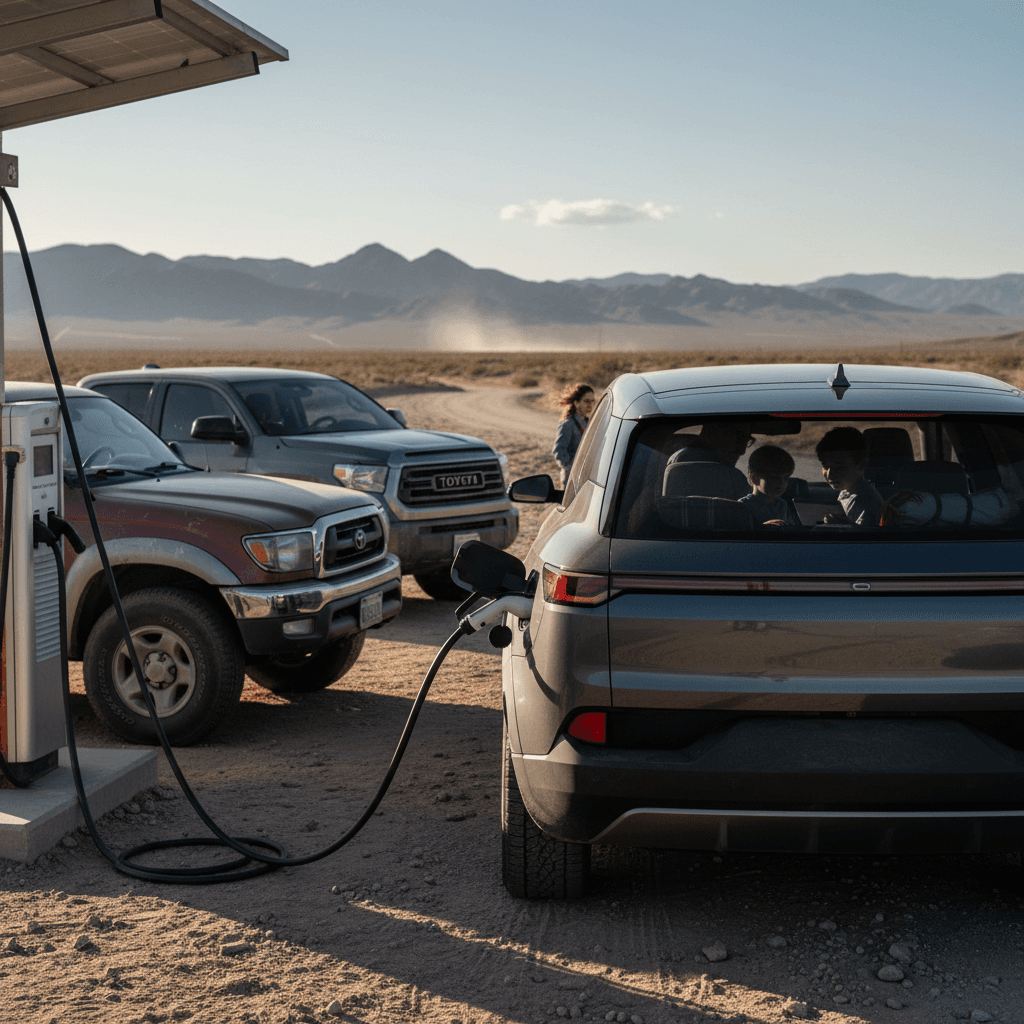
You might be focused on a conventional gas Tacoma or Tundra, but it’s worth looking at how electrification is changing the truck market. Toyota has launched hybrid versions of the Tundra, and other brands offer fully electric pickups like the Ford F‑150 Lightning and Rivian R1T. If you’re open to a different badge, a used electric truck can deliver serious torque and low running costs, especially if most of your trips fall within its real‑world range.
Traditional used Toyota truck
- Pros: Proven hardware, easy fueling, wide service network, and long‑term durability.
- Cons: Higher fuel costs, especially for V8 Tundras used mainly around town.
- Best for: Owners who tow often, live far from public chargers, or simply prefer Toyota’s track record.
Used hybrid or electric truck
- Pros: Instant torque, quiet operation, and significantly lower energy and maintenance costs.
- Cons: Higher upfront price and the need to understand range, charging, and battery health.
- Best for: Daily commuting, short‑to‑medium‑distance towing, and owners with home or workplace charging.
Battery health matters most on EVs
FAQ: Used Toyota Trucks
Frequently asked questions about used Toyota trucks
Bottom Line: Choosing the Right Used Toyota Truck
A used Toyota truck can be one of the most dependable tools you’ll ever own, but only if you buy the right truck at the right price. Start by deciding whether a Tacoma’s maneuverability or a Tundra’s towing strength better fits your life. Focus on well‑regarded model years with solid service history, and never compromise on frame condition or unresolved recalls just because the badge says Toyota.
From there, line up your financing, compare options, and, if you’re also considering hybrids or electric trucks, lean on tools like the Recharged Score to understand long‑term costs and battery health. Take your time, ask hard questions, and you’ll end up with a truck, gas, hybrid, or electric, that you can count on for years to come.