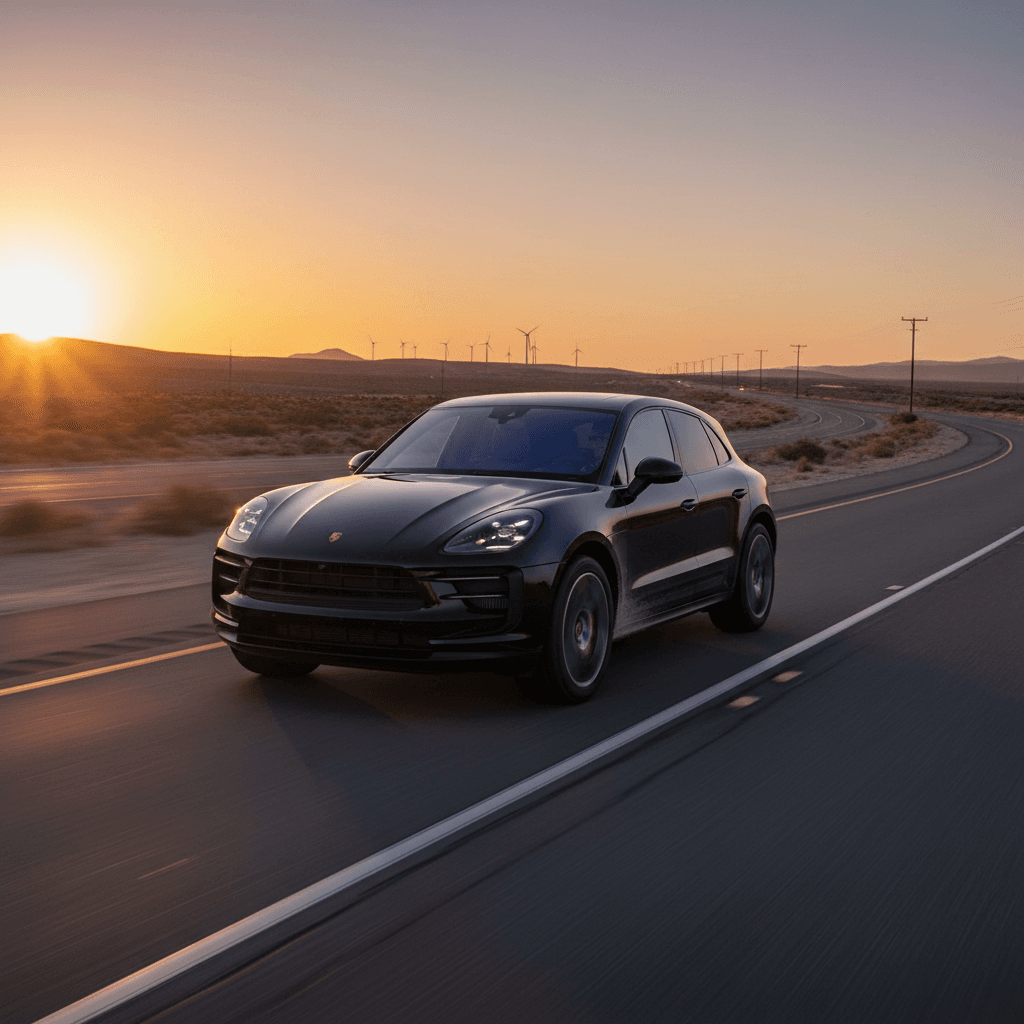
If you’re eyeing a Porsche Macan Electric, you’re probably wondering less about brochure numbers and more about what it will actually do on the interstate. EPA estimates are helpful, but what matters on a long run between chargers is the real-world highway range at 70–75 mph with traffic flowing and climate control running.
Quick answer
Why highway range matters on the Macan Electric
Around town, the Macan Electric feels like it has endless range. Regenerative braking is constantly topping the battery up, average speeds are lower, and you’re rarely staring down a 150‑mile stretch of empty map. On the highway, everything flips. Aerodynamic drag ramps up, regen is almost irrelevant, and you start to care, deeply, about how far the car will really go at 70–75 mph between fast chargers.
The good news: Porsche’s first electric SUV is impressively efficient for a performance-focused, nearly 5,300‑lb crossover. Independent tests have shown that the Macan Electric’s highway range tracks fairly closely to its EPA numbers when you drive it like most people actually do on an interstate, fast lane, traffic ebb and flow, climate control set to comfortable.
Think in legs, not just total range
Macan Electric battery and EPA range basics
Every current Porsche Macan Electric variant is built around the same large pack: roughly 95 kWh usable (about 100 kWh gross), paired with an 800‑volt electrical architecture for very fast DC charging. You don’t need to remember those numbers to enjoy the car, but they matter when you’re comparing real‑world highway range to other EVs.
Porsche Macan Electric: battery and EPA range overview
Key figures for the 2025 Macan Electric lineup as of early 2026. Values may be updated as Porsche adds trims or revises estimates.
| Trim (MY25 USA) | Battery (usable) | Drive | EPA range (mi, est./certified) |
|---|---|---|---|
| Macan Electric (base RWD) | ~95 kWh | RWD | 315 mi (EPA estimate) |
| Macan 4 Electric | ~95 kWh | AWD | 308 mi (EPA certified) |
| Macan 4S Electric | ~95 kWh | AWD | 288 mi (EPA certified) |
| Macan Turbo Electric | ~95 kWh | AWD | 288 mi (EPA certified) |
EPA ratings are for mixed driving. Expect lower range at a steady 70–75 mph.
Those numbers are for the full EPA test cycle, city and highway combined. On real roads, you’ll almost never see the EPA figure if you’re running 75 mph with the A/C on, but the Macan holds up better than many performance‑leaning EVs once you leave town.
Charging speed bonus
Real-world highway range at 70–75 mph: Macan 4, 4S, and Turbo
Let’s get into what most shoppers really want to know: with the cruise set around U.S. interstate speeds, how far does the Macan Electric actually go on a charge? We’ll focus on independent 70–75 mph loop testing and long‑distance reviews rather than lab numbers.
Macan Electric real-world highway range snapshot
Approximate results from independent 70–75 mph testing and long road drives, on a full charge in mild conditions.
Macan 4 Electric
Real-world highway range: ~260–282 miles at 70–75 mph.
- Car and Driver 75‑mph test: about 260 miles.
- MotorTrend 70‑mph “Road‑Trip Range”: 282 miles.
That’s roughly 85–90% of its 308‑mile EPA rating.
Macan 4S & Turbo Electric
Real-world highway range: Macan 4S around 240 miles; Turbo similar or slightly lower depending on wheels and tires.
- Car and Driver 75‑mph test: 4S around 240 miles.
- Turbo trades a bit more range for power and stickier rubber.
Plan legs in the 190–220‑mile range for painless trips.
If you’re used to older performance EVs that would shed 30–40% of their rated range on the highway, the Macan’s numbers are reassuring. In mixed British motorway driving, one long‑term review saw energy use of about 3.0–3.5 miles per kWh at typical 70‑mph flows. On a 95 kWh usable pack, that suggests a theoretical 285–330 miles if you drove from 100% down to zero in perfect weather, very much in line with the formal test loops above.
A simple rule of thumb
• Macan 4: 250–270 miles of comfortable 70–75 mph range in mild weather.
• Macan 4S/Turbo: 220–240 miles at the same speeds.
Then build in a buffer for hills, cold, headwinds, or heavy loads.
How driving style and conditions change your Macan EV range
You don’t have to baby a Macan Electric, it’s still a Porsche, but the way you drive and the conditions you drive in will absolutely move your real-world highway range up or down by 15–30%.
Biggest factors that change highway range in a Macan Electric
Speed: 65 vs 80 mph
Above about 60 mph, aerodynamic drag climbs quickly. In many EVs, jumping from 65 to 80 mph can cost you 15–25% of your range. For the Macan, a relaxed 68–70 mph cruise can be the difference between needing a top‑off or gliding to your planned stop.
Temperature and climate control
Cold batteries hold less usable energy and charge slower. Running the heater at 10°F can nibble away at your highway number, while blazing‑hot days with the A/C working hard also cut into efficiency. Preconditioning the cabin while plugged in can claw some of that back.
Wheels, tires, and options
Big wheels and sticky performance tires look great and sharpen handling, but they add rolling resistance. A Turbo or 4S on 21–22‑inch rubber will typically go fewer highway miles per kWh than a base Macan or Macan 4 on more modest wheels.
Load, roof racks, and trailers
Fill the Macan with people and luggage, hang a ski box or bikes on the roof, or tow up to its rated capacity, and your aero and weight penalties stack up quickly. It’s not hard to lose another 10–20% of range with a loaded roof box at 75 mph.
Elevation and wind
Long climbs at highway speeds use a lot of energy, even if you get some of it back coming down. Strong headwinds can feel like driving uphill in an invisible canyon. Tailwinds, lucky you, can sometimes give you a range number that looks almost too good to be true.
Don’t compare your worst day to the brochure
How the Macan’s highway range compares to rival EV SUVs
When you stack the Macan Electric against other premium EV crossovers, its real-world highway range is competitive, especially considering its performance focus. It’s not the absolute longest‑legged SUV on sale, but its mix of usable highway range and ultra‑quick charging means you spend less time staring at a state‑of‑charge display and more time covering miles.
Macan Electric vs similar EV SUVs: highway range snapshot
Approximate independent 70–75 mph or “road‑trip” highway results where available, in mild conditions, for context. Exact numbers vary by wheel choice and test protocol.
| Model | Battery usable (approx.) | EPA range (top trim, mi) | Observed highway range* |
|---|---|---|---|
| Porsche Macan 4 Electric | ~95 kWh | 308 mi | ~260–282 mi |
| Porsche Macan 4S/Turbo | ~95 kWh | 288 mi | ~230–245 mi (est.) |
| Audi Q8 e‑tron | ~89 kWh | 285 mi | ~220–240 mi |
| BMW iX xDrive50 | ~105 kWh | 324 mi | ~270–290 mi |
| Genesis GV60 AWD | ~77 kWh | 294 mi | ~220–240 mi |
The Macan hangs near the front of the pack on highway legs, especially when you factor in its fast charging.
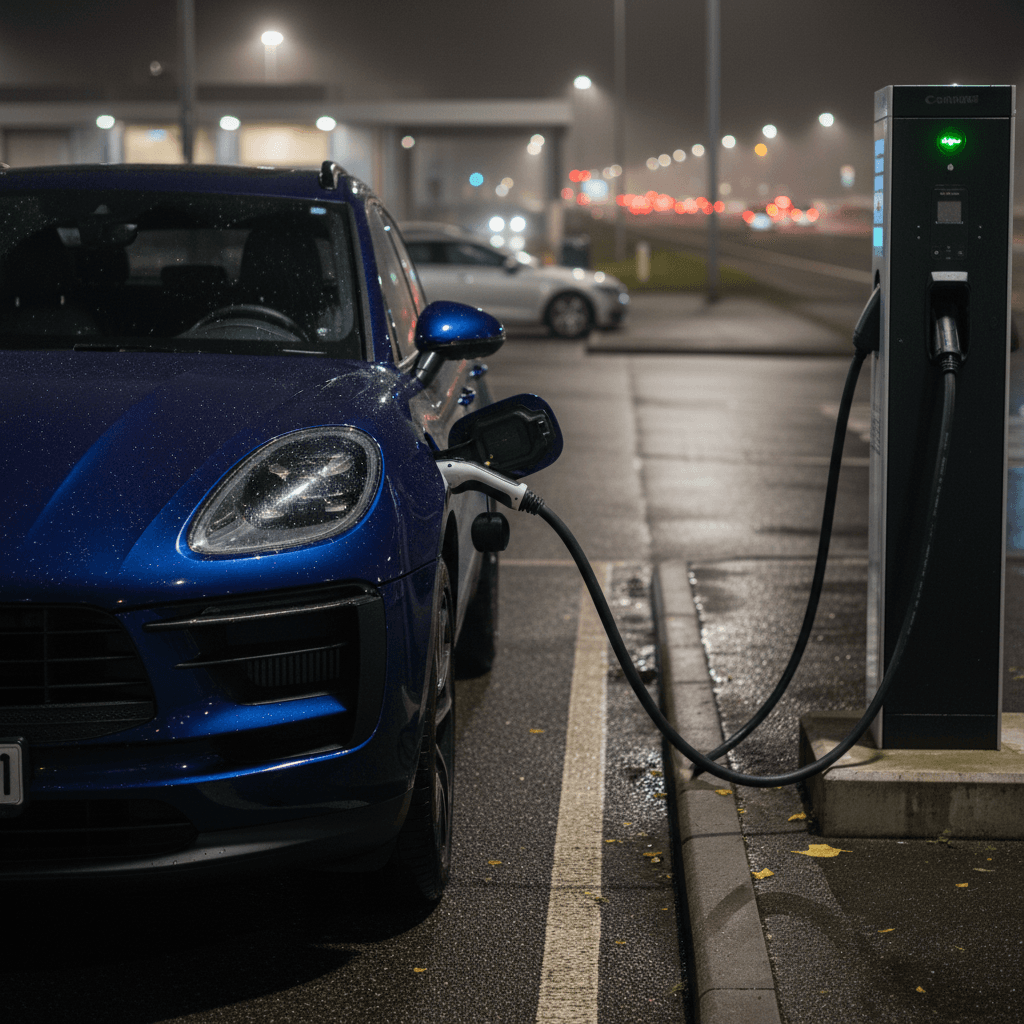
The BMW iX can go a bit farther per charge thanks to a slightly larger battery and very slippery aero, but the Macan claws back time at the charger. In many cases, you’ll arrive at your destination just as quickly, or quicker, in the Porsche because its 10–80% fast‑charge window is so short.
Planning a road trip in a Macan Electric
Living with the Macan Electric on the open road is less about nursing the battery and more about planning smart stops. The onboard navigation does a solid job of routing you to appropriate chargers and estimating how long you’ll need to plug in, but a little human judgment goes a long way.
Macan Electric road-trip planning checklist
1. Use the car’s trip planner
Start with the built‑in navigation, which can route you via DC fast chargers, estimate arrival state of charge, and suggest how long to charge. It’s a good first pass, especially in unfamiliar territory.
2. Assume 75–85% of EPA at highway speeds
For a Macan 4, plan around 250–270 highway miles per leg in good conditions. For a 4S or Turbo, use 220–240 miles. That way, surprises (construction, weather, detours) don’t become emergencies.
3. Target 10–70% fast-charge windows
The Macan charges fastest in the middle of its state‑of‑charge window. On a long haul, it’s usually quicker overall to stop more often for shorter 10–70% sessions than to push down to 0% and charge all the way to 100%.
4. Mind your wheels and cargo
If your Macan Electric wears big‑diameter wheels on sticky tires and you’ve packed it to the ceiling, give yourself extra margin on each leg. Likewise if you’ve added a cargo box or bike rack up top.
5. Precondition when possible
In cold weather, preheat the cabin and battery while you’re still plugged in. You’ll leave with full regen available sooner and avoid wasting precious highway miles just getting everything up to temperature.
6. Learn your personal number
After a couple of long trips, you’ll spot a pattern in your own driving, maybe you always see 3.1 mi/kWh at 72 mph. Use that as your real‑world yardstick rather than any single published figure.
How Recharged can help you road-trip with confidence
Ready to find your next EV?
Browse VehiclesUsed Macan Electric: what range to expect over time
Porsche warrants the Macan Electric’s high‑voltage battery for 8 years or 100,000 miles, with an expectation that most packs will still hold about 70% of their original capacity at that point. In practice, early‑life degradation tends to be steeper, then the curve flattens; many owners will see something like a 5–10% drop in the first few years, then a slower decline.
New or nearly new Macan EV
- Expect real‑world highway legs that match the test data: roughly 250–280 miles in a Macan 4, around 230–245 in a 4S/Turbo in mild weather.
- Degradation in the first 20–30k miles is usually modest if the car hasn’t been fast‑charged from low state‑of‑charge all the time.
- Wheel and tire choice will likely affect you more than age in the first couple years.
Higher‑mileage used Macan EV
- If the battery has lost, say, 10–15% usable capacity by 100k miles, your highway range drops by a similar percentage.
- A Macan 4 that once comfortably did 260–280 miles at 70–75 mph may now be more of a 220–240‑mile car on the same route.
- Battery‑health data from a proper diagnostic scan is worth its weight in gold when you’re comparing used examples.
Why guessing on battery health is risky
That’s exactly why Recharged built the Recharged Score. Our battery diagnostics give you a clear view of remaining capacity and help you translate that into realistic highway range expectations before you buy. When you already know whether a particular Macan EV is a 240‑mile highway car or a 210‑mile car for your use case, picking the right one gets much easier.
Porsche Macan Electric highway range FAQ
Frequently asked questions about Macan Electric real-world highway range
Key takeaways for Macan Electric buyers focused on highway range
- Expect roughly 260–282 miles of real-world 70–75 mph range from a Macan 4 Electric in good conditions, and around 230–245 miles from a Macan 4S or Turbo.
- Highway driving will usually deliver 80–90% of the EPA number, depending on speed, weather, wheels, and load.
- What you lose in absolute range, you largely gain back in very fast 10–80% DC charging, which keeps overall trip times competitive.
- Used Macan Electrics can still be excellent road‑trip companions if you verify battery health and remaining usable capacity before you buy.
- Planning conservative 200–240‑mile legs, using the car’s trip planner, and preconditioning in extreme temperatures will make the Macan Electric feel like the grand‑touring Porsche SUV it is.
If you’re cross‑shopping the Porsche Macan Electric, don’t let range anxiety overshadow what the car does well. Its real‑world highway range is honest, its charging speeds are genuinely impressive, and with a bit of planning it’s an easy tool for long‑distance travel. And if you’re looking at a used Macan EV, pairing this understanding of highway behavior with a trusted battery‑health report, like the Recharged Score, turns those numbers into confidence every time you merge onto the interstate.