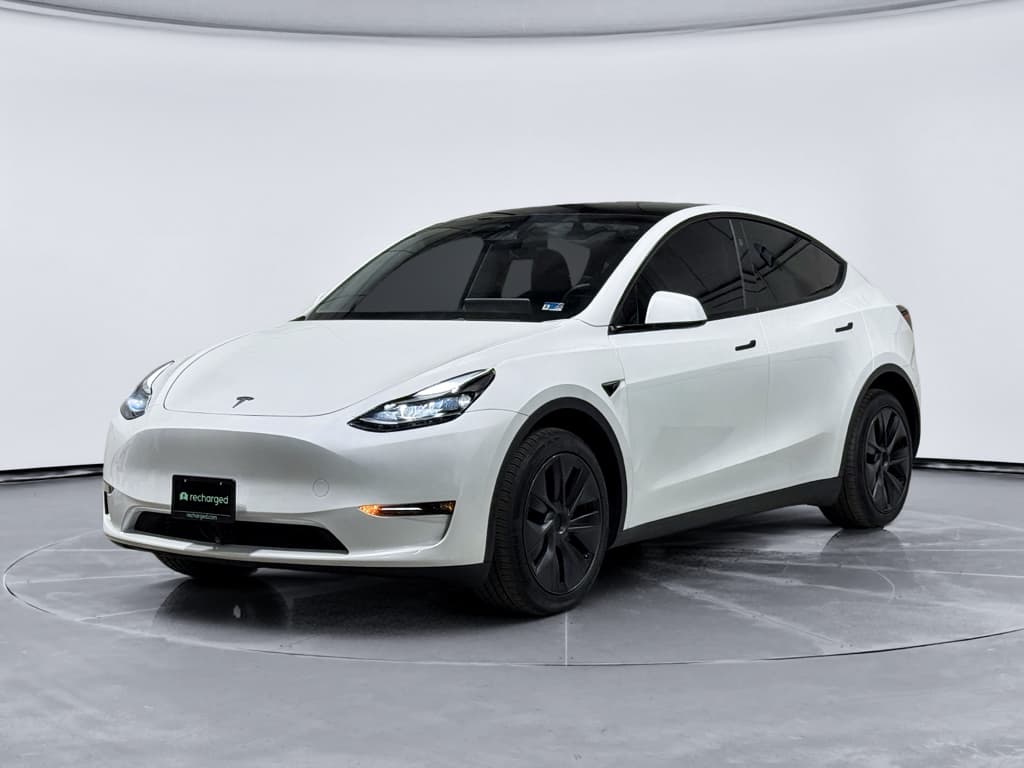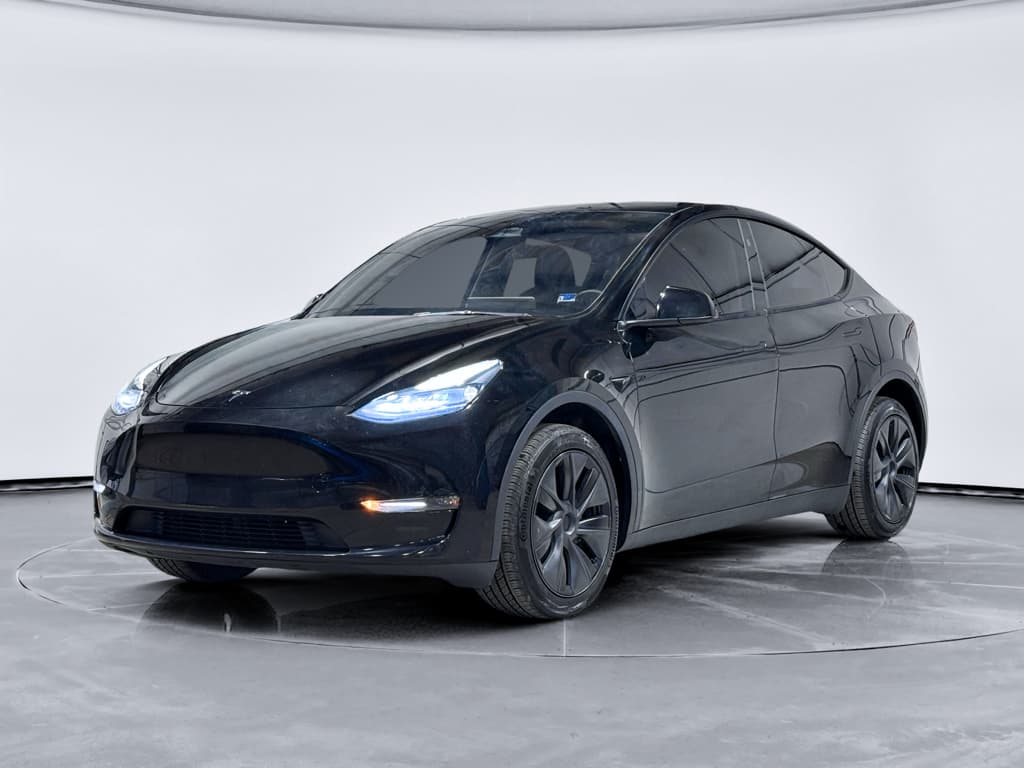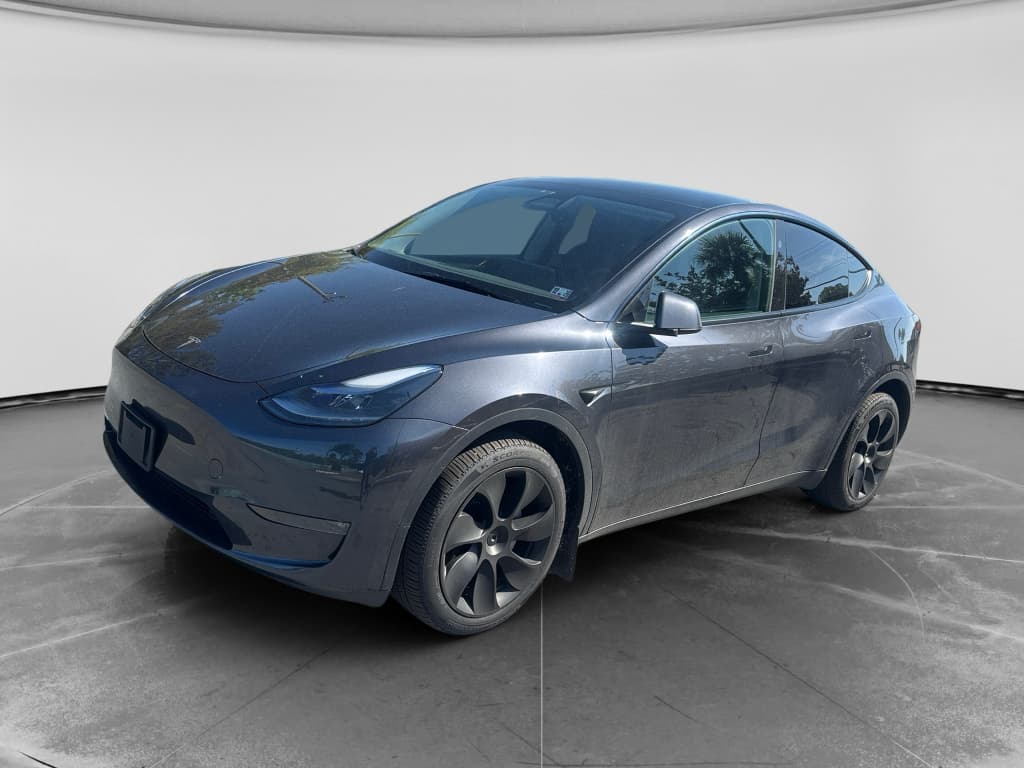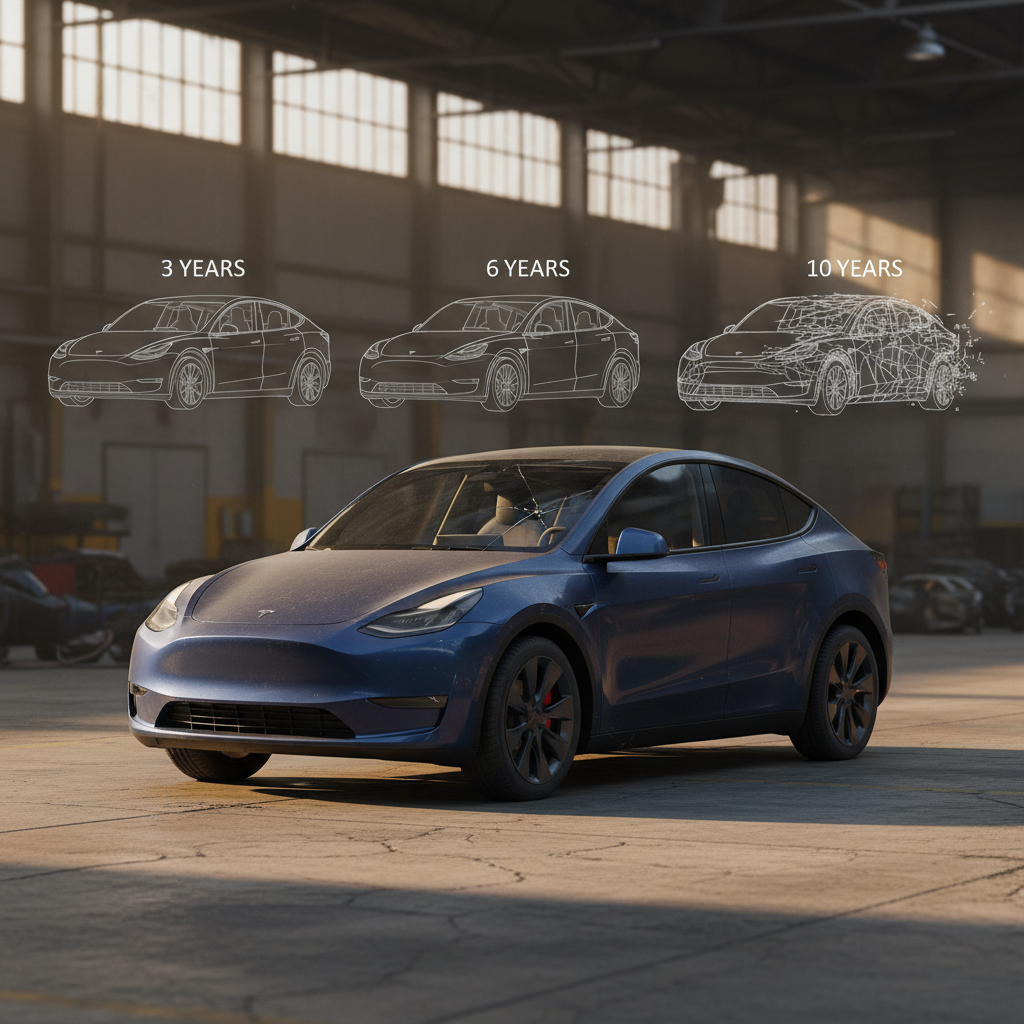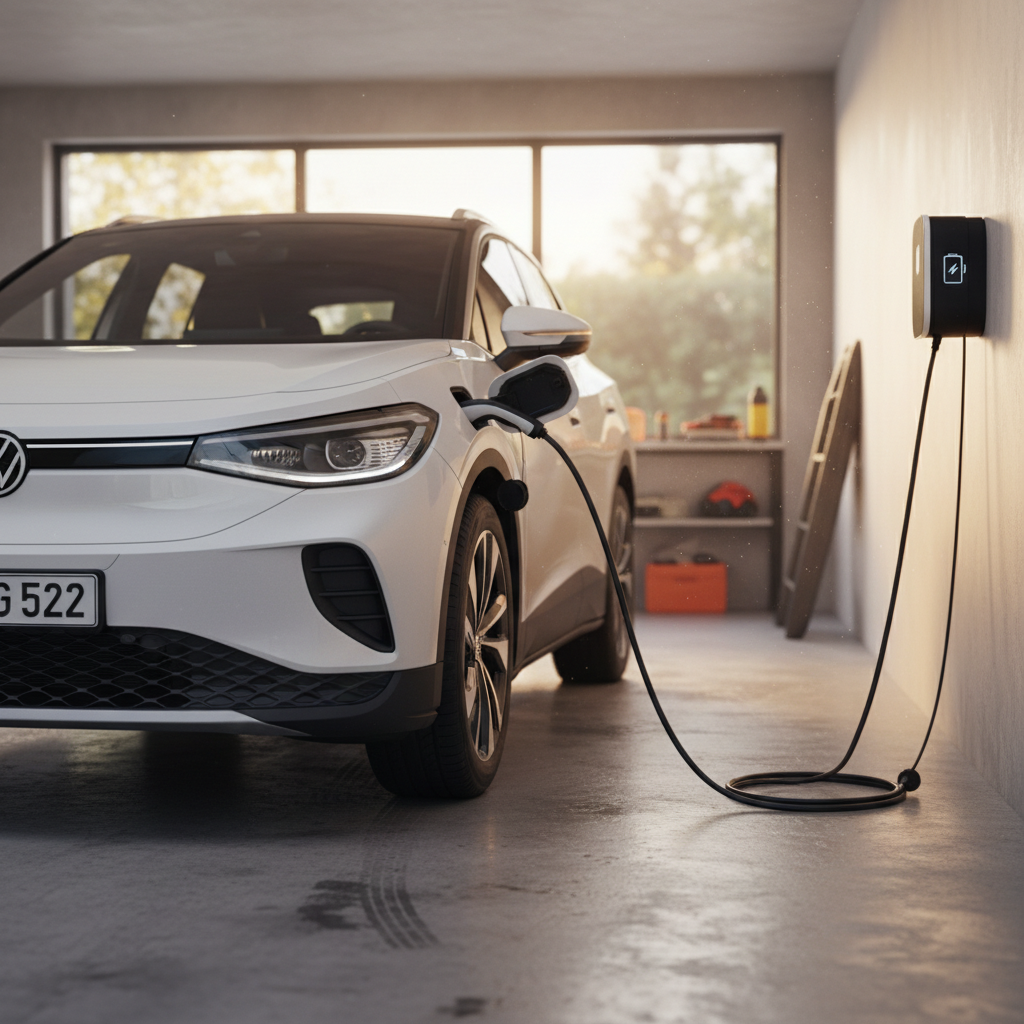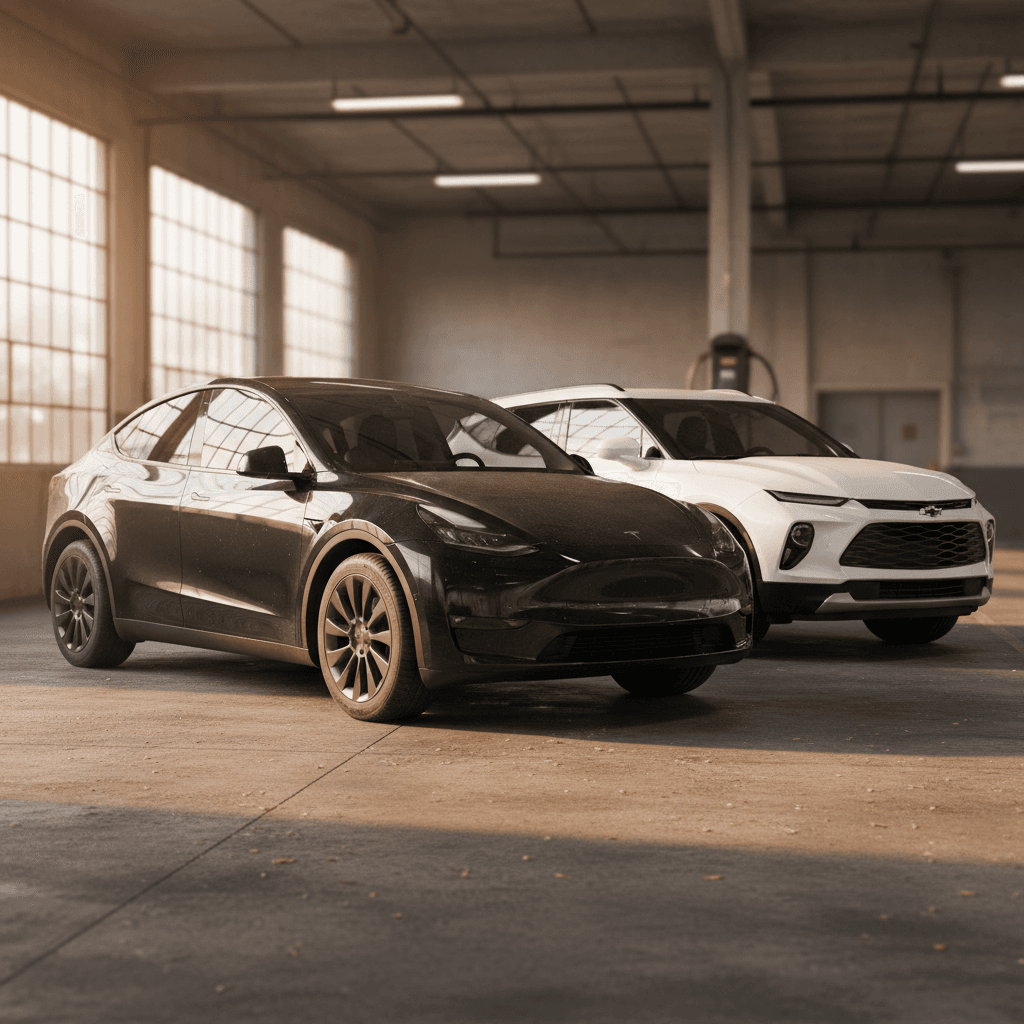
If you’re cross-shopping a used Tesla Model Y vs Subaru Solterra, you’re probably looking for a practical electric SUV that can handle daily family duty, bad weather, and the occasional road trip, without paying new‑car prices. Both are compact EV crossovers with standard all‑wheel drive available, but they approach the problem from very different philosophies.
Two very different takes on the same idea
Overview: Used Model Y vs Subaru Solterra
On the used market today, you’ll mostly see 2020–2024 Tesla Model Y examples and 2023–2025 Subaru Solterras. The Tesla has been around longer, with hundreds of thousands on the road in the U.S. The Solterra arrived for 2023 and is still a niche choice, so used inventory is thinner but often newer with fewer miles.
- Tesla Model Y: multiple battery options, RWD or AWD, 5 or 7 seats, 260–330+ miles EPA range depending on version and year.
- Subaru Solterra: dual‑motor AWD only, 5 seats, about 227 miles EPA range on 2023–2025 models, more for the refreshed 2026, and a strong safety story.
- Charging: Model Y gets native access to Tesla Superchargers; Solterra uses CCS fast charging now and NACS (Tesla port) starting with the updated 2026 model year in the U.S.
Think about your use case first
Quick spec comparison: used Tesla Model Y vs Subaru Solterra
Core specs: typical used Model Y vs 2023–2025 Solterra
Broad strokes comparison. Exact numbers vary by trim, year, and wheel size, but this gives you a realistic baseline for the used market.
| Spec | Used Tesla Model Y (Long Range AWD) | Used Tesla Model Y (RWD/Standard) | Subaru Solterra (2023–2025 AWD) |
|---|---|---|---|
| EPA range | ≈ 310–330 mi (depending on year/wheels) | ≈ 260–280 mi | ≈ 227 mi Premium / ≈ 222 mi Limited & Touring |
| Battery (gross, approx.) | 75–82 kWh | ≈ 60–70 kWh | 72.8 kWh |
| Drivetrain | Dual‑motor AWD | Single‑motor RWD | Dual‑motor AWD |
| 0–60 mph (manufacturer/independent tests) | About 4.4 s (Performance quicker) | ≈ 6.5–7.0 s | ≈ 6.1 s |
| Fast‑charge peak | Up to 250 kW on V3 Supercharger | Same | Up to ≈100 kW (2023–25); higher on 2026 refresh |
| Home AC charging | Up to 11.5 kW onboard | Up to 11.5 kW | 6.6 kW onboard (2023–25) |
| Ground clearance | ≈ 6.6 in | ≈ 6.6 in | 8.3 in |
| Seats | 5 or optional 7 | 5 | 5 |
| Cargo behind 2nd row | ≈ 30 cu ft | ≈ 30 cu ft | ≈ 23.8 cu ft |
| DC fast‑charge 10–80% (realistic) | ~25–35 min when conditions ideal | ~25–35 min | ~35–45 min on a 100 kW charger |
| Connector (U.S.) | NACS (Tesla) | NACS (Tesla) | CCS1 on 2023–25; NACS on 2026+ |
Specifications are representative U.S. figures for mainstream trims as of early 2026.
Specs are only part of the story
Range and efficiency: how far will you actually get?
Range is usually the first filter shoppers apply, and it’s where a used Tesla Model Y pulls clearly ahead of the Subaru Solterra, especially on the highway, where many Solterra owners report lower real‑world range than the EPA sticker would suggest.
Realistic range expectations
Assuming a healthy battery and mild weather, driven at U.S. highway speeds.
Used Tesla Model Y
- Long Range AWD: Many owners see ~260–290 miles at 70–75 mph when new; older/high‑mileage cars may be modestly lower.
- Standard/RWD versions: Typically more like 220–250 miles of honest highway range.
- Efficiency: Tesla’s aero and software tend to beat most rivals in Wh/mi.
Subaru Solterra
- EPA: 227 miles (Premium) or ~222 miles (Limited/Touring) on 2023–25 models.
- Real‑world highway tests: Around 200 miles at 75 mph has been common in instrumented tests.
- 2026+ refresh: Subaru is targeting ~285 mi EPA thanks to a slightly larger battery and better efficiency.
Don’t shop by EPA number alone
Charging experience: Tesla Supercharger access vs CCS networks
Charging is where the ownership experience really diverges. Tesla effectively built its own fuel network; Subaru leans on third‑party CCS fast‑charging providers like Electrify America, EVgo, and others, though newer Solterras will inherit access to that same Tesla Supercharger footprint via NACS.
Used Tesla Model Y: the easy button for road trips
- Native Supercharger access: You plug in, the car and charger handle payment and routing, and sites tend to be well‑maintained.
- Navigation integration: The route planner automatically chooses Superchargers based on your state of charge, temperature, and expected consumption.
- High peak power: Newer cars on V3 Superchargers can peak around 250 kW in ideal conditions, keeping average stop times short.
- Home charging: Strong 11.5 kW onboard AC charger means full overnight fills with a 48‑amp Level 2 setup.
Subaru Solterra: better for home‑base drivers (for now)
- CCS fast charging: 2023–2025 Solterras peak around 100 kW and, after a 2024 battery‑conditioning upgrade, can do 10–80% in about 35 minutes under good conditions.
- Network quality varies: CCS networks are improving but are still more hit‑or‑miss than Tesla’s in many regions, especially the rural U.S.
- Onboard AC charger: 6.6 kW on 2023–25 models means a full recharge at home typically takes 9–11 hours on a 240‑volt Level 2.
- Future NACS access: The 2026+ Solterra gains Tesla’s NACS port from the factory, and earlier cars are expected to gain some Supercharger access via adapters as networks open.
How Recharged can help on charging
AWD, snow, and light trails: which EV SUV feels more Subaru?
Both of these are marketed as do‑it‑all crossovers, but their all‑weather personalities differ. The Solterra is a Subaru first and foremost, tuned for confidence on bad pavement and slippery surfaces, while the Model Y is more of a tall performance hatchback that happens to have AWD.
AWD and capability comparison
Think traction, ground clearance, and how they feel when the weather turns nasty.
Subaru Solterra
- Standard dual‑motor AWD: Every Solterra comes with an electric take on Subaru’s long‑standing AWD reputation.
- Drive modes: Snow/Dirt and Deep Snow/Mud modes, plus hill‑descent and "Grip Control" for low‑speed off‑road crawling.
- Ground clearance: 8.3 inches, genuinely helpful on rutted roads, snow, and light trails.
- Off‑road manners: Tuned suspension and traction control feel very Subaru; it’s happy on forest roads, not just mall parking lots.
Tesla Model Y
- Traction: Dual‑motor AWD versions offer very strong traction and brisk acceleration; software can react faster than mechanical AWD systems.
- Ground clearance: Around 6.5–6.8 inches, fine for snow‑plowed roads, less ideal for deep ruts.
- Drive modes: Primarily road‑oriented; no adventure‑branded off‑road settings.
- Handling: Feels more like a sporty car on stilts than an off‑road crossover.
Who wins in winter?
Interior space, cargo and family practicality
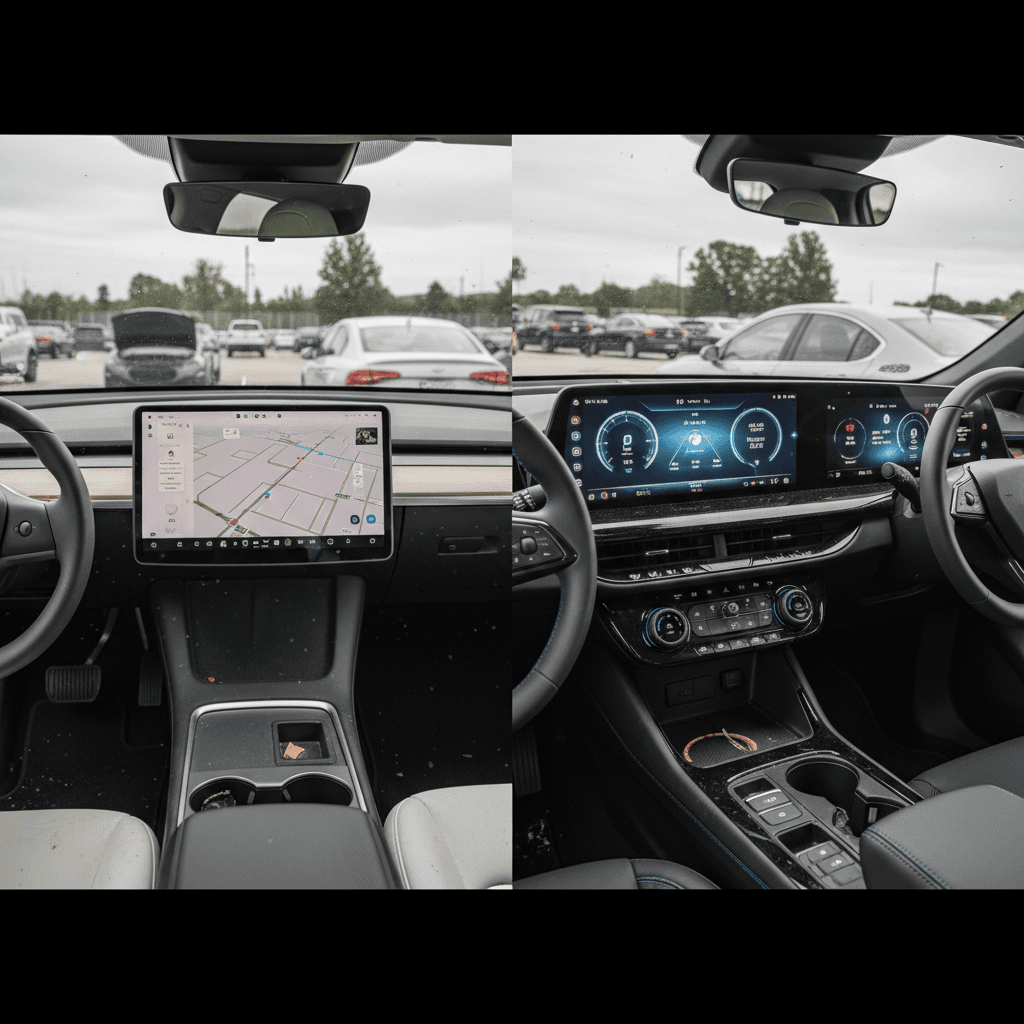
Both of these are compact crossovers on paper, but the way they use their space is quite different. If you care about rear‑seat room and cargo flexibility for kids, pets, and gear, you’ll want to sit in both before you decide.
Tesla Model Y
- Cabin design: Ultra‑minimalist, one central touchscreen runs almost everything, including HVAC and most driving settings.
- Space: Excellent rear legroom for this class; tall passengers should be comfortable. An optional cramped third row in some Model Y Long Range examples adds kid‑only seating.
- Cargo: Strong numbers with a large rear hatch, extra under‑floor storage, and a front trunk (frunk). Great for road trips and Costco runs.
- Interior feel: Clean and modern but some shoppers find materials and sound insulation a step behind luxury‑brand rivals.
Subaru Solterra
- Cabin design: More traditional dashboard with a driver display, central touchscreen, and more hard buttons. Easier transition if you’re coming from a gas Subaru.
- Space: Good front seating position and visibility. Rear seat and cargo area are a bit tighter than Model Y, especially in depth.
- Cargo: About 23.8 cu ft behind the second row, usable, but not class‑leading. There’s no frunk.
- Interior feel: Familiar Subaru ergonomics, with an emphasis on practicality and durable materials rather than tech minimalism.
Tech, safety, and driving assistance
Both of these SUVs have strong safety stories, but they deliver tech in very different ways. Tesla leans on over‑the‑air software updates and camera‑based driver assistance; Subaru leans on its EyeSight safety suite and more conventional ergonomics.
Tech and safety snapshot
What you’ll interact with every day behind the wheel.
Tesla Model Y
- Infotainment: Large central touchscreen running Tesla’s proprietary OS with built‑in navigation, streaming, and frequent OTA updates.
- Driver assistance: Autopilot standard on most used cars; many will have paid options like Enhanced Autopilot or Full Self‑Driving capability (beware of assumptions, check the spec sheet).
- Crash safety: Historically very strong crash‑test performance.
- Quirk: Nearly all controls, including wipers, mirrors, and even glovebox, are software‑driven. Some love it, some don’t.
Subaru Solterra
- Infotainment: 12.3‑inch touchscreen on most trims with Apple CarPlay/Android Auto, which Tesla still doesn’t offer.
- Driver assistance: Subaru EyeSight with lane‑keeping, adaptive cruise, and for 2024+ extra features like hands‑free low‑speed traffic jam assist on some trims.
- Crash safety: Strong crash‑test results and a Top Safety Pick+ rating from IIHS on recent model years.
- Controls: More physical buttons, more conventional feel, easier adjustment to if you’re EV‑curious but not tech‑obsessed.
Test the driver‑assist systems yourself
Reliability, battery health, and recalls to know about
Used EV shoppers worry, rightly, about long‑term reliability and battery health. Both the Model Y and Solterra are too new to have a 15‑year track record, but we do have meaningful owner data and some important recall history to consider.
Reliability signals from the field
Broadly, early Model Y reliability has improved versus the first wave of Model 3s, but build quality and service experiences can still be hit‑or‑miss regionally. Subaru’s track record with gas SUVs is excellent, but Solterra is its first mass‑market EV, co‑developed with Toyota. That means some classic “new‑platform” issues, in particular, software and HVAC recalls, have already surfaced, though they’re being fixed under warranty.
Battery health can’t be guessed from the odometer
Ownership costs, incentives, and resale value
Once you get past the test‑drive impressions, the big question is which EV SUV will cost you less to own, and leave you in a better position when it’s time to sell or trade again.
Tesla Model Y: higher demand, higher price
- Purchase price: Used Model Ys tend to command higher prices than Solterras of similar age and mileage because demand is strong and there’s a deep national buyer pool.
- Energy costs: High efficiency means lower electricity bills per mile vs many rivals, especially on highway trips.
- Maintenance: No oil changes, but watch for wear items like tires (performance EVs eat tires), suspension components, and out‑of‑warranty repair costs at Tesla service centers.
- Resale: Historically strong resale value; easier to resell nationwide thanks to brand recognition and Supercharger access.
Subaru Solterra: lower entry price, softer resale (for now)
- Purchase price: Because Solterra is less well‑known and range is modest on early years, used prices can be more approachable for a newer, low‑mileage vehicle.
- Energy costs: Less efficient than Model Y, so slightly higher energy cost per mile, especially at highway speeds.
- Maintenance: Subaru’s dealer network and familiar service processes may feel more comfortable if you’ve owned Subarus or Toyotas before.
- Resale: Narrower buyer pool and range anxiety concerns may hold values down relative to Tesla. That can be good news for buyers, but you shouldn’t count on top‑tier resale later.
Don’t forget used‑EV incentives
Which used EV SUV should you buy?
There’s no one‑size‑fits‑all answer, but after looking at range, charging, AWD, practicality, and costs, some patterns emerge that can guide you.
Who is better off in a used Model Y vs Solterra?
Match your driving profile to the right used EV SUV.
Choose a used Tesla Model Y if…
- You do frequent highway or cross‑country trips and want the simplest fast‑charging experience.
- Range matters more than ground clearance; you’re mostly on paved roads.
- You like minimalist, screen‑centric tech and value frequent software updates.
- You want the strongest resale value and the broadest buyer pool when you eventually sell.
Choose a used Subaru Solterra if…
- Your driving is mostly local or regional, with reliable home charging and only occasional road trips.
- You prioritize Subaru’s all‑weather image, ground clearance, and comfort on rough roads.
- You prefer traditional controls, CarPlay/Android Auto, and a Subaru/Toyota‑style dealer relationship.
- You want a newer, low‑mileage EV at a lower entry price, and you’re okay with modest range.
If you forced a purely rational call for most U.S. drivers, the used Tesla Model Y is the safer default: better range, better fast charging, and extremely strong market acceptance. But if your life is built around snow‑belt trails, you already trust your local Subaru dealer, and your trips are short, a well‑priced Solterra can absolutely be the right move, especially if a detailed Recharged Score battery report shows a healthy pack and you’re getting meaningful savings versus a comparable Model Y.
Checklist: how to shop a used Model Y or Solterra wisely
Used Model Y & Solterra buyer’s checklist
1. Verify remaining battery warranty
Check the in‑service date and mileage so you know how much of the 8‑year / 100,000‑mile–type battery warranty is left. A car that’s only 2–3 years old can still have many years of factory battery coverage.
2. Get an objective battery‑health report
Instead of guessing about degradation, use a seller that provides <strong>pack‑level diagnostics</strong>. Every vehicle on Recharged includes a Recharged Score report with tested usable capacity and charging behavior history where available.
3. Inspect tires, suspension, and brakes
EVs are heavy and torquey. On both Model Y and Solterra, look closely at inner tire wear, listen for suspension clunks, and budget for high‑quality all‑season or winter tires if the current set is marginal.
4. Test fast‑charging behavior
If possible, do a brief DC fast‑charge session during the test drive. You’re looking for normal ramp‑up behavior and reasonable charge speeds, not a pack that immediately throttles or throws errors.
5. Check software, recalls, and driver‑assist features
On Teslas, confirm what driver‑assist package is actually included on the specific VIN. On Solterra, confirm all recall work (especially HVAC and charging‑related campaigns) has been completed by a dealer.
6. Think about your charging reality, not your fantasy road trip
Be honest: if 95% of your driving is within 40 miles of home and you have Level 2 in your garage, you may not need a 300‑mile battery. But if you lack home charging or road‑trip a lot, prioritize range and the Supercharger network.
7. Run the total cost of ownership
Compare not just purchase price but also financing, insurance, electricity costs, and expected resale value. Recharged’s EV specialists can walk through numbers for specific cars, not just generic averages.