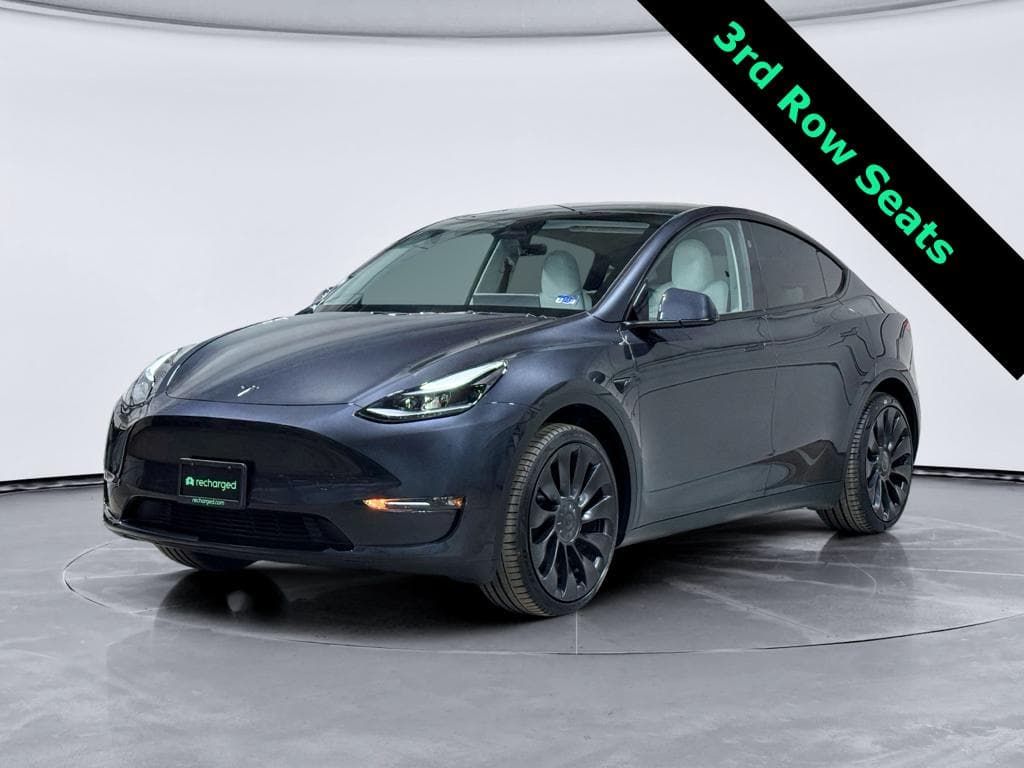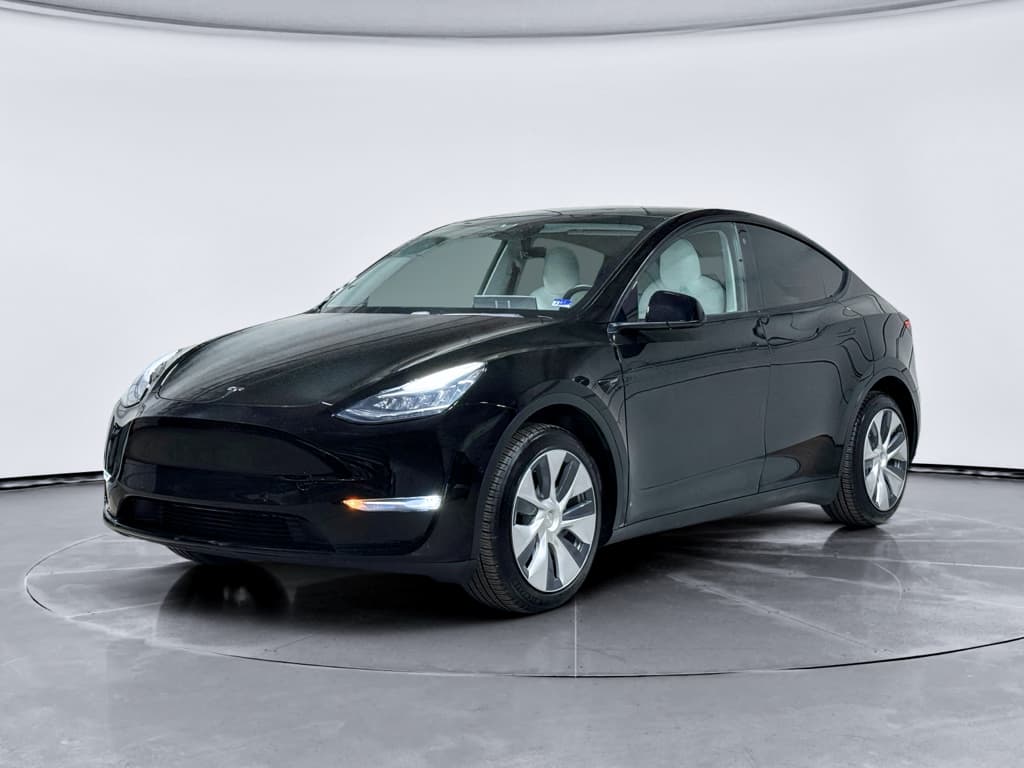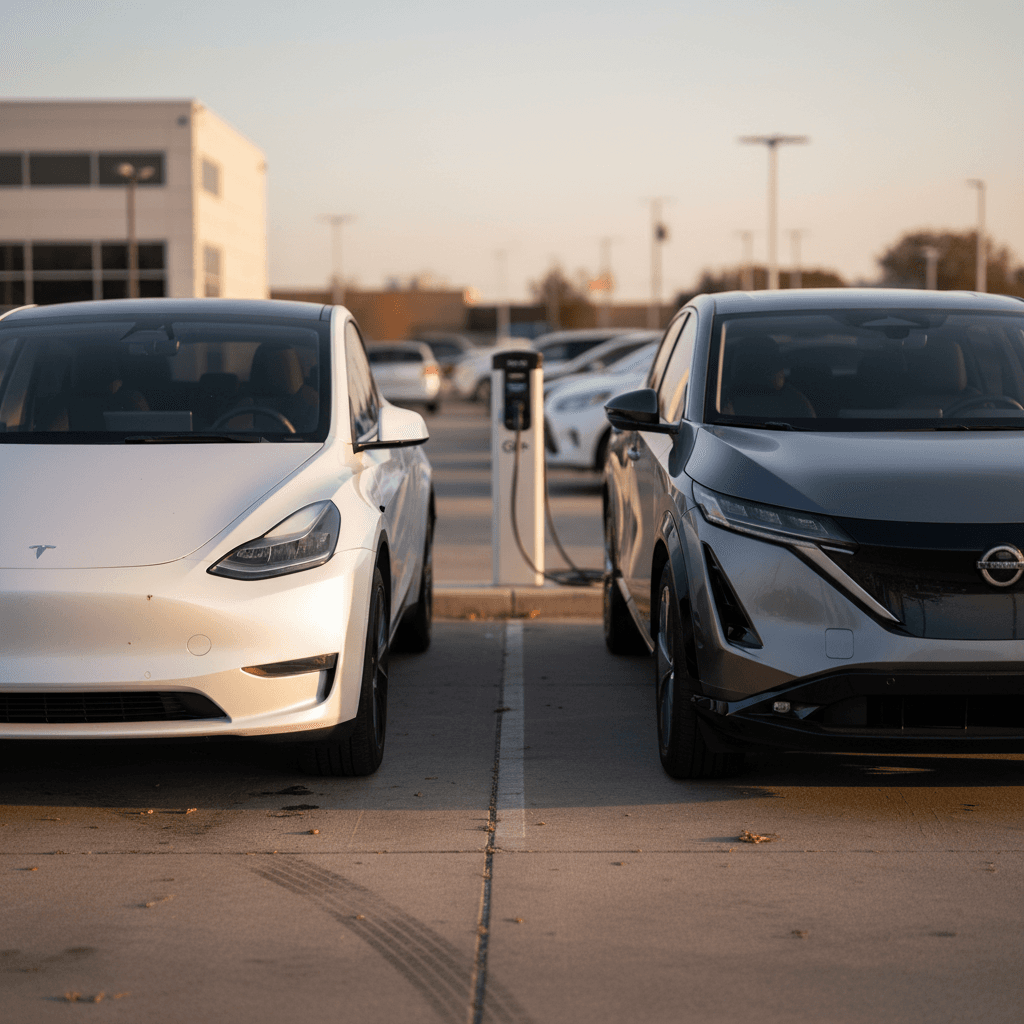
If you’re shopping the used EV market in 2026, a **used Tesla Model Y vs Nissan Ariya comparison** is probably on your short list. Both are all‑electric compact SUVs with family‑friendly space, solid range, and modern tech, but they go about the job in very different ways.
In a hurry? Here’s the elevator pitch
Used Model Y vs Ariya: who this guide is for
This guide is aimed at U.S. shoppers comparing **3–5‑year‑old** Teslas and Nissans, think 2021–2024 Tesla Model Y and 2023–2025 Nissan Ariya, either on a dealer lot or via online marketplaces like Recharged. We’ll stick to what matters when you’re buying used: real transaction prices, battery health, charging access, reliability, and day‑to‑day livability, not just glossy brochure specs.
- You’re cross‑shopping compact electric SUVs for family duty or commuting
- You care about long‑term battery health and charging convenience
- You’re open to either brand and want an honest pros/cons breakdown
- You plan to own the EV at least 3–7 more years
Quick take: which used EV SUV fits you?
Tesla Model Y vs Nissan Ariya at a glance
Match the SUV to your priorities, not the badge
Choose a used Tesla Model Y if…
- You road‑trip often and want the best fast‑charging network (Superchargers).
- Efficiency and longer highway range matter more than cushy ride quality.
- You like minimalist interiors and big screens.
- You care about over‑the‑air updates and a huge owner community.
Choose a used Nissan Ariya if…
- You prioritize a quiet, upscale cabin and smooth ride.
- You want a more traditional dash with physical controls.
- You prefer a calmer ownership experience and less flashy image.
- You’re value‑driven and willing to trade a bit of range for comfort.
Decision shortcut
Pricing and value in the 2026 used market
Used pricing snapshot for 2026 (typical U.S. asking prices)
By 2026, the **used Tesla Model Y** is everywhere. It’s been one of the world’s best‑selling vehicles, and aggressive new‑car price cuts over 2023–2025 pushed resale values down. That’s bad news for early owners, but very good news for you as a used shopper. You can often find a nicely equipped Long Range Model Y in the high‑$20,000s to mid‑$30,000s, depending on miles and condition.
The **used Nissan Ariya** isn’t nearly as common, but that can work in your favor. Nissan slashed new‑car prices for 2024 and 2025, and early depreciation has been brisk. It’s not unusual to see fairly low‑mile 2023–2024 Ariya Evolve+ or Venture+ models listed several thousand dollars below an equivalent‑year Model Y, especially outside EV‑hotbed states.
Typical 2026 used price bands (U.S. retail, not auction)
What many shoppers are seeing on dealer lots and online listings. Exact prices vary by region and incentives.
| Model / Trim | Common Model Years on Used Market | Typical Miles | Typical Asking Price (2026) |
|---|---|---|---|
| Tesla Model Y Long Range AWD | 2021–2023 | 30k–70k | $30,000–$38,000 |
| Tesla Model Y AWD (base / “Long Range” renamed) | 2024 | 10k–40k | $34,000–$40,000 |
| Tesla Model Y Performance | 2021–2023 | 25k–60k | $34,000–$42,000 |
| Nissan Ariya Venture+ (FWD) | 2023–2024 | 10k–40k | $24,000–$29,000 |
| Nissan Ariya Evolve+ / Engage+ (FWD) | 2023–2024 | 10k–40k | $25,000–$31,000 |
| Nissan Ariya Platinum+ e‑4ORCE (AWD) | 2023–2024 | 15k–45k | $29,000–$35,000 |
Use these bands as ballparks; always compare multiple listings and inspect vehicle history.
Watch for wildly cheap Teslas
Range, efficiency, and battery health
Tesla Model Y: the range leader
- Most Long Range AWD Model Y examples from 2021–2024 carried EPA ratings in the 303–330‑mile neighborhood, depending on wheels and year.
- Real‑world highway range is often 10–20% lower, but owners routinely see 240–270 miles from 100% to low state of charge on Long Range trims when driven reasonably.
- Standard/"base" Model Y variants land closer to 250–280 miles EPA and can feel tight on cold‑weather road trips if you like to drive fast.
Nissan Ariya: solid but generally shorter legs
- Front‑drive Ariya models with the bigger pack, Venture+ and Evolve+, carry EPA ratings around 289–304 miles, putting them in the same conversation as Long Range Teslas on paper.
- Dual‑motor e‑4ORCE Ariyas trade some of that range for traction and power, often landing around 250 miles EPA or less.
- In real‑world mixed driving, many Ariya owners report range that feels similar to a base or mid‑level Model Y rather than the best‑case Tesla figures.
Battery health matters more than original EPA numbers
Tesla did a lot right with battery management, and the Model Y’s thermal system is excellent. That’s one reason you see many high‑mile cars still delivering respectable range. Nissan’s modern EV packs (Ariya included) are much better cooled and managed than the old Leaf days, but the Ariya hasn’t been on the road as long, so we’re still watching how they age into higher mileage.
On Recharged, every used EV, Model Y or Ariya, comes with a Recharged Score battery health diagnostic, so you’re not squinting at an on‑screen guess. You see how the pack is actually performing against original capacity, plus usage patterns that may affect future life.
Charging speed and real-world network access
This is where the cars feel very different to live with, especially if you use DC fast charging more than a few times a year.
Charging: what it’s like to live with each used EV
Think beyond peak kW, look at networks, curves, and convenience.
Fast‑charging hardware
Tesla Model Y
- Supports DC fast charging over 200 kW on paper (varies by year).
- Very strong charging curve from 10–50% on most packs.
- Real‑world: 20–80% in roughly 20–30 minutes under good conditions.
Nissan Ariya DC charging
Nissan Ariya
- Supported peak DC rate around 130 kW, but maintains solid power through the mid‑pack.
- Typical 20–80% session on an extended‑range Ariya is ~35–40 minutes.
- Slower on paper, but respectable for its class.
Network access
- Used Model Y: native access to Tesla’s Supercharger network and most third‑party stations with adapters.
- Used Ariya: CCS fast charging plus, by 2026, widespread access to Tesla Superchargers via Nissan‑supported NACS adapters at many sites.
Reality check for road‑trippers
Space, comfort, and design
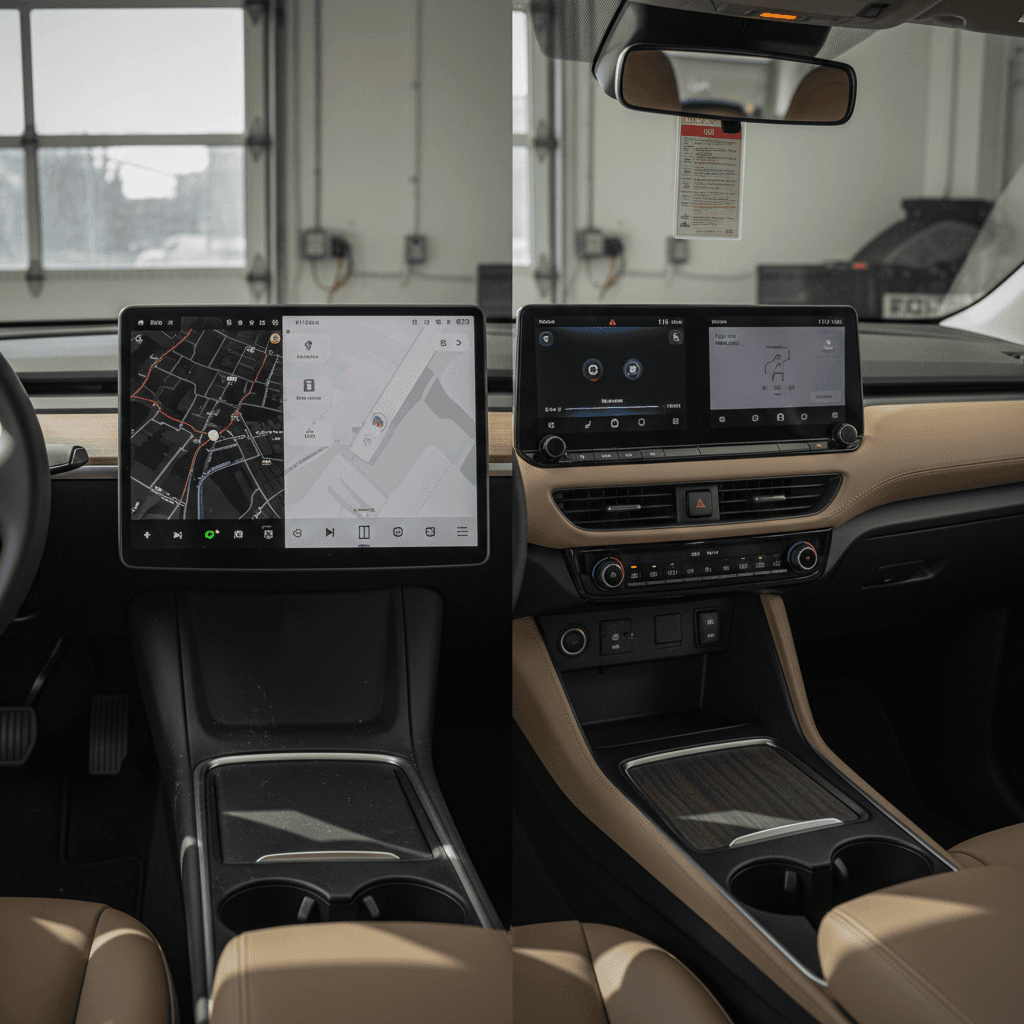
Model Y: airy and minimalist, but firm
- Space: Excellent rear legroom and huge cargo hold, especially with the optional third row in some years (though that third row is tight).
- Ride: Tends toward the firm side. You’ll feel expansion joints and broken pavement more than in the Ariya.
- Noise: Road and wind noise are acceptable but not luxury‑car quiet, especially on big wheels.
- Design: Minimalist, Scandinavian‑style interior with nearly all controls on a central touchscreen. Some love the simplicity; others miss buttons.
Ariya: lounge‑like cabin, calmer ride
- Space: Slightly less cargo volume than Model Y but still plenty for families, with generous seating for four adults.
- Ride: Noticeably softer and more forgiving. Soaks up rough city streets and highway expansion joints better.
- Noise: One of the Ariya’s highlights, very quiet cabin, particularly at city and suburban speeds.
- Design: Warm, modern interior with a mix of screens and physical controls. Ambient lighting and materials feel more "premium" than you might expect from Nissan.
Family comfort winner
Driving experience and performance
Both of these SUVs are quick compared with their gas counterparts. The question is whether you want a silent, secure shove or something that feels genuinely feisty every time you merge.
Performance feel: popular trims compared
Approximate factory specs; individual vehicles may vary slightly by year and wheels.
| Model / Drivetrain | 0–60 mph (approx.) | Horsepower (approx.) | Driving Character |
|---|---|---|---|
| Tesla Model Y Long Range AWD | 4.6–4.8 sec | ≈ 380 hp | Very strong mid‑range punch, responsive throttle, firm ride. |
| Tesla Model Y Performance | 3.5–3.7 sec | ≈ 450+ hp | Hot‑hatch levels of acceleration; sacrifices some comfort for grip and speed. |
| Nissan Ariya FWD (extended range) | 7.0–7.5 sec | ≈ 238–290 hp | Smooth, adequate power for daily use; tuned for calm, not thrills. |
| Nissan Ariya e‑4ORCE AWD | 5.0–5.5 sec | ≈ 335–389 hp | Confident, planted acceleration with focus on stability and comfort. |
Even the slower versions of both SUVs feel quick vs most gas crossovers.
The Model Y is the sportier choice. Steering is quick, the chassis is eager, and even non‑Performance trims have enough torque to make highway passing trivial. The Ariya, especially with e‑4ORCE all‑wheel drive, feels more like a quiet luxury SUV, less eager to play, more interested in keeping everyone comfortable and unruffled.
Reliability and ownership hassles
We’re still early in the long‑term story for both of these EVs, but by 2026 some patterns have emerged from owner reports and service bulletins.
- Tesla Model Y: Drivetrain and battery packs have generally been robust, but owners report a grab‑bag of minor issues, wind noise, trim rattles, paint quality, infotainment glitches, and occasional suspension noises. Service experiences can be great or frustrating depending on how close you are to a Tesla Service Center.
- Nissan Ariya: Fewer reports simply because there are fewer on the road, but some owners have complained about 12‑volt battery failures, software update hiccups, and the occasional charging‑system fault. Traditional dealer network means you’re never far from a Nissan sign, but EV expertise can vary store to store.
Why you should never skip a pre‑purchase inspection on a used EV
Tech, safety, and driver assistance
Tesla Model Y tech highlights
- Large central touchscreen running Tesla’s infotainment with frequent over‑the‑air software updates.
- Autopilot standard on most used examples, with optional enhanced Autopilot or Full Self‑Driving packages on some cars.
- Excellent navigation that tightly integrates charging stops, especially at Superchargers.
- Minimal physical buttons, almost everything lives in software menus.
Nissan Ariya tech highlights
- Dual‑screen layout with a mix of touch controls and haptic‑feedback buttons set into the dash.
- ProPILOT Assist 2.0 on higher trims offers hands‑on and, in some cases, limited hands‑free driving on mapped highways.
- Wireless Apple CarPlay/Android Auto availability, which many Tesla shoppers miss.
- More conventional control layout, easier learning curve for non‑techy drivers.
Safety credentials
Side‑by‑side spec comparison (popular trims)
Used‑market spec snapshot (typical trims you’ll see)
Approximate specs for commonly cross‑shopped versions.
| Tesla Model Y Long Range AWD (2022–2023) | Nissan Ariya Evolve+ FWD (2023–2024) | |
|---|---|---|
| EPA Range (mi) | ≈ 318–330 | ≈ 289–304 |
| Battery size (usable, approx.) | ≈ 75–78 kWh | ≈ 87 kWh |
| DC fast‑charge peak | 200+ kW (site‑dependent) | ≈ 130 kW |
| Onboard AC charger | 11.5 kW | 7.2–7.4 kW |
| 0–60 mph | ≈ 4.7 sec | ≈ 7.1 sec |
| Drive layout | Dual‑motor AWD | Single‑motor FWD |
| Cargo volume (rear seats up) | Mid‑30s cu‑ft + under‑floor storage | Low‑20s to mid‑20s cu‑ft (varies by spec) |
| Infotainment | Tesla OS, no CarPlay/Android Auto | Nissan system with Apple CarPlay/Android Auto |
| Typical 2026 used price | $32k–$38k | $26k–$31k |
Don’t chase tiny spec differences, focus on range, charging, and comfort that fit your life.
How to choose: practical checklist
Used Model Y vs Ariya: step‑by‑step decision guide
1. Map your actual driving pattern
Write down your normal weekday miles, longest regular trip, and how many true road‑trips (400+ miles in a day) you do per year. Heavy road‑trippers lean toward the Model Y; mostly local drivers can happily live with either.
2. Decide how much range you really need
If your regular days are under 120 miles, any long‑range trim of either SUV is overkill. If you regularly see 200+ miles in a day, favor a Long Range Model Y or big‑battery Ariya.
3. Be honest about your comfort priorities
If you or your passengers complain about firm rides, the Ariya’s softer suspension and quieter cabin will make everyone happier. If you like a sporty, connected feel, the Model Y wins.
4. Check your charging reality
Do you have home Level 2 charging or rely on public DC fast chargers? Supercharger access and charging‑planner smarts make the Model Y very compelling if you live on the road. If you mostly charge at home, either car works; just confirm Ariya fast‑charging options along your usual routes.
5. Compare total cost, not just sticker price
Include expected insurance, potential warranty coverage, and any needed repairs or tires. A cheaper Ariya could erase its advantage if it needs out‑of‑warranty work right away, or vice versa.
6. Demand a battery health report
Never buy a used EV blind. Use tools like the <strong>Recharged Score</strong> to see state of health, DC fast‑charge history, and how the pack is aging. Walk away from any seller who refuses a battery check.
How Recharged can help with a used Model Y or Ariya
Shopping used EVs is different from shopping used gas SUVs. You’re not just checking oil stains and sniffing for burning transmission fluid, you’re evaluating battery life, charging behavior, software history, and complex electronics. That’s where a specialist marketplace like Recharged earns its keep.
- Every vehicle on Recharged comes with a Recharged Score Report that includes verified battery health, usage patterns, and fair‑market pricing, so you can see whether a used Model Y or Ariya is genuinely a good buy.
- You can trade in your current car, line up EV‑friendly financing, and arrange nationwide delivery without bouncing between dealers.
- If you’re near Richmond, VA, you can visit the Recharged Experience Center for in‑person help and test drives; if you’re not, EV specialists can guide you digitally from first question to keys‑in‑hand.
Try this before you fall in love on a test drive
Ready to find your next EV?
Browse VehiclesFAQ: used Tesla Model Y vs Nissan Ariya
Frequently asked questions
Bottom line: which used EV SUV should you buy?
If you want the **most efficient, road‑trip‑ready used EV SUV** with the best integrated fast‑charging experience, the Tesla Model Y is still the one to beat in 2026. Its combination of range, performance, and Supercharger access is hard to argue with, especially if you live on the interstate and don’t mind a firmer ride or minimalist interior.
If you care more about **comfort, cabin quality, and value**, the Nissan Ariya is a deeply appealing alternative. You trade a bit of range and charging speed for a quieter, softer‑riding SUV that often costs less to buy, feels more familiar to non‑tech‑obsessed drivers, and still delivers all the benefits of electric daily driving.
The smart move is to line up one of each, used Model Y and Ariya, in your price range, then look past the badges. Study their battery health, charging history, and pricing with objective data, not just a test‑drive grin. On Recharged, that’s exactly what the Recharged Score is built to do, so you can pick the EV that matches your life, not your social feed.