If you live in the DMV, Maryland, Virginia or Washington, DC, keeping up with EV rebates in the DMV area has turned into a moving target. Federal rules have shifted, state programs have run out of money, and new local incentives keep popping up. The good news: if you know where to look, you can still trim thousands off the cost of going electric, especially with a used EV.
Important timing note
Why EV rebates still matter in the DMV
EVs already cost less to run than gas cars in the region, electricity is cheaper per mile than gasoline, and maintenance is simpler. But upfront price is still the biggest hurdle for most buyers. That’s where rebates, tax credits, utility discounts and registration breaks come in. In the DMV, they can easily make the difference between an EV that fits your monthly budget and one that doesn’t.
EV incentives snapshot in the DMV
Big picture: what changed for EV rebates in 2025–2026
1. Federal EV credits are phasing out faster
In 2025, Congress accelerated the wind-down of several clean energy incentives, including the federal clean vehicle tax credits for new and used EVs and some charger credits. For many DMV buyers, that means the window to claim a federal EV tax credit on a new or used purchase closed or narrowed well before originally planned. If you took delivery before those cutoffs, you may still be able to claim a credit on your tax return; if you buy in late 2025 or 2026, you may be relying mostly on state, local and utility incentives.
2. States and cities are filling some of the gap
Maryland leaned heavily on a state excise tax credit for EVs, but that program has periodic funding shortages. DC focused on generous excise tax exemptions and a credit scheduled to run through 2026. Virginia passed an EV rebate program in 2021 but has yet to fund it, while utilities there offer targeted perks for home charging. For a DMV shopper, the practical takeaway is simple: your ZIP code matters more than ever when you’re penciling out EV costs.
Don’t rely on last year’s info
Maryland EV rebates and credits
Maryland has been one of the most aggressive EV incentive states in the region, but its flagship programs are also capped and sometimes run out of money mid-year. That makes timing and documentation critical if you’re counting on those dollars.
Key Maryland EV incentives at a glance
What’s available today and what to watch for
EV excise tax credit (funding-limited)
Maryland offers a one-time excise tax credit of up to about $3,000 for qualifying new plug-in or fuel cell vehicles, subject to annual funding limits and price caps. Once each fiscal year’s pot is exhausted, applicants are often put on a waitlist that may or may not be funded later.
If you bought recently, check the Maryland MVA site for FY26 funding status and how to submit your application.
Home charger rebate
The Maryland Energy Administration has offered rebates that typically cover up to 50% of eligible Level 2 charger equipment and installation costs, capped per charger for residential customers.
Funds are limited and offered on a first-come, first-served basis, so early applications each cycle tend to fare best.
County & city sweeteners
Several counties, like Montgomery and Frederick, promote additional perks from utilities and local programs: charging rewards, discounted off-peak rates, or extra rebates for chargers tied to managed charging pilots.
Check your county sustainability, environment or “zero-emission vehicle” pages for localized offers.
Maryland timing strategy
DC EV incentives: tax credits and excise breaks
Washington, DC doesn’t talk as much about “rebates” as it does about tax exemptions and credits. For city residents, those can be just as valuable as cash back, especially when you’re titling a vehicle for the first time.
Major EV incentives for DC residents
These are the big buckets of value DC offers to qualifying electric-vehicle owners.
| Incentive | What it does | Key limits/notes |
|---|---|---|
| EV income tax credit | Provides a District income tax credit for eligible electric vehicles through at least the end of 2026. | Non‑refundable; only offsets your DC income tax bill, and scheduled to expire December 31, 2026 unless extended. |
| Excise tax exemption | Waives the motor vehicle excise tax when titling qualifying fully electric vehicles in DC. | Vehicle must be 100% electric and meet the District’s MPGe and registration requirements. |
| Charging infrastructure credit | Offers a tax credit for a portion of EV charging equipment and installation costs. | Typically calculated as a percentage of eligible costs, up to a per‑project cap; available to both residents and some businesses. |
Always confirm current eligibility and expiration dates with DC DMV and the DC Office of Tax and Revenue.
Why DC can be a standout for EV buyers
Virginia EV incentives and utility programs
Virginia is the outlier in the DMV: it has a rebate program on the books for EVs but has not fully funded it, and the Commonwealth has leaned more on market forces and utility pilots than on broad consumer rebates.
What Virginia EV shoppers should know
Policy on paper vs. money in your pocket
Unfunded state rebate (for now)
In 2021, Virginia authorized a state EV rebate program that would provide around $2,500 for qualifying new or used EVs, with an extra amount for lower‑income buyers. The program window technically runs through early 2027, but the General Assembly has not consistently funded it.
Budget proposals in 2025 sought to allocate tens of millions to the program; whether that funding is ultimately approved will decide if consumer rebates become real.
Policy shifts & Clean Cars
Virginia briefly aligned with California’s Clean Cars rules for model-year 2025, but stepped back from adopting the stricter ACC II standard. That’s relevant mostly for automaker EV supply, not your pocket directly, but it illustrates how fast EV policy can shift in Richmond.
Utility and regional perks
Despite the lack of a broad state rebate, several Virginia utilities, like Dominion, run or have piloted home charger rebates, off‑peak charging rates and managed charging programs. Some localities also offer perks like emissions‑inspection exemptions for EVs.
Virginia buyers: watch the budget process
Utility and local EV charging incentives
Even as headline EV rebates come and go, utility-backed charging programs across the DMV can quietly save you hundreds of dollars upfront and every year on your electric bill.
Common utility incentives in the DMV area
Specific names and eligibility vary, but the patterns are similar
Home charger rebates
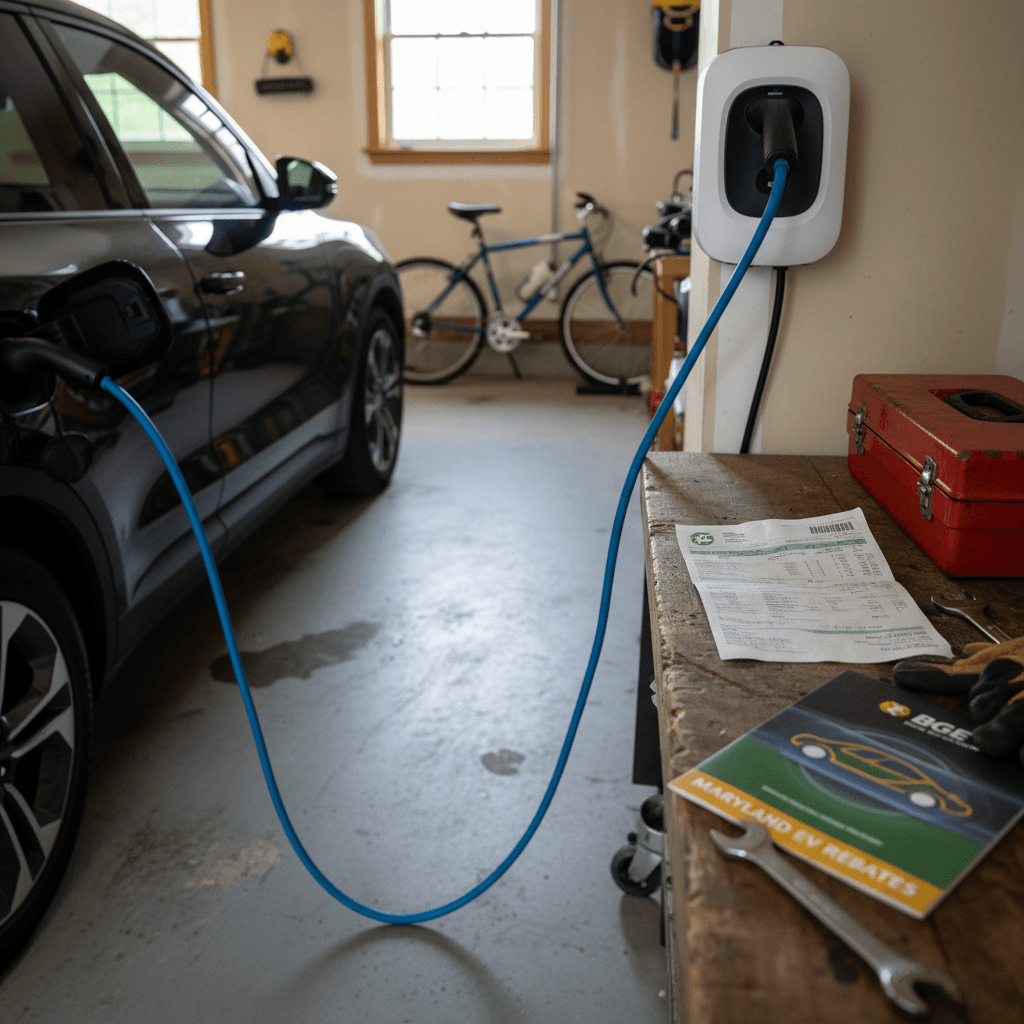
Utilities in Maryland and Virginia, along with some in the DC metro area, have offered rebates toward the purchase and installation of Level 2 chargers. Typical structures cover a fixed dollar amount or a percentage of project cost, often with a cap per household.
Off-peak rate plans
Time-of-use or off‑peak rate plans reward you for charging at night. For many EV owners, simply shifting charging to overnight hours can cut home charging costs by 20–40% versus plugging in during weekday evenings.
Managed charging rewards
Some utilities pay you a small monthly credit for enrolling your charger or vehicle in a managed charging program, allowing them to slightly adjust charging times to relieve grid stress. If you don’t mind giving up some control, it’s easy money.
How to stack EV savings in the DMV
If you’re methodical, you can stack federal benefits (where still available), state or DC incentives, local utility rebates and dealer discounts into a single deal. The key is understanding what can be combined and what applies only to new vs. used EVs.
Example: Maryland buyer of a used EV
- Buys a used Chevy Bolt from a dealer at around $20,000.
- Checks whether they qualify for any remaining federal used EV credit based on delivery date and income.
- Applies for Maryland’s excise tax credit (if funding is still available and the car qualifies).
- Installs a Level 2 charger at home and submits paperwork for MEA’s charger rebate.
Stacked together, those benefits can substantially narrow the gap between a used EV and a comparable used gas car.
Example: DC resident eyeing a commuter EV
- Buys a compact new EV that meets DC’s efficiency requirements.
- Claims the excise tax exemption at titling, shaving a significant cost from upfront fees.
- Claims the DC income tax credit in the year of purchase, up to the program cap.
- Enrolls in a local utility’s off‑peak EV rate to keep ongoing costs down.
Even if federal credits are limited, the District’s structure front‑loads savings in ways that favor urban, lower‑mileage drivers.
Where Recharged fits into the picture
Buying a used EV: how rebates work differently
Used EV buyers in the DMV often assume incentives are only for new cars. In reality, some of the most valuable programs, especially in Maryland and the District, either explicitly include used vehicles or focus on fees and infrastructure instead of list price.
- Federal used EV credits (where still available) typically require that you buy from a dealer, not a private seller, and cap the vehicle price and your income.
- Maryland’s excise tax credit rules allow for leased vehicles and sometimes used EVs, subject to detailed eligibility and funding.
- DC’s excise tax exemption can benefit subsequent purchasers of a qualifying EV, not just the original buyer, as long as the vehicle meets the city’s electric and efficiency criteria.
- Utility and charger rebates almost always treat new and used EVs the same way, it’s your charger and your participation that matter, not the car’s model year.
Don’t double dip or misreport
Step-by-step checklist to claim your EV rebates
Your DMV EV rebate action plan
1. Decide new vs. used (and your budget)
Start with your monthly payment comfort zone and driving needs. A used EV with strong battery health can be thousands cheaper upfront while still qualifying for key incentives.
2. Map your jurisdiction-specific incentives
Make a quick list: Do you live in Maryland, Virginia or DC? Which state or city EV and charger programs are currently funded? Bookmark the official program pages so you can reference exact requirements later.
3. Check federal rules by delivery date
Because federal EV credits are phasing down, your delivery date and the vehicle’s VIN can determine eligibility. Confirm what’s still available for the model year you’re shopping and whether used EV credits remain in play.
4. Compare models with incentives in mind
Some models qualify for more programs than others based on price, battery size or efficiency. When you shop on platforms like Recharged, ask explicitly which incentives each vehicle is likely to qualify for in your situation.
5. Gather documents before you buy
State and DC programs may ask for purchase contracts, VINs, proof of residency, income documentation, charger receipts or installation invoices. Set up a digital folder so you’re not hunting for paperwork after deadlines pass.
6. Submit applications quickly
For funding-limited programs, speed matters. Once you close on an EV or charger install, complete online applications and mail any required forms as soon as possible to improve your chances of landing in the funded queue.
7. Revisit your electric rate plan
After your EV purchase, contact your utility about off‑peak rates or EV‑specific plans. Pairing rebates with a better rate structure can lock in lower total ownership costs long after the rebate checks clear.
EV rebates in the DMV: FAQs
Common questions about EV rebates in Maryland, Virginia and DC
Bottom line: making EV rebates work for you
The EV incentive landscape in the DMV is messy, but not hopeless. Federal credits are narrowing, Virginia’s statewide rebate is still a promise on paper, and Maryland’s funding waxes and wanes. Yet between state and DC tax breaks, home charging rebates and smart utility programs, most DMV shoppers can still meaningfully lower the true cost of owning an EV, especially if they’re open to a high‑quality used model.
If you’re ready to run the numbers, start by deciding whether new or used makes more sense, then map the incentives tied to your home address. From there, compare specific vehicles, not just on price, but on battery health, charging costs and long‑term fit. A platform like Recharged can streamline that process, pairing transparent used‑EV listings and battery reports with expert guidance on which incentives you can realistically count on. In a fast‑changing policy environment, that clarity is often the most valuable incentive you can get.