If you’re shopping the used market in 2026, a **used Tesla Cybertruck vs Chevrolet Silverado EV comparison** is probably at the top of your list. Both are headline‑grabbing electric pickups with serious power, big batteries, and plenty of internet hype, but they’re very different ownership experiences once you put 20,000 or 40,000 miles on the odometer.
Two very new trucks, not much history
Overview: Used Electric Pickups in 2026
Until a few years ago, a used full‑size pickup almost always meant a burly gas V8 or diesel. By 2026, the landscape looks different. The **Cybertruck and Silverado EV** now headline the used EV truck scene alongside Ford’s F‑150 Lightning and Rivian’s R1T. You’re no longer a guinea pig; there’s a real market with real data on depreciation, software quirks, and battery health.
For most shoppers comparing these two, the core questions are the same: range when loaded, towing confidence, charging convenience, and total cost to own. We’ll walk through each area and highlight where a used Cybertruck or a used Silverado EV is likely to fit your life better. Along the way, we’ll call out how a Recharged Score battery‑health and pricing report can de‑risk your decision.
Used Electric Pickup Snapshot for 2026
Quick Specs: Cybertruck vs Silverado EV
Exact numbers vary by trim and wheel/tire package, but the high‑level story is consistent: the Silverado EV generally offers **more rated range and conventional truck proportions**, while the Cybertruck counters with wild acceleration, steer‑by‑wire agility, and tighter integration with Tesla’s software ecosystem.
Tesla Cybertruck vs Chevrolet Silverado EV: Headline Specs (Typical 2025–2026 Configs)
Representative specs for popular dual‑motor Cybertruck and dual‑motor Silverado EV trims you’re most likely to see used. Always verify exact numbers for the specific truck you’re buying.
| Spec | Tesla Cybertruck Dual‑Motor AWD | Tesla Cyberbeast (Tri‑Motor) | Chevy Silverado EV WT / Work‑focused | Chevy Silverado EV RST / Retail‑focused |
|---|---|---|---|---|
| Rated range (unloaded) | ~340 mi | ~320 mi (varies) | ~393–450+ mi (Max Range packs) | ~350–390+ mi (depending on pack) |
| Max towing capacity | Up to ~11,000 lbs | Up to ~11,000 lbs | Up to ~12,500 lbs | Up to ~12,500 lbs |
| Approx. payload | ~2,000–2,500 lbs | ~2,200 lbs | ~1,700–1,800 lbs (varies by trim) | ~1,400–1,600 lbs (depending on options) |
| Battery platform | Tesla structural pack | Tesla structural pack | GM Ultium large pack (~200 kWh on Max Range) | GM Ultium large pack |
| Drive layout | Dual‑motor AWD | Tri‑motor AWD | Dual‑motor AWD | Dual‑motor AWD |
Specs are manufacturer estimates or early test data; real‑world results vary with load, weather, and driving style.
Look beyond max numbers
Range and Efficiency Compared
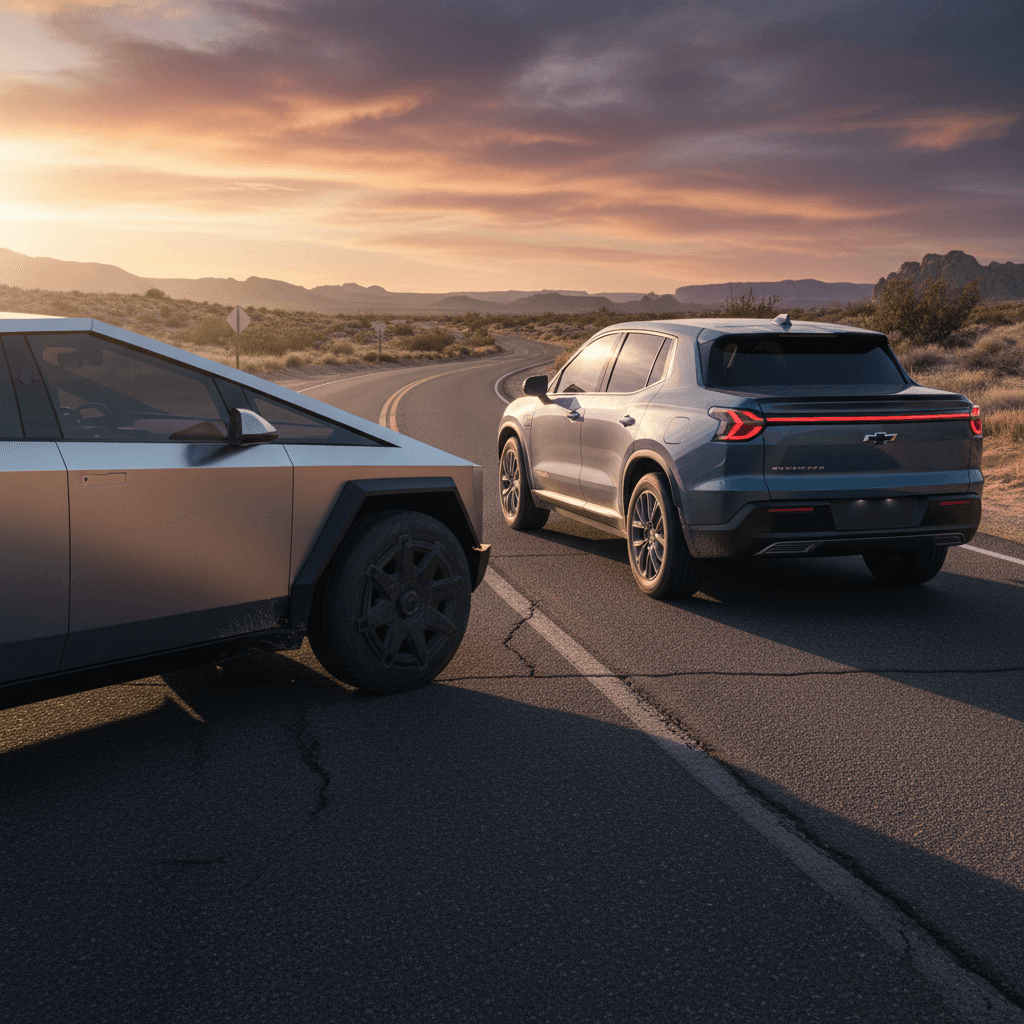
On paper, the **Silverado EV often wins the raw range battle**, especially in Work Truck and Max Range configurations that can top 390–450 miles when empty. The Cybertruck typically lands in the low‑to‑mid‑300‑mile range for its dual‑motor AWD trims, depending on wheels and options.
Used Tesla Cybertruck: Range Reality
- Dual‑motor trucks commonly rated around the 340‑mile mark on standard wheels.
- Tri‑motor Cyberbeast gives you huge performance, but real‑world efficiency can suffer.
- Range drops quickly at highway speeds and in cold weather, just like other EV pickups.
- Tesla’s promised Range Extender bed‑module adds kWh at the cost of cargo space; on the used market, availability is still limited and pricing is premium.
Used Silverado EV: Range Reality
- Max‑range WT trims can exceed 450 miles rated unloaded, with many real‑world users seeing 300+ miles at highway speeds without a trailer.
- Retail‑oriented RST and upcoming Trail Boss trims still offer generous range, usually above 350 miles.
- The big Ultium pack is heavy, but that mass actually helps stability when towing and in crosswinds.
- Chevy’s range estimates tend to be reasonably conservative versus some early EV promises.
Expect 30–50% range loss when towing
Towing, Payload, and Real-Work Ability
Both trucks boast five‑digit tow ratings that would make a three‑quarter‑ton diesel from a few years ago blush. But the experience of actually working these trucks, especially used ones with some miles and battery aging, feels different.
How They Tow and Haul
Spec sheets tell one story, the day‑to‑day experience tells another.
Cybertruck: Agile but Range‑Sensitive
- Up to ~11,000‑lb tow rating on properly equipped trucks.
- Steer‑by‑wire and rear‑steer make it surprisingly nimble when backing a trailer into tight spaces.
- Shorter bed (around 6 feet) and high bed walls limit some traditional truck use cases, especially for fifth‑wheel setups.
- Owners report significant range hits above ~5,000 lbs of trailer, especially at 70+ mph.
Silverado EV: Traditional Truck Feel
- Max tow packages target up to ~12,500 lbs on key trims.
- Longer bed and more conventional dimensions make it easier to match with existing trailers and bed accessories.
- Independent rear suspension and heavy battery pack give it a planted, confident feel with a trailer.
- GM’s tow/haul programming is familiar to anyone who has towed with a modern Silverado or Sierra.
Payload nuance matters
Charging Experience and Road-Trip Usable Range
Range is only half the story on a long trip. Where and how you can charge, especially while towing, makes or breaks the ownership experience. Here the Tesla ecosystem still has a real advantage, but the Silverado EV isn’t stranded by any means.
Cybertruck: Supercharger Native
- Full access to Tesla’s Supercharger network, including many high‑power V3 and newer stalls.
- Routing, preconditioning, and stall availability are all integrated in Tesla’s native navigation.
- Some locations still aren’t trailer‑friendly; you may have to drop the trailer or block multiple stalls.
- By 2026, more non‑Tesla EVs use the NACS connector, but Tesla trucks still tend to get the best‑integrated experience.
Silverado EV: CCS Today, NACS Tomorrow
- Early trucks use CCS fast‑charging, relying on networks like Electrify America and others; newer builds transition to NACS as GM adopts Tesla’s standard.
- GM’s Ultium‑based trucks can accept high peak charge rates, but real‑world sessions depend heavily on station health.
- GM’s apps and route planning are improving, but still feel less polished than Tesla’s all‑in‑one approach.
- On the plus side, the Silverado EV’s larger pack gives more buffer between fast‑charge stops, even if each stop can be a bit longer.
Think in legs, not total range
Interior Comfort, Tech, and Everyday Livability
Inside, these trucks aim at slightly different buyers. The Cybertruck leans into a minimalist, sci‑fi cabin dominated by a massive center screen and hard, angular surfaces. The Silverado EV, especially in RST and future Trail Boss trims, feels more like an upscale version of a familiar Chevy pickup wrapped around a giant battery.
Cabin, Comfort, and Tech Highlights
Both trucks offer plenty of screens and outlets, but the vibe is very different.
Cybertruck Cabin
- Minimalist dash with a central touchscreen controlling nearly everything.
- Futuristic design appeals to some, feels stark to others.
- Steer‑by‑wire yoke or wheel (depending on build) changes the driving feel dramatically.
- Great visibility forward, but small rear window and tonneau can make backing to a hitch more reliant on cameras.
Silverado EV Cabin
- More traditional truck layout with familiar controls and materials.
- Comfortable seating and quiet ride, especially on highway commutes.
- Big center display and digital cluster, but still dedicated switches for key functions.
- Cab and bed dimensions feel closer to a conventional half‑ton truck.
Utility & Power
- Both trucks offer multiple 120V/240V outlets for tools, camping gear, or emergency home backup.
- Cybertruck leans on software‑driven features and OTA updates.
- Silverado EV integrates GM’s latest driver‑assist and trailering aids.
Reliability, Battery Health, and Recalls
By 2026, both trucks have lived through their early‑production growing pains. Cybertruck owners have navigated high‑profile recalls and ongoing over‑the‑air software tweaks. Silverado EV buyers have watched GM work through Ultium‑platform launch issues, supplier constraints, and firmware updates.
Don’t skip a battery health check
- Tesla’s track record shows that software issues can often be fixed quickly with over‑the‑air updates, but not all squeaks, rattles, and alignment issues can.
- GM’s Ultium platform is new but builds on decades of truck engineering; hardware feels traditional even when the powertrain doesn’t.
- Both brands have issued recalls related to safety systems, software, and hardware components. Always confirm recall completion by VIN before you sign anything.
- Battery warranties (often 8 years/100,000–150,000 miles for EV components) typically transfer to subsequent owners, but read the fine print on coverage limits.
Used Market Pricing and Resale Trends in 2026
Early in 2024, used Cybertrucks were selling for eye‑watering markups, well into six‑figure territory in some cases. As production ramped and the initial frenzy cooled, **values corrected hard**, with some lightly used trucks losing well over a third of their original transaction price within the first year. By 2026, the Cybertruck market is more rational, but still volatile by traditional truck standards.
The Silverado EV story is quieter. Fleet‑focused WT trucks and early RSTs have slid down a more normal depreciation curve. Used pricing bands vary widely with trim and mileage, but you’ll often find a Silverado EV with more range and a more traditional cabin for similar or slightly lower money than a comparable‑age Cybertruck, especially if you shop work‑oriented trims instead of halo launches.
Typical 2026 Used Price Bands (Illustrative Only)
High‑level pricing feel for mainstream trims with average mileage. Real‑world prices move with incentives, local demand, and equipment.
| Truck & Trim (Used, Typical 1–2 Years Old) | Observed Market Behavior | What It Means for You |
|---|---|---|
| Cybertruck Dual‑Motor AWD | Steeper early drops from launch‑era prices; wide spread between private sellers and dealers. | Room to negotiate, especially on higher‑mile or cosmetically imperfect trucks. |
| Cybertruck Cyberbeast | Still commands a performance premium, but post‑hype reality has tempered the wild markups. | Expect to pay more per mile of range vs other trims. |
| Silverado EV WT / Work Config | Fleet turn‑ins starting to appear; pricing closer to traditional half‑ton work trucks adjusted for EV tech. | Good deals if you prioritize range and capability over luxury features. |
| Silverado EV RST / Retail Trim | Newer to the used market; prices hold a bit stronger but follow familiar GM half‑ton depreciation. | Better value than a new one, especially if you’re flexible on color and options. |
Use this as a directional guide, not a quote. A Recharged valuation report will pin down fair market pricing for a specific VIN.
Ownership Costs, Insurance, and Value
Owning either truck isn’t cheap, but operating costs can be a pleasant surprise compared with a 6.2‑liter gas V8 or a modern diesel. Electricity is usually cheaper than fuel on a per‑mile basis, there’s no engine oil to change, and brake wear tends to be light thanks to regenerative braking. Tires, however, are **not** cheap, and big‑battery trucks eat a lot of rubber if you push them hard.
Where the Money Goes Over Time
Beyond the purchase price, think about electricity, tires, insurance, and resale.
Cybertruck Ownership Patterns
- Insurance can run higher than average thanks to unique bodywork and limited repair history.
- Stainless steel exterior resists minor dings but can be expensive and specialized to repair when damaged.
- Resale volatility cuts both ways: buyers today may get a great deal vs early adopters, but future values are harder to predict.
- Strong integration with Tesla’s ecosystem and software features adds perceived value for tech‑oriented owners.
Silverado EV Ownership Patterns
- Insurance tends to be closer to other full‑size GM pickups, though EV repair costs and parts availability still matter.
- Conventional steel/aluminum body panels are more familiar to body shops, which may help repair times and costs.
- Depreciation looks more like a high‑trim gas half‑ton adjusted for battery tech, less drama than the Cybertruck.
- GM’s dealer network gives you plenty of service touchpoints, which some owners prefer over the all‑digital model.
Where Recharged fits in
Ready to find your next EV?
Browse VehiclesWhich Used Electric Truck Is Right for You?
Both of these trucks can tow, haul, and commute in ways that simply weren’t possible with early EVs. The right choice is less about raw specs and more about **how you’ll use the truck most of the time**.
Match the Truck to Your Life
Choose a Used Tesla Cybertruck If…
You want the most integrated fast‑charging and software experience today, especially if you road‑trip often.
You value sharp acceleration and futuristic design more than conventional pickup styling.
Your towing is relatively occasional or moderate in distance, or you’re willing to plan extra stops.
You’re comfortable with a truck whose resale history is still evolving and whose recall story isn’t finished yet.
Choose a Used Chevy Silverado EV If…
You want maximum rated range and more relaxed towing legs, especially with heavier trailers.
You prefer a traditional pickup shape, interior, and bed dimensions that match existing accessories.
You like the idea of GM dealer support and a truck that feels like an evolution of what you already know.
You’re prioritizing predictable depreciation and a calmer long‑term value story.
If you’re still torn, let the day‑to‑day picture guide you. Think in terms of how far you need to go, how often you’ll tow, where you can charge, and how long you plan to keep the truck. A well‑chosen used Cybertruck or Silverado EV can be a terrific value in 2026, but only if you buy based on facts, not hype. That’s exactly what a professionally inspected truck with a Recharged Score report is designed to deliver.
Checklist: How to Shop a Used Electric Pickup
Key Steps Before You Commit
1. Confirm Battery and High‑Voltage Warranty
Ask for in‑service date and remaining coverage on the battery and drive unit. For both trucks, you want clear documentation that warranties transfer and that any battery‑related recalls or service campaigns are complete.
2. Pull a Detailed Battery Health Report
Don’t rely on a simple range estimate from the dash. A Recharged Score battery‑health diagnostic quantifies usable capacity, DC‑fast‑charge history, and signs of unusual degradation, all critical on big‑pack pickups.
3. Inspect for Towing and Work Abuse
Look for hitch wear, wiring splices, brake controller installs, and bed damage. A truck that towed at max weight every weekend will age differently than one that mostly hauled kids and mountain bikes.
4. Test‑Drive Fully Loaded
If possible, drive with a trailer or at least a full crew and cargo. Pay attention to ride quality, steering feel, and confidence when braking from highway speeds.
5. Check Charging Behavior
Fast‑charge the truck at least once before buying. Watch for charge‑rate drop‑offs, error messages, or station‑compatibility issues that suggest deeper problems.
6. Verify Software, Recalls, and Service History
For Cybertruck, confirm over‑the‑air updates are current and that recall work has been completed. For Silverado EV, review dealer service records and ask about any Ultium‑related campaigns.
7. Get a Realistic Valuation
Use data from multiple sources, or a Recharged market‑based valuation, to ensure you’re paying fair money. Early EV trucks can show wild asking‑price spreads; focus on sold values, not wishful thinking.