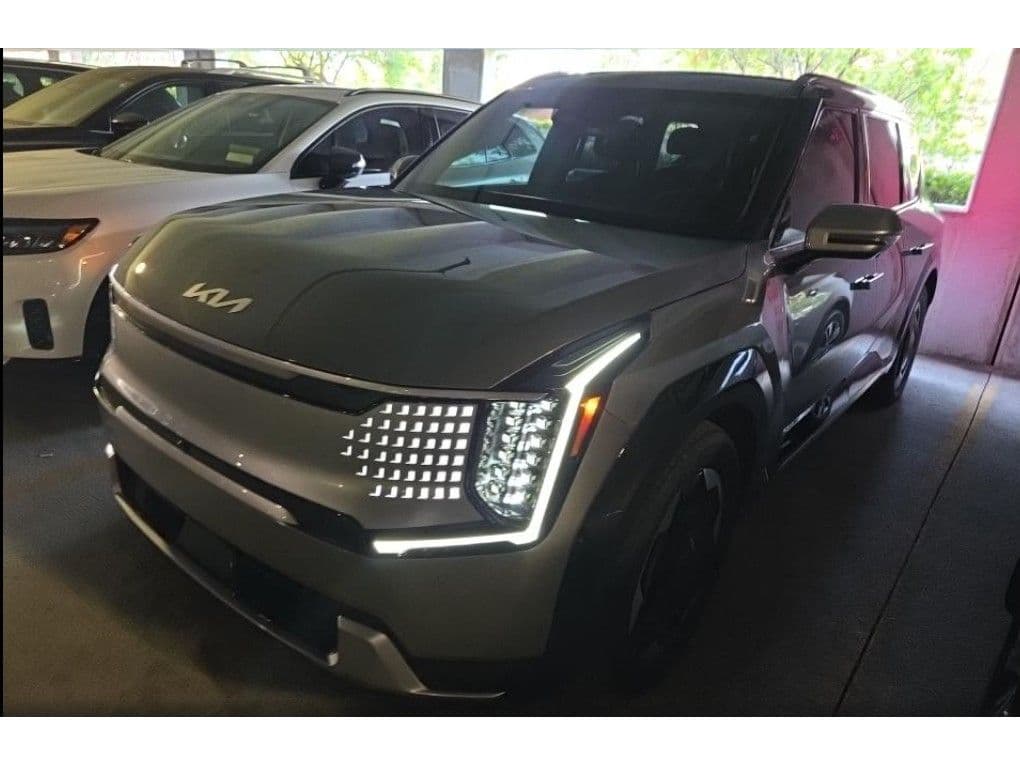
If you want a three-row electric SUV today, there’s a good chance you’re cross‑shopping a used Rivian R1S against a new Kia EV9. On paper they both seat seven, offer solid range, and promise SUV practicality, but they take very different approaches to price, off‑road ability, tech, and long‑term ownership risk.
Two similar missions, very different personalities
Why compare a used Rivian R1S vs a new Kia EV9?
This comparison isn’t as odd as it sounds. In early 2026, lightly used Rivian R1S models, often 2022–2024 builds with 10,000–40,000 miles, are commonly advertised in the $65,000–$80,000 range depending on spec and condition. Meanwhile, a new 2024–2025 Kia EV9 starts in the mid‑$50,000s and can climb into the low‑$70,000s for GT‑Line trims. That means a used, more premium Rivian often overlaps the price of a new, warrantied Kia EV9.
So the real question many shoppers are asking is: is an off‑lease or one‑owner R1S a smarter buy than ordering a brand‑new EV9? Let’s break that decision down the way a serious EV buyer, or a lender, would.
Quick take: who each SUV is best for
Used Rivian R1S vs new Kia EV9: who should pick what?
Match the SUV to your driving and risk tolerance, not just the badge.
Used Rivian R1S: best for
- Adventure‑oriented drivers who want real off‑road capability and air suspension.
- Households that tow 3,500–7,700 lbs (campers, boats) and can live with range hit.
- Buyers who value a luxury, design‑forward cabin over mainstream practicality.
- Tech‑savvy owners comfortable with direct‑to‑consumer service and software‑heavy vehicles.
New Kia EV9: best for
- Families prioritizing warranty coverage, dealer network, and predictable ownership costs.
- Drivers who mostly stay on‑road and want a comfortable, quiet three‑row family hauler.
- Budget‑conscious shoppers who like transparent pricing and incentives.
- First‑time EV buyers who want the safest, least‑drama path into a three‑row EV.
Start with your use case
Key specs at a glance
Used Rivian R1S vs new Kia EV9: headline numbers
Representative specs for common trims in early 2026 U.S. market. Individual vehicles will vary by year and configuration.
| Used Rivian R1S (Dual‑motor Large Pack, 2023–2025) | New Kia EV9 (2024–2025, typical trims) | |
|---|---|---|
| Typical price window | $65,000–$80,000 used (miles & options sensitive) | $56,000–$75,000 MSRP new, often less after incentives |
| EPA range | Up to ~330 miles (Dual Large pack) | ~230–304 miles depending on battery and drivetrain |
| Battery size | ≈109 kWh usable (Large pack class) | ≈76–99 kWh gross depending on trim |
| Drive layout | Standard AWD, some quad‑motor in used market | RWD or AWD depending on trim |
| 0–60 mph | As quick as ~4.5 sec (dual‑motor), quicker on older quad | ≈5.0–8.8 sec depending on trim |
| Max towing | Up to 7,700 lbs | Up to 5,000 lbs (2,000 lbs on base trims) |
| Seating | Standard 7‑seat three‑row | 6‑ or 7‑seat, depending on captain’s chairs |
| Charging | Up to ~220 kW DC, 11.5 kW AC | Up to ~210–230 kW DC (800V), ~11 kW AC |
| Warranty remaining (typical) | Varies; often 2–6 years battery/drivetrain remaining on 8yr/150k mi | Full new‑car coverage: 10yr/100k powertrain (Kia), 8yr/100k–120k battery (market‑dependent) |
Ranges are EPA estimates where available; used R1S pricing reflects typical asking prices, not transaction data.
Value snapshot: where the money goes
Pricing, depreciation, and real-world value
From a finance‑oriented point of view, the biggest difference between a used Rivian R1S and a new Kia EV9 is where you sit on each vehicle’s depreciation curve.
Used Rivian R1S pricing dynamics
- New R1S builds with higher‑end specs have regularly stickered north of $90,000, especially early quad‑motor models.
- The used market now shows many 2022–2024 R1S listings in the mid‑$60,000s to high‑$70,000s, depending on mileage, trim, and region.
- That means you may be buying the truck after 30–45% of its depreciation has already happened, assuming it holds value reasonably from here.
- However, Rivian is still an emerging brand. Future software changes, recalls, or resale‑value shocks are real risks that markets are still pricing in.
New Kia EV9 pricing dynamics
- 2024 EV9 MSRPs span roughly mid‑$50,000s to mid‑$70,000s, depending on battery and trim, before destination and options.
- In many U.S. markets, Kia dealers are offering discounts or finance incentives, especially on non‑GT‑Line trims.
- You’re at the top of the depreciation curve, but you’re trading that for a full new‑car warranty and the ability to spec exactly what you want.
- Because the EV9 is priced more like a mainstream family SUV, its downside risk is cushioned compared with luxury‑priced EVs if the segment softens.
Watch the total cost, not just the sticker
This is exactly where tools like the Recharged Score Report matter. When you’re comparing a used R1S to a new EV9, you need a clear picture of battery health, prior use, and pricing fairness. A Recharged Score combines battery diagnostics with market data so you’re not guessing whether that particular R1S is priced right, or hiding a hard life.
Range, battery, and charging experience
On paper, both SUVs offer enough range for most U.S. families. The differences are about how they deliver that range and how pleasant road‑trip charging feels.
Range and charging: how they really stack up
Numbers are one thing; road‑trip behavior is another.
Rivian R1S (used)
- Large battery pack around the 100+ kWh class with EPA range up to the low‑300‑mile band on efficient dual‑motor trims.
- DC fast charging peaks around ~220 kW, with solid 10–80% times when chargers are behaving.
- Rivian’s navigation is tuned for adventure driving and integrates trip planning with charging stops reasonably well.
- Heavier, boxier shape and big all‑terrain tires can eat into real‑world highway range, especially at 70–80 mph or while towing.
Kia EV9 (new)
- EPA ranges roughly 230–304 miles depending on RWD vs AWD and battery size.
- Built on an 800‑volt architecture, allowing very fast DC charging (10–80% in under ~25 minutes under ideal conditions).
- Hyundai–Kia’s EVs have generally charged quickly and predictably on compatible networks, which matters a lot on long trips.
- Less off‑road tire and aero penalty than the Rivian, so real‑world highway efficiency is competitive for a big three‑row SUV.
Think in legs, not just miles
Space, comfort, and family usability
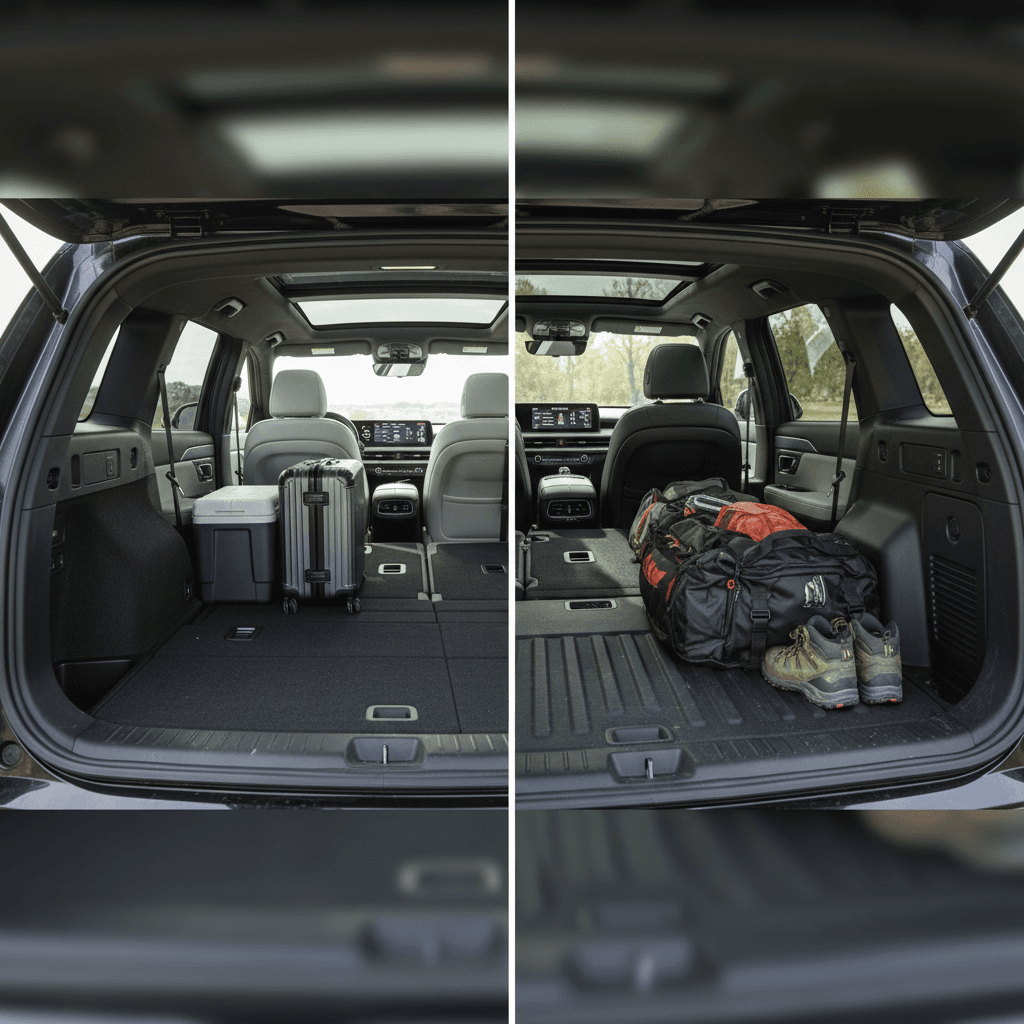
From the standpoint of hauling kids, gear, and pets, both the R1S and EV9 are genuinely useful. But the packaging tradeoffs are different, and that matters when you live with one every day.
Rivian R1S: adventure first, family second
- Shorter overall length than many three‑row SUVs but still spacious enough for most families.
- Cabin layout is design‑forward, with big screens and minimal physical controls, beautiful, but sometimes fiddly in daily kid‑chaos.
- Third row is usable for kids and smaller adults, but access and headroom feel more like an adventure SUV than a minivan replacement.
- Large frunk and under‑floor storage add flexibility for road trips and dirty gear.
Kia EV9: family packaging specialist
- Boxy, practical shape with generous third‑row space and cargo volume competitive with top gas three‑rows.
- Available captain’s chairs turn the EV9 into a genuinely comfortable six‑seater with easy third‑row access.
- Kia’s interior ergonomics lean mainstream: clear physical controls for frequently used functions and thoughtful storage.
- Materials and build quality are solid for the price point, though not as boutique as the Rivian.
If kids rule your life…
Performance, towing, and off‑road capability
Here the used Rivian R1S starts to justify its original luxury‑SUV pricing. It’s engineered to go places the EV9 simply isn’t meant to go.
Performance and capability comparison
Ask yourself whether you’ll really use what you’re paying for.
Rivian R1S strengths
- Standard air suspension with adjustable ride height and serious off‑road modes.
- AWD is standard, and earlier quad‑motor versions offer sports‑car levels of acceleration in a huge SUV.
- Up to 7,700‑lb towing, enough for many travel trailers and boats.
- Power and traction tuned for off‑pavement adventures, not just snow‑day traction.
Kia EV9 strengths
- AWD trims provide confident all‑weather capability and strong passing power.
- 0–60 mph performance in the 5‑second range on higher‑power trims is more than enough for family duty.
- Up to 5,000‑lb towing covers small campers, utility trailers, and most recreational gear.
- Suspension tuning leans toward comfort and quiet, not rock‑crawling.
Towing reality check
Tech, safety, and driver-assistance
Both vehicles are rolling software platforms. That’s a gift, constant improvements, and a risk, because bugs and recalls increasingly arrive via over‑the‑air updates rather than wrenches.
Rivian R1S
- Clean, tablet‑like interface with frequent software updates that add features and refine behavior.
- Modern driver‑assist suite with highway assist features, lane‑keeping, and adaptive cruise.
- Some owners have reported occasional glitches and UI quirks that take a few updates to iron out.
- Because Rivian controls the whole stack, features can improve rapidly, but you’re also subject to the company’s learning curve.
Kia EV9
- Uses the latest generation of Kia’s infotainment and driver‑assist tech, including competent highway assist and solid lane‑centering.
- Interface can feel more conventional, with good use of physical switches and a flatter learning curve for non‑techy drivers.
- Kia is pairing EV9 with a strong active‑safety and crash‑protection story, making it an easy sell for cautious parents.
- Software updates exist but are not as aggressively positioned as a "constantly evolving" experience the way Rivian markets theirs.
Safety isn’t just crash tests
Reliability, warranty, and ownership risk
This is the part of the decision most spec sheets gloss over, and where the used R1S vs new EV9 choice really diverges. You’re not just choosing between two vehicles; you’re choosing between two very different risk profiles.
Used Rivian R1S: high reward, higher uncertainty
- Many early R1S owners report loving the driving experience, but also mention fit‑and‑finish issues, suspension noise, or minor leaks that required service visits.
- Like many young EV startups, Rivian has faced multiple recalls and service campaigns related to suspension components, software behavior, and labeling.
- You may still have years left on Rivian’s battery and drivetrain warranty (often 8 years/150,000 miles from in‑service date), but bumper‑to‑bumper coverage may be shorter and partially used.
- Service network is growing but limited versus legacy automakers; mobile service covers many issues, but a big repair could mean longer waits or travel.
New Kia EV9: boring is good here
- Kia’s long powertrain warranties (up to 10 years/100k miles) and mainstream dealer network reduce downside risk for most owners.
- As a first‑generation model, the EV9 will still see early‑production issues, but Kia has decades of mass‑production experience to lean on.
- When things do go wrong, there’s a dense dealer network in most U.S. metros and many smaller markets.
- Buying new also gives you a clean slate: no past unknown damage, no mystery fast‑charging history, and predictable maintenance from day one.
Used startup EV reality
This is exactly why Recharged built the Recharged Score battery and condition report. On a used R1S, we don’t just scan the battery, we look at software history, error codes, and wear patterns to help surface the kinds of issues that lead to repeat service visits. That reduces, but doesn’t eliminate, the extra risk you take on versus a new EV9.
Buying checklist: used R1S vs new EV9
Key questions before you choose a used Rivian R1S or a new Kia EV9
1. How much do you value off‑road and towing capability?
If your lifestyle truly includes regular trail driving or towing 5,000+ lbs, the R1S justifies its premium hardware. If towing is rare and light, the EV9’s more modest capability may be perfectly adequate and cheaper to live with.
2. Are you comfortable with startup‑brand ownership risk?
With a used R1S, you’re betting on Rivian’s long‑term durability, recall handling, and service expansion. If that uncertainty bothers you, a new EV9 with a large dealer network is the lower‑stress path.
3. How far are you from each brand’s service support?
Check how close the nearest Rivian service center and mobile coverage area are to you, and compare that to local Kia dealers. Distance to service is one of the most under‑appreciated factors in EV happiness.
4. What’s your real budget after incentives and financing?
Run actual payment scenarios for a used R1S and a new EV9, including interest rates, taxes, possible EV incentives, and insurance. A new EV9 with rebates may land surprisingly close in monthly cost to a more expensive used R1S.
5. How long do you plan to keep the vehicle?
If you plan to keep the SUV 8–10 years, you may care more about long‑term brand stability and warranty tail. If you’ll sell in 3–4 years, you’re more exposed to <strong>resale volatility</strong>, especially on the R1S.
6. What’s the health of the specific used R1S you’re eyeing?
Get <strong>battery diagnostics</strong>, a detailed inspection, and history on fast‑charging, off‑road use, and accident repairs. A clean, well‑documented R1S with strong battery health is a completely different proposition from a hard‑used one at the same asking price.
How Recharged can help with a used R1S or other EV SUV
If this comparison is pushing you toward a used Rivian R1S, or even a different used three‑row EV like a Model X, it’s worth getting expert backup. Recharged was built specifically to make used EV ownership simpler and more transparent.
- Every vehicle on Recharged comes with a Recharged Score Report that includes verified battery health, pricing benchmarks, and a plain‑English condition summary.
- Our EV‑specialist team can help you cross‑shop a used R1S against other three‑row EVs, not just the EV9, and walk you through trade‑offs in range, towing, and risk.
- You can finance, trade in, and complete paperwork fully online, with nationwide delivery and an Experience Center in Richmond, VA if you’d rather see vehicles in person.
- If you decide the R1S risk profile is too high, we’ll help you pivot to a lower‑risk used EV that still fits your family’s needs and budget.
Leaning toward used?
FAQ: used Rivian R1S vs new Kia EV9
Frequently asked questions
Bottom line: which one should you buy?
If you prize off‑road capability, towing headroom, and a boutique EV experience, a well‑vetted used Rivian R1S can be a deeply satisfying choice, especially once early depreciation has done its work. But you need to go in with open eyes about startup‑brand service, recall risk, and the time cost of debugging a complex, software‑defined vehicle.
If you want an EV that simply does the family‑SUV job with minimum drama, the new Kia EV9 is the rational pick. Its pricing, warranty, and dealer support are aligned with mainstream expectations, and its range and charging performance are more than enough for how most families actually drive.
Either way, your smartest move is to evaluate specific vehicles, not just badges. That’s where Recharged comes in: with verified battery health, transparent pricing, and EV‑specialist guidance, we can help you find a used three‑row EV, R1S or otherwise, that fits your life as well as your spreadsheet.