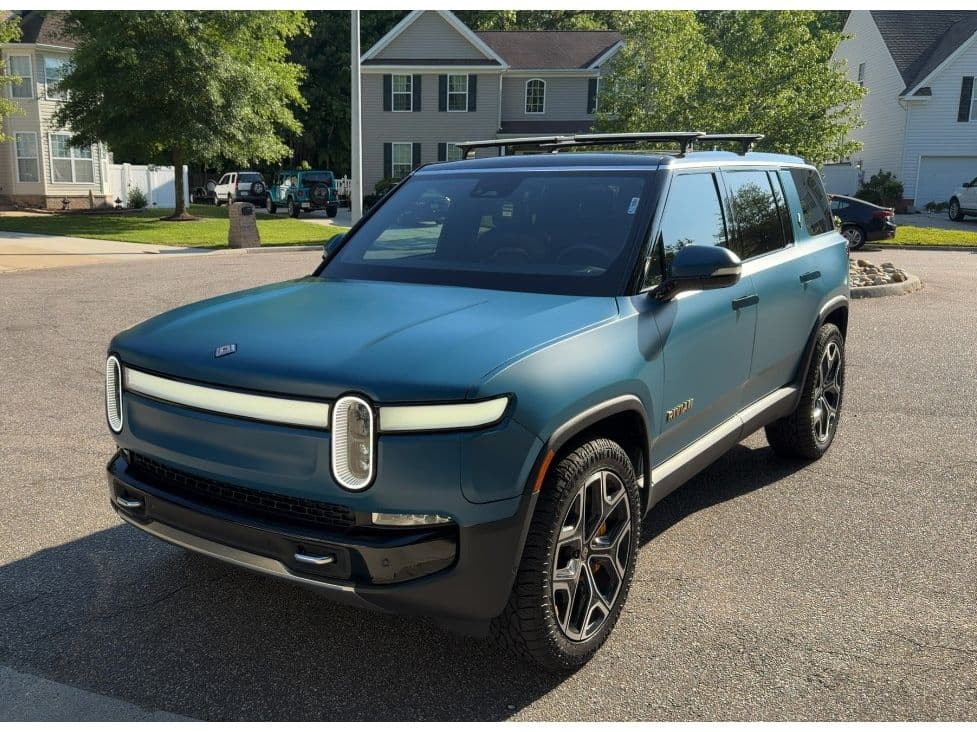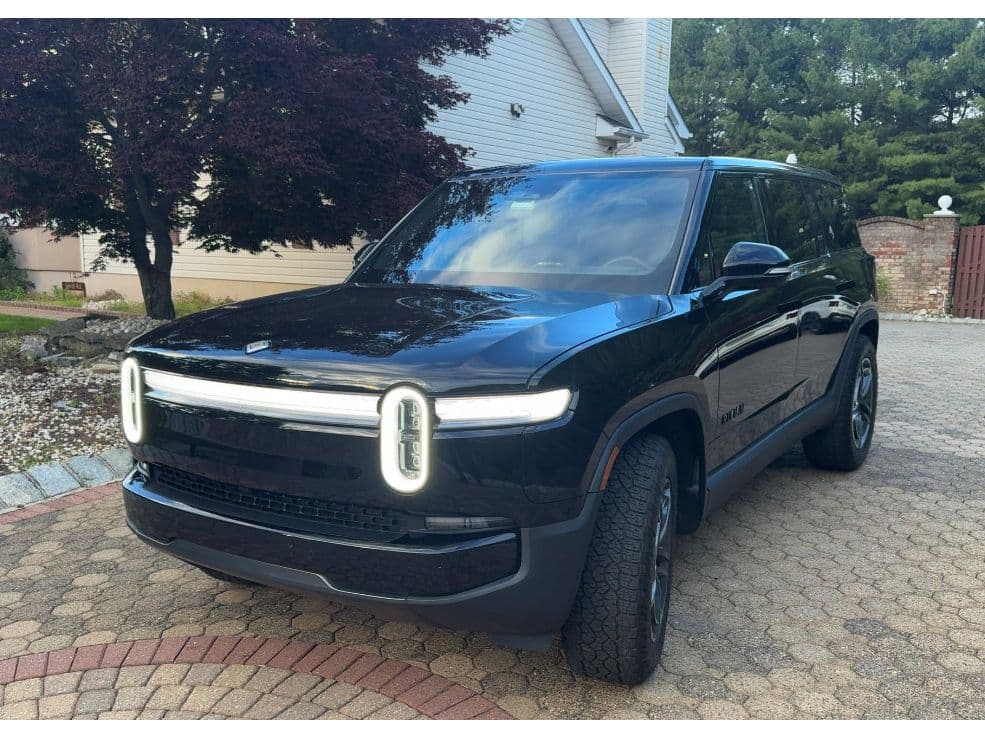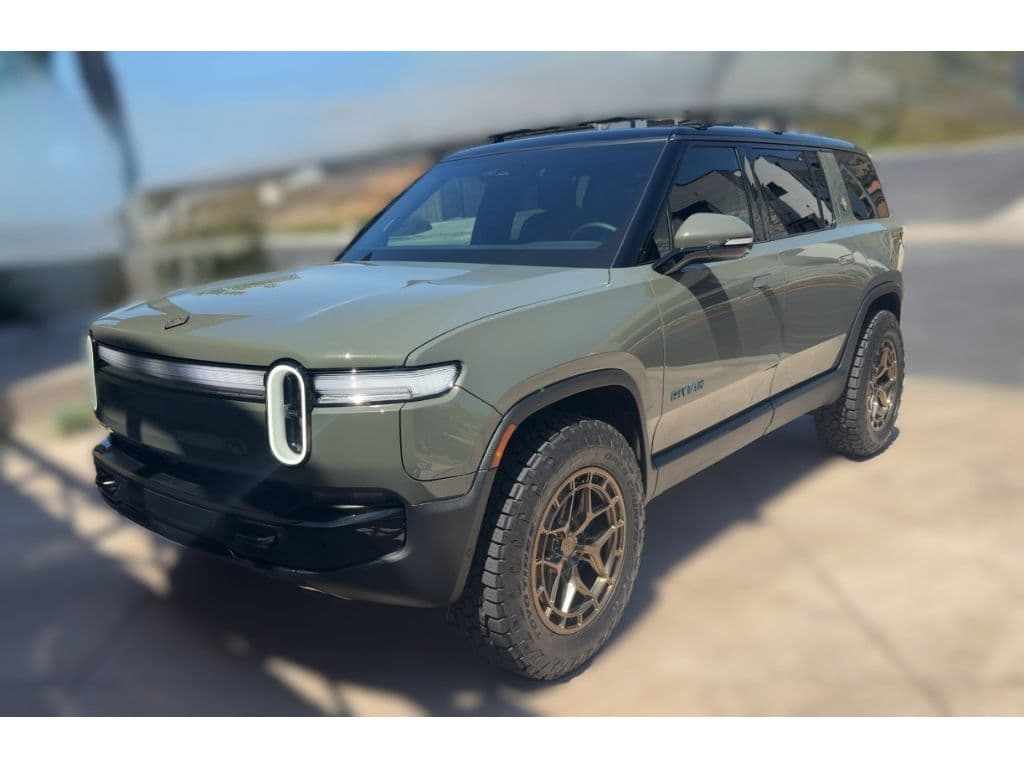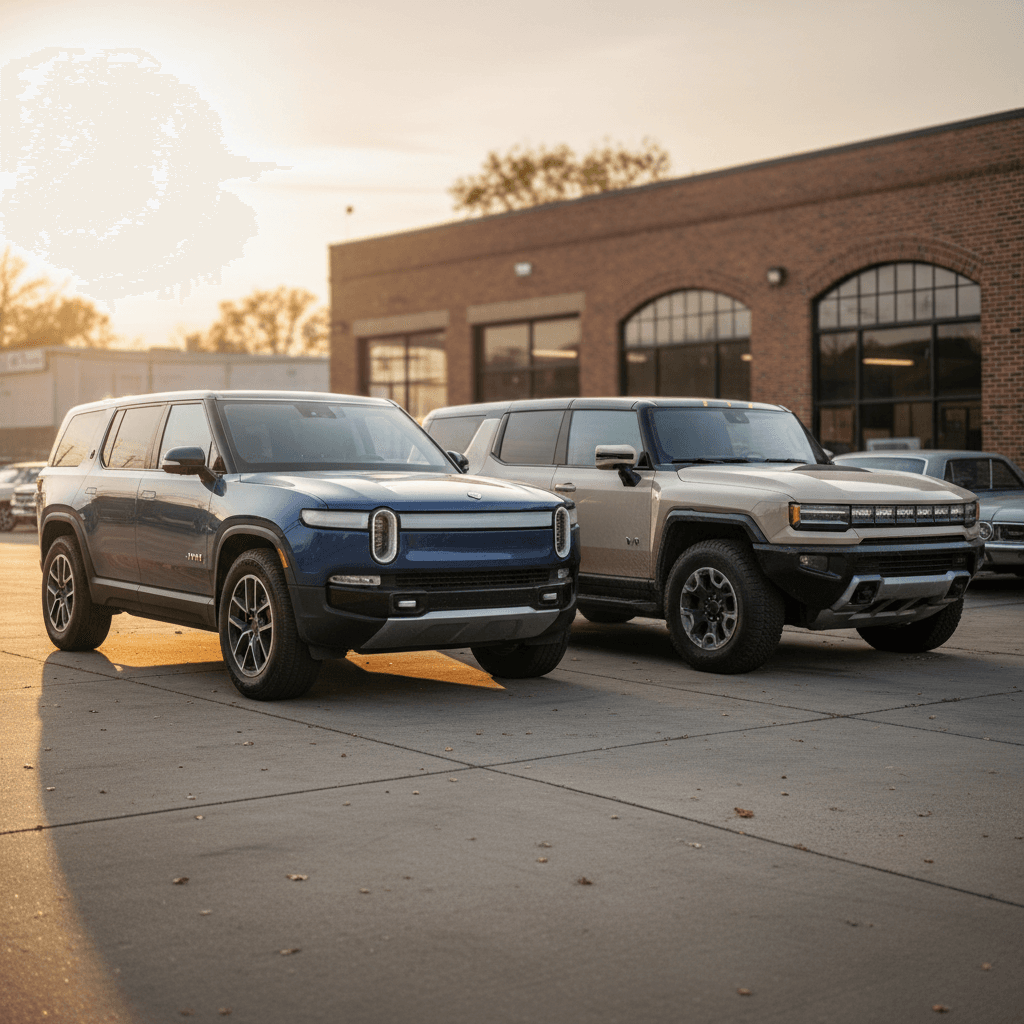
If you’re cross-shopping a used Rivian R1S vs GMC Hummer EV SUV, you’re not deciding between ordinary family crossovers. Both are halo products: huge battery packs, big power, serious off-road capability, and eye-catching design. But they answer very different questions: the R1S wants to be your everyday adventure SUV, while the Hummer EV SUV leans into outrageous excess and off-road theater.
Who this comparison is for
Overview: Used Rivian R1S vs GMC Hummer EV SUV
On paper, the Rivian R1S and GMC Hummer EV SUV overlap a lot: both are off-road-capable, luxury electric SUVs with huge batteries, powerful dual- or tri-motor powertrains, and six-figure MSRPs when new. In practice, they occupy opposite ends of the usability spectrum.
Rivian R1S (used)
- Mission: Adventure family SUV you can daily-drive.
- Seating: Standard 3-row, up to 7 passengers.
- Range: Up to around 400 miles with Max pack; many used examples in the 315–350 mile range band.
- Character: Modern, minimalist, quiet, surprisingly efficient for its size.
GMC Hummer EV SUV (used)
- Mission: Electric off-road toy and status symbol.
- Seating: 2-row only, 5 passengers.
- Range: EPA up to about 315 miles when new, less with off-road packages.
- Character: Huge, heavy, spectacularly quick and capable, but thirsty for electrons.
Bottom line up front
Quick specs: Rivian R1S vs Hummer EV SUV
Headline specs (new) that matter on the used market
Approximate specs for popular configurations that you’re likely to see on the used market. Numbers vary by year, trim, and tire package, so always verify a specific VIN.
| Metric | Rivian R1S (Dual / Large or Standard+ pack) | Rivian R1S (Tri / Max pack) | GMC Hummer EV SUV 2X | GMC Hummer EV SUV 3X |
|---|---|---|---|---|
| Horsepower | ~533 hp dual-motor | Up to ~850 hp tri-motor | Up to 570 hp (dual-motor) | Up to 830 hp (tri-motor) |
| EPA range (max trims) | Roughly 315–352 miles (Large pack), ~400 miles (Max) | Up to ~400 miles | Up to ~315 miles | Around 300–312 miles |
| Towing capacity | 7,700 lbs | 7,700 lbs | TBD officially for all configs, but oriented to off-road more than towing | TBD; similar story, strong power, but not a tow-first rig |
| 0–60 mph (approx.) | ~4.5 seconds (dual) | Down to ~2.9 seconds | Around 4–5 seconds (dual) | ~3.5 seconds with Watts to Freedom |
| Curb weight | ~7,000–7,200 lbs depending on pack | Slightly higher with larger pack | Just under 9,000 lbs in many trims | Similar ~9,000 lbs |
| Seating | 3 rows, up to 7 | 3 rows, up to 7 | 2 rows, 5 seats | 2 rows, 5 seats |
Rivian R1S vs GMC Hummer EV SUV: key numbers for used shoppers
Efficiency snapshot: why these numbers matter
Used-spec reality check
Size, comfort, and practicality
Everyday usability: Rivian R1S vs Hummer EV SUV
Both are big; only one is really family-friendly.
Rivian R1S: family adventure rig
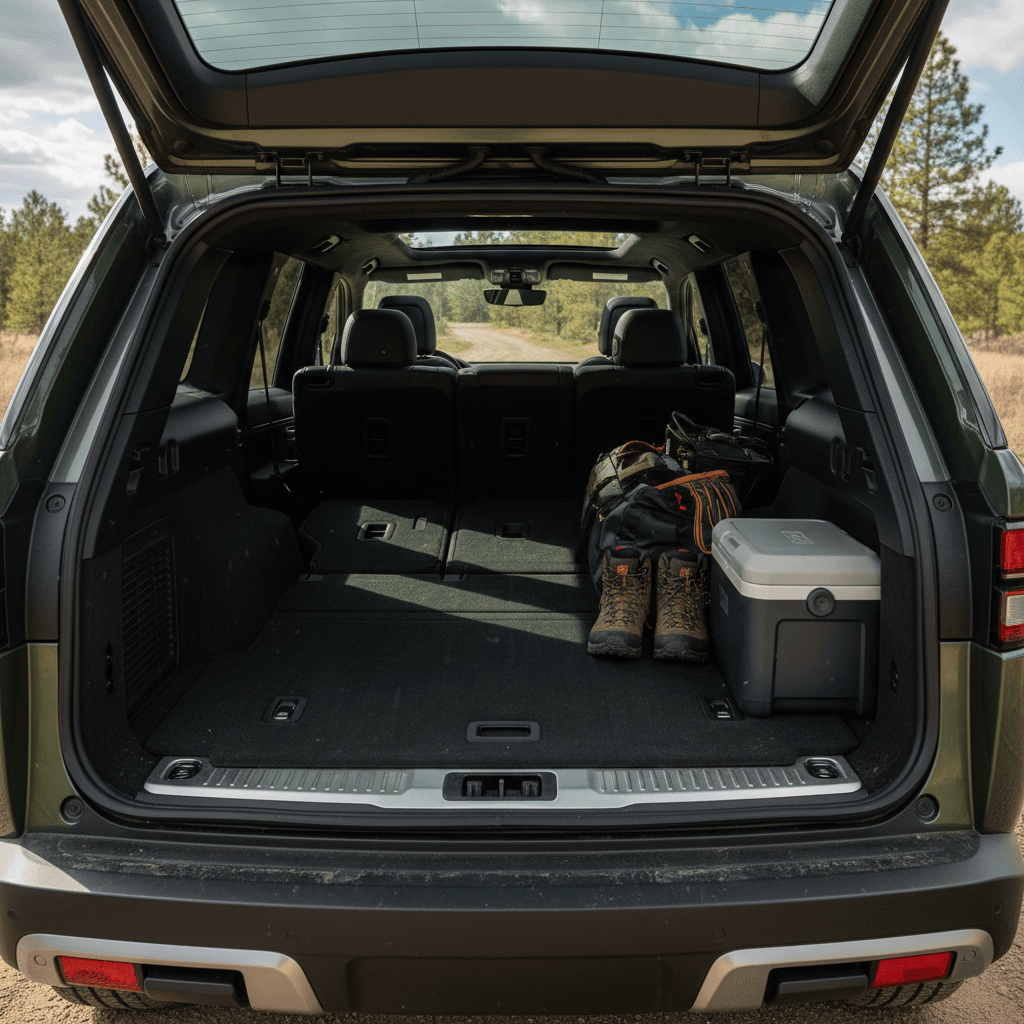
- Three-row seating: Standard 7-passenger layout, with an adult-tolerable third row and easy-fold seats.
- Cargo flexibility: Up to roughly 88 cu ft with rows folded, plus a useful frunk.
- Footprint: About 200.8 inches long, big, but still roughly in line with a midsize body-on-frame SUV.
- Cabin vibe: Minimalist, airy, with good outward visibility and clever storage.
Hummer EV SUV: playable giant
- Two-row only: Seats five; no third row. For families of four or more, that’s a real limitation.
- Massive presence: Shorter than the Hummer pickup but still extremely wide and tall. Urban parking can be stressful.
- Cargo: Big rear cargo area and front trunk, but less clever packaging than Rivian.
- Roof panels: Removable panels and a power swing gate add fun and drama, at the cost of some day-to-day refinement.
Practicality verdict
Performance, off-road capability, and driving experience
Both SUVs are absurdly quick for what they are, and both can go much farther off-pavement than most owners will dare. But they deliver that capability in very different ways.
On-road feel
- Rivian R1S: Air suspension with adaptive damping and clever roll-control gives the R1S a planted, controlled feel. It still feels big, but it’s more composed and car-like than body-on-frame giants.
- Hummer EV SUV: The Hummer’s weight is always present. Straight-line acceleration is hilarious, but the physics of a ~9,000 lb SUV mean more body motion, longer stopping distances, and extra caution in tight spaces.
Off-road tools
- Rivian R1S: Multiple drive modes, height-adjustable suspension up to around 14–15 inches of clearance, strong approach/departure angles, and precise traction control make it genuinely capable on trails.
- Hummer EV SUV: CrabWalk, Extract Mode that lifts the body roughly 6 inches, and available 35-inch off-road tires turn the Hummer into a rock-crawling spectacle. It’s more capable than most owners will ever need, but efficiency pays the price.
If you really wheel your EV
Range, efficiency, and charging
This is where the philosophical differences really hit your wallet. The Rivian R1S is a big, heavy SUV that happens to be relatively efficient. The Hummer EV SUV is a big, heavy SUV that leans fully into excess, then carries a huge battery to make up for it.
Range and efficiency comparison (high-level)
Approximate figures for popular trims; used vehicles will vary with wheel size, tire choice, and options.
| Metric | Rivian R1S (Dual / efficient spec) | Rivian R1S (Tri / performance spec) | GMC Hummer EV SUV (street tires) | GMC Hummer EV SUV (Extreme Off-Road) |
|---|---|---|---|---|
| EPA-rated range | Up to ~315–352 miles, depending on battery | Around 321–400 miles | Roughly 300–315 miles | High-200s to low-300s |
| Approx. efficiency | Mid-60s to mid-70s MPGe, depending on spec | Slightly lower with Max pack and tri-motor | Often in the 50s MPGe range | Real-world reports closer to 1.5 mi/kWh |
| Battery size | ~121–147 kWh usable across packs | Larger Max pack approaching 147 kWh | ~170 kWh in many SUV trims | Same pack, but off-road tires add drag |
Rivian R1S vs GMC Hummer EV SUV: how far you go per kWh matters
Charging experience on road trips
Both can fast-charge quickly, but consumption changes the math.
Rivian R1S
- Peak DC fast-charge rate around 220 kW on newer packs.
- Real-world: adding ~140 miles in about 20 minutes at a strong DC fast charger.
- Better efficiency means fewer stops and shorter sessions for a given trip.
GMC Hummer EV SUV
- Peak DC fast-charge rate up to around 300–350 kW on 800V-capable stations.
- Can add 100+ miles in about 10 minutes of ideal charging.
- But huge battery and poor efficiency mean you spend more total time plugged in over a long trip.
Home charging matters more with the Hummer
Ownership costs and used-market realities
When these SUVs were new, both routinely brushed six figures. On the used market, depreciation and demand patterns have started to diverge, and so have running costs.
Key cost factors for used R1S vs Hummer EV SUV
1. Depreciation and resale
Early Rivian R1S builds saw typical startup volatility, but demand for practical, long-range EV SUVs is real. Hummer EV SUVs are a more niche product; some trims have softened quickly as initial hype cooled and buyers realized the day-to-day compromises.
2. Insurance
Both are expensive to insure thanks to price, weight, and repair complexity. In many ZIP codes, the Hummer’s size and performance can push premiums even higher than an equivalent R1S.
3. Energy costs
Given its better efficiency, an R1S might cost $40–$60 less per month in electricity for a typical American commute compared with a Hummer EV SUV, assuming similar miles and rates. Over a 5-year ownership, that’s thousands of dollars.
4. Tires and wear items
Both are hard on tires because of weight and torque. The Hummer’s 35-inch off-road tires are substantially more expensive to replace and will generally wear faster than the Rivian’s more road-biased setups.
5. Incentives and financing
Used EV tax incentives and attractive financing often favor more mainstream, efficient EVs. A Hummer EV SUV may fall outside some buyers’ price and incentive windows, while a used R1S can sometimes slot into programs more easily.
Leverage the used EV sweet spot
Reliability, battery health, and what to inspect
Both Rivian and GMC are still relatively early in their EV life cycles, and neither the R1S nor the Hummer EV SUV has a decade of real-world data behind it. That makes careful inspection and battery-health assessment especially important on the used market.
What to look for on a used Rivian R1S vs Hummer EV SUV
Focus on battery health, software, and hard-use clues.
Rivian R1S inspection priorities
- Battery and range: Verify displayed full-charge range vs original EPA rating, accounting for wheel/tire choice.
- Air suspension: Listen for compressor noise, check for uneven ride height or warnings.
- Software and driver aids: Rivian updates often; confirm current software, check for error messages or sensor issues.
- Off-road use: Look underneath for scrapes, bent skid plates, or evidence of frequent off-road abuse.
Hummer EV SUV inspection priorities
- Battery and charging behavior: Confirm DC fast-charging works as expected and that the vehicle reaches appropriate peak speeds.
- Suspension and steering: CrabWalk and four-wheel steer add complexity; test all modes and listen for clunks.
- Roof panels and seals: Inspect for leaks, wind noise, and water ingress around removable panels.
- Tire wear: Aggressive off-road tires plus heavy curb weight can create uneven wear; inspect carefully.
Don’t guess on battery health
Which used EV SUV is right for you?
Choose your path: R1S vs Hummer EV SUV by buyer type
Daily-driver family with road trips
You regularly carry kids, pets, or friends and need three rows at least some of the time.
You plan 2–4 long road trips per year and want to minimize charging stops.
You care about running costs alongside performance.
<strong>Best fit:</strong> Used Rivian R1S, ideally Dual Motor with a Large or Max pack for range headroom.
Weekend warrior with heavy off-road focus
You already own another practical daily and want an electric toy.
You prioritize rock-crawling tricks, approach/departure angles, and spectacle.
You’re comfortable planning around higher energy use and tire costs.
<strong>Best fit:</strong> GMC Hummer EV SUV, preferably with off-road packages, just go in eyes open on efficiency.
Status-seeker and collector
You value presence and uniqueness above practicality.
You drive relatively few miles per year but want something memorable.
Resale value is a consideration, but not the primary concern.
<strong>Best fit:</strong> Either can work, but the Hummer has more “future collectible” vibes; the Rivian is more liveable if your tastes change.
First EV, coming from a traditional SUV
You want an EV that still feels like a ‘normal’ SUV to live with.
Charging, range, and learning curve are a concern.
You’d like your first EV to prove that electrification can be better, not just different.
<strong>Best fit:</strong> Rivian R1S. It’s easier to park, more efficient, and more versatile day-to-day.
My nuanced take
How Recharged can help you shop smarter
High-end used EVs like the Rivian R1S and GMC Hummer EV SUV live at the intersection of cutting-edge software, complex hardware, and rapid depreciation. That’s exactly where you want transparency rather than guesswork.
Why shop for a used R1S or Hummer EV SUV with Recharged?
Data, diagnostics, and EV specialists on your side.
Recharged Score battery diagnostics
EV-specialist guidance
Financing, trade‑in, and delivery
Ready to find your next EV?
Browse VehiclesIf you’re leaning toward a used Rivian R1S or GMC Hummer EV SUV, you’re already thinking beyond the average crossover. The key is matching the vehicle’s personality and operating costs to your real life. Get clear on how you’ll actually use the SUV, then use tools like battery-health reports, expert support, and transparent pricing to de-risk the decision. That’s where marketplaces built specifically for used EVs, like Recharged, can turn an intimidating purchase into a confident one.