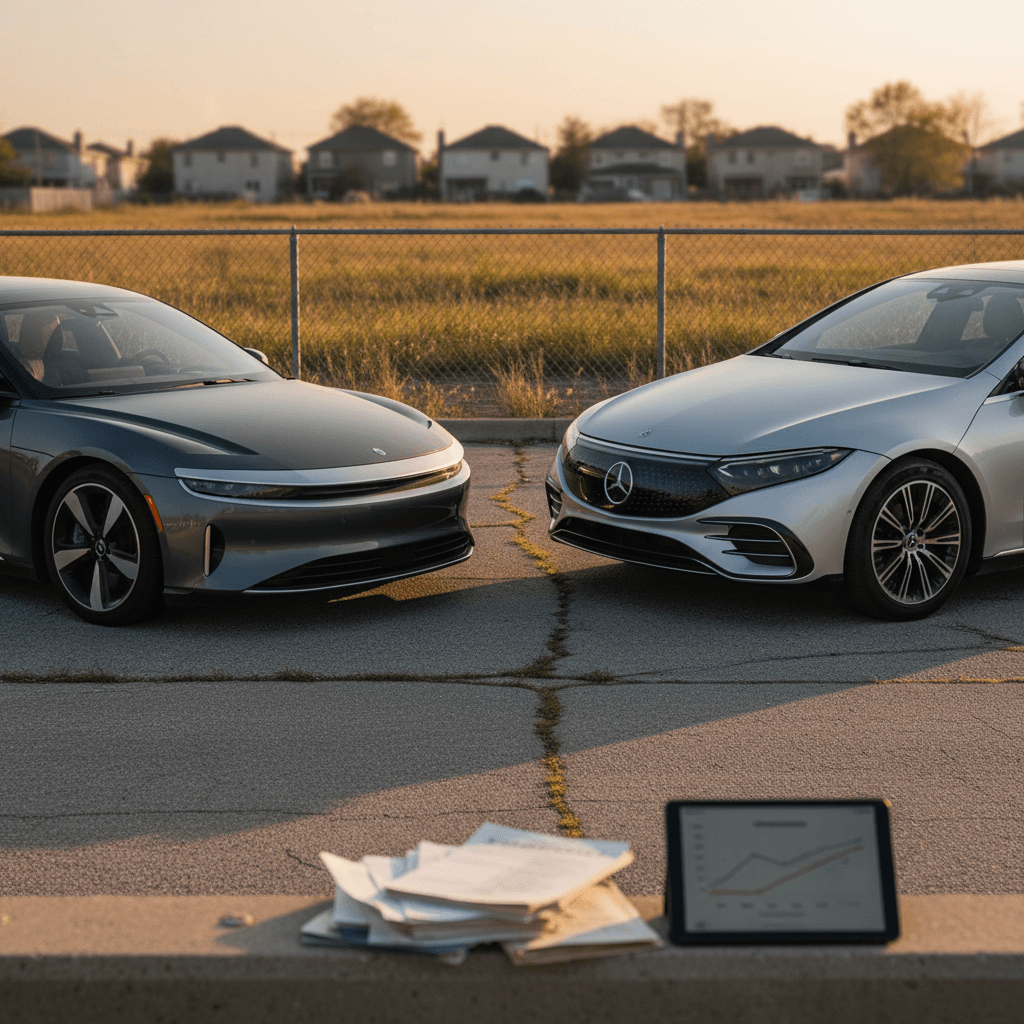
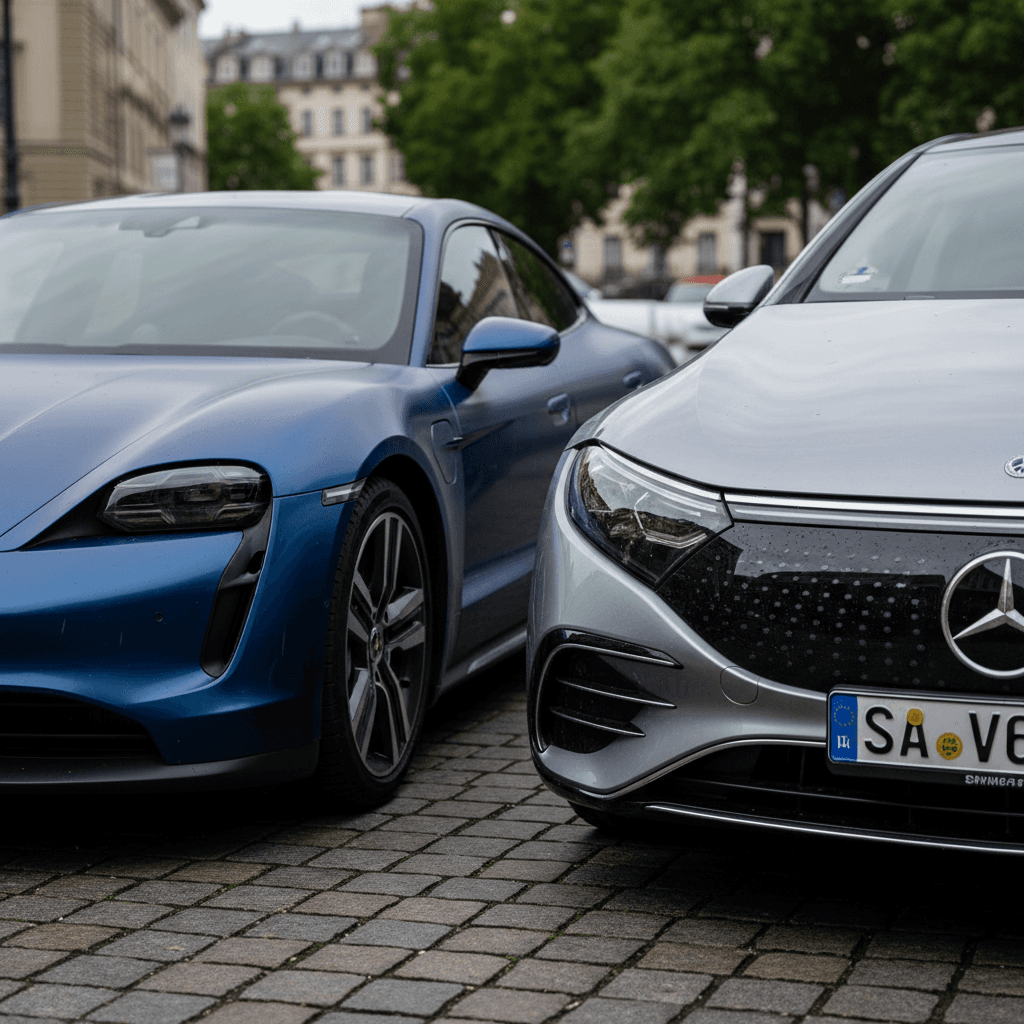
If you’re cross‑shopping a used Porsche Taycan vs Mercedes EQS, you’re comparing two very different takes on the luxury EV formula. One is a four‑door sports car with race‑track reflexes, the other a rolling executive lounge aimed squarely at S‑Class loyalists. On the used market in 2025, their prices are finally overlapping, making this a real decision for U.S. shoppers.
Quick takeaway
Overview: Used Taycan vs Used EQS
Taycan vs EQS at a Glance (Used Market)
How these luxury EVs stack up in 2025
Porsche Taycan (2019–present)
Best for: Enthusiasts who want sports‑sedan handling and rapid fast‑charging.
- Body styles: sedan, Cross Turismo (wagon), Sport Turismo
- Typical EPA range (early U.S. models): ~200–246 miles; later 2025 updates push much higher in real‑world tests
- 800‑volt architecture with very fast DC charging (up to around 270–320 kW on newer cars)
- Ride/handling tuned for performance; firmer than an EQS
Mercedes‑Benz EQS Sedan (2022–present)
Best for: Drivers who prioritize silence, comfort, and maximum range over canyon‑road pace.
- Body style: full‑size liftback sedan
- EPA range: up to the mid‑300‑mile range on EQS 450+ trims
- 400‑volt architecture, DC fast‑charging up to ~200 kW
- Ultra‑quiet cabin, soft ride, huge rear seat and cargo area
Model availability note
Who Each Car Is For
Choose a used Porsche Taycan if…
- You care more about steering feel and handling than absolute range.
- You like a lower seating position and sport‑sedan posture.
- Most of your driving is under 150 miles a day with easy access to DC fast charging on trips.
- You’re okay trading some rear‑seat and trunk space for design and dynamics.
- You want a car that still feels special in five years, Taycan is central to Porsche’s EV strategy.
Choose a used Mercedes EQS if…
- You want a modern, electric S‑Class alternative with a quiet, plush ride.
- You value range and comfort over lap times.
- You carry passengers often and need adult‑friendly rear seating plus a big hatchback trunk.
- You like advanced driver‑assist and huge screens (Hyperscreen on many trims).
- You don’t mind softer road feel and a more isolated driving experience.
Driving Experience & Performance
The biggest subjective gap between a used Porsche Taycan vs Mercedes EQS is how they feel from behind the wheel. Both are quick; only one really behaves like a sports car.
Performance Snapshot (Representative U.S. Trims)
Exact specs vary by year and trim; these examples illustrate typical differences shoppers will see on the used market.
| Model | Example trim | Power (hp) | 0–60 mph (approx.) | Drive | Character |
|---|---|---|---|---|---|
| Porsche Taycan | Base / RWD (early U.S. car) | ~402 hp | ~5.0 sec | RWD | Balanced, still very quick |
| Porsche Taycan 4S | Mid‑range performance | ~522–562 hp (with overboost) | ~3.5–3.8 sec | AWD | Serious performance sedan |
| Porsche Taycan Turbo | High performance | ~670 hp | ~3.0 sec or less | AWD | Near‑supercar straight‑line pace |
| Mercedes EQS 450+ | Single‑motor luxury | ~329 hp | ~5.5–5.9 sec | RWD | Smooth and adequate rather than thrilling |
| Mercedes EQS 580 4MATIC | Dual‑motor luxury | ~516 hp | ~4.1–4.3 sec | AWD | Fast in a straight line, softly sprung |
Always confirm the specific trim and year when you compare cars, both lineups run from mild to wild.
Behind‑the‑wheel reality
Porsche tunes the Taycan for sharp turn‑in, strong brake feel, and an almost telepathic connection through the steering wheel. Adaptive air suspension and optional rear‑axle steering keep it composed even on bumpy roads. The trade‑off is a firmer ride than you’ll find in the EQS, especially on big wheels.
The EQS goes the other direction: it isolates you. Steering is light, the cabin is ultra‑quiet, and the suspension soaks up bad pavement. It’s less satisfying for aggressive driving but wonderfully relaxing on long highway runs or in heavy traffic.
Range, Charging, and Road-Trip Ability
This is where many shoppers lean Mercedes. A used EQS generally offers more range on paper, while a Taycan answers with faster charging and, in later years, much‑improved efficiency.
Range & Charging Highlights
Real‑world 2025 Taycan improvements
- Daily use: If you mostly charge at home and rarely drive more than 150–180 miles in a day, both cars work well. Taycan’s slightly shorter range is less of a concern here.
- Road trips: EQS pulls ahead on pure distance between stops. Taycan counters with short, high‑power charging sessions, especially at 800‑volt DC fast chargers.
- Charging networks: Both use CCS in earlier model years, and the U.S. shift toward NACS means you’ll want to check adapter support and Supercharger access when you buy. A used‑EV specialist like Recharged can help you sort through compatibility questions based on your location and routes.
Comfort, Interior, and Tech
On the inside, a used Porsche Taycan vs Mercedes EQS feels like a contrast between a high‑end sports cockpit and a modern business‑class lounge. Both are premium; they just express it differently.
Cabin Experience: Sporty vs Sanctuary
How it feels to live with each car every day
Porsche Taycan Interior
- Driving position: Low and sporty, closer to a 911 than a Cayenne.
- Materials: High‑quality, but some reviewers note it’s more minimalist and tech‑focused than plush.
- Space: Fine up front; rear seat and trunk are tighter than the EQS.
- Tech: Multiple screens, responsive software, strong Apple CarPlay/Android Auto integration in newer model years.
Mercedes EQS Interior
- Driving position: Higher, more relaxed; emphasizes comfort over connection.
- Materials: Soft leather, ambient lighting, and rich detailing when well‑optioned.
- Space: Excellent rear legroom, big liftback cargo area; feels more like an S‑Class.
- Tech: Hyperscreen on many trims, extensive driver‑assist, lots of touch controls (which not everyone loves).
Used‑car watch item: touch controls
Battery Health, Warranties, and Longevity
Battery condition is the single biggest variable when you compare a used Porsche Taycan vs Mercedes EQS. Both were expensive new, both pack large, complex battery systems, and both rely heavily on software to manage that chemistry.
Factory Battery Warranties (Typical U.S. Coverage)
Always verify the in‑service date and warranty booklet for the exact car you’re buying, but this is what most U.S. owners see.
| Model | Battery warranty term | Mileage limit | Common threshold |
|---|---|---|---|
| Porsche Taycan | 8 years | 100,000 mi | Often covers capacity below a specified percentage (e.g., ~70%) |
| Mercedes EQS | Around 10 years (varies by region) | Up to ~155,000 mi equivalent | Also capacity‑based; check the specific car’s booklet |
Capacity coverage is just as important as years and miles, look for language about minimum usable capacity or state of health.
Why third‑party battery tests matter
The Taycan benefits from Porsche’s long experience with performance‑oriented thermal management, and the 800‑volt system helps with efficient fast‑charging. The EQS leans more toward preserving comfort and range, with conservative power delivery and extensive software‑controlled cooling and heating. In both cases, a highway‑heavy, gently driven example with regular software updates is more desirable than a hard‑driven car that fast‑charged daily from 0–100%.
Used Pricing, Depreciation, and Value
When these cars were new, many well‑optioned Taycans and EQS sedans easily cleared six figures. On the used market in 2025, they’ve both taken real depreciation hits, often landing in the same price band for early model years.
What’s Happening on the Used Market
How to read asking prices
If you’re purely value‑driven, the EQS often undercuts a similarly‑aged Taycan on the used lot because demand for big electric sedans has cooled faster than for performance‑oriented EVs. Porsche’s brand pull and enthusiast audience help the Taycan hold onto a bit more residual value, especially in desirable specs like Cross Turismo wagons or higher‑performance trims.
Ownership Costs and Reliability
Day‑to‑day, both cars will be cheaper to "fuel" than a gasoline S‑Class or Panamera, especially if you can charge at home on a favorable electricity rate. Where things diverge is in long‑term complexity, service networks, and how much tech you’re comfortable maintaining as the car ages.
Key cost considerations for Taycan
- Service: Porsche dealers are familiar with high‑end customers but EV volume is still ramping. Out‑of‑warranty repairs can be pricey.
- Wear items: Performance tires and big brakes cost more to replace than on a typical compact EV.
- Software: OTA updates continue to improve efficiency and features; confirm the car is up to date.
- Insurance: Sports‑car image and high parts cost can nudge premiums upward.
Key cost considerations for EQS
- Service: Wider U.S. dealer network, but some stores are still learning EV‑specific workflows.
- Complex tech: Hyperscreen, extensive driver‑assist, and air suspension add comfort, and repair risk, long‑term.
- Brakes & tires: Heavy curb weight plus large wheels means careful attention to tire quality and alignment.
- Incentives: With new EQ models slowing, you may see aggressive CPO offers and extended warranties.
Don’t skip the EV‑specific inspection
Which Used EV Is Better for You?
There’s no universal winner in the used Porsche Taycan vs Mercedes EQS debate. Instead, there’s a clear best choice for different types of drivers.
Taycan vs EQS: Best Fit by Use Case
Match the car to how you actually drive
Weekend driver & enthusiast
Pick: Porsche Taycan (ideally 4S or above).
If you live for backroads, on‑ramps, and track‑day potential, the Taycan’s steering, braking, and chassis tuning simply feel more special. Range will be fine for weekends; just map fast‑chargers for longer routes.
Commuter & business travel
Pick: Mercedes EQS 450+.
Long highway stints, conference calls, and airport runs play to the EQS’s strengths: quiet, roomy, and efficient. You’ll arrive more relaxed and stop less often for charging.
Family hauler & road‑tripper
Pick: Lean EQS, consider Taycan Cross Turismo.
EQS offers more usable rear space and cargo. If you’re drawn to Porsche and okay with a bit less room, a Taycan Cross Turismo wagon bridges the gap with extra practicality.
If you still feel torn, drive both on the same day. Pay attention to how each car makes you feel after 30 minutes in mixed traffic. Then factor in charging access, battery health, and total monthly cost, areas where a transparent marketplace like Recharged, with its battery‑health‑verified Recharged Score and EV‑savvy financing options, can turn a tough call into a confident decision.
Checklist: Shopping a Used Taycan or EQS
Essential Steps Before You Buy
1. Confirm battery health and fast‑charge history
Ask for documented state‑of‑health (SoH) readings and review how the car was charged. Frequent DC fast‑charging from very low states of charge can accelerate wear if not managed well.
2. Decode trim, options, and wheels
On Taycan, options like Performance Battery Plus and adaptive suspension change the experience. On EQS, focus on 450+ vs 580, wheel size, and whether you’re getting Hyperscreen or not.
3. Test driver‑assist and infotainment
Try adaptive cruise, lane‑keeping, parking aids, and voice control in real traffic. A glitchy interface will get old fast on a daily driver.
4. Check software update status
Verify that critical software updates, recalls, and campaigns have been completed. Updated firmware can improve range, reliability, and user experience on both cars.
5. Inspect tires, brakes, and suspension
These cars are heavy and powerful; worn tires or tired shocks are expensive to fix. Listen for clunks, feel for vibrations, and budget accordingly.
6. Plan your charging ecosystem
Map your home setup (120V vs 240V), workplace charging, and DC fast‑charge options along your usual routes. If you’re buying through Recharged, an EV specialist can walk you through realistic charging scenarios for your lifestyle.
7. Run the total cost of ownership
Look beyond price. Fold in insurance, financing terms, projected electricity vs fuel savings, and a realistic maintenance/repair reserve over the next 5–7 years.