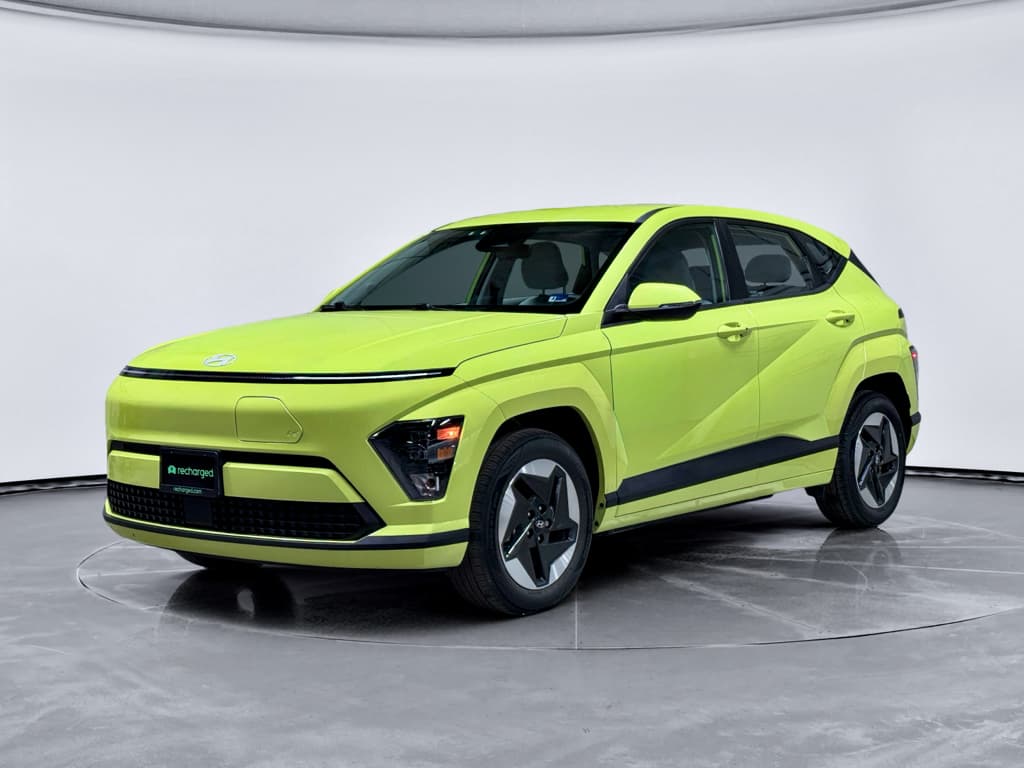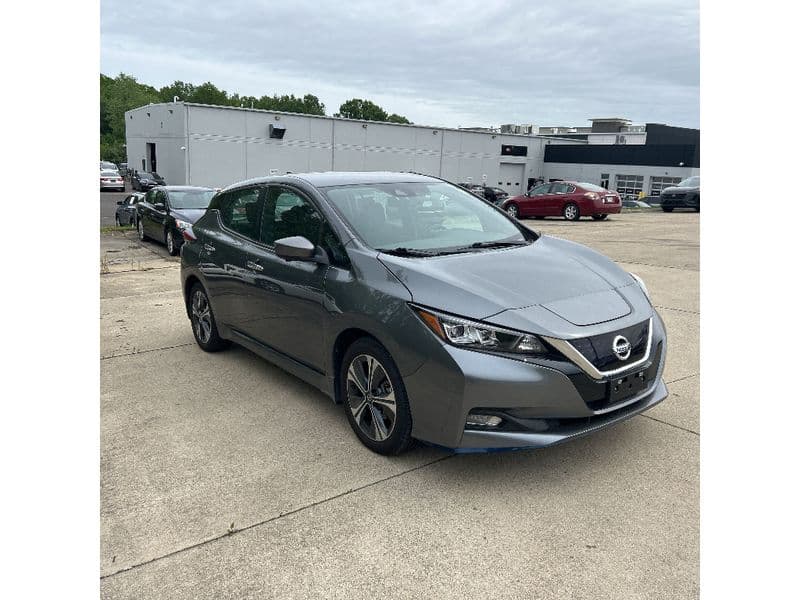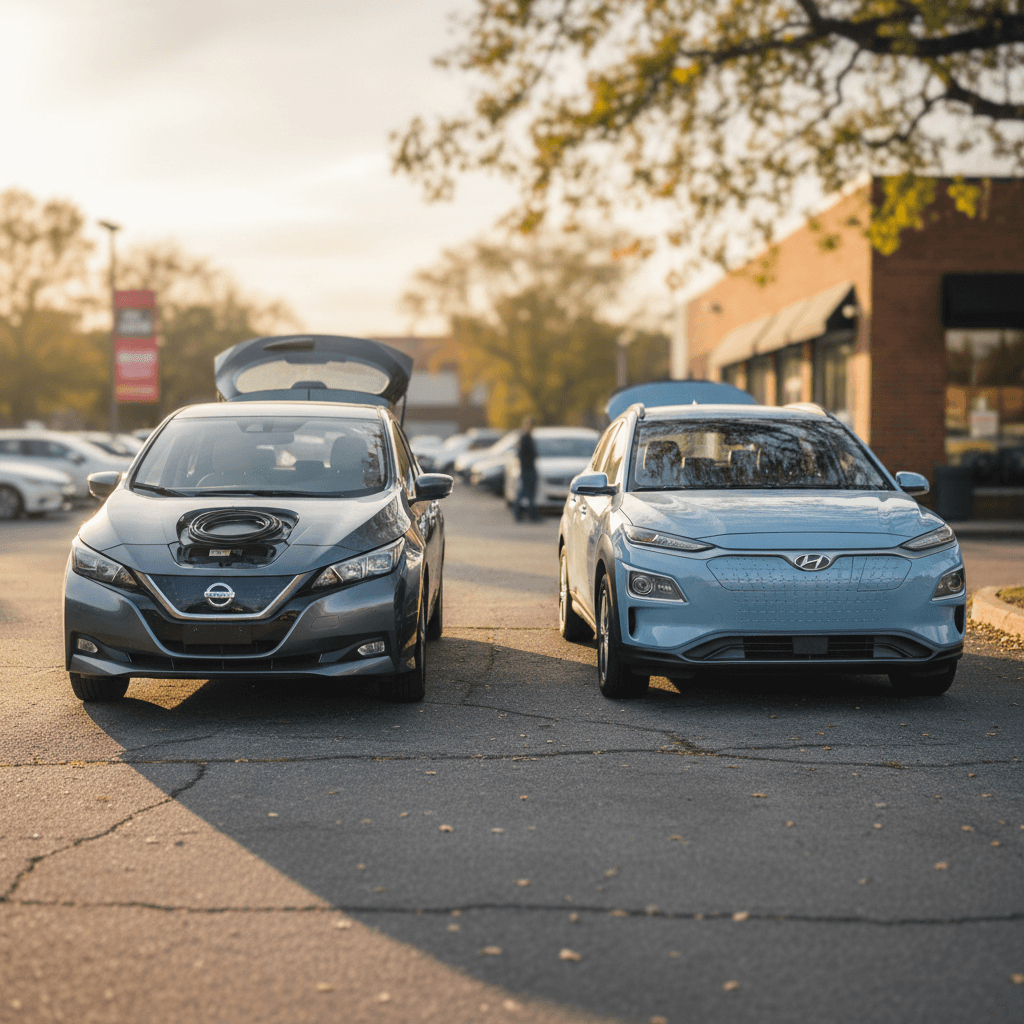
If you’re shopping the used EV market in 2026, the **Nissan Leaf** and **Hyundai Kona Electric** will pop up again and again. Both are compact, practical, and relatively affordable, but they’re very different once you start digging into range, battery health, and how they fit into your life day to day.
Quick context for 2026 shoppers
Who this Leaf vs Kona Electric comparison is for
This 2026 comparison of the **used Nissan Leaf vs Hyundai Kona Electric** is aimed at shoppers in the U.S. who are looking at model years roughly 2018–2024, with budgets from about $12,000 on the low end (older Leafs) up into the mid‑$30,000s (newer Konas). If you want a clear, real‑world view of range, battery health, charging, and ownership costs, not just glossy brochure specs, you’re in the right place.
- You’re cross‑shopping a Leaf and a Kona Electric and want to know which one really fits your life.
- You mostly drive around town but wonder if either car can handle the occasional highway trip.
- You’ve heard about Leaf battery degradation and want to understand the risk.
- You’re trying to decide if it’s worth paying more upfront for a used Kona Electric instead of a cheaper Leaf.
How Recharged can help
At a glance: used Nissan Leaf vs Hyundai Kona Electric in 2026
Leaf vs Kona Electric: key used‑market highlights
Used Nissan Leaf vs Hyundai Kona Electric: high‑level comparison
These are typical configurations you’ll see most often on the used market in 2026, not every niche trim.
| Used Nissan Leaf (common U.S. trims) | Used Hyundai Kona Electric (U.S.) | |
|---|---|---|
| Typical battery packs | 24, 30, 40, 62 kWh (Leaf Plus) | ~64 kWh (some markets also see a ~48 kWh pack) |
| EPA range when new | ~84–150 mi (24–40 kWh), up to ~226 mi (62 kWh) | ~258–261 mi (64.8 kWh pack, depending on year) |
| Fast‑charge standard | CHAdeMO | CCS Combo |
| Body style | Compact hatchback | Subcompact crossover SUV |
| Real‑world used price band (2026, rough) | ~$8k–$25k depending on year/battery | ~$20k–mid‑$30k depending on year/miles |
| Best for | Budget commuters, shorter‑range city use | Mixed city/highway, road‑trip capable all‑rounder |
Real‑world range on a used car will depend on battery health, temperature, speed, and driving style.
Range and battery packs: Leaf vs Kona Electric
Range is where the **Hyundai Kona Electric** earns its keep. Most U.S. Konas you’ll see used have a battery around **64 kWh** with EPA ratings in the **~258–261‑mile** range when new. That’s a huge amount of cushion for daily driving and makes moderate‑length highway trips realistic without white‑knuckling the gauge.
The **Nissan Leaf** is trickier because there are several battery sizes and generations on the used market, especially from 2011 onward. In simple terms:
- Older Leafs (24 kWh, early 30 kWh): typically under 100–110 miles of real‑world highway range when new, often less today because of degradation.
- 40 kWh Leafs (from 2018 in the U.S.): roughly 140–150 miles EPA when new, with realistic highway range often in the 115–135‑mile window when healthy.
- 62 kWh Leaf Plus: EPA up to about 215–226 miles depending on year, and often 150–180 miles of steady‑speed highway range when the pack is in good shape.
Don’t shop Leaf by year alone
When a used Leaf makes sense
If your daily driving is under about 40–60 miles, and you’ll rarely need to blast down the interstate for hours, a healthy 40 kWh Leaf can be perfectly adequate and far cheaper to buy than a Kona. For many city commuters, buying more range than you actually use doesn’t deliver extra value.
When the Kona Electric is the clear winner
If you see regular 70–75 mph highway runs, live in a cold‑weather climate, or just want a big buffer so you’re not living at the public chargers, the Kona’s larger pack and greater efficiency are worth the premium. Even with some degradation, a used Kona Electric usually offers a lot more usable range than a similar‑year Leaf.
Battery degradation and health on the used market
Every used EV story is really a **battery story**, and the Leaf and Kona Electric have very different reputations here.
Leaf vs Kona: battery design differences
What you should know before buying used
Nissan Leaf: more degradation risk
Earlier Leafs (especially pre‑2018 24 and 30 kWh packs) are known for faster capacity loss in hot climates because most lack active liquid cooling. Over a decade, it’s common for them to lose a noticeable chunk of their original range, particularly in places with extreme heat.
Later 40 kWh and 62 kWh packs improved chemistry and durability, but they still don’t have the same robust thermal management you’ll find in many newer EVs.
Hyundai Kona Electric: generally robust packs
The Kona Electric uses a liquid‑cooled battery, which typically manages heat better on long highway drives and repeated DC fast‑charges. In the real world, that tends to translate to slower, more predictable degradation on average compared with older Leafs.
That doesn’t mean every Kona pack is perfect, history shows some early‑build Hyundai batteries had recall campaigns, but overall, used Konas tend to retain more of their original range.
Why a battery health report matters more than model reputation
Charging speed and road‑trip ability
Charging is where the differences between these two really start to shape how you’ll live with them, especially in North America.
Charging comparison: used Leaf vs Kona Electric
Typical capabilities for popular U.S. model years; always confirm exact specs on the car you’re considering.
| Used Nissan Leaf | Used Hyundai Kona Electric | |
|---|---|---|
| DC fast‑charge connector | CHAdeMO (older Japanese standard) | CCS (Combined Charging System) |
| Typical DC fast‑charge peak | Around 50 kW on most trims | Up to ~70–80 kW depending on year/trim |
| Highway fast‑charging network future | CHAdeMO support is shrinking at many new sites | CCS is the dominant standard across U.S. networks |
| Level 2 AC charging | 6.6 kW onboard charger on most newer Leafs | Up to ~7.2–10.4 kW depending on model year/market |
| Road‑trip practicality | Best for modest hops between CHAdeMO sites; planning required | Much easier thanks to CCS support and larger battery |
CHAdeMO support is slowly shrinking in North America, which matters for Leaf buyers planning road trips.
CHAdeMO’s shrinking footprint
On home charging, both cars are straightforward: add a **Level 2 (240‑volt) charger** and you can fully recharge overnight. A 40 kWh Leaf is easier on the grid and fills faster; the Kona’s bigger battery takes longer but you don’t have to charge as often.
Space, practicality, and comfort
Nissan Leaf: urban hatchback workhorse
The Leaf’s tall‑roof hatchback shape makes it surprisingly easy to load. The rear seat is fine for kids and short trips with adults, and visibility is excellent. Earlier interiors can feel basic by 2026 standards, but controls are simple and the driving position is relaxed.
If you parallel‑park on crowded city streets, the Leaf’s smaller footprint is a plus. Think of it as a roomy compact car rather than a small SUV.
Hyundai Kona Electric: crossover flavor
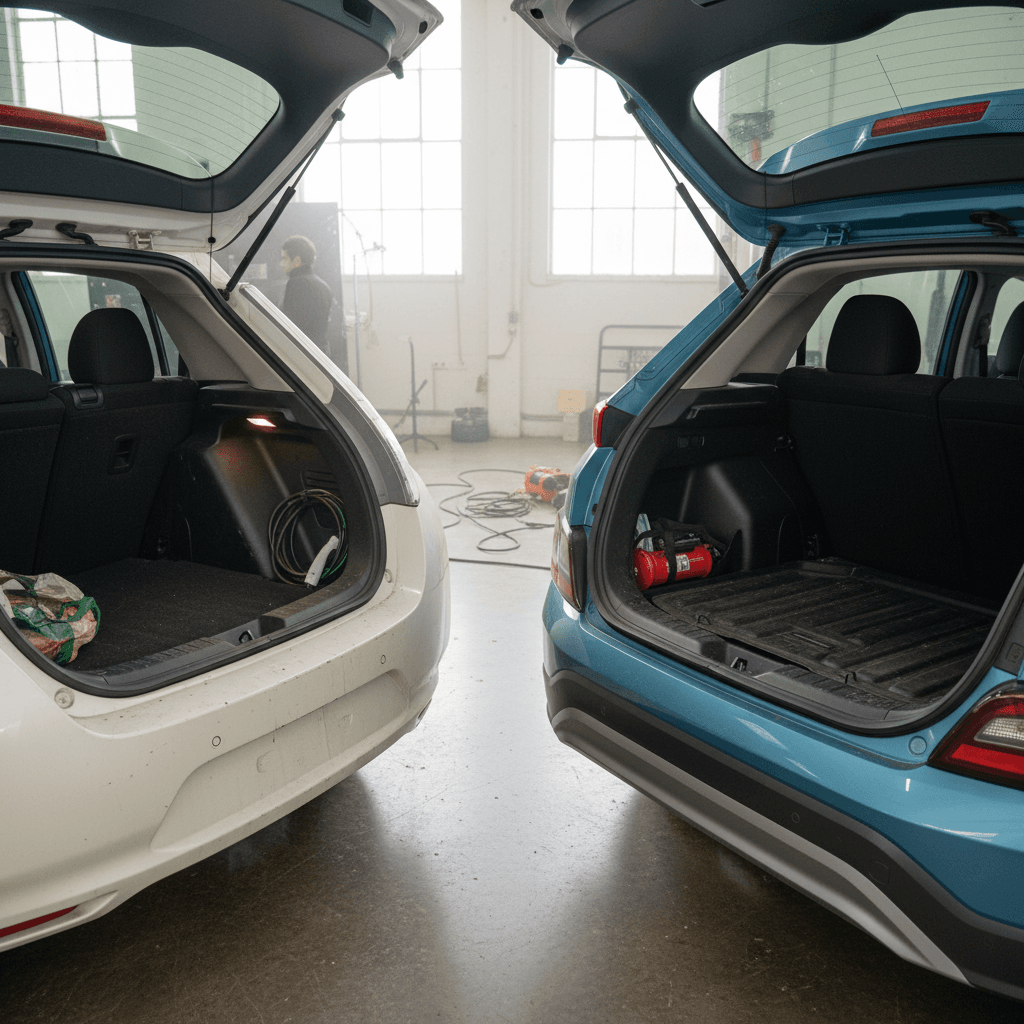
The Kona Electric rides a bit higher, with styling and seating that feel more like a small SUV. It’s still compact, but there’s a touch more front‑seat space and a more modern interior, especially on 2021+ cars. Rear legroom isn’t huge, yet the square cargo opening makes it easy to load strollers, luggage, or a small dog crate.
If you like the security of a crossover stance with a bit more ground clearance for snow and rough roads, the Kona has the edge.
Car seats, strollers, and Costco runs
Driving experience, tech, and safety
How they feel from behind the wheel
Remember: almost any EV will feel “quick enough” versus a gas compact.
Leaf: quiet and easygoing
Even early Leafs feel smooth and punchy around town. Steering is light, visibility is great, and the car is easy to maneuver. Later models add more modern driver‑assist tech, but the vibe is still calm commuter, not sporty corner‑carver.
Noise levels are generally fine, though older cars can pick up some wind and road noise by 2026 just from age and tires.
Kona Electric: more punch, more polish
With roughly 201 horsepower on most U.S. trims, the Kona Electric feels stronger at highway speeds and more confident merging or passing. Body control is tidy and many owners describe it as surprisingly fun on a twisty road.
Inside, later Konas deliver more modern screens, slicker infotainment, and a fuller suite of safety assists like adaptive cruise and lane‑keeping on many trims.
Safety and driver‑assist considerations
Costs, depreciation, and total value
This is where the used Nissan Leaf fights back: **price.** Years of heavy depreciation plus anxiety around older battery tech mean you can buy a healthy used Leaf for far less than almost any other modern EV. That reality is why you’ll see so many budget commuters and second‑car households gravitating to them in 2026.
- Older 24–30 kWh Leafs can be some of the cheapest usable EVs on the market, if the battery still has enough capacity for your needs.
- 40 kWh Leafs (2018+) hit a sweet spot of price vs daily range for many urban drivers.
- 62 kWh Leaf Plus models cost more but often remain cheaper than a similar‑year Kona Electric with comparable mileage.
The **Hyundai Kona Electric** holds its value better, largely because of its longer range, CCS fast‑charging, and modern packaging. You’ll typically pay more upfront, and insurance may be slightly higher, but you’re getting an EV that can realistically replace a gas car for many households as the primary vehicle.
Think in “cost per usable mile of range”
Which used EV should you buy in 2026?
Choose a used Nissan Leaf if…
- You drive mostly short city or suburban trips under 40–60 miles a day.
- You have reliable home Level 2 charging so overnight top‑offs are easy.
- Your budget is tight, and you’d rather spend less upfront than chase maximum range.
- You’re comfortable skipping most long road trips in this car, or you live near strong CHAdeMO coverage.
- You can verify that the specific Leaf you’re considering has good remaining battery health.
Choose a used Hyundai Kona Electric if…
- You want one EV that can realistically handle daily commuting and weekend getaways.
- You’ll see regular highway driving or cold‑weather use where extra range really pays off.
- You care about modern infotainment, safety tech, and CCS fast‑charging for longer trips.
- You’re willing to pay more upfront to reduce compromises and keep the car longer.
The bottom line
Buying checklist for used Leaf and Kona Electric
Essential checks before you sign for either EV
1. Confirm battery size and trim
On a Leaf, nail down whether you’re looking at 24, 30, 40, or 62 kWh, this alone can change range by 100 miles. On a Kona, confirm whether it’s the larger ~64 kWh pack and which trim (SE/SEL/Limited, etc.) you’re driving.
2. Get a real battery‑health report
Ask for data, not feelings. A professional diagnostic like the Recharged Score can estimate remaining usable capacity and flag unusual degradation patterns that might affect range today and resale value later.
3. Inspect charging hardware and history
Confirm that the car has its charge cables, that the charge port locks operate smoothly, and that there are no error messages related to rapid charging. On Leafs, ask how often CHAdeMO DC fast charging was used; on Konas, verify CCS fast‑charging works properly.
4. Test your real‑world route
If possible, drive a sample of your actual daily route, especially any long freeway segments or steep hills, and watch energy consumption and estimated range drop. It’s the best way to confirm that the car’s real capability matches your life.
5. Check tires, brakes, and software updates
EVs are easy on brakes, but tires and alignment can tell you a lot about prior use. Ask about open recalls and software updates, particularly on early Kona Electrics where battery‑related campaigns may apply.
6. Plan your charging ecosystem
Map out where and how you’ll charge 90% of the time before you buy. If you’re leaning toward a Leaf, zoom in on CHAdeMO sites; if you’re leaning Kona, look for strong CCS coverage along your usual paths.
FAQ: used Nissan Leaf vs Hyundai Kona Electric
Frequently asked questions
A decade ago, the Nissan Leaf proved that an affordable electric commute was possible. The Hyundai Kona Electric pushed the idea further, adding long‑range capability and fast‑charging that can realistically replace many gas cars. On the 2026 used market, your best choice comes down to how far you really drive, how you plan to charge, and how much you’re willing to invest up front. Whichever way you’re leaning, pairing the right car with a **verified battery health report and expert guidance from Recharged** turns this from a gamble into a smart, confident step into EV ownership.