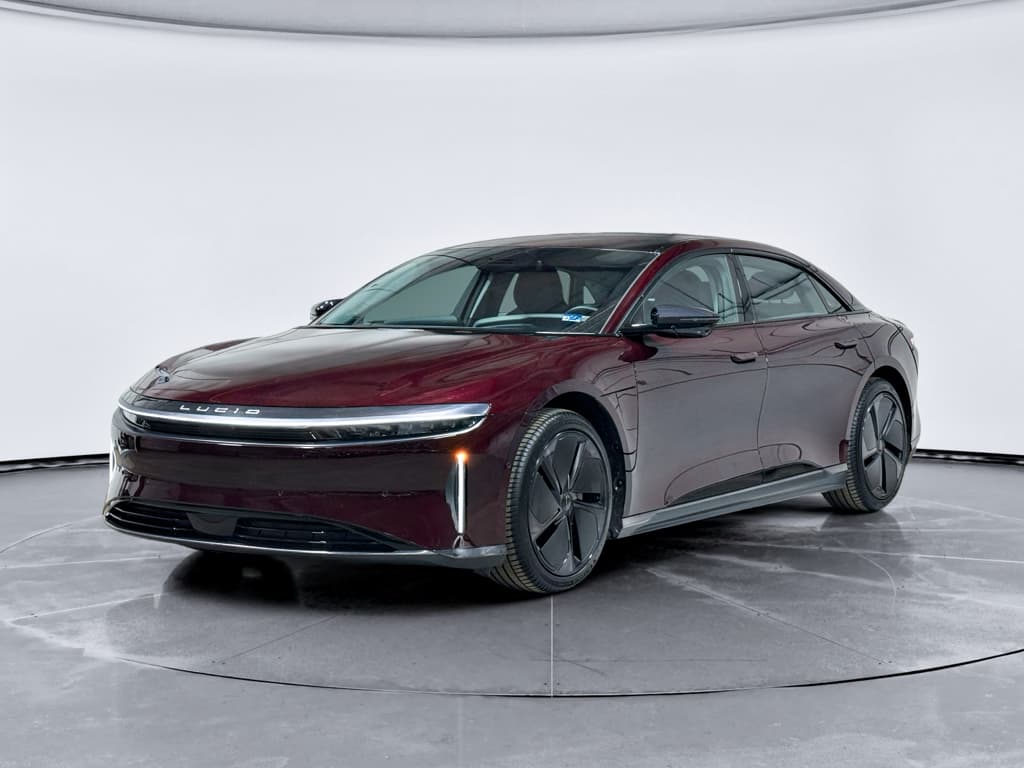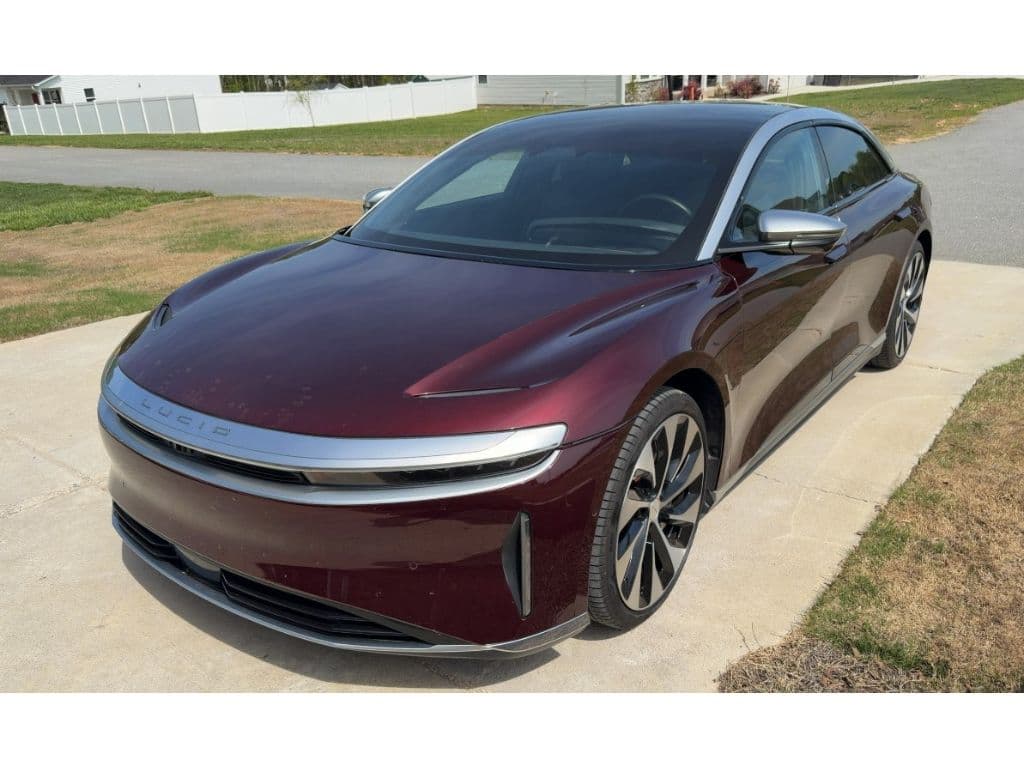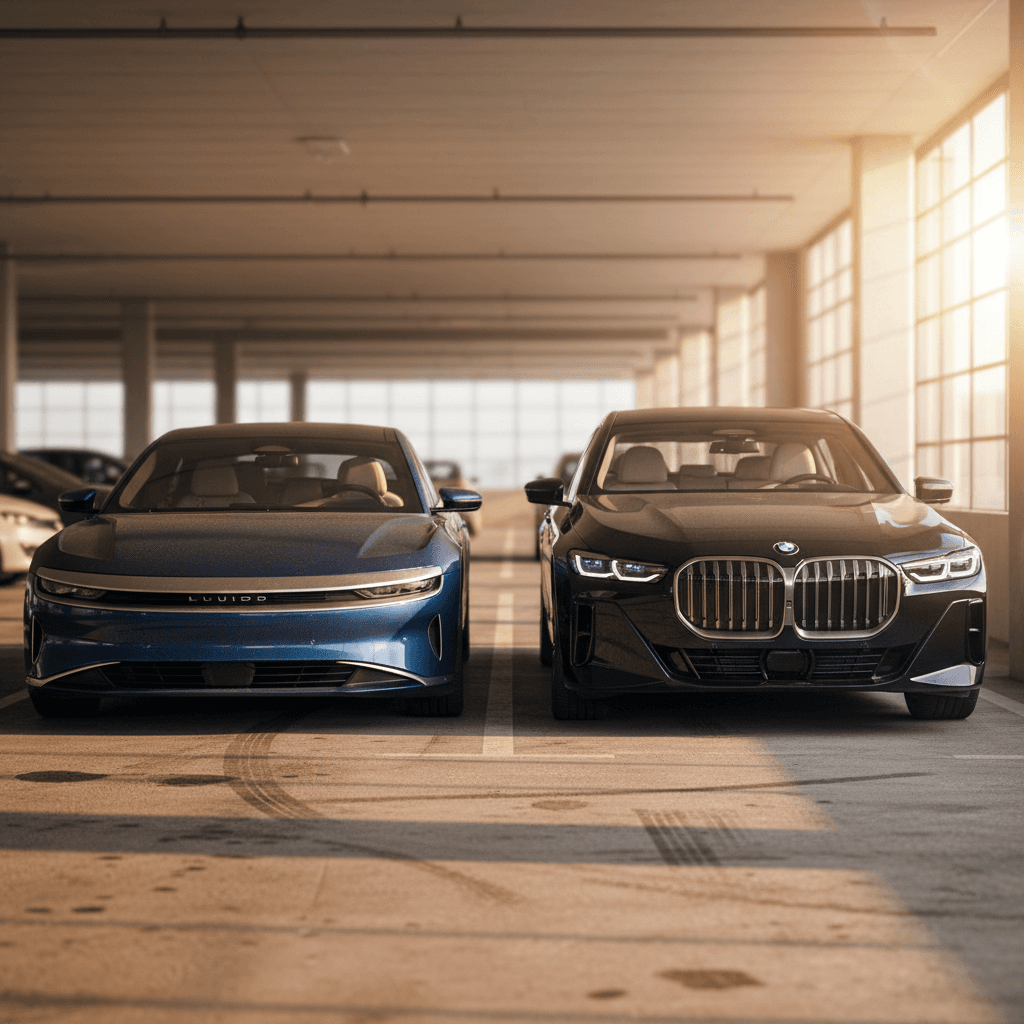
If you’re shopping top-shelf used luxury EVs in 2026, a used Lucid Air vs BMW i7 comparison is probably on your shortlist. Both deliver limo-grade comfort, huge screens, and serious performance, but they take very different paths to getting there, and those differences matter a lot in the used market.
Two very new flagships
Why this Lucid Air vs BMW i7 comparison matters in 2026
By 2026, the U.S. used EV market has matured enough that you can realistically cross-shop a 2022–2024 Lucid Air against a 2023–2025 BMW i7 at similar price points. Original MSRPs easily cleared six figures, but many examples now sit in the $60,000–$90,000 band depending on trim, mileage, and options. The question isn’t “are they good?”, they’re both excellent. The real question is: which one fits your use case, risk tolerance, and budget?
- You commute long distances or road-trip frequently and care about range and charging time.
- You want S-Class / 7 Series levels of comfort but with EV smoothness and torque.
- You’re weighing a tech-forward start-up (Lucid) against a legacy luxury brand (BMW).
- You’re trying to understand battery health and depreciation risks before writing a very large check.
Used vs new calculus
Lucid Air vs BMW i7 at a glance
Key specs: typical used Lucid Air vs BMW i7 trims
These are typical specs for common trims you’ll see used in 2026. Exact figures vary by model year, wheels, and options.
| Model (common used trims) | Typical used price range (2026) | Power & 0–60 mph | EPA range (approx.) | Battery size (usable kWh) | DC fast charge peak | Drive layout |
|---|---|---|---|---|---|---|
| Lucid Air Pure (RWD / AWD) | ~$55k–$75k | 430–480 hp / ~4.0–4.5 s | 300–410 miles | ~84–92 kWh | ~250+ kW | RWD or AWD |
| Lucid Air Touring | ~$70k–$90k | 620+ hp / low‑4s | ~340–410 miles | ~92 kWh | ~250+ kW | AWD |
| Lucid Air Grand Touring | ~$90k–$115k | 800+ hp / ~3.0 s | ~400–425 miles | ~112–118 kWh | ~300+ kW | AWD |
| BMW i7 eDrive50 (RWD) | ~$70k–$90k | 449 hp / ~5.3 s | ~305–321 miles | ~101–106 kWh | up to ~195 kW | RWD |
| BMW i7 xDrive60 (AWD) | ~$80k–$105k | 536 hp / ~4.3–4.5 s | ~295–311 miles | ~101–106 kWh | up to ~195 kW | AWD |
| BMW i7 M70 xDrive | ~$115k–$140k | ~650+ hp / ~3.5 s | ~285 miles | ~101–106 kWh | up to ~195 kW | AWD |
Lucid emphasizes range and efficiency; BMW emphasizes traditional luxury and refinement.
Specs vs real world
Performance and driving character
Lucid Air: Light, ultra-efficient, and extremely quick
The Lucid Air feels like a clean‑sheet EV design. Steering is light but accurate, the car masks its size well, and even a Touring feels explosively quick. The Grand Touring and performance variants deliver supercar acceleration with long‑legged range, something few competitors can match.
- Strengths: Huge power, effortless passing, superb efficiency.
- Weaknesses: Road noise and ride quality can be a bit firmer than traditional luxury sedans, depending on wheels and tires. Early software tuning for suspension and driver aids can feel slightly unpolished compared with BMW.
BMW i7: Classic 7 Series feel with electric torque
The i7 drives like a traditional 7 Series that happens to be electric. Steering is more relaxed, the chassis prioritizes isolation and composure, and the car feels heavy but planted. The eDrive50 is more than quick enough, while the xDrive60 and M70 deliver serious shove when you ask for it.
- Strengths: Superb ride comfort, quiet cabin, very predictable handling.
- Weaknesses: Not as efficient as the Lucid; it feels heavier and more insulated from the road, great for some buyers, too detached for others.
Performance takeaways
Both are fast; how they deliver speed feels very different.
Raw acceleration
Ride & refinement
Efficiency
Range, battery, and charging on road trips
Range and charging are where the used Lucid Air vs BMW i7 decision becomes less about taste and more about math. Both offer 300‑ish miles on paper, but Lucid generally stretches that number farther in the real world, while BMW leans on a slightly smaller but still substantial pack and a more conservative approach.
Range and charging: what to expect in the real world
Charging networks in 2026
- Lucid Air: Best choice if you regularly do 300–400+ mile days and want to minimize stops. Its efficiency advantage compounds over long distances.
- BMW i7: Adequate for most U.S. road trips, especially with DC fast charging and access to multi-network route planning, but you’ll stop a bit more often than in a long‑range Lucid.
Interior comfort, tech, and luxury
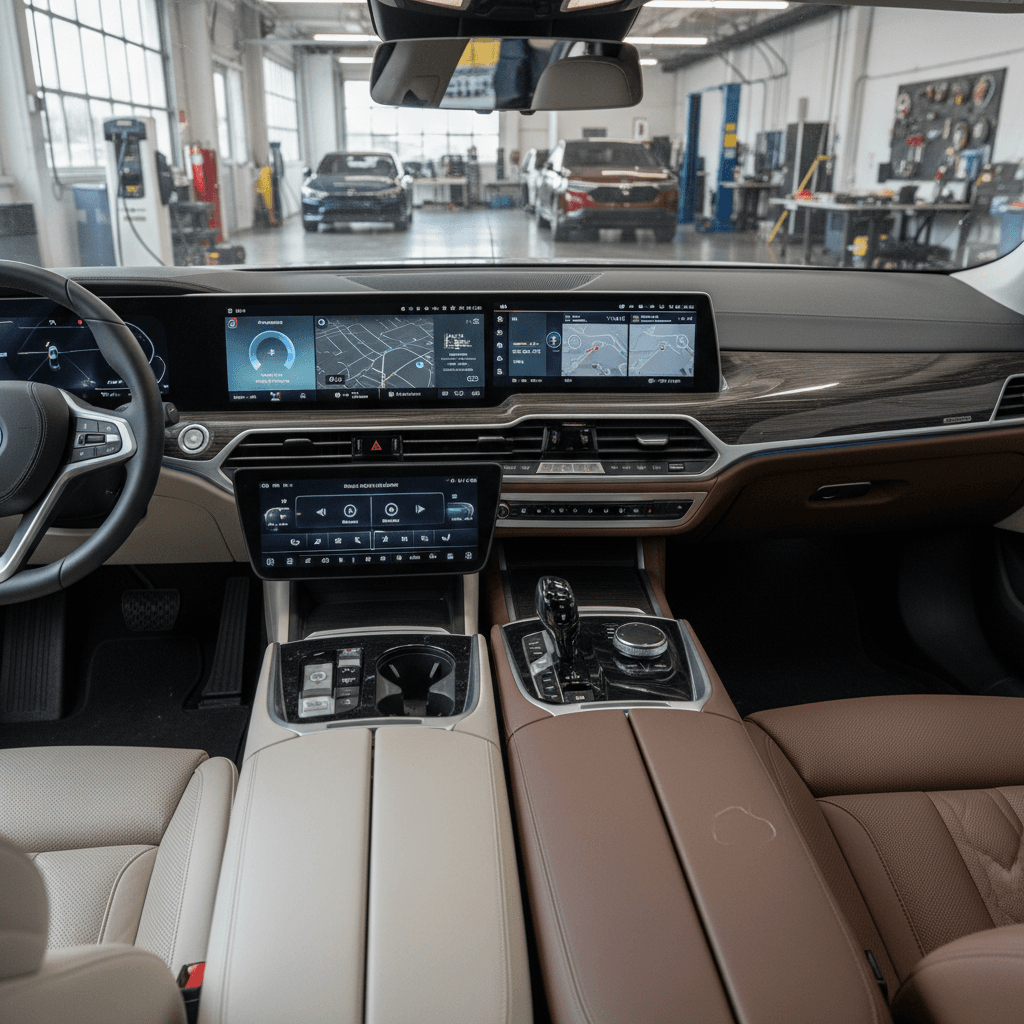
The cabin is where you’ll spend your time, and Lucid and BMW have very different visions of what a six‑figure EV should feel like. Both are genuinely special inside, but they’ll appeal to different buyers.
Cabin feel: Lucid Air vs BMW i7
Minimalist futurism or modernized old‑world luxury?
Lucid Air interior
BMW i7 interior
Sit in the back, not just the front
- Both offer excellent front seats with heating, cooling, and massage on higher trims.
- Lucid’s infotainment has matured quickly via over‑the‑air updates but can still feel more like a Silicon Valley product, powerful, occasionally quirky.
- BMW’s iDrive is familiar, polished, and backed by a long history of in‑car UX, but the sheer number of features and menus can overwhelm new owners.
Ownership costs, depreciation, and value
On a six‑figure EV, depreciation dominates your cost of ownership. Electricity is cheap relative to gasoline, and routine maintenance is modest compared with a V8 7 Series. The real swing factors are how quickly each model loses value, what insurance looks like, and what happens if something big, like a battery or high‑voltage component, fails out of warranty.
Depreciation and value realities
Why used pricing looks the way it does in 2026.
Lucid Air depreciation
BMW i7 depreciation
Operating costs
Watch for out-of-warranty exposure
Checklist: Getting a good deal on a used Lucid Air or BMW i7
1. Study original MSRP and options
Two cars that look similar on the outside can be separated by tens of thousands of dollars in original options. Look for build sheets or window stickers so you’re comparing apples to apples.
2. Factor tax credits and incentives
Some higher‑priced EVs didn’t qualify for new‑car credits, but local used‑EV incentives may still apply depending on price caps and income. Check your state and utility programs before you buy.
3. Compare total cost, not just price
Insurance quotes, local electricity rates, home charging installation, and expected depreciation over the next 3–5 years matter more than whether one car is $3,000 cheaper at purchase.
4. Ask for a third‑party battery report
For any used EV, especially a six‑figure one, you want independent confirmation of battery health, not just a range guess on the dash. This is where tools like Recharged’s <strong>Recharged Score Report</strong> become critical.
Reliability, battery health, and warranty realities
Neither of these EVs has been around long enough to have decade‑long track records, but some patterns are emerging. As a used buyer, you’re buying into not just a car, but a company’s ability to stand behind complex software and high‑voltage components.
Lucid Air reliability picture
Owner reports paint a mixed but improving picture. Powertrains and battery packs themselves have generally held up well so far, but early cars saw software glitches, sensor issues, and panel‑fit complaints. Lucid has been aggressive with over‑the‑air updates, which is good for feature growth but can introduce bugs.
Battery degradation data is still limited. Many owners report modest loss over the first few years, but outliers exist. That makes an independent battery‑health check especially valuable.
BMW i7 reliability picture
BMW has decades of experience building 7 Series flagships, and the i7 benefits from that institutional knowledge. Early issues tend to be feature‑related, complex infotainment options, powered doors, and rear‑seat entertainment, rather than core battery or motor failures.
BMW’s dealer network is far larger than Lucid’s, and parts logistics are more mature. That doesn’t mean repairs are cheap, but it does mean the process is more predictable for most U.S. buyers.
Warranty basics to keep in mind
Battery health questions to ask before you commit
How was the car charged?
Frequent DC fast charging, especially to 100%, can be harder on a pack than mostly home Level 2 charging. Prior owner habits matter on both Lucid and BMW.
What’s the measured state of health (SoH)?
Don’t rely on a dashboard range guess alone. Ask for a professional battery diagnostic showing usable capacity versus when new.
Has the car had any high-voltage repairs?
Inverter or DC fast‑charge faults, pack replacements, or repeated HV errors can hint at deeper issues. Ask for service records.
Is software up to date?
Both cars lean heavily on software. Confirm the vehicle is on a current software release and that previous owner accounts have been properly released.
Which used luxury EV fits you best?
Lucid Air vs BMW i7: Who each car is best for
Think in terms of your use case, not the spec sheet.
Choose a used Lucid Air if…
- You road‑trip long distances and want maximum range with minimum charging time.
- You value bleeding‑edge EV tech, airy design, and supercar‑grade acceleration.
- You’re comfortable with a younger brand and a smaller service network in exchange for more performance and efficiency per dollar.
- You’re willing to lean on independent battery reports and EV‑specialist sellers to de‑risk the purchase.
Choose a used BMW i7 if…
- You prioritize traditional luxury, isolation, and back‑seat comfort.
- You want a large dealer network and the familiarity of a long‑established premium brand.
- You care more about refinement and feature depth than squeezing the last 80 miles of range out of the pack.
- You prefer a more predictable depreciation curve and parts availability story.
When in doubt, drive both
How Recharged helps with used Lucid Air and BMW i7
High‑end EVs like the Lucid Air and BMW i7 reward informed buyers but can punish guesswork. That’s why Recharged is built from the ground up around transparency on battery health and total cost of ownership, especially for used EVs that started life near or above six figures.
- Recharged Score Report: Every vehicle listed on Recharged includes a detailed report with verified battery health, real‑world range expectations, and fair‑market pricing analysis for that specific car, not just the model line.
- EV‑specialist support: Our team lives and breathes EVs. If you’re torn between a used Lucid Air and a BMW i7, they can walk you through charging needs, warranty coverage, and how each car will actually fit your daily routine.
- Financing and trade‑ins: Recharged offers EV‑friendly financing options, trade‑in or instant‑offer tools, and even consignment if you need to sell your current vehicle first.
- Nationwide delivery and digital buying: Browse, compare, and buy online, then have your EV delivered to your driveway, or visit the Recharged Experience Center in Richmond, VA if you want to see vehicles in person.
Use Recharged as your comparison lab
FAQ: Used Lucid Air vs BMW i7
Frequently asked questions
Bottom line: Lucid Air vs BMW i7 in 2026
If you want maximum range, cutting‑edge EV tech, and explosive performance, a used Lucid Air, especially Touring or Grand Touring trims, delivers more miles and speed per dollar than just about anything else on the road. The tradeoff is embracing a younger brand with a smaller service footprint and more software complexity.
If you want effortless comfort, a deep dealer network, and a familiar luxury‑sedan experience, the BMW i7 is the safer, more traditional choice. It doesn’t match Lucid’s efficiency, but it wraps its healthy range in an ultra‑refined package that feels instantly understandable if you’re coming from a gas 7 Series or S‑Class.
Either way, this is not a segment where you want to buy blind from a classified ad. Use independent battery diagnostics, dig into option lists and warranty status, and if you can, work with an EV‑focused marketplace like Recharged that backs every used luxury EV with a clear Recharged Score and expert guidance. Get those pieces right, and both the Lucid Air and BMW i7 can be spectacular values in 2026’s used market.