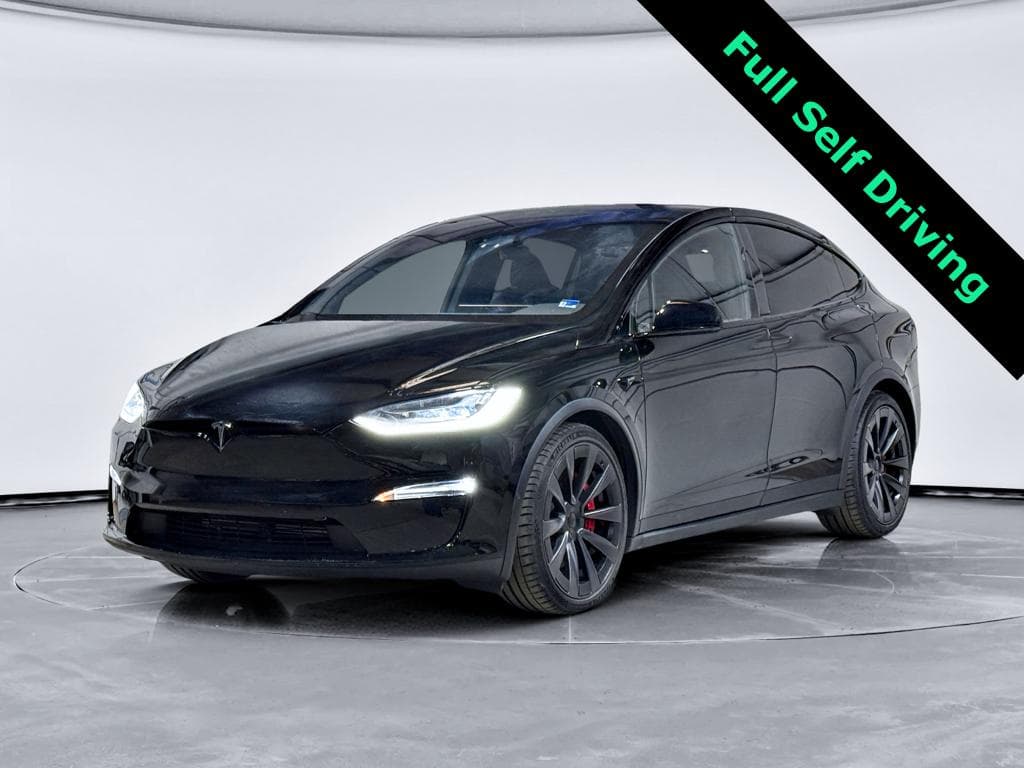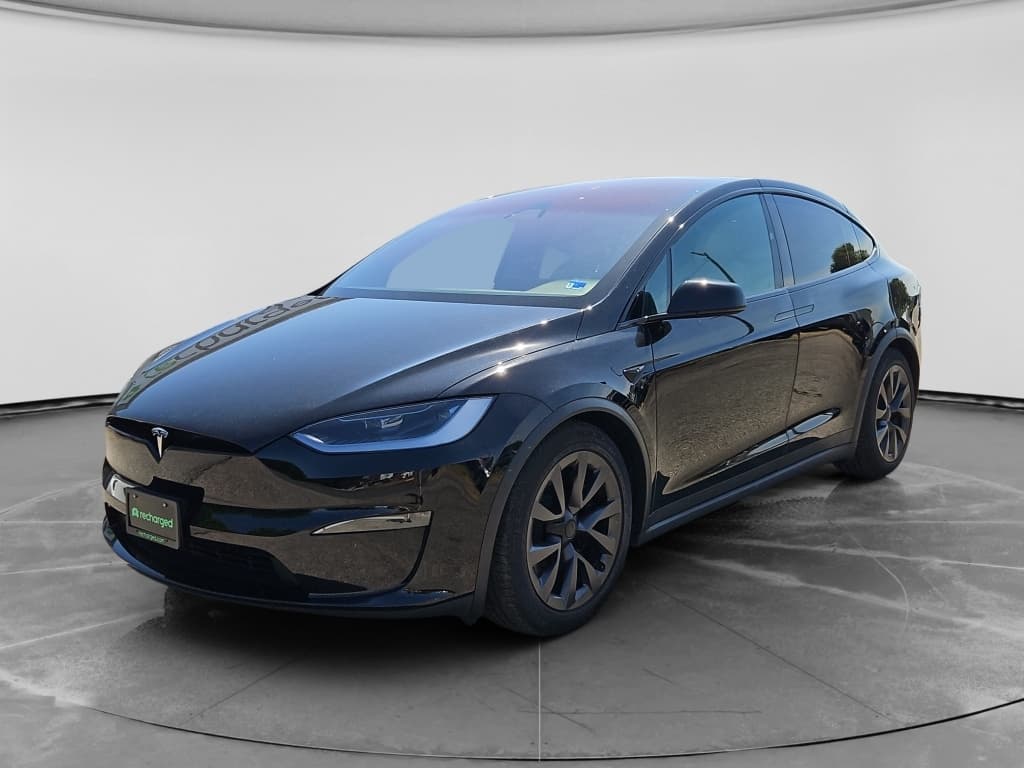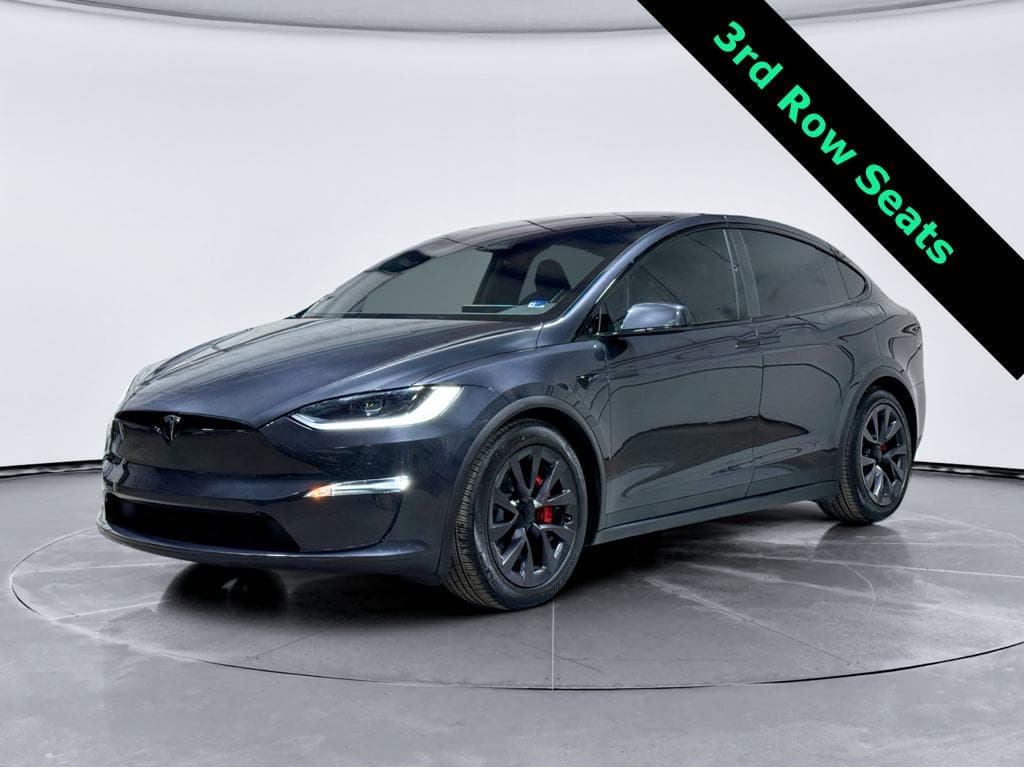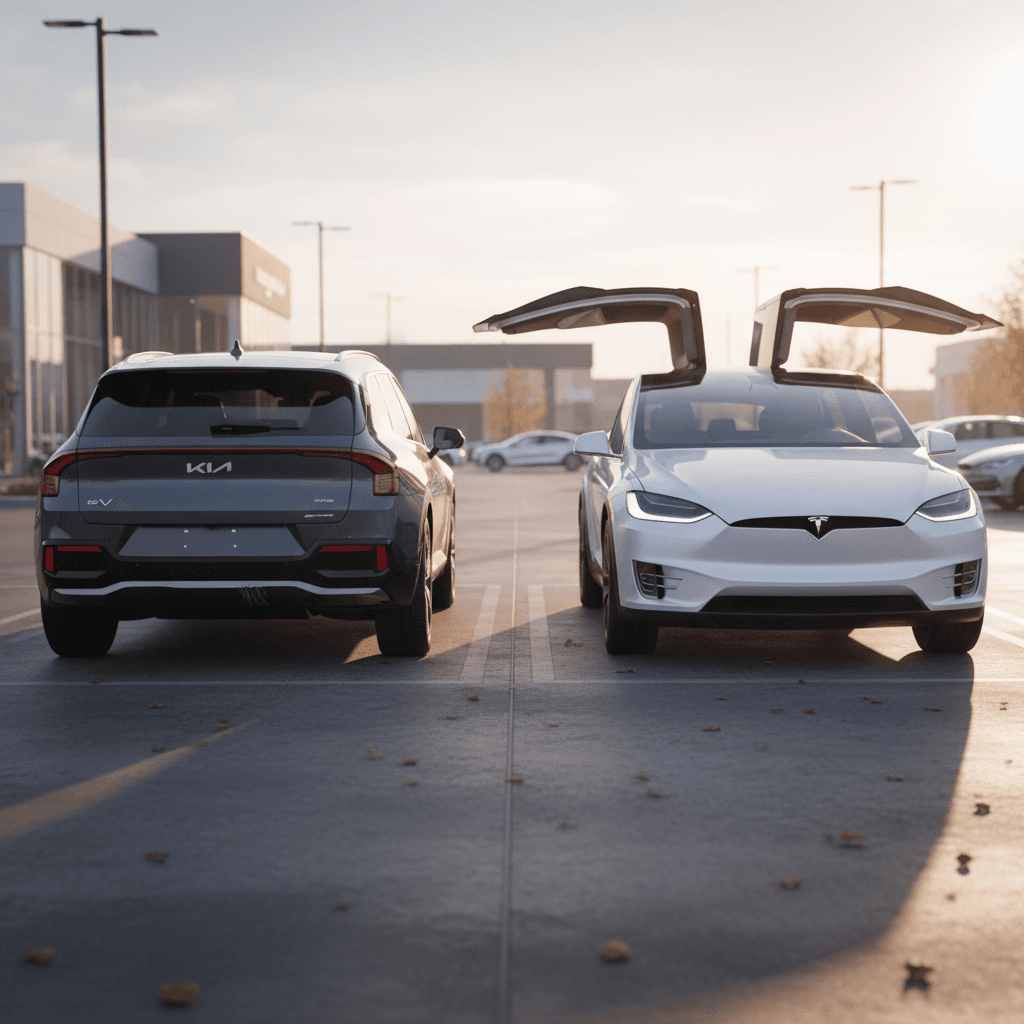
You’re shopping for a serious family EV in 2026, not a science project. On one side is the new kid, the used Kia EV9, already populating dealer lots as leases roll off. On the other is the established celebrity, the used Tesla Model X, with its falcon doors, star‑power badge, and a decade of real‑world data behind it. This 2026 comparison of used Kia EV9 vs Tesla Model X focuses on the things that matter when you’re spending real money: price, space, charging, battery health, and how each SUV will treat you over the next 5–10 years.
Context: model years we’re really talking about
Why this used EV9 vs Model X comparison matters in 2026
Three‑row electric SUVs are finally a segment, not a science experiment. The Kia EV9 arrived for 2024 with true family packaging, modern fast‑charging, and pricing that undercut German rivals. By 2026, off‑lease EV9s are filtering into the used market, often with low miles and plenty of warranty left. Meanwhile, the Tesla Model X has matured into a known quantity: strong range, good efficiency, and access to the Supercharger network, but also higher repair costs and more variability as you get into older, high‑mileage examples.
If you’re buying used, you’re not just choosing a badge; you’re buying into charging ecosystems, warranty coverage, software philosophies, and depreciation curves. That’s where the EV9 and Model X diverge sharply, and where a platform like Recharged can help by surfacing verified battery health and fair market pricing across both models.
Quick 2026 used-market snapshot
Specs at a glance: used Kia EV9 vs Tesla Model X
Core spec comparison (typical U.S. trims you’ll see used in 2026)
These aren’t exhaustive spec sheets, but they capture the versions most families will cross‑shop used.
| Used Kia EV9 | Used Tesla Model X | |
|---|---|---|
| Typical model years (used in 2026) | 2024–2025 (early 2026s starting to appear) | 2019–2024 (a few 2016–2018 at lower prices) |
| Drivetrain options | RWD or AWD, 2 or 3 rows | AWD only, 3 rows |
| Battery sizes (approx.) | 76 kWh / 99.8 kWh | ~100 kWh |
| EPA range when new | ~230–304 mi depending on trim | ~314–329 mi for recent Long Range / Plaid |
| Max DC fast‑charge power | Up to ~210–230 kW on 800‑V system | Up to ~250 kW on V3 Superchargers |
| Seats | 6 or 7 | 6 or 7 (few 5‑seat), falcon doors standard |
| Towing capacity | Up to 5,000 lb when properly equipped | Up to 5,000 lb when properly equipped |
| Driver assistance | Highway Drive Assist / HDA 2, various packs | Autopilot standard; Enhanced Autopilot / FSD optional |
| New‑car base MSRP (when new) | Roughly mid‑$50k to mid‑$70k depending on trim | Around $80k+ for Long Range, more for Plaid |
Always check the exact trim, wheels, and battery size of the specific SUV you’re considering, these have a huge impact on range and price.
How Recharged compares these SUVs for you
Used pricing: what you’ll actually pay in 2026
Used Kia EV9 pricing in 2026
By April 2026, the first wave of 2024 Kia EV9s has already hit the used market as 2‑year leases and early trades come due. Those SUVs launched with MSRPs roughly in the mid‑$50,000s to mid‑$70,000s, depending on trim and battery size.
- Light / Light Long Range RWD: Often the most affordable used EV9s; you’ll frequently see them in the low‑ to mid‑$40,000s with reasonable miles.
- Wind / Land AWD: Sweet spot trims with strong equipment and dual‑motor grip usually live in the mid‑$40,000s to low‑$50,000s, depending on mileage and options.
- GT‑Line: Heavily optioned, sporty‑looking top trims can still ask high‑$50,000s when lightly used.
Because the EV9 launched into a world of aggressive lease deals and tax‑credit gymnastics, early depreciation looks steep on paper, but for a used buyer, that simply means a lot of SUV for the dollar.
Used Tesla Model X pricing in 2026
Model X pricing on the used market in 2026 spreads like an inkblot, heavily influenced by year, mileage, and software options.
- 2017–2019 Model X Long Range / 100D: Common entry point, often in the upper‑$30,000s to mid‑$40,000s with higher miles.
- 2020–2022 Long Range: Nicer interiors and refreshed tech can push prices into the high‑$40,000s to low‑$60,000s.
- Late‑model Long Range and Plaid (2023–2024): Still command $60,000–$75,000+, especially with low miles and desirable wheels.
Remember that options like Full Self‑Driving (FSD) can inflate ask prices without always adding equivalent real‑world value, especially if you care more about road‑trip comfort than being a beta tester for driver‑assist algorithms.
Watch the real cost, not just the sticker
Space, comfort, and family practicality
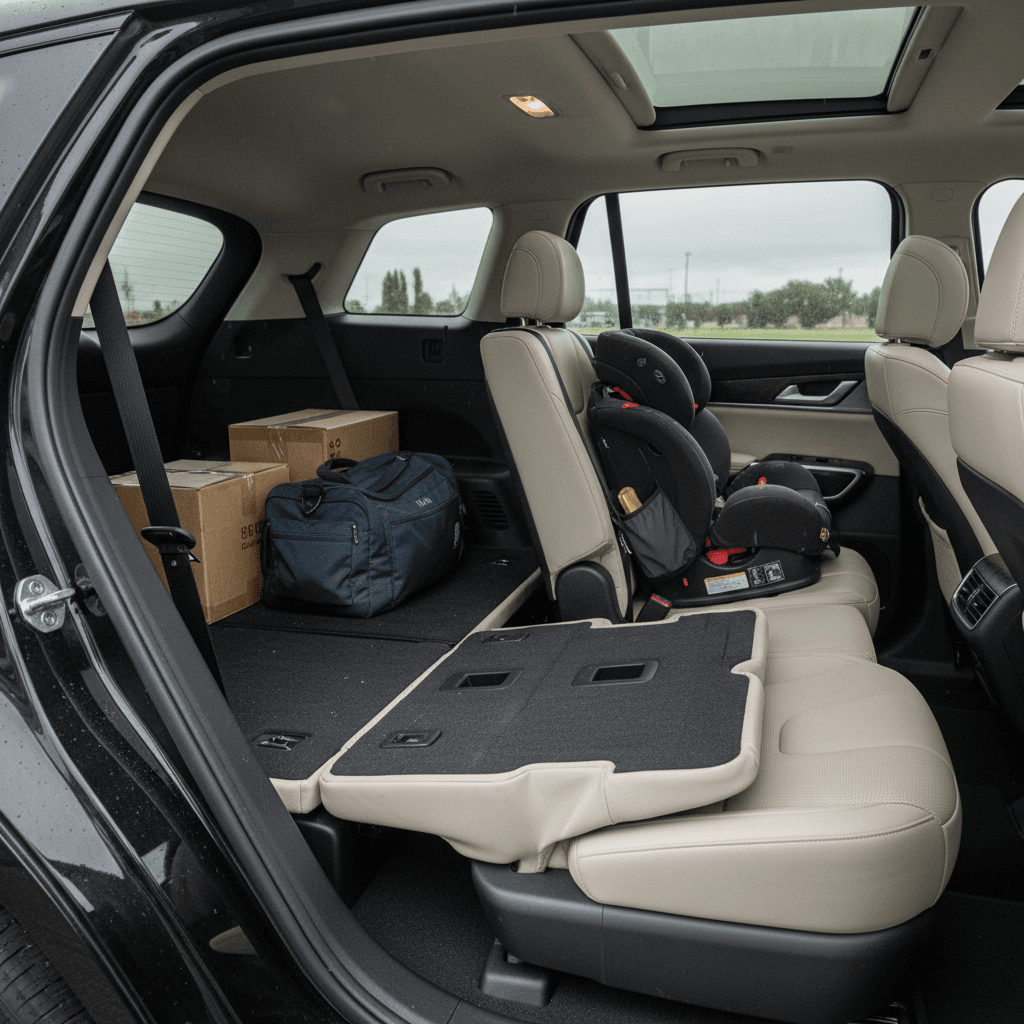
Interior packaging: smart people mover vs. electric spaceship
Both seat six or seven, but they solve the same problem with very different personalities.
Kia EV9: the rational family hauler
If you’ve ever looked at a minivan and thought, “I can’t do it,” the EV9 is your loophole. It’s boxy in the right ways, with a nearly upright tailgate and a long roof, so third‑row adults don’t feel like carry‑on luggage.
- Available 2nd‑row captain’s chairs or bench for 7‑seat layout.
- Flat floor, wide doors, and generous headroom make loading kids and car seats straightforward.
- Conventional rear doors and big openings, no drama, just easy ingress/egress in tight parking lots.
The cabin design is airy and modern, less “cockpit” and more “lounge,” which suits school‑run duty better than you’d think.
Tesla Model X: the dramatic people mover
The Model X remains a rolling spectacle. The falcon‑wing rear doors still turn heads a decade on, and when they work perfectly, access to the second and third rows is superb.
- Third row is decent for adults on shorter trips, especially in newer Xs with reworked seating.
- Second‑row seats look and feel more like individual thrones than family furniture.
- Massive windshield and minimalist dash give the front row a sci‑fi vibe.
The trade‑off: those party‑trick doors come with complexity, and on older used Xs, you’ll want to verify operation and alignment carefully.
Car seats and kid duty
Driving experience and performance
How the Kia EV9 drives
The EV9 doesn’t pretend to be a sports car; it’s a confident, quiet highway cruiser. Single‑motor RWD trims are adequate, not thrilling. Dual‑motor AWD versions add satisfying shove off the line, especially in the sportier GT‑Line, but this is still a big, heavy SUV.
Ride quality skews comfortable. On 20‑inch wheels, it soaks up broken pavement with a composure missing in many legacy SUVs. The steering is light but accurate, tuned more for easy commuting than carving canyons, which is correct for a three‑row family bus that happens to be electric.
How the Tesla Model X drives
The Model X is the one that will quietly rearrange your organs if you lean into the accelerator. Dual‑motor Long Range models are already quick; Plaid versions are straight‑line cartoons, capable of supercar‑grade 0–60 mph runs when new tires and batteries are in fighting shape.
On the move, the X feels more tied down than the EV9, with a lower cowl and a sportier stance. Air suspension on many trims lets you toggle between comfort and stiffness. The flip side is that replacing those big, sticky tires (and, eventually, suspension bits) isn’t a cheap hobby.
Performance takeaway
Range and road-trip usability
- Most U.S. Kia EV9 trims deliver EPA ranges from roughly about 230 miles up to just over 300 miles, depending on battery, drivetrain, and wheel size.
- Recent Tesla Model X Long Range variants cluster in the low‑ to mid‑300‑mile EPA range when new, with Plaid versions trading a bit of range for absurd power.
- Real‑world owners in mixed driving often report 80–90% of EPA range once you factor in weather, speed, and cargo, similar for both vehicles, though the X is generally more efficient mile‑for‑mile.
Wheels, weather, and weight matter
Charging experience and networks
Charging: Tesla’s ecosystem vs. the brave new open‑network world
In 2026, the charging story is more nuanced than “Tesla good, others bad.”
Kia EV9: CCS today, NACS tomorrow
U.S. EV9s launched with the industry‑standard CCS port and 800‑V architecture, allowing very fast DC charging, often from 10–80% in roughly half an hour on a strong 350‑kW station.
By 2026, major networks like Electrify America, EVgo, and others blanket key corridors, but reliability is still a mixed bag region‑to‑region. Kia and other automakers are transitioning to the North American Charging Standard (NACS), so keep an eye on whether your specific EV9 has access to NACS adapters or direct‑NACS hardware as updates roll out.
Tesla Model X: native Supercharger access
The Model X’s trump card remains native access to Tesla’s Supercharger network, still the gold standard for reliability and ease of use. Plug in, walk away; no badges, no apps (unless you want them).
By 2026, that network is opening to many non‑Tesla EVs via NACS, but the X is still the one that speaks the native language. If you live on the road, this alone can justify picking an X over an EV9, provided the rest of the car checks out.
How Recharged helps de‑risk charging anxiety
Tech, safety, and driver assistance
Kia EV9: modern, sensible, and button‑forward
Inside, the EV9 splits the difference between tablet and traditional. You get dual widescreen displays, a row of physical climate buttons, and straightforward menus. Over‑the‑air updates exist but don’t fully define the ownership experience.
- Highway Drive Assist (HDA / HDA 2) can handle lane‑centering and adaptive cruise on mapped highways with decent smoothness.
- Plenty of USB‑C ports, wireless charging, and thoughtful storage everywhere.
- Top trims bring surround‑view cameras, blind‑spot view monitors, and high‑end audio.
For most families, it’s enough tech to feel current without requiring a software degree.
Tesla Model X: software as a lifestyle choice
The Model X cabin centers around its massive touchscreen and Tesla’s relentless over‑the‑air update cadence. Autopilot is standard; many used Xs will have Enhanced Autopilot or some flavor of Full Self‑Driving (Supervised) enabled.
- Interface is fast and fluid, but almost everything lives in menus, including basic adjustments.
- Frequent software changes can improve features, or shuffle them, or occasionally break something before the next patch.
- Entertainment (games, streaming apps) is best‑in‑class if you spend time charging on road trips.
If you like your car to feel like a constantly evolving gadget, the X is your playground. If you want predictable stability, the EV9 may feel saner.
Reliability, battery health, and warranty coverage
Key reliability and warranty differences to understand
1. Battery longevity profiles
Real‑world fleet data suggests Tesla S/X packs commonly retain roughly 85–90% capacity even around very high mileages when cared for reasonably. Kia’s large‑pack EVs are newer to market, but early EV9 data and Kia’s track record with the EV6 and other models point toward competitive degradation when charging and temperature are managed sensibly.
2. Kia EV9 factory warranty
New Kia EVs typically carry a long powertrain and high‑voltage battery warranty (often 10 years / 100,000 miles for original owners, with strong coverage carrying over to subsequent buyers depending on region and terms). A used 2024 EV9 bought in 2026 may still have the majority of that coverage remaining, an enormous safety net.
3. Tesla Model X battery & drive unit warranty
Recent Model X SUVs ship with an 8‑year / 150,000‑mile battery and drive unit warranty with a capacity retention clause (commonly around 70% minimum during the coverage period). On a 2019–2020 X, that clock is already ticking toward its later years, so check in‑service dates carefully.
4. Non‑battery reliability and repairs
The EV9, being new, doesn’t yet have a full decade of squeaks and rattles behind it, but hardware is largely conventional. The Model X carries scar tissue: iconic falcon‑wing doors, complex seats, and older examples with build‑quality quirks. Out‑of‑warranty work on a Tesla can be expensive, and parts availability/time can vary.
5. Use a battery health report, not vibes
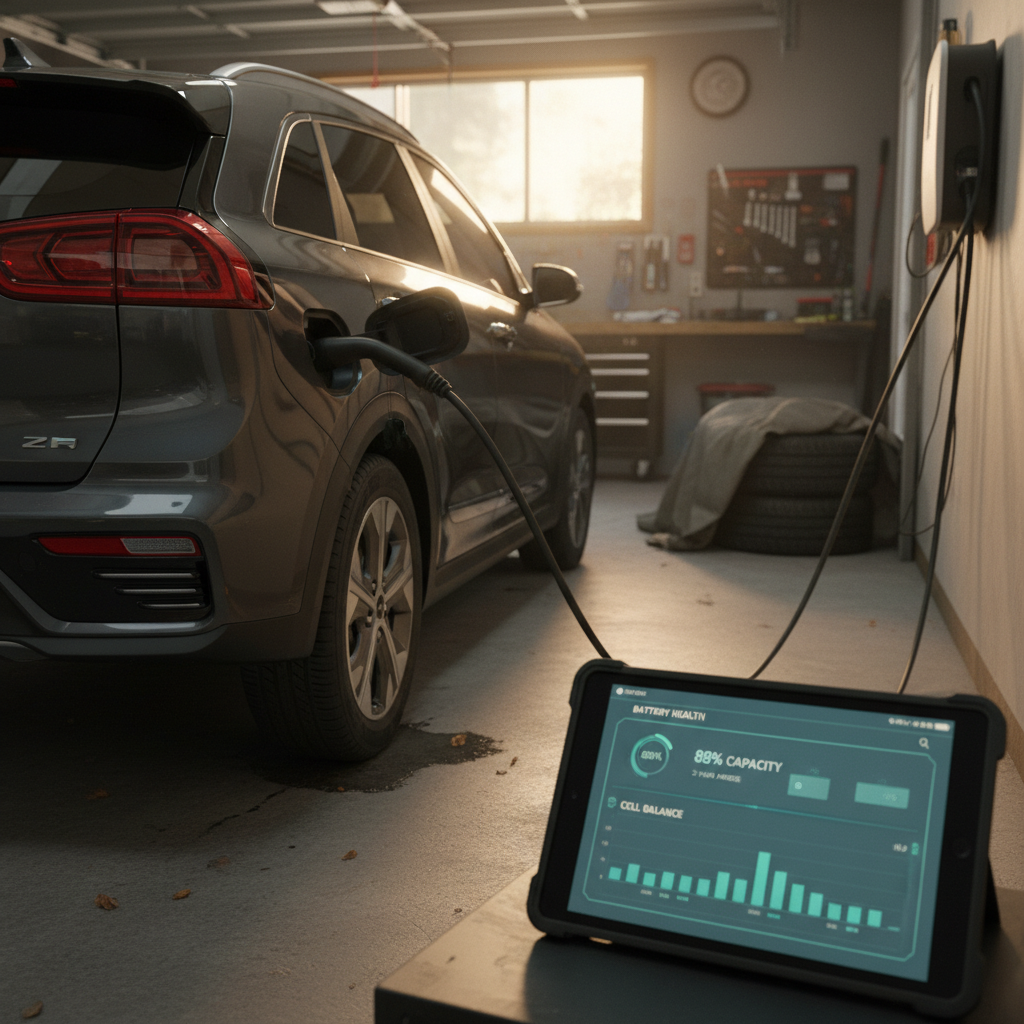
With any used EV, you should insist on real data. On Recharged, every vehicle includes a <strong>Recharged Score Report</strong> based on diagnostic battery‑health scans and range tests, not just a hopeful guess from the dash readout, so you know whether that 300‑mile promise is still anywhere close to true.
Don’t skip a professional EV inspection
Resale value and long-term costs
Depreciation: who’s the better bet from 2026 onward?
Both SUVs took big hits new; that’s good news when you’re the second owner.
Kia EV9: heavy early hit, then likely to stabilize
Early estimates of 2‑year depreciation on 2024 EV9s suggest a steep initial drop from their mid‑$50,000s–$70,000s MSRPs into the $40,000s. That’s a combination of aggressive leasing, incentives, and the market learning what a three‑row EV is worth.
For a 2026 buyer, much of that early pain is already baked in. As long as Kia supports the platform well and charging access continues to improve, the EV9’s space‑per‑dollar and feature‑per‑dollar equation should help resale solidify over time.
Tesla Model X: older luxury behavior
Model X depreciation varies wildly by year. The earliest examples dropped hard, then plateaued as they found a niche. Newer Xs sold after Tesla’s 2023–2024 price cuts had less MSRP headroom to fall from, but they still behave like luxury vehicles: big options, big wheels, and high repair costs tend to pull values down faster than mass‑market crossovers.
In 2026, a clean, mid‑mileage Long Range X should still hold value reasonably well, but the risk of a large out‑of‑warranty repair lands squarely on you, not the previous owner.
Where Recharged fits into the value puzzle
Ready to find your next EV?
Browse VehiclesWhich one should you buy used in 2026?
Best‑fit buyers: used Kia EV9 vs Tesla Model X
Choose a used Kia EV9 if…
You want a <strong>family‑first three‑row EV</strong> with huge space, normal doors, and an interior that’s easy to live with daily.
You value <strong>warranty coverage and predictability</strong> more than 0–60 bragging rights.
Your budget sits roughly in the <strong>low‑$40,000s to mid‑$50,000s</strong>, and you’d rather have a newer, lower‑mileage EV than an older luxury badge.
You live near decent CCS fast‑charging, and you’re comfortable that NACS access and adapter options will only improve from here.
You like the idea of buying a nearly new EV with <strong>modern safety tech and a conventional dealer service network</strong>.
Choose a used Tesla Model X if…
You road‑trip a lot and want <strong>native Supercharger access</strong> plus excellent long‑distance efficiency.
You care about <strong>performance and tech theater</strong>: instant torque, over‑the‑air updates, big screen, falcon‑wing doors.
Your budget can stretch into the <strong>high‑$40,000s to $70,000s+</strong> for newer, lower‑mileage examples, or you’re willing to roll the dice on an older X with more miles to get into the ecosystem cheaply.
You’re comfortable with a car that behaves more like a constantly evolving piece of software than an appliance.
You go in eyes‑open about potential <strong>out‑of‑warranty repair costs</strong> and have a financial cushion if something big fails.
In 2026, the used Kia EV9 and Tesla Model X are solving the same problem from different directions. The EV9 is the rationalist’s answer: vast space, strong charging, a long warranty horizon, and pricing that finally makes a three‑row EV feel attainable. The Model X is the romantic: blistering performance, best‑in‑class charging, and a design that still feels like it came from a slightly more interesting timeline. The right choice isn’t which SUV is “better” in the abstract, it’s which one aligns with your tolerance for risk, your appetite for tech drama, and your family’s day‑to‑day reality.
If you want help sorting that out, Recharged can put both on the same playing field: verified battery health, transparent pricing, financing options, trade‑in values, and even nationwide delivery from our digital showroom or Richmond, VA Experience Center. That way, whether you end up in an EV9 or a Model X, the only surprise is how quickly an electric three‑row SUV starts to feel completely normal.