If you own a 2024 Rivian R1T, or you’re shopping for a used one, you’ve probably heard about recalls. The 2024 R1T is a quick, capable electric pickup, but like most new EVs, it’s had a few growing pains. This guide walks through the known 2024 Rivian R1T recalls list, explains what each one means in plain English, and helps you make smart decisions as an owner or used‑EV shopper.
First things first
Overview: Why 2024 R1T recalls matter
Recalls sound scary, but they’re also a sign that a manufacturer is watching its fleet closely and fixing issues at no cost to you. For the 2024 Rivian R1T, most recalls are about compliance and safety details, things like lighting performance, labels and torque specs, rather than fundamental battery or drivetrain defects.
2024 R1T recall snapshot (across model years 2022–2025)
Because the R1T is still a relatively low‑volume, tech‑heavy vehicle, recalls tend to happen in batches as Rivian learns from real‑world use. If you’re evaluating a 2024 truck, your job is to confirm whether the recalls apply and whether they’ve already been completed, not to panic at the word “recall” itself.
Quick 2024 Rivian R1T recalls list
Here’s a high‑level look at the major recall campaigns that can affect 2024 model‑year R1T trucks. Exact coverage depends on build date and VIN range, so think of this as a roadmap, not a substitute for an official lookup.
Key recall campaigns that may include 2024 Rivian R1T trucks
Always confirm coverage for your specific vehicle by checking the VIN with NHTSA or Rivian.
| Issue / System | Typical model years affected | What can go wrong | Typical fix | Concern level |
|---|---|---|---|---|
| Headlight alignment / performance | 2023–2024 R1T & R1S | Low‑beam headlights may not meet federal visibility requirements in some conditions. | Inspect and adjust headlights; replace components if needed. | Moderate – visibility and night driving safety. |
| Airbag warning label compliance | 2024 R1T & R1S (small population) | Dashboard airbag warning label may be missing or incorrect on some trucks. | Inspect label; install or replace as needed. | Low – label compliance, not airbag deployment function. |
| Seat belt D‑ring / anchorage torque | 2022–2025 R1T & R1S (subset including 2024) | Front seat belt upper anchorage bolts may not be tightened to spec, reducing protection in a crash. | Inspect D‑ring bolts; re‑torque or replace hardware. | High – seat belts are primary safety equipment. |
| Rear suspension toe link service error | 2022–2025 R1T & R1S with certain prior repairs | Toe link joint may have been reassembled incorrectly during earlier suspension service, affecting handling. | Inspect rear suspension toe link joints; reassemble and torque correctly; replace parts if needed. | High – handling and stability over bumps/turns. |
| Accelerator pedal issue (early builds) | Primarily 2022–early 2023; some campaigns remained active in 2024 | Pedal design could allow reduced or unintended accelerator response under rare conditions. | Hardware replacement plus software update. | Moderate – driveability more than structural failure. |
Summary of notable safety recalls that can touch the 2024 R1T model year.
Important nuance for 2024 owners
Major 2024 R1T recalls explained
Headlight alignment / lighting performance
One of the most talked‑about campaigns for the 2023–2024 R1T and R1S involves headlight compliance. In some trucks, the headlights may not meet the exact beam pattern and intensity requirements in federal regulations. In the real world, that can mean less‑than‑ideal visibility at night or more glare for oncoming drivers.
What owners might notice
- Headlights that seem a bit low, high, or uneven.
- Poor definition of the road edge at night.
- Occasional flashes from oncoming drivers if your beams are mis‑aimed.
What Rivian typically does
- Inspect headlight aim and hardware.
- Adjust headlight alignment to spec.
- Replace headlamp assemblies if they don’t meet performance requirements.
The work is usually quick, but you may be asked to leave the truck for part of the day.
Owner tip
Airbag warning label recall (2024 build)
Another 2024‑specific campaign focuses on a missing or incorrect dashboard airbag warning label. This is a federal labeling requirement, basically the bright text that reminds you about front‑seat airbag risks.
On the safety spectrum, this is a low‑drama recall. The airbags themselves are not the problem; it’s the legal requirement that certain warnings be visible. Rivian’s fix is straightforward: a technician checks the labeling and installs the correct part if needed. It’s the sort of thing that can be done quickly during another service visit.
Seat belt D‑ring / anchorage torque
A more consequential campaign applies to certain 2022–2025 R1T and R1S vehicles, including some built for the 2024 model year. In this recall, Rivian found that the upper anchorage (D‑ring) bolts for the front seat belts may not have been tightened to the specified torque at the factory.
- In a severe crash, an improperly torqued D‑ring bolt could shift or loosen.
- That can reduce how effectively the seat belt restrains you.
- The fix is typically a quick inspection with a torque wrench and, if needed, new hardware installed to spec.
Why this one matters
Rear suspension toe link service error recall
One of Rivian’s newer campaigns doesn’t target a specific model year as much as it targets trucks that had certain rear suspension work before a given date. The concern: during those repairs, a technician may have reassembled a rear toe link joint incorrectly, which can change alignment or, in extreme cases, affect stability.
If your 2024 R1T ever had rear suspension components replaced or adjusted and later shows up as part of this recall, Rivian will inspect the toe link joints, verify proper assembly and torque, and replace any damaged components. From a driver’s point of view, signs can include wandering, pulling, or uneven tire wear. Don’t ignore those, recall or not.
Older accelerator pedal recall that may still show
Finally, you may see an accelerator pedal–related recall in the history of a 2024 R1T you’re considering, even if that campaign mainly affected earlier trucks. Rivian has used a combination of hardware replacement and software updates to address rare conditions where pedal feel or response might not match driver input. Most 2024‑build trucks will have this handled long before they land on the used market, but it’s worth confirming completion in the records.
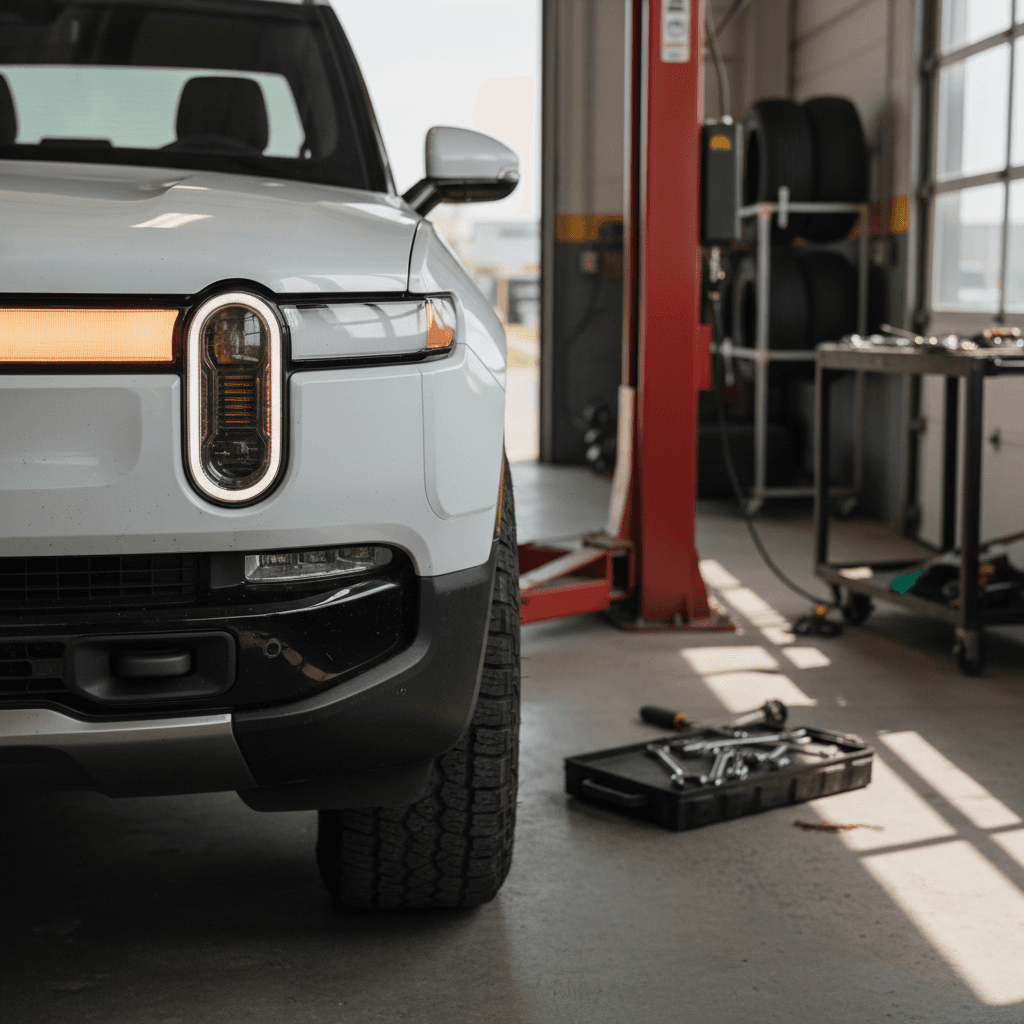
How to see if your 2024 R1T is affected
The only way to know for sure whether a recall applies to your specific truck is to check its 17‑digit VIN. Fortunately, that’s easy and free, and you don’t have to guess which campaigns cover which dates.
Step‑by‑step: Check your 2024 R1T for open recalls
1. Find your VIN
You’ll see it on the lower driver‑side windshield, on the driver‑door jamb label, and in the Rivian app under vehicle details. Snap a photo so you don’t have to keep walking back to the truck.
2. Use the official NHTSA lookup
Go to the NHTSA recall lookup site and enter your VIN. This will show all <strong>open safety recalls</strong>, anything Rivian still owes your truck.
3. Check in the Rivian app
The Rivian app and in‑vehicle display will typically alert you to open recalls or service campaigns. It’s a nice cross‑check against the NHTSA tool.
4. Call or chat with Rivian service
If you’re still unsure, contact Rivian service with your VIN. They can confirm which campaigns are open, which have been completed, and what’s scheduled.
5. For used‑truck shoppers, ask for proof
If you’re buying a 2024 R1T from a private seller or non‑Rivian dealer, ask for documentation or screenshots showing that recall work is complete.
6. Set a reminder after purchase
Once you own the truck, re‑run the VIN check every few months. As new campaigns roll out, you’ll want to catch them early while scheduling is wide open.
Good news on cost
Recalls vs TSBs vs customer campaigns
When you start digging into Rivian forums or paperwork, you’ll see a mix of acronyms: recalls, TSBs, and customer satisfaction campaigns. They’re not all the same thing, and that matters when you’re judging how healthy a 2024 R1T really is.
Three kinds of factory fixes you’ll see
How to tell a serious safety recall from a quality‑of‑life update.
Safety recall
Issued through NHTSA. Means there’s a safety or compliance defect that must be corrected.
- Legally reportable.
- Repair is free.
- Shows up in VIN recall lookup.
Technical Service Bulletin (TSB)
Guidance from the automaker to dealers or service teams on known issues and repair procedures.
- Not always safety‑related.
- May affect warranty coverage.
- Does not always show in a public recall search.
Customer campaign
Proactive fixes or upgrades, often for reliability or satisfaction.
- Can include OTA updates.
- Sometimes time‑limited.
- Good sign the brand is paying attention.
Why this matters to buyers
What 2024 R1T recalls mean for used buyers
If you’re shopping for a used 2024 Rivian R1T, recall history is part of the story, but it isn’t the whole book. These trucks are still new enough that many are on their first or second owner, and Rivian is evolving its hardware and software at a brisk pace.
Why recalls aren’t automatic dealbreakers
- Most 2024 R1T recalls involve fixable components like lighting, labeling and torque specs.
- Safety recalls are free to repair, even if you buy used from a private seller.
- Completed recalls show that the truck got hands‑on attention from technicians.
Red flags to watch for
- Open seat‑belt or suspension recalls the seller hasn’t addressed.
- Uneven tire wear, pulling or clunks that suggest unresolved suspension issues.
- A seller who can’t, or won’t, share service records or app screenshots.
As the used EV market matures, the strongest R1T candidates are usually the trucks with documented service histories, a clean bill of health on recalls, and a clear picture of battery health and everyday wear.
Inspection checklist for a used 2024 R1T
When you walk up to a used 2024 R1T, whether it’s in a driveway, at a dealer lot, or on the delivery truck, you can do a lot with your own eyes and a short test drive. Use this list as a starting point, then layer in a professional inspection or a third‑party condition report.
Used 2024 R1T inspection checklist (recall‑aware)
Confirm open recalls by VIN
Run the VIN through the NHTSA site and check the Rivian app (if you have temporary access) to confirm whether any seat‑belt, suspension or lighting recalls are still open.
Inspect headlights at night
If possible, drive after dark. Look for an even, bright beam pattern with good road‑edge visibility and no obvious mis‑aim or dark patches.
Check dash labels and airbag warnings
Take a quick look at the dashboard and sun visor for proper airbag warnings. If anything looks missing, ask whether the truck was part of the label recall and if it’s been resolved.
Look and feel for suspension issues
During a test drive, pay attention to straight‑line tracking, steering feel and clunks or pops over bumps, especially from the rear. Uneven tire wear can also point to toe link or alignment problems.
Test seat belts at all seating positions
Buckle each belt, tug sharply to confirm it locks, and check for smooth retraction. Any sticking or looseness should be checked against the seat‑belt anchorage recall.
Review service history
Ask for a printout or screenshot of the Rivian service history showing completed recalls, suspension work and any accelerator‑pedal or lighting campaigns.
Bring a second set of eyes
Cost and downtime: what to expect
By law, Rivian can’t charge you to repair a safety recall. But you should still plan for time and logistics. Some work takes a technician 20 minutes; getting your truck in and out of a busy service center can turn that into half a day.
Typical recall repair time expectations
Rough planning estimates for 2024 R1T owners. Actual times vary by location and workload.
| Recall type | Owner cost | Shop time estimate | Likely visit impact |
|---|---|---|---|
| Headlight alignment / components | $0 | 0.5–2 hours | Often same‑day; may wait on site. |
| Airbag warning label | $0 | < 1 hour | Can often be combined with other work. |
| Seat belt D‑ring torque / hardware | $0 | 1–2 hours | Plan on a half‑day in case of busy schedule. |
| Rear suspension toe link inspection | $0 | 1–3 hours | Truck may stay longer if parts need replacement. |
| Older accelerator pedal recall | $0 | 1–2 hours | Usually one visit plus a software update. |
Ask your Rivian service advisor for a more precise estimate when you book an appointment.
Rivian has leaned heavily on mobile service and over‑the‑air updates where possible. That’s a benefit if you live far from a service center: some smaller recall‑related checks or software portions can be handled in your driveway, not a waiting room.
How Recharged handles Rivian R1T recalls
If you’re considering a used 2024 R1T through Recharged, you don’t have to decode recall history on your own. Every vehicle we list goes through a structured intake process and gets a Recharged Score Report that includes verified battery health, pricing context and a look at safety‑related items.
What Recharged does before listing a used R1T
So you understand the truck you’re buying, not just the paint color.
VIN & recall check
Battery & charging health
Condition & road test
Ready to find your next EV?
Browse VehiclesWe also offer financing, trade‑in options, consignment and nationwide delivery, all handled through a fully digital experience or at our Experience Center in Richmond, VA. If you’re deciding between several R1Ts, or between an R1T and another EV pickup, a Recharged specialist can walk you through the tradeoffs with recall history and running costs in mind.
FAQ: 2024 Rivian R1T recalls
Frequently asked questions about 2024 R1T recalls
Bottom line: Are 2024 R1T recalls a dealbreaker?
Recalls are part of the reality of driving a cutting‑edge electric pickup, and the 2024 Rivian R1T is no exception. The current 2024 Rivian R1T recalls list reflects a young automaker tightening up lighting performance, labeling, seat‑belt hardware and suspension service procedures, not systemic failures of the truck’s core battery or drivetrain.
If you’re an owner, your priority is simple: check your VIN, schedule the work, and keep records. If you’re shopping used, look for trucks with documented recall completion, clean driving behavior and verified battery health. And if you’d rather not decode all of that yourself, a curated marketplace like Recharged can help you find a 2024 R1T that’s already been vetted, so you can focus on how it drives, not on what’s hiding in the fine print.