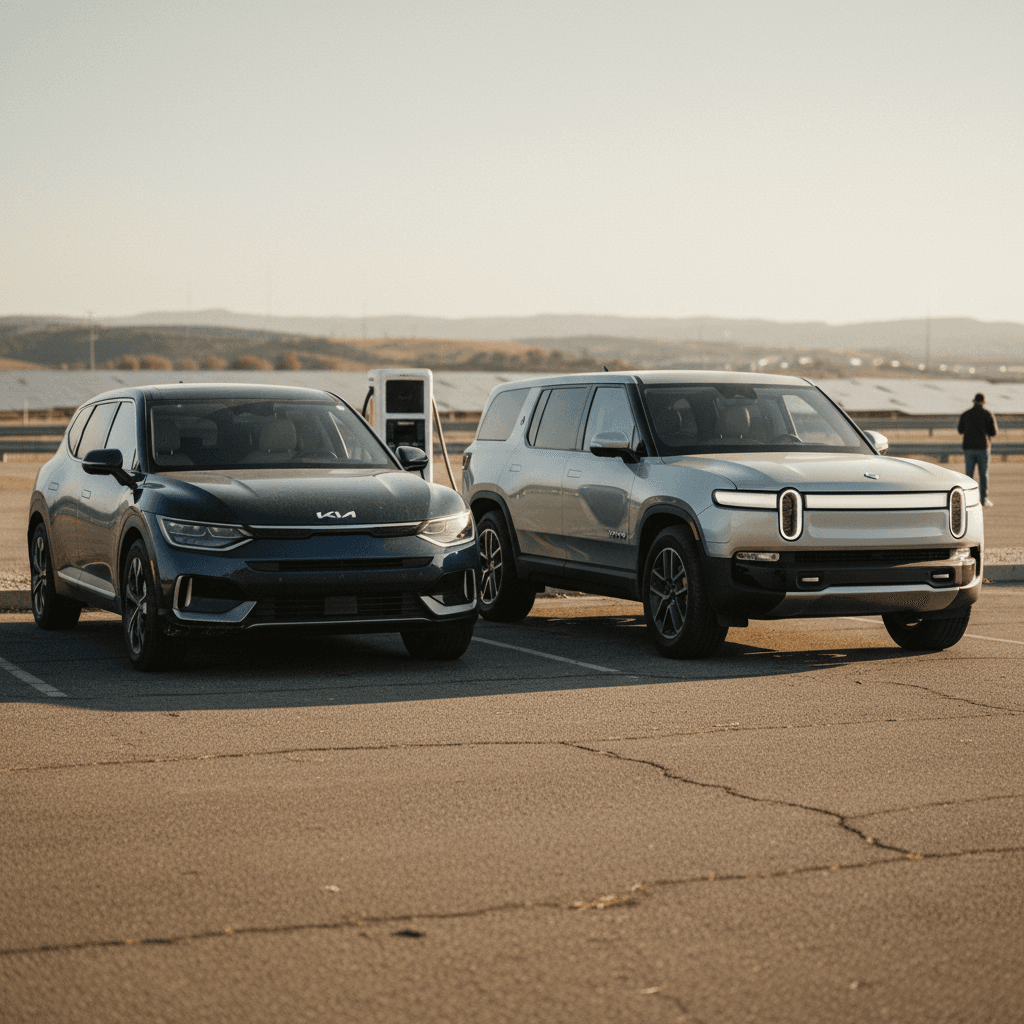
If you’re shopping a **three‑row electric SUV** in 2026, the two names you’ll see over and over are the **used Kia EV9** and the **used Rivian R1S**. Both promise real family practicality with zero tailpipe emissions, but they get there in very different ways. This guide walks you through a clear, 2026‑specific **used Kia EV9 vs Rivian R1S comparison** so you can decide which fits your budget, driving style, and family needs.
A note on model years
Overview: Used Kia EV9 vs Rivian R1S in 2026
Kia EV9: the mainstream family hauler
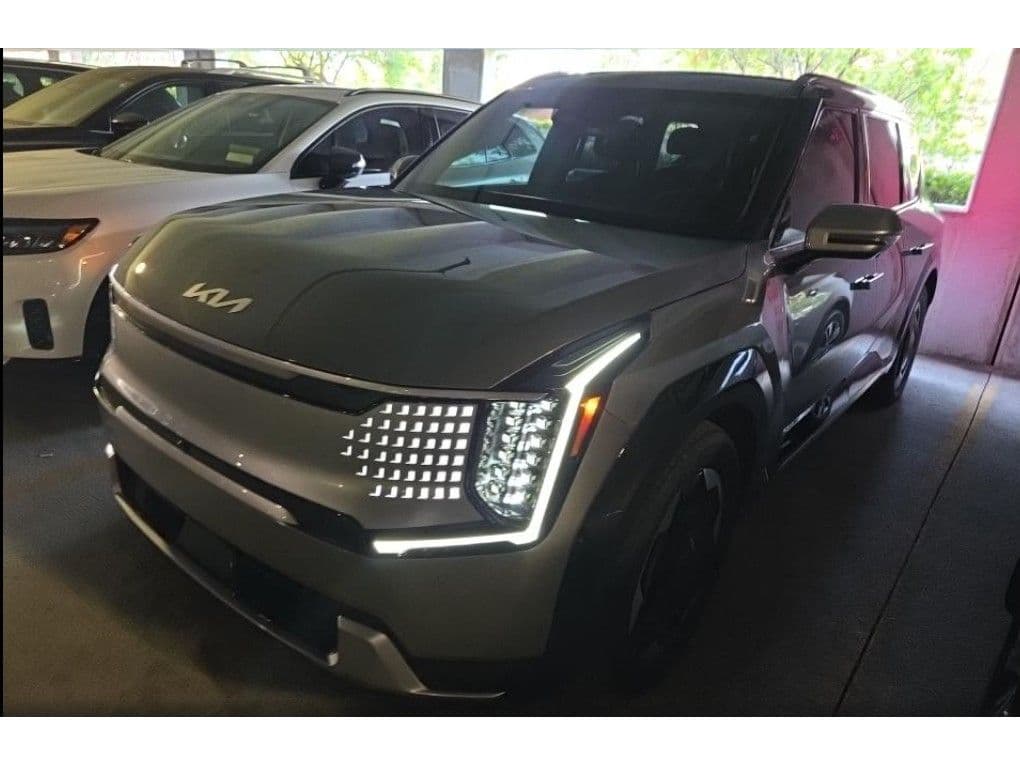
The Kia EV9 is a three‑row, midsize SUV on Hyundai–Kia’s 800‑volt E‑GMP platform. It’s sized a bit like a Telluride, but fully electric, with trims ranging from the efficient Light RWD to punchy GT‑Line AWD. In the U.S., Kia quotes up to about 300 miles of range depending on trim and a max tow rating around 5,000 pounds on properly equipped AWD models. ([kbb.com](https://www.kbb.com/kia/ev9/2025/?utm_source=openai))
Rivian R1S: electric adventure wagon
The Rivian R1S is a more off‑road‑oriented three‑row SUV built on a dedicated skateboard platform. Dual‑ and tri‑motor versions with Standard, Large, and Max battery packs deliver EPA ranges from roughly the high‑200s up past 400 miles on the most efficient 2025–2026 dual‑motor Max‑pack configurations. It rides higher, offers serious off‑road hardware, and targets buyers who want an electric Land Cruiser vibe. ([motortrend.com](https://www.motortrend.com/cars/rivian/r1s/2026?utm_source=openai))
High‑level verdict
Quick take: which used EV SUV fits you?
Who should buy which in 2026?
Match your use case to the right three‑row EV
Pick a used Kia EV9 if…
- You want maximum space per dollar and a more approachable price.
- Your driving is mostly paved‑road family duty with occasional road trips.
- You care about warranty support and mainstream dealer access.
- Fast DC charging and easy public‑network access matter more than hardcore off‑road chops.
Pick a used Rivian R1S if…
- You want top‑tier performance and real off‑road capability.
- Long‑range road trips and overlanding are on the menu.
- You’re comfortable with a more tech‑startup ownership experience.
- You’re willing to pay more up front for design and capability.
Still deciding?
If you’re on the fence, it’s usually because:
- Your budget fits either a newer EV9 or older R1S.
- You want Rivian’s style but Kia’s warranty and dealer network.
In that case, focus on how often you really leave pavement and whether range or total cost of ownership matters most over the next 5–8 years.
Pricing: what used EV9 and R1S actually cost in 2026
By April 2026, both of these SUVs have already taken their biggest depreciation hit. Kia EV9s sold new in late 2023 and 2024 had high MSRPs and strong incentives; Rivian has adjusted pricing several times since launch. That makes the used market especially interesting.
Used price & depreciation snapshot (early 2026)
Typical used asking prices in early 2026
Actual transaction prices vary by mileage, region, options, and condition, but these ballparks help frame your search.
| Vehicle & spec | Model years commonly found | Typical miles | Rough asking range |
|---|---|---|---|
| Kia EV9 Light / Light Long Range | 2024–2025 | 10k–35k | High-$30,000s to mid-$40,000s |
| Kia EV9 Wind / Land AWD | 2024–2025 | 10k–30k | Low-$40,000s to low-$50,000s |
| Kia EV9 GT-Line AWD | 2024–2025 | Under 20k | Mid-$50,000s and up |
| Rivian R1S Dual‑Motor Standard/Large | 2023–2025 | 20k–45k | Mid-$50,000s to mid-$60,000s |
| Rivian R1S Dual‑Motor Max | 2024–2025 | 10k–30k | High-$60,000s to $70,000+ |
| Rivian R1S Quad‑Motor (early builds) | 2022–2023 | 20k–50k | Mid‑$60,000s to low‑$70,000s |
Approximate U.S. used pricing as of Q1 2026.
Where Recharged fits in
Range, battery, and efficiency
Range is where the Rivian R1S can run away from the Kia EV9, if you’re comparing the right versions. But the EV9 holds its own, especially for families who don’t need 400‑plus miles on a charge.
Headline range and battery specs
Key EPA or manufacturer‑estimated ranges for popular trims you’ll see used in 2026.
| Model / trim (approximate) | Battery pack | Official range (EPA or est.) | Real‑world highway notes |
|---|---|---|---|
| Kia EV9 Light RWD (Standard Range) | ~76 kWh | ~230 miles | Fine for suburban duty; road‑trips demand more planning. ([kbb.com](https://www.kbb.com/kia/ev9/2025/?utm_source=openai)) |
| Kia EV9 Light Long Range RWD | ~99.8 kWh | ~304–305 miles | Best EV9 pick if you prioritize range over AWD. ([kbb.com](https://www.kbb.com/kia/ev9/2025/?utm_source=openai)) |
| Kia EV9 Wind/Land AWD | ~99.8 kWh | ~280–283 miles | Slight range trade‑off for AWD traction. ([kbb.com](https://www.kbb.com/kia/ev9/2025/?utm_source=openai)) |
| Rivian R1S Dual‑Motor Standard | Standard pack | ~270 miles | Owners often report slightly lower displayed range at 100% charge. ([motortrend.com](https://www.motortrend.com/cars/rivian/r1s/2026?utm_source=openai)) |
| Rivian R1S Dual‑Motor Large | Large pack | ~350 miles (varies by wheels) | Strong balance of cost, mass, and real‑world range. ([motortrend.com](https://www.motortrend.com/cars/rivian/r1s/2026?utm_source=openai)) |
| Rivian R1S Dual‑Motor Max | Max pack | Up to ~400–410 miles | MotorTrend saw ~340 miles in long‑range testing; still a standout. ([motortrend.com](https://www.motortrend.com/cars/rivian/r1s/2026?utm_source=openai)) |
Always confirm the exact battery pack and wheel size on the VIN you’re considering.
Don’t shop by EPA range alone
- For **short‑range suburban families**, an EV9 Light or Wind/Land AWD is usually plenty.
- If you do **frequent interstate road trips**, a Large‑ or Max‑pack R1S is undeniably easier to live with.
- For **occasional road trips plus cost focus**, an EV9 Light Long Range RWD hits a sweet spot of price and range.
Charging speed and road-trip convenience
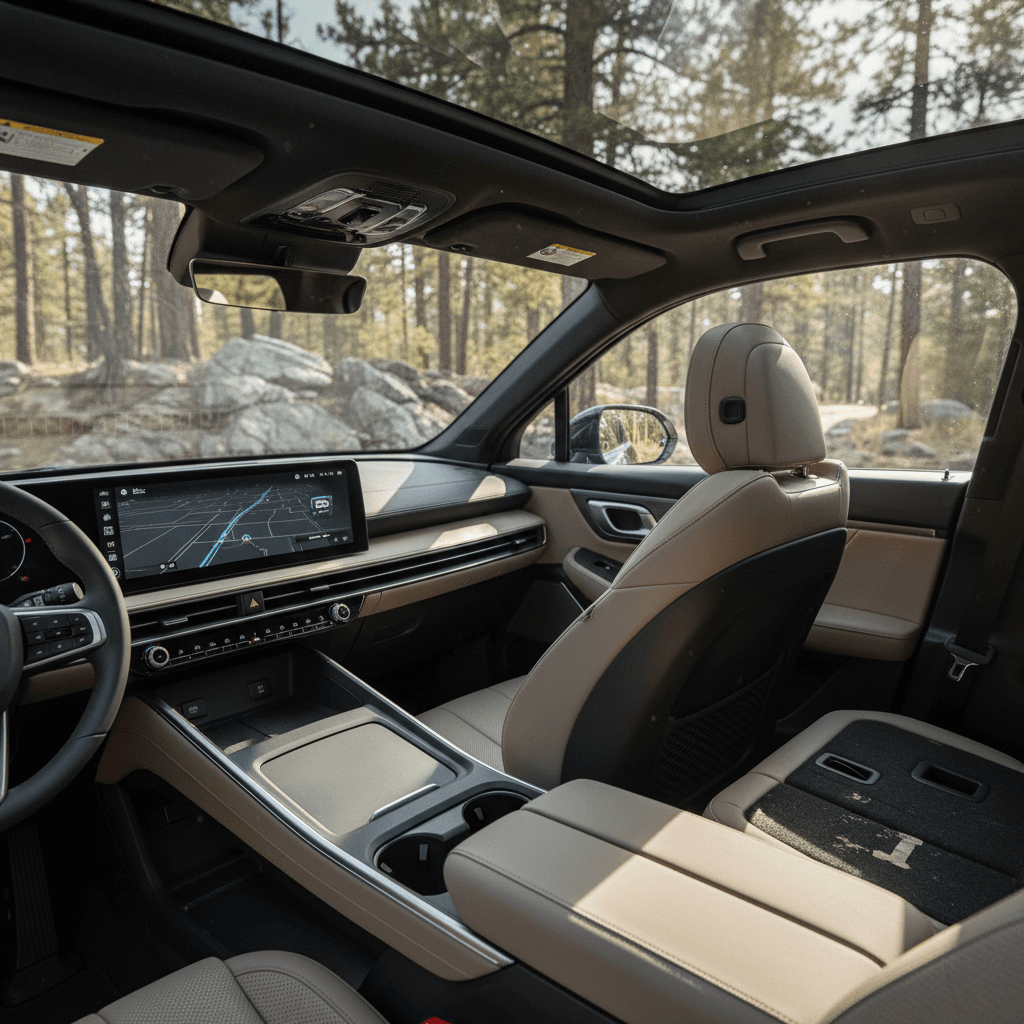
Both of these SUVs are very capable DC fast‑chargers, but they plug into different ecosystems and use different electrical architectures. Those details matter if you road‑trip often.
Charging and network differences
What day‑to‑day charging looks like in a used EV9 vs R1S
Kia EV9 charging experience
- 800‑volt architecture supports very high peak DC speeds; Kia quotes ~10–80% in under 25 minutes on a strong fast charger. ([kbb.com](https://www.kbb.com/kia/ev9/2025/?utm_source=openai))
- CCS charge port on 2024–2025 U.S. models taps into networks like Electrify America, EVgo, and others.
- Home charging uses a common J1772/CCS cable, and a 240‑V Level 2 unit can fully recharge overnight.
Rivian R1S charging experience
- Early R1S models use CCS; newer 2026 R1S adds a native NACS (Tesla‑style) port while maintaining CCS support via adapter, opening up Tesla’s Supercharger network on top of existing third‑party DC fast‑chargers. ([motortrend.com](https://www.motortrend.com/cars/rivian/r1s/2026?utm_source=openai))
- Peak DC speeds are strong but somewhat less headline‑grabbing than the EV9’s, especially on Standard pack trims.
- Rivian’s trip planner is tightly integrated with its own Adventure Network and partner stations.
Look at your real charging map
Space, comfort, and interior experience
Both of these SUVs are genuinely usable three‑row vehicles, not just two‑row crossovers with an afterthought third row. That said, they prioritize their cabins differently.
Kia EV9: family‑first layout
- Boxy, upright body yields excellent headroom and cargo volume, especially behind the third row.
- Second‑row options include captain’s chairs or a bench, depending on trim.
- Interior design leans modern‑minimalist but familiar, physical controls for key functions and a relatively intuitive infotainment system.
- Ride quality is tuned more like a mainstream crossover; higher‑line trims feel near‑luxury but not ultra‑plush.
Rivian R1S: adventure‑chic lounge
- Shorter overall length but similar wheelbase to the EV9, with a **taller, more upright stance**.
- Cabin materials feel more boutique, wood, vegan leather, and distinctive color schemes on many builds.
- Big central touchscreen and minimal hard keys; gorgeous, but some owners find software laggy or quirky across updates. ([reddit.com](https://www.reddit.com/r/Rivian/comments/1ihj3nc?utm_source=openai))
- Third row is usable for adults on shorter stints, but cargo behind the third row is tighter than the Kia’s boxier tailgate area.
Car‑seat and kid duty
Performance and driving character
The Kia EV9 and Rivian R1S are both quick by traditional SUV standards, but the way they deliver that performance, and what they prioritize, differs dramatically.
On‑road and off‑road personality
How they feel from behind the wheel
Kia EV9
- Single‑motor RWD trims feel punchy enough for daily duty; AWD versions step up to **high‑300‑hp territory** and 0–60 mph in the 5‑second range. ([kbb.com](https://www.kbb.com/kia/ev9/2025/?utm_source=openai))
- Steering and suspension tuning lean comfortable rather than sporty.
- Light off‑roading and snow duty are no problem with AWD, but there’s no air suspension or equivalent crawl mode trickery.
Rivian R1S
- Even dual‑motor trims feel genuinely quick; tri‑ and quad‑motor versions deliver near‑supercar 0–60 times in some configurations. ([en.wikipedia.org](https://en.wikipedia.org/wiki/Rivian_R1S?utm_source=openai))
- Available air suspension, adjustable ride height, and sophisticated traction management make the R1S a serious off‑road tool.
- On pavement, it feels more planted and athletic but can ride firmer depending on mode and tires.
Know what you’re paying for
Ownership costs and reliability
Total cost of ownership is where a lot of EV shoppers quietly win, or lose. Beyond the purchase price, you’re looking at maintenance, potential repairs, and how each brand stands behind its vehicles.
Cost‑of‑ownership signals
Kia benefits from a large dealer network and decades of volume production. That can make real‑world repairs, parts availability, and warranty work more straightforward than with a younger, direct‑to‑consumer brand like Rivian. On the other hand, Rivian’s service model is heavily mobile and concierge‑oriented in many areas, which some owners love and others find limiting depending on where they live.
Leverage a third‑party inspection
Resale value and long‑term outlook
Both models have already experienced sharp early depreciation. That’s painful for the first owner, but a gift to you as a used buyer.
Kia EV9 depreciation story
- Early 2024 EV9s show around 49% value loss in the first two years, a function of high launch MSRPs plus aggressive discounts and evolving federal incentives. ([kbb.com](https://www.kbb.com/kia/ev9/2024/depreciation/?utm_source=openai))
- Projection tools suggest another ~$36,000 in depreciation over the first five years from new, front‑loaded toward those early years. ([kbb.com](https://www.kbb.com/kia/ev9/2025/cost-to-own/?utm_source=openai))
- That means a 2‑ to 3‑year‑old EV9 you buy in 2026 may have already lived through the steepest part of the curve.
Rivian R1S value trajectory
- R1S started from very high prices; later discounts, new battery packs, and the arrival of lower‑priced Rivian R2 models are all pressuring used values.
- Forum data and listings suggest many used R1S trucks transacting at 40–50% below original MSRP within a few years, especially heavily optioned examples. ([reddit.com](https://www.reddit.com/r/Rivian/comments/1ruutid/anyone_else_hoping_for_a_nice_drop_in_used_r1s/?utm_source=openai))
- The flip side: there’s still more uncertainty about long‑term perception, especially as newer generations roll out.
Which is the safer bet?
How to choose: EV9 vs R1S for your use case
Buyer profiles and best picks
Suburban family commuter (under 15,000 miles/year)
Priorities: reliability, comfort, simple charging, total cost of ownership.
Best bets: Kia EV9 Light Long Range RWD or Wind/Land AWD with remaining factory warranty.
Why: Plenty of range for weekends, easier dealer support, and strong value after initial depreciation.
Frequent interstate road‑tripper
Priorities: range, fast‑charge coverage, comfort at 75–80 mph.
Best bets: Rivian R1S Dual‑Motor Large or Max battery packs, or a very competitively priced EV9 Light Long Range if you have excellent CCS coverage.
Why: Longer usable range makes trip planning easier; newer R1S units with NACS ports further strengthen the case.
Outdoor / overland enthusiast
Priorities: off‑road capability, towing, storage solutions.
Best bets: Rivian R1S with dual‑ or tri‑motor and off‑road package; air‑suspension equipped models preferred.
Why: Adjustable ride height, off‑road drive modes, and beefier hardware simply outclass the EV9 in this role.
Value‑driven first‑time EV owner
Priorities: predictable costs, warranty coverage, gentle learning curve.
Best bets: Lower‑mile 2024–2025 Kia EV9 with strong service records and clean history.
Why: Mainstream dealer network, more conventional interface, and attractive pricing make the learning experience less stressful.
Checklist: what to inspect on a used EV9 or R1S
Essential inspection items before you buy
1. Confirm battery pack, drive layout, and port type
On both the EV9 and R1S, the specific battery pack (Standard, Long Range, Large, Max), drive layout (RWD vs AWD / dual vs tri / quad motor), and charge‑port type (CCS or NACS on newer R1S) radically change value. Verify these against the build sheet or window sticker, not just the ad.
2. Pull a detailed battery health report
Look for fast‑charge vs home‑charge history, usable capacity estimates, and any high‑voltage fault codes. On Recharged, this comes baked into the <strong>Recharged Score</strong>, but if you’re buying elsewhere, insist on a high‑voltage system scan from a shop that truly understands EVs.
3. Inspect tires, brakes, and suspension
These SUVs are heavy and powerful. Uneven tire wear, noisy wheel bearings, or tired dampers can get expensive. Check for curb‑rashed wheels (common on big 21–22‑inch setups) and budget for quality EV‑rated tires if replacement is near.
4. Test all doors, seats, and glass
Verify that the powered liftgate, frunk, second‑ and third‑row seat mechanisms, and panoramic roof (if fitted) operate smoothly. On three‑row EVs, seat tracks and latches see a lot of real‑world abuse.
5. Live with the software for at least 30 minutes
Spend time in the infotainment, navigation, driver‑assist, and user‑profile screens. With Rivian especially, evaluate UI speed, common functions (charging, trip planning), and check for error messages. Make sure all OTA updates are current.
6. Verify warranty status and recall history
Ask the seller or a dealer/service center to confirm remaining basic and battery warranties, plus any open recalls or service campaigns. For Rivian, confirm there is no salvage or major undisclosed damage that might void coverage.
FAQ: used Kia EV9 vs Rivian R1S
Frequently asked questions
Bottom line: which used EV SUV is the better buy?
If you’re looking at the **used Kia EV9 vs Rivian R1S in 2026**, start with an honest look at how you’ll really use the vehicle. For most American families who spend their time on paved roads, haul kids and cargo, and want a straightforward ownership experience, a well‑priced used EV9, with plenty of warranty left and a clean battery health report, delivers excellent value. If you crave long‑range adventure capability, love the Rivian design, and are comfortable living with a tech‑forward brand that’s still evolving, a carefully chosen R1S can be a deeply satisfying choice.
Either way, don’t buy blind. Use a structured inspection checklist, verify battery health, and compare real‑world pricing rather than just EPA range or original MSRP. Platforms like Recharged exist to make that process simpler, combining transparent marketplace listings, **Recharged Score** battery diagnostics, financing options, trade‑in support, and even nationwide delivery. With the right data in front of you, the question isn’t "EV9 or R1S?" so much as "Which specific vehicle is the right long‑term partner for your family and your budget?"