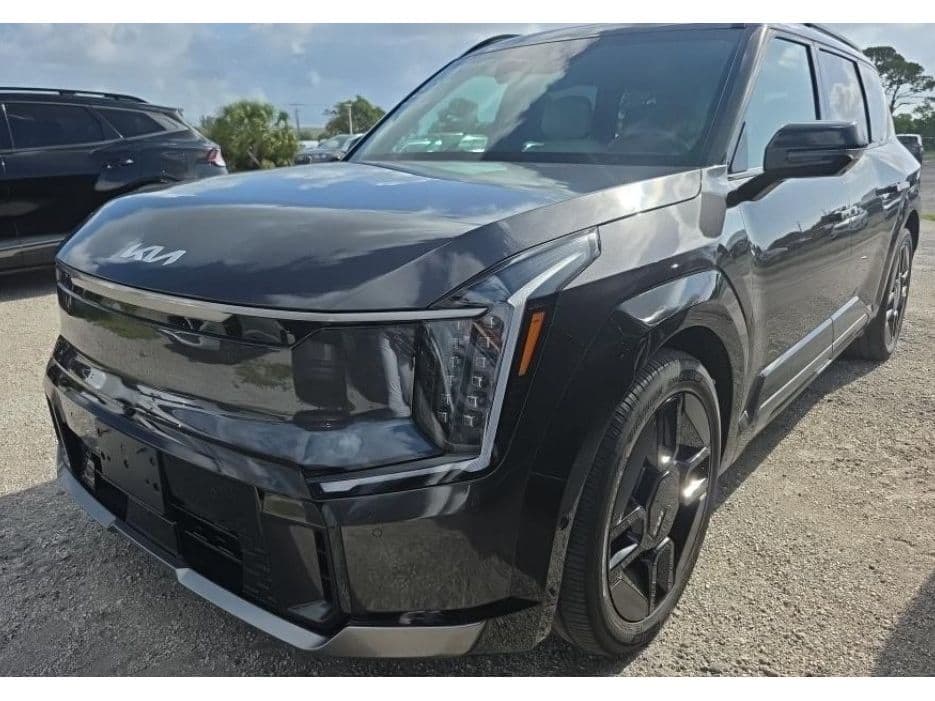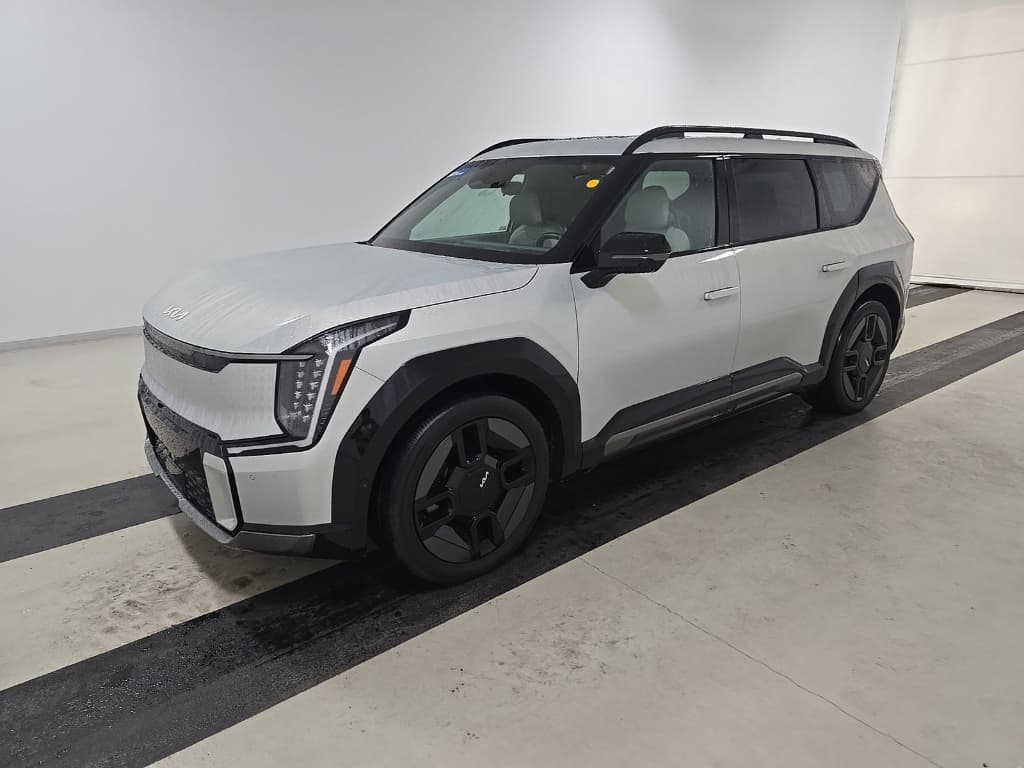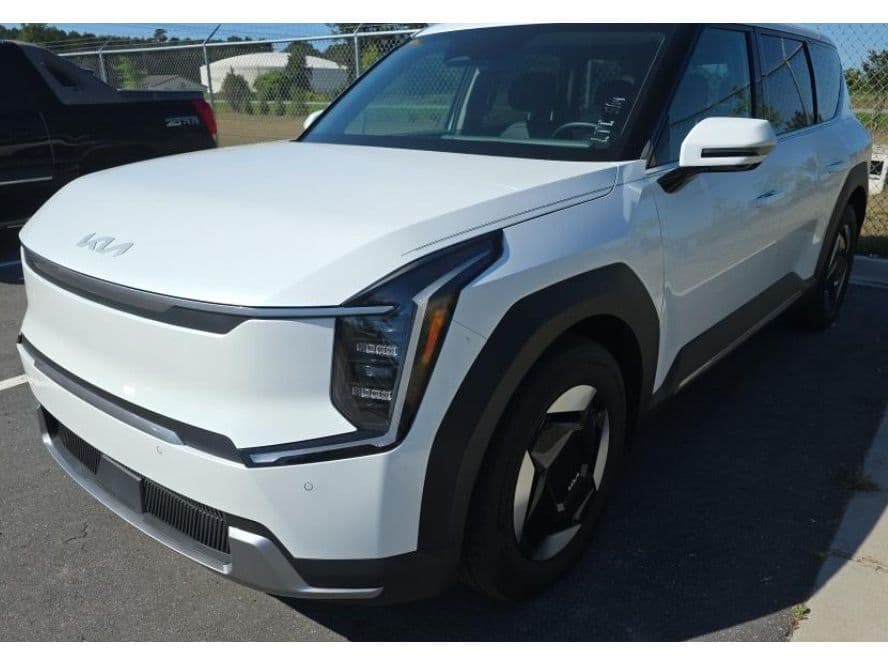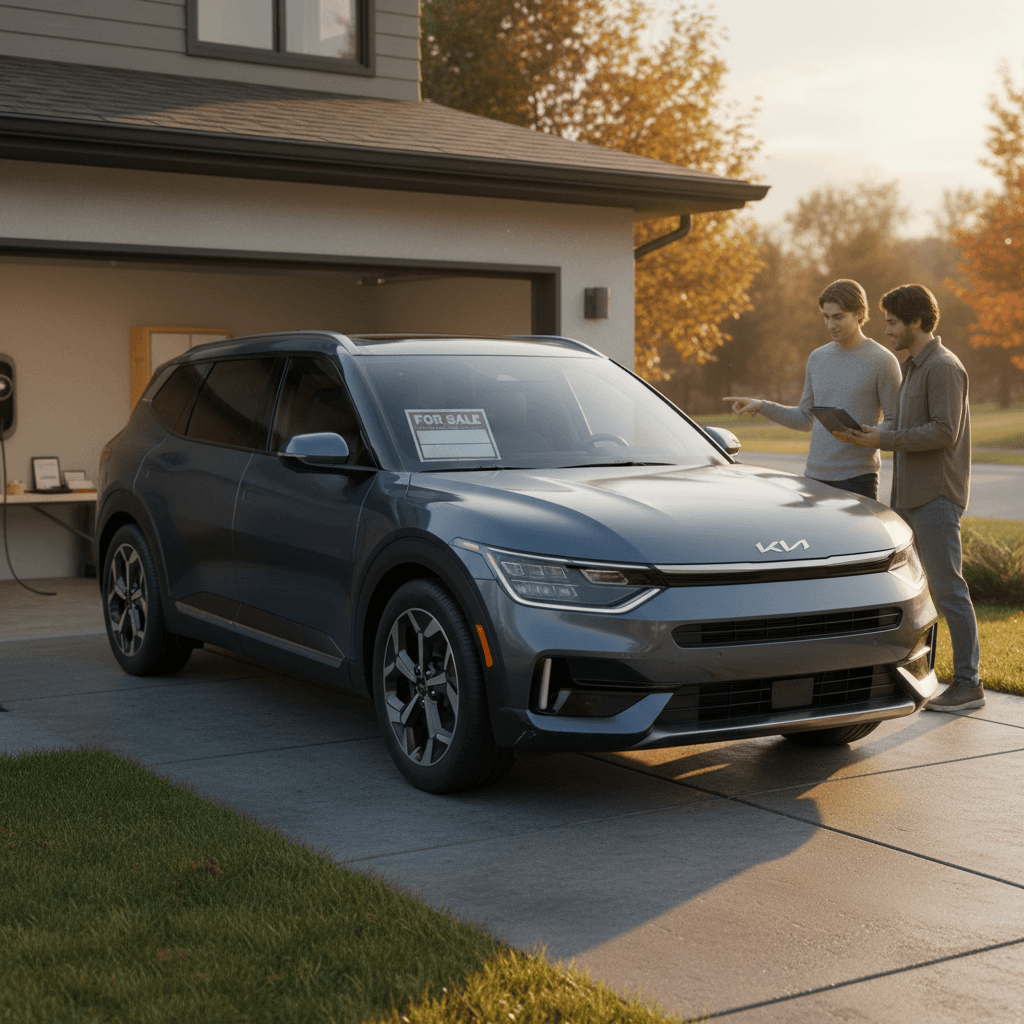
If you want a three-row electric SUV without brand-new sticker shock, a used Kia EV9 jumps to the top of the list in 2026. It’s big, genuinely comfortable for families, shaped like a digital shipping container, and, unlike many early EVs, arrived with serious safety credentials and competitive range. This guide walks you through everything that matters when buying a used Kia EV9 in 2026: trims and batteries, real-world range, charging, pricing, and the specific red flags to look for before you sign anything.
Model years to focus on
Why the used Kia EV9 is so interesting in 2026
Kia EV9 at a glance
The EV9 is Kia’s flagship EV, roughly the electric analog to the Telluride: three rows, squared-off stance, and a cabin that doesn’t feel like a penalty box for choosing electrons over gasoline. It rides on the E-GMP platform shared with the Kia EV6 and Hyundai Ioniq 5/7/9 siblings, which means 800-volt electrical architecture, fast DC charging, and a flat floor that makes row three livable.
Why it works so well as a used buy
Kia EV9 trims and batteries: quick cheat sheet
Trim names vary slightly by market and year, but 2024–2026 U.S. Kia EV9s follow the same basic recipe: two battery sizes and either rear-wheel drive (RWD) or all-wheel drive (AWD). Getting your head around this up front will save you from buying the wrong EV9 for your driving pattern.
2024–2026 Kia EV9 U.S. trim basics
High-level overview of the used EV9 trims you’re likely to see in 2026. Exact equipment and naming can vary by model year and package.
| Trim (typical) | Battery | Drive | EPA range (approx.) | Who it suits |
|---|---|---|---|---|
| Light (Standard Range RWD) | ~76 kWh usable | RWD | ~230–233 mi | Short commuters, urban families, frequent home charging. |
| Light Long Range RWD | ~99.8 kWh usable | RWD | Up to ~304 mi | Highway commuters, road-trippers who don’t need AWD. |
| Wind / Land AWD | ~99.8 kWh usable | Dual motor AWD | ~270–280 mi | Snow-belt families, those towing or needing traction. |
| GT-Line AWD | ~99.8 kWh usable | Dual motor AWD | ~270 mi | Most features and performance, least efficient of the bunch. |
Always verify the exact battery and drivetrain on the specific VIN, don’t assume based on a badge alone.
Decode the battery quickly
Real-world range: what you can actually expect
EPA range figures are good for comparing models, but your life happens in the messy middle: winter, loaded with kids and cargo, maybe towing a small trailer to the lake. The good news is that early testing and owner reports show the EV9’s big battery and relatively efficient drivetrain deliver range that’s fairly close to the window sticker in mild weather when driven sensibly.
Typical real-world range expectations
How the EV9 behaves once it’s yours, not Kia’s press car
Standard battery RWD (Light)
Expect ~180–210 miles in mixed driving at highway speeds, more in city-only use. In cold weather with heat running, that can dip into the 150–180 mile range, especially at 75+ mph.
Long Range RWD (Light LR)
Owners who drive 65–70 mph and avoid aggressive acceleration often see 230–260 real-world miles, with more in warm weather, less in deep winter. It’s the sweet spot if you road trip but don’t need AWD.
AWD trims (Wind, Land, GT-Line)
The dual-motor AWD EV9 uses more energy, especially at interstate speeds. Figure 200–240 miles in typical conditions and as low as ~180 if you’re fully loaded and it’s below freezing.
Cold-weather reality check
Charging speeds and connector changes (CCS vs NACS)
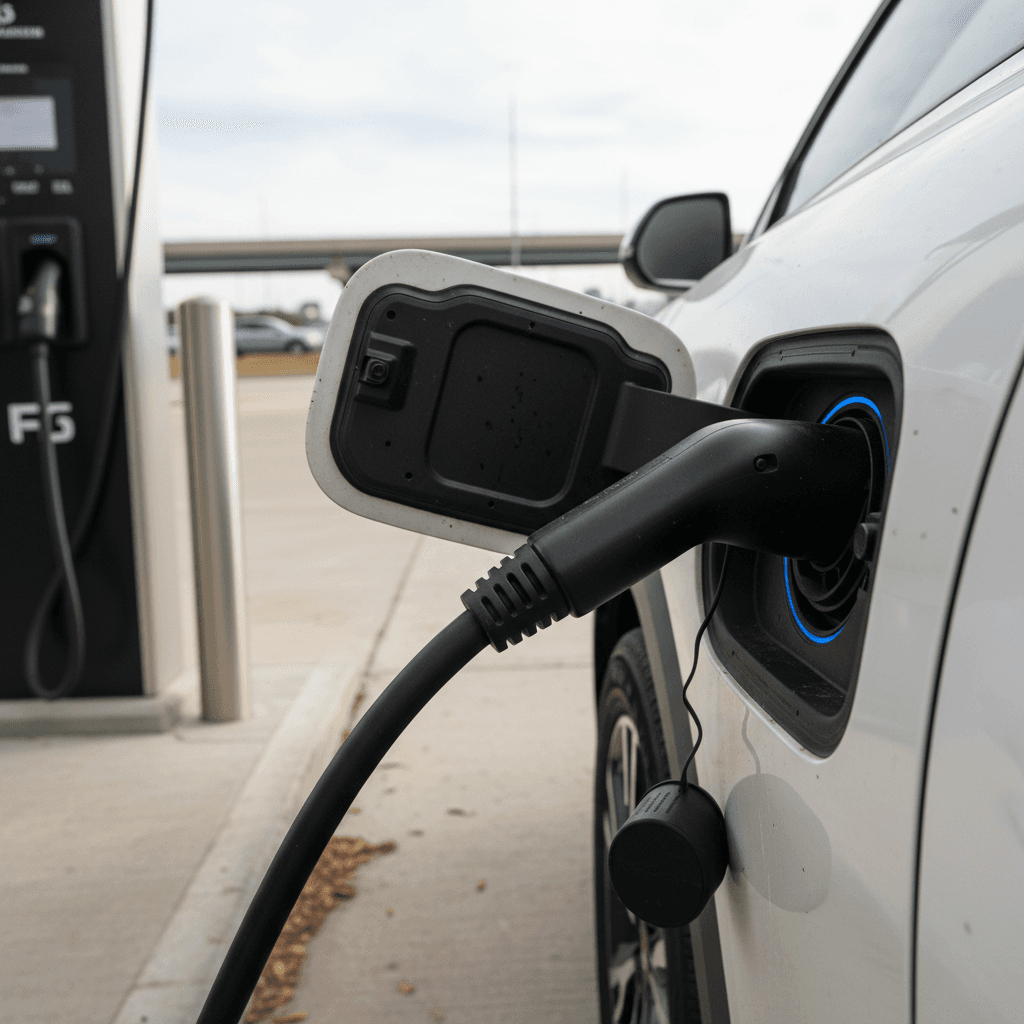
Early U.S. EV9s (2024 and 2025 model years) shipped with the CCS1 DC fast-charging connector. That was the North American standard used by most non‑Tesla EVs at the time. By late 2024 and into 2025, Kia began committing to the Tesla-style NACS plug on future builds and offering adapters to some owners, but in 2026 the used market is a mix of realities depending on build date and region.
DC fast charging
- The EV9’s 800V platform allows up to ~210–230 kW peak on a high-power DC charger, in ideal conditions.
- In practice you’ll see the classic fast‑then‑taper curve: very quick from 10–50%, slowing notably past ~70%.
- Plan on about 25–30 minutes from 10–80% on a 350 kW station if the battery is warm and the station is cooperating.
If a seller claims “10–80% in 10 minutes,” smile politely and ignore them.
CCS now, NACS later
- Most used EV9s you’ll see in 2026 still have CCS ports. That’s not a problem, adapters and multi‑standard stations are proliferating.
- Some owners received OEM or third‑party CCS–to–NACS adapters so they can charge on Tesla Superchargers.
- Ask whether any official Kia adapter or retrofit is included with the car; that can save you hundreds of dollars.
Recharged can walk you through which adapters you’ll actually need for your home region.
Home charging: don’t overthink it
Safety, reliability, and known issues so far
From a safety standpoint, the EV9 comes out of the gate like a Volvo that went to K‑pop boot camp. The Insurance Institute for Highway Safety awarded early EV9s Top Safety Pick and then Top Safety Pick+ as testing evolved, and NHTSA has published a 5‑star overall crash rating. That matters when you’re strapping actual children into row three.
Safety and driver-assistance highlights
What you’re getting even on a mid-trim used EV9
Crashworthiness
Strong crash-test performance, including side impacts and small-overlap frontal tests. The EV9’s boxy shape hides a very carefully engineered safety cage.
Active safety tech
Most used EV9s will have forward collision avoidance, blind-spot monitoring, rear cross-traffic alert, lane-keeping assist, and adaptive cruise, often with lane-centering.
Highway assist
On higher trims, Kia’s Highway Driving Assist adds smoother lane centering and better cruise-control behavior, especially in stop‑and‑go traffic.
Reliability data is still early because the oldest EV9s are barely two years old, but there are a few patterns worth noting from owner reports and service bulletins:
- Software glitches: occasional infotainment freezes, camera-system gremlins, or false driver-assist alerts, typically fixed via over‑the‑air updates or dealer flashes.
- Charging quirks: some owners have reported finicky behavior at certain DC fast-charger brands. This is as much about the station as the car, but check that your used EV9 completes at least one clean DC session during the test drive.
- Interior squeaks/rattles: big, boxy SUVs amplify minor noises. Listen closely over rough pavement; localized rattles can often be addressed under warranty if still active.
- Early build recalls: as with most new models, Kia has issued a handful of recalls and service campaigns. Make sure any open campaigns have been closed on the VIN before you buy.
Non-negotiable: recall and campaign check
Used Kia EV9 pricing and value in 2026
EV pricing in the mid‑2020s has been a circus: new EV incentives come and go, inventory swings from famine to fire sale, and depreciation curves look like stock charts. The EV9 is one of the rare models that has held its value surprisingly well, largely because it lives in a thinly populated niche: genuinely usable three-row electric SUVs.
Typical used Kia EV9 price bands in early 2026 (U.S.)
These are directional ranges, not quotes. Real prices depend on region, mileage, condition, and equipment.
| Configuration / age | Odometer ballpark | Typical asking range | Notes |
|---|---|---|---|
| 2024 Light / Light LR RWD (2 years old) | 25k–40k miles | Low–mid $30Ks | Base and long-range RWD trims tend to be the value sweet spot. |
| 2024–2025 Wind / Land AWD | 20k–35k miles | High $30Ks–mid $40Ks | AWD + popular packages keep demand (and prices) strong. |
| 2025 GT-Line AWD | 10k–25k miles | Low–high $40Ks | Top trim with most toys; limited supply keeps prices firm. |
| Early 2026 demos/low-mile used | Under 10k miles | Upper $40Ks+ | Often ex‑loaner or demo vehicles with remaining factory warranty. |
Always compare multiple sources and get an instant offer on your trade to understand your real out-of-pocket cost.
The 2026 tax‑credit curveball
Compared to rivals, the EV9’s resale strength is a backhanded compliment. It hasn’t fallen off a cliff like some smaller EV crossovers, which means a used EV9 isn’t dirt‑cheap, but you’re also not buying an orphan. For a lot of families, paying a bit more for a mainstream, supported platform beats rolling the dice on a deeply discounted oddball.
What to check on a used EV9 before you buy
A used EV9 inspection starts like any other late‑model SUV, accident history, paintwork, tires, but you also need to interrogate the battery, charging behavior, and software in a way you wouldn’t with a gas car. Here’s a structured way to do it.
Used Kia EV9 pre-purchase checklist
1. Confirm trim, battery, and drivetrain
Match the advertised trim to the actual VIN data and window sticker. Verify whether it’s Standard Range or Long Range, and RWD vs AWD. A misrepresented battery pack changes the value equation dramatically.
2. Review charging history and behavior
Ask how and where the car was charged, mostly DC fast charging, or primarily Level 2 at home? On the test drive, plug into both a Level 2 station and, if possible, a DC fast charger to check for error messages or unusual tapering.
3. Get a real battery health report
You want more than a dash guess. A <strong>Recharged Score battery health report</strong> uses diagnostics to estimate remaining usable capacity and flag any anomalies, so you’re not guessing about the most expensive component in the vehicle.
4. Inspect tires, brakes, and suspension
The EV9 is a heavy SUV. Uneven tire wear, tired shocks, or warped rotors show up earlier than on a compact hatchback. Check for cupping, inside-edge wear, and any shudder under braking from highway speeds.
5. Test all three rows and cargo area
Fold every seat, slide every track, and verify power functions. A squeaky second‑row slide or a balky power-fold third row can be expensive and annoying, especially once kids discover the buttons.
6. Drive it where you actually live
If you commute on a 75‑mph highway, don’t judge the EV9 on a 25‑mph test loop. Take it on your real roads, including a stretch at the speeds you typically drive, and watch energy consumption and noise levels.
Ask for data, not vibes
EV9 vs other used 3-row electric SUVs
The EV9 doesn’t exist in a vacuum. By 2026 you can cross‑shop it against used Rivian R1S, Tesla Model X, Mercedes EQS SUV, and emerging Hyundai Ioniq 9 inventory. Each plays a different game.
Rivian R1S
- Adventure aesthetic, off-road capability, clever storage.
- Generally more expensive used than a comparable EV9.
- Software experience is rich but still maturing; service network is narrower.
Tesla Model X
- Strong efficiency, native access to Superchargers, distinctive Falcon Wing doors.
- Cabin feels older‑school next to the EV9’s fresh interior; build quality can be hit‑or‑miss.
- Third row is tighter than in the EV9 for taller passengers.
Others (EQS SUV, Ioniq 9, etc.)
- Luxury options like EQS SUV bring big comfort and bigger price tags.
- Hyundai Ioniq 9 shares a lot of hardware with EV9; worth cross‑shopping if you like the design and deal.
- EV9 often wins on value and straightforward usability.
Where the EV9 quietly wins
How Recharged makes a used EV9 less of a gamble
Shopping a used EV9 on your own usually means juggling private sellers, vague “battery is great” assurances, and dealers who understand the tech about as well as your cat. Recharged was built specifically to make used EV ownership simple and transparent, and the EV9 is a perfect example of where that matters.
What you get with a used EV9 from Recharged
Less guessing, more driving
Recharged Score battery health report
Every EV9 listed on Recharged includes a Recharged Score, which analyzes battery health, charging behavior, and usage patterns. You see a clear snapshot of usable capacity and any red flags before you commit.
Fair-market pricing and financing
Recharged benchmarks pricing against national data so you’re not overpaying just because inventory is tight in your ZIP code. You can apply for financing online, compare terms, and see your real monthly payment before you fall in love with a specific EV9.
Nationwide delivery and trade-in
Found the right EV9 a few states away? Recharged can coordinate nationwide delivery and handle your trade-in with an instant offer, so you’re not spending weekends driving from dealer to dealer.
EV-specialist support
From CCS vs NACS confusion to home-charging questions, Recharged’s EV specialists help you pick the right trim, battery, and charger for your actual life, not an idealized brochure scenario.
Ready to find your next EV?
Browse VehiclesWant to sit in one first?
Used Kia EV9 FAQ (2026)
Frequently asked questions about buying a used Kia EV9 in 2026
Bottom line: is a used Kia EV9 right for you?
If you want an electric family hauler that doesn’t feel like a science project, a used Kia EV9 in 2026 is one of the most compelling options on the road. It’s big without being bloated, comfortable without being ostentatious, and electric without forcing you into a charging lifestyle that only works in California. The key is buying the right EV9, correct battery, honest range expectations, clean battery health, and a price that reflects reality rather than hype.
Do your homework on trims and charging, insist on real battery data, and take a test drive that mirrors your actual life, not a dealer’s three‑mile loop. If you’d rather skip the guesswork, shopping a used EV9 through Recharged means every vehicle comes with a Recharged Score battery report, transparent pricing, EV‑savvy support, and the option for nationwide delivery. However you buy, the EV9 proves that the electric family SUV has finally grown up, and the used market is where it starts to make real financial sense.