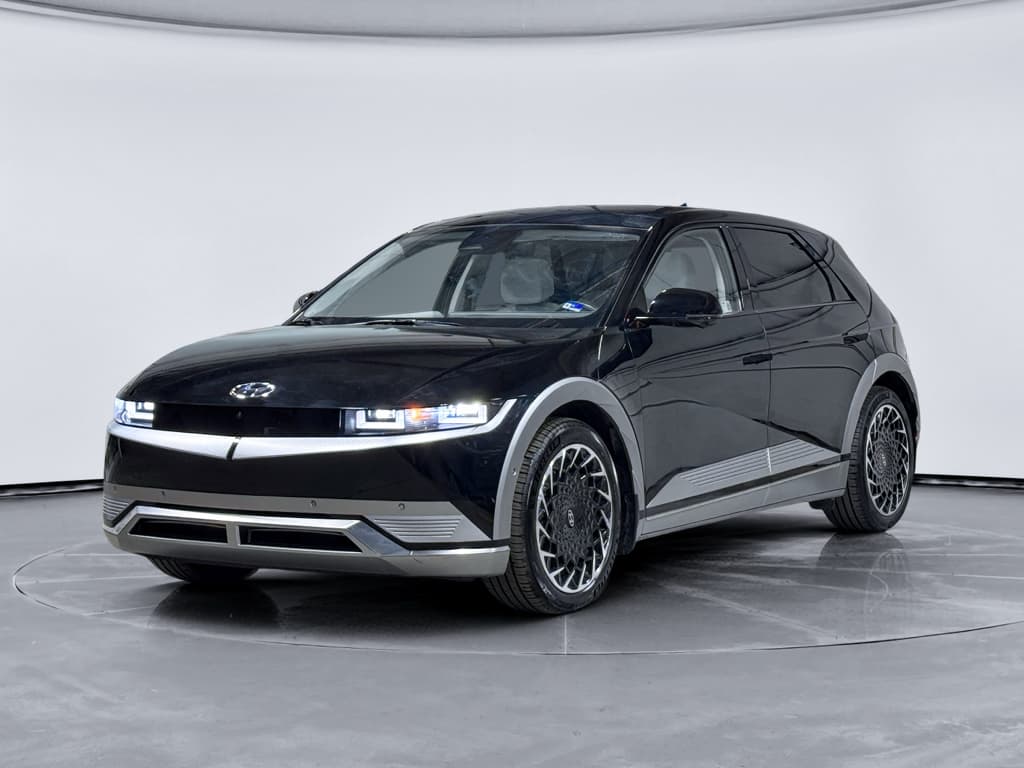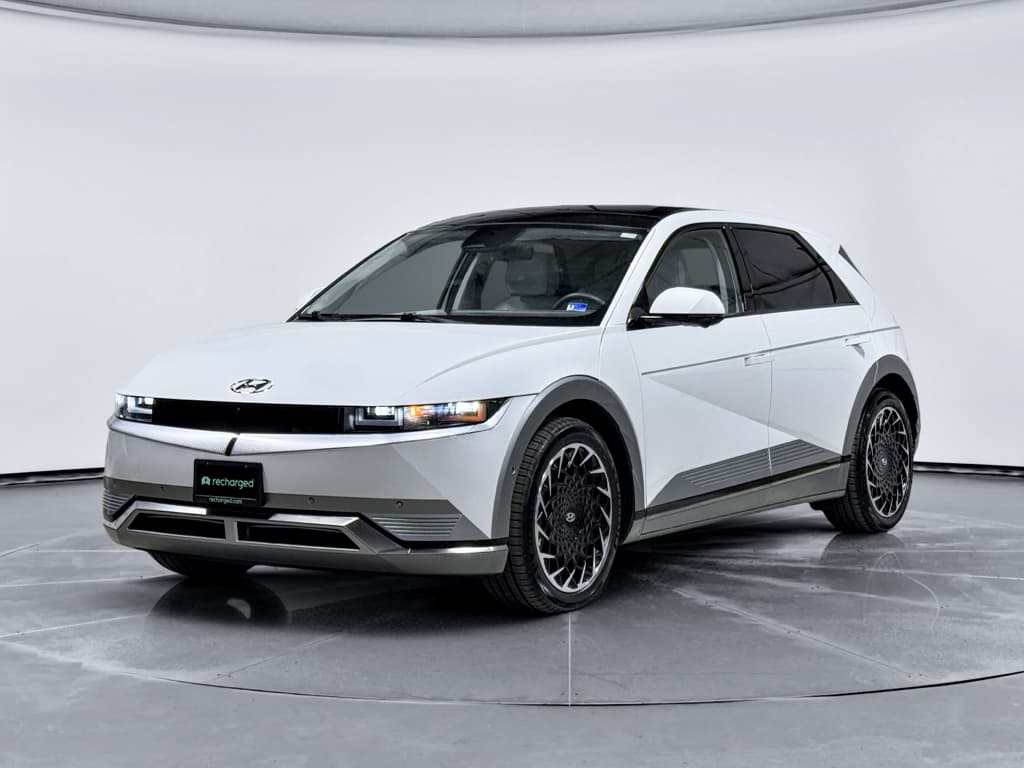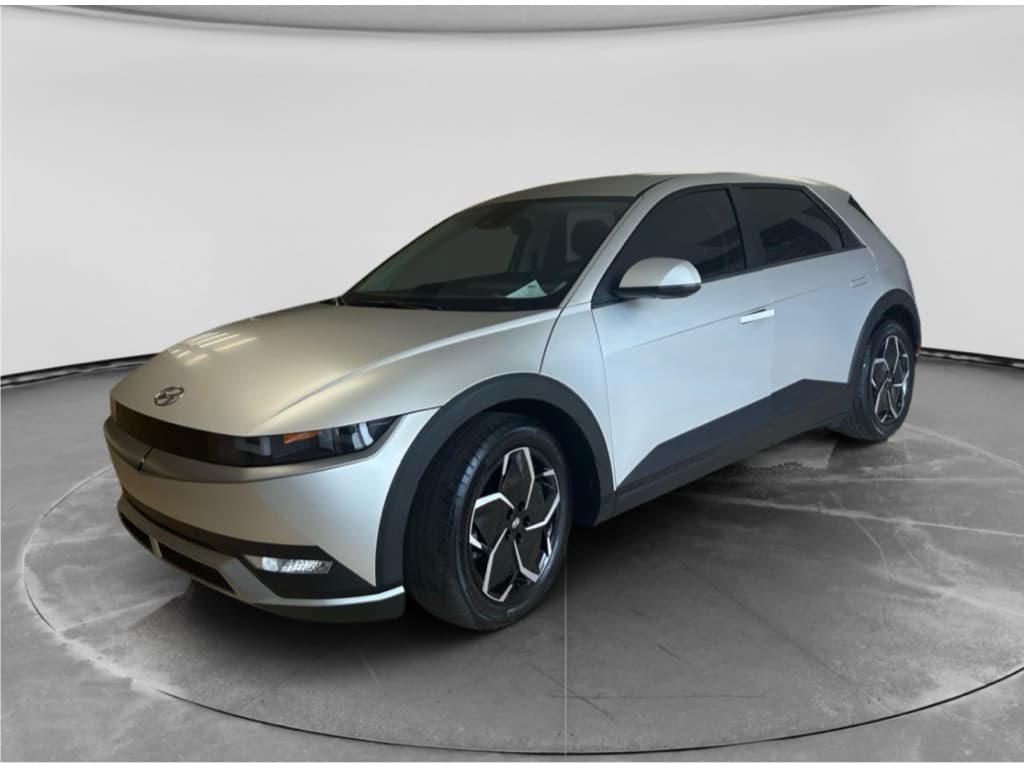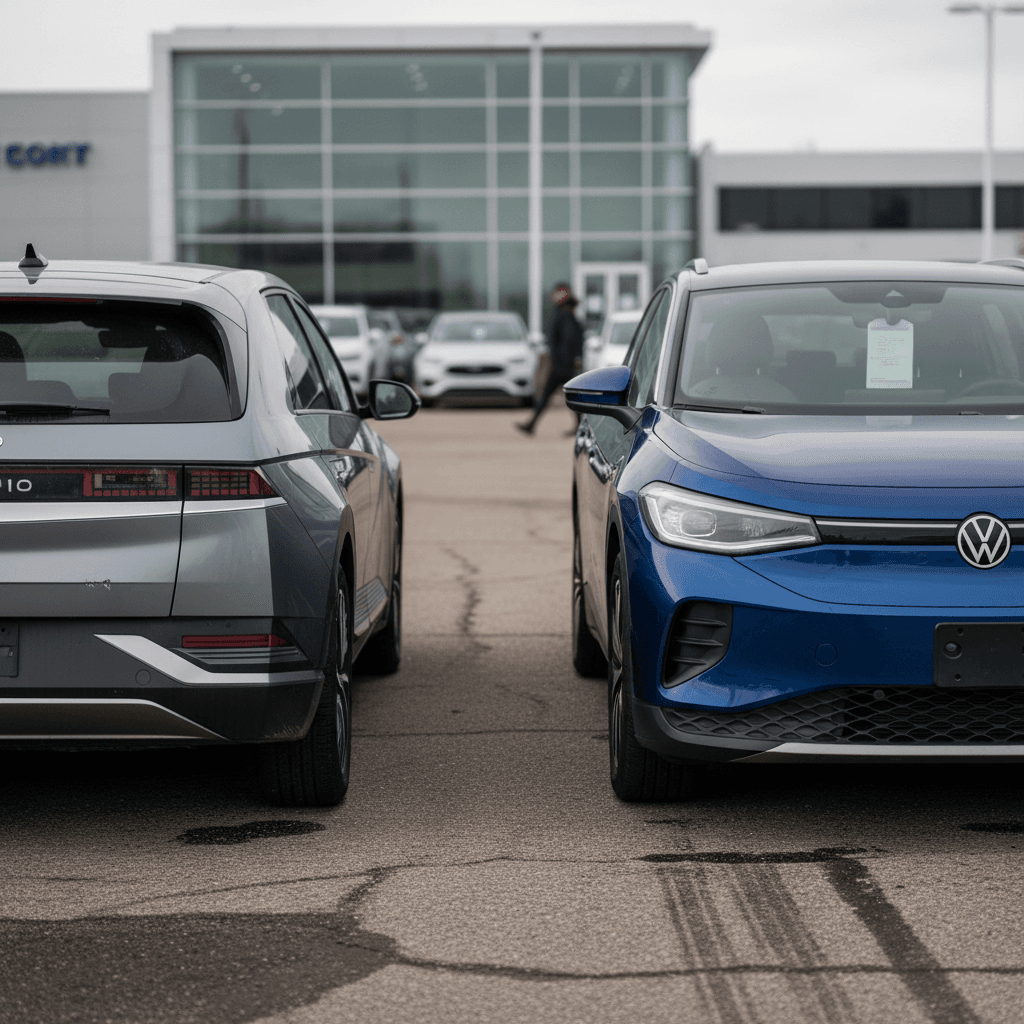
If you’re shopping for a **used electric SUV under $25,000**, the two names that keep popping up are the **Hyundai Ioniq 5** and **Volkswagen ID.4**. Both offer real‑family space, decent range, and modern styling, but they appeal to slightly different kinds of drivers. This guide walks you through how a used Hyundai Ioniq 5 vs used Volkswagen ID.4 under $25,000 compare on price, range, charging, comfort, and long‑term ownership so you can choose with confidence.
A quick word about the market
Who this guide is for
- You’re focused on **total value**, not just the lowest sticker price.
- You want a **family‑friendly electric SUV** with real cargo room and back‑seat space.
- You’re comfortable buying **used** and want to understand battery health and charging.
- Your budget ceiling is around **$20,000–$25,000** before taxes and fees.
If that sounds like you, the Ioniq 5 and ID.4 are two of the strongest candidates in today’s used EV market. The right choice comes down to how you drive, where you charge, and how much you value interior design versus road‑trip speed.
Can you really get an Ioniq 5 or ID.4 under $25,000?
Typical deals under $25,000 (U.S. market, early 2026)
In today’s used market, the **VW ID.4 shows up under $25,000 more often** than the Ioniq 5. The Hyundai’s styling, ultra‑fast charging, and strong reviews have kept prices firmer, while the ID.4 has seen deeper discounting, especially on earlier model‑year U.S.‑built cars.
Expect trade‑offs at this price
Quick take: Ioniq 5 vs ID.4 under $25k
At a glance: which used EV fits you best?
Both are solid choices, here’s how they differ when money is tight.
Hyundai Ioniq 5: Best for fast charging and style
- Pros: Among the quickest DC fast‑charging EVs in its class, excellent range for the size, standout design, airy interior, strong tech in higher trims.
- Cons: Harder to find under $25k, especially long‑range trims; some cars were heavily fast‑charged early in life, so battery health really matters.
- Best for: Drivers who road‑trip often, care about design, and are willing to hunt for the right car.
Volkswagen ID.4: Best for value and everyday comfort
- Pros: More inventory under $25k, comfortable ride, roomy cabin, solid highway stability, easier entry price for an electric SUV.
- Cons: DC fast charging is good but not class‑leading; early software quirks; range varies more by trim and wheel size.
- Best for: Budget‑sensitive shoppers who want a calm, practical daily driver more than brag‑worthy charging speeds.
Where Recharged fits in
Ready to find your next EV?
Browse VehiclesRange and battery: which goes farther?
EPA range snapshots for typical used trims
Approximate EPA ratings for common U.S. trims you’re likely to see under $25,000. Exact numbers vary slightly by model year and wheels, but this is a solid starting point.
| Model & trim (likely under $25k) | Battery (usable, approx.) | Drivetrain | EPA-rated range (mi) |
|---|---|---|---|
| Hyundai Ioniq 5 SE Standard Range | ~58–63 kWh | RWD | ~220–245 |
| Hyundai Ioniq 5 SE/SEL Long Range | ~77–84 kWh | RWD | ~300–318 |
| Hyundai Ioniq 5 SE/SEL Long Range | ~77–84 kWh | AWD | ~260–290 |
| VW ID.4 Standard / 62 kWh | ~58–62 kWh | RWD | ~200–215 |
| VW ID.4 Pro / 82 kWh | ~77–82 kWh | RWD | ~250–290 |
| VW ID.4 Pro / AWD 82 kWh | ~77–82 kWh | AWD | ~240–265 |
Focus your search on long‑range versions if you road‑trip; standard‑range is often fine for commuting.
When you compare **used Ioniq 5 vs used ID.4 under $25,000**, the key isn’t just the badge, it’s which **battery and drivetrain combo** you’re getting. Both crossovers offer a smaller “standard” pack and a larger “long‑range” pack, in rear‑wheel‑drive (RWD) and all‑wheel‑drive (AWD) variants.
Ioniq 5: slightly stronger on long‑range trims
- Long‑range RWD Ioniq 5s often post around 300+ miles EPA, which is excellent for a compact SUV.
- Even AWD versions typically land in the **mid‑ to high‑200‑mile** range.
- The standard‑range Ioniq 5 sits closer to **220–245 miles**, still enough for most daily use.
In simple terms, if you snag a **long‑range Ioniq 5**, you’re getting one of the most capable road‑trip batteries in the segment.
ID.4: more variation, but still solid
- Smaller‑pack ID.4s hover close to **200–215 miles** EPA, fine for commuting, tighter for long trips.
- Big‑battery ID.4 Pro models stack up well with **mid‑ to high‑200‑mile** ratings, depending on wheels and AWD.
- Later‑model ID.4s improved efficiency and charging slightly, so a newer 82 kWh ID.4 can feel more competitive than the paper numbers suggest.
Overall, **range is a wash if you compare long‑range versions head‑to‑head**, but the Ioniq 5 tends to eke out a small edge.
Look past the dash estimate
Charging speed and road‑trip ability
Typical DC fast‑charge performance (10–80%)
Real‑world times depend on charger quality, weather, and software versions, but these ballpark figures line up with owner tests.
| Model & pack | Peak DC power (approx.) | 10–80% time (ideal conditions) | Road‑trip feel |
|---|---|---|---|
| Hyundai Ioniq 5 (all packs) | 200–235 kW | ~18–20 minutes | Feels “sports‑car fast” for charging; short, efficient stops. |
| VW ID.4 62 kWh | Up to ~140 kW | ~25–28 minutes | Respectable, but not class‑leading. |
| VW ID.4 82 kWh (newer SK packs) | Up to ~170–175 kW | ~28–30 minutes | Improved over early cars; still longer stops than Ioniq 5. |
Fast charging is where the Ioniq 5 clearly distances itself from the ID.4.
Hyundai built the Ioniq 5 on an **800‑volt‑class architecture**, which allows extremely high charging power and very short DC fast‑charge sessions. In the real world, that means you can roll into a high‑power station at around 10% and be on your way again in roughly 20 minutes.
The ID.4, especially earlier model years, uses a more conventional 400‑volt system and historically lower peak charge rates. Later 82 kWh cars improved, but you’re still looking at **longer 10–80% times** than an Ioniq 5 on the same charger.
Supercharger access matters now
Comfort, space, and practicality
Interior space and practicality: both are family‑ready
These are not shrunken hatchbacks, they’re real crossovers.
Cabin space
Cargo and usability
Family friendliness
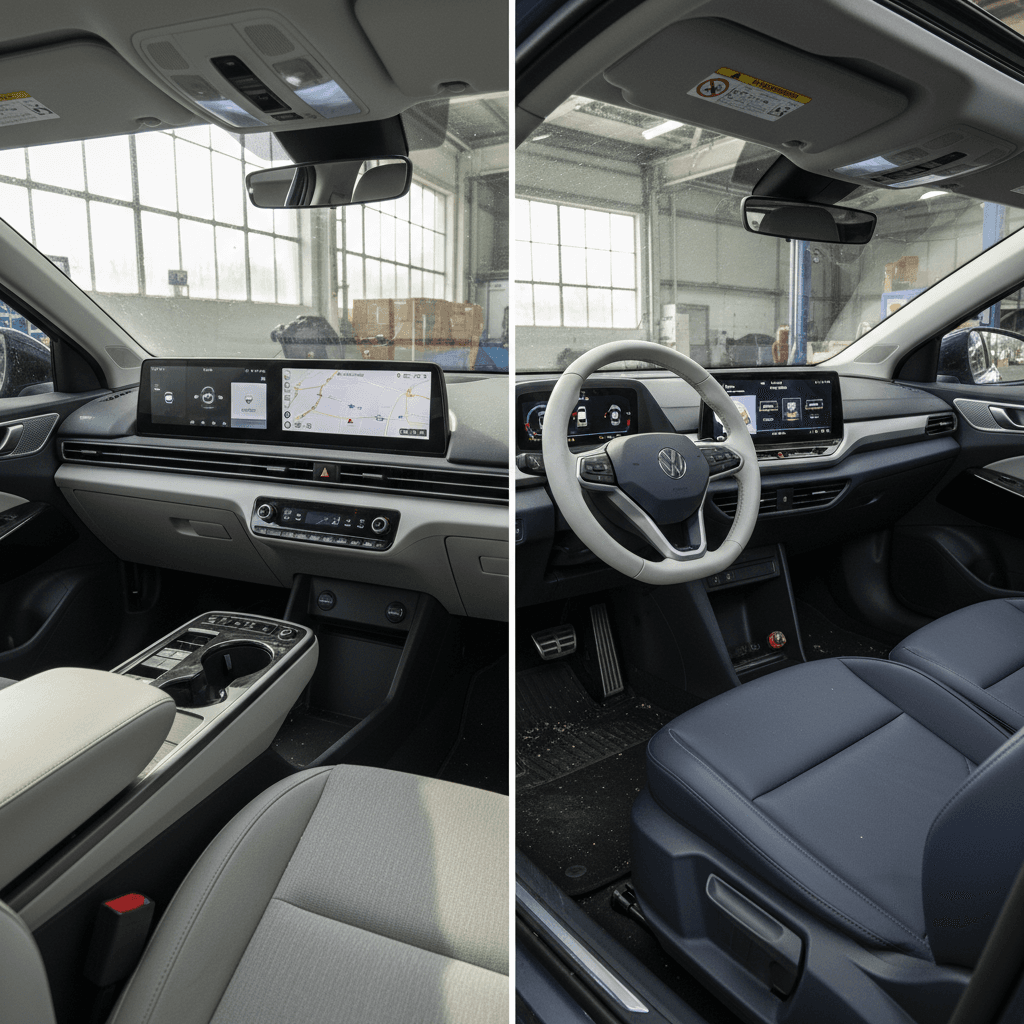
If you’re hauling kids, pets, or Costco runs, either of these EVs can handle it. The **ID.4 skews toward “conventional crossover”** with a soft ride and upright seating. The **Ioniq 5 feels more like a futuristic hatchback on stilts**, with a flat floor, sliding console, and a more open, airy cabin design.
Try a long test sit, not just a test drive
Driving experience and in‑car tech
How they drive
- Ioniq 5: Feels light on its feet, with brisk acceleration even in RWD form and genuinely quick AWD variants. Low noise, sharp responses, and that 800‑volt platform give it a modern, premium feel.
- ID.4: Calm, composed, and a bit more relaxed. It’s not slow, but it prioritizes stability and comfort over outright punch. Many owners like it because it disappears into the background on long drives, in a good way.
Infotainment and controls
- Ioniq 5: Clean twin‑screen layout, generally quick responses, and more physical controls than many EVs, especially in newer model years.
- ID.4: Earlier cars drew criticism for touch‑sensitive sliders and laggy software. VW has improved things via updates and newer hardware, but user experience still comes down to model year and software level.
On a strict tech‑and‑responsiveness basis, the Ioniq 5 usually gets the nod, while the ID.4’s interface is more hit‑or‑miss.
"When you compare these two under real used‑car conditions, miles on the clock, software updates, and all, the Ioniq 5 feels more future‑proof. The ID.4 fights back with value and comfort."
Reliability, battery health, and warranty
- Both the Ioniq 5 and ID.4 carry **8‑year/100,000‑mile** (or similar) battery warranties from new, which typically transfer to subsequent owners.
- Early **software bugs** and infotainment frustrations have been more common on the ID.4 than the Ioniq 5, especially first‑wave 2021–2022 cars.
- Neither model has a reputation for catastrophic battery failures, but individual cars can show **different levels of degradation** depending on fast‑charging habits and climate.
For a used EV under $25,000, the single most important question isn’t paint color or wheel size, it’s **battery health**. A car that’s been fast‑charged to 100% every day in a hot climate will age very differently from one that lived an easy life on a Level 2 charger in a temperate garage.
Don’t skip a battery health check
Ownership costs and value over time
Key cost and value considerations
At equal purchase price and condition, **running costs between a used Ioniq 5 and ID.4 are broadly similar**. Electricity is far cheaper than gasoline per mile in most U.S. markets, and both EVs avoid many traditional maintenance items.
Where they diverge is **resale and depreciation curves**. The Ioniq 5’s demand and strong reviews have kept values higher, which can be frustrating as a buyer, but helpful when you eventually sell or trade. The ID.4’s steeper depreciation is exactly why it shows up more often under $25,000, making it the value play today.
How to shop smart for these EVs under $25,000
Used Ioniq 5 & ID.4 buying checklist (under $25k)
1. Prioritize battery and drivetrain, not trim toys
Decide whether you truly need AWD and how much range you actually require. A **long‑range RWD** version with cloth seats is a better buy than a heavily optioned AWD with a tired pack.
2. Verify remaining factory warranty
Ask for the in‑service date so you know how much of the **8‑year/100,000‑mile battery warranty** remains. A car nearing that limit should be priced accordingly.
3. Pull detailed charging history when possible
Frequent DC fast‑charging isn’t automatically bad, but extreme patterns (daily charging to 100% on fast DC) can accelerate degradation. Look for well‑documented service and charging behavior.
4. Test all driver‑assist and infotainment features
On both models, confirm adaptive cruise, lane‑keeping, parking sensors, cameras, and the infotainment system work as expected. Software fixes many issues, but some glitches can be annoying or costly.
5. Compare real‑world range on a full charge
On a warm day, charge to near 100% and note the estimated range versus the original EPA figure. A modest gap is normal; a massive shortfall could signal battery or driving‑pattern issues.
6. Use a trusted marketplace or EV‑savvy retailer
Because EV condition is more nuanced than mileage alone, buying from an EV‑focused platform like <strong>Recharged</strong>, with a Recharged Score, battery diagnostics, and fair‑market pricing, can save you thousands over a sketchy "too good to be true" listing.
Why many used‑EV shoppers start at Recharged
FAQ: used Ioniq 5 vs used ID.4 under $25,000
Frequently asked questions
Bottom line: which should you buy?
If your budget cap is firm at $25,000, a **used Volkswagen ID.4** will generally give you more choices, more often, especially if you’re okay with a comfortable, slightly less flashy EV that excels at everyday duties. If you can find a clean, well‑documented **Hyundai Ioniq 5** in range at that price, you’re getting sharper styling, quicker charging, and arguably a more future‑proof platform, but you’ll work harder to track it down.
Either way, the smartest move is to focus less on badges and more on **battery health, range needs, charging access, and total cost of ownership**. That’s exactly what Recharged is built around: verified battery diagnostics, transparent pricing, EV‑savvy support, and nationwide delivery. Start your search with those fundamentals in mind, and whether you end up in an Ioniq 5 or an ID.4, you’ll have a capable electric SUV that fits both your lifestyle and your budget.