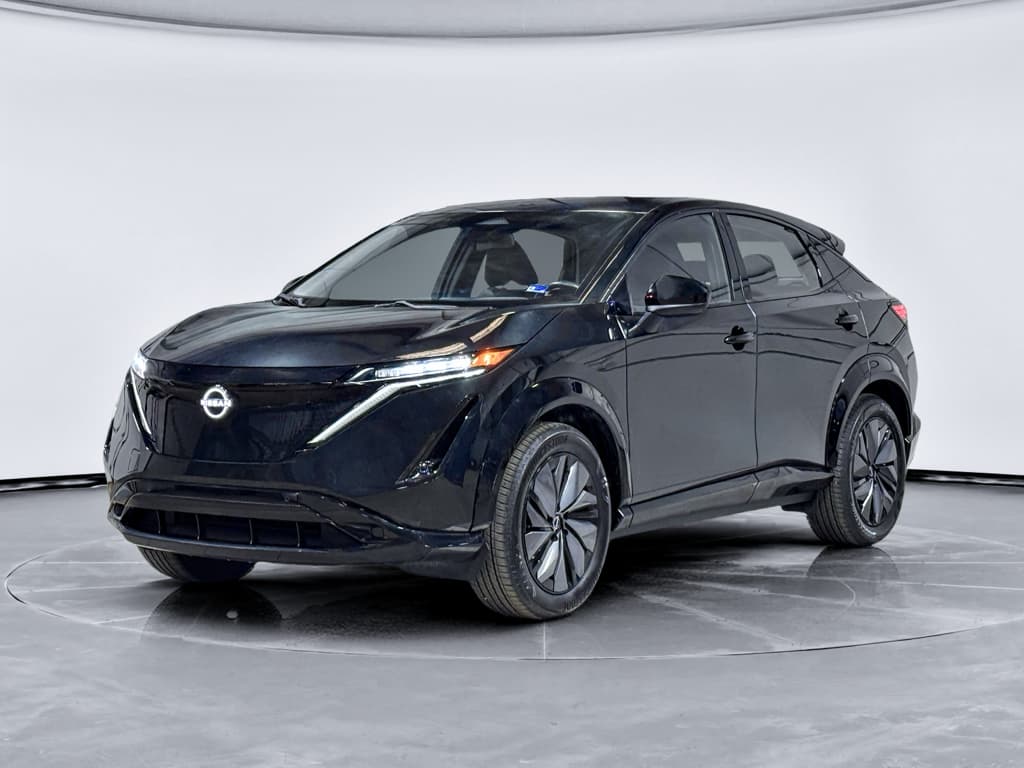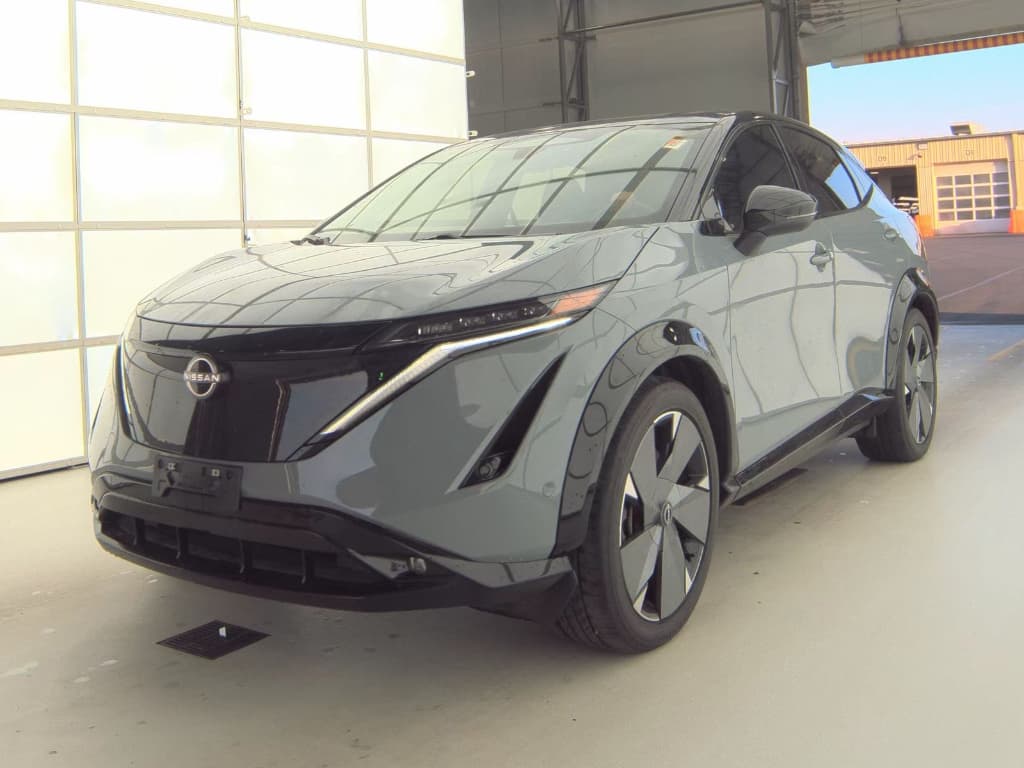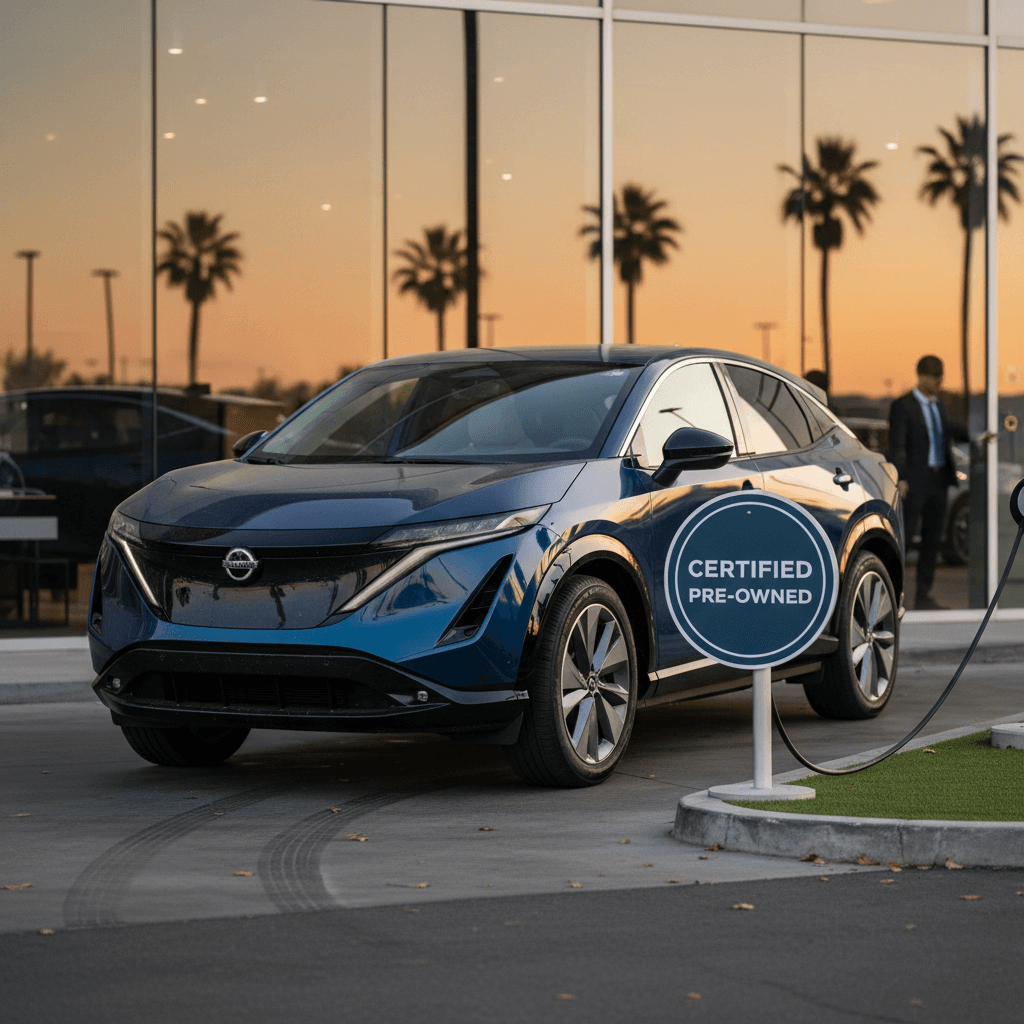
If you’re shopping for a used electric SUV, you’ll almost inevitably end up comparing a used Hyundai IONIQ 5 vs Nissan Ariya. Both are stylish, family‑friendly crossovers with real EV range and modern tech. But on the used market, they don’t play identical roles, and some recent news about the Ariya’s future makes this comparison even more important if you plan to keep the car a long time.
Big picture
Used IONIQ 5 vs Ariya at a glance
Key numbers (typical U.S. trims buyers cross‑shop used)
Core spec comparison: common U.S. trims you’ll see used
Numbers are approximate U.S. EPA ranges and charging times; always confirm the exact trim and year of any specific car.
| Feature | Hyundai IONIQ 5 (used) | Nissan Ariya (used) |
|---|---|---|
| Market availability (U.S.) | Ongoing beyond 2025 | Ends after 2025 model year (existing stock only) |
| Typical battery sizes | Standard ~58 kWh, Long‑Range ~77–84 kWh (trim/year dependent) | ~63 kWh or ~87 kWh |
| Max EPA range | Up to ~303 mi (RWD, long‑range) | Up to ~289 mi (FWD, larger battery) |
| Peak DC fast‑charge rate | Up to ~230–250 kW on 800‑V architecture | Up to ~130 kW on CCS |
| 10–80% DC fast charge time | Around 18–20 minutes in ideal conditions | Around 35–40 minutes in ideal conditions |
| Drivetrain options | RWD or AWD; performance N version available | FWD or AWD |
| Onboard AC charger | Typically 10.9–11 kW | Around 7.2–7.4 kW (trim dependent) |
| Vehicle‑to‑load (V2L) | Yes, widely available | Not commonly available in U.S. trims |
| Tax credit eligibility used* | Many used examples can qualify under federal used EV credit rules | Same, but fewer U.S. sales mean smaller used pool |
| Body style & size | Boxy, roomy compact/midsize crossover | Sleeker, coupe‑ish crossover with smaller rear headroom |
Hyundai IONIQ 5 vs Nissan Ariya: headline specs that matter most for daily use.
About numbers and trims
Battery, range, and charging on the used market
Battery health and real‑world range are where a used EV either feels like a bargain or an expensive compromise. Both the Hyundai IONIQ 5 and Nissan Ariya offer genuinely useful range when new, but they approach charging and energy use differently, and that matters once they’re a few years old.
Hyundai IONIQ 5: 800‑V speed demon
- Uses an 800‑volt electrical architecture, similar to high‑end EVs, which allows very high DC fast‑charge speeds.
- Long‑range trims can reach roughly 10–80% in about 18–20 minutes on a strong DC fast charger in good conditions.
- Standard and long‑range packs (roughly 58 kWh and 77–84 kWh depending on year and market) give solid road‑trip legs, especially in RWD form.
- Widely available vehicle‑to‑load (V2L) lets you power tools, camping gear, or even parts of your home from the battery.
Nissan Ariya: Solid range, slower fast‑charging
- Runs on a more conventional 400‑V architecture with peak DC fast‑charge power around 130 kW.
- Typical 10–80% fast‑charge times are in the 35–40 minute range on a capable DC fast charger.
- Battery options around 63 kWh and 87 kWh offer up to about 289 miles EPA range in the most efficient FWD trim.
- No widely offered V2L in U.S. trims, so it’s more of a conventional EV in terms of energy use.
Road‑trip reality check
Driving feel, comfort, and interior space
How they feel to drive and live with
Both are comfortable, but they prioritize different things.
IONIQ 5: Relaxed, roomy, almost retro-futurist
- Long wheelbase gives a smooth, planted ride and limo‑like rear legroom.
- Boxy shape and big glass give excellent visibility and a more upright, SUV‑like feel.
- Interior is airy and minimalist, with sliding console and flat floor that make it feel larger than it is.
- Suspension tuning leans comfortable rather than sporty; AWD and N versions add real punch.
Ariya: Quiet, premium‑leaning and cocooned
- Cabin feels more enclosed and upscale, closer to a traditional premium crossover.
- Ride quality is comfortable and quiet, with Nissan focusing heavily on NVH (noise, vibration, harshness).
- Rear headroom is a bit tighter due to the sloping roofline, especially for tall passengers.
- Steering and acceleration tuning make it feel more like a refined gas crossover that just happens to be electric.
Family‑hauler winner
Technology, safety, and driver-assistance
On tech and safety, neither of these EVs feels like a compromise. Both ship with robust driver‑assistance suites, big screens, and solid infotainment, but there are meaningful differences that show up in daily use, especially on the highway.
IONIQ 5 tech highlights
- Dual 12.3‑inch displays on most trims with a clean, configurable layout.
- Hyundai’s Highway Driving Assist can combine adaptive cruise and lane‑centering to reduce fatigue.
- Software and interface feel straightforward, with physical controls for key functions.
- Over‑the‑air updates exist but are not yet on Tesla’s level; most used buyers focus more on hardware than software here.
Ariya tech highlights
- Dual screens with a more luxury‑inspired cabin design, including touch‑sensitive surfaces and integrated ambient lighting.
- ProPILOT Assist (and ProPILOT Assist 2.0 on some trims) delivers confident lane‑keeping and adaptive cruise on highways.
- Infotainment is competent but not class‑leading; voice and menu systems can feel more traditional.
- Nissan leans heavily on a premium, quiet experience rather than bleeding‑edge software tricks.
Safety perspective
Reliability, warranty, and long-term support
Neither the IONIQ 5 nor the Ariya has been on the market long enough to build a decades‑deep reliability record, but we can say a few useful things, especially about battery coverage and each brand’s strategic direction.
- Both come with typical EV battery warranties around 8 years/100,000 miles from new, which transfer to subsequent owners. A 2–4‑year‑old used example will often have most of that coverage left.
- The IONIQ 5’s 800‑V fast‑charging hasn’t raised widespread red flags so far, but as with any EV, frequent DC fast‑charging at high states of charge can accelerate degradation.
- The Ariya uses a liquid‑cooled pack and a more conservative charging profile, which should theoretically be kind to the battery, though long‑term U.S. data is still emerging.
- Hyundai is aggressively expanding its EV lineup and investing in North American production, which tends to be good news for long‑term parts availability and service training.
- Nissan has chosen to end Ariya sales in the U.S. after the 2025 model year while continuing to support existing owners. That’s not a disaster for a used buyer, but it does mean future dealer familiarity and resale demand are question marks you should price in.
Don’t skip a battery health check
Used pricing and total cost of ownership
Used prices move quickly, but some broad patterns are emerging. The IONIQ 5 has strong demand thanks to its styling, charging speed, and Hyundai’s aggressive EV marketing. The Ariya, by contrast, has sold in lower volumes and now faces an early sunset in the U.S., which can pull used prices in two different directions: softer demand, but also fewer vehicles available.
Key cost factors that matter after year one
Think beyond sticker price when comparing a used IONIQ 5 vs Ariya.
Depreciation
The IONIQ 5’s popularity helps residual values, but heavy lease volume can mean more supply later. The Ariya’s discontinuation in the U.S. may create good bargains now, but long‑term resale is more uncertain.
Home & public charging costs
Energy use is similar for comparable trims. The IONIQ 5’s faster DC charging doesn’t necessarily cost more per kWh; it just saves time. For most owners, home Level 2 charging dominates costs for both models.
Maintenance & repairs
Routine EV maintenance is low for both: tires, cabin filters, brake fluid. Where things diverge is future parts availability and dealer EV expertise, areas where Hyundai is investing more visibly than Nissan in the U.S. today.
Leverage incentives and the used EV tax credit
Which used EV fits your life better?
Who is better off in an IONIQ 5 vs Ariya?
Choose a used Hyundai IONIQ 5 if…
You plan to do regular road‑trips and care a lot about <strong>short fast‑charging stops</strong>.
Rear‑seat and cargo space are priorities, kids, car seats, bikes, or big Costco runs.
You’re attracted to the idea of <strong>vehicle‑to‑load</strong> for camping, tailgating, or backup power.
You like a more open, airy cabin and don’t mind the slightly more futuristic styling.
You want to bet on a brand that’s clearly leaning into EVs in North America.
Choose a used Nissan Ariya if…
You primarily drive locally and regionally, so a <strong>slower DC charge curve</strong> isn’t a dealbreaker.
You prefer a quieter, more cocooned cabin that feels closer to a traditional premium crossover.
You find an Ariya with the larger battery at a <strong>meaningfully lower price</strong> than comparable IONIQ 5s.
You value Nissan’s history with the Leaf and are comfortable owning a model that’s leaving the U.S. new‑car market but still supported.
You’re keeping the car long enough that near‑term resale value isn’t your top concern.
How to shop a used IONIQ 5 or Ariya the smart way
A practical checklist for cross‑shopping used IONIQ 5 and Ariya
1. Start with your charging reality
Map out where and how you’ll charge most of the time. If you rely heavily on DC fast charging for road‑trips or apartment life, the IONIQ 5’s 800‑V hardware is a major plus. If you mostly charge at home on Level 2, either vehicle will work fine.
2. Verify battery health with real data
Don’t just glance at the dashboard battery bars. Ask for a <strong>formal battery health report</strong>. On Recharged, every vehicle includes a Recharged Score with <strong>independently verified battery diagnostics</strong>, so you know exactly what you’re buying.
3. Decode trims and options carefully
Range, charging speed, and driver‑assist features all depend heavily on trim. Look up the exact model year, battery size, drivetrain (FWD/RWD/AWD), and wheel size for any listing you’re considering.
4. Factor in remaining warranty and support
Check the in‑service date and mileage to see how much of the original 8‑year/100,000‑mile battery warranty is left. With Ariya leaving the U.S. new‑car market after 2025, give extra weight to dealer support in your region.
5. Compare total cost, not just price
Include insurance, financing, charging costs, and potential tax credits. Through Recharged, you can <strong>get pre‑qualified, arrange trade‑in or consignment, and even add nationwide delivery</strong> to simplify the entire process.
6. Test‑drive for ergonomics and visibility
Specs won’t tell you how the seating position, visibility, and controls feel. The IONIQ 5’s upright greenhouse is very different from the Ariya’s coupe‑like profile; try both if you can.
How Recharged helps
Ready to find your next EV?
Browse VehiclesFAQ: Used Hyundai IONIQ 5 vs Nissan Ariya
Common questions from used EV shoppers
When you stack up a used Hyundai IONIQ 5 vs Nissan Ariya, you’re really choosing between two solid but differently positioned EV crossovers. The IONIQ 5 leans into fast‑charging, space, and a future‑proof role in Hyundai’s lineup; the Ariya leans into comfort, refinement, and today’s value, especially if you find one priced aggressively. Either can be a smart buy if the battery is healthy and the numbers work for your life. The key is to shop with real data, not guesswork, and that’s exactly what Recharged is designed to provide.