If you’ve been watching every used hybrid car sale in your area, you’re not imagining it: hybrids are hot again. With gas prices still unpredictable and full EVs not fitting everyone’s lifestyle, a used hybrid can be the sweet spot, EV‑like efficiency without worrying about public chargers.
Why this year is different
Why used hybrid car sales are booming in 2025
Hybrids have quietly become the practical compromise in a market that’s still figuring out where EVs fit. Recent reliability surveys show that traditional hybrids are among the most dependable vehicles on the road, often outscoring both EVs and plug‑in hybrids for trouble‑free ownership. At the same time, some carmakers are publicly shifting investment back toward hybrids, signaling they’re betting on this tech for the long haul.
Hybrid and used‑car market at a glance
For you as a shopper, that means there’s real value hiding in the used‑hybrid lane, if you know how to shop the sale, spot a strong battery, and avoid models with expensive quirks. Let’s start with what you’re actually buying when you choose a hybrid.
Hybrid basics: what you’re actually buying
What a conventional hybrid is
A conventional hybrid (often just called a “hybrid”) has a gas engine, an electric motor, and a small battery pack that’s charged by the engine and by braking. You never plug it in, the car decides when to use electric assist to save fuel.
- Best for: commuters who want simplicity
- Typical combined economy: mid‑40s to high‑50s MPG
- Examples: Toyota Prius, Honda Accord Hybrid, Toyota RAV4 Hybrid
What a plug‑in hybrid is
A plug‑in hybrid (PHEV) has a bigger battery you charge from the wall. You get an all‑electric range (often 20–40 miles) before it behaves like a normal hybrid.
- Best for: short daily trips with occasional road‑trips
- Typical electric range: 20–40 miles on many models
- Examples: Toyota Prius Prime, Chrysler Pacifica Hybrid, Hyundai Ioniq Plug‑in
Match the hybrid to your life
Pros and cons of buying a used hybrid vs gas or EV
Used hybrid vs gas vs full EV
Where hybrids shine, and where they don’t
Used hybrid: the middle lane
- Pros: Huge fuel savings, no charging anxiety, strong reliability on many models, easier resale than some EVs.
- Cons: More complex than pure gas cars, battery health matters, may cost more than a similar gas sedan.
Used gas car
- Pros: Lowest upfront cost, any mechanic can work on it, widest selection.
- Cons: Higher fuel bills, more emissions, often more wear on brakes and engines in city driving.
Used EV
- Pros: Lowest running costs if you can charge at home, smooth and quiet, fewer moving parts.
- Cons: Range and charging network still stress some owners, faster tech aging, larger battery degradation questions.
Don’t ignore your driving pattern
How much should you pay at a used hybrid car sale?
Pricing will swing based on brand, mileage, and how new the tech is, but there are some helpful benchmarks from large used‑car data sets. Analyses of millions of listings show late‑model hybrids like the Toyota Prius, Camry Hybrid, and Avalon Hybrid often land between the mid‑$20,000s and low‑$30,000s when they’re just a few years old and still under factory battery warranty.
Typical price bands for reliable used hybrids (2025)
These are rough U.S. retail targets if you’re shopping mainstream, highly rated hybrids at a dealer sale.
| Budget band | What you’re likely to find | Example models |
|---|---|---|
| Under $15,000 | Older, higher‑mileage hybrids (8–12+ years), often out of basic warranty but still solid if well maintained. | 2015 Kia Optima Hybrid, 2014–2016 Toyota Prius, early Ford Fusion Hybrid |
| $15,000–$25,000 | Sweet spot for 4–8‑year‑old hybrids with reasonable mileage and proven reliability. | 2017–2020 Honda Accord Hybrid, 2018–2020 Hyundai Ioniq, 2018–2020 Toyota Camry Hybrid |
| $25,000–$35,000 | Newer body styles, more safety tech, and many cars still in factory powertrain and battery coverage. | 2022–2024 Toyota Prius, 2021–2023 Toyota RAV4 Hybrid, 2021–2023 Kia Niro Hybrid |
| $35,000–$40,000 | Larger family hybrids and well‑equipped crossovers or minivans. | 2021 Toyota Sienna Hybrid, late‑model 3‑row hybrid SUVs and people‑movers. |
Always adjust for your local market, trim level, and mileage.
Why hybrids hold their value
Shortlist: best used hybrid cars right now
Every buyer’s needs are different, but if you’re walking into a used hybrid car sale today, some names deserve to be at the top of your list for reliability, efficiency, and availability.
Used hybrid all‑stars to look for
Models that consistently score well for reliability and value
Toyota Prius
Toyota Camry Hybrid & Honda Accord Hybrid
Hybrid SUVs: RAV4, Niro & more
Stick with proven nameplates

Battery life, warranties, and replacement costs
The hybrid battery pack is the big question mark in most shoppers’ minds. The good news: traditional hybrid batteries have proved far more durable than early skeptics expected, especially in mainstream Japanese models. Many first‑generation Priuses ran well past 150,000–200,000 miles before needing major battery work.
- Most hybrid battery warranties run 8–10 years and up to 100,000–150,000 miles, and in some states certain components have even longer coverage.
- Replacement costs are often lower than people fear, frequently in the mid‑$2,000s to mid‑$3,000s from independent specialists on popular models, sometimes less with refurbished packs.
- Battery health is about age, heat, and charging cycles. A 7‑year‑old car with highway miles in a mild climate may be a safer bet than a lower‑mileage car that lived in extreme heat.
Never skip a battery‑health check
Inspection checklist before you buy
A hybrid inspection starts like any used‑car inspection, then zooms in on the battery, cooling systems, and electronics. Use this checklist at your next used hybrid car sale or when you’re evaluating a private‑party deal.
Used hybrid pre‑purchase checklist
1. Pull a full vehicle history report
Look for clean title, no flood damage, and no pattern of repeated repairs for electrical or hybrid systems. Occasional minor accidents are normal; major structural repairs are not.
2. Scan for warning lights and stored codes
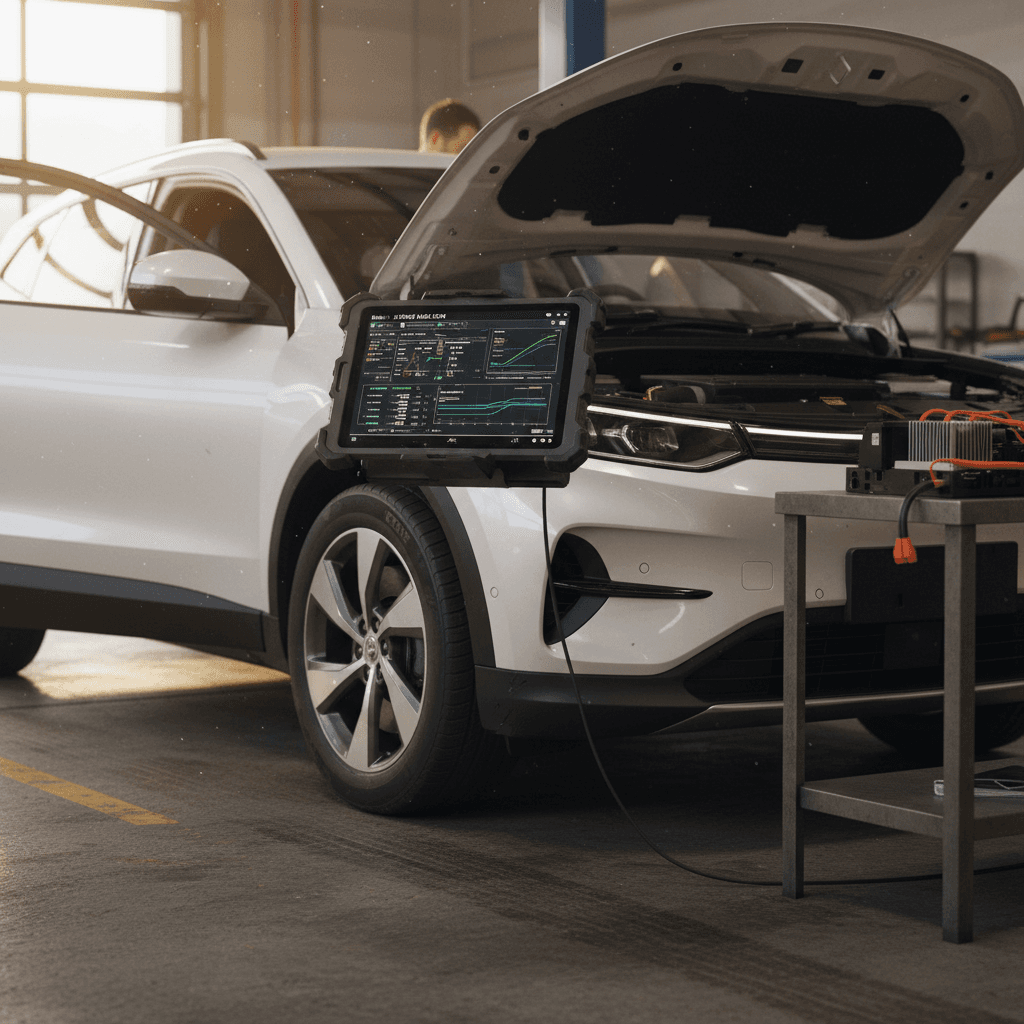
Turn the car on and make sure the check‑engine, hybrid‑system, and ABS lights all cycle on and then off. A pre‑purchase scan with a good diagnostic tool can reveal stored hybrid or battery faults.
3. Test the hybrid system on a long drive
On the test drive, pay attention to how smoothly the car transitions between gas and electric, any shuddering, or warning messages. Watch the energy or charge‑level display, does it behave predictably or swing wildly?
4. Listen for engine and cooling‑fan noise
Hybrids often shut the engine off at stops. Rough restarts, loud engine clatter, or fans that roar constantly can hint at underlying issues, especially overheating or a stressed battery pack.
5. Inspect brakes and tires closely
Hybrids use regenerative braking, so pads can last a long time. Uneven wear, pulsing, or groaning may mean neglected maintenance or deeper issues with the brake‑by‑wire system.
6. Check service records and recalls
Ask for proof of regular oil changes, coolant service for the engine and inverter (if applicable), and recall work. A hybrid that’s been dealer‑serviced on schedule is worth paying more for.
Financing a used hybrid and trade‑in tips
Once you’ve found the right car, the deal math matters just as much as the MPG. Hybrids sometimes carry a small price premium on the lot, but the total cost of ownership, fuel, maintenance, and resale, can still win handily over a cheaper gas car.
How to finance a used hybrid smartly
- Know your budget first. Use online calculators to decide your comfortable payment range before you step onto the lot.
- Compare APR offers. Get quotes from your bank or credit union, then compare them with dealer financing. Sometimes manufacturer‑affiliated lenders offer strong used‑hybrid rates.
- Keep term length realistic. Try to keep used‑car loans at 60 months or less so you don’t stay upside‑down for most of the loan.
Make the most of your trade‑in
- Get multiple valuations. Collect instant‑offer quotes and online trade‑in estimates before visiting the sale, so you know your car’s ballpark value.
- Separate the numbers. Negotiate the price of the hybrid and the value of your trade separately to keep the math honest.
- Clean and document. A clean car with service records can be worth hundreds more in real trade‑in dollars.
Consider pre‑qualification
How Recharged can help with used hybrids and EVs
Shopping for electrified vehicles can feel like a homework assignment, especially if you’re weighing a used hybrid against a used EV. That’s where Recharged comes in. While Recharged focuses on used EVs, the same tools that make EV shopping transparent, battery diagnostics, fair‑market pricing, and expert support, are exactly what you want when you’re cross‑shopping hybrids too.
- Every vehicle on Recharged comes with a Recharged Score Report that includes verified battery health and pricing analysis, taking the guesswork out of the most expensive part of an electrified car.
- You can handle the entire purchase digitally, from browsing and financing to signing documents and scheduling nationwide delivery, or visit the Recharged Experience Center in Richmond, VA if you prefer in‑person help.
- If you’re coming out of a gas or hybrid vehicle, Recharged offers trade‑in and instant‑offer options, or consignment if you want to maximize what your current car is worth.
Why battery reports matter, hybrid or EV
Ready to find your next EV?
Browse VehiclesUsed hybrid car sale FAQ
Your questions about used hybrid car sales, answered
Bottom line: how to walk away with the right hybrid
A used hybrid can be one of the smartest buys on the lot: great fuel economy, proven reliability, and no need to rewire your life around public chargers. The key is to shop deliberately, not just chase the first used hybrid car sale banner you see. Focus on proven models, insist on battery and service documentation, let a hybrid‑savvy technician inspect the car, and structure your financing so the savings actually reach your wallet.
Do that, and you’ll own a car that feels cheap to run every time you fill up, without giving up the flexibility of a traditional road‑trip. And if you decide a fully electric car might fit you after all, platforms like Recharged can give you the same level of transparency on battery health and pricing, plus help you trade out of your current car when it’s time for the next step.