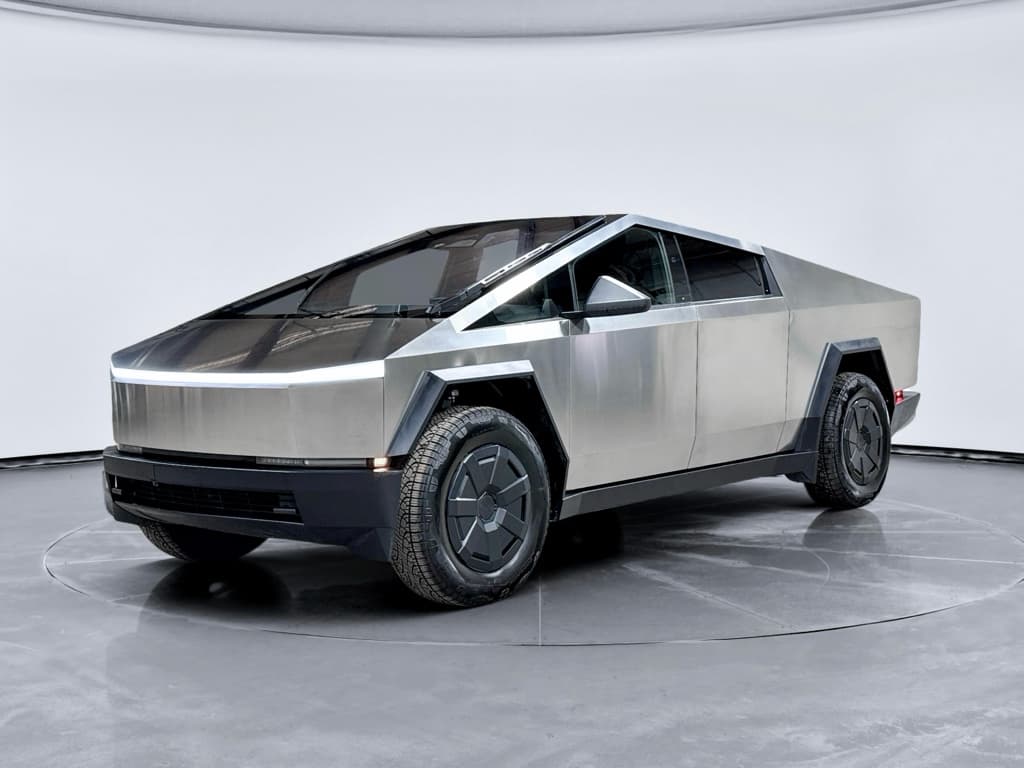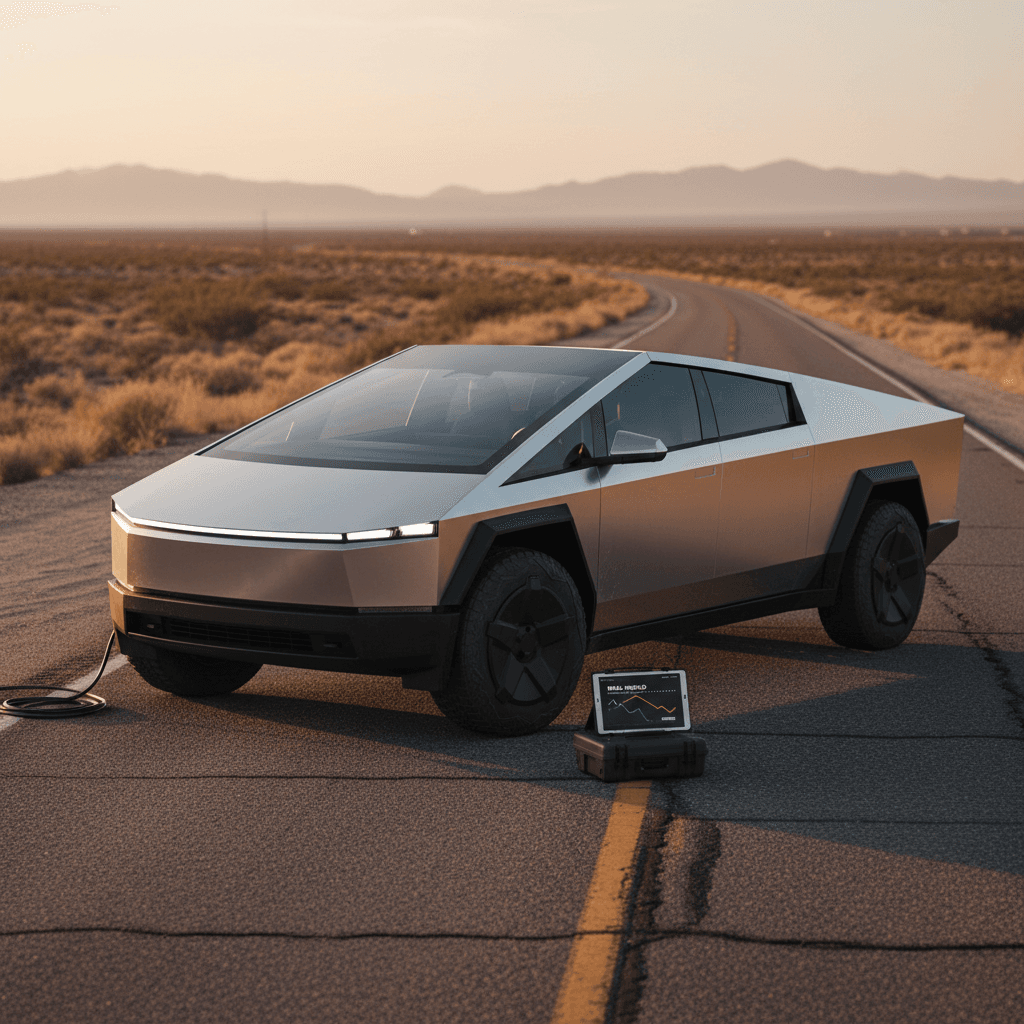
If you’ve been eyeing Tesla’s stainless-steel wedge and wondering how far it really goes on a charge, you’re not alone. The 2024 Tesla Cybertruck’s range numbers look impressive on paper, but independent Cybertruck range tests tell a more nuanced story, especially at 70–75 mph, in cold weather, or when you’re towing.
Quick takeaway
Why Cybertruck range tests matter more than the spec sheet
Tesla has always led with headline numbers. For the Cybertruck, that meant early promises of more than 500 miles of range and a relatively attainable starting price. The production trucks that arrived in late 2023 and through 2024 are different: real prices are higher, and real-world range sits well below those early claims. That’s not unique to Tesla, but the gap between marketing and reality is wider than many shoppers expected.
Unlike most EVs, the Cybertruck’s heavy-duty classification means there’s no official EPA window sticker. Tesla publishes its own estimates instead. That makes independent road tests especially important if you’re deciding between a Cybertruck, a Rivian R1T, or a Ford F-150 Lightning, or if you’re thinking about buying a used Cybertruck from a marketplace like Recharged, where range and battery health are front and center in every listing.
Cybertruck battery size and Tesla’s claimed range
Underneath the stainless steel drama is a big battery. Early technical deep dives and Tesla’s own documentation put the primary Cybertruck pack around 123 kWh usable for dual-motor and Cyberbeast models. That’s in the same ballpark as other full-size electric pickups.
Tesla’s stated 2024 Cybertruck range figures (without extender)
Approximate manufacturer-estimated range numbers for early production models.
| Configuration | Drivetrain | Battery (approx. usable) | Tesla-estimated range* |
|---|---|---|---|
| Base/RWD (early spec) | Single motor RWD | ~123 kWh | ~250 mi |
| Dual Motor AWD | Dual motor AWD | ~123 kWh | ~325–340 mi |
| Cyberbeast | Tri motor AWD | ~123 kWh | ~301–320 mi |
Real-world results often come in 10–25% below these figures depending on speed, temperature, and load.
About those range numbers
Real-world 2024 Cybertruck range tests at a glance
Snapshot of early real-world Cybertruck range tests
Those numbers already tell you two important things: the Cybertruck can slightly beat its estimate in some mixed-driving tests, and it can miss by 15–25% in tough highway or cold-weather scenarios. That’s very similar to other EV pickups, but the shape of the curve, and the lack of an EPA label, means you’ll want to pay attention to the details below.
Dual-motor Cybertruck range tests: highway and mixed driving
The dual-motor all-wheel-drive Cybertruck is the volume model and the one most independent outlets have tested. It pairs strong acceleration with the longest claimed range, so it’s the configuration most buyers gravitate toward, whether they’re buying new or used.
Key 2024 dual-motor Cybertruck range results
From controlled editorial tests and enthusiast 100%-to-dead runs
Editorial mixed-driving tests
Edmunds-style tests ran dual-motor Cybertrucks on a standardized loop and recorded roughly 334 miles on a full charge, slightly better than Tesla’s own 325–340 mile claim. That’s with normal driving, traffic, and typical speeds rather than a locked 75-mph highway run.
Energy use landed in the low-to-mid-40s kWh per 100 miles, which is right in line with other electric trucks of this size.
Highway 70–75 mph tests
Enthusiast groups and YouTube channels have done the classic "100% to dead" Cybertruck range tests at a steady highway cruise. One widely shared Texas run at about 70 mph in ~45°F weather delivered roughly 254 miles before the truck shut itself down, about 20% below Tesla’s estimated 320-mile figure for that configuration.
That gap is large, but it closely mirrors what we’ve seen from other big EV trucks pushed hard on the interstate.
So if you’re trying to translate the marketing into your life, here’s the rule of thumb: a dual-motor Cybertruck can behave like a 330-mile truck in mild, mixed driving, and like a 250–260 mile truck on long highway slogs at 70–75 mph. That’s the number to hang your hat on for real road-trip planning.
Planning buffer
Cyberbeast range tests: the fast one isn’t the far one
The tri-motor Cyberbeast model is the one that gets the headlines: roughly mid-2-second 0–60 mph blasts and supercar-level passing power. But that extra motor and higher-performance tune don’t help range.
Cyberbeast real-world range vs Tesla claim
How the high-performance Cyberbeast compares on paper and in 75-mph testing.
| Test | Speed & conditions | Result | Tesla-estimated range |
|---|---|---|---|
| 75-mph highway loop | Steady 75 mph, mild weather | ~250 mi on full charge | ~301 mi |
| Mixed city/highway driving | Typical commuting, moderate speeds | High-200s estimated | ~301 mi |
The Cyberbeast joins other EV pickups in coming up short of its claimed range at sustained highway speeds.
In other words, you pay for the fun with a meaningful chunk of range, especially if you lean on that power or add larger off-road tires. If you’re a buyer who wants to use your truck for long trips or heavy towing, the regular dual-motor is the smarter choice.
Performance vs practicality
Highway vs city, cold vs mild: what really changes range
Speed and driving style
- Above 65 mph, air resistance climbs fast. At 70–75 mph, every big EV truck takes a range hit, and the Cybertruck’s bluff shape doesn’t help.
- Stop-and-go city driving is easier on range than a steady 75 mph cruise, thanks to regenerative braking.
- Big all-terrain tires, roof racks, and lift kits all nibble away at your efficiency.
Temperature and climate control
- Highway tests around 45°F have already shown roughly a 20% hit vs Tesla’s ideal-condition estimates.
- Cabin heat, especially preconditioning on shore power, matters. Heating the truck from the grid instead of the pack preserves range.
- Extreme heat can hurt too, with battery cooling and A/C drawing extra power.
The winter EV reality
What happens to Cybertruck range when you tow or haul
Tesla hasn’t published detailed towing-range charts for the Cybertruck, and independent towing tests are still catching up. But we already know what happens to electric trucks when you bolt on a big trailer: range falls off a cliff. Airstreams, tall box trailers, and heavy loads all turn a long-range truck into a short-range one.
What to expect when towing with a Cybertruck
1. Cut your range estimate in half
Based on Ford F-150 Lightning and Rivian R1T testing, it’s wise to assume a <strong>40–50% range reduction</strong> when towing a large, blunt trailer at highway speeds. A dual-motor Cybertruck that feels like a 250-mile highway truck solo can feel more like a 130-mile truck hitched up.
2. Plan chargers like fuel stops
Use Tesla’s in-car planning tools, but sanity-check them. Look for chargers near highway exits with easy trailer access, and don’t be afraid to top up more often rather than running low with a trailer in tow.
3. Mind your speed and conditions
Driving 60–65 mph instead of 75 mph can be the difference between a stressful stop and a relaxed one when you’re pulling a trailer through headwinds or cold weather.
4. Use camp mode and shore power
If you’re camping with a travel trailer, plug the trailer into campground power when you can. Don’t ask the truck to be both tow vehicle and long-term generator unless you’ve left a big buffer in the pack.
Payload still counts
Cybertruck range vs Rivian R1T and Ford F-150 Lightning
If you’re cross-shopping electric pickups, you care less about the promised number and more about how these trucks behave on the same road, at the same speed. Early comparison tests have already put the Cybertruck up against the Rivian R1T and Ford F-150 Lightning.
Real-world highway range: Cybertruck vs competitors
Approximate 70–75 mph range test results from multiple outlets.
| Truck & battery | Configuration tested | Approx. 75-mph range | Notes |
|---|---|---|---|
| Tesla Cybertruck Dual Motor | AWD, 123 kWh, large AT tires | ~250–260 mi | Beats Lightning in some tests, trails Rivian’s biggest pack |
| Tesla Cybertruck Cyberbeast | Tri-motor, 123 kWh | ~250 mi | Similar highway result to dual motor despite lower claim |
| Rivian R1T Dual Motor Max Pack | AWD, large pack | High-200s to low-300s mi | Often goes farther than Cybertruck, but with smaller bed |
| Ford F-150 Lightning Extended Range | AWD, large battery | ~230–260 mi | Generally shortest real-world range of the three at highway speeds |
All three trucks lose range at highway speeds; the Cybertruck tends to land slightly ahead of the Lightning and in the Rivian’s ballpark, depending on configuration.
The headline? The Cybertruck doesn’t shatter the range curve. It sits roughly where you’d expect a big, heavy, 120+ kWh electric truck to sit: competitive with Rivian, noticeably ahead of the F-150 Lightning in many tests, and subject to the same aerodynamic and temperature penalties as everything else.
Whatever happened to the Cybertruck range extender?
When Tesla first detailed the Cybertruck lineup, there was a wild-card option: a roughly 50-kWh range extender battery that would sit in the bed and, in theory, push the dual-motor truck into the mid-400-mile range. It was expensive, heavy, and consumed a big chunk of cargo space, but it briefly existed on the configurator with deposits accepted.
That extender is now gone. Tesla canceled the program, removed the option from the website, and refunded early deposits. For shoppers, that means there’s no factory path to a 400+ mile Cybertruck in 2026, just smart route planning and realistic expectations. If you see an older marketing screenshot mentioning a range extender while you’re browsing used listings, treat it as vaporware.
Why that matters for used buyers
Shopping new or used Cybertruck: range questions to ask
If you’re considering a Cybertruck, especially on the used market, the right questions can tell you more than any original window sticker. This is where a platform built for EVs, like Recharged, has a real advantage: every truck comes with a Recharged Score battery and range report, so you’re not guessing how the first owner treated that giant pack.
Key range-related questions for Cybertruck shoppers
1. Which configuration is it?
Confirm whether it’s a dual-motor or Cyberbeast truck. The dual-motor model generally offers the best balance of range and performance. Early references to a base RWD truck are mostly academic at this point.
2. What wheels and tires is it running?
Factory all-terrain tires look great but hurt efficiency at highway speeds. All-season tires and smaller-diameter wheel options typically buy you a noticeable bump in real-world range.
3. How was it driven and charged?
Ask about typical daily mileage, charging habits, and whether it lived on DC fast charging. On Recharged, the battery-health section of the Recharged Score summarizes this history in a simple, visual way.
4. What’s the verified battery health?
EV batteries usually lose only a few percent of capacity in the first years, but use patterns matter. Look for independent battery diagnostics rather than relying on an optimistic in-dash range estimate.
5. Do my routes fit its real range?
Map your longest regular drives, commutes, job sites, cabins, towing routes, and apply the 250-mile highway rule. If your use case routinely stretches beyond that without easy charging, you’ll want a different plan or a different truck.
How Recharged helps de-risk range
Ready to find your next EV?
Browse Vehicles
Practical tips to stretch your Cybertruck’s range
Simple ways to get more miles from your Cybertruck
Small habits make a big difference when you’re pushing a heavy EV pickup through the air.
Tame your speed
Every 5 mph above 65 hurts. Dropping from 75 to 68 mph on the highway can easily save 10–15% of your consumption, especially in cold or windy conditions.
Use climate control smartly
Precondition the cabin while plugged in, use seat and steering-wheel heaters, and avoid extreme temperature swings. Climate systems can pull several kilowatts all by themselves.
Pick efficient routes
Sometimes the slightly slower, more direct route spends fewer miles at high speeds and uses less energy overall. Let the truck’s trip planner suggest stops, but don’t be afraid to tweak the path.
Watch your tires
Proper tire pressure and more road-focused tread patterns make a surprising difference. Overly aggressive AT tires and low pressures can chew through range on long highway runs.
Charge strategically
On road trips, it’s often faster to charge from about 10–15% up to 50–60% than to sit waiting for the last 20%. Plan for more frequent, shorter stops instead of one long top-off.
Travel light when you can
Roof racks, bed racks, heavy toolboxes, and overlanding builds all add mass and drag. If you don’t need it for this trip, leave it off and save a chunk of energy.
2024 Tesla Cybertruck range test FAQ
Common questions about 2024 Cybertruck range tests
The 2024 Tesla Cybertruck doesn’t break the laws of physics. In real-world testing it behaves like what it is: a very heavy, very quick electric pickup with a big battery and a big appetite for energy at highway speeds. Treated as a roughly 250-mile highway truck and a roughly 330-mile mixed-driving truck, it’s predictable and surprisingly easy to live with, especially with Superchargers in the mix. Whether you’re configuring a new Cybertruck or hunting for a used one, build your plans around those tested numbers, not the press-release promises, and you’ll be far happier with the stainless-steel spaceship in your driveway.