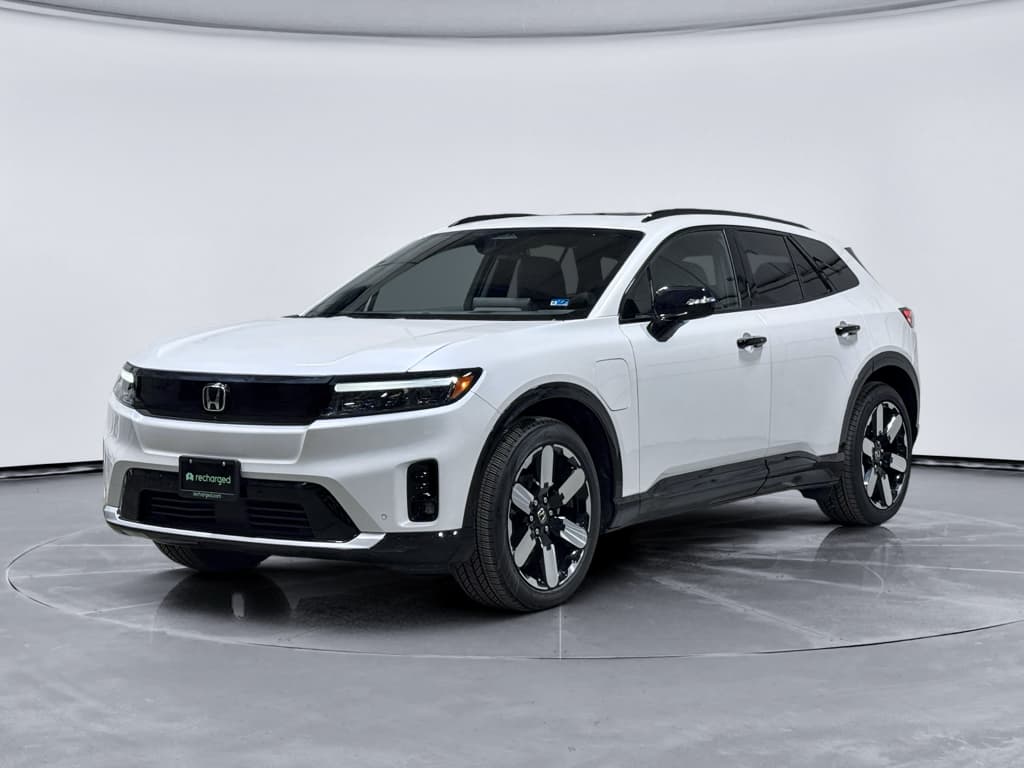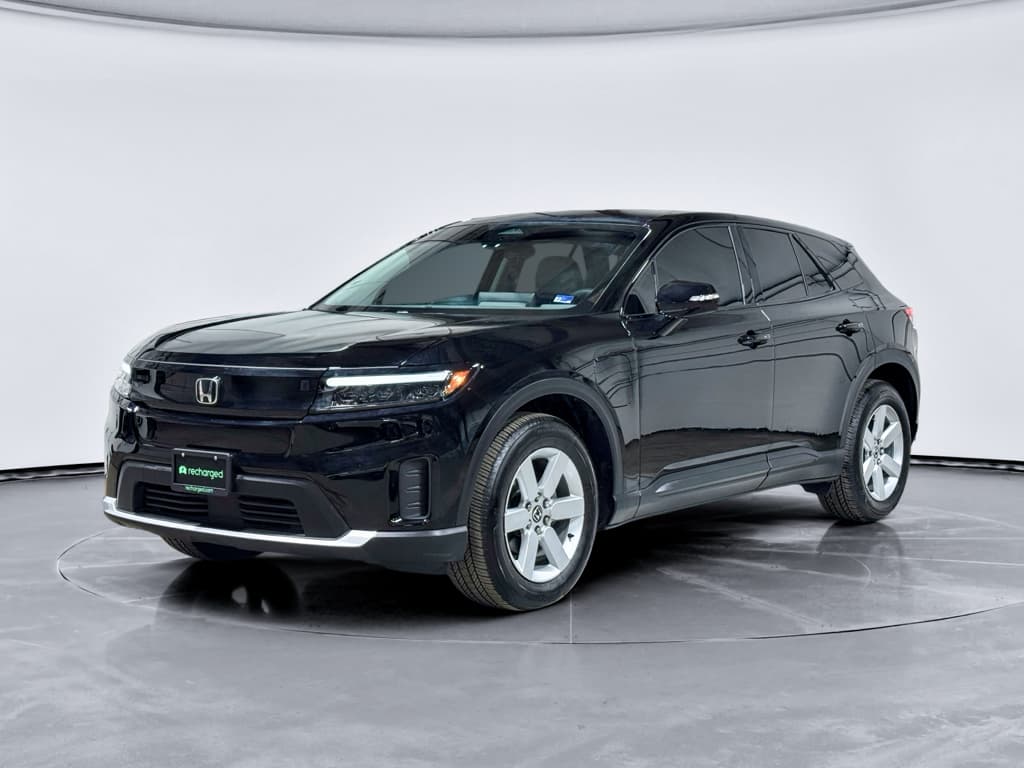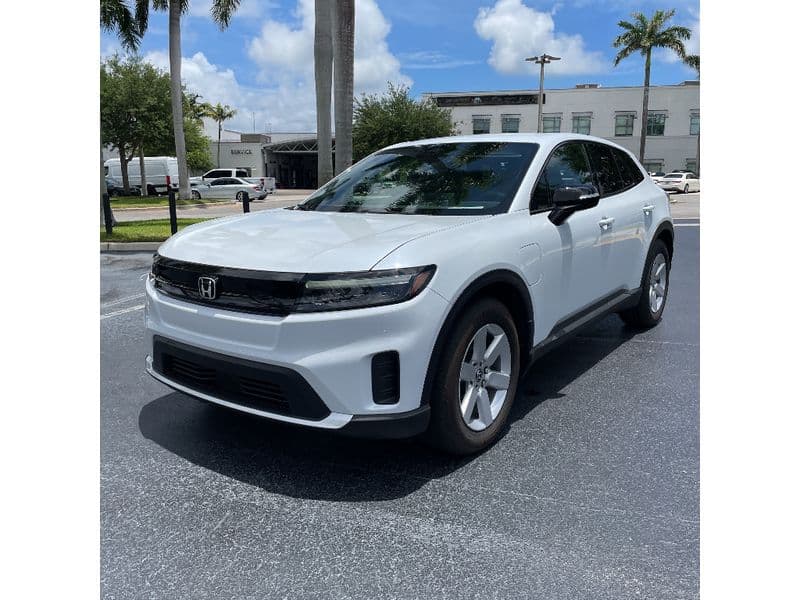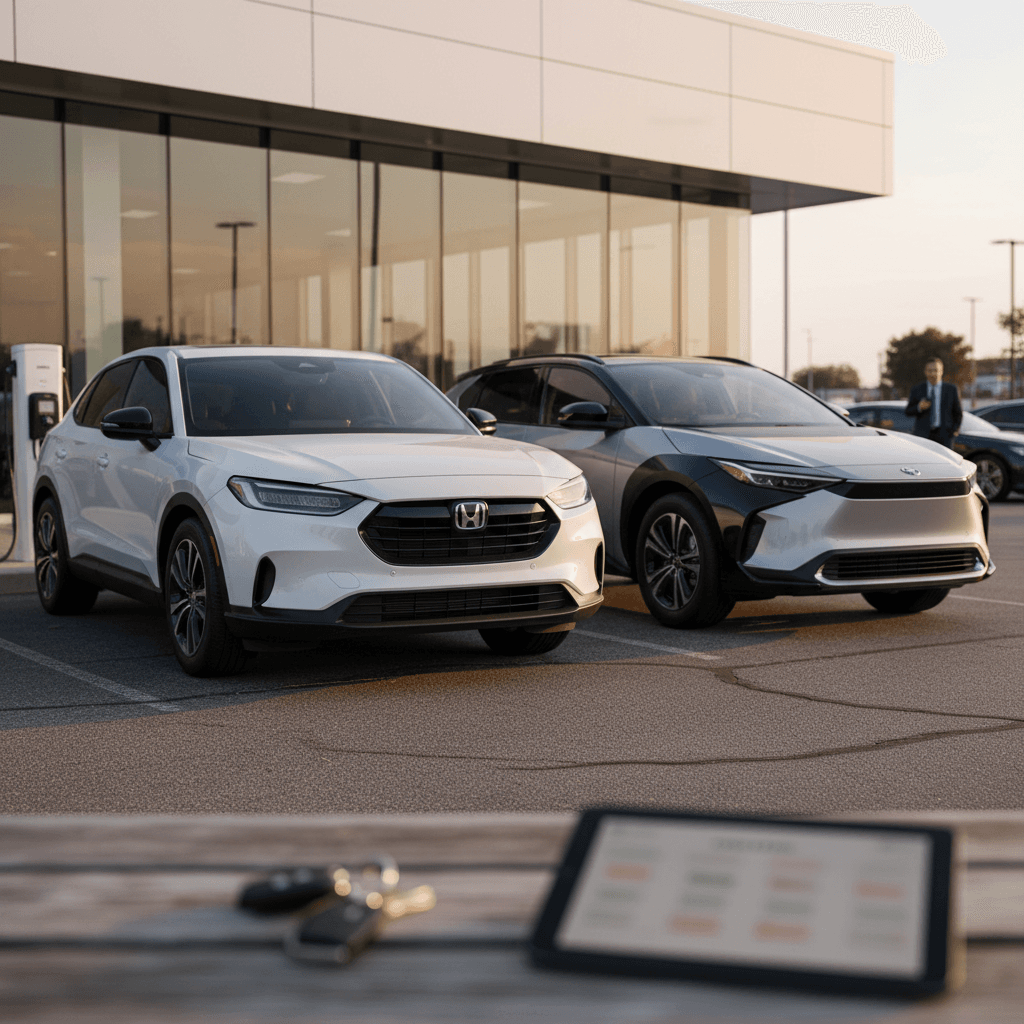
If you’re shopping for a used electric SUV in 2026, a **used Honda Prologue vs Toyota bZ4X comparison** sits right at the heart of the market. Both are compact-to-midsize crossovers from brands you probably already trust, but they take very different approaches to range, charging, and long‑term ownership. The trick is understanding where each shines, and where the compromises live once these EVs are a few years old.
Model years covered in this guide
Why this Honda Prologue vs bZ4X comparison matters in 2026
Honda and Toyota spent the 2010s and early 2020s sitting out the battery‑EV arms race while Tesla, Hyundai–Kia, and others sprinted ahead. The **Prologue** and **bZ4X** are both “catch‑up” vehicles, but they landed in very different places. The Prologue rides on GM’s Ultium platform with an 85‑kWh pack and EPA range up to about **308 miles** in its most efficient trims, while the bZ4X uses Toyota’s e‑TNGA platform with a roughly **71–73 kWh** battery and EPA ranges topping out in the **low‑ to mid‑250‑mile** range depending on drive type.
On the used market, these differences translate directly into how far you can go on a charge, how confident you’ll feel on a road trip, and how much value you get per dollar. Add in Toyota’s early missteps with wheels‑falling‑off recalls and tepid DC fast charging, and suddenly this isn’t just a spec‑sheet duel, it’s about whether you’re buying the first rough draft of Toyota’s EV future or Honda’s more modern, GM‑based effort.
Quick take: which used EV SUV fits you?
At a glance: used Honda Prologue vs Toyota bZ4X
Match each SUV to the kind of driver you are
Used Honda Prologue: best if you want
- Longer highway range (around 280–300+ miles when new, trim‑dependent).
- Stronger DC fast charging and better road‑trip usability.
- More interior space and a conventional, easy‑to‑live‑with layout.
- Modern GM Ultium battery tech with robust thermal management.
- Access to the growing North American Charging Standard (NACS) ecosystem via adapters.
Used Toyota bZ4X: best if you want
- City‑focused efficiency and a smaller, easier‑to‑park footprint.
- Toyota brand familiarity and hybrid‑like driving feel.
- Lower entry price on early‑build, higher‑miles examples.
- A relatively simple infotainment and control layout.
- You drive mostly locally and rarely need DC fast charging.
Big picture verdict
Specs showdown: range, battery, and charging
Core specs: used Honda Prologue vs Toyota bZ4X (U.S. market)
Approximate headline specs for common U.S. trims you’ll see used in 2026. Always verify exact figures for the model year and trim you’re buying.
| Spec | Used Honda Prologue (2024–2025) | Used Toyota bZ4X (2023–2025) |
|---|---|---|
| Battery capacity (usable) | ~85 kWh Ultium pack | ~71–73 kWh pack (FWD vs AWD) |
| EPA range (best trims) | Up to ~308 miles FWD; high‑200s AWD | ~252 miles XLE FWD; ~228 miles AWD |
| DC fast‑charge peak | Around 150–155 kW claimed | Up to ~150 kW FWD; AWD effectively slower in many tests |
| 0–80% DC fast charge (ideal conditions) | Roughly 35 minutes from ~20–80% | Often closer to 40–60 minutes, especially on AWD |
| Onboard AC charger | 11.5 kW Level 2 (240 V) | Historically 6.6 kW, with later models and some markets moving higher; check your specific car |
| Drive layouts | Single‑motor FWD or dual‑motor AWD | FWD or AWD |
| Platform | GM Ultium (shared with Chevy Blazer EV, etc.) | Toyota e‑TNGA (shared with Subaru Solterra) |
EPA range and battery sizes are manufacturer‑quoted when new; real‑world range on a used vehicle will depend on driving style, climate, and battery health.
Specs vs reality on the used market
Why range and charging favor the Prologue
Real‑world charging experience and networks
On paper, both the Prologue and bZ4X support DC fast charging around the 150‑kW mark. In the real world, the stories diverge. Early Toyota bZ4X AWD models in particular earned a reputation for **slow, conservative charging curves**, starting reasonably fast, then ramping down quickly and stretching sessions out toward an hour for 0–80% in less‑than‑ideal temperatures. Later model‑year updates have improved this somewhat, but you still shouldn’t expect Hyundai‑Ioniq‑5‑level charging from a used bZ4X.
The Honda Prologue, by contrast, shares GM’s more mature **Ultium charging playbook**. With an 85‑kWh pack and ~150 kW peak, you’re not at the bleeding edge of charging tech, but you’re solidly competitive: a typical 20–80% session in the mid‑30‑minute range when the pack is warm and the charger is behaving. For road‑trippers, that predictability is worth a lot.
Honda Prologue: tapping into NACS and Ultium planning
- Ships with CCS1 inlet, but Honda has committed to NACS (Tesla connector) access via adapters and future port changes.
- Ultium‑based trip planners tend to be conservative but usable, route planning improves as GM and Honda iterate software.
- On a used Prologue, you’re buying into a charging story that’s still improving, not one that’s already hitting hardware limits.
Toyota bZ4X: better than it was, still conservative
- Initially launched with limited DC performance and no battery preconditioning, which hurt cold‑weather charging.
- Subsequent updates have nudged things in the right direction, but the hardware and pack size still constrain road‑trip speed.
- For mostly local driving with occasional DC top‑ups, it’s fine; for frequent multi‑hundred‑mile days, it’s a compromise.
How Recharged helps on the charging question
Space, comfort, and tech inside each SUV
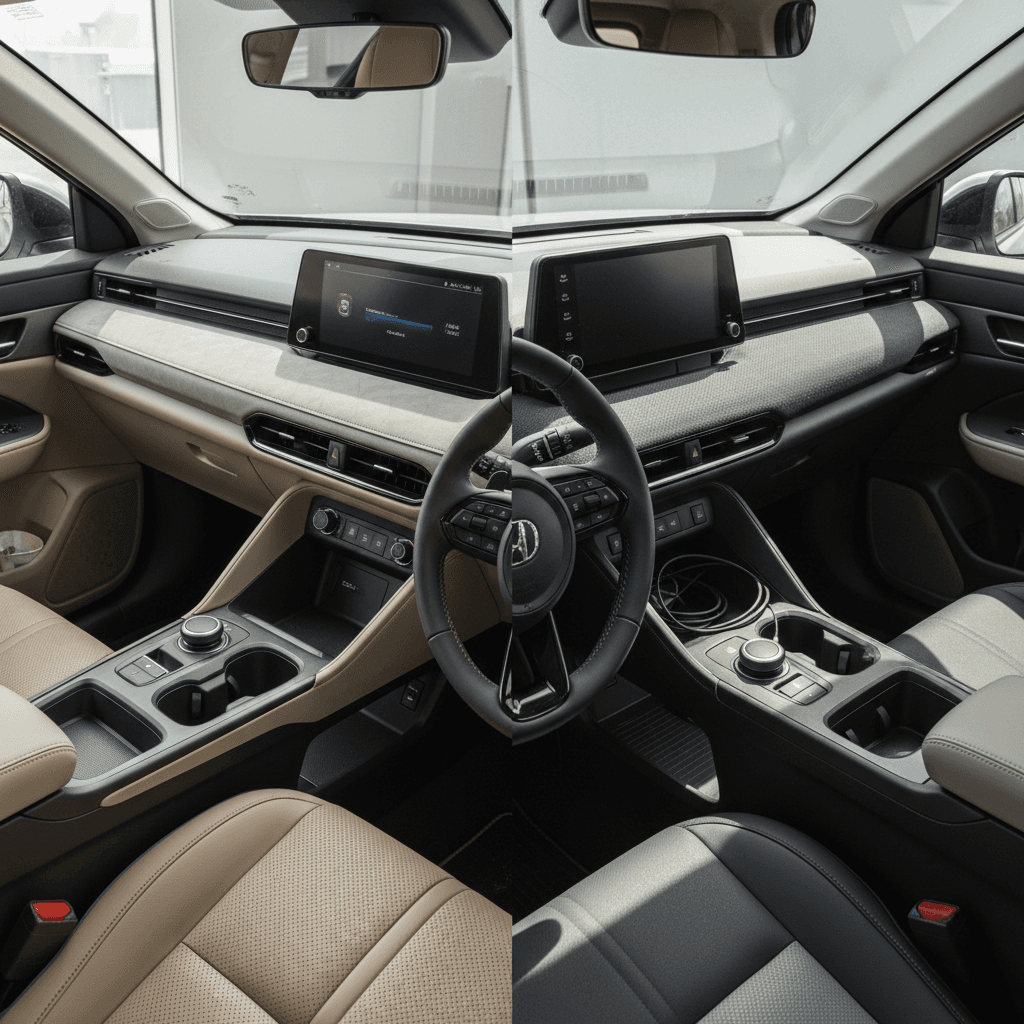
Interior feel: family hauler vs city crossover
How each EV SUV fits people, cargo, and screens into its footprint
Honda Prologue: airy and conventional
- Size: Feels like a true midsize SUV, more shoulder room and cargo space than bZ4X.
- Seating: Comfortable for four adults plus a child; rear seats are genuinely road‑trip‑worthy.
- Cargo: Boxier roofline and longer body make it easier to load strollers, camping gear, or a big Costco run.
- Interface: Traditional gauge cluster plus central touchscreen; familiar Honda ergonomics layered over GM electronics.
Toyota bZ4X: compact and design‑led
- Size: Closer to a RAV4 footprint, fine for small families but not cavernous.
- Seating: Comfortable up front; rear bench is adequate but not generous for tall adults on long drives.
- Cargo: Sloping rear styling eats into vertical cargo space versus the Prologue.
- Interface: Depending on trim, you’ll see Toyota’s newer infotainment with an emphasis on simplicity over flash.
If interior space is your top priority
Reliability, battery health, and warranty on the used market
Both Honda and Toyota bring strong reputations for reliability, but early EVs inevitably carry more uncertainty than their mature gas counterparts. The Toyota bZ4X has already gone through some public teething issues, including an early recall over wheel‑hub hardware and plenty of owner chatter about middling charging behavior and software sophistication. None of that makes the bZ4X a bad car, but it does mean you want to be extra careful about how the specific example you’re buying has been used and maintained.
The Honda Prologue is newer hardware on a shared Ultium platform, which cuts both ways. On one hand, Ultium battery packs and drive units are already working across multiple GM products, so failures and fixes tend to be better documented. On the other hand, Prologue itself only hit U.S. driveways in 2024, so the used market in 2026 is dealing with **very young inventory**, great for warranty coverage, but there’s simply less long‑term data than we have for Toyota’s hybrid and plug‑in fleets.
Warranty snapshots to keep in mind
1. Federal battery warranty coverage
Both Honda and Toyota typically back EV batteries and major drive components for around <strong>8 years or 100,000 miles</strong> (sometimes more in certain states). On a 2‑ or 3‑year‑old used Prologue or bZ4X, you’re still well inside that window.
2. Bumper‑to‑bumper protection
Comprehensive coverage on electronics, interior, and non‑powertrain parts is shorter, often 3–4 years/36k–50k miles. A used 2023 bZ4X may be right at the edge of that coverage in 2026, while a 2024 Prologue should still be inside it.
3. Software and recalls
Because these are software‑heavy EVs, you want all recall and software updates applied. This can significantly improve things like charging behavior and range prediction over time.
4. Battery health verification
Ask for documented battery diagnostics rather than trusting a dashboard guess. Marketplaces like <strong>Recharged</strong> provide a <strong>Recharged Score battery health report</strong> so you can see pack condition before you commit.
Don’t skip a battery health report
Depreciation and used pricing: what you’ll pay
Exact numbers will vary by region and mileage, but the pattern in 2026 is fairly clear: EVs in general depreciate faster than comparable gas SUVs, and early‑generation models from brands that lagged the EV transition tend to fall a bit harder. That dynamic applies more harshly to the bZ4X than to the Prologue.
Used Honda Prologue pricing trends
- Arrived later, so most used examples are low‑miles 2024–2025 lease returns or first owners trading out.
- Stronger range and charging keep demand relatively healthy versus other non‑Tesla used EVs.
- You’re likely to pay more up‑front than for a similar‑miles bZ4X, but you get a newer design and more future‑proof specs.
Used Toyota bZ4X pricing trends
- Launched earlier with more mixed press, so they’ve had more time to depreciate.
- Some buyers shy away because of early charging complaints and recalls, which can push asking prices down.
- That can create genuine bargains, if you verify battery health and accept the charging compromises.
Where Recharged can tilt the math in your favor
Ownership costs and driving character
Both the Honda Prologue and Toyota bZ4X will radically slash your fuel costs versus a comparable gas RAV4 or CR‑V. Day‑to‑day ownership expenses mostly come down to electricity rates, tire wear (these are heavy EVs), insurance, and the occasional software‑driven service visit. The bigger differences show up in how each SUV feels from behind the wheel.
How they drive: calm commuter vs confident cruiser
You’re not buying a sports car, but feel still matters.
Honda Prologue: stable, confident, mature
- Ultium platform gives the Prologue a planted, composed feel on the highway.
- Power is adequate‑to‑strong depending on motor configuration; passing doesn’t feel strained.
- Suspension tuning leans toward comfort, but the extra mass and longer wheelbase help stability.
- For long‑distance commuters and frequent road‑trippers, it’s the more relaxed companion.
Toyota bZ4X: city‑friendly and efficient
- Smaller footprint makes it easy to maneuver and park in dense urban areas.
- Acceleration is perfectly fine for merging and city work, but not thrilling.
- Steering and ride are tuned more like a traditional Toyota crossover, familiar if you’re coming from a RAV4.
- Where it struggles is extended high‑speed runs, where range and charging weaknesses pile up.
What to check before buying a used Prologue or bZ4X
Pre‑purchase checklist: used Honda Prologue vs Toyota bZ4X
1. Battery health and DC fast‑charge history
Ask how often the vehicle has been DC fast‑charged and request a <strong>battery health report</strong>. Extremely heavy fast‑charging or frequent 100% charging can accelerate degradation. Marketplaces like Recharged bundle this into their Recharged Score.
2. Software version and update history
For both Prologue and bZ4X, software updates can improve range estimates, charging behavior, driver‑assist performance, and bugs. Have the seller show you the current software version and confirm all recalls are closed.
3. Charging port and adapter situation
Confirm which connector the car uses (CCS1 today), whether it includes any NACS/Tesla adapters, and whether prior owners had any physical damage or port replacements. Inspect the port and charge door for wear.
4. Tires, brakes, and suspension
EVs are heavy. Check for uneven tire wear, noisy wheel bearings, or tired shocks, especially on higher‑miles bZ4X fleet or rental returns. These items aren’t EV‑specific but can add up quickly.
5. Interior wear and water ingress
Inspect carpets and underfloor storage for signs of leaks, especially in areas with heavy rain or snow. Check every seat adjustment, window, and door seal, some early EVs had teething issues with body sealing.
6. Remaining warranty and service records
Verify in writing how much <strong>battery and powertrain warranty</strong> remains, and ask for service records. A car that’s lived at a franchised Honda or Toyota dealer and seen regular software/recall work is generally a safer bet.
Private seller vs curated marketplace
FAQ: used Honda Prologue vs Toyota bZ4X
Frequently asked questions
Bottom line: which used EV should you pick?
If you’re approaching this as a rational 2026 car buyer, the pattern is hard to ignore: a **used Honda Prologue** generally offers more range, more comfortable fast‑charging, and more interior space than a comparable **used Toyota bZ4X**. Add in the Ultium platform’s charging roadmap and NACS access via adapters, and the Prologue looks like the more future‑proof choice for most American drivers.
That doesn’t mean the bZ4X is a write‑off. If your driving is mostly local, you charge at home, and you find a well‑maintained example at a significant discount, it can be a smart, relatively simple electric commuter with Toyota’s familiar crossover manners. The key is buying with your eyes open: understand that you’re trading some highway range and charging speed for a lower entry price.
Whichever way you lean, treat the battery pack as the core asset. Look for cars with documented software and recall history, verify battery health and real‑world charging performance, and don’t be shy about walking away from sketchy service records. If you’d rather have that legwork done for you, browsing used Honda Prologues and Toyota bZ4Xs on Recharged gives you transparent Recharged Scores, expert help, financing options, and nationwide delivery, so you can pick the EV that fits your life, not just the one that happens to be on a nearby lot.