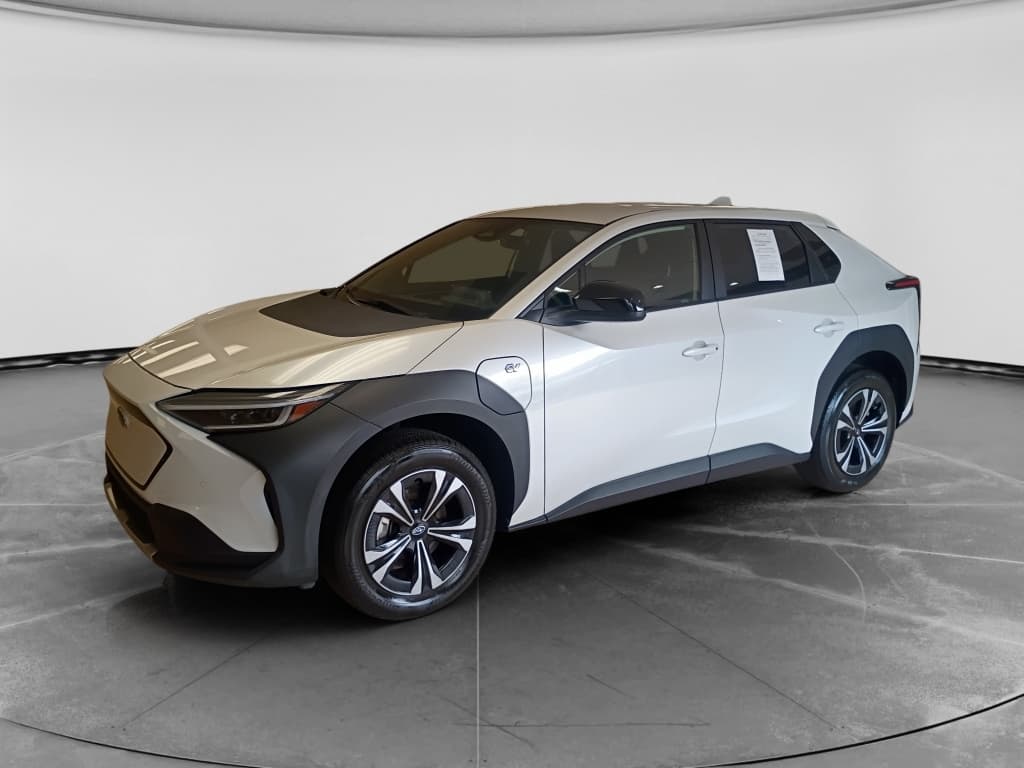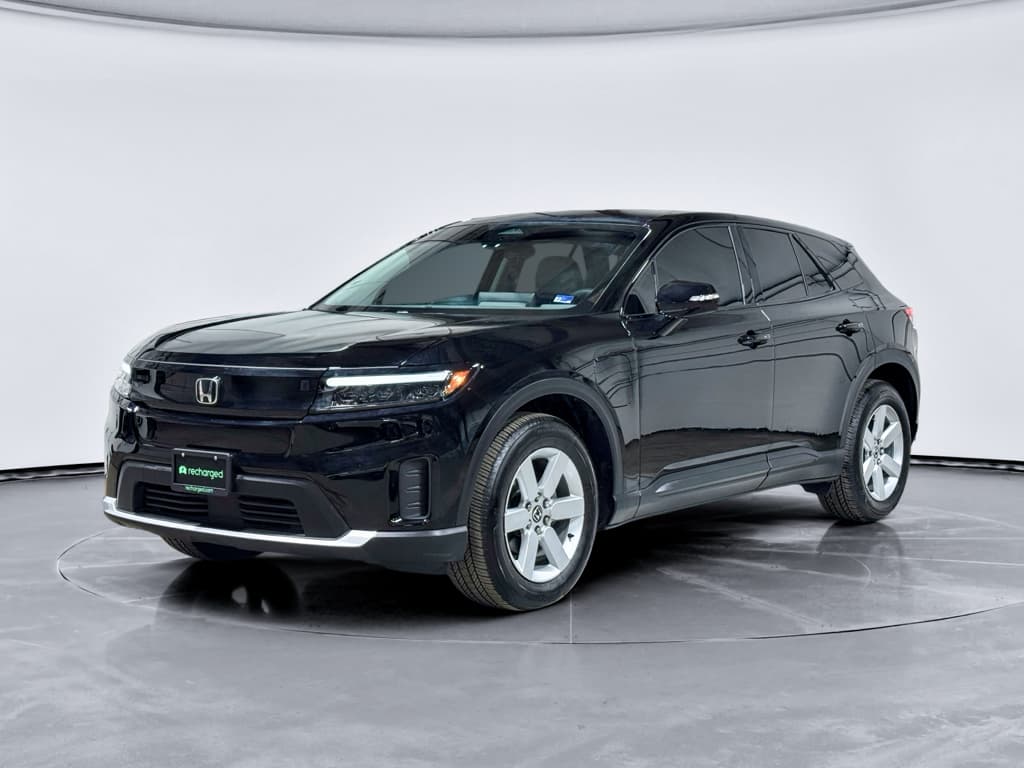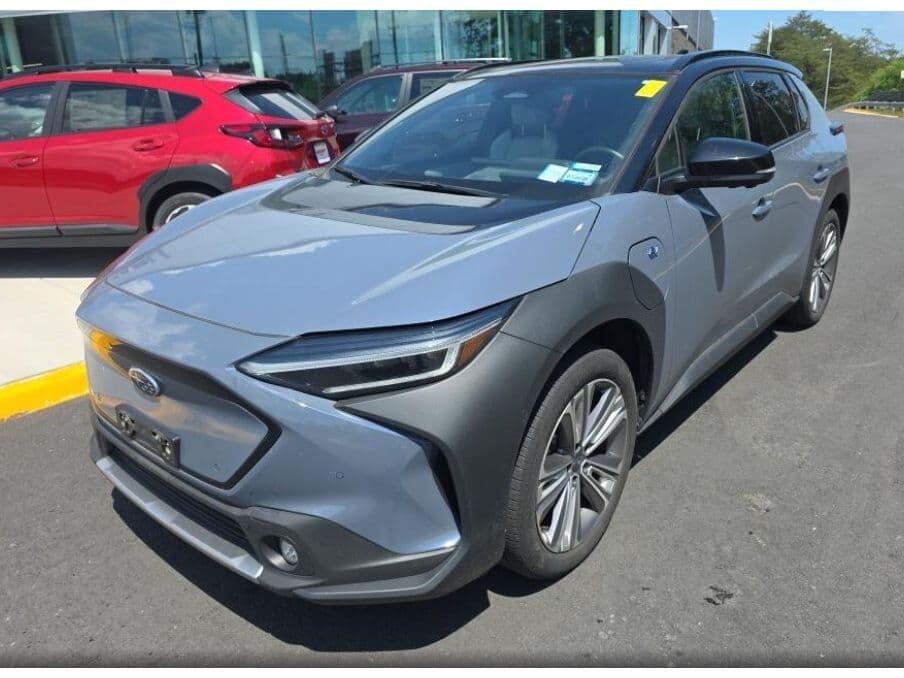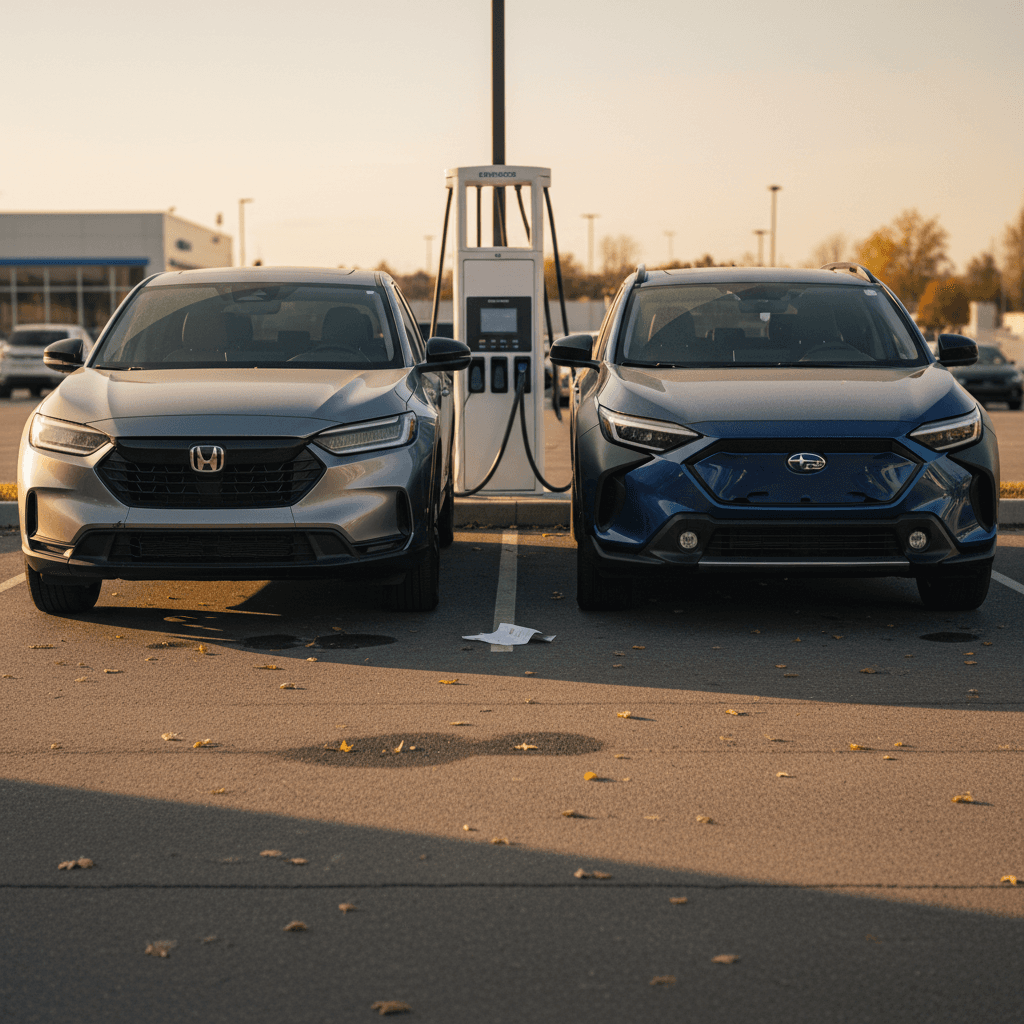
If you’re shopping the used EV market in 2026, a used Honda Prologue vs Subaru Solterra comparison is a smart place to start. Both are all‑electric, all‑wheel‑drive compact SUVs from brands known for reliability and sensible design, but they take very different paths when it comes to range, charging, and everyday usability.
Model years we’re talking about
Overview: Used Prologue vs Solterra in 2026
On paper, the Honda Prologue and Subaru Solterra land in the same space: two-row electric crossovers with standard dual‑motor all‑wheel drive available, lots of safety tech, and family‑friendly cabins. In practice, they solve different problems. The Prologue leans hard into range, fast charging, and tech, riding on GM’s Ultium platform with an 85 kWh battery and EPA ratings that crest 300 miles in front‑wheel‑drive trims. The Solterra leans into Subaru’s outdoorsy AWD identity, but its ~222–227‑mile EPA range and slower charging keep it more comfortable close to home.
Quick Take: Who Each SUV Suits Best
Match the EV to your lifestyle before you start shopping used listings
Honda Prologue: Best For
- Drivers who want **300+ miles of rated range** on some trims
- Frequent highway or interstate trips
- Tech‑forward shoppers who like Google‑built‑in and GM Ultium smoothness
- Leaning toward **value and efficiency** over trail capability
Subaru Solterra: Best For
- Drivers who prioritize **standard dual‑motor AWD** and traction
- Shorter daily commutes with dependable home charging
- Fans of Subaru’s safety story and high seating position
- Those who spend more time on dirt roads than interstates
Used‑EV buying tip
Key Specs: Honda Prologue vs Subaru Solterra
Core Specs at a Glance (Typical U.S. Models)
These figures represent common U.S. trims you’ll see used in 2026. Always verify exact specs for the specific VIN.
| Spec | Used Honda Prologue (2024–2025) | Used Subaru Solterra (2023–2025) |
|---|---|---|
| Battery capacity | ~85 kWh pack | ~72.8 kWh pack |
| EPA range (best trims) | Up to ~296–300+ miles (FWD EX/Touring) | ~227 miles (Premium), ~222 miles (Limited/Touring) |
| Drivetrain | FWD or dual‑motor AWD | Dual‑motor AWD standard |
| DC fast‑charge peak | Around 150–155 kW | Around 100–150 kW (real‑world closer to 100 kW) |
| Onboard AC charger | ~11.5 kW Level 2 | 6.6 kW Level 2 |
| Horsepower | Roughly 288 hp (FWD) to low‑300s (AWD), depending on year | 215 hp dual‑motor |
| Length / size | Compact‑midsize SUV, similar to Chevy Blazer EV | Compact SUV, similar footprint to Toyota bZ4X |
Honda Prologue wins on battery size, range, and DC charging; Solterra counters with standard dual‑motor AWD and Subaru’s safety story.
Range and Efficiency: Daily Driving and Road Trips
If you commute far or hate watching the state‑of‑charge gauge, range is where the **used Honda Prologue vs Subaru Solterra comparison** starts to separate.
Honda Prologue: Stronger Range Story
- Typical FWD trims land near or above **296–300 miles of EPA range** on a full charge.
- AWD trims trade a bit of range for traction but still push well into the **mid‑200s** on paper.
- Owners commonly report **high‑200s real‑world** on mixed driving when they charge to 80–90% and avoid aggressive speeds.
For a used buyer, that extra buffer means more flexibility: you can commute, run errands, and still have range in hand without obsessing over every kilowatt‑hour.
Subaru Solterra: Adequate, But Not a Road‑Trip Hero
- EPA ratings hover around **227 miles** for the lightest trims and **222 miles** for higher trims.
- Real‑world highway range can dip into the **180–200‑mile** window, especially in winter or at 70+ mph.
- The battery is smaller, so you feel range swings from weather and elevation changes more.
The Solterra works well for **shorter commutes and regional driving**, but you plan road trips more carefully and stop more often.
Cold‑weather reality check
Efficiency Snapshot (Typical Real‑World Averages)
Charging Speed and Road-Trip Compatibility
Range is only half the story. If you expect to road‑trip your used EV SUV in 2026, how quickly it refills from a fast charger, and how many networks you can actually use, matters just as much.
Home and Public Charging: How They Differ
Think about how often you’ll plug in away from home before you choose a platform.
Level 1 (120V at home)
Slow but universal.
- Solterra gains roughly **2–4 miles of range per hour**.
- Prologue typically adds **2–3 miles per hour** on 120V.
- Fine for light use; frustrating as a primary source.
Level 2 (240V at home or work)
This is the real game‑changer.
- Prologue’s ~11.5 kW onboard charger can easily add **25–35 miles per hour** or more.
- Solterra’s 6.6 kW charger tops out closer to **20–25 miles per hour**.
- Either will fully refill overnight; Prologue just climbs faster.
DC Fast Charging (Public)
Crucial for road trips.
- Prologue can peak around **150–155 kW**, often adding roughly **60+ miles in 10 minutes** in ideal conditions.
- Solterra is rated as high as **150 kW**, but real‑world sessions tend to sit closer to **100 kW**.
- Both taper as they approach 80% state of charge.
Connector types in 2026
Road‑Trip Readiness: Questions to Ask Before You Buy
1. Where will I charge most of the time?
If you can install **Level 2 at home**, either SUV works. If you’ll lean heavily on public DC fast charging, the Prologue’s combination of larger battery and stronger peak charge rate is easier to live with.
2. How often do I drive 200+ miles in a day?
If the answer is “twice a year,” Solterra can work with careful planning. If it’s “twice a month,” you’ll likely appreciate the Prologue’s extra range buffer and shorter stops.
3. What charging networks are near me?
Open apps like PlugShare or your preferred network app and drop pins along your regular routes. Pay attention to how many **150 kW+ CCS or NACS sites** you actually have.
4. Is battery preconditioning supported and working?
Fast charge speeds depend on pack temperature. Make sure any preconditioning features still work as intended on the used car you’re test‑driving and that there are no charge‑related recalls outstanding.
Performance, AWD, and Driving Feel
Neither of these SUVs is chasing Nürburgring lap records. They’re tuned for confidence and comfort. But how they build that confidence, and how they put power down when the road turns nasty, differs in a way you’ll notice from the driver’s seat.
Honda Prologue: Quiet, Composed Cruiser
- Single‑motor FWD trims offer smooth, easy acceleration with **roughly 280+ hp** on tap.
- Dual‑motor AWD trims climb into the **low‑300‑hp** neighborhood, giving strong passing power.
- Ride quality is tuned more like a mainstream crossover, comfortable, composed, and happy on the highway.
- Steering feels light but accurate; it’s an easy SUV to live with, not a performance EV.
If your miles are mostly **pavement and interstate**, the Prologue feels like a familiar gas SUV that happens to be electric, and that’s a compliment.
Subaru Solterra: Confident Traction, Modest Power
- Every Solterra uses a **dual‑motor AWD system** making about **215 hp**.
- Acceleration is adequate rather than brisk; think capable compact crossover, not hot hatch.
- Standard **X‑MODE drive settings and decent ground clearance** help when the pavement ends or when you’re slogging through snow.
- Steering and ride skew slightly firmer; it feels like a Subaru that borrowed EV bones from Toyota.
For drivers who care more about **traction on a muddy trailhead** than 0–60 bragging rights, the Solterra’s balance makes sense.
Safety is a strong point for both
Interior Space, Tech, and Comfort
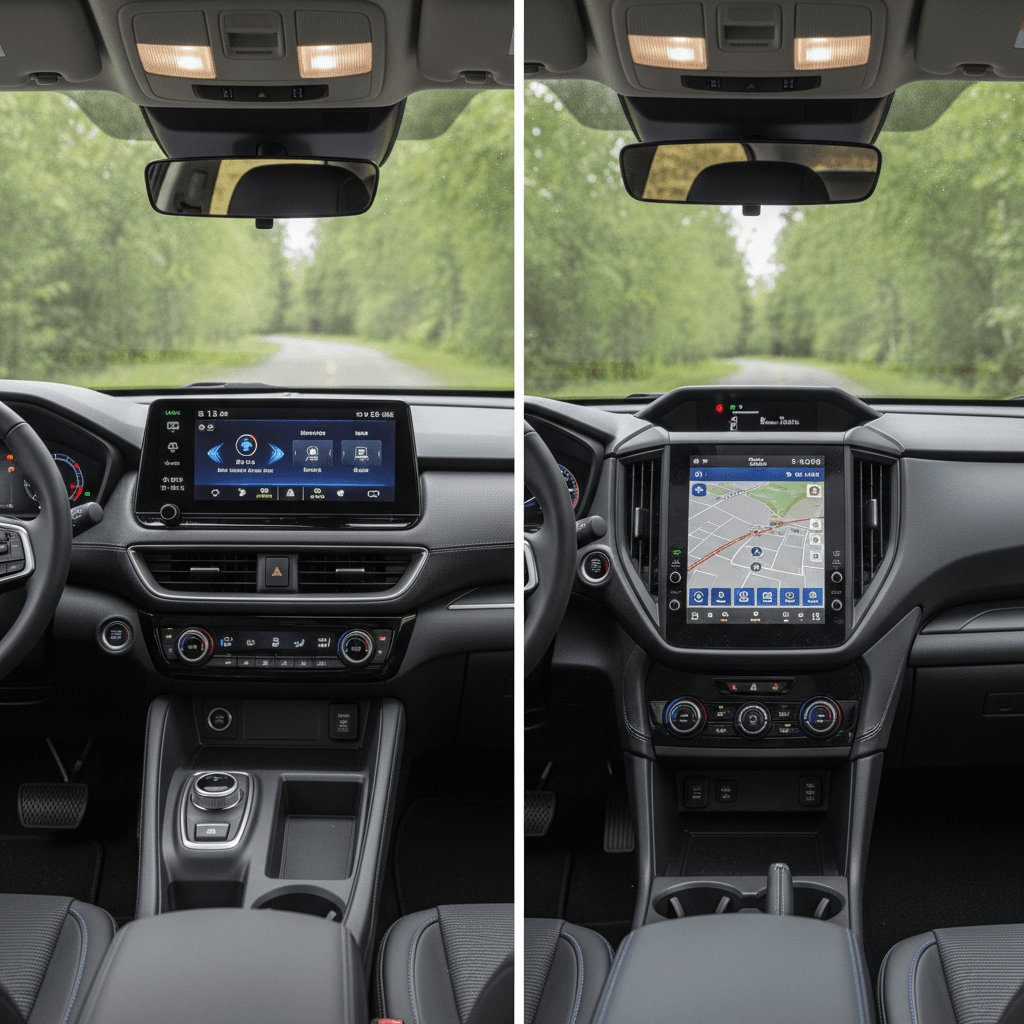
Sit in both of these back‑to‑back and you’ll feel two different philosophies: Honda channeling a calm, tech‑forward family SUV, and Subaru/Toyota delivering a more upright, adventurous vibe.
Cabin Feel: Honda Calm vs Subaru Rugged
The right interior makes or breaks daily EV life.
Honda Prologue Interior
- Clean, modern cabin with **Google built‑in** on a large central screen plus a separate digital cluster.
- Generous rear legroom and a cargo area closer to a midsize crossover.
- Materials feel mid‑market: not luxury, but solid. Some switchgear will remind you it shares bones with GM products.
- Excellent for families who want easy smartphone‑like tech and simple menus.
Subaru Solterra Interior
- High seating position and chunky exterior design carry into the cabin.
- Shared roots with the Toyota bZ4X show in the infotainment layout and controls.
- Plenty of headroom and decent cargo space, though not as airy as the Prologue.
- Feels more like an **adventure‑ready compact SUV** than a tech showcase.
What to test on your drive
Pricing, Depreciation, and 2026 Used-Market Values
Electric SUVs have taken their first big depreciation hit by 2026, and that’s good news if you’re shopping used. The Prologue and Solterra land at similar price points new, but their different range and charging stories will influence used pricing.
- When new, the Honda Prologue typically carried a higher MSRP than the Solterra but justified it with more range and faster charging.
- By 2026, **used Prologues with healthy batteries and desirable trims** are likely to hold value better in regions where range and road‑trip friendliness are prized.
- The Solterra’s shorter range and slower charging may soften demand in some markets, but strong brand loyalty and all‑weather chops help it retain appeal in snow‑belt states.
Value Signals to Watch for in 2026
Financing a used EV
Reliability, Battery Health, and Warranty
Both Honda and Subaru have solid reputations for building cars that outlast their payments, but modern EVs add a new variable: a large, expensive battery pack whose health you can’t judge with a quick glance. In a used Prologue or Solterra, battery condition is easily the most important line item after accident history.
Battery and Drivetrain Warranties
- Expect **8‑year / 100,000‑mile** high‑voltage battery warranties on both brands (check your specific VIN and state for details).
- Most 2024–2025 Prologues and 2023–2025 Solterras sold in the U.S. will still have several years of battery coverage remaining in 2026.
- Powertrain and bumper‑to‑bumper coverage will vary more, especially for ex‑loaner or fleet vehicles.
If you’re buying in 2026, target vehicles that keep you under the **battery warranty time and mileage limits** for as much of your ownership as possible.
What Degrades a Pack Faster
- Heavy use of **DC fast charging**, particularly from low state of charge to near 100% repeatedly.
- Living at very high or low states of charge (parking at 5% or 100% for days on end).
- High annual mileage without many gentle, Level 2 home‑charging cycles.
Ask the seller about **charging habits**, and whenever possible, get a third‑party battery health report instead of relying on a simple range estimate on the dash.
How Recharged’s battery health checks help
Ready to find your next EV?
Browse VehiclesUsed Prologue & Solterra Inspection Checklist
1. Confirm open recalls and software updates
Ask for a full recall and software‑update history. Many early EVs receive charging, range‑estimate, or safety‑system updates that can significantly improve ownership.
2. Review DC fast‑charge history
If the seller has charging logs or app history, look for heavy DC fast‑charge use vs. balanced home Level 2 charging. A road‑trip or two is fine; **constant fast charging** is less ideal.
3. Inspect tires and brakes
EVs are heavy. Check for **uneven tire wear** and brake‑rotor rust or pitting, especially if the car sat unused for long periods.
4. Test all driver‑assist features
On your test drive, verify adaptive cruise, lane‑centering, blind‑spot monitoring, parking cameras, and parking sensors. These systems are central to the experience and expensive to repair.
5. Check charge‑port and cables
Look for bent pins, corrosion, or damaged seals in the charge port. Confirm that the seller includes the **portable charging cable** and any factory adapters promised in the listing.
Which Used EV SUV Fits You Best?
After thousands of miles in both these platforms and countless owner stories, a pattern emerges: you buy the **Prologue** for range and charging confidence, and you buy the **Solterra** for Subaru‑style traction and personality, while accepting its compromises.
Decision Guide: Prologue vs Solterra Personas
Match yourself to the closest description for a quick gut check.
Highway Commuter / Road‑Trip Family
Leans: Honda Prologue
- Commutes 40–80 miles per day.
- Regular cross‑state trips to see family.
- Wants fewer, shorter fast‑charge stops.
- Happy to live mostly on pavement.
Mountain Town / Trailhead Regular
Leans: Subaru Solterra
- Daily drives are short but include snow, mud, or gravel.
- Weekend access to trailheads and cabins.
- Home Level 2 charging is easy.
- Range anxiety isn’t a big concern.
Undecided, Mixed Use
Test‑drive both before deciding
- Mix of city, suburb, and occasional highway trips.
- Wants AWD but also values range.
- Open to either brand.
- Best move: drive both on the same day and compare how relaxed you feel in each.
Don’t ignore your gut feeling
How Recharged Helps with Used Prologue and Solterra
Sorting through used EV listings can feel like detective work: incomplete descriptions, vague comments about range, and almost no data on battery health. That’s exactly the problem Recharged was built to solve.
- Every EV on Recharged includes a **Recharged Score Report** with verified battery health, charging history insights when available, and fair‑market pricing analysis.
- You can **finance your used Prologue or Solterra** directly through Recharged, with EV‑savvy specialists who understand how range and battery life affect long‑term costs.
- If you’re upgrading from another car, gas or electric, Recharged can **value your trade‑in or give you an instant offer**, helping you step into your next EV with less hassle.
- Nationwide delivery and a fully digital process mean you can shop for the right Prologue or Solterra configuration instead of settling for whatever your local lot happens to have.
One more advantage of going used with Recharged
FAQ: Used Honda Prologue vs Subaru Solterra
Frequently Asked Questions
In the end, the choice between a **used Honda Prologue and a used Subaru Solterra in 2026** comes down to how, and where, you drive. If you crave range and easy road‑tripping, the Prologue is the stronger tool. If you live for snow‑packed driveways and gravel trailheads, the Solterra’s Subaru‑flavored AWD will speak your language. The key is to buy with data, not guesswork: clear battery‑health information, honest pricing, and a test drive that covers how you’ll really use the car. That’s where a used‑EV specialist like Recharged can help you go from spreadsheet comparisons to an electric SUV that genuinely fits your life.