If you’re shopping a used Honda Prologue, you’ve probably noticed something strange: big discounts on prices, but financing that doesn’t look nearly as generous as the 0.99% APR deals Honda advertised on new Prologues in 2025. Used Honda Prologue financing rates live in a very different world, and understanding that world can save you thousands over the life of the loan.
Context: Prologue prices vs. loans
Why used Honda Prologue financing rates look weird right now
The Prologue launched into a market that has been brutal for new EV pricing. By mid‑2025, some buyers were stacking five‑figure discounts and sub‑1% APR financing on new Prologues. Only a year or two later, those same vehicles are being traded in or off‑leased, often for far less than their original sticker price.
Lenders, however, care less about how far prices have fallen and more about three things: the risk of depreciation, the borrower’s credit profile, and the broader interest rate environment. In 2025–2026, national averages for used auto loans are still high single digits, often around the 9–11% APR range, even as some EV‑specific products undercut that for qualified buyers.
Don’t anchor on new‑car APR ads
What lenders see when you finance a used Prologue
How lenders underwrite a used Honda Prologue
Four levers that make or break your APR
Your credit profile
Vehicle & battery risk
Loan structure
Channel incentives
Honda’s own finance arm may still aggressively support new Prologue leases and loans, but once the vehicle is titled and in the used pool, your options broaden to local banks, credit unions, and online lenders. That’s where the spread in used Honda Prologue financing rates really shows up.
Typical used Honda Prologue financing rates in 2025–2026
Where used Prologue APRs tend to land
For a clean, late‑model used Prologue with a strong credit applicant, seeing quoted APRs in the mid‑single digits from a credit union or EV‑specific lender is realistic. At mainstream banks or dealer‑arranged financing, especially if you’re light on down payment, a rate near or above the national used‑vehicle average is more common.
Use the new‑car deal as a benchmark, not a target
Why used EVs like the Prologue can be hard to finance
Used EV financing is still catching up to reality. Lenders worry about three specific risks with vehicles like the Prologue: the battery, future incentives, and the speed of technology change. All three show up in the APR they’re willing to quote you.
- Battery uncertainty: Even though modern EV packs age better than many people think, most lenders still treat high‑mileage EVs cautiously, especially once they’re out of the original battery warranty window.
- Policy and incentive whiplash: Changes to federal and state EV incentives can move new‑car pricing overnight, which in turn can knock thousands off used values. Lenders price that volatility into their rates.
- Technology turnover: Fast improvements in range, charging speed, and NACS/CCS compatibility can make a three‑year‑old EV feel older than a three‑year‑old gas SUV, depressing resale and raising perceived risk.
Why this matters for your Prologue loan
How to get the lowest used Prologue APR
Six ways to cut your used Honda Prologue rate
1. Know your credit going in
Pull your scores and reports before you ever test‑drive. For a used EV, a clean history and a score above ~720 dramatically improve your odds of landing an APR below national averages.
2. Target EV‑friendly lenders
Many credit unions and community banks now advertise <strong>special EV loan products</strong> with rate discounts for electric or plug‑in vehicles. These can shave 0.25–1.0 percentage points off a standard used‑car rate if you qualify.
3. Bring a real pre‑approval
Walk into the dealership or seller with a written pre‑approval that includes rate, term, and max loan amount. It sets a floor for negotiations and forces dealer finance managers to beat a concrete offer, not a hypothetical.
4. Adjust term and down payment
Ask your lender how the APR changes if you drop from 72 to 60 months, or bump your down payment from 10% to 20%. Often, a slightly higher monthly payment with a shorter term saves thousands in interest.
5. Separate price and financing
Negotiate the Prologue’s price as if you were paying cash. Once you’ve locked in a fair out‑the‑door number, then compare financing options. Mixing the two makes it easier for a dealer to hide a higher APR behind a larger discount.
6. Shop specialized marketplaces
Platforms like <strong>Recharged</strong> focus on used EVs and can connect you with lenders that understand battery health, depreciation, and EV incentives. That can translate into more competitive rates than a general used‑car lot. At Recharged, every car comes with a battery‑health‑driven <strong>Recharged Score Report</strong> that lenders can understand.
How Recharged helps on the financing side
Ready to find your next EV?
Browse VehiclesDealer vs. credit union vs. online marketplace
Franchise or independent dealer
- Pros: Convenient one‑stop shop, access to many lenders, sometimes promotional used‑EV rates tied to volume targets.
- Cons: Markups in the finance office are common; advertised APRs may assume huge down payments or only apply to top‑tier credit.
Credit union / community bank
- Pros: Often the best combination of rate and transparency, with green‑auto or EV‑specific discounts.
- Cons: Membership requirements; may be slower or less flexible on unusual situations like very high‑mileage EVs.
Online used‑EV marketplace
- Pros: Platforms like Recharged bundle transparent pricing, battery health, and lender relationships tailored to EVs.
- Cons: Not every market is fully covered yet; selection can be more curated than exhaustive.
How channels typically compare for a used Honda Prologue loan
These are directional patterns, not guarantees, always compare real quotes.
| Channel | Rate trend vs. national used avg | Typical term options | Key watchouts |
|---|---|---|---|
| Honda / brand dealer financing | Can be higher without incentives | 36–72 months | Finance office add‑ons, rate markups, required financing to get price discounts |
| Independent used‑car dealer | Often above average | 36–72 months | Limited EV knowledge, higher LTVs, fewer EV‑friendly lenders |
| Credit union (EV loan) | Often below average | 36–84 months | Membership and documentation requirements |
| Online EV marketplace (like Recharged) | Competitive with EV‑friendly lenders | 36–84 months | Rates may vary by partner and your credit tier |
Channel comparisons assume the same borrower, vehicle, and term length.
Loan structure: how term and down payment change your cost
Once you have a sense of where used Honda Prologue financing rates sit for your credit tier, the next lever is how you structure the loan. The same APR can be a good or bad deal depending on term length and how much cash you bring.
- Shorter term, slightly higher rate: A 60‑month loan at 7.0% APR can be cheaper overall than a 72‑month loan at 6.5% because you’re paying interest for an extra year on the longer term.
- More cash down, same car: If you can push your loan‑to‑value (LTV) below 90%, or even 80%, some lenders will drop your APR tier, especially on an EV with volatile resale like the Prologue.
- Avoid rolling in negative equity: If you’re upside‑down on your current car, rolling that balance into a used Prologue can push your effective LTV well over 100%, which many lenders punish with higher APRs or flat‑out decline.
Watch out for payment‑chasing
Protecting yourself: battery health and resale risk
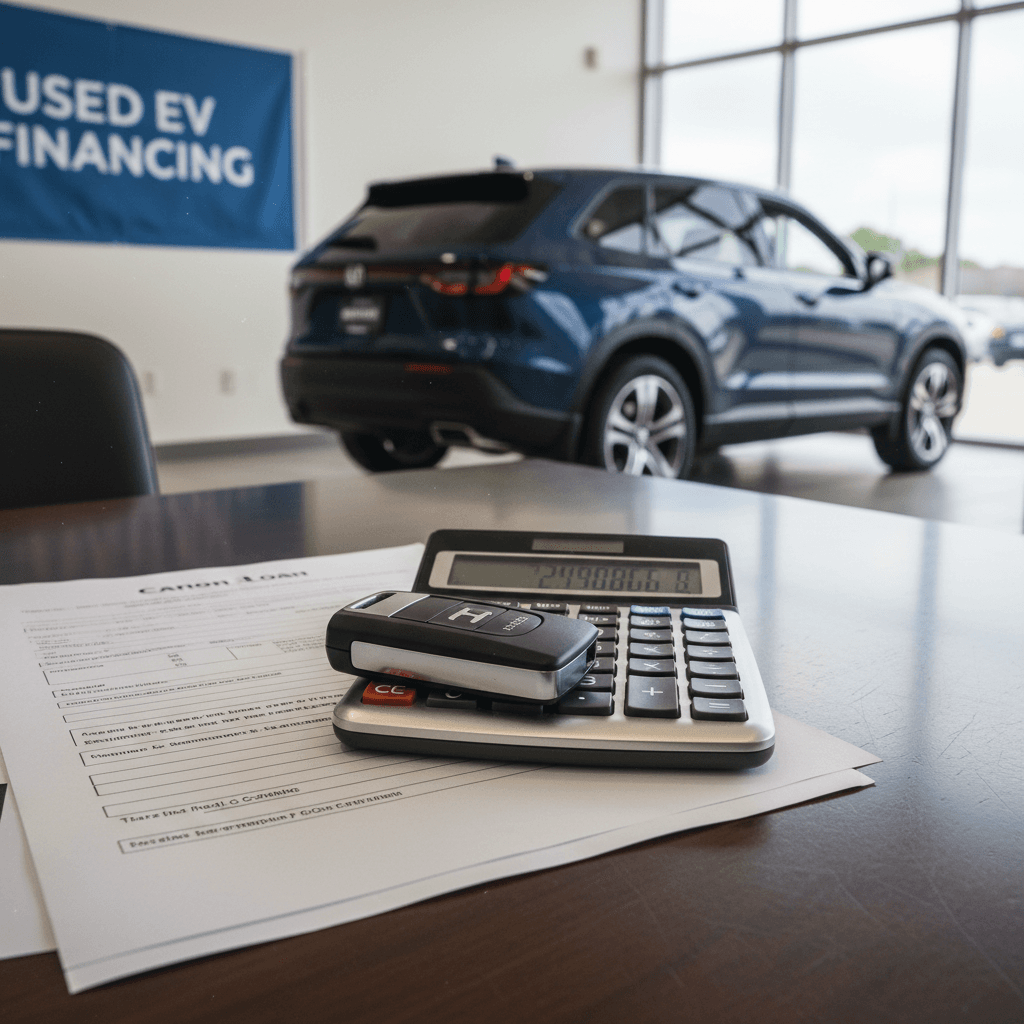
With any used EV, you’re not just borrowing against a vehicle, you’re effectively borrowing against a battery pack whose health will drive both your ownership experience and your resale value. If the battery underperforms or needs repair, neither you nor your lender is going to be happy with the remaining balance on your Prologue loan.
Battery health, resale, and your loan
Three questions to answer before you sign
Is the battery independently assessed?
What warranty remains?
What if values fall more?
How Recharged’s battery data can help your financing
FAQ: used Honda Prologue financing rates
Frequently asked questions about used Prologue loans
Bottom line: financing a used Honda Prologue smartly
The used Honda Prologue is a classic 2020s EV story: steep discounts on the new side, eye‑catching used prices, and financing that doesn’t always look as friendly as the headlines. If you treat used Honda Prologue financing rates as just another lever you can shop and structure, rather than a fixed cost, you’ll be in a much better position.
Start by understanding where national used‑car APRs sit, then target EV‑friendly lenders, get real pre‑approvals, and choose a term and down payment that keep you out of negative‑equity territory. Layer on solid battery‑health documentation and realistic pricing, and a used Prologue can be financed in a way that makes sense both for your monthly budget and your exit strategy.
If you want a smoother path, consider shopping through Recharged. Every used EV on the platform includes a verified Recharged Score Report with battery health, fair‑market pricing, and access to EV‑savvy financing partners, plus nationwide delivery and expert EV support. That combination doesn’t just make the rate conversation easier; it makes the entire ownership journey more transparent from day one.