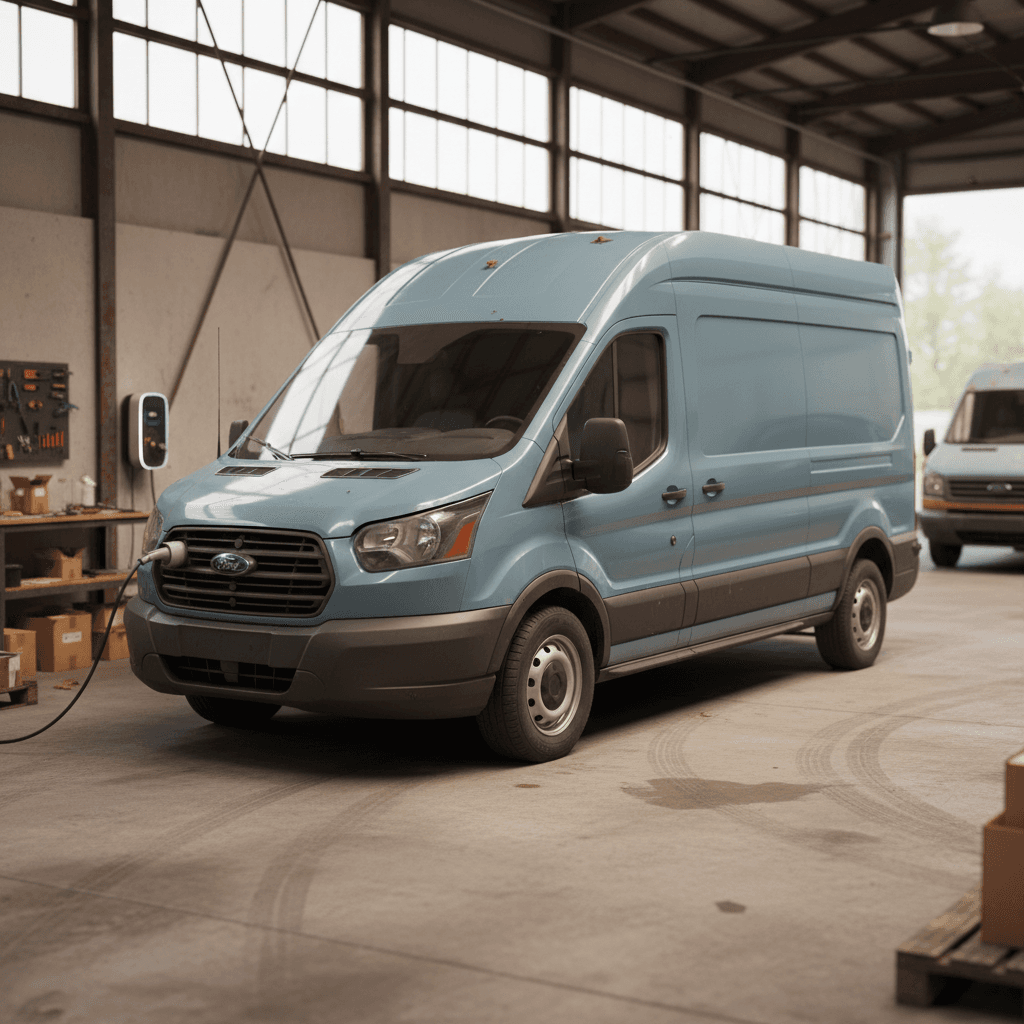
If you run a small business, manage a fleet, or you’re just tired of feeding a thirsty gas Transit, a used Ford E-Transit can look like a cheat code: quiet, quick, and far cheaper to run than a diesel van. But it’s also a first‑generation commercial EV with specific range limits, recalls, and use‑case quirks. This used Ford E-Transit buying guide walks you through the specs that matter, real‑world range, battery health, and how to shop the used market without buying someone else’s science experiment.
Who this guide is for
Why consider a used Ford E-Transit?
Core advantages of a used E-Transit
Where Ford’s electric work van shines over a used gas Transit
Lower running costs
Electricity is usually cheaper per mile than gasoline or diesel, especially if you can charge overnight at home or at a depot. Fewer moving parts also mean fewer oil changes, belts, and exhaust components to maintain.
Urban range sweet spot
The E-Transit’s range is tailored for city and suburban duty cycles, routes under about 120 miles a day, where stop‑and‑go driving actually helps efficiency through regenerative braking.
Quiet, clean, future‑proof
Zero tailpipe emissions can help with city regulations, low‑emission zones, and corporate sustainability goals. Drivers also get a quieter, less fatiguing workday.
Biggest drawback: range
Key specs and real‑world range on a used E-Transit
Used Ford E-Transit headline specs (U.S. models)
On paper, early 2022–2023 U.S. Ford E-Transit cargo vans shipped with a ~68 kWh battery and a realistic mixed‑use range around 120–130 miles. From the 2024 model year, Ford introduced an enhanced‑range battery around 89 kWh, and quotes up to about 159 miles for a low‑roof cargo van in ideal test conditions. In the real world, loaded, HVAC on, mostly highway, you should think more in terms of 90–140 miles, depending on body style, weather, and how hard the van is worked.
- City, light load, mild weather: often 1.7–2.1 mi/kWh (roughly 150–170 miles on a big‑battery E-Transit).
- Mixed routes, tools on board: often 1.4–1.7 mi/kWh (about 120–150 miles).
- Heavy load, high speeds, winter: it can drop near 1.0–1.3 mi/kWh (90–120 miles).
Plan for your worst day, not your best
Model years, trims, and configurations to know
Used Ford E-Transit: what you’ll actually see for sale
Common U.S. configurations in the used market and what they mean for you.
| Model year | Battery | Body/roof options | What it’s best for |
|---|---|---|---|
| 2022 | ~68 kWh | Cargo van, multiple lengths/roof heights | Early adopters, urban fleets, bargain hunters; lower range, often lowest prices. |
| 2023 | ~68 kWh | Similar to 2022 | Same hardware as 2022 with minor software/feature tweaks; check for heavy fleet use. |
| 2024 | ≈89 kWh enhanced | Cargo van (low/med/high roof), cutaway/chassis cab | More range and faster DC charging; better fit for slightly longer routes or heavier upfits. |
| 2025+ | Enhanced battery standard | Broader mix including chassis/cutaway | Look for updated driver‑assist tech and connectivity; still trickling onto used market. |
Exact specs vary by VIN; always confirm against the Monroney label or Ford build sheet.
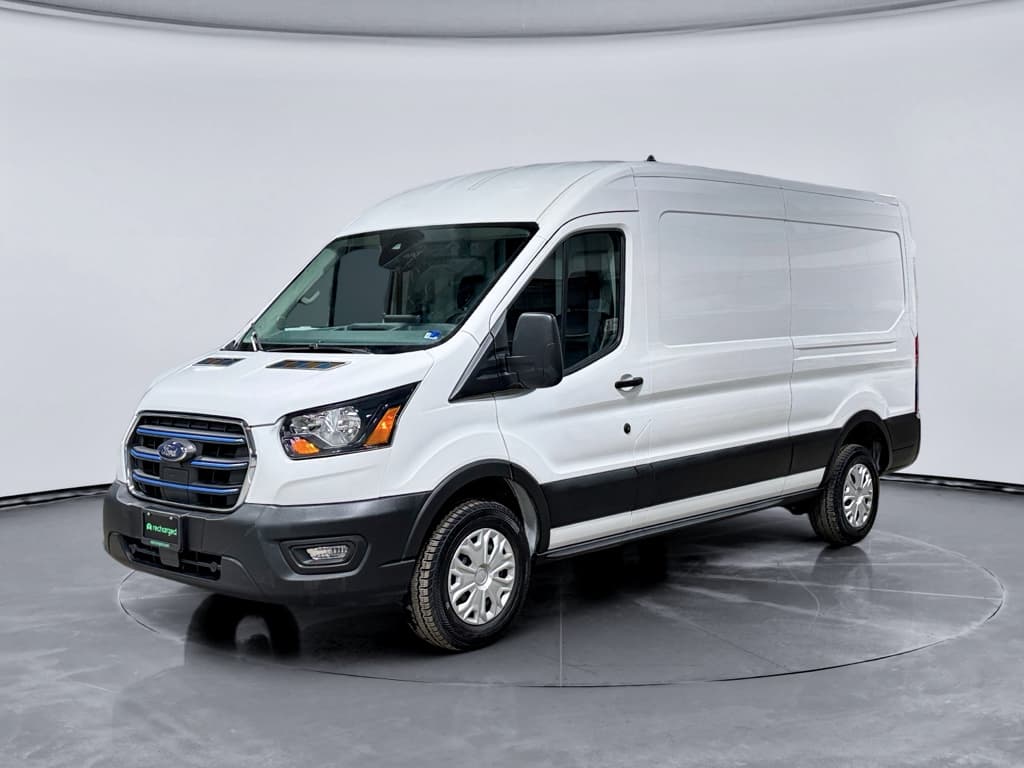
Most used Ford E-Transit listings you’ll see today are 2022–2024 cargo vans in low‑ or medium‑roof form, typically ex‑fleet vehicles coming off 2–3 year duty cycles. Chassis‑cab and cutaway variants exist but are rarer and usually show up with specific upfits: box trucks, flatbeds, refrigerated bodies and the like.
Cargo van vs. cutaway vs. chassis cab
Pick the configuration that matches your work, not your imagination
Cargo van
The most common used E-Transit. Enclosed body from the factory, multiple roof and length options. Best for parcel delivery, service trades, and camper conversions.
Cutaway
Rear body is open behind the cab for an upfitter box. Higher payload ratings, more frontal area, usually worse aero and range. Think cube vans and specialty bodies.
Chassis cab
Basically a rolling frame with cab. For the most customized builds. On the used market, buy this only if the existing upfit already matches your business.
Check the VIN for build details
Range vs. payload: how much van do you really need?
Start with your real routes
Before you even look at vans, audit your last month of work. What is the longest daily route any van runs, door‑to‑door, including detours? How much of that is highway vs. surface streets? If your longest realistic day, plus a 20% buffer, fits under 140 miles, a used E-Transit can make real sense.
Remember that a high‑roof, long‑wheelbase van with ladders on top will see worse efficiency than a low‑roof shorty running around downtown. Be honest about how your fleet actually lives.
Be realistic about payload
Ford’s brochure payload numbers, around 3,200 lb for many cargo vans, assume the van is essentially empty of upfits and passengers. That HVAC rack, steel bulkhead, liftgate, and rolling toolbox all eat into payload.
Weigh a loaded gas Transit on a truck scale to know what you truly carry. If you’re already flirting with GVWR every day, the E-Transit may still work, but your effective range will shrink and you’ll want the enhanced‑range battery models.
Don’t oversize “just in case”
Charging a used E-Transit at home and at work
Your three main charging scenarios
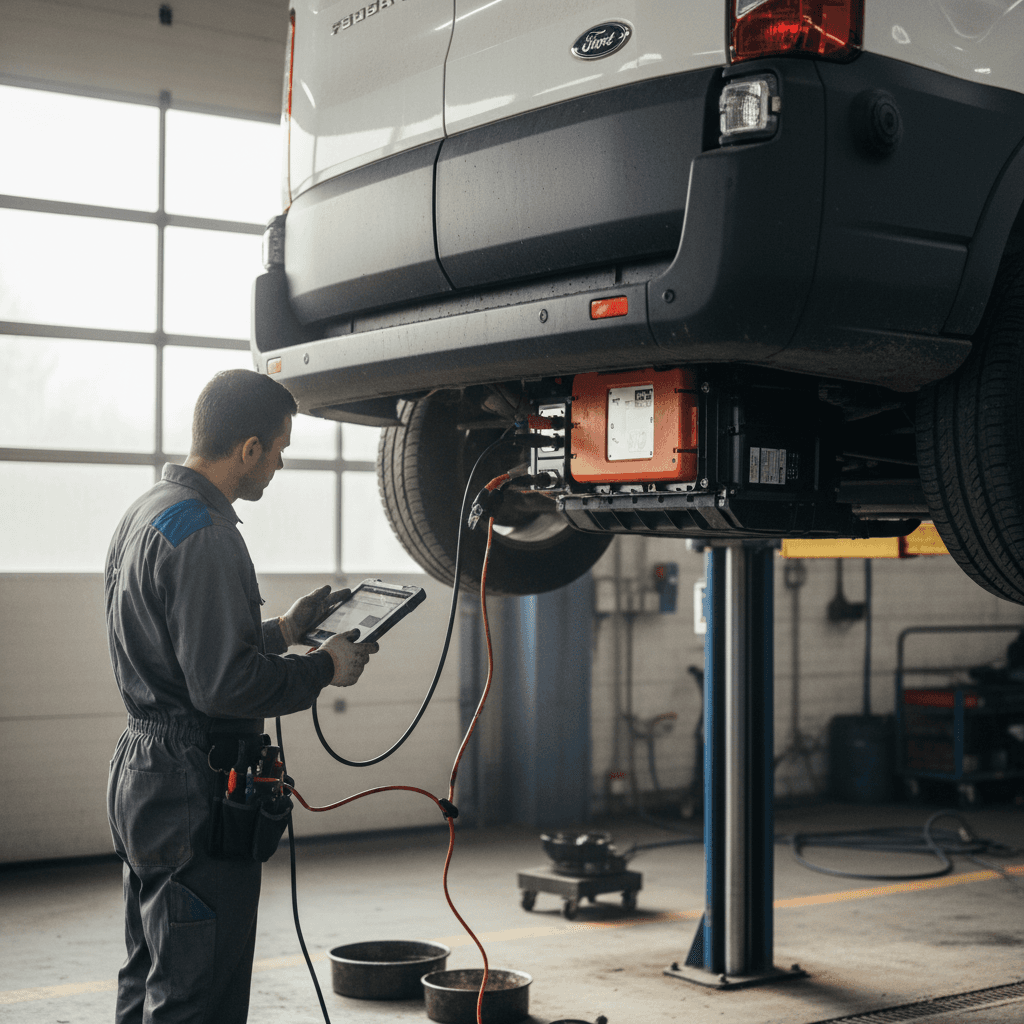
Most used Ford E-Transits will live at Level 2
Depot / home Level 2
The sweet spot. A 40–48A Level 2 charger on a 240V circuit can refill an E-Transit overnight. This is how most fleets operate: plug in when the vans come home, unplug in the morning.
Public DC fast charging
E-Transit supports DC fast charging, with later models improving peak charge speed. Great for the occasional long day, but pricing at public fast chargers can eat into your fuel‑savings math.
Work-from-home one‑offs
If a foreman or technician takes the van home, confirm they have access to at least a 240V outlet. Dribbling charge in on 120V household power is possible but slow for a big pack.
Electrical work is not DIY territory
When you’re comparing used vans, ask for the charging history if it’s a fleet return. A van that mostly lived on overnight Level 2 will typically show less battery stress than one fast‑charged to 80% three times a day. Fast charging is fine in moderation; build your operation so it’s an exception, not the default.
Common issues, recalls, and reliability
Mechanically, the Ford E-Transit is simpler than its gas sibling, no turbo V6, no transmission with hundreds of moving parts. But first‑generation commercial EVs inevitably carry some recalls and teething issues, and you need to know where the landmines are before you buy used.
- Rear axle / half‑shaft recall: Certain 2022–2025 E-Transit vans have been recalled for a rear axle half shaft that can partially disengage from the drive unit, potentially causing loss of drive. Any used van you consider should show this recall as completed, or you should plan on getting it done immediately at a Ford dealer.
- Battery and high‑voltage system recalls: A small number of E-Transits and Transit variants have faced recalls involving battery or electrical issues over the years. Again, the VIN is your truth serum, run it through the NHTSA and Ford recall tools before you sign anything.
- Rear‑view camera / software glitches: Recent Ford recalls have involved software problems affecting rear‑view camera displays across several models, including Transit. Annoying more than catastrophic, but worth checking for open campaigns.
- Fleet wear and tear: Most used E-Transits are ex‑fleet. Expect door seals, sliding doors, seat foam, and cargo‑area trim to show hard use even when the mechanicals are fine.
Non‑negotiable: run a full recall check
The E-Transit is, fundamentally, a Transit: a work boot on wheels. The difference is that this boot now runs silently, on electrons, and punishes sloppy route planning instead of sloppy oil‑change intervals.
Battery health on a used Ford E-Transit
The high‑voltage battery is the heart of any used electric van purchase. You care less about whether the cupholders rattle and more about whether the pack still has the capacity your routes demand. Ford designed the E-Transit’s pack with thermal management and conservative buffers, and most real‑world fleet reports suggest moderate degradation over the first 3–4 years when charged sanely. But you are not buying an average; you are buying one specific van.
How to sanity‑check E-Transit battery health
Three perspectives: software, data, and reality check
1. In‑van diagnostics
Scan for any battery or high‑voltage system trouble codes. Verify there are no warning lights on the dash. Some shops can pull state‑of‑health data from Ford’s systems, but it’s not as transparent as a smartphone‑style battery readout.
2. Telematics / charging history
If the van was in a connected fleet, ask for telematics or charging data. Patterns of constant 0–100% charging or frequent DC fast charging can accelerate wear compared with gentle 20–80% Level 2 charging.
3. Real‑world test drive
Start with a known state of charge, run a mix of city and highway with some weight in back, and see how quickly the percentage drops. A short, thoughtful drive can reveal more than a dozen brochures.
What the Recharged Score adds
Inspection checklist for used E-Transit buyers
Used Ford E-Transit inspection checklist
1. Verify configuration and GVWR
Use the VIN and door‑jamb sticker to confirm roof height, wheelbase, GVWR, and payload ratings. Make sure the van you’re buying matches your route needs and any weight‑restricted roads you use.
2. Look under the van, not just inside
On a lift, inspect the battery enclosure, high‑voltage cabling, and cooling lines for scrapes, impacts, or corrosion. Commercial vans live hard lives around loading docks and curbs.
3. Check tires and suspension for abuse
Uneven tire wear, sagging rear springs, or blown shocks can signal chronic overloading or hard use. A beat‑up suspension on a low‑mileage van is a red flag.
4. Inspect charging hardware and port
Open the charge port and look for bent pins, damage, or evidence of repeated rough handling. Confirm the portable charging cord (if included) works and isn’t spliced or modified.
5. Scan for codes, including HV system
A pre‑purchase inspection should include a scan of all modules, not just basic OBD‑II. You want to know about any stored high‑voltage battery, thermal management, or DC fast‑charge errors.
6. Confirm software updates and recalls
Ask for service records showing completed recalls and software updates. For fleet returns, a Ford commercial dealer may be able to pull a full service history by VIN.
7. Test drive your actual duty cycle
If possible, drive a representative route, speeds, loads, and stops similar to your real day. Watch energy consumption and projected range with the van working, not cruising empty on a sunny afternoon.
Let an EV‑literate shop inspect it
Costs, financing, and potential incentives
Used Ford E-Transit pricing is still shaking out as more 2022–2023 vans hit the secondary market. Expect asking prices to be higher than equivalent gas Transits of the same age, but the total cost of ownership can swing in the E-Transit’s favor when you account for fuel and maintenance savings, especially if your routes are short and predictable.
Fuel and maintenance math
- Energy cost per mile: At typical U.S. commercial electric rates, an E-Transit can cost a fraction per mile compared with gas or diesel, especially when charging overnight.
- Maintenance: No oil changes, fewer filters, no exhaust system, no spark plugs. You still have brakes, tires, and suspension to maintain, but overall shop time tends to drop.
- Downtime: For multi‑van fleets, less time in the shop can matter as much as the dollars. Electric vans tend to have fewer wear‑item surprises once recalls are addressed.
Financing and incentives
- Commercial financing: Many lenders now understand EV residuals better and are open to financing used commercial EVs with terms similar to conventional vans.
- Local incentives: While the big federal clean‑vehicle credits mainly target new purchases, some states and utilities offer rebates, grants, or reduced electric rates for adding used electric commercial vehicles to service.
- Cash‑flow planning: If you’re stretching to afford the van, make sure your charging infrastructure costs are part of the same conversation, not a nasty surprise after delivery.
How Recharged structures the numbers
How Recharged helps with used commercial EVs
Shopping for a used Ford E-Transit is not like buying a used F‑150. You’re evaluating a battery, a charging strategy, and a daily duty cycle, not just bodywork and mileage. That’s where a specialist matters.
What you get with a used E-Transit from Recharged
Commercial EV vans, minus the guesswork
Recharged Score Report
Every vehicle includes a detailed Recharged Score with verified battery health, charging behavior, and fair‑market pricing. You see the van’s strengths and weaknesses before you commit.
EV‑specialist guidance
Recharged’s EV specialists walk through your routes, loads, and charging options to confirm whether an E-Transit actually fits your business. If it doesn’t, they’ll tell you plainly.
Digital buying + delivery
You can buy fully online, trade in an existing vehicle, choose between instant offer or consignment for your current fleet, and arrange nationwide delivery, or visit the Recharged Experience Center in Richmond, VA.
Ready to find your next EV?
Browse VehiclesScaling beyond one van
Used Ford E-Transit FAQ
Frequently asked questions about buying a used Ford E-Transit
Bottom line: is a used Ford E-Transit right for you?
A used Ford E-Transit can be a brilliant tool when it’s matched to the right job: urban and suburban routes, predictable daily mileage, and a place to plug in every night. It’s not a one‑size‑fits‑all replacement for every gas Transit, and treating it like one is how fleets end up grumpy on YouTube. If you respect its range envelope, verify battery health and recall status, and set up proper charging, it can turn fuel and maintenance line items into real savings and give your drivers a quieter, cleaner workday.
If you’re ready to explore a used Ford E-Transit, or want a sanity check before you commit, Recharged can pair you with EV‑savvy advisors, detailed Recharged Score reports, flexible financing, trade‑in options, and nationwide delivery. That way, your first (or next) electric work van feels less like a leap into the unknown and more like a well‑run project with numbers that actually add up.