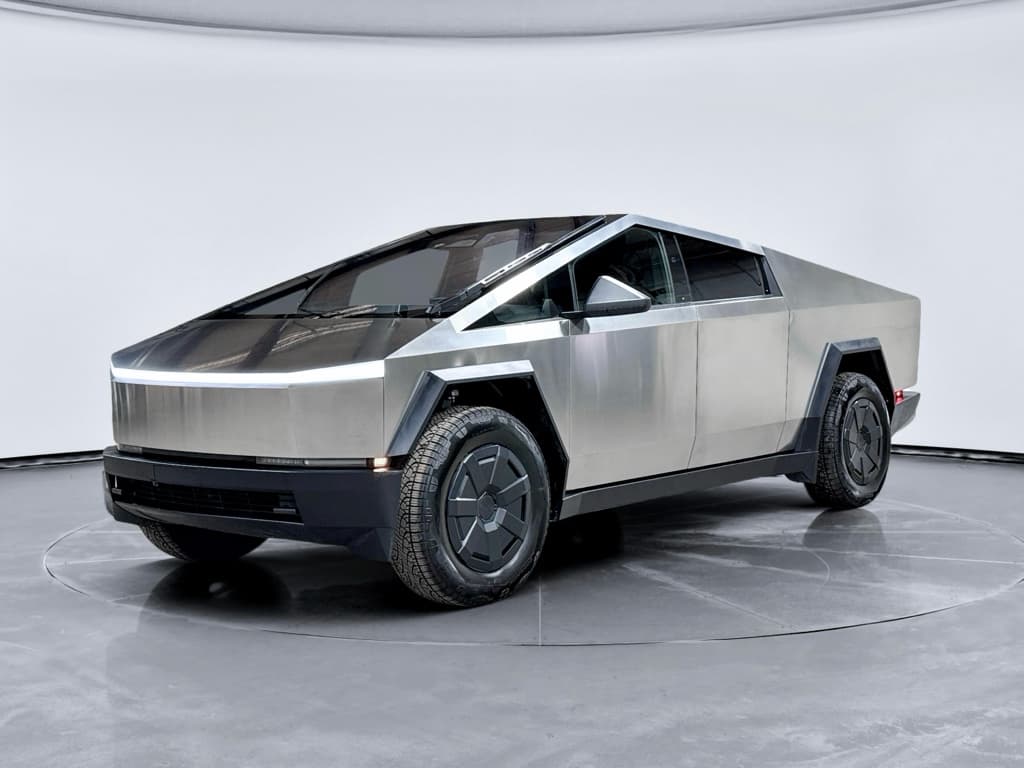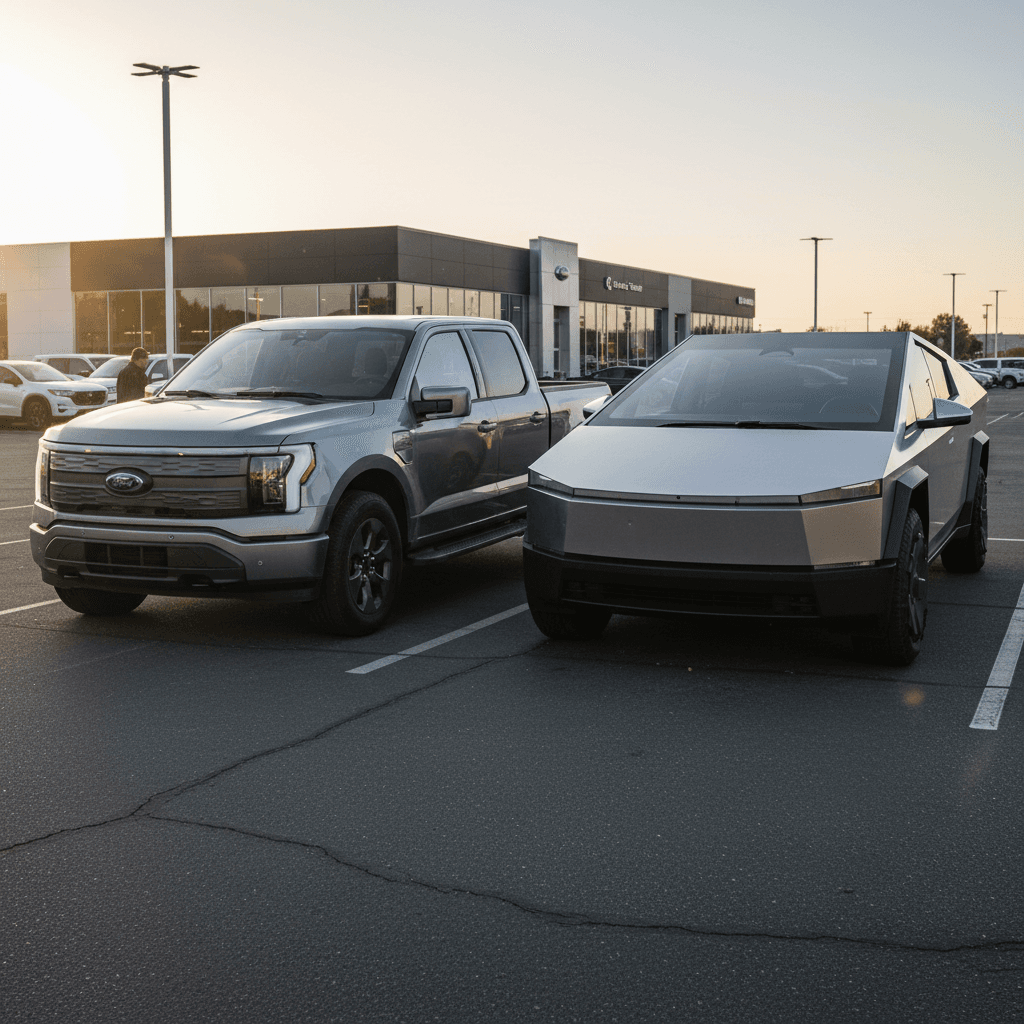
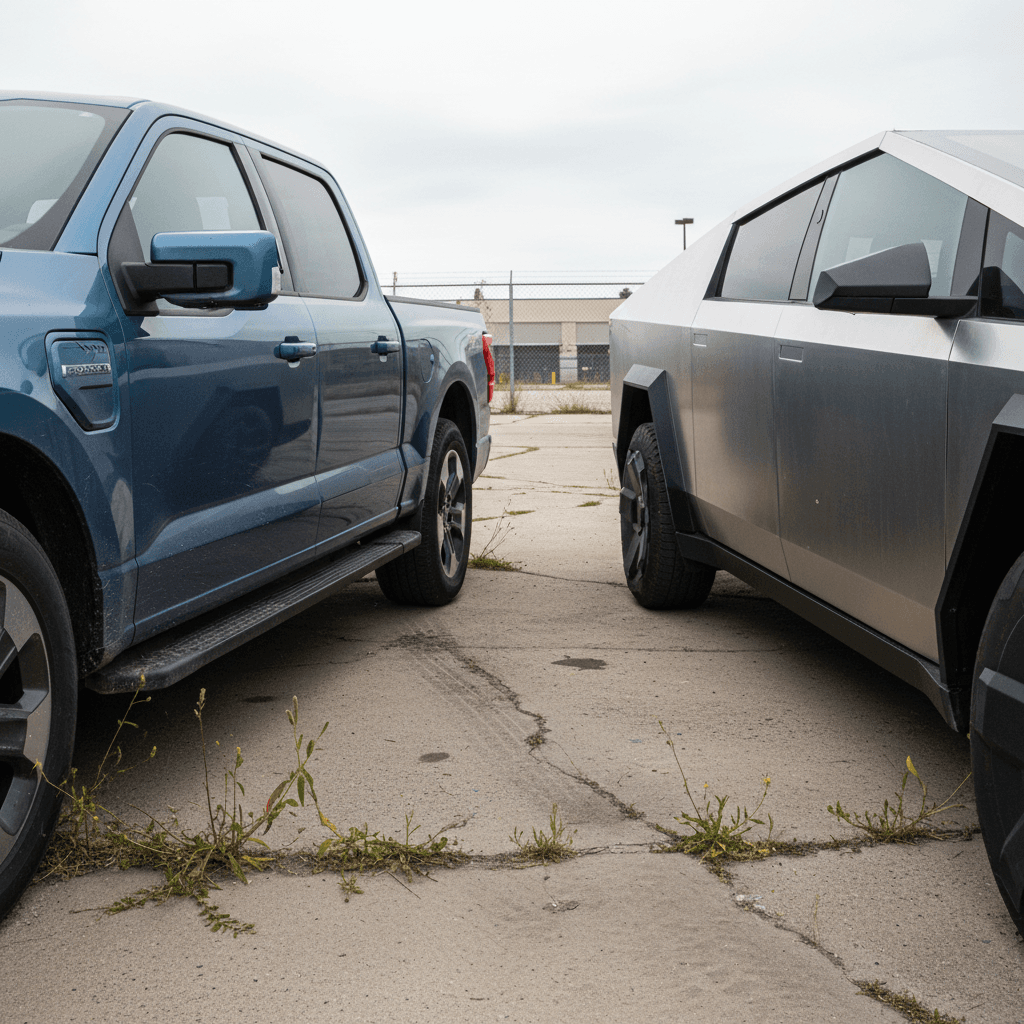
In 2026, the used Ford F-150 Lightning vs Tesla Cybertruck matchup is less about specs on a brochure and more about a simple question: do you want a truck that behaves like a truck, or a stainless-steel conversation piece with a complicated backstory and a bruised resale value?
Quick take
Why this 2026 comparison matters
Both trucks launched with enormous hype. By late 2025, reality had settled in. Ford announced the end of production for the current F-150 Lightning, turning every example into a used-only proposition. Meanwhile, the Cybertruck went from waitlist trophy to overbuilt niche product, piling up at dealers and on auction sites as early adopters tried to cash out. For you, the 2026 shopper, that means one thing: leverage.
This guide focuses on the used market as it looks in 2026: real-world prices, depreciation, reliability headlines, and how these two electric pickups actually live as tools, commuters, and toys. We’ll stay grounded in what you can buy today, not the promises made on stage five product cycles ago.
Used electric truck market snapshot, 2026 (U.S.)
Snapshot: key specs for used F-150 Lightning vs Cybertruck
Exact numbers vary by trim and year, but most used shoppers in 2026 are cross-shopping extended-range Lightnings against dual-motor Cybertrucks. Those are the volume players in the real world.
Core specs: typical used configurations in 2026
Approximate specs for popular used trims buyers see most often in 2026. Always verify exact figures for the VIN you’re considering.
| Truck & typical trim | Battery / pack | EPA range (new) | 0–60 mph (approx.) | Max tow rating | Bed length |
|---|---|---|---|---|---|
| Ford F-150 Lightning XLT / Lariat ER | ~131 kWh usable | up to ~320 mi | ~4.0 sec | 10,000 lbs (with tow pkg) | 5.5 ft |
| Ford F-150 Lightning Pro SR work truck | ~98 kWh usable | ~230–240 mi | ~4.5–5.0 sec | 7,700–8,500 lbs | 5.5 ft |
| Tesla Cybertruck AWD | ~123 kWh class* | ~340 mi (Tesla estimate) | ~4.1 sec | 11,000 lbs | 6 ft "vault" |
| Tesla Cybertruck Cyberbeast | larger performance pack* | ~320 mi (with 20" wheels) | ~2.6–2.7 sec | 11,000 lbs | 6 ft "vault" |
Specs will vary by year/trim; treat these as ballpark comparison points, not promises.
About the numbers
Used pricing & depreciation: 2026 reality check
Both of these trucks have had soap-opera character arcs when it comes to pricing. Early Cybertrucks auctioned for exotic-car money; early Lightnings were hard to find at MSRP. By 2026, gravity has done its work.
How much do used F-150 Lightnings and Cybertrucks cost in 2026?
Ballpark U.S. retail asking prices; your market will vary.
Used Ford F-150 Lightning
Typical 2023–2024 Pro / XLT SR
- Often in the high-$30k to mid-$40k range for lower-mile work trucks.
- XLTs and Lariats with options slide into the $45k–$55k band.
Discounts reflect Ford’s later price cuts, tax-credit shifts, and the end of Lightning production, which nudged values down but also made the truck a bit of a future curiosity.
Used Tesla Cybertruck
Typical 2024–2025 AWD
- After the early spike, many used AWD trucks now list in the mid-$60k to low-$80k range, depending on miles and options.
- Cyberbeast examples, once six-figure darlings, frequently trade in the high-$80k to low-$90k band.
The bigger story is depreciation: some early buyers have eaten eye-watering losses as Tesla adjusted pricing and demand cooled.
Depreciation: who falls faster?
Smart ways to shop used EV truck prices in 2026
1. Look at sold prices, not just listings
Auction results and recent sales data tell you what people are actually paying for used Lightnings and Cybertrucks. Asking prices can lag reality by months.
2. Adjust for tax credits you won’t get
Many new trucks benefited from federal or state incentives. Those don’t transfer to used buyers, so compare your out-the-door used price to the new truck’s effective post-incentive cost at the time.
3. Consider depreciation already “baked in”
A used Cybertruck that’s already shed $25,000 off MSRP in 18 months may be near the bottom of its steepest slide. A Lightning with gentler losses might hold steady if demand for capable work trucks remains.
4. Weigh warranty time left
Both trucks carry long battery and drivetrain warranties (often 8 years / 100,000 miles on high-voltage components). A slightly higher price for more warranty coverage can be a better long-term deal.
Range, efficiency, and real-world usage
On paper, a dual-motor Cybertruck goes farther than most Lightnings between charges. In practice, both trucks are big, blunt instruments pushing a lot of air. If you’re expecting Model 3 efficiency, you will go home sad.
Ford F-150 Lightning
- Extended-range trucks are rated around 300–320 miles when new, depending on trim and wheels.
- Standard-range packs hover closer to 230–250 miles.
- Owners routinely report 20–30% lower range in cold weather or at highway speeds.
- Battery thermal management is conservative, which helps long-term health but doesn’t work miracles against physics.
Tesla Cybertruck
- AWD trucks are quoted around 340 miles; performance variants a bit less, especially on big tires.
- Like all Tesla estimates, figure on 20–25% off in real mixed driving for a safe expectation.
- Optional all-terrain tires and accessories nick range noticeably.
- The aero profile is better than it looks, but this is still a heavy brick, not a sedan.
A simple range rule of thumb
Towing, hauling, and working like a truck
This is where the myth of the electric supertruck crashes into the reality of electrons. Both the Lightning and the Cybertruck can tow five-digit numbers on paper. Hook up a serious trailer at freeway speeds, and range plummets in a way that feels almost theological: you’re being punished for your enthusiasm.
Towing and payload comparison (headline numbers)
Manufacturer-quoted maximums for popular configurations; your VIN and equipment matter more than the brochure.
| Truck | Max tow rating (properly equipped) | Typical real-world towing range | Payload feel & bed usability |
|---|---|---|---|
| F-150 Lightning ER (Max Tow pkg) | Up to 10,000 lbs | Often 90–140 miles with a 5,000–7,000 lb trailer at highway speeds | Traditional 5.5-ft bed, excellent tie-downs, familiar box dimensions. |
| Cybertruck AWD / Cyberbeast | Up to 11,000 lbs | Similar story: heavy trailers can cut usable range roughly in half | 6-ft "vault" with integrated tonneau; useful but less conventional dimensions. |
Remember: these are best-case ratings. Real range while towing can drop by half or more for both trucks.
Towing reality check
- For jobsite work, the Lightning’s traditional bed shape, lower sides, and plentiful Ford accessories make it feel like any other F-150, just faster and quieter.
- The Cybertruck’s “vault” bed is cleverly packaged but higher and more enclosed; fantastic for locking gear away, less ideal if you’re used to forklifts dropping pallets into a square-sided box.
- Pro Power Onboard in the Lightning gives you household-style outlets and serious exportable power right from the bed; Cybertruck has its own outlet setup, but Ford’s work-truck ecosystem is deeper and more familiar to contractors.
Charging experience and road-trip viability
When these trucks launched, the conventional wisdom was simple: Cybertruck equals Supercharger supremacy; Lightning equals you, alone in a parking lot, staring at a broken CCS charger. By 2026 the gap has narrowed, but the experience still feels different from behind the wheel.
Ford F-150 Lightning
- Uses the CCS fast-charging standard on early years; later models begin to adopt NACS (Tesla’s connector) with adapters in the mix.
- Real-world DC rates vary by pack; peak speeds are strong, but sustained charging can taper earlier than Tesla’s best.
- You’ll rely on networks like Electrify America, EVgo, and regional players, some good sites, some horror stories.
- Home Level 2 charging (240V) is straightforward and, for most owners, the primary fueling source.
Tesla Cybertruck
- Native access to the Tesla Supercharger network, still the gold standard for reliability and ease of use.
- High peak DC speeds and predictable charge curves make long trips simpler to plan.
- Some non-Tesla stations are accessible via adapters as NACS spreads, but in practice most owners live on Superchargers.
- Home charging is similar: a 240V circuit and the Tesla Wall Connector or a compatible Level 2 charger.
Good news for both trucks
Reliability, recalls, and build quality
This is the section where the Cybertruck’s strangeness stops being charming and starts being homework. Both trucks have seen the usual EV teething issues, software quirks, minor hardware recalls, but the Cybertruck has carried a heavier spotlight and a longer list of headlines.
Used reliability themes: Lightning vs Cybertruck
What you’re actually likely to live with day to day.
Ford F-150 Lightning
- Underlying F-150 platform and cabin hardware are known quantities; lots of shared parts and established suppliers.
- Most issues center on software updates, charging behavior, and occasional 12V system gremlins.
- Ford’s dealer network can be a blessing and a curse, plenty of shops, but EV expertise varies wildly.
- Battery packs are covered by long warranties; early data suggests modest, manageable degradation for typical use.
Tesla Cybertruck
- Complex stainless body panels, unusual wiper and lighting hardware, and unique glass all raise repair-cost questions.
- Documented recalls and campaign updates in the first years have addressed steering, trim, and structural concerns.
- Panel alignment, fit-and-finish, and water sealing are bigger question marks than on the Ford.
- On the upside, over-the-air software updates can meaningfully improve behavior, features, and even efficiency.
Collision repair risk
Interior, tech, and day-to-day livability
Climb in and the philosophical divide is immediate. The F-150 Lightning is an F-150 that happens to be electric. The Cybertruck is a spaceship that happens to have a bed.
Ford F-150 Lightning: familiar, functional
- Conventional controls, physical buttons for key functions, and a layout anyone coming from a gas F-150 will grasp in minutes.
- Comfortable seats, good visibility, and a pleasant ride quality, especially in mid- and upper trims.
- Sync infotainment is competent if not glamorous, and smartphone mirroring (Apple CarPlay / Android Auto) is a big plus.
- Cabin materials track the trim: work-truck Pro models feel honest and durable, while Lariat and Platinum get into luxury territory.
Tesla Cybertruck: brutalist lounge
- Dominated by a large central screen and minimalist controls; if you like Tesla’s design language, you’ll feel at home.
- Some owners love the futuristic vibe; others find the stark surfaces and sharp angles fatiguing over long days.
- Software features, visualizations, and Easter eggs are pure Tesla, entertaining, sometimes distracting, rarely boring.
- Rear-seat comfort is decent, but the cabin can feel more like a design object than a work space.
- If you share the truck with less tech-comfortable drivers, the Lightning will generate fewer panicked phone calls.
- If you live for over-the-air features, flashy UI, and being on the bleeding edge, the Cybertruck scratches that itch better than the Ford ever could.
- Noise levels at highway speeds are low in both, but the Lightning’s more traditional aerodynamics and sealing often feel more refined.
Ownership costs, insurance, and resale
One of the big reasons to consider a used electric truck in 2026 is simple: let someone else eat the worst of the depreciation. That’s especially appealing with the Cybertruck, whose early buyers sometimes watched value evaporate faster than battery percentage while towing uphill.
Cost and value themes for 2026 shoppers
Insurance can be higher than a regular half-ton truck for both models thanks to vehicle value, repair complexity, and parts availability. The Cybertruck’s unusual body construction and early repair stories don’t help here; Lightning repairs, while still not cheap, at least live on planet F-150.
Think in terms of total cost of ownership
Which used EV truck is right for you?
Buyer profiles: who should pick what?
The practical contractor or family hauler
You care about reliability, dealer support, and a cabin everyone understands.
You’ll use the bed like a bed, not as a design statement.
You want Pro Power-style onboard outlets for tools, tailgating, or backup power.
Verdict: a <strong>used F-150 Lightning</strong>, ideally an extended-range XLT or Lariat, is the better fit.
The tech-forward early adopter
You want the wildest-looking thing in any parking lot, and you’re comfortable being a rolling beta test.
You’ll actually use the Tesla Supercharger network for long trips.
You’re okay with repair and depreciation uncertainty in exchange for performance and presence.
Verdict: a <strong>used Cybertruck AWD or Cyberbeast</strong> scratches that itch like nothing else.
The numbers-focused commuter
You mostly drive a fixed route, rarely tow, and just want a quiet, comfortable, cheap-to-run truck.
Home charging is available; public fast charging is occasional, not weekly.
You’d like to minimize depreciation risk and insurance surprises.
Verdict: a <strong>used Lightning with standard-range battery</strong> can make excellent financial sense.
The toy-with-a-bed shopper
You already have a sensible car in the household; this is your indulgence truck.
0–60 times and social media reactions matter more than payload or fifth-wheel ratings.
You’re willing to accept some chaos in exchange for thrills.
Verdict: the <strong>Cybertruck</strong> is the more entertaining, if riskier, choice.
The boring answer is usually right
How Recharged helps with used EV trucks
Shopping for a used Lightning or Cybertruck isn’t like grabbing a used gas F-150 off a corner lot. Battery health, charging history, and software state matter just as much as mileage and tire tread. That’s exactly the gap Recharged was built to close.
- Every vehicle on Recharged comes with a Recharged Score Report that includes verified battery health and transparent pricing, so you’re not guessing how much range you’re really buying.
- You can buy and finance online, trade in your current vehicle, and arrange nationwide delivery without stepping into a dealership back office.
- EV specialists walk you through charging setup, incentives, and everyday use, whether you’re eyeing a work-ready Lightning or a weekend Cybertruck.
- If you’re near Richmond, VA, you can visit the Recharged Experience Center to see vehicles in person and talk through which truck matches your actual life, not just your Instagram feed.
The used electric pickup market in 2026 is finally mature enough that you have options, and leverage. Whether you end up in a Ford F-150 Lightning, a Tesla Cybertruck, or something else entirely, go in with clear eyes about range, towing, depreciation, and repair realities. And if you’d like a second set of eyes on that battery report or build sheet, Recharged is built for exactly this kind of decision.