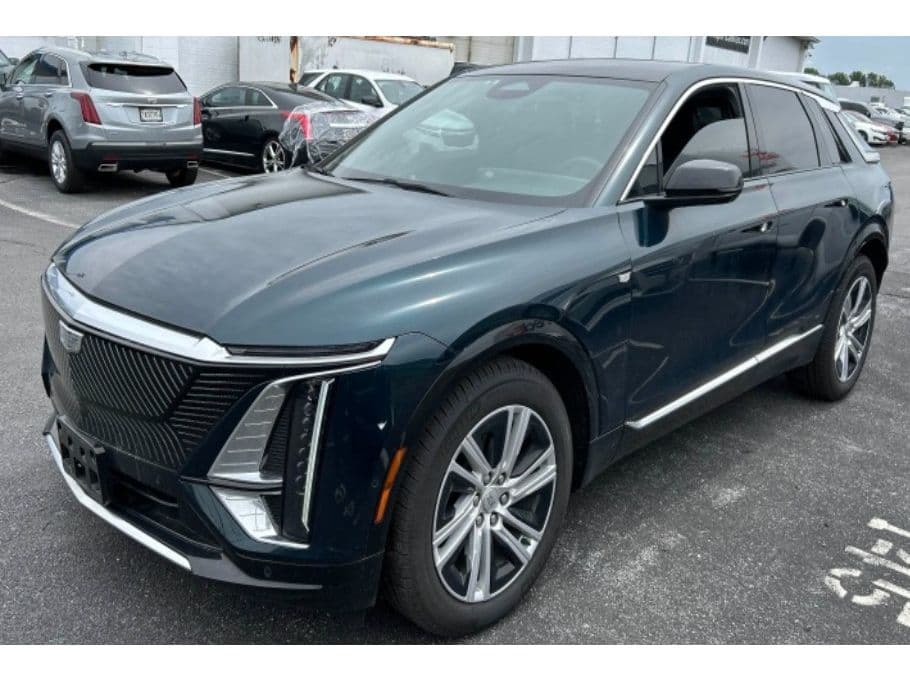
If you are budgeting long‑term maintenance on a Cadillac Lyriq, the phrase coolant flush can raise a red flag. The good news is that on a modern EV like the Lyriq, coolant service is infrequent and usually not a budget buster, but it is more involved than a simple radiator flush on an old gas sedan. This guide walks through Cadillac Lyriq coolant flush cost, when you actually need it, and how to factor it into your ownership plan.
Quick context
Lyriq coolant flush cost at a glance
Typical Cadillac Lyriq coolant service numbers (2026)
Because EV coolant work is less familiar than an oil change, cost estimates online are all over the map. Looking at GM EV guidance, typical EV coolant service ranges, and current labor times, a realistic Cadillac Lyriq coolant flush cost usually falls between $150 and $350 for a single circuit at a dealer or EV‑savvy shop in 2026. Multi‑circuit services, battery, inverter, and cabin, can climb higher, but they are rarely done all at once outside of major repairs.
Big‑picture maintenance tip
How the Cadillac Lyriq’s cooling system actually works
Multiple coolant circuits, not just one radiator
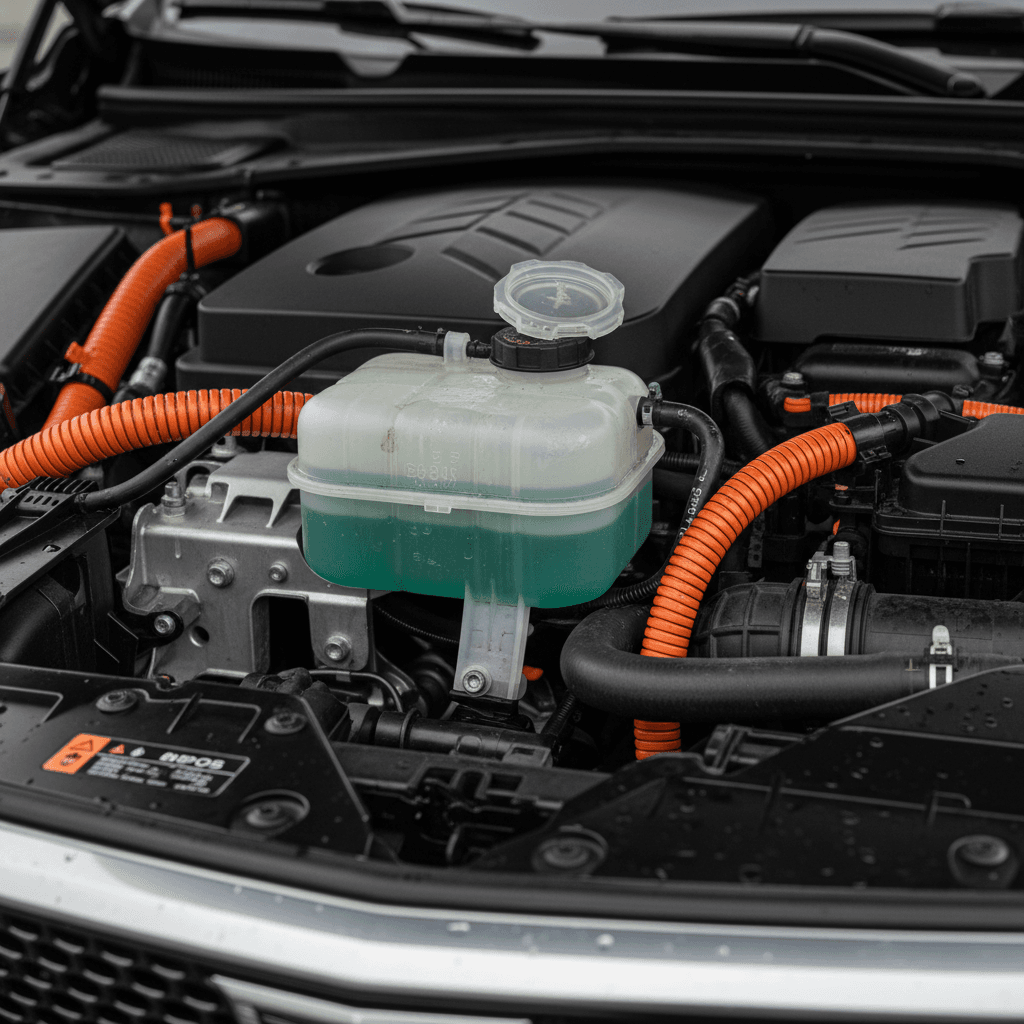
The Lyriq uses multiple liquid cooling loops that share a similar orange or pink Dex‑Cool–type coolant but serve different jobs:
- High‑voltage battery loop – Keeps the Ultium battery pack in its preferred temperature range for longevity and fast‑charging performance.
- Drive unit / inverter loop – Cools the electric motors and power electronics that turn battery energy into motion.
- Cabin/HVAC loop – Ties into the heat‑pump and A/C system to warm or cool the cabin and, when needed, the pack.
Why coolant matters on an EV
Instead of preventing an engine from boiling over, EV coolant protects high‑value components. Over time coolant can lose its corrosion protection or become contaminated with air bubbles or debris. That can lead to:
- Reduced fast‑charging speed as the system limits power to protect the battery.
- Warning lights like “Service High Voltage System.”
- In extreme cases, overheating damage to inverters, pumps, or the battery pack itself.
That’s why GM sets long but definite coolant replacement intervals, even though EVs have fewer fluids overall.
Factory interval: when a Lyriq really needs a coolant flush
GM guidance vs. real‑world coolant service timing
Always confirm specifics in your owner’s manual, but this gives you a realistic framework for planning Lyriq coolant maintenance.
| Component / loop | Typical GM guidance* | Likely first service for many owners | Notes |
|---|---|---|---|
| High‑voltage battery coolant | ~150,000 miles or 5 years | 8–10 years for average mileage | Often checked with a test strip or scan tool before replacement. |
| Drive unit / inverter coolant | ~150,000 miles or 5 years | 8–10 years | May be serviced with the battery loop, depending on dealer procedure. |
| Cabin/HVAC‑related coolant | Varies; often inspected, not routinely flushed | Only if a repair is performed | Heat‑pump and A/C work can require draining and refilling coolant loops. |
| 12V system / engine‑style loop (if equipped) | ~150,000 miles | 8–10 years | Less of a focus on BEVs but sometimes listed in generic schedules. |
Intervals here refer to normal‑use scenarios; heavy fast‑charging, hot climates, or early component failures can move these dates up.
Check your specific manual
The big takeaway is that coolant is a long‑interval item on the Lyriq. Most owners will hit tire rotations, brake fluid, and cabin filters many times before they pay for their first coolant flush. But if you drive high mileage, live in an extreme‑temperature region, or see cooling‑system warnings, you may face coolant service earlier than the printed schedule suggests.
Cadillac Lyriq coolant flush cost breakdown
Where your Lyriq coolant flush dollars go
Labor, parts, and shop overhead all play a role in your final bill.
Labor
$120–$220 typical for a single‑loop service, assuming 1.5–2.0 hours at a $90–$140/hr shop rate. Some published labor guides list 3–6 hours for deep battery or inverter coolant work, which can push labor closer to $300–$600 in complex cases.
Coolant & supplies
GM‑approved Dex‑Cool–type coolant runs about $15–$25 per gallon at retail, sometimes more at the dealer. A Lyriq coolant loop might use 2–3 gallons including waste, plus shop supplies and a new reservoir cap or seals if needed, roughly $60–$120 in parts.
Shop & diagnostic fees
Expect an $80–$180 diagnostic or EV service fee if you came in for a warning light. Many shops roll that into the final repair if you authorize coolant work; others charge it separately.
Add those pieces together and most straightforward Cadillac Lyriq coolant flush costs land between $150 and $350 for a simple drain‑and‑fill on one loop. If a dealer follows the more conservative labor times from EV service manuals, purging air, using special vacuum tools, and performing multiple bleed cycles, the total can climb into the $400–$700 range, especially if two loops are serviced in the same visit.
Don’t cheap out on coolant type
Dealer vs. independent shop vs. EV specialist
Cadillac dealer
- Highest familiarity with Lyriq bulletins and software updates.
- Access to GM‑specific bleed procedures and tools.
- Rates often in the $150–$220/hr range in many metro areas.
- Best choice if you have active warranty coverage or recurring thermal management warnings.
Independent shop
- Labor rates commonly 10–30% lower than dealer.
- Only a few have the training and tooling to handle high‑voltage coolant loops correctly.
- Great option for out‑of‑warranty cars if the shop has verifiable EV experience.
EV specialist (like Recharged partners)
- Shops that work on EVs all day understand battery cooling quirks, not just engines.
- Often use OE‑equivalent fluids and documented EV procedures.
- Can pair coolant checks with battery health diagnostics, which is exactly what we do with the Recharged Score on every EV we sell.
Where Recharged fits in
Ready to find your next EV?
Browse VehiclesSigns your Lyriq may need coolant service sooner
Watch for these cooling‑system warning signs
1. “Service High Voltage System” message
One of the most common Lyriq complaints online is a general high‑voltage system warning. While it can mean several things, low coolant level, trapped air, or a failing coolant pump are frequent culprits and should be checked immediately.
2. Reduced fast‑charging speed
If DC fast‑charging used to hit higher power levels on the same station and weather conditions, but now falls off quickly, the battery may be limiting power due to conservative temperature estimates or marginal cooling performance.
3. Audible coolant pump or rumbling noises
Electric coolant pumps make a whirring sound, but loud groaning, rumbling, or random cycling noises during preconditioning or charging can point to cavitation, low coolant, or a bad pump.
4. Visible coolant loss or stains
Any orange, pink, or reddish puddles under the vehicle, or a noticeable drop in the reservoir level, require immediate attention. A leaking line or chiller can starve the battery loop of coolant.
5. HVAC performance changes
Because the Lyriq’s heat pump and cabin system share hardware with battery cooling, odd A/C behavior, weak heat in winter, or repeated defrost issues can be related to coolant problems.
6. Overheating warnings while towing or climbing
If you see thermal warnings during high‑load situations such as mountain grades or towing, do not keep driving as if nothing is wrong. Pull over where safe and have the car inspected.
Act fast on thermal warnings
How a Cadillac Lyriq coolant flush is performed
- The technician verifies any warning codes and confirms which coolant loop is affected (battery, drive unit, HVAC).
- The car is placed into a service mode that safely de‑energizes high‑voltage components so the cooling system can be opened without risk.
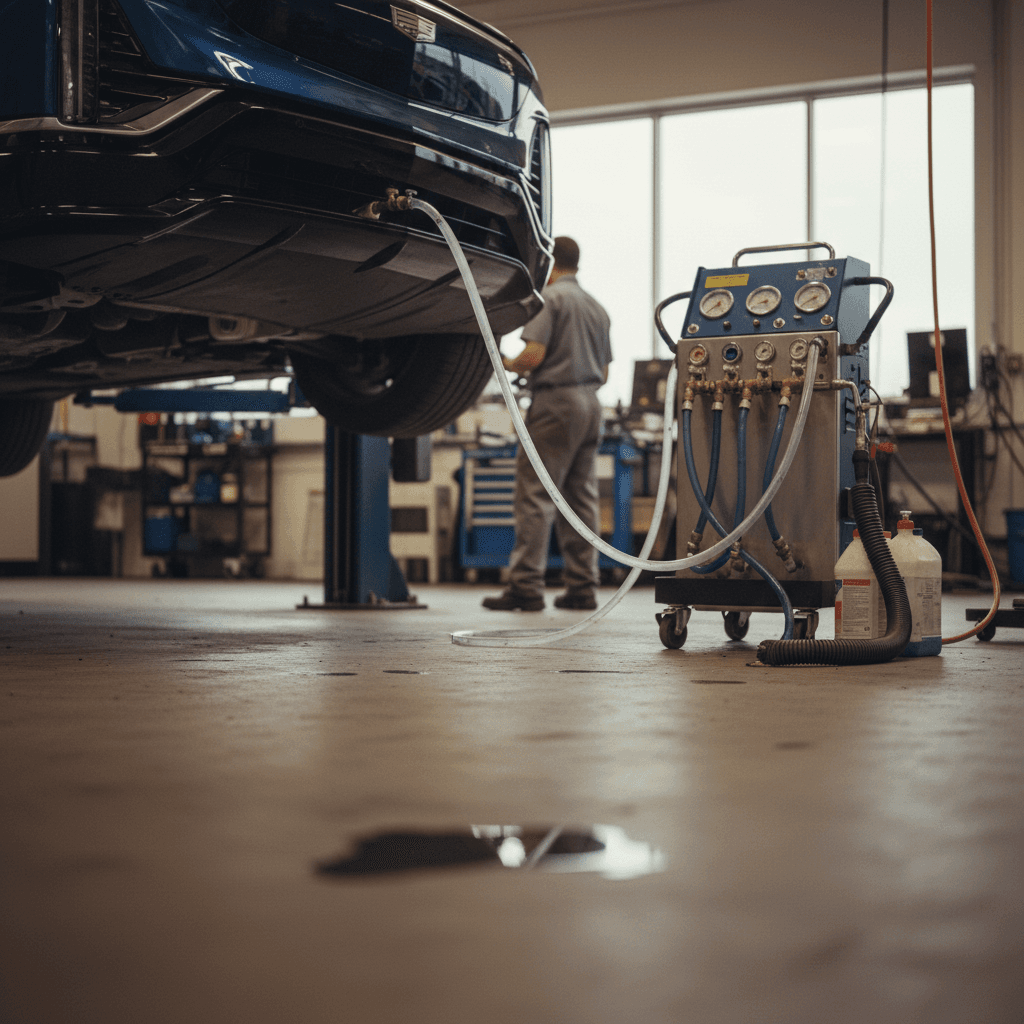
- Coolant is drained from the relevant reservoirs, hoses, and low points; some procedures use a vacuum machine to pull out trapped fluid.
- Lines and components are inspected for leaks, damaged fittings, or contamination (such as oil in coolant from a failed chiller).
- The system is refilled with fresh, GM‑approved Dex‑Cool–type coolant mixed to the correct ratio for your climate.
- A vacuum‑fill or pressure‑bleed process removes air bubbles; the car may run its pumps and valves through a service routine to circulate coolant.
- Finally, the technician rechecks levels, clears any stored codes, performs a short road test or charge session, and verifies there are no new leaks.
High‑voltage safety note
Ways to keep Lyriq coolant service costs in check
Practical tactics to avoid surprise coolant bills
A little planning goes a long way when it comes to long‑interval services.
Bundle services smartly
When your Lyriq is in for scheduled work, like brake fluid, tires, or a recall, ask the service advisor to check coolant levels and freeze point. If you are approaching the mileage or time limit, it might be cheaper to do coolant during the same visit than to come back separately.
Review warranties and service plans
Some extended warranties or pre‑paid maintenance plans cover high‑voltage coolant service at the recommended interval. Before you pay cash, double‑check what your contract includes.
Get a second opinion on big estimates
If you receive a $700–$1,000 estimate for coolant work, ask for a line‑item breakdown and then consult an EV‑experienced independent shop for comparison. In some cases, not every loop needs to be flushed at once.
Choose the right shop for the job
For in‑warranty issues or repeated thermal faults, stick with a Cadillac dealer. For out‑of‑warranty, routine service, a reputable EV specialist can often match dealer quality for less money.
Coolant flush considerations for used Lyriq buyers
If you are considering a used Cadillac Lyriq, especially an early‑build 2023 or 2024 model, coolant and thermal management should be on your inspection checklist. Early owners have reported issues such as coolant pump failures, noisy heating systems, and high‑voltage warnings that trace back to cooling‑system behavior. None of this is a deal‑breaker, but it makes a thorough pre‑purchase evaluation even more important.
Used Lyriq cooling‑system checklist
Verify warning‑free operation
During the test drive, pay attention to the instrument cluster for any “Service High Voltage System” or battery‑temperature alerts, especially while fast‑charging or using cabin preconditioning.
Inspect coolant reservoirs
With the vehicle off and safe to inspect, have a technician confirm that the coolant level in all accessible reservoirs is within spec and that the fluid appears clean, not rusty or oily.
Scan for stored codes
A professional scan tool can reveal historical thermal‑management faults even if the dash is currently clear. This is a step most casual buyers skip, but it can save you from buying someone else’s problem.
Ask about prior cooling repairs
Request service records. Replaced coolant pumps, valves, lines, or A/C compressors aren’t automatically bad news, but you’ll want to know they were fixed correctly.
Plan future coolant costs into your budget
If the odometer is creeping toward 100,000–150,000 miles with original coolant, assume you’ll be the one paying for the first flush. Build <strong>$200–$500</strong> into your ownership plan over the next few years.
How Recharged de‑risks used Lyriqs
FAQ: Cadillac Lyriq coolant flush cost & intervals
Common questions about Lyriq coolant service
Bottom line: how worried should you be about Lyriq coolant costs?
Compared with what owners once spent on oil changes, tune‑ups, and transmission services, Cadillac Lyriq coolant flush cost is an occasional, manageable expense. You are likely looking at one or two coolant services in a decade of driving, at a few hundred dollars each, provided no components fail prematurely. The key is to treat thermal warnings seriously, choose a shop that understands EV cooling systems, and fold that long‑interval service into your ownership budget rather than being surprised by it.
If you are in the market for a Lyriq or another used EV, buying from a source that understands battery health and cooling, like Recharged, can take a lot of the guesswork out of the equation. With transparent battery data, fair pricing, and EV‑specialist support, you can enjoy the quiet, refined drive of a Lyriq without losing sleep over what’s happening in its coolant loops.