You’re not imagining it: a few years ago, electric vehicles looked like toys for early adopters with big budgets. Today, thanks to steep depreciation and a flood of off-lease vehicles, it’s possible to get a used EV with a low monthly payment, often similar to a used gas car payment, but with much lower running costs. The trick is understanding how prices, financing, and battery health fit together so you don’t end up with a cheap payment on the wrong car.
Why this moment matters
Why used EVs are so affordable right now
To understand how to get a low payment, it helps to know why used EVs are relatively cheap compared with what the first owner paid. Several forces are pushing prices down while quality is often still high.
The used EV price reset, in numbers
- Fast depreciation of new EVs: Automakers slashed new EV prices in 2023–2025, which pulled used values down even faster.
- Off‑lease wave: EV leasing surged earlier in the decade, and many of those cars are hitting the used market in 2025–2026.
- Tech turnover: Newer EVs have longer range and faster charging, so last‑gen models have to be priced aggressively to compete.
- Expired federal credits for buyers: The federal used EV tax credit of up to $4,000 ended for purchases after September 30, 2025, so sellers often discount to keep deals attractive.
What this means for your payment
How price, loan, and term shape your monthly payment
A “low monthly payment” is rarely magic; it’s just math. Three levers determine what you pay each month on a used EV: purchase price, interest rate, and loan term. You control more of this than most dealers want you to think.
Example monthly payments on a used EV
Assumes 10% down and 7% APR. These are illustrative only; your actual offers will vary.
| Price (after down) | Loan Term | Approx. Payment | Total Interest Paid |
|---|---|---|---|
| $18,000 | 48 months | ≈ $430/month | ≈ $2,600 |
| $18,000 | 72 months | ≈ $310/month | ≈ $4,300 |
| $24,000 | 72 months | ≈ $415/month | ≈ $5,700 |
| $24,000 | 84 months | ≈ $380/month | ≈ $6,900 |
Notice how stretching the term lowers the payment but raises total interest paid.
1. Vehicle price
Every $1,000 you shave off the price of a used EV typically cuts your payment by roughly $15–$25 per month, depending on term and rate. Choosing a $20k hatchback instead of a $28k crossover can make a bigger difference than obsessing over a quarter‑point on the APR.
2. Interest rate & term
A lower APR reduces both your payment and total interest, but extending the term has the biggest impact on the monthly number. Just remember: a 72‑ or 84‑month loan keeps you upside‑down longer, which matters in a fast‑depreciating segment like EVs.
Beware the “payment shopper” trap
Picking the right used EV to keep payments low
The cheapest monthly payment rarely comes from the flashiest badge. In the current market, some used EVs are genuine bargains, while others, especially certain Teslas, have recently firmed up in price. Your goal is a car that’s inexpensive to buy, cheap to run, and still fits your real‑world range needs.
Used EV types that tend to yield lower payments
Think beyond brand hype and focus on value, range, and battery health.
Compact hatchbacks & sedans
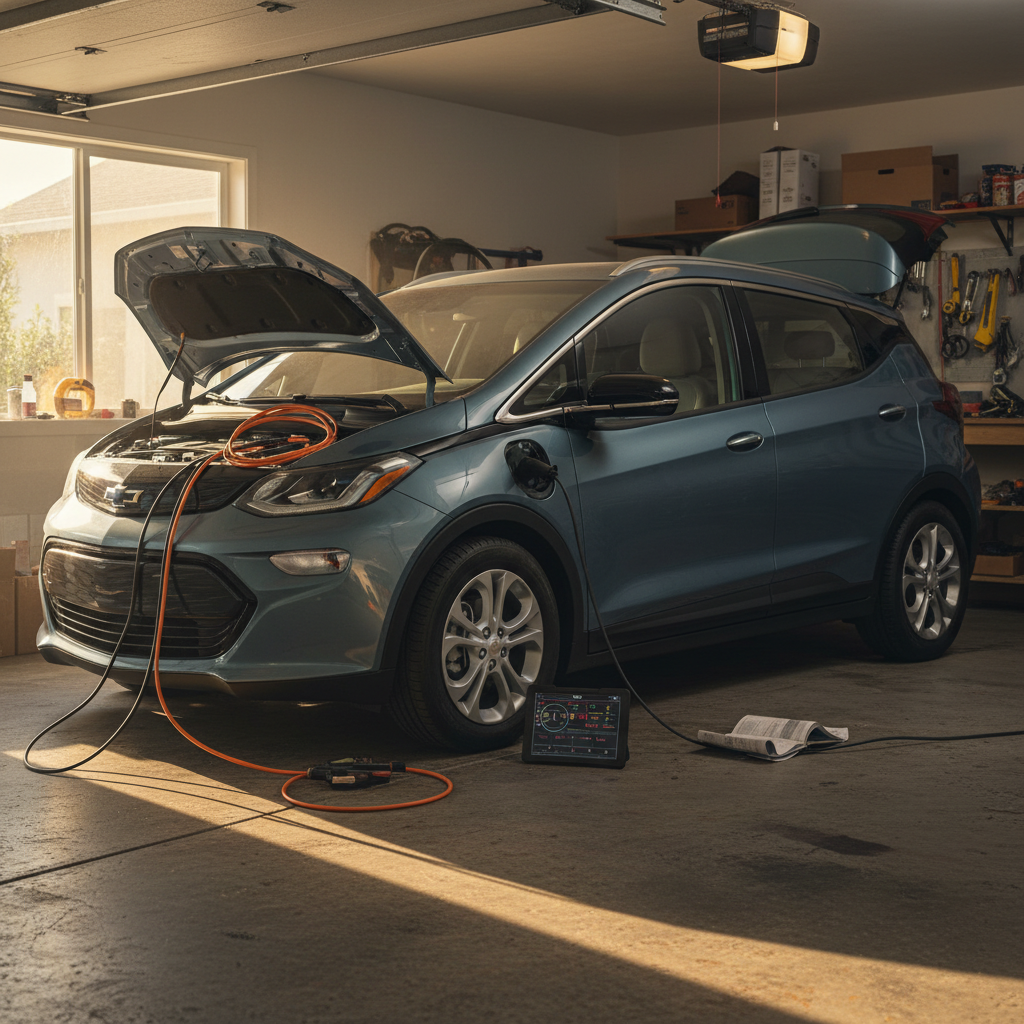
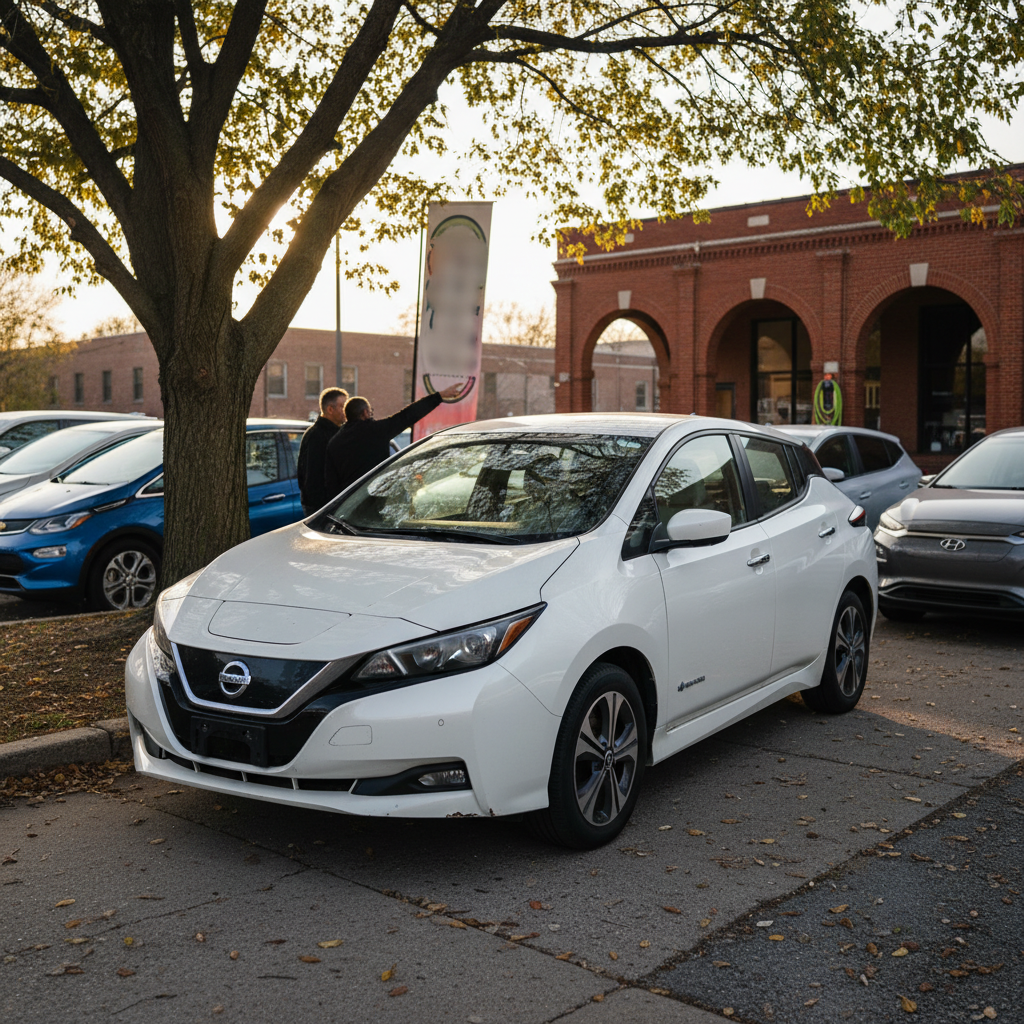
Cars like the Nissan Leaf, Chevy Bolt EV, and older Hyundai Ioniq Electric have seen some of the steepest depreciation. They’re often thousands cheaper than similarly aged crossovers, which translates directly into lower payments.
Early mainstream crossovers
First‑generation Hyundai Kona Electric, Kia Niro EV, and early Mustang Mach‑E models can be excellent values if the battery checks out. Look for 3–5‑year‑old examples coming off lease.
Previous‑gen premium EVs
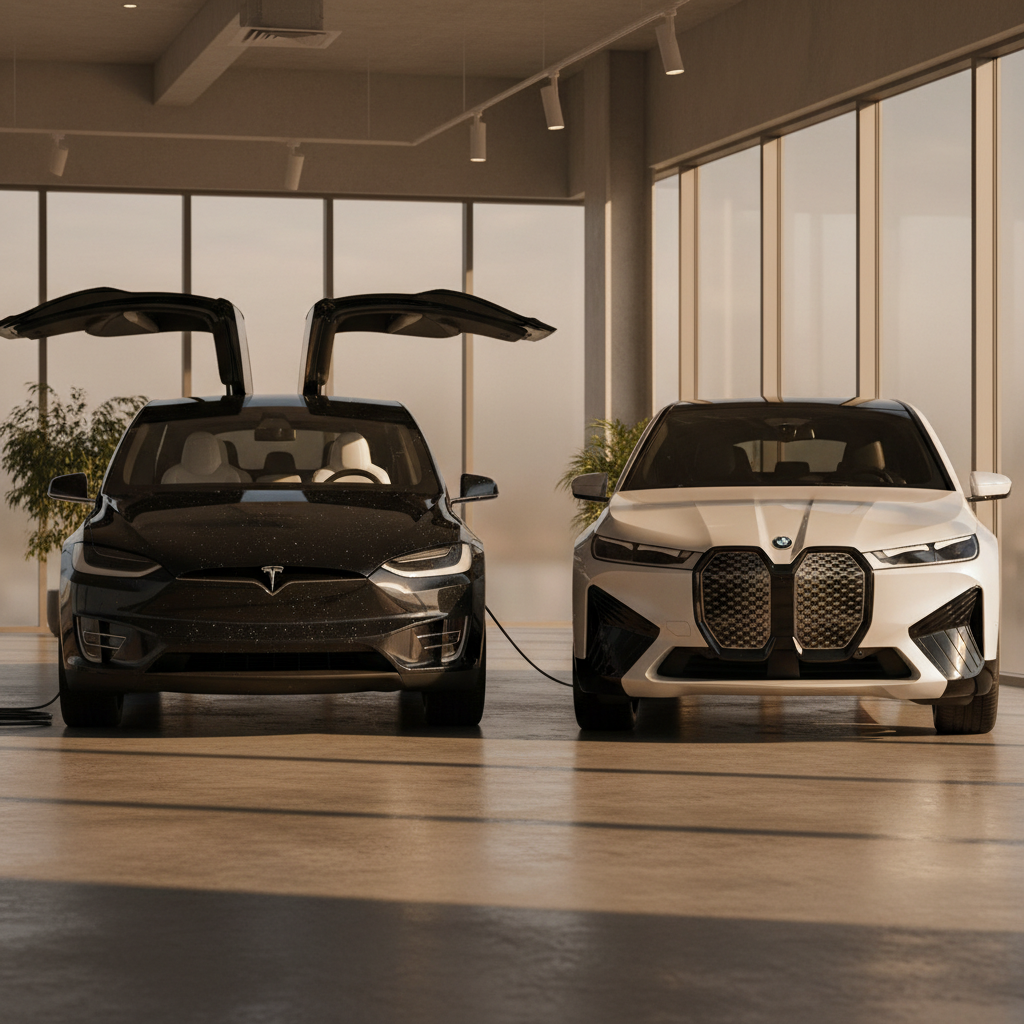
Luxury EVs (Audi e‑tron, Jaguar I‑PACE, older Tesla Model S/X) can have massive price drops. They can deliver a surprisingly low payment, but only if you’re comfortable with potentially higher repair and energy costs.
How Recharged helps with model choice
Financing strategies to lower your payment
Once you’ve narrowed down the right kind of car, the next lever is how you finance it. With rates still elevated compared with the pre‑pandemic era, choosing the right structure can easily save you $50–$150 per month.
Tactics to drive down your used EV payment
1. Improve your credit before you apply
Even moving from a "fair" to a "good" credit tier can knock 1–2 percentage points off your APR. That’s often the difference between a deal that fits your budget and one that doesn’t.
2. Get pre‑qualified, then shop vehicles
Instead of letting the dealer control the process, <strong>get pre‑qualified</strong> first. Recharged lets you see estimated terms with no impact to your credit, so you can filter cars that actually fit your target payment.
3. Right‑size your down payment
More money down lowers your payment and reduces the odds of being upside‑down. For a volatile segment like EVs, 10–20% down is a healthy target if you can afford it.
4. Avoid ultra‑long terms unless you must
Stretching from 72 to 84 months may reduce the payment, but it also keeps you in debt longer and increases your total interest. If you plan to keep the car for the full term, it can work, but go in with eyes open.
5. Compare lender types
Don’t assume the dealer’s finance offer is best. Credit unions often have strong used‑EV programs, and digital retailers like Recharged can sometimes match or beat local banks through partner networks.
Soft pull vs. hard pull
Factoring in tax credits and incentives
For buyers shopping in 2026, the incentive landscape looks different than it did just a year or two ago. The big headline: the federal clean‑vehicle tax credits for new and used EVs ended for purchases after September 30, 2025. That changes how you think about a "low monthly payment."
- No more federal used EV credit: You can’t count on up to $4,000 off a used EV purchase anymore. Sellers know this and are often pricing more aggressively to keep monthly payments appealing.
- State and utility rebates may still help: Some states and local utilities continue to offer point‑of‑sale rebates, bill credits, or discounted charging rates. These don’t usually lower your loan payment directly but reduce your monthly cost of ownership.
- Employer and apartment incentives: A growing number of employers and multi‑family landlords offer free or discounted workplace or overnight charging. That can effectively free up budget that you can redirect into the car payment itself.
Don’t leave local incentives on the table
Don’t trade low payments for a bad battery
The fastest way to turn a “great” payment into a terrible deal is to ignore battery health. A weak or abused traction battery can erase any savings if you need an out‑of‑warranty pack replacement or if range is too poor to actually use the car the way you planned.
Why battery health matters to payment
- If the real‑world range is much lower than advertised, you may need more public fast charging, raising your monthly energy spend.
- Cars with compromised batteries have worse resale value, making it harder to trade or sell without negative equity.
- Out‑of‑warranty pack replacements can run into five figures on some models, far exceeding whatever you saved on the payment.
How Recharged derisks this for you
Every vehicle on Recharged comes with a Recharged Score battery health diagnostic. Instead of guessing from a dash gauge, you see verified state‑of‑health, usage history indicators, and how that battery compares with similar cars. That transparency helps you understand whether a low price is a smart deal, or a red flag.
Red flags on a “too cheap” EV
Total cost of ownership vs. monthly payment
A low monthly car payment is nice, but what really matters is what owning the car costs you each month overall. EVs tend to win here because they’re cheaper to “fuel” and generally need less maintenance, even if the raw payment is similar to a gas car.
How a used EV can cost less than a gas car at the same payment
Assume a $350/month payment on each vehicle.
Used gas car
- $350/month payment
- $150–$250/month in fuel, depending on commute and local prices
- Oil changes, transmission service, exhaust and cooling system repairs over time
- Higher risk of big repair bills as mileage climbs
Used EV
- $350/month payment
- $40–$80/month in electricity for home‑heavy charging in many markets
- No oil changes, far fewer moving parts
- Brake wear is lower thanks to regenerative braking
Think in "all‑in" monthly cost
Step-by-step plan to buy a used EV with a low payment
Putting all of this together, here’s a practical playbook you can follow in 2026 to land a used EV with a genuinely affordable monthly payment, and without stepping on the usual landmines.
Your roadmap to a low‑payment used EV
Before you shop
Check your credit reports and score; clean up any easy errors.
Decide your true budget in terms of <strong>all‑in monthly cost</strong>, not just payment.
Use an online calculator to see how price, term, and APR affect your target payment range.
Research which used EV models fit your range needs and local charging situation.
While you compare cars
Focus on 3–5 model candidates that fit your budget and range needs.
On Recharged, filter inventory by estimated payment so you only look at cars that fit your range.
Compare Recharged Score battery health reports instead of guessing from mileage alone.
Estimate your monthly charging costs based on your commute and access to home or work charging.
When you’re ready to finance
Get pre‑qualified with a soft pull, Recharged can show estimated terms for each vehicle.
Experiment with different down‑payment and term combinations until the <strong>payment and total interest</strong> both feel comfortable.
Avoid any deal that requires an 84‑month term just to squeeze under your budget unless you’re committed to keeping the car that long.
Read the finance contract carefully for add‑ons, mark‑ups, and prepayment penalties.
After you buy
Set up automatic payments so you don’t miss due dates and risk your rate or credit score.
Take advantage of off‑peak charging rates if your utility offers them.
Keep software updated and follow manufacturer guidance to preserve battery health, your future trade‑in value depends on it.
Periodically re‑shop insurance; EV premiums can vary widely between carriers.
FAQ: Used EVs with low monthly payments
Frequently asked questions
Bottom line: Getting a low payment without regrets
In 2026, the stars are unusually aligned if you want a used EV with a low monthly payment. Fast depreciation and a surge of off‑lease vehicles mean you’re no longer paying new‑car money for early‑adopter tech. But the same forces that make prices attractive also make it easier to buy the wrong car, especially if you ignore battery health or stretch the loan just to hit a number.
Focus first on the right vehicle for your range and charging reality, then on a fair price, and only then on dialing in the loan so the payment truly fits your budget. Marketplaces like Recharged are built around that logic: verified battery diagnostics, transparent pricing, EV‑specialist support, and digital financing tools that let you model payments before you ever step into an Experience Center or take delivery at home. That’s how you turn today’s unusual used‑EV market into a genuinely affordable, low‑stress ownership experience.