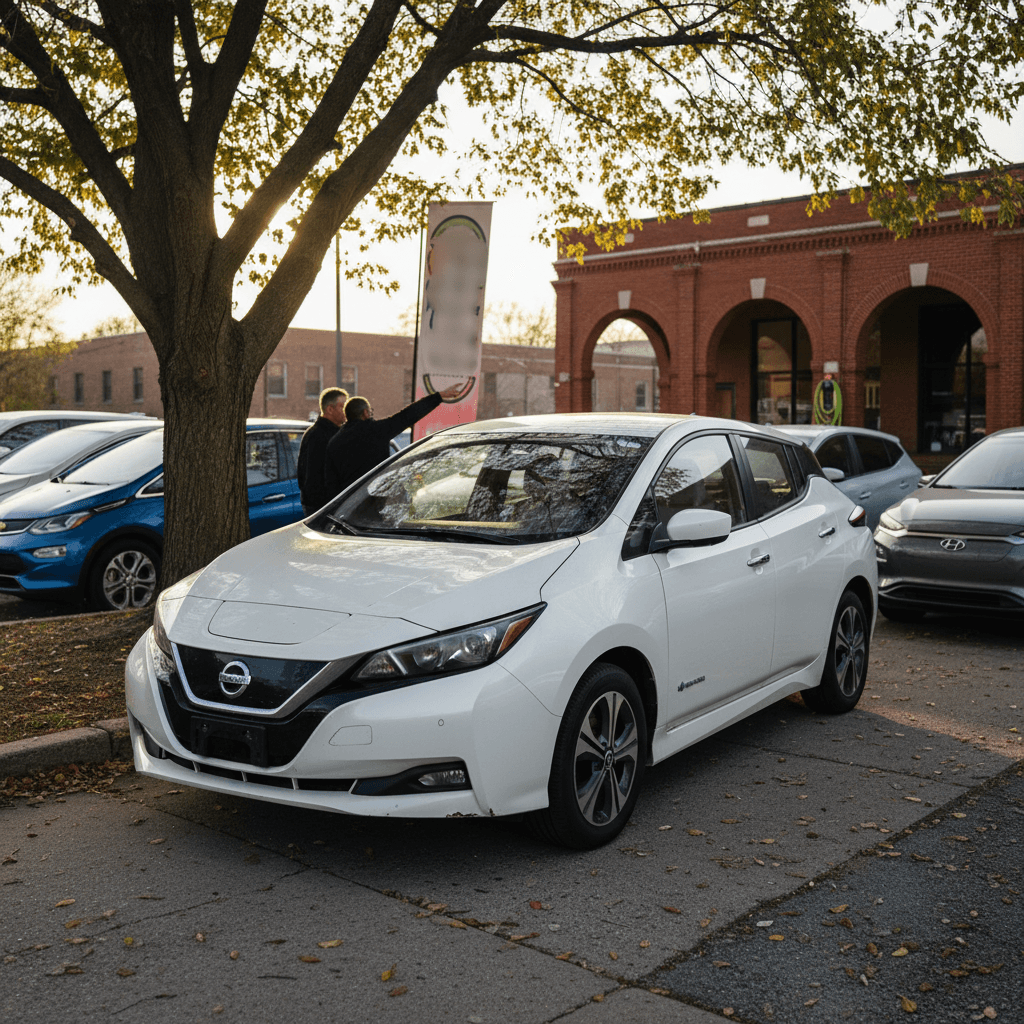
If you’re hunting for the best EV deals in New Haven, CT, you’re in a better spot than a lot of shoppers around the country. Connecticut’s state rebates, strong used-EV supply in the I‑95 corridor, and lower running costs can bring your monthly payment for a used electric car down to, or even below, a comparable gas model.
New Haven EV deal snapshot
Why New Haven Is a Sweet Spot for EV Deals
Zoom out from Wooster Square or Westville and look at the bigger picture: Connecticut sits between major EV hubs like New York City and Boston, along one of the country’s busiest corridors for EV adoption. That means more inventory cycling through the market, and more competition on pricing, than you’ll see in many other midsize metros.
Connecticut EV Market at a Glance
For New Haven buyers, that growth translates into more used inventory and heavier discounting, especially on models that were popular new in 2021–2023 and are now coming off lease. The trick is separating a genuinely good deal from a cheap price hiding an expensive battery problem or weak warranty.
Think regionally, buy locally
How Connecticut EV Incentives Cut Your Costs
Connecticut’s incentives are a big part of why you can land strong EV deals around New Haven. The flagship program is the Connecticut Hydrogen and Electric Automobile Purchase Rebate (CHEAPR), which helps with both new and used EVs.
CHEAPR Incentives Relevant to New Haven Shoppers
Approximate incentives available as of early 2026. Always confirm current rules before you sign paperwork.
| Vehicle type | Buyer type | New EV incentive | Used EV incentive | Key limits |
|---|---|---|---|---|
| Battery‑electric (BEV) | All CT residents | Standard rebate on eligible new models (amount set by DEEP; check current level) | N/A | MSRP cap and in‑state dealer or OEM purchase required |
| Battery‑electric (BEV) | Income‑qualified (Rebate+) | Standard + Rebate+ New on eligible new models | Up to about $5,000 | Income, program participation, or residence in EJ/distressed area |
| Plug‑in hybrid (PHEV) | Income‑qualified (Rebate+) | Standard + Rebate+ New on eligible new PHEVs | Up to about $3,000 | Similar income and location rules; MSRP cap applies |
Income‑qualified buyers can stack larger Rebate+ incentives on top of standard CHEAPR rebates for new EVs; Rebate+ Used targets pre‑owned purchases.
Incentive rules change
- Federal incentives: Many new EVs still qualify for a federal tax credit, but income and vehicle‑content rules have become stricter, and the used‑EV credit is scheduled to sunset after 2025 unless Congress renews it.
- State & utility perks: In addition to CHEAPR, Connecticut offers reduced registration fees for EVs, and several utilities run separate EV or charger rebate programs that can trim your ownership costs further.
- Local angle for New Haven: Many residents qualify for Rebate+ based on income or neighborhood, especially in environmental justice or distressed municipalities. That can put thousands of extra dollars on the hood of a used EV.
Best Places to Find EV Deals In and Around New Haven
You’ve got three main channels when you’re chasing the best EV deals near New Haven: traditional franchised dealers, independent used‑car stores, and digital‑first used‑EV marketplaces like Recharged that can deliver statewide.
Where New Haven Shoppers Are Finding Strong EV Deals
Each channel has pros and cons, use them together to your advantage.
Local New‑Car Dealers
Franchised stores along I‑95 and Route 1 (Honda, Hyundai, Kia, Nissan, Ford, etc.) increasingly take EVs on trade and list them as certified or frontline used units.
- Access to CHEAPR on new EVs
- Potential CPO warranties
- Limited used EV depth on any single lot
Independent Used Lots
Smaller independents around New Haven and in nearby suburbs often price aggressively but may not specialize in EVs.
- Lower advertised prices
- Mixed EV expertise
- Battery health often not documented
Digital Used‑EV Marketplaces
Platforms like Recharged aggregate vehicles from multiple sources, show battery‑health data up front, and offer home or hub delivery to New Haven.
- Wide model and price range
- Transparent reconditioning & pricing
- Remote, paperwork‑light experience
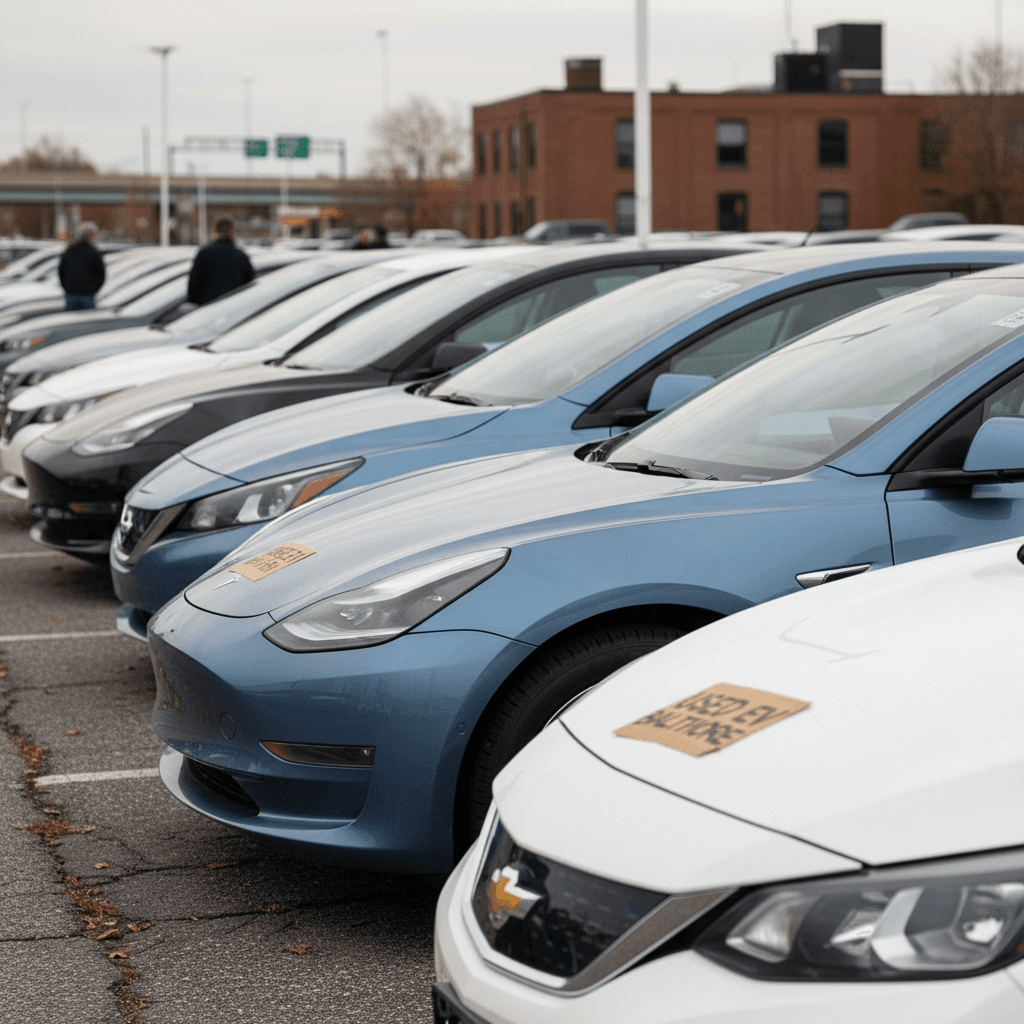
Cast a wider radius
Used EV Models That Tend to Be Great Deals in CT
Exact deals shift week to week, but certain used EV nameplates consistently show up as value plays in Connecticut’s market, especially when you’re willing to consider an older model year or modest range.
Used EV Segments That Often Price Well Around New Haven
Representative examples; actual pricing, range, and incentives depend on model year, trim, and condition.
| Segment | Example models | Why they can be good deals | Ideal New Haven use case |
|---|---|---|---|
| City/commuter hatchbacks | Nissan Leaf, Chevy Bolt EV, Hyundai Ioniq Electric | Earlier‑generation models often sell well below $20k and may qualify for used rebates if income‑eligible. | Daily commuting between neighborhoods like East Rock, Westville, Hamden with home or workplace charging. |
| Compact crossovers | Hyundai Kona Electric, Kia Niro EV, VW ID.4 | Crossovers that came off lease in 2024–2025 give you range plus cargo room at a discount versus new. | Families in surrounding suburbs who want one car that can handle Costco runs and weekend trips. |
| Premium sedans & crossovers | Tesla Model 3, Tesla Model Y, Polestar 2 | High original MSRPs + rapid new‑EV price cuts are pushing used values down, especially on earlier builds. | Buyers who want long range and tech features but are shopping under the price of a brand‑new mainstream SUV. |
Think in segments, city runabout vs. commuter car vs. family hauler, then compare deals within each bucket.
Range vs. price
How to Compare EV Deals Like a Pro
Comparing EV deals isn’t just about the sticker price. You’re weighing up‑front cost, battery health, warranty coverage, incentives, and long‑term running costs. Here’s a framework you can use on any listing in New Haven, or statewide.
EV Deal Evaluation Checklist
1. Start with the battery, not the paint
Ask for <strong>measured battery health</strong> (often expressed as remaining capacity vs. original). A cheap EV with a weak pack can cost you more in lost range or future replacement than you save up front.
2. Confirm remaining factory warranty
Most EVs carry separate battery and powertrain coverage, often 8 years/100,000+ miles. Check the in‑service date and mileage so you know how much high‑voltage coverage you have left.
3. Factor in incentives correctly
Don’t mentally subtract a CHEAPR or federal incentive unless you’re confident you qualify and the vehicle is eligible. With some programs you get the discount at the point of sale; others reduce your tax bill later.
4. Compare monthly cost, not just price
Look at <strong>out‑the‑door price, interest rate, term, and insurance</strong>. An EV that’s $2,000 more up front might still win if you’re saving $80–$100 a month on fuel and maintenance versus your current gas car.
5. Inspect charging history and usage
When possible, ask how the vehicle was charged, mostly at Level 2 at home or hammered on DC fast chargers. Frequent high‑power DC charging can add battery wear over time.
6. Review the vehicle history report
Accidents, flood damage, title issues, and mileage discrepancies all hit value. Flood exposure is especially concerning for EVs because of the high‑voltage components involved.
Example A: "Cheapest" EV on the lot
2019 hatchback EV, 90k miles, limited battery data, no remaining factory battery warranty.
- Lower price today
- Higher risk of range loss or future repair
- Harder to finance on favorable terms
Example B: Slightly higher sticker, stronger fundamentals
2021 crossover EV, 40k miles, documented battery health, several years of battery warranty left, clean history.
- Higher asking price
- Better long‑term reliability outlook
- Potentially better approval odds and rate
Over a 5‑year ownership window, Example B is often the better deal even if the monthly payment is a bit higher.
Financing, Trade-Ins, and Total Cost of Ownership
New Haven buyers are feeling the same price pressure as shoppers nationwide: by late 2025, the average new‑car transaction in the U.S. had climbed above $50,000, with EVs trending even higher. That’s pushed more budget‑conscious drivers into the used market, and made smart financing and trade‑in strategy more important than ever.
Why the “Best Deal” Is Often a Used EV
Look beyond the sale price and think in terms of total cost of ownership (TCO).
Lower running costs
Electricity in Connecticut isn’t cheap, but it’s still typically less per mile than gasoline, especially if you can charge at home on a time‑of‑use plan or via free workplace charging.
EVs also skip oil changes, timing belts, and many exhaust‑related repairs, trimming maintenance bills.
Financing and trade‑in leverage
If you’re upside‑down on a current gas vehicle, rolling negative equity into a new EV can stretch your budget thin.
Shopping for a well‑priced used EV, and getting a solid instant offer or trade‑in quote, can bring your monthly number back into a comfortable range.
Consider pre‑qualification
When you’re comparing deals, map out a simple 3–5 year ownership budget: monthly payment, insurance, charging vs. fuel, expected maintenance, and registration fees. Connecticut’s reduced EV registration fee, currently significantly lower than for many gas vehicles, helps on the margins, especially if you tend to hold cars longer.
Red Flags to Avoid With “Too Good to Be True” EV Deals
Used EV pricing can swing wildly from one listing to the next. Some cheap units are simply older or shorter‑range models, perfectly fine if they fit your driving pattern. Others are cheap because they’re hiding problems that will show up after you’ve signed the paperwork.
- No documentation of battery health or state‑of‑charge behavior, especially on higher‑mileage cars.
- Listings that brag about price but omit range, trim level, or driver‑assistance features.
- Salvage or rebuilt titles, which can void remaining factory EV warranties and complicate insurance.
- Dealers unwilling to let you have a pre‑purchase inspection or answer basic charging questions.
- Heavy evidence of ride‑share or fleet use with sky‑high mileage and worn interiors.
Battery pack replacements are expensive
How Recharged Helps New Haven Shoppers Save
Recharged is built around one idea: buying a used EV should be simpler and more transparent than buying a gas car, not harder. For New Haven shoppers, that means surfacing vehicles with verified battery health, fair pricing, and support that understands the realities of I‑95 commutes and New England winters.
What Makes a “Deal” Different on Recharged
Beyond price tags: how we help you separate solid value from risky cheap cars.
Recharged Score Report
Every vehicle on Recharged includes a Recharged Score Report covering battery health, charging behavior, and key mechanical checks. You see the data that actually matters for an EV before you commit.
Fair market, not mystery pricing
Listings are benchmarked against the broader market so you can see how a given EV compares on price, mileage, features, and condition, before incentives.
Trade‑in & delivery support
Recharged offers trade‑in or instant‑offer options on your current vehicle, flexible financing, and nationwide delivery, including to New Haven and the surrounding metro.
Full‑journey support
FAQs: Best EV Deals in New Haven, CT
Frequently Asked Questions
Key Takeaways for New Haven EV Shoppers
If you’re serious about finding the best EV deals in New Haven, CT, start by thinking bigger than a single lot or a single weekend sale. Connecticut’s combination of state incentives, high EV adoption, and healthy used supply means there are real bargains out there, especially if you focus on battery health, warranty coverage, and total cost of ownership instead of just the lowest advertised price.
- Use Connecticut’s CHEAPR and Rebate+ Used programs to stack thousands in potential savings if you qualify.
- Compare deals across New Haven, the rest of Connecticut, and nearby states, then bring the best one home via delivery.
- Prioritize verified battery health and clean histories over rock‑bottom prices with missing information.
- Run the numbers on financing, fuel vs. electricity, and maintenance over 3–5 years, not just this month’s payment.
- Leverage specialist platforms like Recharged for transparent battery diagnostics, fair‑market pricing, financing, and trade‑in support.
Approach the market with a reporter’s skepticism and a commuter’s practicality. Ask for data, verify incentives, and give extra weight to vehicles with strong documentation. Do that, and Greater New Haven’s EV landscape becomes less of a gamble, and more of an opportunity to cut both your emissions and your monthly costs.