If you’re shopping for a used electric vehicle, you’ll keep running into the same bit of advice: look for a used EV under 50,000 miles. That mileage band often hits the sweet spot between battery health, features, remaining warranty, and price. But why 50,000 miles, and how strict should you be about that number? Let’s unpack what really matters so you can buy with your head, not just your gut.
Mileage is a proxy, not a verdict
Why 50,000 miles matters for used EVs
On a gas car, 50,000 miles is barely broken in. On a used EV, sub‑50k mileage tends to line up with three things that matter to you as a buyer: milder battery use, stronger warranty coverage, and modern tech. It’s also right about the time when first owners trade in for something newer, which puts a lot of good inventory on the market.
How 50,000 miles fits typical U.S. driving
Put simply, when you find a used EV with under 50,000 miles, you’re often looking at a car that’s lived a pretty normal life, hasn’t exhausted its battery warranty, and still feels modern inside. That’s exactly the kind of combination you want in a daily driver.
Think in years and miles
How many miles is too many on a used EV?
The honest answer: there’s no magic cut‑off where a used EV suddenly becomes a bad buy. There are healthy cars well over 100,000 miles and sketchy ones under 30,000. Still, mileage brackets can help you shop smarter:
Typical used EV mileage brackets and what they mean
Use this as a starting point; always confirm battery health and service history.
| Mileage range | What it usually means | Buyer takeaways |
|---|---|---|
| Under 20,000 miles | Very lightly used, often first owner, near‑new condition | Great if you want "almost new", but pricing may not feel like a bargain. |
| 20,000–50,000 miles | Daily‑driver mileage, still early in its life cycle | Often the sweet spot: good battery health, strong remaining warranty, big savings over new. |
| 50,000–80,000 miles | Heavier use; more real‑world battery wear | Look closely at battery health reports and charging history; you may get excellent value. |
| 80,000+ miles | High‑mileage EV, often first battery warranty window | Demand a clear battery health report and price that reflects potential future battery loss. |
Mileage ranges are general guidelines and can vary by model, climate, and charging habits.
If you’re risk‑averse, staying under 50,000 miles lets you enjoy a long runway before you approach six‑figure mileage, where bigger repairs and noticeable range loss become more common. If you’re more budget‑focused, you may deliberately target 60,000–80,000 miles and insist on iron‑clad battery data.
Don’t ignore calendar age
Battery health: what 50k miles usually looks like
Mileage and battery health are related, but not welded together. Modern EV packs are engineered for hundreds of thousands of miles. The first chunk of capacity, say the first 10–15%, often disappears faster, then degradation tapers. By the time most EVs reach 50,000 miles, they’ve usually settled into a slower, steadier decline.
- Many mainstream EVs still show 70–90% of original range at 50,000 miles, assuming mostly Level 1/Level 2 charging and moderate climates.
- The federally mandated minimum battery warranty is typically 8 years or 100,000 miles for many EVs, so a sub‑50k car is often well within coverage if a pack defect shows up.
- Some models have on‑screen battery health readouts or apps that show state of health (SoH). Others require a diagnostic scan, exactly what Recharged’s Recharged Score is built to surface.
Good signs at 50,000 miles
- Estimated range still covers your daily needs with a buffer.
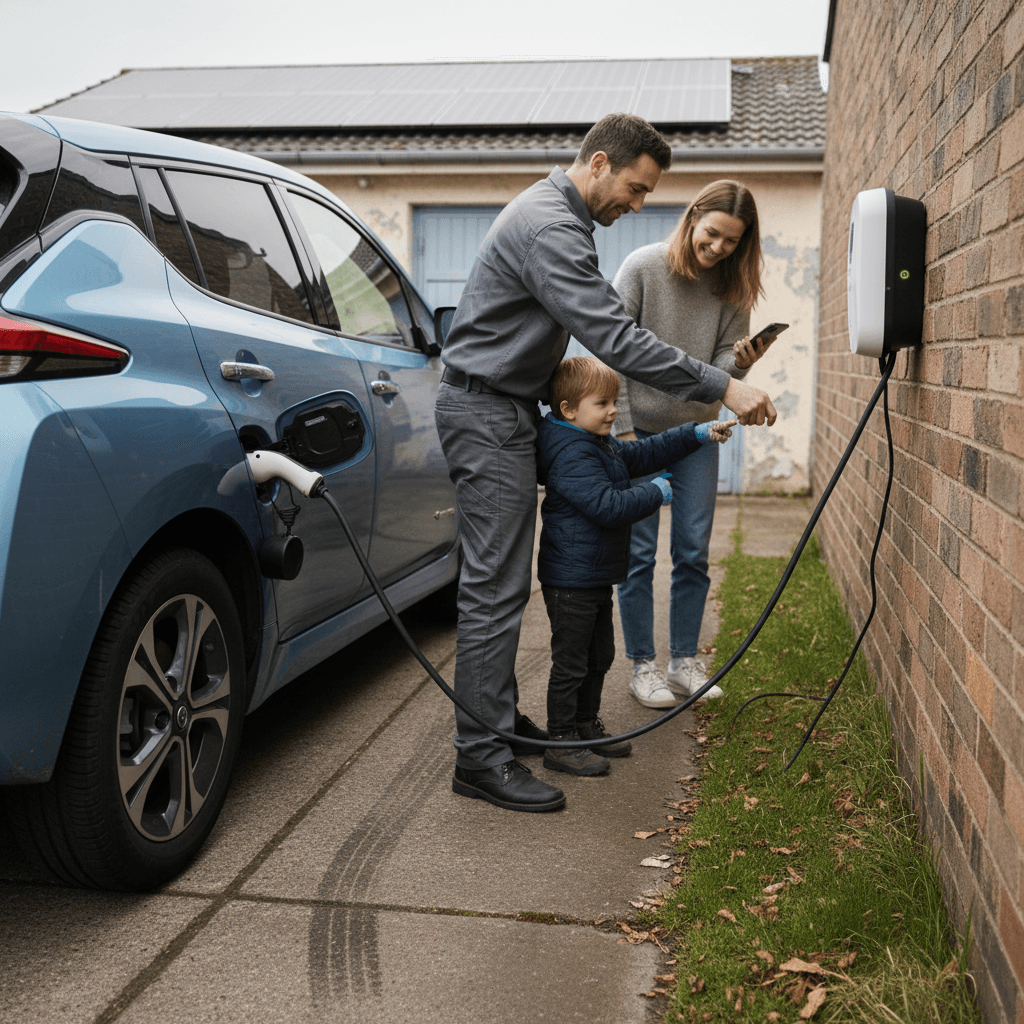
- Service records show mostly Level 2 home charging.
- Vehicle lived in mild or mixed climate, not extreme heat year‑round.
- Battery health readout (or third‑party report) shows high state of health.
Red flags to investigate
- Frequent DC fast charging as primary charging method.
- Car lived in very hot climate, parked outside most of the time.
- Big mismatch between rated range and real‑world range on a full charge.
- No documentation and seller won’t provide a battery report.
Always get a battery health report
Warranty and depreciation: the sweet-spot tradeoff
Warranty and depreciation are where the used EV under 50,000 miles sweet spot really shows up. New EVs tend to lose the steepest chunk of value in the first three years. By the time an EV has rolled up 30,000–50,000 miles, someone else has eaten that gut‑punch of depreciation, but you still enjoy years of coverage.
What you usually get with a sub‑50k‑mile used EV
The balance between protection and price is often best right here.
Big savings vs. new
Battery warranty runway
Modern platform
If you drop well below 20,000 miles, you may pay a premium that erases some of the used‑car advantage. Go way above 80,000 and you’re shopping on price first, with more risk that a future battery issue will be on you. That’s why so many savvy shoppers live in that 20,000–50,000‑mile window.
When you want maximum value
Features, tech, and fast charging at this mileage
EV tech has been moving fast. A used EV built just five or six years ago can feel decades newer than a gas car of the same age. Shopping under 50,000 miles usually means you’re also shopping in that sweet era where software, safety, and charging standards stepped up dramatically.
What you typically get with a 20–50k‑mile used EV
Most of these were high‑tech when new, and they still feel modern today.
Software and infotainment
Better charging experience
Safety and driver assists
Real‑world range
Model‑specific sweet spots exist too
Inspection checklist for a used EV under 50,000 miles
Once you’ve filtered to low‑mileage candidates, the real work begins. Here’s a practical checklist to make sure that sub‑50k‑mile car is as good as it looks online.
Used EV under 50,000 miles: buyer’s checklist
1. Confirm true battery health
Don’t rely on the range number alone. Ask for a <strong>battery health report</strong>, review any state‑of‑health readouts in the car, or use a third‑party scan. With Recharged, this is already baked into the Recharged Score.
2. Review charging history
Ask how and where the EV was charged. Mostly home Level 2 and moderate climates are your friends. Heavy fast‑charging or constant 100% charging deserves a closer look at the pack.
3. Match range to your routine
On a full charge, check the estimated range and compare it to the original EPA rating. Then compare that to your daily needs plus a buffer. A car that now goes 180 miles on a charge may be fine if you only drive 40–50 miles a day.
4. Inspect tires, brakes, and suspension
EVs are heavier than gas cars. Even under 50,000 miles, look for uneven tire wear, tired dampers, or noisy suspension components, especially if the car lived on rough roads.
5. Check for software updates and recalls
Make sure the car is on the latest software version and that any recalls, for batteries, charging, or safety systems, have been addressed. A dealer or EV specialist can verify this with the VIN.
6. Verify warranty start date and coverage
Battery warranties start from the <strong>in‑service date</strong>, not the model year. Confirm when the car was first sold and exactly how many years/miles of battery and drivetrain coverage remain.
Don’t skip a professional inspection
How 50k miles affects price and total cost
EV depreciation has been choppy as incentives, interest rates, and new‑car prices move around. But some patterns have been consistent. Used EVs take their biggest value hit in the first few years, then level off. That’s exactly why shopping in the 20,000–50,000‑mile band can be so attractive.
What you’re avoiding
- The initial depreciation cliff in the first 1–3 years.
- Paying for options the first owner already took the hit on.
- Uncertain pricing swings tied to brand‑new tech or incentives.
What you’re gaining
- Lower monthly payments or ability to finance less.
- Room in the budget for a home Level 2 charger or road‑trip charging costs.
- Potentially lower insurance premiums than a brand‑new EV of the same model.
Run the total cost, not just the price
How Recharged helps de-risk buying a used EV
You can absolutely hunt for a used EV under 50,000 miles in private listings and auctions, but you’ll be doing the detective work yourself. Recharged was built to remove as much of that uncertainty as possible, especially around battery health and fair pricing.
Why low‑mileage used EVs pair well with Recharged
Less guesswork, more confidence.
Recharged Score battery diagnostics
Transparent, fair pricing
Nationwide digital buying experience
Ready to find your next EV?
Browse VehiclesOn top of that, Recharged can help you finance your used EV, evaluate a trade‑in, or get an instant offer if you’re selling an EV of your own. Our EV‑specialist team lives with these cars every day, so you don’t have to be the expert in battery chemistries and charging curves before you make a decision.
FAQ: Used EV mileage and battery health
Frequently asked questions about used EVs under 50,000 miles
Bottom line: finding your personal sweet spot
"Used EV under 50,000 miles" is a handy rule of thumb because it lines up with what most shoppers want: a modern car, a healthy battery, and a price that feels like a win. But the real sweet spot is the place where range, warranty, price, and your driving life all overlap. For many people, that’s a 3–5‑year‑old EV with 20,000–50,000 miles and clear battery data. For others, a higher‑mileage bargain with a stellar Recharged Score is the right call.
Start by being honest about how far you drive, how long you plan to keep the car, and how much uncertainty you’re comfortable carrying. Then let the data, battery reports, warranty details, and total cost of ownership, guide you. When you’re ready, Recharged is here to help you sort the gems from the guesses, so you can enjoy electric driving without losing sleep over the numbers on the odometer.