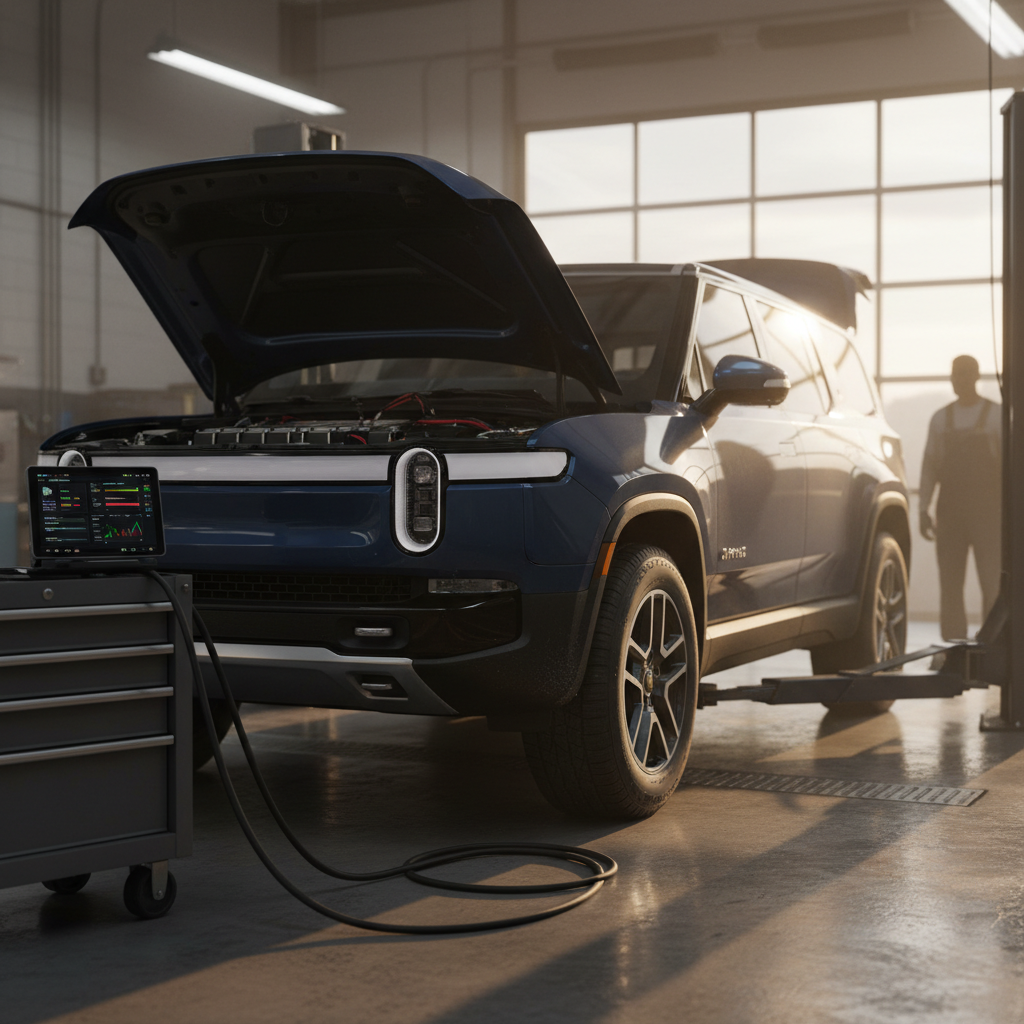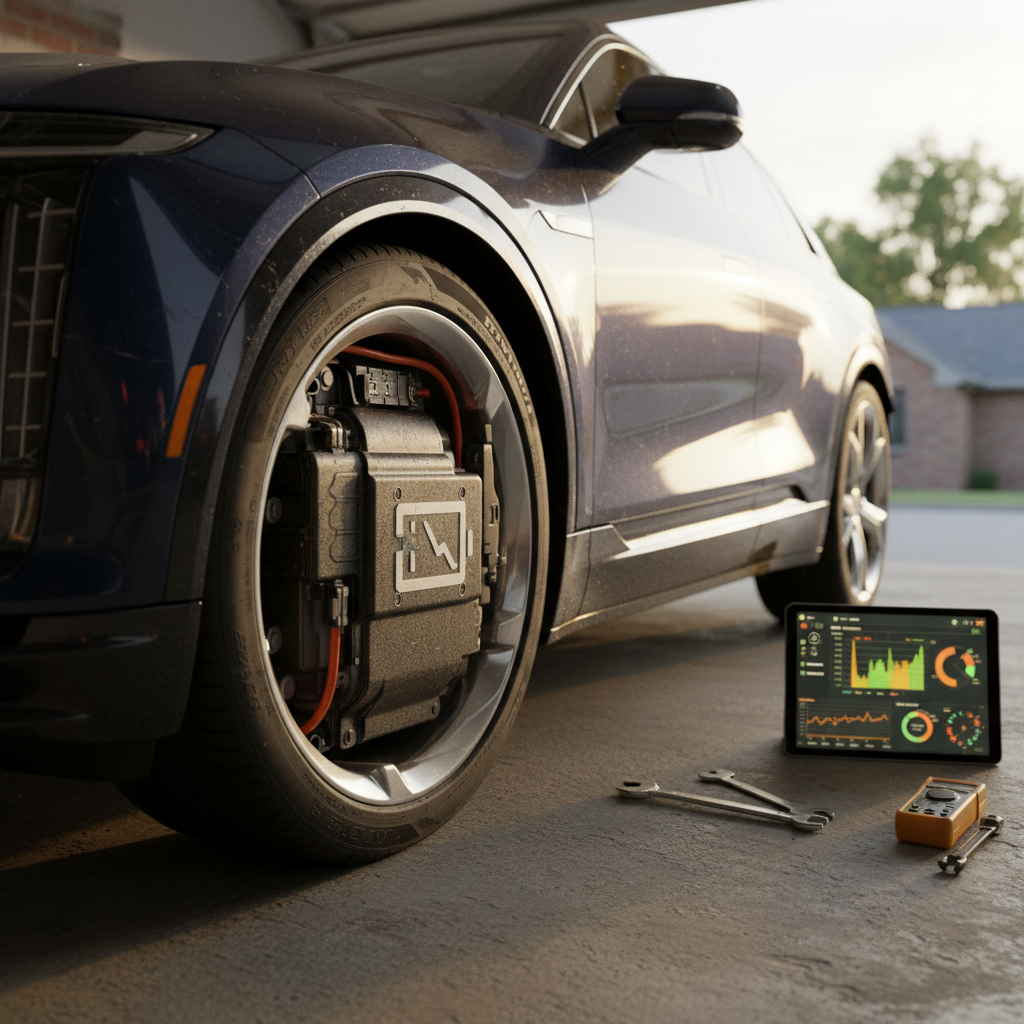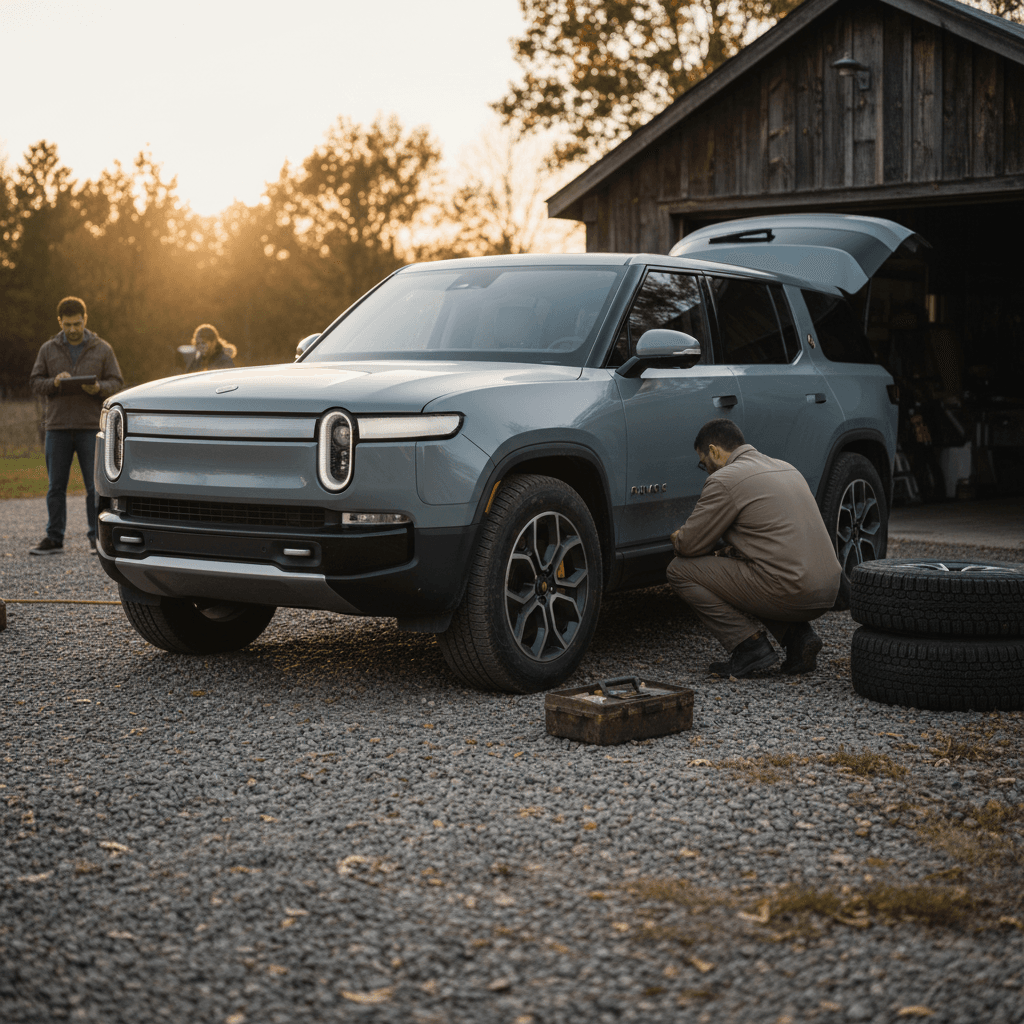
The 2023 Rivian R1S is one of the few electric SUVs that can tow big toys, bomb down a fire road, and still drop the kids off at school in silence. As a used buy in 2026, though, the question isn’t “Is it cool?”, it’s “Is a used 2023 Rivian R1S actually a smart place to park $60,000-plus?” This review tackles the 2023 R1S specifically as a used vehicle: how it drives, how it’s aging, where it stumbles, and what you absolutely must inspect before money changes hands.
Who this review is for
Is a used 2023 Rivian R1S a smart buy in 2026?
In a word: yes, if you’re eyes‑open. The 2023 Rivian R1S delivers an outrageous mix of power, design theater, and genuine adventure hardware that no other used EV SUV quite matches. Rapid early depreciation means you can now buy what was an $80,000–$90,000 SUV for mid‑$50,000s to low‑$60,000s, depending on mileage and spec. At the same time, you’re buying into an early‑production vehicle from a young automaker with teething issues, most of them software and trim‑quality related, but sometimes serious enough to sideline the car for warranty work.
If you want bulletproof, appliance‑like transportation, a used Toyota hybrid is still your huckleberry. If you want an EV that feels like a concept car someone accidentally homologated for the real world, and you’re willing to live with some drama around the edges, the 2023 R1S can be a deeply satisfying buy.
2023 Rivian R1S used-market snapshot (2026)
2023 Rivian R1S at a glance
Key 2023 Rivian R1S specs (most common U.S. configurations)
Exact specs vary by trim, wheels, and whether you’re looking at quad‑motor or early dual‑motor builds, but this is the core layout of most 2023 R1S models you’ll see used.
| Spec | Typical 2023 R1S value |
|---|---|
| Seating | 3 rows, 7 seats |
| Drivetrains | Quad‑motor AWD (most 2023s), some dual‑motor AWD later in the year |
| Battery options | "Large" ~135 kWh pack on 2023 U.S. R1S; Standard pack arrived later and is rarer |
| EPA range when new | Roughly 300–321 miles depending on wheels/tires and configuration |
| Towing capacity | Up to 7,700 lb |
| Ground clearance | Up to ~14.5 inches in highest air‑suspension setting |
| Off‑road hardware | Air suspension, adaptive dampers, sophisticated traction and drive‑mode software |
| Charging | DC fast charging up to ~200+ kW; CCS port on 2023 models (pre‑NACS) |
Always confirm battery, motor configuration, and wheel size on the specific used R1S you’re considering.
Driving experience: on-road and off
On-road: effortless, occasionally busy
On pavement, the 2023 R1S drives like an electric Grand Cherokee that went to finishing school in Silicon Valley. Quad‑motor trucks are violently quick from any speed; you learn to roll into the throttle, not stab at it. Steering is light but accurate, and the air suspension smooths out most broken pavement.
Where it falls short of German rivals is polish. On certain surfaces the R1S can feel a little busy or jittery, 19–22 inch wheels and a very heavy body will do that, and there’s more wind and tire noise at highway speed than you’ll find in a Mercedes EQE SUV or BMW iX. It’s not sloppy, but it’s not “vault‑quiet luxury barge” either.
Off-road: the party trick
Off the pavement, the R1S is in its element. With nearly 15 inches of ground clearance in its highest setting, short overhangs, and clever torque distribution, it can tackle trails that would embarrass most crossovers. The 2023 quad‑motor setup lets the truck pivot and claw its way over obstacles in a way that feels almost unfair.
If you’re buying used, that off‑road talent is a double‑edged sword. Many R1S owners actually use it, so inspect skid plates, suspension hard points, and lower bodywork for rock rash, bent components, or underbody scrapes before you buy.
Test-drive tip
Range, battery, and charging
Most 2023 Rivian R1S models in the U.S. used market carry the Large pack, roughly 135 kWh usable, paired with quad‑motor all‑wheel drive. When new, that combination delivered an EPA‑rated range around the low‑to‑mid‑300‑mile mark depending on wheels and tires. In the real world, you should think in terms of 240–280 miles on the highway and a bit more in city use, depending on driving style, temperature, and load.
Battery health and charging: what matters on a used R1S
The 2023 model year sits early in Rivian’s lifecycle, so pay close attention to how the high‑voltage hardware has aged.
Battery degradation
So far, owner reports suggest modest degradation on 2023 packs, often single‑digit percentage losses over the first few years, assuming normal DC fast‑charging habits.
Still, you want data, not vibes. A verified battery‑health report, like the Recharged Score, shows usable capacity and projected range so you’re not buying blind.
Charging reality
The 2023 R1S uses a CCS fast‑charging port. On a healthy DC fast charger, expect peaks in the 200 kW neighborhood and decent speed from 10–60% state of charge, then a taper.
At home on a 48‑amp Level 2 charger, you can comfortably add 25–30 miles of range per hour. For most owners, that’s a full charge overnight.
Future-proofing & adapters
Rivian has committed to the shift toward the NACS (Tesla) connector and access to the Supercharger network via adapters and future port changes. A 2023 R1S won’t have a native NACS inlet, but you should factor in the cost and availability of the adapter program, especially if road trips are a priority.
Ask the seller what charging equipment and adapters are included in the sale.
Don’t skip a battery health report
Reliability and common issues on 2023 R1S
The 2023 Rivian R1S lives in a strange place: average overall reliability by some mainstream measures, yet built by a startup brand that still placed near the bottom of industry reliability rankings. In plain English, that means you’re more likely to have “nuisance” problems, software gremlins, trim issues, sensors, than catastrophic failures, but you should expect more visits to the service center than you’d have with a Toyota.
Most common 2023 R1S trouble spots
These are patterns seen across owner reports, recall campaigns, and reliability surveys.
Software & screens
- Center screen glitches: Freezes, black screens, slow boot, especially after updates. Usually fixable with a reboot or over‑the‑air patch, but occasionally requires hardware replacement.
- Navigation quirks: Incorrect routing or laggy map performance. Annoying more than dangerous, but test the nav carefully.
Electronics & sensors
- ADAS sensors: Parking sensors or driver‑assist features that go offline or throw warnings.
- Warning lights: Occasional spurious fault messages that clear after a restart, but sometimes lead to a precautionary tow and dealer visit.
Trim & build quality
- Wind noise from door seals or the panoramic roof at highway speeds.
- Tailgate or hatch alignment issues leading to rattles or water intrusion; often addressed under warranty.
Recalls & hardware campaigns
- Early R1T/R1S recalls for steering fasteners, seatbelt sensors, and other safety items have largely been addressed by 2026, but you must verify that recall work is complete on any 2023 R1S you’re considering.
- Ask for service records and a printout of completed recall and service campaigns.
Red-flag symptoms on a used R1S
Depreciation and used pricing
Like most early‑generation EVs, the 2023 Rivian R1S has taken a meaningful hit in the first few years. Pricing data from multiple valuation guides and auction platforms points to roughly 30–35% depreciation from original MSRP by year three. Put differently, many 2023 R1S models that penciled around $80,000–$90,000 when new are now trading closer to the mid‑$50,000s to low‑$60,000s depending on miles, options, and condition.
What depreciation means in real dollars
The upside for you is obvious: someone else already ate the riskiest years of software flakiness and price discovery. The downside is that the used market is noisy. Condition, color, off‑road use, and whether major hardware issues have been resolved all move the needle. This is where Recharged leans on real‑world transaction data and the Recharged Score to anchor pricing in what similar R1S trucks actually sell for, not just what sellers hope to get.
What to check on a used 2023 R1S before you buy
Pre‑purchase checklist for a 2023 Rivian R1S
1. Confirm battery warranty and in‑service date
Rivian’s high‑voltage battery and drivetrain warranty typically runs 8 years from the original in‑service date, with a mileage cap. On a 2023 R1S, you want as much of that coverage left as possible. Ask for the original paperwork or have Rivian confirm the in‑service date tied to the VIN.
2. Get objective battery health data
Don’t rely on the dash range estimate alone. A <strong>Recharged Score Report</strong> reads the pack’s usable capacity and charging history so you can see if fast‑charging abuse or high mileage has meaningfully reduced range.
3. Scan recall and service history
Insist on documentation showing all open recalls and service campaigns have been completed, especially those related to steering, seatbelts, and any high‑voltage hardware. If the seller can’t produce records, build in the time to have Rivian or an EV‑savvy shop pull them.
4. Inspect underbody and suspension
The R1S invites off‑road use. Get the truck on a lift if you can. Look for bent skid plates, scraped battery enclosures, damaged control arms, leaking air‑suspension components, and corrosion on exposed hardware.
5. Test every door, seat, and hatch
Cycle all doors, the tailgate, frunk, seats, and the third‑row mechanisms. Listen for creaks and rattles. Look for misaligned panels, uneven gaps, or water staining around seals that might suggest prior leaks.
6. Drive it like you’ll own it
On the test drive, work through different drive modes, engage driver‑assist systems, and brake from highway speed. Watch for warning lights, steering shake, harsh clunks, or inconsistent pedal feel, then assume anything you notice will bother you more once the honeymoon ends.
How Recharged simplifies this
Ready to find your next EV?
Browse VehiclesHow the 2023 R1S compares to other used EV SUVs
2023 R1S vs key used EV SUV rivals
Where the Rivian shines, and where a more traditional rival might make more sense.
| Model | Character | Pros as a used buy | Potential drawbacks |
|---|---|---|---|
| Rivian R1S (2023) | Adventure-first EV SUV | Wild styling, huge power, real off‑road talent, strong towing, three usable rows. | Younger brand, more frequent software and trim issues, CCS charging port on 2023 models, sometimes long service wait times. |
| Tesla Model X (2022–2023) | Tech-heavy family shuttle | Excellent efficiency and Supercharger access, strong acceleration, big charging network. | Falcon Wing door complexity, aging interior design, mixed build quality, sometimes higher prices for equivalent spec. |
| Mercedes EQE SUV | Quiet luxury crossover | Superb noise isolation, high‑end interior, strong dealer network, softer ride. | Less cargo and off‑road capability, more subdued design, weaker towing figures. |
| BMW iX | Futurist luxury pod | Outstanding ride and handling, efficient for its size, great seats and tech. | Only two rows, polarizing styling, pricier for similar performance, less adventure‑ready. |
Assumes similarly priced, similarly aged examples in the U.S. used market.
Choose the 2023 R1S if…
- You actually use roof racks, tow hitches, and dirt roads, not just Whole Foods parking lots.
- You want an EV that feels special every time you walk up to it, not just efficient.
- You’re comfortable trading some service‑bay time for a more interesting ownership experience.
Consider a rival if…
- You value dealership density and established service networks above all else.
- You want the absolute lowest drama and highest efficiency (a Tesla Model Y or EQE SUV might fit better).
- You rarely need three rows or serious towing capacity.
So, should you buy a used 2023 Rivian R1S?
A used 2023 Rivian R1S is not the rational choice; it’s the emotional one that happens to be backed by a large battery, big towing numbers, and a warranty that still has years left on the clock. As a 2026 purchase, you’re getting flagship‑SUV performance and capability at a sizeable discount, along with the knowledge that many early recalls and software gremlins have already been worked through.
The tradeoff is tolerance. You must be okay with the occasional over‑the‑air update hiccup, the possibility of a service visit for a sensor or seal, and the reality that Rivian is still growing into its service obligations. If that sounds like part of the adventure rather than a deal‑breaker, a well‑vetted 2023 R1S can be the most interesting family vehicle you’ve ever owned.
If you’d like to de‑risk that adventure, buying through Recharged means every R1S comes with a Recharged Score Report, expert EV guidance, optional financing, and even nationwide delivery. You focus on whether the R1S fits your life; we’ll obsess over whether that specific truck is actually worth your money.