If you’re shopping for a used electric vehicle in 2026, you’ve probably heard about the federal used EV tax credit, and you may also have heard that it went away. The truth is a bit nuanced: the federal credit for previously owned clean vehicles ended for purchases after fall 2025, but many of the eligibility rules still matter for how you file your 2025 taxes and how you evaluate a used EV deal today.
2026 snapshot
Big picture: Is there a used EV tax credit in 2026?
Let’s separate two different questions people blend together when they search for “used EV tax credit eligibility 2026”:
- Can I claim a used EV tax credit on a 2025 tax return that I file in 2026? Yes, if you bought an eligible used EV on or before September 30, 2025 and meet all Section 25E rules.
- Can I get a federal used EV tax credit for a used EV purchase made in 2026? No. The federal used EV credit was repealed for vehicles purchased after September 30, 2025 under the 2025 tax legislation known informally as the “One Big Beautiful Bill” / Trump tax bill. The credit for new and used clean vehicles ended as of October 1, 2025.
That means in 2026 there are two different groups of used EV owners:
Two types of used EV buyers in 2026
Your eligibility depends on when you bought the car, not when you file.
1. Bought by Sept. 30, 2025
You may still qualify for the previously owned clean vehicle credit of up to $4,000, which you’ll claim on your 2025 tax return filed in 2026.
You either:
- Got the credit as a point-of-sale rebate in 2024–2025, or
- Plan to claim it directly on Form 8936 when you file.
2. Buying in 2026 or later
For purchases made on or after October 1, 2025, there is no federal used EV tax credit left to claim under Section 25E.
You’ll need to focus on:
- State and local incentives
- Utility rebates
- Dealer discounts and financing
Important timing detail
How the used EV tax credit worked before it ended
Understanding how the used EV credit was structured helps you figure out if you still qualify on a 2025 return and why 2026 purchases look different. Under the Inflation Reduction Act, the Previously Owned Clean Vehicle Credit (Section 25E) created a federal incentive for purchasing a qualifying used EV or fuel cell vehicle from a dealer.
Previously Owned Clean Vehicle Credit at a glance
Core federal rules that applied through Sept. 30, 2025
Key Section 25E used EV credit requirements (through 9/30/2025)
These are the rules that determined whether a used EV purchase qualified for the federal credit before repeal.
| Category | Requirement | What it meant for you |
|---|---|---|
| Vehicle type | EV or fuel cell vehicle (car, SUV, pickup, some motorcycles) | Had to be a street-legal clean vehicle with a battery you plug in or a fuel cell. |
| Model year | At least 2 model years older than purchase year | If you bought in 2025, model year 2023 or older. |
| Sale type | Purchased from a licensed dealer | Private-party sales between individuals didn’t qualify. |
| Price cap | Sale price of $25,000 or less | Contract price after discounts but before taxes/fees had to be at or under $25,000. |
| Use | Primarily for personal use, not resale | No flipping the car; had to be for your own transportation. |
| Income limits | MAGI below thresholds (e.g., $75k single / $150k joint under IRA rules) | High-income buyers were phased out of the credit. |
| Buyer history | No used EV credit in the prior 3 years | You couldn’t claim this credit more than once every three years. |
| Vehicle history | Credit can be claimed only once per vehicle | If any prior owner already took the Section 25E credit on that VIN, it was no longer eligible. |
If your deal happened by September 30, 2025, these criteria still govern whether you can claim the credit on your 2025 return.
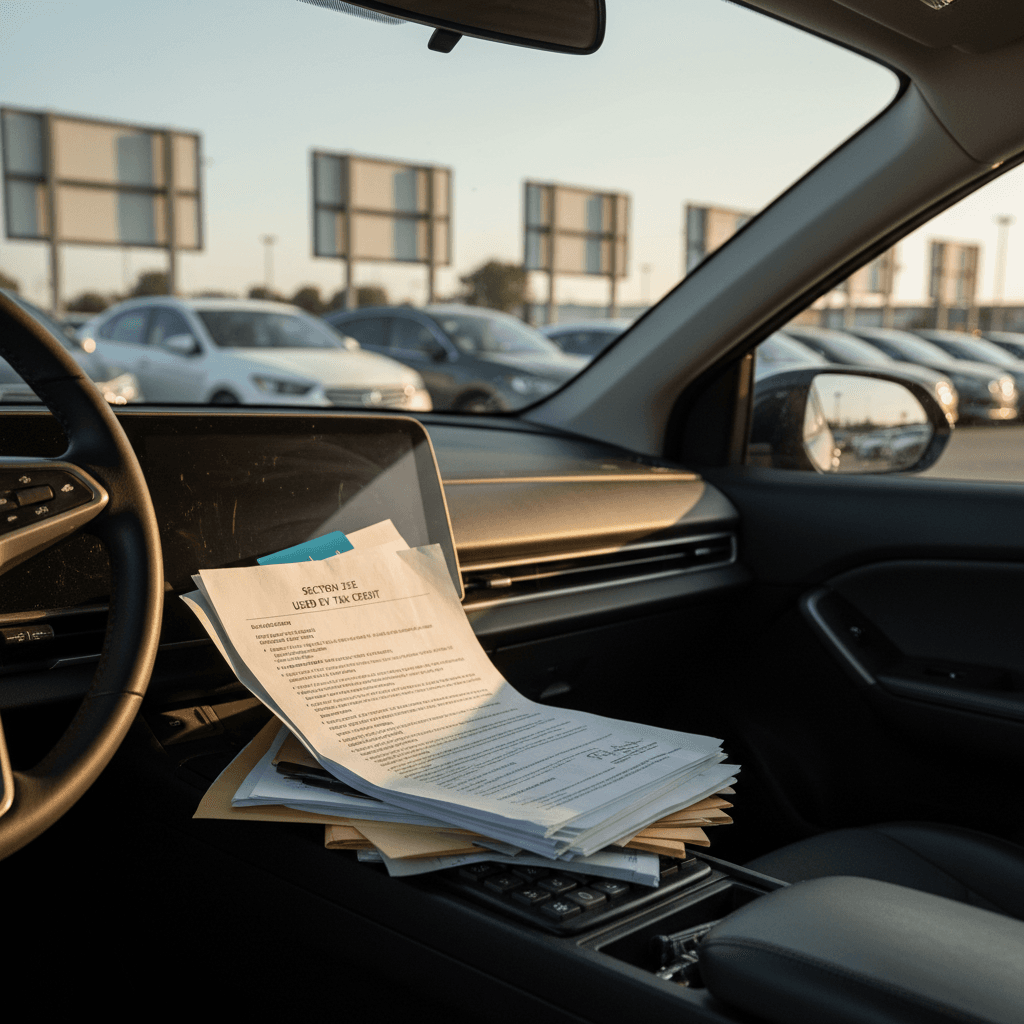
IRS documentation you needed
Who can still claim a used EV credit on 2025 tax returns
Even though Congress ended the clean vehicle credits for purchases after September 30, 2025, the law still allows you to claim the used EV credit on a 2025 tax return for an eligible purchase made before that cutoff. Here’s who might still benefit when filing in 2026:
You may still qualify on your 2025 return if…
1. You bought by Sept. 30, 2025
You entered a binding purchase agreement and took delivery of a qualifying used EV from a licensed dealer on or before September 30, 2025.
2. The sale price was $25,000 or less
The contract sale price (before taxes and DMV fees) was at or under $25,000, and the vehicle meets the model-year and clean vehicle requirements.
3. Your income fits the MAGI limits
Your modified adjusted gross income for 2025 (or 2024, if lower and elected) is at or below the used EV thresholds for your filing status.
4. You haven’t claimed a used EV credit in 3 years
No used EV credit was allowed to you for the three-year period ending on the purchase date, check your prior returns if you’re not sure.
5. No one used that VIN for the credit before
The vehicle has not already generated a Previously Owned Clean Vehicle Credit for another taxpayer, your dealer should have verified this before selling.
6. The dealer reported the sale to the IRS
The dealer was registered with the IRS clean vehicle portal and submitted the required seller report with your name and TIN.
Point-of-sale vs. claiming at tax time
Eligibility checklist: Used EV credit rules that still matter
Even though new 2026 purchases don’t get a federal used EV credit, the old rules still matter in two ways: they determine whether you can claim a credit on your 2025 return, and they influence how you evaluate older listings whose previous owners already used the incentive.
Buyer-side rules to keep in mind
- Income limits: High earners could be partially or fully phased out of the 25E credit. If your income jumped in 2025, you might consider using your 2024 MAGI if that’s allowed and lower.
- Three-year rule: If you already claimed a used EV credit in the prior three years, you generally couldn’t claim another one, even if you traded into a different EV.
- Primary use: The car had to be for your own use, not for resale. Occasional business use was allowed, but primarily personal use was the expectation.
Vehicle-side rules to keep in mind
- One-time credit per VIN: Once a given EV had generated a 25E credit for any buyer, that credit slot was used up. Future buyers of that VIN couldn’t claim the same credit again.
- Model-year and price caps: Vehicles had to be at least two model years older than the purchase year and priced at $25,000 or less.
- Dealer-only eligibility: Private-party sales never qualified under Section 25E, so a used EV bought from an individual in 2024 or 2025 doesn’t suddenly become credit-eligible on your 2025 return.
2026 tax planning if you bought or will buy a used EV
For most shoppers searching "used EV tax credit eligibility 2026," the real question is how to make a smart purchase now that the federal incentives landscape has shifted. Here’s how to think about it depending on when you bought, or plan to buy.
What to do depending on your purchase timing
Your next steps look different if you bought before or after the 2025 cutoff.
A. Bought by Sept. 30, 2025
Action in 2026: Gather your dealer paperwork and file Form 8936 with your 2025 return.
- Confirm you met income and three‑year rules.
- Keep the dealer’s IRS seller report with your tax records.
- Talk with a tax professional if your income changed significantly between 2024 and 2025.
B. Bought after Oct. 1, 2025
Action in 2026: Assume no federal used EV credit.
- Double‑check for state or local incentives.
- Focus on long‑term fuel and maintenance savings.
- Evaluate whether you’re eligible for any home charger credits.
C. Shopping for a used EV now
Action in 2026: Treat tax credits as a bonus, not a requirement.
- Use marketplaces like Recharged to compare battery health, pricing, and financing offers.
- Ask about any remaining state or utility rebates.
- Run total cost of ownership vs. a comparable gas car.
Good news: EVs still save money without a federal credit
State and local incentives that may still help used EV buyers
While the federal used EV credit has ended for new 2026 purchases, many states, utilities, and local programs still offer incentives that effectively reduce the cost of a used electric vehicle, sometimes by thousands of dollars.
- State-level EV rebates or tax credits: Some states offer purchase rebates that apply to used EVs, especially for income‑qualified buyers.
- Utility company rebates: Your electric utility might offer a credit for buying a used EV, off‑peak charging, or installing a smart charger at home.
- Home charging incentives: A separate federal credit for certain home charging equipment and installations has its own rules and sunset dates, which may still apply to upgrades you make in 2026.
- HOV lane and registration perks: Non‑cash benefits like carpool‑lane access or reduced registration fees can add meaningful value even without a check from the IRS.
Check your ZIP code
How Recharged helps you navigate incentives and total cost
Federal credits come and go, but the fundamentals of a smart used EV purchase don’t change. That’s where a transparent marketplace like Recharged can make a real difference in 2026 and beyond.
Why buying through Recharged still makes sense post‑credit
Clarity on battery health, pricing, and financing matters more than ever now that federal used EV incentives have ended.
Verified battery health
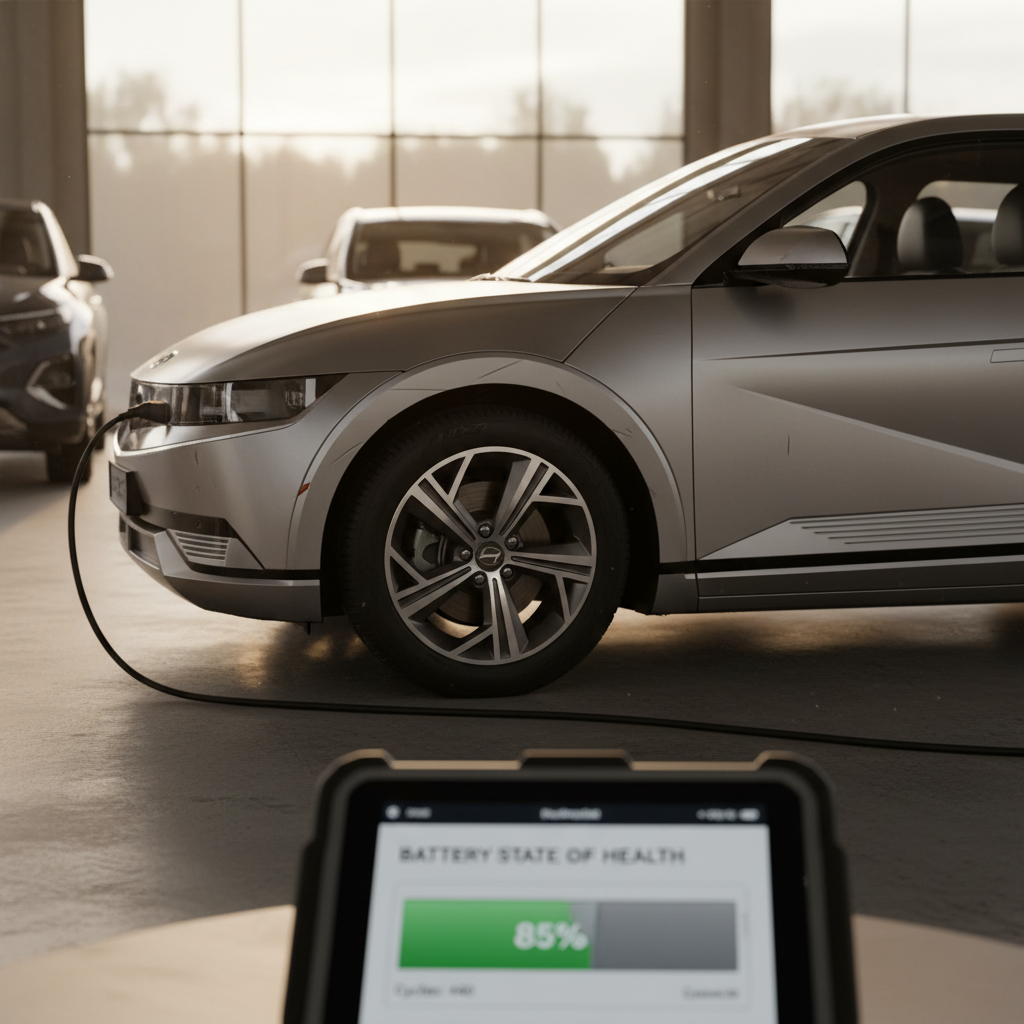
Every vehicle on Recharged comes with a Recharged Score Report that includes independent battery diagnostics. You see how a used EV’s battery is performing today, not just what it looked like on the original window sticker.
Fair, transparent pricing
Our marketplace benchmarks each vehicle against the used EV market, recent sales, and battery condition, so you’re not guessing how much of yesterday’s tax credits are already "baked into" today’s price.
Financing and trade‑ins built for EVs
Recharged offers financing options, nationwide delivery, trade‑in or instant offer programs, and even consignment. That helps you lower your monthly payment in a world where federal credits are no longer trimming the sticker price.
Ready to find your next EV?
Browse VehiclesIf you’re near Richmond, VA, you can also visit the Recharged Experience Center to test‑drive used EVs, talk through ownership costs with EV‑specialist staff, and compare options side‑by‑side. Or, complete the entire process online with a fully digital, guided experience.
Frequently asked questions: Used EV tax credit eligibility 2026
Used EV tax credit questions for 2026
Key takeaways: Used EV tax credit and smart buying in 2026
In 2026, the phrase "used EV tax credit" means two different things at once. If you bought a qualifying used EV by September 30, 2025, you may still be able to claim a Previously Owned Clean Vehicle Credit on your 2025 tax return, even though Congress has now shut the program off for new purchases. If you’re shopping in 2026, there’s no longer a federal used EV credit to count on, but there are still plenty of ways to make the numbers work in your favor.
- The federal Section 25E used EV credit ended for purchases after late 2025, so 2026 buyers shouldn’t expect a federal rebate.
- You may still qualify on your 2025 return if you bought an eligible used EV before the cutoff and meet all the original requirements.
- State, local, and utility incentives can still meaningfully lower your net cost, especially for income‑qualified buyers.
- Battery health, fair pricing, and smart financing matter more than ever without a federal backstop, exactly the areas where Recharged focuses its tools, reports, and expert guidance.
If you’re evaluating a used EV right now, don’t let confusion around incentives stall your decision. Focus on the fundamentals: what you’ll pay each month, how the car will be used, how healthy the battery is, and what it will cost you to own. With transparent marketplaces like Recharged, and a clear understanding of how the old credit rules interact with today’s laws, you can make a confident, informed move into electric driving in 2026.