If you’re shopping for a used electric vehicle in 2026, you’ve probably heard a lot of conflicting claims about a $4,000 used EV tax credit. Some dealers still mention it in ads, while tax headlines say it ended in 2025. This guide cuts through the noise so you understand exactly how the used EV tax credit works in 2026, whether you can still claim it, and what smart alternatives you have if you’re buying now.
Quick context
Used EV Tax Credit 2026 at a Glance
Key facts about the used EV tax credit in 2026
- No new federal used EV credits for purchases made in 2026 under current law.
- You can still claim the used clean vehicle credit on your tax return if you bought a qualifying used EV from a dealer on or before September 30, 2025 and meet income and vehicle rules.
- If you already transferred the credit to a dealer at the point of sale in 2024 or 2025, you generally can’t claim it again on your tax return, but you may have to repay it if your income was too high.
- State and utility programs in 2026 can still knock thousands off the effective cost of a used EV, often with far less complexity than the old federal credit.
How the Used Clean Vehicle Credit Worked Through 2025
Under the Inflation Reduction Act, the federal Previously Owned Clean Vehicle Credit (Section 25E) launched for vehicles placed in service starting January 1, 2023. Through September 30, 2025, it worked like this:
Original used clean vehicle credit (Section 25E) rules
These rules are still what the IRS uses to determine eligibility for vehicles bought before the September 30, 2025 cutoff.
| Rule | Key detail |
|---|---|
| Credit amount | 30% of the sale price, up to $4,000 |
| Price cap | Vehicle sale price had to be $25,000 or less |
| Model year | Used EV had to be at least 2 model years older than the calendar year of purchase |
| Where you bought it | Had to be purchased from a licensed dealer (no private-party sales) |
| Buyer income cap (MAGI) | $75,000 single / $112,500 head of household / $150,000 married filing jointly |
| Buyer usage | Vehicle for personal use, not for resale, and primarily used in the U.S. |
| One‑time rule | Buyer couldn’t have claimed a used EV credit in the previous 3 years |
| VIN & reporting | VIN and sale details had to be reported to the IRS by the dealer |
If your purchase happened before the cutoff, these are the guardrails that matter on your 2025 or 2026 tax return.
On top of that, the vehicle itself had to be a “clean vehicle” under IRS rules, battery‑electric or plug‑in hybrid with at least a 7 kWh battery and a gross vehicle weight under 14,000 pounds. The IRS also excluded vehicles with branded titles like “salvage” or “junk,” and the sale had to be the first retail transfer of that used EV since August 16, 2022.
Why this still matters in 2026
What Changed for Used EV Tax Credits After September 30, 2025
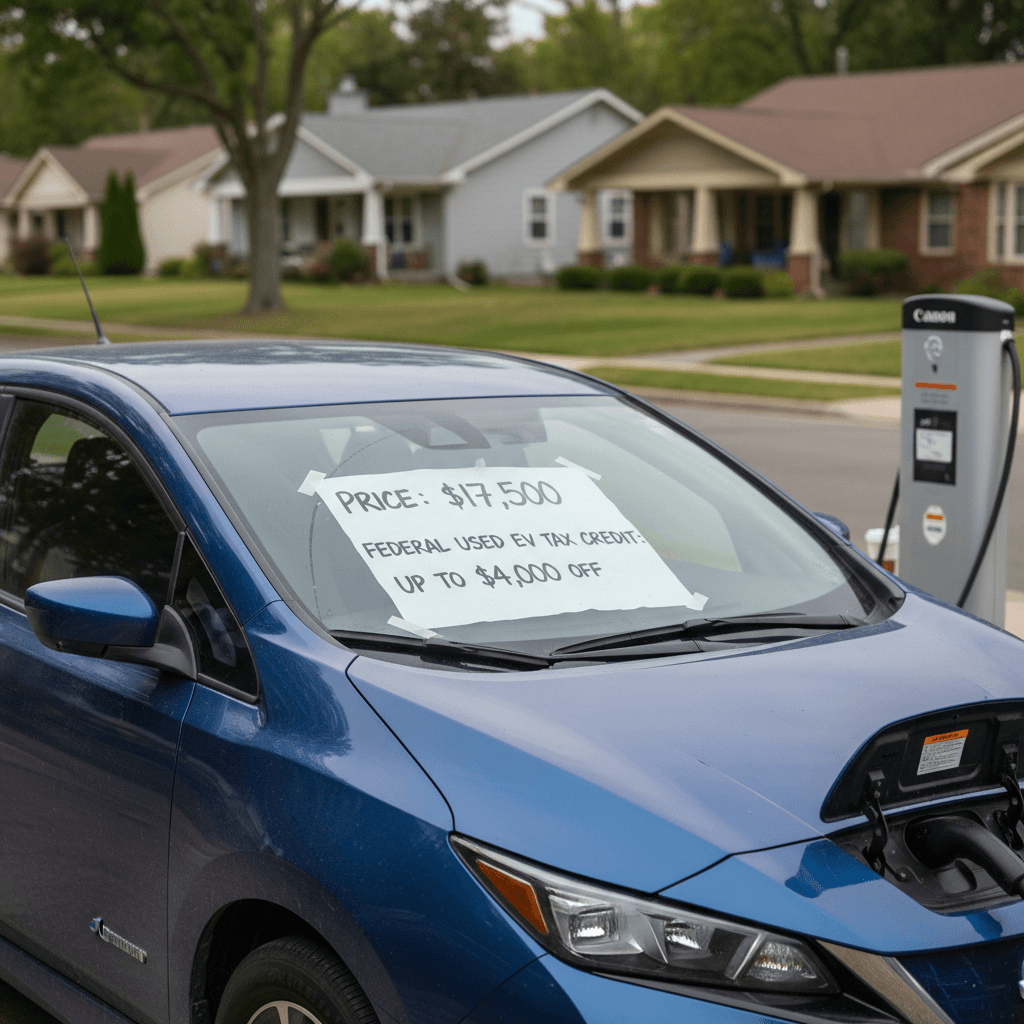
In mid‑2025, Congress passed the “One Big Beautiful Bill Act,” which rewrote big chunks of the Inflation Reduction Act’s clean‑energy incentives. One of the headline changes for EV shoppers: the federal used EV tax credit under Section 25E ended for vehicles purchased after September 30, 2025. That’s why you see the $4,000 used credit described in the past tense today.
Before October 1, 2025
- Qualifying used EVs under $25,000 could earn up to a $4,000 federal tax credit.
- Buyers could either claim on their tax return or transfer the credit to a registered dealer at the point of sale.
- Rules were set nationally, even though many details were confusing in practice.
On or after October 1, 2025
- No new federal credit for buying a used EV, regardless of price or income.
- Dealer point‑of‑sale transfers for used EVs stopped with the end of the credit.
- Only state, utility, and local programs remain to reduce used‑EV costs.
Watch for outdated dealer advertising
Can You Still Claim the Used EV Tax Credit on 2025 and 2026 Returns?
Yes, just because you’re filing a 2025 or 2026 return doesn’t mean the window is closed. The key date is when you placed the vehicle in service (when you took possession), not when you file your taxes. There are three main situations for 2026 filers:
Which bucket are you in for 2026?
Your next steps depend entirely on when and how you bought your used EV.
1. Bought before 9/30/25, never claimed
If you purchased a qualifying used EV on or before September 30, 2025 and never transferred the credit to a dealer, you may still be able to claim it on your 2025 federal return (or amend 2024 if that’s when you bought).
2. Used point-of-sale credit
If you transferred the credit to the dealer at the time of sale, you generally can’t claim it again. But if your income later turns out to be above the limit, you may have to repay the credit when you file.
3. Bought after 9/30/25
If you bought a used EV on or after October 1, 2025, there is no federal used EV tax credit under current law, even if your dealer paperwork mentions it.
Don’t rely on the sales contract alone
Eligibility Rules to Know If You Bought a Used EV Before the Deadline
If you placed a used EV in service on or before September 30, 2025 and haven’t claimed the credit yet, walk through the same Section 25E criteria the IRS will use. Missing even one can disqualify the credit.
Quick eligibility checklist for the old used EV credit
1. Confirm the purchase date and vehicle age
Your purchase (delivery) had to be on or before September 30, 2025. The EV needed to be at least two model years older than the calendar year of purchase (for example, in 2025 you needed a 2023 model year or older).
2. Check the sale price on the bill of sale
The sale price had to be $25,000 or less before fees and taxes. If the dealer worked backward to “bake in” the credit and push the sale price over $25,000, the IRS can treat that as ineligible.
3. Make sure you bought from a licensed dealer
Private‑party sales never qualified. The seller ID and dealer certification should appear on your sales paperwork and the IRS seller report you received.
4. Verify your income (MAGI) against limits
For the year you placed the vehicle in service, your modified adjusted gross income (MAGI) had to be at or below $75,000 (single), $112,500 (head of household), or $150,000 (married filing jointly). You could use the lower of the purchase year or prior year.
5. Confirm you haven’t claimed a used EV credit in the last 3 years
Section 25E is a once‑every‑three‑years benefit per taxpayer. If you already claimed a used EV credit for a prior vehicle within that window, you’re not eligible again yet.
6. Review the VIN and seller’s report
Your dealer should have given you documentation showing the VIN, battery size, and attestation that the car qualifies as a previously owned clean vehicle under IRS rules, plus confirmation that it’s not a salvage or junk vehicle.
Form to know: 8936
How the Dealer Point-of-Sale Used EV Credit Worked
Starting January 1, 2024, buyers could transfer the used clean vehicle credit to a registered dealer at the time of sale. In practice, that meant the dealer knocked up to $4,000 off the price (or showed it as cash or down payment help), then claimed the credit from the IRS through the Energy Credits Online portal.
- You buy a qualifying used EV from a dealer and elect to transfer the credit at closing.
- The dealer reduces your out‑of‑pocket price (or applies a matching credit to your trade‑in or down payment).
- Within three days, the dealer reports the sale, your information, and the VIN to the IRS via Energy Credits Online.
- The IRS pays the dealer the credit amount, typically after basic checks.
- When you file your taxes, you report that you already transferred the credit. If your income is too high, you may have to repay some or all of it.
Why some 2024–2025 buyers face surprises in 2026
2026 Strategies to Save on a Used EV Without a Federal Credit
The end of the federal used EV tax credit doesn’t mean used EVs stopped making financial sense. It just shifts the math. In 2026, the biggest levers are purchase price discipline, smart financing, and local incentives rather than one big line item on your federal return.
Four ways to bring used EV costs down in 2026
Think total cost of ownership, not just tax credits.
1. Let depreciation work for you
EVs, especially early‑generation models, often depreciated faster than comparable gas cars. That’s painful for the first owner, but a win for you. A 3–5‑year‑old EV can cost 40–60% less than new while still offering plenty of battery life if you choose carefully.
2. Make battery health non‑negotiable
Battery condition now matters more than a one‑time tax break. A used EV with strong, verified battery health will cost less to own than a cheaper car with a tired pack. Every vehicle on Recharged includes a Recharged Score Report with third‑party battery diagnostics so you’re not guessing.
3. Use smarter financing instead of chasing credits
In 2026, you may be better off negotiating a lower price, then pairing it with competitive financing. Recharged offers EV‑friendly financing and can help you structure a payment that fits your budget without betting your plan on an uncertain tax outcome.
4. Stack state & utility rebates
Where federal support stepped back, a lot of states and utilities stepped up. Many offer $1,000–$5,000 for used EVs, income‑based assistance, or special low‑rate loans. Those programs are where the real 2026 savings are.
State and Local Used EV Incentives Still Available in 2026
Federal policy has become more skeptical toward consumer EV subsidies, but many states and utilities still see EV adoption as a grid and air‑quality strategy. The result is a patchwork of 2026 used‑EV programs that can rival, or even beat, the old $4,000 federal credit for the right buyer.
Common types of 2026 used‑EV incentives
- State income‑based rebates for used EVs, often $2,000–$5,000.
- Point‑of‑sale utility rebates applied directly at participating dealers.
- Low‑interest green auto loans through state green banks or credit unions.
- Reduced registration fees or HOV lane access for EV owners.
How to find incentives in your area
- Check your state energy or transportation department’s EV incentive page.
- Search your local utility plus “EV rebate” or “transportation electrification.”
- Use databases like your state’s clean‑energy portal or national EV incentive maps.
- Ask dealers to itemize any incentives separately from pricing so you can verify them.
Rebates can be geography‑locked
How Recharged Helps You Navigate Post‑Credit Used EV Buying
A lot of the 2023–2025 EV boom messaging assumed generous federal credits would last for a decade. They didn’t. That makes transparency and fundamentals more important than ever when you’re buying used.
Buying a used EV in 2026: What you get with Recharged
We focus on the things that still matter when the federal credit is gone.
Recharged Score battery health diagnostics
Every vehicle comes with a Recharged Score Report that includes verified battery health and range performance. That’s your long‑term cost anchor now that you’re not counting on a one‑time tax break.
Expert EV‑specialist support
Our EV specialists walk you through how incentives apply, or don’t, for your situation. If you bought a used EV before the 2025 deadline, we can help you understand what paperwork to ask your tax pro about.
Nationwide digital buying & delivery
Because Recharged operates fully online with nationwide delivery and an Experience Center in Richmond, VA, you can comparison‑shop cars from multiple incentive regions and see the full pricing breakdown up front.
Financing tailored to EVs
Instead of structuring the deal around a now‑vanished used EV credit, our financing options are built around realistic EV resale values and battery longevity.
Help with trade‑in or consignment
If you’re moving out of an older EV or gas car, Recharged can give you an instant offer, help you consign, or structure a trade‑in so you’re not leaving equity on the table chasing a credit that no longer exists.
Clear, digital paperwork
From pricing to battery reports to delivery logistics, everything is handled in a transparent, digital flow, reducing the kind of misunderstandings that plagued some early dealer point‑of‑sale credit transactions.
Ready to find your next EV?
Browse VehiclesStep-by-Step Checklist If You Think You Qualify
If you bought a used EV before the September 30, 2025 cutoff and aren’t sure whether you claimed, or can still claim, the credit, work through this step‑by‑step. This is also a useful framework to bring to your tax professional.
What to do if you might still be eligible
1. Gather your sales paperwork
Locate your purchase agreement, bill of sale, and any dealer “clean vehicle” or IRS seller reports. Confirm the delivery date and sale price before taxes and fees.
2. Confirm whether you used point-of-sale transfer
Look for language showing a “clean vehicle credit transfer,” “used clean vehicle incentive,” or a line item discount tied to the federal credit. If in doubt, call the dealer’s finance office and ask explicitly whether they processed a Section 25E transfer.
3. Check the VIN against IRS guidance
Use IRS and manufacturer tools (or documentation from your dealer) to make sure your vehicle was considered a previously owned clean vehicle at the time you bought it, including battery size and title status.
4. Run your income numbers for the relevant year
Estimate your modified adjusted gross income for the year you placed the vehicle in service and the prior year. If either year is at or below the threshold, you can use that year for eligibility.
5. Review your last three years of tax returns
Confirm you haven’t already claimed a used EV credit in the three years before your purchase. Look at Form 8936 and related worksheets in your prior returns.
6. Talk with a tax professional if anything is unclear
The rules are technical, and early dealer implementation wasn’t perfect. A qualified tax pro can help you decide whether to claim the credit, amend a return, or prepare for potential repayment if your income exceeded the cap.
Frequently Asked Questions About the Used EV Tax Credit in 2026
Used EV tax credit 2026: Common questions
Bottom Line on the Used EV Tax Credit in 2026
The headline for 2026 is simple: the federal used EV tax credit is gone for new purchases, but it still matters if you bought a qualifying vehicle on or before September 30, 2025 and haven’t yet claimed (or reconciled) the benefit. For everyone else, the game has shifted away from tax engineering and toward fundamentals, buying the right car, at the right price, with the right battery health and local support.
If you’re planning a used EV purchase this year, treat the expired credit as a reminder, not a requirement. Ask hard questions about range and degradation, look closely at total cost of ownership, and explore state and utility incentives that still meaningfully move the needle. And if you want a shopping experience built around that reality, not around yesterday’s federal incentives, Recharged is designed for exactly this moment in the EV market.