If you’re looking at the used EV market in 2026, you’re stepping into one of the most interesting, and uneven, corners of the auto world. Prices on many used electric cars are softening, a big wave of off‑lease vehicles is about to hit, and policy shifts are changing who buys what and when. If you understand these trends, you can find genuine bargains and avoid some expensive mistakes.
2026 at a glance
Overview: What’s Happening in the Used EV Market in 2026
Key Used EV Market Signals for 2026
Zooming out, 2026 is a transition year. New EV sales in the U.S. cooled in 2025 after several years of rapid growth, even as overall vehicle sales rose. At the same time, used EV transactions climbed as more shoppers looked for value and as early adopters cycled out of their first electric cars. For you as a used‑car shopper or owner, that means more choice, wider price spreads between models, and big differences in how individual vehicles hold their value.
The market is not moving in one direction
A Wave of Off-Lease EVs Is Hitting the Market
One of the biggest used EV market trends in 2026 is the sheer number of vehicles coming off lease. Leasing was heavily promoted for EVs in 2022–2024 because it let automakers and dealers stack tax credits and incentives. That means those three‑year leases are expiring in large numbers right now.
How EV Lease Returns Change Used Supply
Why 2026 will feel different from prior years on used EV lots.
| Model Year Cohort | Typical Lease End Year | What’s Hitting Used Lots in 2026 | Likely Market Effect |
|---|---|---|---|
| 2022 EVs | 2025 | First wave already arrived | Tested real‑world range and early‑life battery data become visible to shoppers. |
| 2023 EVs | 2026 | Large volume arriving now | Sharp increase in late‑model, low‑mileage EVs, especially crossovers. |
| 2024 EVs | 2027 | Next wave | Sustained supply keeps used EV inventories relatively rich versus gas cars. |
| Gas Vehicles (all years) | 2024–2026 | Lease returns remain below 2019 levels | Used gas inventory stays tight, making EVs comparatively plentiful. |
EV lease‑return volumes are growing even as many gas‑vehicle lease returns stay below pre‑pandemic levels.
Why this matters to you
Why lessees may walk away
With aggressive discounts on new EVs and the ability to apply tax credits at the point of sale, many returning lessees find that leasing a fresh EV is cheaper than buying out their current car. That pushes more three‑year‑old EVs into the wholesale and retail used channels.
What that does to values
More supply without equally strong demand typically puts downward pressure on prices. In segments where multiple brands launched similar EV crossovers at once, expect used prices to be especially competitive in 2026 and 2027.
Price Trends: Which Used EVs Are Falling, and Which Are Rising
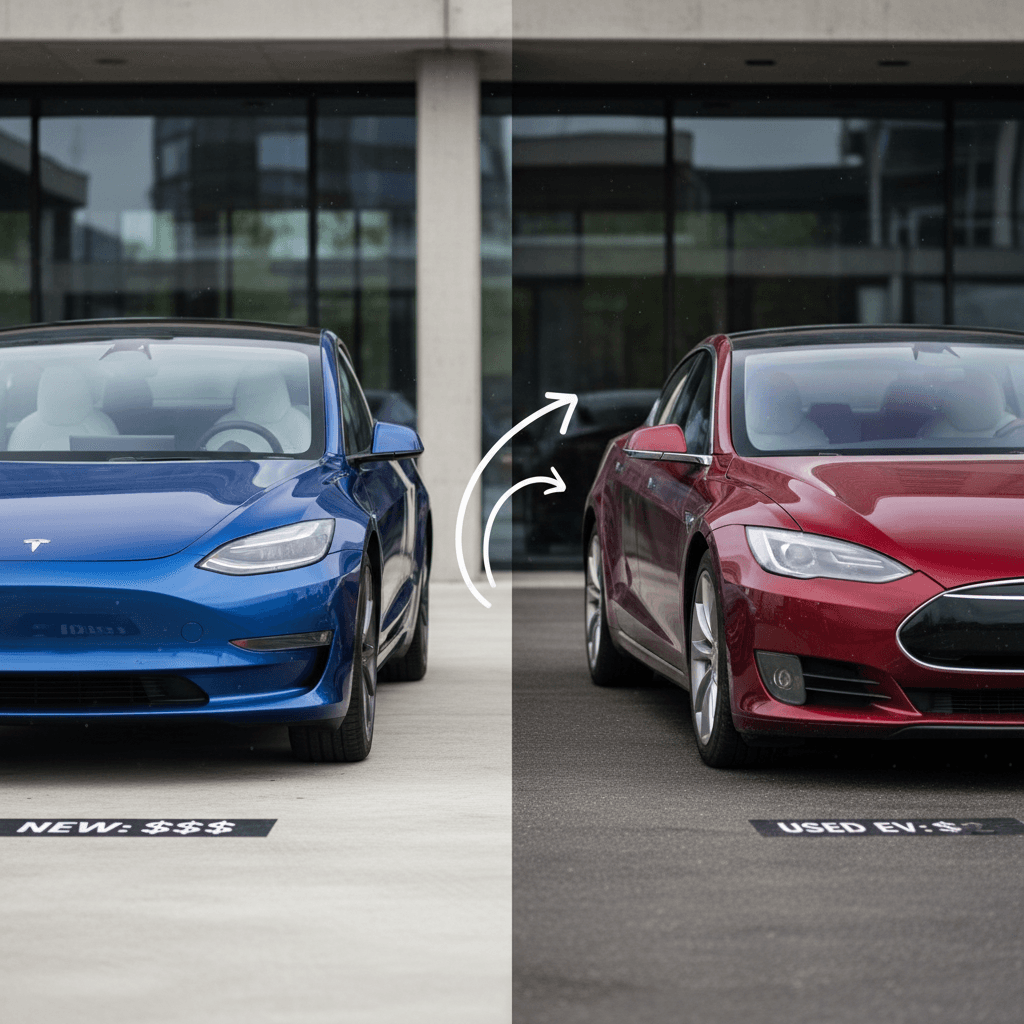
Used EV pricing has split into two stories. On one side, many mainstream EVs have seen mid‑single‑digit price declines over the past several months. On the other, used Teslas, after dropping hard in 2023 and early 2025, have recently ticked upward again even as most competitors kept sliding.
How Different Used EV Segments Are Behaving in 2026
Price patterns you’re likely to see on dealer lots and online listings.
Mainstream compact EVs
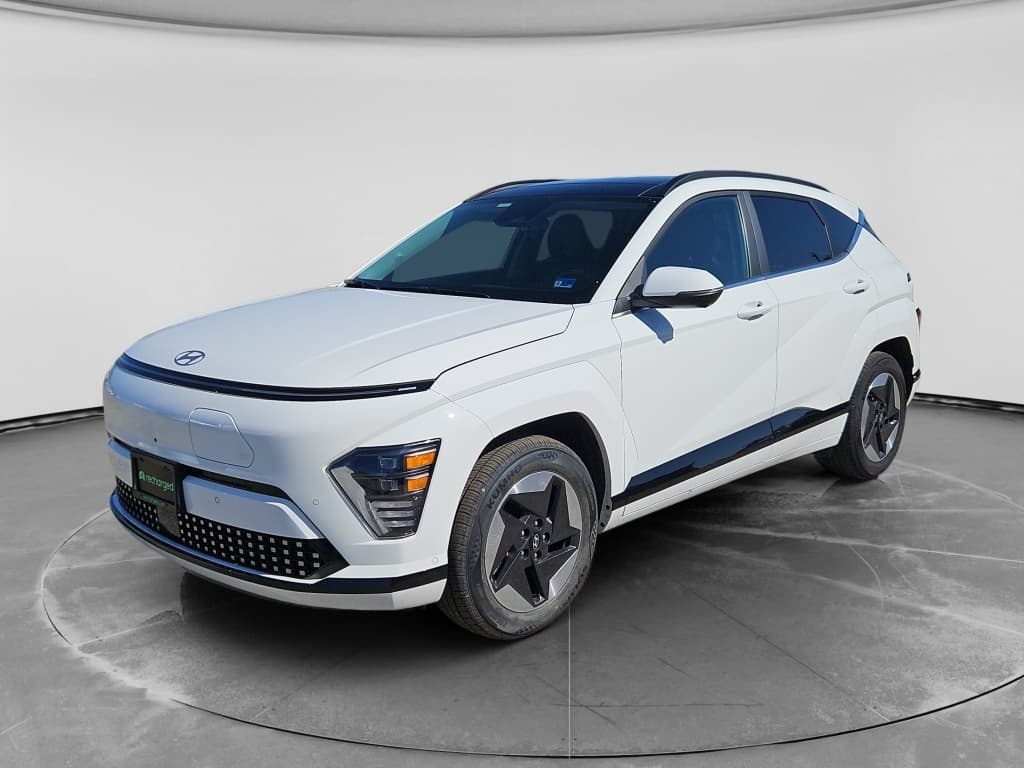
Models like the Nissan Leaf, Hyundai Kona Electric, Kia Niro EV, and VW ID.4 have generally seen prices slip. Many have dropped around 4–6% from late 2025 levels as supply grew and buyers focused on value.
Performance & premium EVs
High‑end EVs such as Porsche Taycan and certain luxury crossovers tend to remain more resilient. Transaction volumes are lower, and shoppers in this tier are less price‑sensitive, but depreciation is still steeper than for comparable gas cars.
Used Teslas
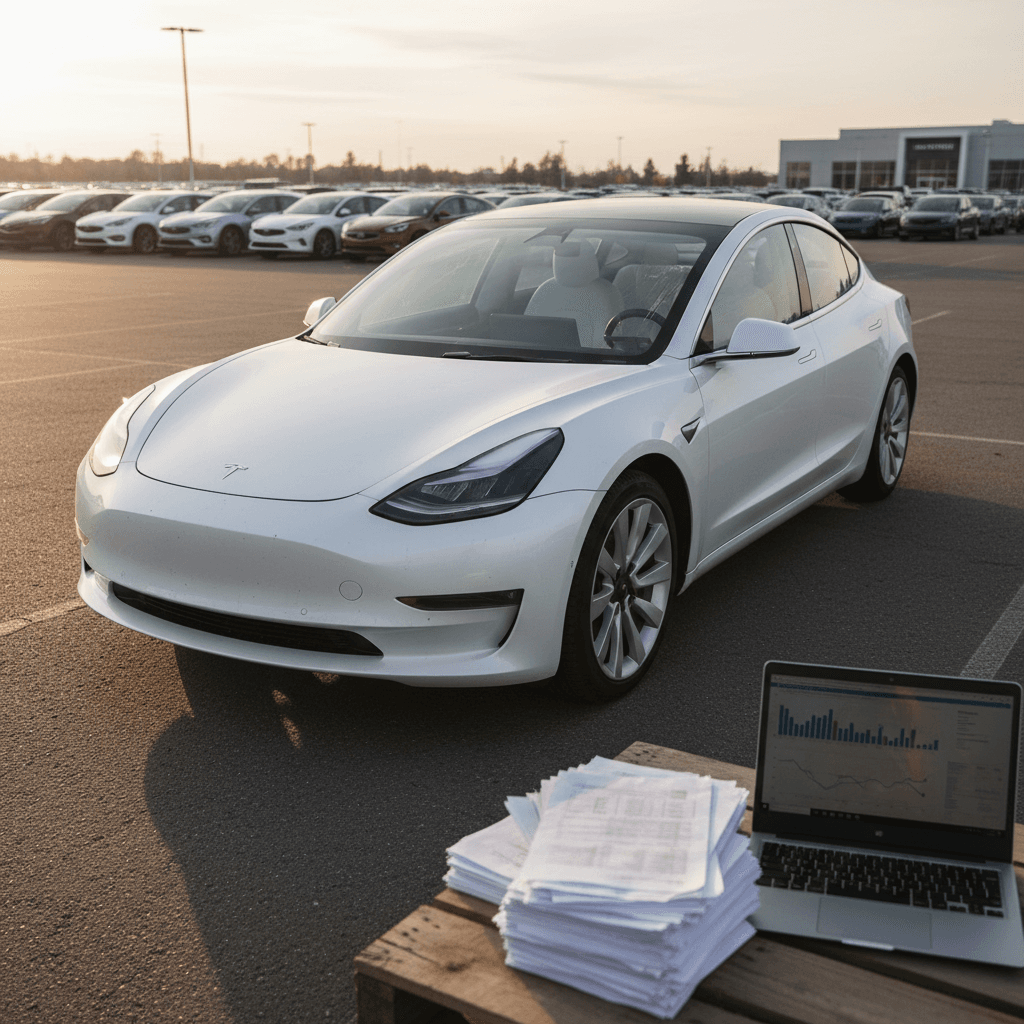
After a steep correction, used Tesla prices rebounded in late 2025 and early 2026, up roughly 4% on average. Discontinued Model S and X variants, in particular, have tightened in supply, helping lift values even as competitors keep discounting.
Look past list price
How Tax Credits and Policy Shifts Are Reshaping Demand
Incentives and tax rules have an outsized impact on EV demand, and 2026 is no exception. For used shoppers in the U.S., the headline is that the previously owned clean vehicle credit of up to $4,000 remains available on qualifying cars purchased through September 30, 2025, with income and price caps. Starting in 2024, that credit could be applied at the point of sale through participating dealers, effectively turning into an immediate discount.
Key Policy Factors Influencing Used EVs
1. Point-of-sale used EV credit
If you qualify, you can get up to $4,000 off a used EV (subject to price, age, and income limits) through transactions completed by September 30, 2025. Many franchised dealers and some digital retailers can process this at the time of purchase.
2. Expiration of new-EV credits
The phase‑out and expiration of some new‑EV incentives at the end of 2025 changed the equation: as some new EVs effectively got more expensive, demand and pricing for certain used EVs, especially Teslas, firmed up.
3. Local incentives and fees
States and utilities continue to tweak EV rebates, HOV‑lane access, and registration fees. Those changes don’t always hit the headline price, but they affect total cost of ownership and can nudge more shoppers toward (or away from) used EVs.
4. Charging-standard transition
As more brands move toward the North American Charging Standard (NACS) for DC fast charging, buyers are watching whether older CCS‑only models will feel left behind. That concern can pressure prices on some used non‑Tesla EVs without strong adapter support.
Watch the credit timelines
Battery Health: The New Mileage for Used EV Values
For a used gasoline car, everyone asks about mileage. For a used EV, battery health is becoming the equivalent question. Dealers and buyers have learned the hard way that you can’t accurately judge an EV’s value without some insight into pack condition and usable range.
Why Battery Health Now Drives Used EV Pricing
Three realities that shape what your EV is worth.
Unknown battery = discounted car
Trade buyers and dealers increasingly shy away from EVs with no verifiable battery data. When they do buy them, they often assume the worst and price accordingly, building in a discount to cover risk.
Battery certificates add confidence
Battery‑health certificates and diagnostic reports are quickly becoming the most trusted documents in a used‑EV deal, often more influential than traditional inspection reports or even service history.
Early years tell the story
For most modern EVs, outright pack failures are rare in the first 5–8 years, but how the battery has been used and charged can noticeably affect range. A documented, healthy pack helps preserve resale value.
How Recharged helps on battery health
Ready to find your next EV?
Browse VehiclesHow battery health affects depreciation
Two identical EVs built in the same month can carry different price tags if one has noticeably more usable capacity left. Shoppers are increasingly willing to pay more for an EV that still delivers near‑original range and fast‑charging performance.
What you should look for
- Battery‑health score or state‑of‑health percentage.
- Realistic projected range at highway speeds.
- Evidence of regular maintenance and software updates.
- Limited history of repeated DC‑fast‑charging from 0–100%.
Buyer’s Guide: How to Shop Smart for a Used EV in 2026
With all these moving pieces, how do you turn 2026’s used EV trends into a solid personal decision? Start by getting clear about how you drive, then work backward from battery health, range, charging access, and total cost of ownership, not just monthly payment.
Essential Checklist for 2026 Used EV Shoppers
1. Match range to your real driving
Look at your typical weekly routine. If you drive 30–40 miles a day with occasional trips, a used EV with 180–220 miles of reliable real‑world range may be plenty; road‑trip warriors may want 250+ miles and robust fast‑charging capability.
2. Prioritize battery documentation
Insist on a <strong>battery‑health report</strong> or diagnostic readout, not just a dashboard range guess. Recharged includes this in the Recharged Score, but if you’re shopping elsewhere, ask how the seller measured pack health.
3. Understand charging where you live
If you can install Level 2 charging at home, you can comfortably live with many more EV options. Apartment or condo dwellers should pay extra attention to public charging coverage and reliability near home and work.
4. Compare total cost, not just price
Factor in fuel savings, maintenance, insurance, registration fees, and potential tax credits. A used EV with a slightly higher sticker price can still be cheaper to own than a similar gas car over three to five years.
5. Check software and support
Make sure the vehicle still receives over‑the‑air updates or dealer software support, and confirm that key features (like DC fast‑charging access or app connectivity) are active and transferable to you as the next owner.
6. Use EV‑savvy marketplaces
Working with an EV‑focused retailer like <strong>Recharged</strong> gives you access to battery‑health data, fair‑market price analysis, EV‑specialist support, and digital tools for financing, trade‑in, and delivery.
Leverage digital tools
Advice for Current Owners and Sellers
If you already own an EV, 2026 is a year to think strategically. Some models are better held for another cycle; others might be smart to trade while buyer demand is still solid and tax credits can help support your asking price.
If you plan to keep your EV
- Stay current on battery and thermal‑management software updates.
- Avoid frequent, full 0–100% DC fast‑charging sessions unless you truly need them.
- Document service visits and any battery‑related diagnostics, today’s records are tomorrow’s resale leverage.
If you’re thinking about selling or trading
- Get a battery‑health report before listing; it can justify a stronger price and speed up the sale.
- Consider timing around incentive deadlines, buyers may be more motivated before credits expire.
- Explore options beyond a simple trade‑in: instant offers or consignment programs (like Recharged’s) can net you more while still keeping the process hands‑off.
How Recharged supports sellers
Where the Used EV Market Is Likely Headed Next
Looking beyond 2026, several forces will keep reshaping the used EV landscape: larger numbers of off‑lease vehicles, the gradual spread of NACS fast‑charging, changing battery chemistries, and whatever Congress decides to do next about EV incentives. That combination points to continued volatility by model but also to a maturing market where data, not hype, drives decisions.
What Shoppers Can Expect Over the Next 3–5 Years
Big-picture themes that are likely to play out.
More used EV inventory
Lease‑return waves and broader new‑EV adoption will keep used EV supply relatively healthy. That should mean more choice and a wider range of prices, especially in the crossover and compact‑car segments.
Uneven depreciation
Some models will develop reputations as range stars or reliability standouts and hold value; others will be known as discount specials. Battery‑health transparency will be a major factor in separating the two.
Software and autonomy value
As more EVs ship with advanced driver‑assist and connected‑car features, support and upgrade paths will matter. Vehicles that continue receiving meaningful software updates will have a better shot at stronger resale.
The early EV market was driven by tax credits and early adopters. The next phase will be driven by value, transparency about battery health, and simple ownership experiences.
For you as a shopper or owner in 2026, the takeaway is straightforward: this is no longer a science experiment. It’s a real, functioning used‑vehicle market with its own logic. If you focus on battery health, realistic range, charging access, and total cost of ownership, and lean on EV‑savvy tools like the Recharged Score, you can turn today’s used EV market trends into an advantage instead of a risk.