If you’re shopping for used electric cars in New York in 2026, you’re walking into the most interesting EV market the state has ever seen. New‑car hype has cooled, federal tax credits ended in late 2025, and a flood of three‑ to five‑year‑old EVs is finally hitting the used market. For New Yorkers, that adds up to something rare in this city: leverage.
Quick 2026 snapshot
Why Used Electric Cars in New York Make Sense in 2026
Used EVs Are Growing Up in 2026
The EV story in New York in 2026 isn’t the breathless, sold‑out‑for‑months narrative from 2021. It’s a maturing market: more inventory, calmer pricing, and buyers who want the upside of electric without paying new‑car money. That’s exactly where used EVs shine, especially if you’re paying New York gasoline and parking rates.
- Energy costs: Electricity in New York isn’t cheap, but per‑mile costs for an EV are still significantly lower than gas, especially if you can charge off‑peak at home or at work.
- Maintenance: No oil changes, fewer moving parts, and regenerative braking that stretches pad life. Over a few years, this is where EVs quietly pay you back.
- Depreciation already hit: Early buyers absorbed the steepest drop. In 2026 you’re often buying after the big haircut, especially on 2021–2023 models.
Who benefits most in NY
Market Reality: Used EV Prices and Availability in NY
By 2026, the used EV market has finally moved past its awkward adolescence. In late 2024 and 2025, prices on many non‑Tesla EVs slid as new‑car discounts and softening demand rippled into the secondhand market. At the same time, EV lease penetration spiked, and those cars are now spilling into dealer lots and online marketplaces.
What You’ll Actually See on the Used EV Market in New York
From Brooklyn walk‑ups to Buffalo driveways, these are the usual suspects.
Mainstream commuters
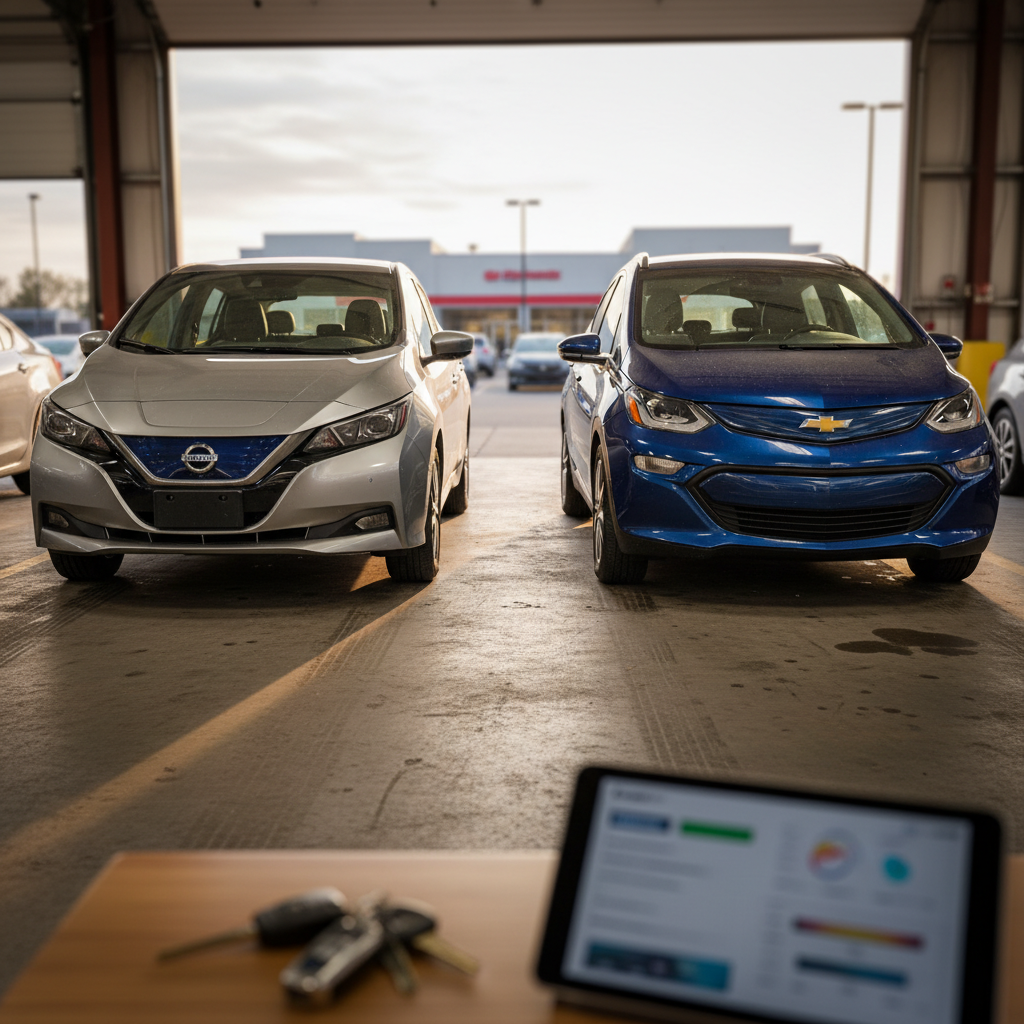
Think Tesla Model 3, Model Y, Chevrolet Bolt EUV, Nissan Leaf, Hyundai Kona Electric.
These are the workhorses of the used market, often coming off three‑year leases with 25,000–45,000 miles.
Crossovers & family haulers
Volkswagen ID.4, Hyundai Ioniq 5, Kia EV6, Ford Mustang Mach‑E.
Perfect for Westchester, Long Island, and upstate families who want one car that can handle winter, Costco, and I‑87.
Luxury & performance EVs
Tesla Model S and X, Audi e‑tron/Q8 e‑tron, Mercedes EQE, BMW i4/iX.
These take the biggest new‑to‑used price hit, but repairs and tires still cost luxury‑car money, go in eyes open.
Mind the outlier bargains
Incentives and Taxes: What Changed After 2025?
The headline you need to internalize before you start shopping: the federal EV tax credits for both new and used vehicles ended on September 30, 2025. In 2026, you can’t count on a $4,000 used‑EV credit swooping in at tax time to fix an over‑ambitious purchase price. The deal needs to make sense on the sticker, not on your Form 8936.
Federal incentives in 2026
- No federal purchase credit for used EVs bought after September 30, 2025.
- Some buyers may still be filing for credits on pre‑October 2025 purchases, but that’s history, not help for a car you buy today.
- Don’t build your 2026 budget around a federal rebate that no longer exists.
New York–specific help
- New York has historically stacked its own incentives on top of federal programs, and lawmakers continue to debate state sales‑tax relief for EVs on part of the purchase price.
- Utility programs (Con Edison, NYSEG, National Grid, etc.) may offer home‑charging rebates or off‑peak rate plans.
- HOV lane rules for EVs on downstate parkways continue to evolve, helpful if you’re a Long Island commuter.
Always check the current NYSERDA and utility websites before you sign anything; state programs can change within a budget cycle.
How to think about incentives in 2026
NYC vs Upstate: Different Used EV Realities
“New York” is really two different EV universes: the five boroughs and everywhere else. Used buyers in a Brooklyn walk‑up have a radically different life than a Syracuse homeowner with a two‑car garage and a 240‑volt outlet by the panel.
Used EV Ownership: NYC vs Upstate/Suburbs
Same state, very different realities for charging, parking, and model choice.
| Factor | NYC (5 boroughs) | Upstate & Suburbs |
|---|---|---|
| Where it lives | Street parking, garages, co‑ops, walk‑ups | Driveways, garages, more private parking |
| Charging reality | Public fast charging, workplace, limited home options | Strong case for Level 2 home charging |
| Best body style | Smaller sedans, hatchbacks, compact crossovers | Crossovers, SUVs, sedans with bigger trunks |
| Range sweet spot | 180–260 miles usable range is often enough | 220–300+ miles makes winter and road trips easier |
| Top concerns | Curbs, bumper dings, charger access, vandalism | Snow, highway range, battery longevity |
| Insurance & parking | Higher premiums, monthly garage bills | Lower insurance, cheaper or no parking fees |
Use this as a gut‑check before you fall in love with a particular used EV online.
Don’t shop like you live somewhere else
Charging an EV in New York: Where Will You Plug In?
Common Charging Setups for New York EV Owners
Match your charging reality before you shop for a car.
Home garage / driveway
- Install a Level 2 charger on a 240‑volt circuit.
- Overnight charging covers 30–40+ miles of driving per hour plugged in on many EVs.
- Best‑case scenario for upstate and suburbs.
Apartment / co‑op
- Look for buildings with on‑site charging or garages that support it.
- Many NYC owners rely on workplace and public fast charging.
- Short‑range EVs can still work if you plug in a couple of times per week.
Public & fast charging
- New DC fast‑charging stations along major NY corridors keep multiplying, especially near interstates.
- Tesla’s Supercharger network has opened many sites to non‑Teslas using the NACS standard.
- Great for top‑ups and road trips, but expensive as your only fuel source.
If you can’t charge at home…
Best Used Electric Cars for New York Buyers
The “best” used EV for New York depends less on brand loyalty and more on three questions: Where will you charge, how far do you drive, and what does winter look like for you? Assuming you’re charging at least sometimes at home or work, a handful of models stand out for 2026 shoppers.
Used EV Shortlist for New York (2026)
Models that tend to pencil out well on the used market.
Tesla Model 3 & Model Y
Why they work in NY:
- Excellent fast‑charging speed and Supercharger access across New York.
- Strong efficiency, especially in rear‑wheel‑drive trims.
- Software, navigation, and over‑the‑air updates age better than many rivals.
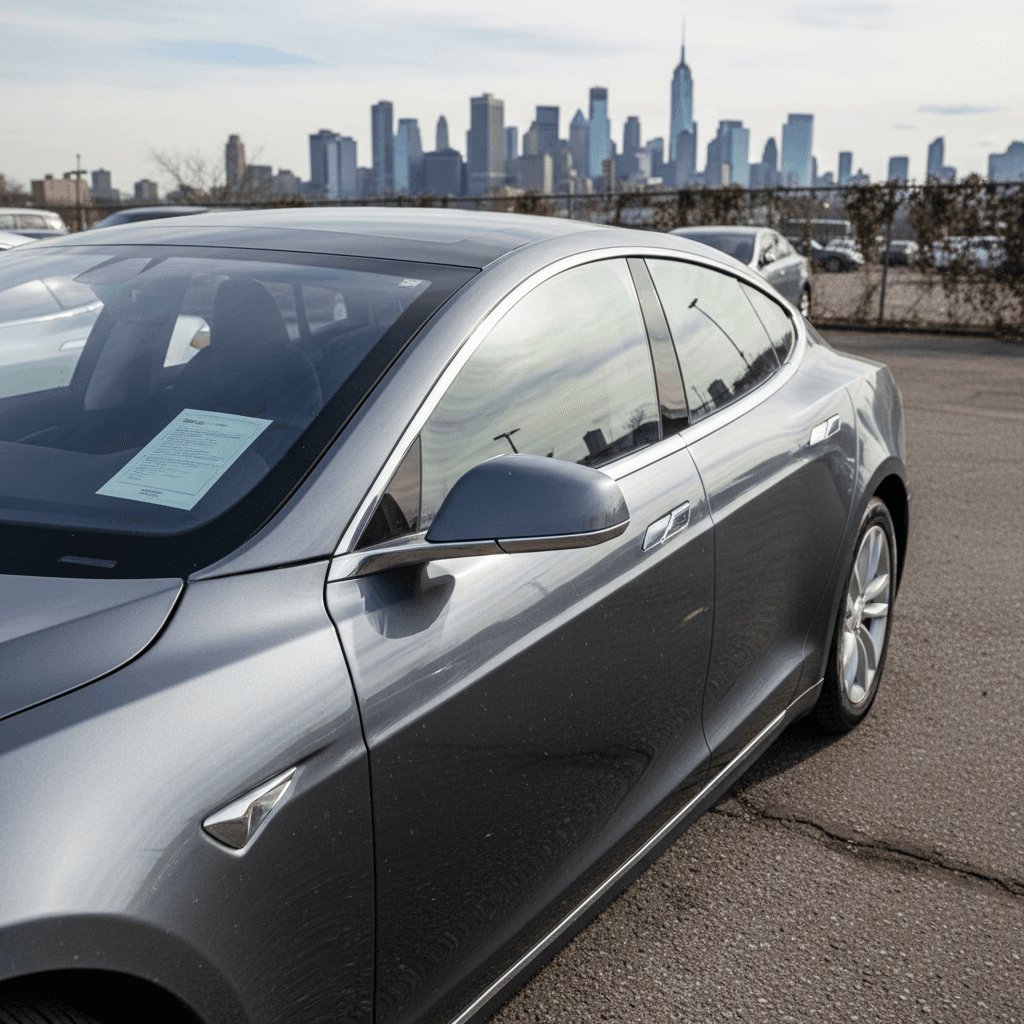
Used prices stayed firmer than rivals but often undercut new‑car MSRPs by five figures, especially on 2020–2023 models.
Hyundai Kona Electric / Kia Niro EV
Sweet‑spot commuters:
- Compact, easy to street‑park in NYC, with solid real‑world range.
- Often significantly cheaper than comparable Teslas on the used market.
- Good choice for upstate and Long Island commuters with home charging.
Nissan Leaf (2nd gen)
Budget play, handle with care:
- Some of the lowest used EV prices in New York.
- Older models lack liquid battery cooling and use CHAdeMO fast‑charging, which is fading.
- Great for short‑range city duty if battery health checks out; risky for frequent long highway drives.
ID.4, Mach‑E, Ioniq 5, EV6
Family‑friendly crossovers:
- Roomier cabins and cargo for kids, dogs, and ski trips.
- Many are off‑lease 2021–2023 models with big depreciation already baked in.
- Check fast‑charging performance and cold‑weather range model by model.
Models to think twice about
Battery Health, Range, and Winters in NY
New York winters are where weak EVs go to confess their sins. Cold weather saps range, snow tires add drag, and heaters pull real power. A used EV that looks adequate on paper in July can feel marginal on the Thruway in January, especially if its battery has already lost a few percentage points of capacity.
Battery & Range Questions to Answer Before You Buy
1. How much usable range do you really need?
Take your longest regular trip, say, Queens to New Paltz and back, and add a generous buffer for winter and detours. Many New York drivers are comfortable with <strong>180–250 miles</strong> of honest, cold‑weather range; road‑warriors may want more.
2. What’s the actual battery health?
Don’t settle for a guess or a single range estimate. Look for a <strong>data‑driven battery report</strong> that compares the car’s current capacity to when it was new, based on real‑world telemetry rather than just the dash gauge.
3. How was it charged before?
An EV that lived its life on 50‑amp home charging will usually age more gently than one fast‑charged to 100% every day. Ask about charging habits and look for patterns in any available data.
4. Is there an active battery warranty?
Many EVs carry separate battery warranties, often 8 years or 100,000 miles, for capacity loss below a certain threshold. On a 2021–2022 car, you may still have years of coverage left.
5. How does it behave in the cold?
Search owner forums and reviews for your specific model plus “winter range New York” or “cold weather.” Some EVs handle 20°F mornings gracefully; others throw their hands up and go inside.
Where Recharged’s battery data comes in
Ready to find your next EV?
Browse VehiclesHow Recharged Helps New Yorkers Buy Used EVs Smarter
Shopping for a used EV in New York can feel like auditioning for a graduate seminar in electrical engineering and tax law. Recharged exists to simplify that. The goal isn’t to drown you in jargon; it’s to show you, in plain English, what you’re buying and what it will cost you to live with in New York, not Arizona.
What you get with every Recharged EV
- Recharged Score battery health diagnostics – Transparent pack data, not just a guess at “good” or “bad.”
- Fair‑market pricing – Listings benchmarked against the real used EV market, including recent swings in 2024–2025 prices.
- EV‑specialist support – People who speak range, kilowatts, and New York winters fluently, available from first question to delivery.
- Fully digital buying experience – Browse, finance, and sign from your sofa; Recharged can arrange nationwide delivery, including New York.
Built for how people actually buy cars now
- Financing options tailored to used EVs, with tools to keep monthly payments aligned with your fuel and maintenance savings.
- Trade‑in or instant offer for your current car, plus consignment options if your situation is more nuanced.
- Experience Center in Richmond, VA if you want to touch metal and talk to specialists in person before buying and shipping.
- Guidance on incentives – While federal credits are gone for 2026 purchases, Recharged can help you understand current state and utility programs that may apply.
Not in Virginia? No problem.
Step-by-Step Checklist for Buying a Used EV in NY
Your 10‑Step 2026 Used EV Playbook (New York Edition)
1. Audit your daily and weekly driving
Log your typical week: commute miles, weekend trips, and rare long hauls. This tells you how much <strong>honest winter range</strong> you truly need instead of chasing the biggest number on the spec sheet.
2. Be honest about charging access
Do you have a driveway or garage? Can you install a Level 2 charger? Is workplace charging realistic? Your charging reality should filter your model list before you look at paint colors.
3. Set a total cost budget, not just price
Factor in insurance, parking, tolls, and electricity or fast‑charging costs in New York. A slightly pricier EV with cheap running costs can beat a cheap gas car with $6‑a‑gallon fill‑ups and $400 monthly parking.
4. Shortlist models that fit New York life
Narrow down to three to five models that fit your range, size, and charging constraints. This is where many buyers end up choosing between a compact sedan/hatch and a small crossover.
5. Compare real used listings, not MSRP
Ignore new‑car window stickers from 2022. Look at <strong>actual used prices</strong> for similar mileage and trim in New York and nearby markets, and filter out obvious outliers.
6. Demand objective battery health data
Whether you’re buying from a dealer, private seller, or online marketplace like Recharged, make <strong>verified battery health</strong> non‑negotiable. If the seller can’t show it, walk away.
7. Check charging history and recall work
Ask how and where the car was usually charged, and confirm that all open recalls and software updates, especially charging and battery‑related, have been taken care of.
8. Test‑drive like a New Yorker
Recreate your life: highway merges, rough pavement, parking‑garage ramps, tight parallel parks. Listen for suspension clunks and check ground clearance against New York’s finest potholes.
9. Line up financing and insurance quotes
Get pre‑qualified so you know your real payment range before you get attached. Compare EV insurance quotes for city vs. suburban garaging; it can move the math more than you think.
10. Plan your first month of charging
Before delivery, map the chargers near home, work, and your favorite weekend haunts. Order home‑charging hardware if applicable. Treat the first month like onboarding to a new job.
Frequently Asked Questions About Used EVs in New York (2026)
Used Electric Cars New York 2026: FAQ
Bottom Line: Should You Buy a Used Electric Car in New York in 2026?
A few years ago, buying a used EV in New York meant overpaying for hype or inheriting first‑generation compromises. In 2026, the picture is saner. Federal incentives are gone, yes, but used EV prices are more rational, selection is broader, and the charging landscape, from Superchargers to non‑Tesla fast chargers along New York’s highways, has matured. If you match the car to your charging reality and winter range needs, a used EV can quietly undercut a comparable gas car on total cost while giving you a far better daily driving experience.
Start with your life, not a badge: where you park, how you commute, what winter looks like. Shortlist a few models that fit that reality, insist on verified battery data, and run the math on fuel, maintenance, and financing. Whether you buy through Recharged, with its Recharged Score battery‑health diagnostics, fair market pricing, EV‑savvy advisors, and nationwide delivery, or elsewhere, the fundamentals are the same. In New York in 2026, the used electric car finally makes sense. Just don’t buy it like it’s still 2019.