If you live in the Sunshine State, you’re seeing more silent cars slipping through traffic than ever before. Florida is now the **second‑largest EV market in the U.S.**, with well over a quarter‑million electric vehicles on the road and hundreds of thousands more expected by 2026. That surge is fueling a fast‑growing market for used electric cars in Florida in 2026, and if you know what you’re doing, it’s one of the best places in the country to buy one.
Florida’s EV moment
Why Florida is a hotbed for used EVs in 2026
Florida’s EV landscape by the mid‑2020s
Put simply, **supply is finally catching up with interest**. Early adopters are trading out of 2018–2021 Teslas and first‑generation crossovers. Fleets and sun‑belt retirees are turning in low‑miles EVs. And because Florida has no state income tax and a strong retiree market, you see a lot of well‑optioned cars that were garage‑kept and gently driven.
Why Florida is especially good for used EV shoppers
Four structural advantages you have over buyers in other states
Gentle winters, kinder batteries
Florida doesn’t have months of sub‑freezing temperatures. That means less cold‑weather range loss and, over time, less battery stress than in northern climates.
Dense urban EV clusters
Metro areas like Miami, Orlando, Tampa Bay, and Jacksonville have strong EV adoption, which creates more used inventory and a healthy ecosystem of EV‑savvy shops.
Growing charging network
Between highway fast chargers, hotel and destination chargers, and local utilities building out networks, Florida drivers have multiple ways to keep a used EV fueled.
Incentives & energy costs
While Florida doesn’t have a big statewide EV rebate, you can sometimes stack utility incentives, federal tax credits on some used EVs, and lower fuel costs to make the numbers work.
Watch for coastal wear
What to expect on used EV prices and availability in Florida
Used EV pricing in Florida in 2026 is a tale of two markets. On one side, you’ve got **plenty of mainstream used electric cars**, Nissan LEAFs, Chevy Bolts, base Model 3s, often priced competitively against comparable gas sedans. On the other, high‑demand models like the Tesla Model Y, Rivian R1T, or newer Hyundai/Kia crossovers still command a premium, especially with low miles and long‑range batteries.
- Older city cars (e.g., early Nissan LEAF, BMW i3) often undercut comparable gas compacts, but may have limited highway range.
- Mainstream commuters (Chevy Bolt EUV, Kia Niro EV, Hyundai Kona Electric) have become the **value sweet spot** for many Florida buyers.
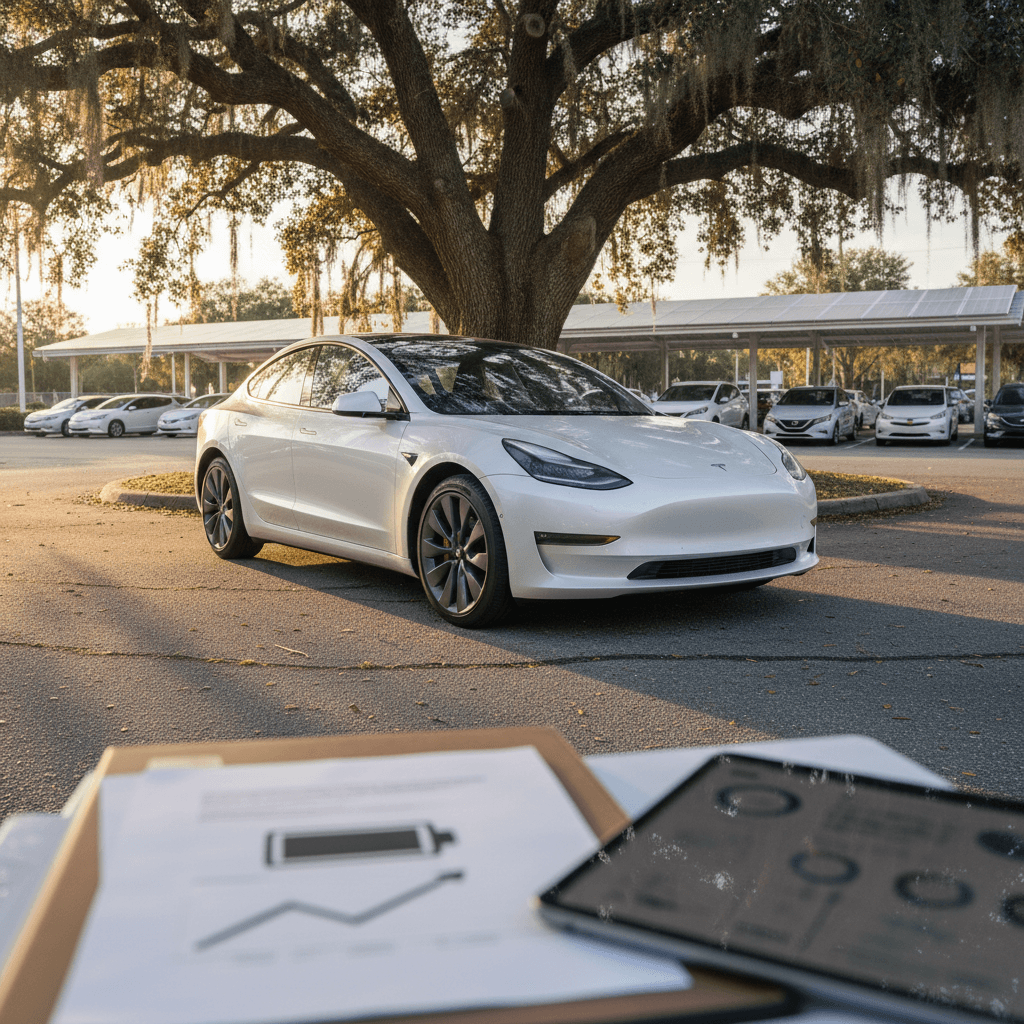
- Teslas dominate the used EV landscape; you’ll see more Model 3s in Florida than almost any other used EV model.
- Larger SUVs and trucks (Model Y, Mustang Mach‑E, Rivian) show up less often and sell quickly, especially in family‑heavy metro areas.
Use Florida‑wide search, not just your zip code
Unique pros and cons of used electric cars in Florida
Florida advantages
- Mild winters mean better real‑world range and less battery stress.
- Plenty of stop‑and‑go driving where EVs are most efficient.
- Heavy air‑conditioning use won’t faze modern packs; they’re designed for hot climates.
- No state emissions testing to worry about, an EV glides past all that.
Florida trade‑offs
- Heat and humidity age interiors and 12‑volt systems faster if a car lives outside.
- Coastal salt air can accelerate rust on suspension and hardware.
- Hurricanes and flooding demand extra vigilance about prior water damage.
- Long, rural stretches between towns mean you’ll want to think carefully about range and charging access.
Flood history is non‑negotiable
Battery health: the #1 thing you can’t afford to guess on
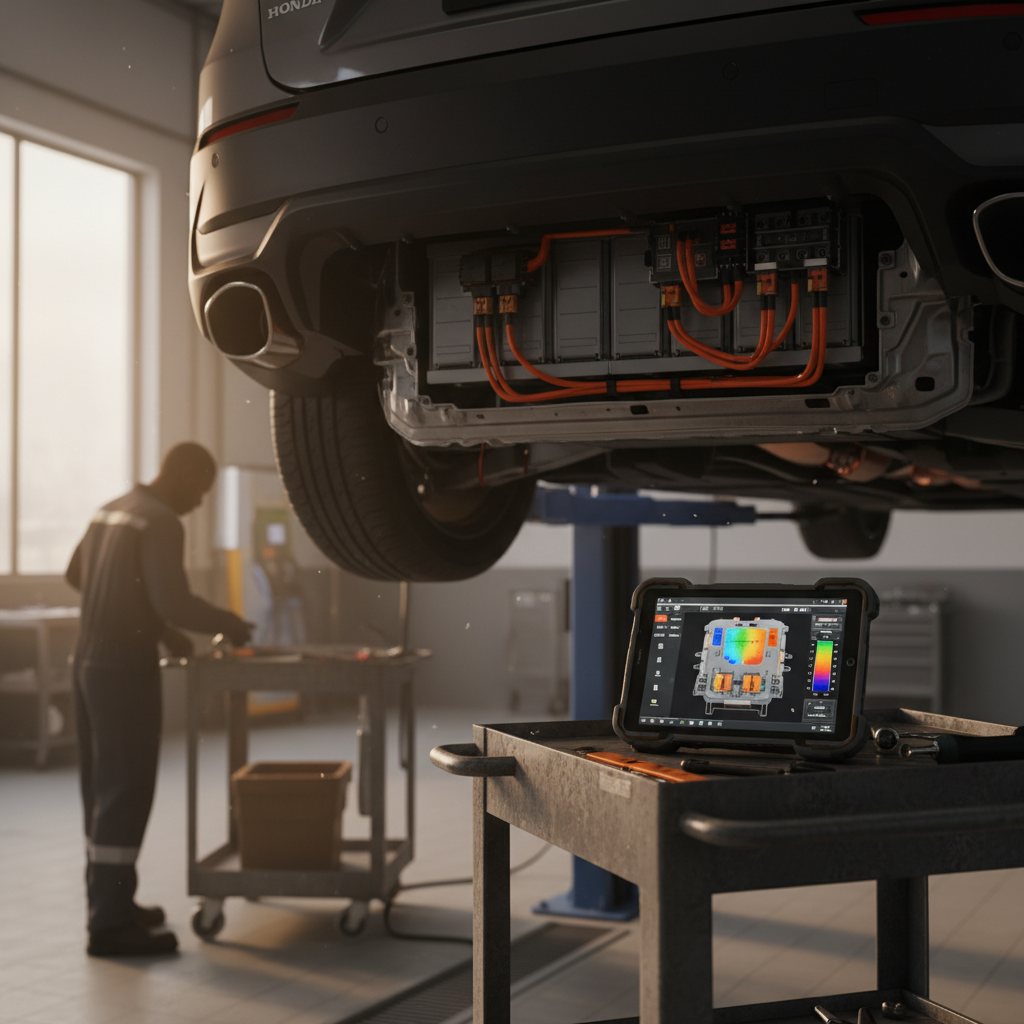
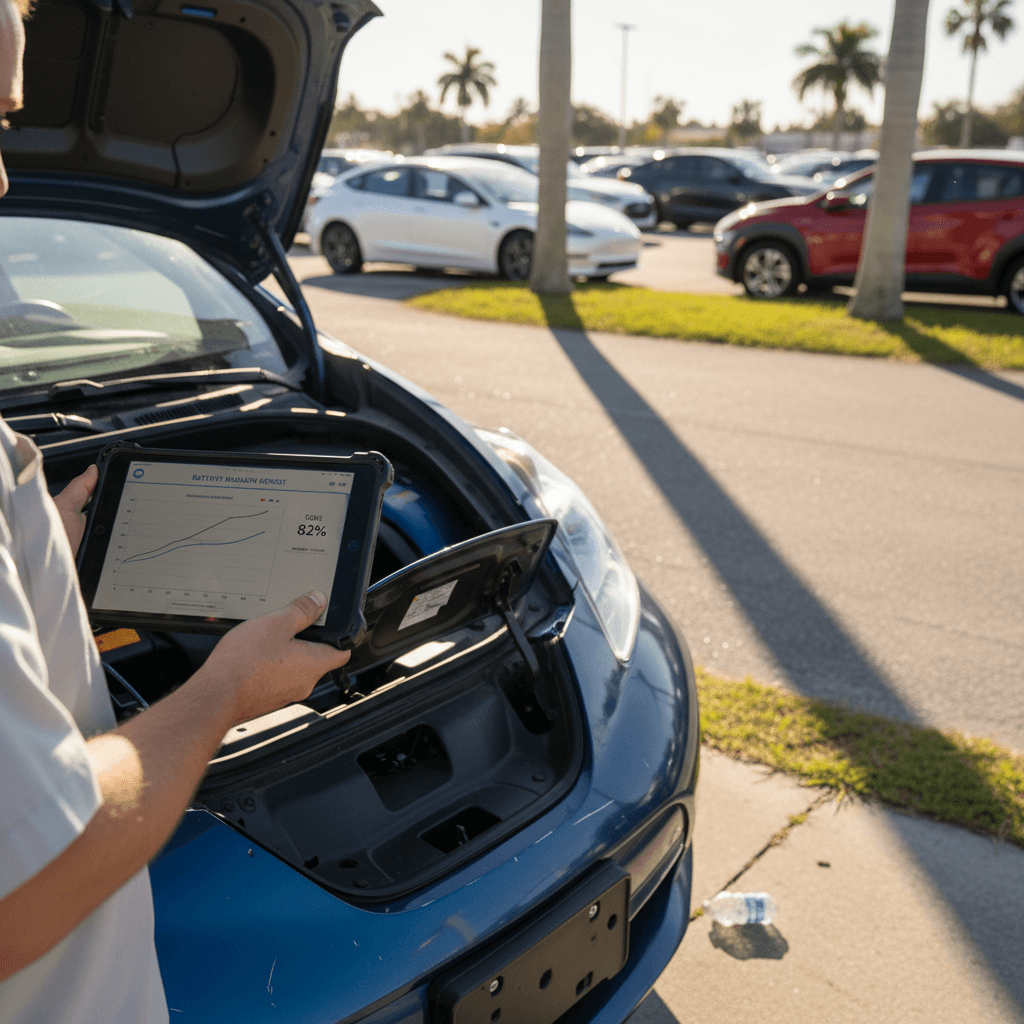
On a used gas car, you worry about head gaskets and transmissions. On a used EV, **the battery pack is the story**. In Florida, where EVs rack up plenty of highway and AC‑on miles, you want to know exactly how much usable capacity is left, not just how the car feels on a 10‑minute test drive.
Battery checks every Florida used‑EV buyer should insist on
1. Get a quantified battery‑health report
You want more than a dash‑screen guess. Look for an independent scan or report that shows remaining usable capacity as a percentage of original, this is built into every <strong>Recharged Score Report</strong>.
2. Compare range to original EPA rating
If a car was rated for 250 miles new and the health report says 88% remaining capacity, you can ballpark today’s full‑charge range around 220 miles under ideal conditions.
3. Ask about charging habits
A car fast‑charged daily from nearly empty to full will usually show more wear than one mostly charged slowly at home and kept between 20% and 80%.
4. Look at climate history
An EV that spent its early life in a colder state and then migrated to Florida may show different wear patterns than one that lived in Miami from day one; neither is automatically better without a health report.
5. Verify remaining battery warranty
Many EVs carry 8‑year battery warranties. In 2026, a 2020 model may still have several years and tens of thousands of miles of coverage left, fine print matters.
6. Test real‑world efficiency
On a longer test drive, reset the efficiency meter and see how many kWh per 100 miles or miles per kWh the car returns at Florida highway speeds with the AC running.
How Recharged handles battery uncertainty
Charging in Florida: can a used EV really work for you?
Most used‑EV shoppers in Florida ask the same question: “Will I actually be able to charge this thing where I live and where I drive?” By 2026, the answer is increasingly “yes,” as long as you understand the three layers of charging you’ll rely on: **home, local public, and highway fast charging**.
Three layers of charging for Florida EV owners
Think about your week, not just your road‑trip fantasy
Home charging
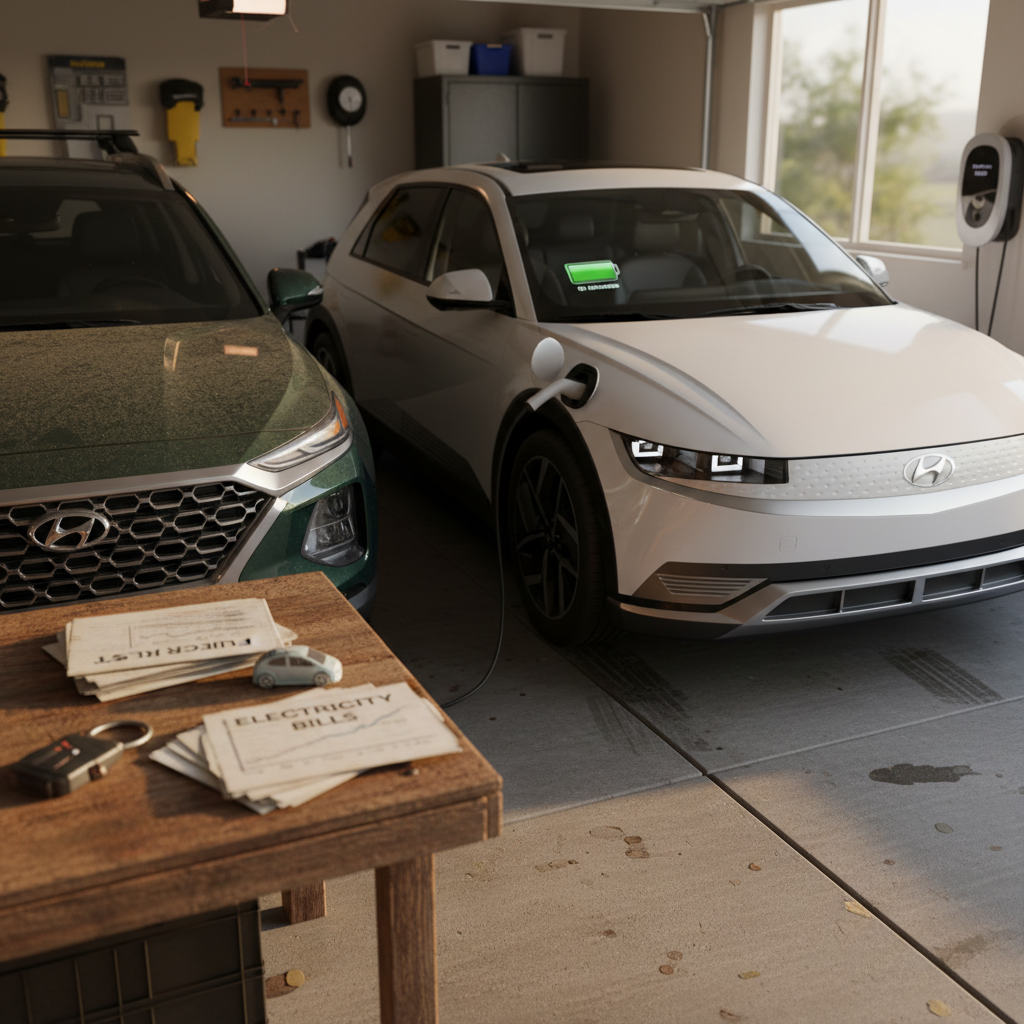
If you have a driveway or garage, a 240‑volt Level 2 charger turns your home into your primary "fuel station." Many Florida utilities offer special EV rates or time‑of‑use pricing.
Local public charging
Workplace, grocery store, hotel, and city chargers top you off while you live your life. Great if you rent or can’t install home charging.
Highway fast charging
DC fast chargers along I‑95, I‑75, and I‑4 make cross‑state drives possible. Tesla and non‑Tesla networks are both expanding across Florida’s interstates and tourist corridors.
Is a used EV realistic for your Florida lifestyle?
Match your home situation to a sensible charging plan before you buy.
| Your situation | Charging reality | Used EV buying tip |
|---|---|---|
| Single‑family home with driveway | Easiest scenario, install a Level 2 wall unit or use a portable 240‑V charger. | Prioritize vehicles with 32–48A onboard chargers so you can add 25–40 miles of range per hour at home. |
| Condo with assigned parking & outlet access | Check with your HOA; you may be able to add shared or personal charging. | Get written approval from the association and clarify who pays for upgrades and electricity. |
| Apartment with shared lot, no outlets | You’ll rely primarily on public charging. | Look for models with faster DC charging and plan your weekly charging stops near places you already visit. |
| Snowbird splitting time between states | You might charge in two very different climates and utility territories. | Confirm charging access in both homes and watch for different utility EV rates and incentives. |
You don’t need a perfect setup, you need a plan that fits how you actually live.
Do a “charging dress rehearsal” before you buy
Insurance, registration, and fees: what Florida EV buyers should know
Florida doesn’t currently levy a special recurring EV tax like some other states, but lawmakers keep circling the idea as gas‑tax revenue shrinks. You should assume that **policy may change over the life of your used EV**, and budget with some wiggle room.
- Insurance on a used EV in Florida is often comparable to a similarly priced gas vehicle; higher repair costs can be offset by strong safety tech and lower annual mileage for many retirees.
- Because EVs don’t need oil changes or emission tests, your maintenance budget shifts toward tires, cabin filters, and brake service rather than fluids.
- Some local utilities and municipalities occasionally offer rebates on home chargers or special EV‑only electric rates, worth checking before you install anything.
- Title, tag, and registration fees are structured like any other passenger vehicle, though legislation has periodically proposed additional EV registration fees to shore up road funding.
Factor in total cost of ownership, not just the sticker
Which used EVs make the most sense in Florida?
The “right” used electric car in Florida depends on how you live, where you park, and how far you like to roam. But certain models just plain fit the state better than others.
Florida‑friendly used EV picks by lifestyle
Think in use cases, not just brand names
Urban & suburban commuters
Good fits: Chevy Bolt/Bolt EUV, Hyundai Kona Electric, Kia Niro EV, base Tesla Model 3.
Compact size, solid range, and easy parking in crowded metro areas. Great for daily 20–60‑mile round‑trips with home or workplace charging.
Families and road‑trippers
Good fits: Tesla Model Y, Hyundai Ioniq 5, Kia EV6, Ford Mustang Mach‑E.
More cargo space for kids and beach gear, plus stronger DC fast‑charging for Orlando‑to‑Miami weekends and Disney runs.
Trucks and outdoor toys
Good fits: Ford F‑150 Lightning, Rivian R1T.
Best if most of your driving is local, towing boats or jet skis short distances to the ramp, not all‑day highway hauls.
Budget city and second cars
Good fits: Older Nissan LEAF, Fiat 500e, BMW i3.
Great as a second car for in‑town errands. Just be realistic about range; some early cars can struggle on long highway runs between Florida cities.
Mind the charging standard
How to shop a used EV in Florida, step by step
Florida used‑EV shopping roadmap
1. Decide how much range you really need
Map your weekly driving and a few typical road trips. If you rarely exceed 120 miles in a day, you may not need a 300‑mile battery, especially with home charging.
2. Confirm your charging plan
Check with your landlord or HOA about outlets and charger installation. Call your utility about EV rates or rebates. Know where your electrons will come from before you buy.
3. Shortlist Florida‑friendly models
Focus on models with strong reliability records, decent real‑world range in heat, and good support from local dealers or independent EV shops.
4. Shop statewide, not just locally
Cast a wide net across Florida. With digital marketplaces and delivery options, a great used EV in Tampa can easily become your new car in Fort Lauderdale.
5. Demand transparent battery and pricing data
Look for listings that show <strong>verified battery health, service history, and market‑based pricing</strong>. If you can’t see how a seller arrived at the price, that’s a red flag.
6. Do an EV‑specific test drive
Test one‑pedal driving, fast acceleration, highway stability, AC performance, and driver‑assist systems. If possible, plug into a charger during the drive to see charging behavior.
7. Line up financing and insurance
Some lenders and insurers treat EVs differently. Platforms like Recharged can help you compare EV‑friendly financing and get quotes without dinging your credit.
Bring an EV‑specific checklist
How Recharged helps Florida buyers shop used EVs with confidence
If this all feels like a lot, that’s because you’re not just buying a car, you’re buying into a different way of owning one. Recharged was built to make **used electric cars in Florida in 2026** feel less like a science project and more like clicking “buy” on something you already understand.
What Recharged does differently for used EV shoppers
Especially useful in an EV‑heavy state like Florida
Recharged Score battery diagnostics
Every vehicle on Recharged comes with a Recharged Score Report that includes verified battery health, not just odometer miles and service stamps.
Fair, transparent pricing
Recharged benchmarks each EV against the broader market so you can see whether a price is fair for its age, mileage, condition, and battery health.
Financing built for EVs
EV‑friendly lenders, pre‑qualification with no impact to your credit, and payment estimates that factor in fuel and maintenance savings.
Statewide delivery from a digital showroom
Shop from your couch in Sarasota, buy a car in Jacksonville, and have it delivered to your door. You don’t need to spend your weekend hopping lots.
Trade‑in or instant offer
Trade in your current vehicle, get an instant offer, or use consignment, Recharged can help you unlock value from your gas car when you switch to an EV.
EV‑specialist support
Talk to people who live and breathe electric cars. They’ll walk you through range planning, charging options, and whether a specific car fits your Florida lifestyle.
Ready to find your next EV?
Browse VehiclesFAQ: Used electric cars in Florida 2026
Frequently asked questions about used EVs in Florida
Bottom line: should you buy a used EV in Florida in 2026?
If you’re ever going to take the leap into electric, **Florida in 2026 is a pretty good place to do it**. You’ve got a rapidly growing pool of used electric cars, a climate that’s kind to batteries, and a charging network that finally makes sense for more than just early adopters. The key is to treat the battery pack as the main mechanical component, plan honestly around your charging reality, and ignore any car that can’t prove its health.
Do that, and a used EV can turn your daily grind, from I‑95 commutes to Gulf‑coast beach runs, into quiet, low‑maintenance miles. And if you’d rather not decode battery reports and charging maps alone, Recharged is built for exactly this moment in the market: a **transparent, digital way to buy a used electric car in Florida** with verified battery health, fair pricing, and EV‑savvy help from your first search to delivery.