If you’re considering a used electric car, the first big question is almost always the same: “What about the battery?” A used electric car battery feels like a black box, expensive, mysterious, and hard to judge from a quick test drive. The good news is that modern EV batteries are holding up far better than early fears suggested, and you have more tools than ever to see their true condition before you buy.
Key takeaway on used EV batteries
Why used electric car batteries worry buyers
With a gas car, you’re used to gradual wear: engines get noisy, transmissions slip, but repairs are familiar and relatively predictable. A used electric car battery is different: it’s a single, high‑voltage component that can cost thousands of dollars to replace. Headlines about five‑figure battery swaps and early Nissan Leafs losing range spooked a lot of shoppers, and some of that anxiety still lingers even as the technology has matured.
- Battery replacement can run from roughly $5,000 on smaller, older EVs to $20,000+ on large, long‑range or luxury models, depending on pack size and brand.
- Battery health directly affects usable range and resale value, so a weak pack can turn a bargain into a headache.
- Unlike paint or upholstery, you can’t judge battery condition with a quick glance, without data, it’s guesswork.
Don’t let fear cost you a great deal
How long used EV batteries really last
What the latest data says about EV battery life
Recent fleet and used‑vehicle studies are converging on the same story: EV batteries are aging better than expected. Large data sets from telematics providers and used‑car brokers show average EV State of Health (SoH) well into the 90s even after years on the road, including vehicles that have seen high mileage and frequent fast charging.
What that means for a used EV buyer
Battery health 101: State of Health explained
To compare one used electric car battery with another, you need more than a hunch. Most modern EVs track a metric called State of Health (SoH). Think of SoH as a score from 0–100% that tells you how much usable capacity the pack has compared with when it was new.
- 100% SoH: The pack is effectively as strong as new (common on very new vehicles).
- 90–95% SoH: Typical for many 2–5‑year‑old EVs, range loss is usually hard to notice in daily driving.
- 80–90% SoH: Still usable for most drivers, but you may see 10–20% less range than the original EPA rating.
- Below ~70% SoH: Many OEM warranties consider this the threshold for a pack that may qualify for repair or replacement.
State of Health vs. State of Charge
What is normal EV battery degradation?
Every lithium‑ion battery loses capacity over time; the question is how fast. The latest multi‑year studies across thousands of electric cars show average degradation around 1.8–2.3% of capacity per year, with a slightly quicker drop in the first year or two and a slower, more stable decline after that.
Typical real‑world EV battery degradation
These are broad, data‑driven ranges, not exact predictions for any single car, but useful benchmarks when you’re evaluating a used electric vehicle.
| Vehicle age | Typical SoH range | What that feels like in range |
|---|---|---|
| 1–2 years | 95–98% | You might not notice any difference day to day. |
| 3–5 years | 90–95% | A small drop in range; full battery may show slightly fewer miles than new. |
| 6–8 years | 85–92% | Some trips may need a bit more planning, but still practical for many commutes. |
| 9–12 years | 80–88% | Comfortable for shorter daily driving; long highway trips may require more charging stops. |
Actual results vary by model, climate, and charging habits, but most modern EVs stay well above 80% capacity for many years.
Look at the trend, not just the number
Used EV battery warranties and transfer rules
One reason EV batteries rarely become financial disasters is that traction batteries carry long warranties. In the U.S., most automakers cover the main high‑voltage pack for 8–10 years and around 100,000 miles, sometimes more. If your used electric car battery suffers an early failure or drops below a specified capacity threshold during that window, the manufacturer will repair or replace it.
- Most mainstream brands (Ford, GM, Hyundai, Kia, Nissan, VW, etc.) provide at least 8‑year/100,000‑mile battery coverage on BEVs sold in the U.S.
- Many luxury brands and some newer EV‑only startups match or exceed that baseline.
- In most cases, this battery warranty transfers to subsequent owners automatically, whether you buy private party or from a dealer.
Watch the fine print
If the battery is still under warranty
- Manufacturer typically covers defects and excessive capacity loss.
- Repairs or pack replacement may cost you little or nothing.
- A strong selling point if you plan to keep the car several more years.
If the battery is out of warranty
- You’re fully exposed to replacement cost, but failure rates are low.
- A detailed, third‑party battery health report is essential.
- Price should reflect remaining capacity and lack of coverage.
EV battery replacement costs in 2025
Battery replacement horror stories make headlines, but they’re not the everyday reality, and replacement is rarely needed within the first decade. That said, it’s smart to understand the stakes. In 2025, full pack replacements typically range from about $5,000 to $20,000 or more, depending on vehicle type, battery size, and whether you choose new, refurbished, or third‑party options.
Typical EV battery replacement cost ranges (2025)
Approximate price ranges for out‑of‑warranty pack replacements in the current market. Actual quotes vary by region, pack size, and whether you use OEM or third‑party suppliers.
| Vehicle segment | Examples | Typical pack replacement range* |
|---|---|---|
| Compact EVs | Older Nissan Leaf, Mini Cooper SE | $5,000 – $8,000 |
| Mainstream sedans/SUVs | Tesla Model 3, Chevy Bolt, Hyundai Ioniq 5 | $8,000 – $15,000 |
| Luxury & long‑range | Tesla Model S, BMW iX, Lucid Air | $12,000 – $20,000+ |
| Electric pickups | Ford F‑150 Lightning, Rivian R1T | $15,000 – $25,000+ |
Most EV owners will never pay for a full pack replacement, especially if they stay within the original 8–10‑year warranty window.
The part most people miss
What affects EV battery replacement cost?
Battery size and chemistry
Larger, long‑range packs with premium chemistries cost more to replace than smaller city‑car batteries.
OEM vs. refurbished packs
New OEM packs are most expensive. Refurbished or remanufactured packs can cut costs by 30–50% but may come with shorter warranties.
Labor and tooling
EV battery swaps require high‑voltage training and equipment. Labor alone can add $1,000–$3,000 to the bill.
Location and parts availability
Coastal metros often have higher labor rates but more EV‑qualified shops. Rural areas may require towing to a specialized center.
How to check a used EV’s battery before you buy
You wouldn’t buy a used gas car without knowing something about the engine. The same logic applies to a used electric car battery, except the tools are different. Instead of compression tests and oil analysis, you’re looking for data‑driven battery diagnostics and real‑world range clues.
Used EV battery inspection checklist
1. Confirm original battery warranty
Look up the in‑service date and mileage to see how much of the 8–10‑year battery warranty remains. Ask for documentation from the selling dealer or previous owner.
2. Get a true SoH report
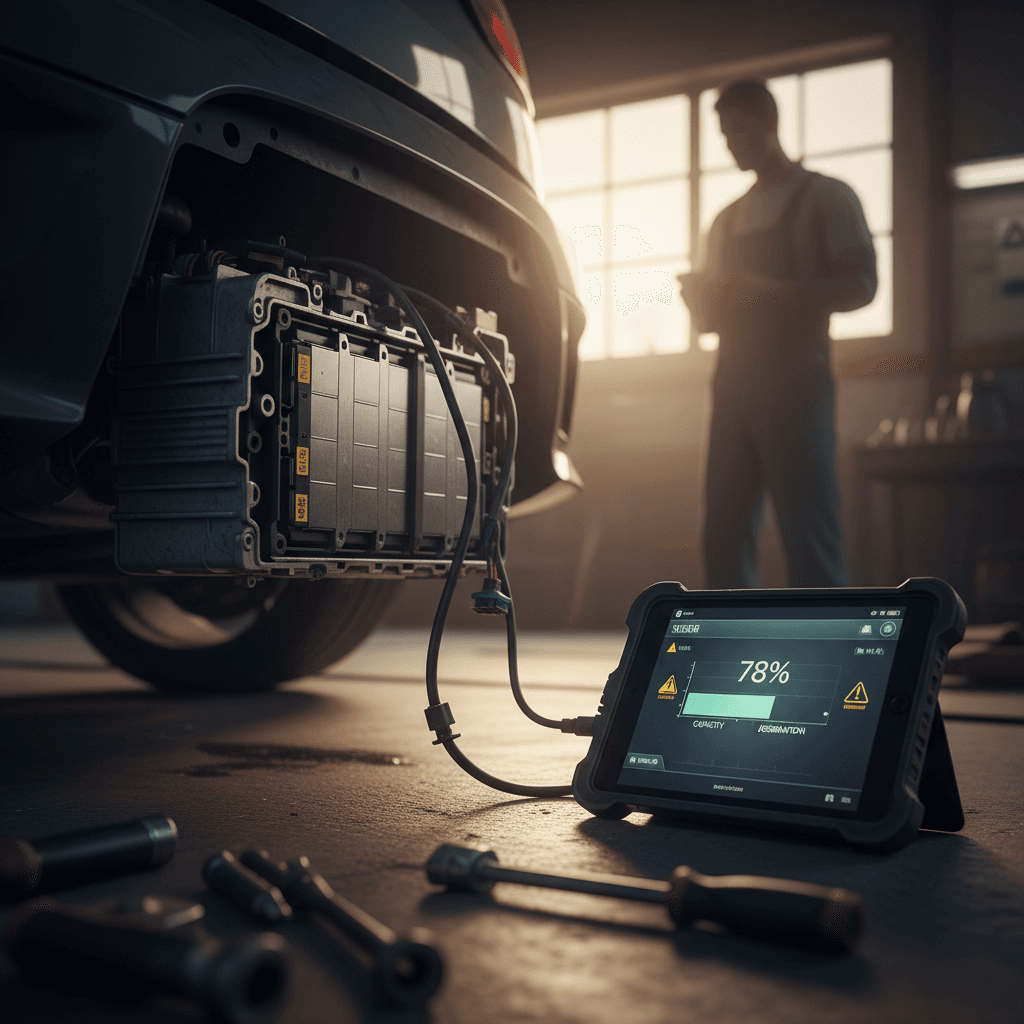
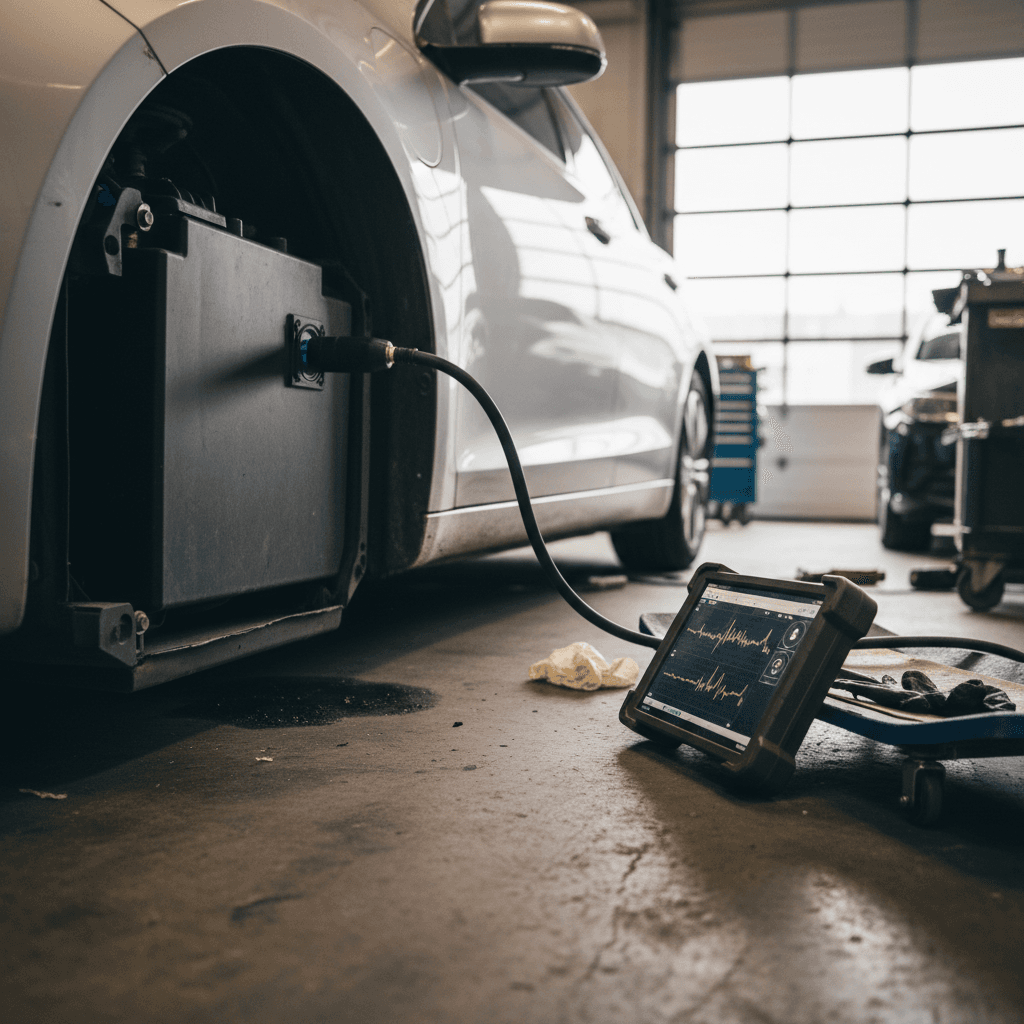
Relying only on the dashboard range estimate can be misleading. Ask for a diagnostic report that pulls State of Health directly from the battery management system.
3. Review DC fast‑charging history
Frequent ultra‑fast charging isn’t automatically bad, but heavy, repeated DC fast use, especially in hot climates, can accelerate degradation. Where possible, review charging history or telematics data.
4. Look for warning lights or fault codes
Any high‑voltage or battery warning lights, or a history of repeated battery‑related fault codes, should be investigated before purchase.
5. Compare claimed range to reality
On a test drive, note the percentage drop vs. miles driven. A car that loses 20% charge over a few city miles may need deeper investigation.
6. Use a trusted inspection service
If you’re shopping outside of a specialized EV retailer, consider a third‑party inspection that includes high‑voltage system checks, not just mechanical items.
Where Recharged fits in
How Recharged evaluates used EV battery health
Because the battery is the heart of any EV, Recharged builds the entire buying experience around making it transparent. Instead of hiding behind generic phrases like “battery OK,” we translate technical diagnostics into a clear Recharged Score Report that shows how a used electric car battery stacks up against similar vehicles.
Inside the Recharged battery evaluation process
From raw diagnostics to a simple battery health story you can actually understand.
Deep-dive diagnostics
Recharged pulls high‑voltage data directly from the vehicle, including State of Health, cell balance, temperature readings, and fault history. This goes far beyond what a dashboard range estimate alone can tell you.
Fair market pricing
Battery data feeds directly into pricing. A car with above‑average SoH is priced differently than one that’s closer to warranty limits, and the report shows how that affects the number you see.
EV‑specialist guidance
Recharged’s EV‑specialist team walks you through the report, explains what the numbers mean for your driving needs, and helps you compare options if you’re torn between two vehicles.
Ready to find your next EV?
Browse VehiclesIn‑person and fully digital options
Tips to extend your used EV’s battery life
Once you own a used EV, your habits matter as much as the car’s history. The same best practices that keep a new battery healthy will help a used electric car battery stay strong longer and preserve your range and resale value.
- Avoid living at 100% or 0%: It’s fine to charge to 100% before a road trip, but for daily use, many owners stick to roughly 20–80% when possible.
- Prioritize Level 2 over frequent ultra‑fast charging: DC fast charging is great for trips, but daily fast‑charge sessions can add heat and stress, especially in hot climates.
- Keep the car cool when you can: High heat accelerates degradation more than cold does. Parking in shade or a garage helps.
- Use scheduled charging: Many EVs let you charge right before departure instead of sitting at high state of charge for hours.
- Stay on top of software updates: Automakers regularly refine battery management through over‑the‑air updates that can improve longevity and charging behavior.
Think in years, not months
Used electric car battery FAQ
Frequently asked questions about used EV batteries
The bottom line on used electric car batteries
A decade ago, skepticism around used electric car batteries was understandable. Today, the data paints a much calmer picture: modern EV packs degrade slowly, last longer than expected, and rarely require out‑of‑warranty replacement. The real challenge isn’t that batteries fail, it’s that too many buyers still can’t see their true condition.
If you pair solid battery diagnostics with realistic expectations about range and warranty, a used EV can be one of the smartest buys in the market, especially as more off‑lease vehicles hit dealer lots. At Recharged, every car comes with a Recharged Score Report, EV‑specialist guidance, and flexible options like financing, trade‑in support, and nationwide delivery so you can shop confidently, whether you’re browsing online or visiting the Richmond, VA Experience Center.
Bottom line: don’t let outdated fears about used electric car batteries push you back to gasoline. With the right information in hand, you can judge battery health objectively, pay a fair price, and enjoy quiet, low‑maintenance electric driving for years to come.