If you’re shopping for a used electric vehicle, you’re really buying two things: the car you can see and the battery pack you can’t. Stories about costly replacements have made used electric car batteries sound like ticking time bombs. The reality in 2025 is very different: most modern EV packs are aging far better than early skeptics predicted, and an entire ecosystem has sprung up to reuse and recycle them.
The short version
Why used electric car batteries matter now
For a long time, the question around EV batteries was, “Will they last?” We’re finally getting real-world answers. Fleets and early adopters have put hundreds of thousands of miles on their cars, and the data are in: used electric car batteries are generally holding up far better than early worst‑case predictions. That’s reshaping how you should think about buying, owning, and eventually reselling a used EV.
What we now know about used EV batteries
Why this matters for you
How long used EV batteries really last
A useful way to think about a traction battery is not, “When does it die?” but, “When does it stop doing the job you need?” Most drivers consider that point to be when usable capacity falls to around 70% of original. The surprise from recent research is how long it takes to get there for modern EVs.
- Large real‑world datasets from fleets and private EVs show average degradation around 1.8% per year, down from earlier estimates above 2%.
- In practical terms, that means a 250‑mile EV might still offer roughly 210–220 miles of range after 7–8 years, assuming normal use.
- Independent long‑term tests on popular models have shown some packs retaining over 90% of their original capacity even after more than 100,000 miles of mixed driving.
- Recent academic work suggests that real‑world stop‑and‑go driving, with rest periods and regenerative braking, may actually extend battery life compared to simplified lab tests.
Think in miles and years, not horror stories
What battery degradation means when you buy used
When you’re looking at used electric car batteries, degradation is only a problem if it sneaks up on you. A 15% loss in capacity just means less range; it’s not the EV equivalent of a blown engine. The key is to understand exactly what you’re getting before you sign anything.
How degradation shows up day to day
- Shorter range: That 300‑mile EPA rating might be closer to 255 miles if the battery is at 85% of its original capacity.
- More frequent charging: You’re plugging in more often on road trips or topping off at home a bit more regularly.
- Less buffer in bad weather: Cold snaps or high speeds eat more into your remaining range when the battery has aged.
Things that usually don’t change
- Performance: Acceleration is largely unaffected until the pack is very degraded or has cell faults.
- Charging speed: Modern EVs manage charging to protect the pack; gentle degradation doesn’t suddenly make fast charging unusable.
- Safety: Degradation is about capacity, not a sign that the pack is about to catch fire or fail catastrophically under normal conditions.
The real red flags
Second-life uses for used electric car batteries
Here’s the twist that doesn’t get nearly enough attention: when an EV battery is “done” in a vehicle, it often still has 60–80% of its original capacity left. That’s more than enough for jobs that don’t involve hauling a two‑ton car down the highway at 75 mph. So instead of shredding every pack that comes off the road, more companies are giving them a second act.
How used EV batteries get a second life
From your driveway to the electric grid, old packs are finding new jobs
Home & commercial storage
Battery modules from used EVs can be reconfigured into wall‑ or rack‑mounted storage systems that soak up solar energy during the day and power homes or businesses at night.
For stationary use, weight doesn’t matter much, so a ‘tired’ car pack can deliver years of reliable service.
Grid‑scale microgrids
Reused packs are now being stacked into container‑size systems that stabilize local grids, back up data centers, or support remote communities.
Some projects are already operating with dozens of megawatt‑hours of capacity built largely from recovered EV batteries.
Charging support & peak shaving
Second‑life batteries can sit next to DC fast chargers, charging slowly from the grid and then delivering quick bursts of power when EVs plug in.
That reduces demand spikes and can make fast charging viable in places with weaker grid connections.
Why second life matters

How used EV batteries are recycled
Eventually, even after a second life, a battery really is worn out. That’s where recycling comes in. Modern lithium‑ion packs are stuffed with metals we’d very much like to use again, lithium, nickel, cobalt, copper, manganese, aluminum, and more, often adding up to hundreds of pounds of materials per pack.
What happens to a used EV battery pack
A simplified look at how used electric car batteries move through the recycling pipeline in North America.
| Step | What happens | Why it matters |
|---|---|---|
| Collection & transport | Packs are collected from dealers, dismantlers, fleet operators and shipped to recycling facilities. | Keeps high‑value, high‑voltage components out of general scrap streams and landfills. |
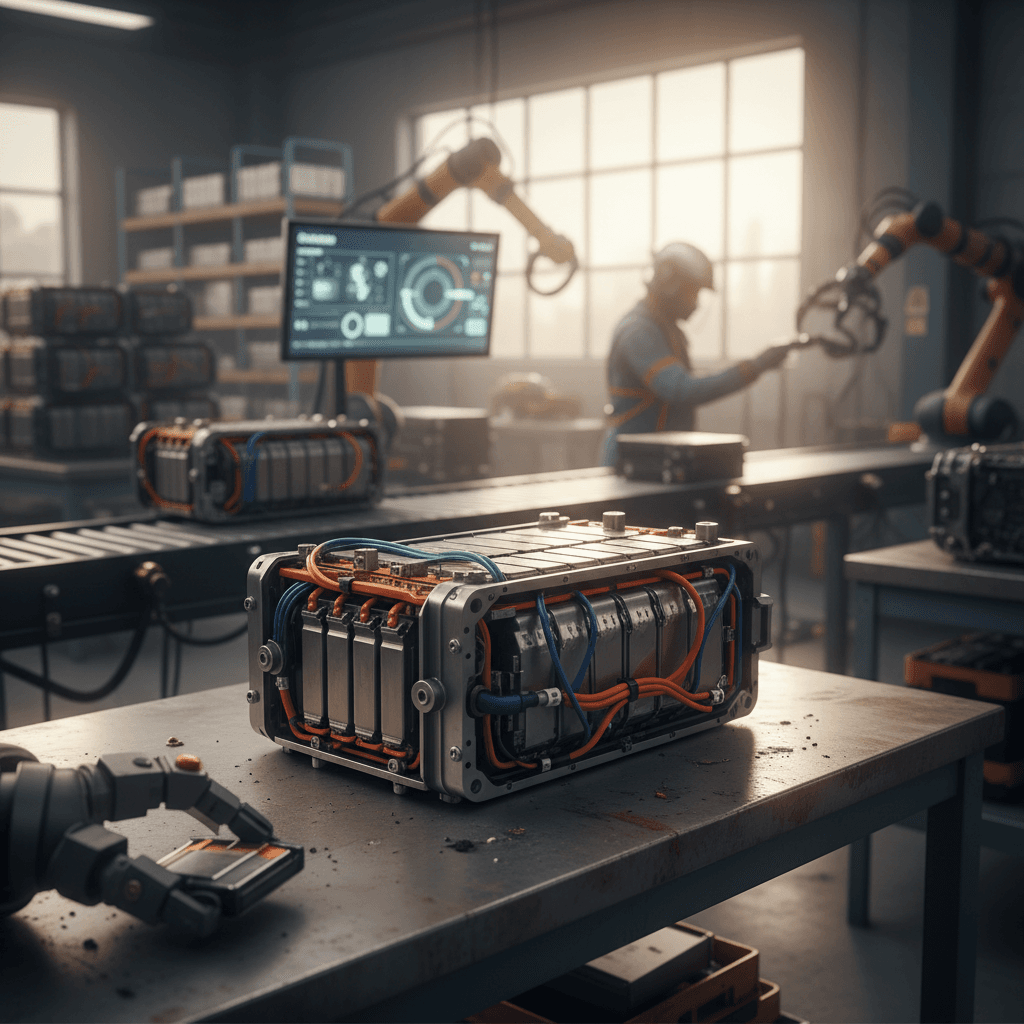
| Disassembly & diagnostics | Packs are opened; modules are tested to see if they’re fit for second life or go straight to recycling. | Maximizes value by reusing what still works before it’s shredded. |
| Size reduction | Batteries are safely discharged and mechanically shredded into ‘black mass’ plus metal foils and casings. | Prepares materials for chemical separation while controlling fire risk. |
| Material recovery | Hydrometallurgical or pyrometallurgical processes recover lithium, nickel, cobalt and other metals. | Recovers the most valuable ingredients so they can go back into new cells. |
| Refinement & new cells | Recovered metals are refined into cathode and anode materials for new battery manufacturing. | Closes the loop, reducing the need for fresh mining and long import supply chains. |
Processes vary by recycler and chemistry, but the general steps are similar.
A rapidly growing industry
How to evaluate battery health on a used EV
You don’t need an engineering degree to get a clear picture of a used EV’s battery. You just need data, a bit of context, and a healthy skepticism about any seller who waves you toward the cord and says, “Drives great, charges fine.”
Used EV battery checklist
1. Look for a battery health report
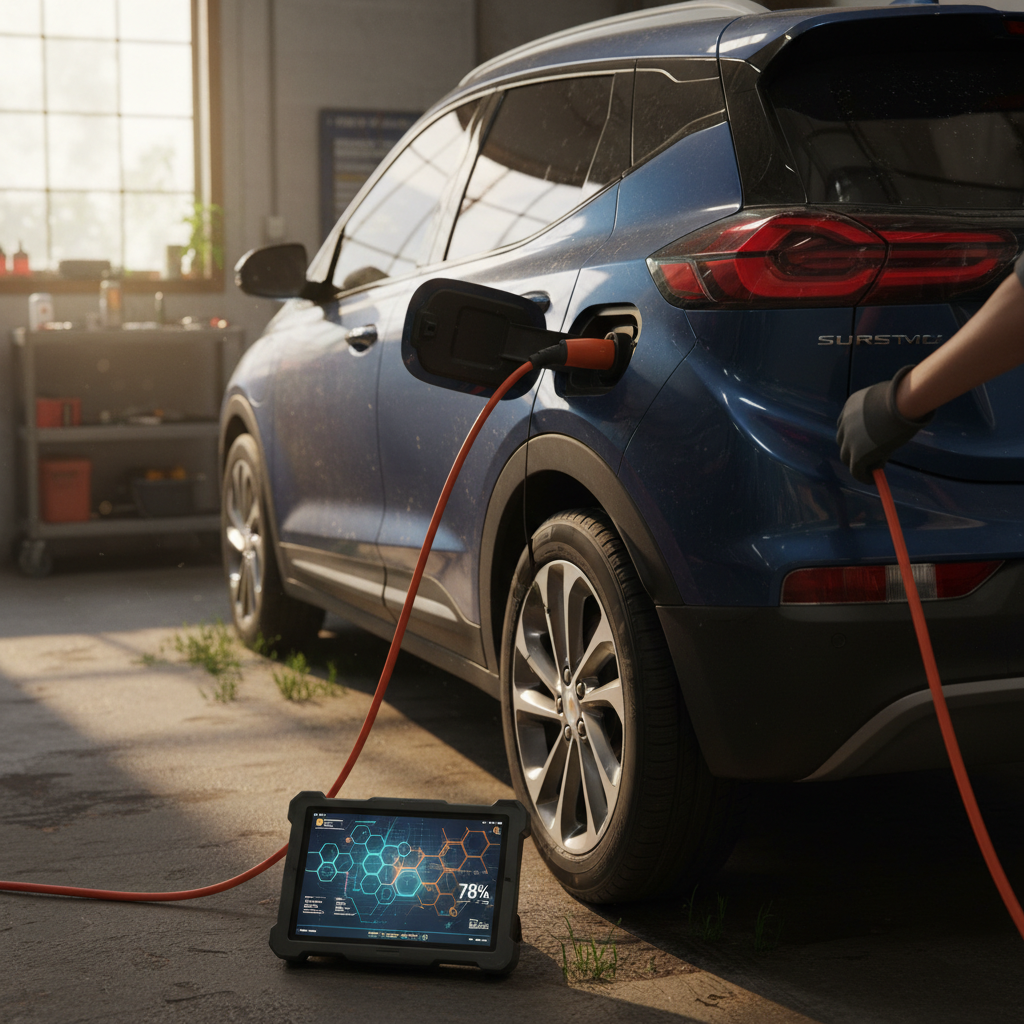
Ask for a recent, third‑party battery health assessment, not just a dashboard range estimate. At Recharged, every car includes a <strong>Recharged Score</strong> with verified battery diagnostics so you can see usable capacity up front.
2. Compare capacity to original specs
Find the original battery size and EPA range for the model you’re considering, then compare that to the tested usable capacity and real‑world range the report shows today.
3. Review charging and usage history
If possible, look at how the previous owner charged: mostly home Level 2, or constant DC fast charging? High‑mileage fast‑charged highway commuters are fine, but you want to know what you’re buying.
4. Check for software limits or warnings
Scan for error codes, limited‑charging warnings, or unusual behavior (like sudden, large drops in state‑of‑charge while driving). Those are signs of deeper issues.
5. Ask about remaining battery warranty
Most EVs sold new in the U.S. carry at least an 8‑year battery warranty. On a 4‑year‑old car, you may still have half that coverage left if capacity dips below the automaker’s threshold.
6. Test drive with an eye on range
On a longer test drive, watch how the range estimate falls relative to miles driven. A slight buffer is normal; big, inconsistent drops can be a red flag.
Why a structured report matters
How to protect and extend a used EV battery
Once you own the car, you become the next chapter in that battery’s story. The good news: a few simple habits can slow degradation and keep your pack happy well into six‑figure mileage.
- Keep daily charging between roughly 20% and 80% when practical; save 100% charges for road trips.
- Use Level 2 charging for most top‑ups; think of DC fast charging as a road‑trip tool, not a daily habit.
- Avoid leaving the car parked at 0% or 100% for long periods, especially in extreme heat.
- Precondition the battery before fast charging in very cold or very hot weather if your car supports it.
- Park in the shade or a garage when you can, high temperatures are tougher on chemistry than cold snaps.
Heat is the silent battery killer
Cost, value, and warranties for used batteries
Batteries still account for a big slice of an EV’s price, so it’s natural to wonder what happens to your wallet if one needs replacing out of warranty. The landscape here is changing quickly as more packs reach the end of their first life and as recycling ramps up.
Replacement costs today
- Out‑of‑pocket packs are expensive: Full pack replacements can run well into five figures when you go through a dealer, especially on early or low‑volume models.
- Module‑level repairs: For some vehicles, independent specialists can replace individual modules instead of the whole pack, trimming costs substantially.
- Future downward pressure: As more batteries are recycled and more independent repair networks emerge, parts and labor costs are likely to become more competitive.
How warranties protect you
- Typical coverage: Many EVs sold in the U.S. include 8‑year battery warranties with a capacity guarantee around 70%.
- Transferability: That coverage usually transfers to the next owner, which is a major plus when you’re buying used.
- Recharged advantage: When you shop through Recharged, we clearly disclose remaining factory battery warranty and back it with our own transparency about pack health via the Recharged Score.
Finding the sweet spot
Frequently asked questions about used EV batteries
Your questions about used electric car batteries, answered
The bottom line on used electric car batteries
Used electric car batteries are no longer an experiment, they’re a maturing, track‑proven technology with a whole ecosystem built around keeping them useful. Most modern packs degrade slowly, many will outlast the cars they power, and when their driving days are over, they’ll likely spend years buffering the grid before their metals are reborn in new cells.
If you’re shopping used, the key is transparency. Know the battery’s health, understand how that translates to real‑world range, and factor in remaining warranty. Platforms like Recharged exist precisely to make that easy, with verified battery diagnostics, fair pricing, nationwide delivery, and EV‑specialist support from your first search to final paperwork. Get the battery story right, and a used EV can be one of the smartest, cleanest car purchases you’ll make.